Showing posts with label homeworld 2. Show all posts

Tuesday, 20 August 2019

Developers tease new HOMEWORLD project


Blackbird Interactive and Gearbox have teased a new project set in the Homeworld universe.

Image

Relic Entertainment originally released the pioneering 3D real-time strategy game Homeworld in 1999. It was followed by stand-alone expansion Homeworld: Cataclysm (from Relic and Barking Dog Studios) in 2000 and Homeworld 2 (from Relic alone) in 2003.

After a lengthy period where the rights to the IP were in flux, Gearbox purchased the rights in 2015 and issued Homeworld Remastered, a huge and fundamental updating of Homeworld and Homeworld 2 to modern standards. Blackbird Interactive, a new developer made up of many of the original Relic team who developed the first two game, released the well-received, ground-based RTS prequel Homeworld: Deserts of Kharak in 2016.

The source code for Homeworld: Cataclysm has been lost, preventing a similar updating, but GoG have reissued the game with patches to help it work on modern systems under the name Homeworld: Emergence.

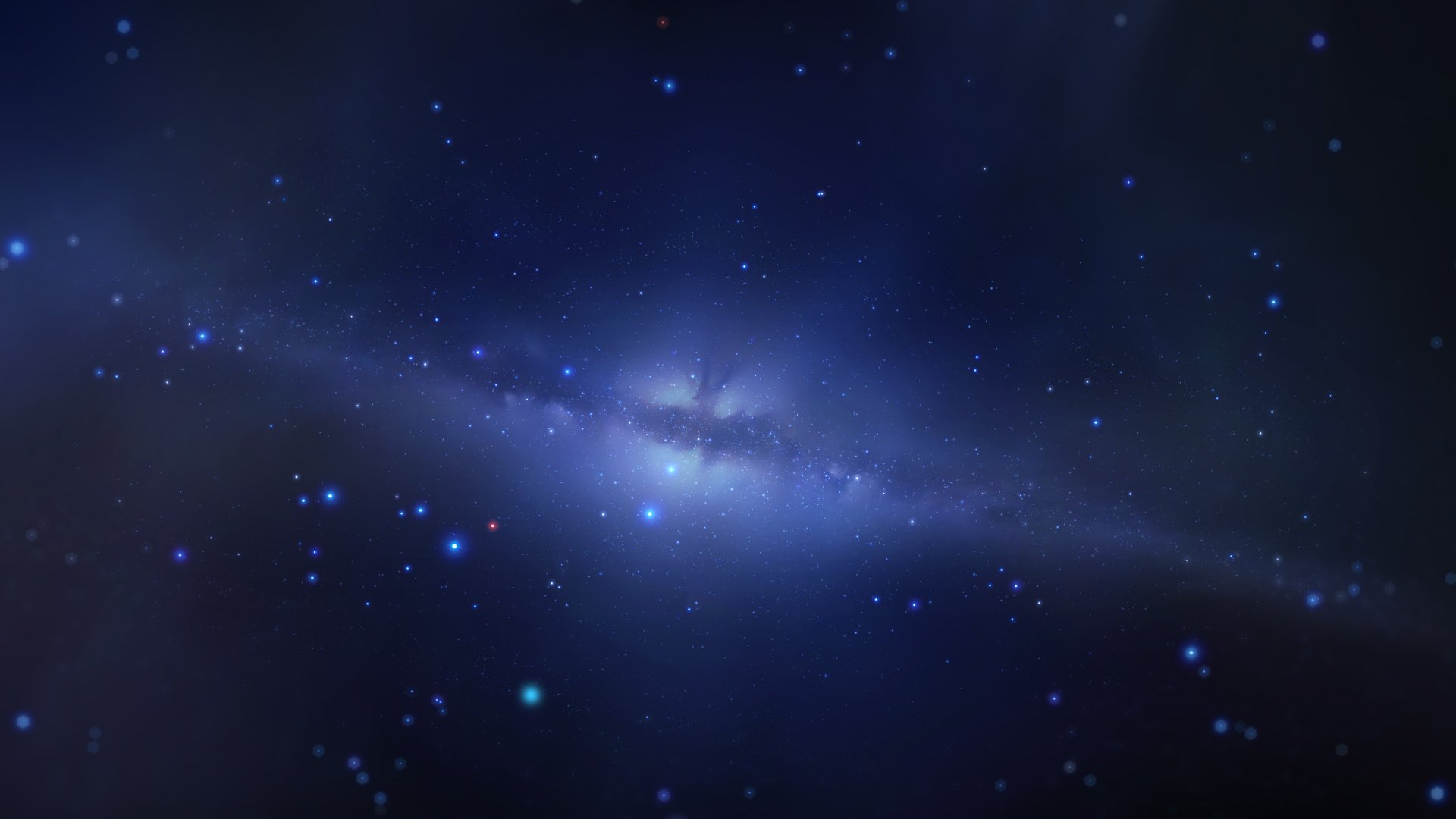
Based on the single promo image issued (a shot of the galactic core of the Homeworld galaxy), the new project appears to be space-based and may be the long, long-rumoured Homeworld 3. Further information is expected to be unveiled at the PAX event on 30 August, where Gearbox will have a presentation which will also reveal more information on their forthcoming game, Borderlands 3.

Saturday, 23 December 2017

Wertzone Classics: Homeworld Remastered

Over sixty years ago, the Kushan people of the desert planet Kharak made a remarkable discovery: a vast, wrecked starship in the desert, and around it the ruins of a four thousand-year-old city. The Kushan confirmed what their scientists and geneticists had long suspected: they were not native to Kharak. They had come from somewhere else in the galaxy. Using technology reverse-engineered from the wreck, a hyperspace core located in its ruins and a Guidestone emblazoned with a curious map, the Kushan have built a vast starship. Their mission is simple: to find their true homeworld.


Originally released in 1999 as the debut title from Relic Entertainment, Homeworld was a video game way ahead of its time. Featuring a remarkable 3D, real-time graphics engine and a gripping storyline, the game told the story of an entire people racing to find their way home, hounded by enemies they don't understand and accused of crimes their ancestors committed millennia earlier. It was followed by two successors, Homeworld: Cataclysm (2000) and Homeworld 2 (2003), but Relic was bought out by Sega and switched to making Warhammer 40,000 games (namely the popular Dawn of War series) and, later, the WWII Company of Heroes series. The Homeworld IP, left behind with dying publisher THQ, was forgotten about.

Or so it seemed. By 2015 THQ had gone bust and the Homeworld IP had been bought by FPS titans Gearbox, several members of whom were massive fans of the original game. Helpfully, many of the team who made Homeworld and Homeworld 2 had left Relic to set up their own studio, Blackbird Interactive, and had begun making their own strategy game which was basically as close to Homeworld as they could get without violating copyright. Gearbox teamed up with Blackbird to retool that game as an official Homeworld game - the excellent Deserts of Kharak - and also fully remaster the original games into a new package, fit for modern gamers.


Homeworld Remastered is the result. This re-release combines Homeworld and Homeworld 2 into one package and significantly updates both titles. Homeworld has been moved into the superior Homeworld 2 engine, given a massive graphical face-lift and had its user interface revamped. The result is nothing short of a revelation: a game that plays identically to how it did in 1999 but with cutting-edge graphics. Pushed to the maximum and played on a 4K monitor and graphics card, it's possible that Homeworld Remastered is the most graphically jaw-dropping game currently in existence. Not bad for a franchise not far off from entering its third decade.

If you haven't played any of the Homeworld games before, an in-depth tutorial explains the basics. Your Mothership is your headquarters and base (stationary in the first game, mobile in the second one), from where you build fighters, capital ships, probes and asteroid-mining craft. Your resource gatherers mine asteroids and gas clouds for resources allowing you to build ships and research new technologies.


The game is controlled from a 3D perspective, with you giving ships orders on where to move and how to engage the enemy. Your ships can move in all directions, including attacking from above or below to surprise the enemy, and several story missions in fact depend on you attacking from outside the usual plane. You can amass your fleet in strike groups of mixed types of craft: the AI is good enough that when you click on an enemy fleet, your ships will engage the appropriate enemy craft (so fighters will target bombers, bombers will target heavy capital ships, battlecruisers will target everyone etc). You can also pause the game and issue orders whilst paused if the action gets too hectic (as it invariably does).

The fleet you build is persistent through the game, so all the units that survive one mission will automatically show up at the beginning of the next one. Your resources are also persistent, so you start each mission with the resources collected from the last one. Slightly controversially, the remaster also automatically harvests up remaining resources from the last mission, allowing you to move on rather than having to sit around and wait for your miners to do their thing (which on some missions took an hour or more after the objectives were met) but also meaning that mining becomes a bit pointless as the game continues, since you automatically just hoover up everything and start each successive missions with more money than you can ever spend.


The real meat of the game, though, is space combat. Your fleets consist of several ship types: fighters, bombers, corvettes, frigates and heavy capital ships. As the game continues the enemy improve their ships so you have to as well, gradually building more versatile and fiercer fleets.

The single-player storyline is excellent, unfolding with unmatched atmosphere. The Homeworld games have some of the best music ever created for video games and the game's use of Adagio for Strings is particularly fantastic. The voice acting is also exceptional, with a special word of appreciation for the late Campbell Lane, whose role as both the main narrator and the Bentusi is superb. RIP, sir. Some people will find the game's lack of any recognisable characters - the cut scenes take place either using the in-game engine so only showing the ships, or in 2D black-and-white cut scenes - a bit weird, but it also allows your imagination to run riot.


The game's art design and direction remain unparalleled. Heavily influenced by 1970s SF artist titans Chris Foss and Peter Elson, Homeworld's ship designs are among the best ever conceived for video games, with clunky, retro designs and excellent use of colours. Watching space light up with a furious fusillade of ion beams remains as awe-inspiring now as it was eighteen years ago.

The package contains two games, and it should be noted that Homeworld and Homeworld 2 are somewhat different games in tone: the first game is more rooted in survival and the nitty-gritty of building alliances with the races you encounter, destroying enemy forces in a pragmatic manner and pressing on to the homeworld. The second game is a bit more mystical, diving into the Kushan religion and revealing it has a basis in an actual mysterious alien race who left strange artefacts around the galaxy, artefacts which may hold the key to defeating an invading alien force. The second game is still very good, but the number of missions revolving around finding the Sacred Key of Maguffin to unlock the Portal of Exposition is a bit on the high side and doesn't entirely feel in keeping with the tone of the first game. Weirdly, since Homeworld 2 came out before the rebooted series even started, the games mirror the two halves of the Battlestar Galactica remake (although Homeworld 2's ending is excellent, unlike Battlestar Galactica's).


There aren't too many other downsides: Homeworld is perhaps a little too easy and Homeworld 2 isn't going to put too many veterans of the first game off, although it does have some notable difficulty spikes (the most infamous have been nerfed through patches over the years, thankfully). There were also some teething problems with Homeworld being moved into the HW2 engine, particularly the fact that formations didn't work properly. This was fixed some time ago, fortunately. The biggest problem is one not really in the developers' control: since the original source code was lost years ago, it wasn't possible to remake Homeworld: Cataclysm in the same manner, so it isn't in the package. Fortunately, GoG have been able to resurrect the game and re-release it in a compatible format for modern PCs. Due to World of WarCraft copyright-related reasons, however, they've had to rename it Homeworld: Emergence. This is slightly frustrating as, although it has a far cheesier plot, Cataclysm/Emergence arguably has the best gameplay of the series.

What you get with Homeworld Remastered are two of the very finest space-set real-time strategy games of all time, spruced up to the maximum with their classic gameplay and unmatched atmosphere left completely unchanged. Frequently available very cheaply in Steam sales, I would argue it's a required purchase for any lover of science fiction or strategy gaming.

Homeworld Remastered (*****) is available via Steam now. Gearbox and Blackbird have mooted making Homeworld 3, but this will depend on the sales of Homeworld Remastered and Deserts of Kharak.
Saturday, 25 November 2017

HOMEWORLD: DESERTS OF KHARAK gets a big discount and update

Blackbird Interactive's excellent real-time strategy game Homeworld: Deserts of Kharak has gotten a substantial update and a steep discount for the Steam Autumn Sale.


Deserts of Kharak is a prequel to the classic Homeworld series of real-time strategy games (Homeworld, Homeworld: Cataclysm - recently renamed Emergence due to copyright issues, and Homeworld 2). Although made by a new company, Blackbird Interactive was founded by ex-developers from Relic Entertainment and includes many veterans who worked on the original games.

The new update fixes some rare but annoying bugs in the original game and adds a "tactical pause" feature, allowing orders to be given to units whilst the game is paused. This feature was present in the original Homeworld and its sequels but was missing from Deserts of Kharak due to time pressures during development.

Deserts of Kharak has also been heavily discounted to £8.99 during the Steam sale. It is an absolute no-brainer for that price. Homeworld Remastered, the spruced-up and re-released version of Homeworld and Homeworld 2 - has also been discounted for the sale and if buy both games together you get a further saving.

Blackbird and publishers Gearbox have also said that the Homeworld franchise will continue - hopefully with a full Homeworld 3 set in space to pick up on the slightly odd ending to Homeworld 2 - if sales of Deserts of Kharak and Homeworld Remastered are strong enough, so if you were thinking of picking up the games but hadn't gotten round to them yet, now is a good time for it.

Tuesday, 7 June 2016

HOMEWORLD REMASTERED gets a substantial update

Homeworld Remastered, Gearbox Software's excellent remastering and update of classic SF strategy games Homeworld and Homeworld 2, has received a substantial update and also been released on GoG.


The update addresses everything from minor graphical improvements to much more substantial gameplay changes, including the fixing of formations (which were left a bit unreliable in the original release) to the implementation of correctly-modelled ballistic weapons.

The GoG version of the game is on a half-price sale for the next few days as well. For two of the greatest video games ever made, of any genre, £13 is an absolute steal.

Thursday, 12 February 2015

The Making of HOMEWORLD REMASTERED - Part 1

The teams at Gearbox and Blackbird Interactive are releasing a series of videos about the making of the remastered versions of the first two Homeworld games. Check it out below.


Homeworld Remastered, containing both the original and new, beyond-HD versions of Homeworld and Homeworld 2, will be released by Gearbox on 25 February. Blackbird are currently working on a brand new prequel, Homeworld: Shipbreakers. Expect to hear more about that once the remastered versions are out.

Sunday, 25 January 2015

HOMEWORLD REMASTERED launches on 25 February

Gearbox have finally announced the release date for Homeworld Remastered, their updated version of the classic space strategy games Homeworld and Homeworld 2.


Originally released by Relic Entertainment in 1999, Homeworld was lauded for its highly atmospheric soundtrack, cool visuals, the first fully successful depiction of 3D space in a strategy game and its compelling storyline. Its sequel, Homeworld 2, was released in 2003 and added some vastly more advanced graphics and a more comprehensive user interface. Released between the two was Homeworld: Cataclysm, a stand-alone expansion which is sometimes regarded, in at least gameplay terms, as the high point of the series.

Unfortunately, Cataclysm is not included in this release due the source files being missing and the rights to the game being in question.

Homeworld and Homeworld 2 were made by Relic Entertainment, by a team led by Rob Cunningham. Cunningham left Relic in 2007 to set up his own studio, Blackbird Interactive. He was joined by many veterans of the two Homeworld games. Blackbird have been assisting Gearbox in their remastering of the two games, by tracking source files and original audio and graphical assets. More excitingly, Blackbird are also working on a full prequel to the games. Homeworld: Shipbreakers will be based around ground combat and strategy as competing factions on the planet Kharak fight for resources. More news about Shipbreakers is expected to be released after the remastered games are out.

The remastered collection will feature both the original or 'classic' versions of the games as well as the new versions. The new versions will feature a remastered version of the original audio (including, where necessary, new voice recordings by the original actors), hugely updated graphics and a new multiplayer mode combining the maps and ships from both games into one competitive game. It's looking pretty great at the moment.

Monday, 14 April 2014

HOMEWORLD REMASTERED will include 12" light-up spaceship

Gearbox have confirmed that the special edition of their forthcoming re-release of the Homeworld games will include a 12" reproduction of the Pride of Hiigara, the Mothership from Homeworld 2. The spacecraft model will, via USB power, light up.


On the one hand, this is completely pointless. On the other hand, it also looks kind of cool. What is a little mystifying is why they have gone with the Pride from the second game, when the Mothership from the original Homeworld is regarded as being more iconic. The Gearbox Homeworld forums even show a clear preference for the model to be of the original ship.

Homeworld Remastered will be released in the autumn via Steam.

Friday, 7 March 2014

Gearbox lifts the lid on HOMEWORLD REMASTERED

Gearbox have expanded on their plans for re-releasing Homeworld and Homeworld 2 later this year. The developers bought the rights to the Homeworld franchise last year when the previous company to hold them, THQ, went bust. Since then Gearbox have been working alongside the original developers (formerly at Relic, now at Blackbird Entertainment) to bring the games back to life for a new generation of gamers.


The most exciting part of this plan is the release of a brand new game, Homeworld: Shipbreakers, which will serve as a prequel to the series. That still seems a way off, however, with Gearbox's immediate focus being on re-releasing the original games. This project is now called Homeworld Remastered, as the work they are doing goes beyond a paint-and-touch-up job. There will be expanded game systems, whole new (and far more detailed) models and textures, upgraded audio and completely redone cut scenes by the original artists. However, for those fearing for the purity of the originals, the original, untouched versions will also be included with the Remastered editions, just brought up to compatibility with modern operating systems.

The games will be released digitally, but Gearbox are also planning a limited edition which will include an art book, the original game manuals, keychains and possibly a map of the Whirlpool Galaxy (where the games are set). Fans are being asked for their input on the Gearbox forums (so far, most are also asking for a soundtrack CD). Most notable is a replica of the Mothership from the game, with a 12" model with internal LED lighting being mooted. Generally I am immune to this sort of merchandising appeal, but frankly I'd sell a kidney for one of these.

Originally released by Relic Entertainment and Vivendi in 1999, Homeworld was the very first real-time strategy game to be set in full, 3D space with movement possible on all planes. It depicted the flight of a few tens of thousands of refugees from the destruction of their planet and the discovery that their true homeworld, Hiigara, lies halfway across the galaxy with enemies harrying them all the way. The game was noted for its atmosphere, vivid setting, awesome music and cutting-edge visuals (inspired by the art of SF cover artists Chris Foss and Peter Elson), as well as its sublime gameplay. A stand-alone spin-off game, Homeworld: Cataclysm, was released in 2000, followed by a full sequel, Homeworld 2, in 2003. Unfortunately, the original code and assets for Cataclysm have gone missing over the years, so at the moment only Homeworld and Homeworld 2 are being updated.

Most of the team involved in the creation of the franchise left Relic after 2006 to found a new studio, Blackbird Entertainment. After working on ports and supporting other projects, they began work on Shipbreakers, a new 3D RTS game, in 2010. Last year Gearbox rescued the game rights to the Homeworld series and teamed up with Blackbird to relaunch the franchise. Shipbreakers was retooled as a Homeworld prequel and is hoped for release in 2014 or 2015.

Tuesday, 11 February 2014

RIP Campbell Lane

Canadian actor Campbell Lane passed away on 30 January at the age of 79. SFF fans may not recognise the name, but they'll be familiar with some of his work.


Homeworld's classic opening cinematic, narrated by Campbell Lane.

Lane is best-known as the narrator of the Homeworld series of games. He also played the voice of the Bentusi species and appeared in all three games released to date (Homeworld, Homeworld: Cataclysm and Homeworld 2). Fans were hoping he would return for the upcoming prequel, Homeworld: Shipbreakers but clearly this will not now happen.

Lane's other genre credits include playing the First Hybrid in the Battlestar Galactica TV movie Razor and playing the voice of Rampage on the Transformers: Beast Wars animated series. He played three different roles on The X-Files (including the recurring role of the Committee Chairman) and also appeared on First Wave.

Campbell Lane as the First Hybrid on BSG. He was the go-to actor for distinctive and foreboding voice-overs.

His other voice work included playing the English-language narrator for Gundam Wing, Mastermind on X-Men: Evolution and Skeletor on The New Adventures of He-Man.

Lane had a highly distinctive, gravelly voice which was immediately recognisable. An accomplished voice actor, his tones will be missed from Homeworld: Shipbreaker and other potential projects.

Saturday, 14 September 2013

HOMEWORLD and SHIPBREAKERS update

Gearbox held a fan community event today where they had a Homeworld-focused panel (starting at 39 minutes) featuring representatives from both Gearbox and Blackbird Interactive, who are developing Homeworld: Shipbreakers and whose members developed the first two games in the series.


It was confirmed that Shipbreakers will be a prequel taking place on Kharak, the planet the Hiigarans were exiled to several millennia before the events of the games. They also confirmed that the Free-to-Play model for the game has been abandoned and there will be a full commercial release on Steam. They are also looking at ways of releasing the game physically, potentially in a limited edition box set with a model of a Homeworld spacecraft included (this was first mooted jokingly, but the positive reception in the audience have led them to reconsider it).

They have also successfully located all of the source files for the original two games, including audio and music, and are currently working on upgrading them for the HD versions. They have also confirmed that the original composer for the first two games (and the Cataclysm spin-off game) will be working on the HD remakes.

A number of other issues are being looked as, such as bug fixes and how to handle the thorny issue of resource gathering. In the Homeworld games collected resources are carried over from one mission to another. The original Homeworld allowed you to choose when to exit a mission once all resources have been collected, but this can take some considerable time. The benefit of this is that it allowed you to build new units and research new tech at the end of each mission before starting the next one. Homeworld 2 automatically had you collecting all resources on each map at the end of each mission, which was much faster but denied you the ability to reconfigure your fleet before the next mission. Homeworld: Cataclysm (which is not being updated due to the loss of the original source files) used the Homeworld model but included a 'speed up time' button, which seemed an excellent compromise. Gearbox are asking for feedback on this issue on their forum.

Blackbird have also confirmed that their 'Prospector's Guide' pre-purchase scheme for Shipbreakers that they launched before the team-up with Gearbox happened has been shut down. They are refunding the early adopters in full and will still give them a free copy of the final game in thanks for their support.

The re-releases of Homeworld and Homeworld 2 are anticipated for 2014. Homeworld: Shipbreakers does not have a release date as yet.

Monday, 2 September 2013

New HOMEWORLD game confirmed

Gearbox and Blackbird Interactive have announced a deal to bring out a new title in the Homeworld series of space-based real-time strategy games. Blackbird (founded by many of the team who made the original Homeworld games) are re-purposing their in-development game Hardware: Shipbreakers - which they had been already treating as a 'spiritual prequel' - as a an actual prequel to the original Homeworld. Gearbox also confirmed that they would be releasing both 'straight' versions of the original Homeworld and Homeworld 2 and HD remakes on PC and other devices, including tablets.


Homeworld was developed by Relic, published by Sierra/Vivendi and released in 1999. It broke new ground for the real-time strategy genre, with a persistent military force that you built up from mission to mission, as well as resources you kept between missions. The game allowed full 3D movement of spacecraft, from lumbering dreadnoughts and carriers to small, nimble fighters and bombers. The game was noted for its fantastic music (a mixture of original tunes and classical music), its sombre atmosphere and its rich storyline.

The game, set in the Whirlpool Galaxy and not involving Earth at all, opened with the people of the desert planet Kharak discovering the wreck of an ancient starship, the Khar-Toba. Inside the ship they found an intact Hyperspace Core, allowing them to travel faster than light, and also a guidestone showing a route across the galaxy to another planet. The people of Kharak realised they were descended from settlers from another planet, Hiigara, their true homeworld. They constructed a massive Mothership to find Hiigara but during its testing run Kharak was obliterated in an alien attack. With the population reduced to half a million settlers (most of them in cryo-sleep), the crew of the Mothership had to guide the survivors of their race to their true home, discovering all sorts of secrets about the galaxy along the way.

A stand-alone expansion, Homeworld: Cataclysm (developed by Barking Dog Studios) was released in 2000. The game, set 15 years after Homeworld, saw a small mining clan forced into a desperate battle with an alien force called the Beast. The game was even more critically acclaimed than its forebear. Sadly, Homeworld: Cataclysm's source code has apparently been lost for good, making a re-release or HD remake unlikely.

A capital ship blowing up in Homeworld 2, yesterday. Or, more accurately, ten years ago.

Homeworld 2, released in 2003, was set 100 years after the events of Cataclysm. A new Mothership, the Pride of Hiigara, has been built to defend against an encroaching alien threat and locate two other missing Hyperspace Cores. If the three Cores can be reunited, it will allegedly usher in a new golden age for the galaxy. However, the alien Vaygr are also after the Cores.

After Homeworld 2's release, Relic was sold to THQ and developed the Dawn of War and Company of Heroes franchises. THQ bought the Homeworld IP from Vivendi in 2007, but failed to do anything with it. Around this time a number of personnel left Relic and set up Blackbird Interactive. In 2010 Blackbird began developing Hardware: Shipbreakers, a spiritual prequel to Homeworld using much of the same art style, music style and even voice actors and fonts. Blackbird apparently hoped to turn the game into a Homeworld prequel early on, and made approaches to THQ which were apparently ignored. They continued development of the game as a separate and new IP.

Earlier this year, THQ went bust and its assets were sold off. Relic were sold to Sega whilst Gearbox, best-known for creating the Brothers in Arms and Borderlands franchises, bought the Homeworld IP rights. Blackbird had made an offer for the IP but it was too low. After the sale Blackbird congratulated Gearbox and worked with them to recover the assets to the Homeworld games to allow them to be re-released. With two new games in development for next-gen systems and no expertise in the RTS genre, Gearbox realised they needed some expertise to make a new Homeworld game and entered negotiations with Blackbird. The deal was signed live on-stage at PAX Dev last month. As well as publishing the new game and allowing it to be set in the Homeworld universe, Gearbox will co-fund and help publish the game.


Hardware: Shipbreakers was formerly set on a desert planet called LM-27 and saw a number of mercenary groups competing to loot crashed spaceships from the planet's surface. It was originally a free-to-play, multiplayer-focused game, but Blackbird had hinted that there would be a narrative. A gameplay footage demo released earlier this year showed some of this and also demonstrated the game's very Homeworld-esque aesthetics in action.

The transition into being a Homeworld game seems to be pretty straightforward. LM-27 will probably now become Kharak, the desert planet the Hiigarans have been exiled to, and it's likely the game will now focus on different kiith (clans/ethnic groups) fighting one another for resources. Whether these will remain the many crashed spaceships of Hardware remains to be seen. It is likely that the new game will culminate in the discovery of the Khar-Toba and the Hyperspace Core that leads to the construction of the Mothership in the original Homeworld. I also suspect that, if successful, a 'proper' Homeworld 3 will follow at a later date.

This is excellent news, though some elements need to be clarified. In particular, if the free-to-play, multiplayer aspect which was extremely lukewarmly received will now be joined by a proper single-player campaign (the previous core of the Homeworld experience).

Thursday, 27 June 2013

Map of the HOMEWORLD galaxy

Deviant Art user Norsehound has created this excellent map of the Homeworld galaxy, from the games Homeworld, Homeworld: Cataclysm and Homeworld 2.


Check out the high resolution version of the map here.


Players of the game will know that the Homeworld series takes place in Messier 51, better-known as the Whirlpool Galaxy, located 23 million light-years away in the constellation of Canes Venatici. The game opens with the inhabitants of the desert world of Kharak discovering they are not native to their world and excavating the spacecraft which brought them there thousands of years earlier. The people of Kharak recover the spacecraft's hyperspace core and use it to power an expedition to discover their true homeworld. Unfortunately this act triggers an attack by alien forces which leaves Kharak burning and a few thousand survivors have to make their way across a hostile galaxy to safety.

Gearbox Software recently bought the rights to the Homeworld IP and have indicated that they are planning to bring the existing games to modern digital platforms as well as at least exploring the possibility of making a fourth game in the series.

Tuesday, 23 April 2013

HOMEWORLD IP bought by Gearbox

Redoubtable shooter developers Gearbox have, for reasons still not yet adequately explained, bought the rights to the Homeworld series of space-based strategy games for a cool $1.35 million. They outbid strategy specialists Stardock and Paradox to get the rights. Given Gearbox's recent mishandling of the Alien licence and their release of the terrible Duke Nuke'Em Forever, the news generated the following reaction amongst the Homeworld fanbase:


Once the initial shock wore off, it appeared that Gearbox are primarily interested in updating the existing games for re-release on modern PCs (and possibly other formats). Whilst the money spent indicates they will be pursuing a fourth game in the series, they have also indicated a willingness to talk to other companies about it. There is some hope that they might talk to Blackbird Interactive, where quite a few of the original Homeworld developers ended up to work on a new strategy game called Hardware. Another company, Team Pixel, had also put a lot of work into a possible iOS-based version of the game, which I imagine Gearbox would be very interested in.

Confusingly, the purchase only includes the rights to Homeworld and Homeworld 2. The fate of the rights to Homeworld: Cataclysm (the best of the three games in the series) seems to be unknown at present.

Update: The original Homeworld creators at Blackbird have congratulated Gearbox and released some unseen concept art about the game. Blackbird also indicated they would be open to talking to Gearbox about any future project. Gearbox outsourcing a Homeworld 3 to Blackbird (the same way that Bethesda outsourced Fallout: New Vegas to Obsidian, where most of the original Fallout creators had ended up) would be a very smart move indeed.

Saturday, 25 April 2009

Homeworld 2

One hundred and fifteen years after the resettlement of Hiigara, the former Exiles have built up a technologically-advanced civilisation spanning much of the Inner Rim of their galaxy. But a new threat has arisen. The warrior-clans of the Vaygr have unified under a warlord named Makaan and vowed to unite the three great hyperspace cores that will awaken Sajuuk, a legendary figure in galactic mythology, and harness his power for their own. To combat this threat, the Hiigarans have built a new flagship, the Pride of Hiigara, and transferred their core from the old Mothership to it. But, before the Pride can be launched, the Vaygr launch a pre-emptive assault, destroying the Pride's construction facilities and besieging Hiigara. With the homeworld only days from falling, the Pride and its fleet must unite the three cores and awaken Sajuuk to defeat the Vaygr before Makaan can do the same.


Homeworld 2 was released in 2003, four years after the first game in the series and three after the well-received stand-alone expansion, Cataclysm. The reason for the lengthy delay was due to Relic pursuing an original project, Impossible Creatures, with Microsoft and returning to the Homeworld series somewhat belatedly. The publishers, Vivendi, were clearly unimpressed and there was very little publicity for the game. It is also likely that any planned sequel or expansion was shelved even before the game was completed, since Homeworld 2's end sequence seems to rather hurriedly describe another sequence of complicated events that sound like they really should be game missions.

Homeworld 2 is something of an evolution and expansion of the original game. Principally, the game is played more or less in the same manner as before. You build up a fleet of ships from your mothership and its attending carriers (the sequel adds mobile shipyards as well, where you can build the biggest vessels in the game) and take the fight to the enemy. Each mission has a different objective, whether it's blowing up an enemy ship, recovering a vital artefact, or holding off an enemy force until you can escape. The game's intricate and mythology-heavy storyline is relayed through Relic's trademark black and white animated cut scenes, which remains a highly effective and atmospheric method of getting across information efficiently. There's also a lot of in-game cinematics which depict the changing circumstances of this new war.

Homeworld 2 is different to its forebear in that it's based around more mythological ideas than the first game. Indeed, with its prophecies, chosen ones and heroes prophesied to return from the dead, it feels like it's more of a fantasy story than hard science fiction. The number of macguffins in the story, from oracles to keepers to super-dreadnoughts, is a bit cheesy but the stakes are high and the drama is played out intensely. Unfortunately, the game's reliance on its storyline interferes with the strategic aspects of the game. Often missions are lost because a mission-specific event has an enemy fleet jumping in on top of your mothership whilst your fleet is attacking an enemy base on the far side of the map (your mothership can move this time, albeit incredibly slowly), leading to the annoying situation where some missions can only be completed after you've attempted them three or four times and can get your fleet in position to jump enemy forces when they arrive. For a strategy game, this can be rather annoying.

On the plus side, there are many innovations. Ships now have sub-systems that can be upgraded and improved (not just your mothership as in Cataclysm but your battlecruisers, shipyards and carriers as well), and the game is more strategic than before. Bombers, fighters and corvettes are necessary right through the game (in the first two you could stop bothering with them about halfway through and it didn't really matter) and you can now combine your capital ships and fighter wings into massive strike groups. When you order these groups to engage enemy fleets, the ships in the group will automatically select the best targets for them to deal with. So flak frigates will target enemy fighters, ion frigates and bombers will go after enemy capital ships and so on. The AI used in this is excellent and remains impressive six years on, although it's a little too good. A strike group maxed out with ships will annihilate entire enemy fleets with no need for you to issue any more orders which is impressive but does reduce the player to a bit of a spectator at times. But when the game looks this good (and the graphics are still gorgeous today) that's not too much of a hardship. Sound is also exceptional, with the music possibly being the best out of all three games and given the quality of the first two games' music, this is quite remarkable.

The game suffers from one, massive flaw that is a dealbreaker for many players. The game scales its difficulty based on the size of your fleet, so the enemy is always given between two and four times as many ships as you have at the start of each level. This is an artificial and unconvincing way of providing a challenge and makes it feel like the game is being deliberately unfair to the player. In addition, the difficulty curve is insane. The third and fourth missions in the game are, ludicrously, the toughest (mission four in particular is ridiculously hard and it's possible to break it by sending a probe to check on the enemy base - a fairly standard tactic - as this means several cut scenes won't trigger and you can't finish the mission or the game). Once you get past them, the game eases off a bit and it's possible to finish the rest of the game in a few hours.

Homeworld 2 (****) is a fine addition to and expansion of the series, even though the somewhat cheesier story, the scaling flaws and difficulty curve all mean it's not as satisfying as the first two games in the sequence. It's well-produced, still looks great and offers some interesting tactical and strategic advances, but it lacks some of the character and charm of its predecessors. Still, the Homeworld universe is a fascinating place, and we are long overdue a return visit. In 2007 THQ, Relic's current owners, bought the Homeworld licence from Vivendi and it is now widely believed there will be a Homeworld 3 some day (there are some comments at the end of this interview here with Relic that suggest this could be on the horizon). The game is available now on budget in the UK (PC, Mac) and USA (PC, Mac).

Homeworld 2 has seen some excellent mods produced for it over the years, most notably the Battlestar Galactica mod Fleet Commander, which allows you to command Colonial battlestars or Cylon baseships in combat, or the Homeworld 2 Complex series which turns it into a massive, multi-hour strategic online challenge. The game's excellent mod scene ensures there's a lot of free content out there that can make the game last a lot longer than its otherwise modest length would ensure.