Scranton, Pennsylvania, 2005. A local PBS documentary crew start capturing the everyday lives of the workers at the local branch of Dunder Mifflin Paper Company as part of a series looking at ordinary working Americans. However, the office they choose is under the management of Michael Scott, a small man with big dreams, and increasingly befuddling behaviour of the employees leads to a documentary project that lasts much, much longer than anticipated.
If there is an immutable rule of reality, just as inarguable as the speed of light or that every other Star Trek film is tripe, it is that British sitcoms cannot be transferred to the American market. Fawlty Towers, Red Dwarf and Men Behaving Badly were all remade for a US audience and bombed, heavily. When NBC announced in 2005 that they were remaking Ricky Gervais's breakthrough vehicle, the mockumentary The Office, for the USA, the full (and perhaps slightly smug) expectation was that it would fall flat on its face.
Of course it didn't. Ricky Gervais and Stephen Merchant's sitcom was well-suited to the transition, since sitting in a boring office working hard for poor pay is probably the most relatable and universal experience of human existence for the past seventy-five years, as true in Scranton, Pennsylvania as it was in Slough, Berkshire. Furthermore, Gervais and Merchant's work was itself heavily inspired by the pioneering mockumentary work of Christopher Guest, particularly This is Spinal Tap and Best in Show. The final piece of the puzzle was that veteran American scriptwriter and producer Greg Daniels (The Simpsons) was a good fit for taking their vision to a US market, assembling a talented group of mostly young writers and producers to help him out (chief among them Michael Schur, who would go on to create or co-create three of the greatest comedies of the 2010s: Parks & Recreation, Brooklyn Nine-Nine and The Good Place).
The US version of The Office gets off to an awkward start, with a first season that feels far too close to the British version for comfort (even down to the pilot using the same script, just slightly tweaked). The dynamics of the office are also extremely familiar, with Steve Carell's Michael Scott being well-meaning but self-unaware and prone to gaffs, Rainn Wilson's Dwight Schrute being officious, pedantic and somewhat tedious, Jim (John Krasinski) being the perennial unlucky-in-love straight man and receptionist Pam Beesly (Jenna Fischer) feel unable to escape her underachieving relationship and disappointing career path. These are pretty much 1:1 matches for the British cast of characters.
Fortunately, the American writers show increased confidence over the short first season run and things quickly improve. A big difference to the British version is that the secondary and tertiary cast of the American show is much larger and the expanded episode count gives many of them multiple episodes to shine, which makes the feeling of everyone being in an office a lot more realistic, with even the only-intermittently-seen warehouse workers receiving some development (and, in the case of Crag Robinson's Darryl, eventual promotion to the main cast).
The show is anchored in Steve Carell's performance as Scott. At first glance Scott and Ricky Gervais's David Brent are clones, but a key difference soon emerges: Brent seemed to know, albeit deeply buried underneath his bluster, that he was a small and underachieving man. Scott is much more oblivious of his failings. However, whilst Brent was also not a particularly good manager or businessman (basically coasting on his subordinate salesmen's reasonably competent performance), Scott is shown to actually be a really good salesman when push comes to shove, and although his humour is often inappropriate for the workplace, he is generally good at helping (or rather, letting through inaction) his staff deal with their various problems. Keeping this tightrope performance going is difficult, but it's impressive how Scott keeps it up for seven whole seasons (that's what she said™).
The other cornerstone of the show is the slow-burning romance between Jim and Pam, which like Tim and Dawn's relationship in the British original, is centred in their friendship and mutual desire to play pranks on Dwight but gradually becomes more serious when Pam realises her current relationship is unsatisfying. The romance was so key to the British original that it wasn't really resolved until the series finale (and several attempts to revisit the show have foundered because of the dubious decision to focus on David Brent alone, not the rest of the cast), but fortunately (since it would have gotten maddening otherwise) the US version of The Office pushes the button on it by the end of Season 3 and then spends a six further seasons exploring the development of the romance, with marriage and kids following. This risks being twee, so it's a welcome surprise when the writers show the relationship has its ups and downs, with a realistic complication introduced in the final season when Jim gets the opportunity to follow the job of his dreams in Philadelphia but Pam is less willing to uproot their family. This ends up being one of the best explorations of a long-term romance in television history, avoiding the problems that a lot of shows have when the "will they/won't they" tension is resolved.
The other castmembers all get their time in the sun, but the show does have one major fly in its character roster: Andy Bernard, played by Ed Helms. Andy joins the cast in Season 3 as one of a "new intake" of workers from another branch which is absorbed into Scranton and is initially presented as hyper-competitive and unpleasant with an anger management problem. This appears to have been down to the original plan being to keep the character around in a short-term recurring role and then get rid of him, but Ed Helms' huge success in the Hangover movies caused a rethink. Andy went off to anger management therapy and came back a changed man, a relatively nice (if low-key) guy with a sideline in singing and playing banjo. In fact, he's a bit of a sap, and in a supporting character role that's vaguely amusing and sometimes sympathetic (even if his on-off again romance with receptionist Erin - Unbreakable Kimmy Schmidt's excellent Ellie Kemper - is astonishingly dull) that's absolutely fine. Unfortunately, in Season 8 it appears that Helms (or his agent) leveraged his movie profile to get him promoted to replace Steve Carell as the show's star, which is when the wheels of the series not so much come off as are ejected with terrifying explosive force and the directionless remnants are allowed to crash into the ground and explode. Fortunately, Helms was called in to make The Hangover 3 and is missing from more than half of the final season, allowing the show to regain most of its former quality.
The Office (USA) is an inconsistent show, sometimes maddeningly so. Its initially rocky first season, when it is too much in the shadow of the British original, soon expands into an "imperial period" of quality in Seasons 2-4 that can withstand comparison to the best seasons of any other show. There's then a three-season slow decline to the end of Season 7, during which time the show is still certainly watchable with some absolutely outstanding moments and individual episodes but also a lot of wheel-spinning, and then Season 8 is dreadful, despite the heroic efforts of recurring guest stars James Spader (who can be hilarious but his character has been teleported in from a completely different universe) and Catherine Tate, but there's a marked return to form in Season 9, culminating in a genuinely effecting final run of episodes and one of the best TV sitcom finales of all time.
The US version of The Office (***½) is, at 201 episodes, a daunting prospect to watch, especially compared to the UK version's slim and breezy 14 instalments. But it's mostly worth it, with genuinely funny (if often cringe-inducing) moments and strong characterisation helping the show transition from its early, more realistic feel to the decidedly implausible plot developments of its later seasons. The cast is exemplary and, at its best, this is a show that can withstand comparisons to the greatest of all sitcoms (especially episodes like Dinner Party, which comfortably outshines anything in the British original). However, it is also inconsistent in quality over the long run, and the disappointing run of episodes late in the show's life means that it will likely be outshone in history by the shorter, funnier and much more consistent Parks & Recreation and the conceptually much bolder The Good Place. The complete series is available to watch in the UK on Amazon Prime Video. In the US it is currently available on Netflix, but will leave the service imminently in favour of NBC's new streaming platform, Peacock.
Showing posts with label michael schur. Show all posts
Thursday, 21 May 2020
Sunday, 13 May 2018
The Good Place: Seasons 1-2
Eleanor Shellstrop is killed by freak accident involving shopping trolleys and an erectile dysfunction advertising truck. She wakes up in a surprisingly non-denominational afterlife and is told that, thanks to a life dedicated to charity and selflessness, she has made it to "the good place." Unfortunately, there's been a mistake. Eleanor is superficial, selfish, self-centred and cynical. Terrified at this mistake being discovered, Eleanor sets out on a quest to become a better person...whatever that means.
The Good Place is a sitcom riffing on some pretty weighty themes: life, death, religion, morality, existentialism and ethics. Fortunately, it's also an extremely funny show. Created by Michael Schur, modern American TV's sitcom-whisperer (he cut his teeth on the American Office before co-creating Parks and Recreation and Brooklyn Nine-Nine), it's a high concept that the show repeatedly explores and deconstructs. It's also, startlingly, a heavily serialised show. The Good Place is not a status quo sitcom, it's an ongoing, continuing narrative. The fact that each episode is called a "Chapter" and the numbering continues between seasons confirms this.
Thematically the show is an exploration of whether our characters are set in stone by immutable factors, or if we can change ourselves for the better, and if doing so out of fear (in this case, the fear of going to "the bad place") is still morally a good thing if the results are positive and beneficial, for the individual or the community. Students of ethics and philosophy will get a buzz out of some very funny jokes revolving around Kant, Plato and Aristotle.
Schur knows that such musings aren't going to be for everyone, so also grounds the comedy through the character of Eleanor, who has no particular interest in such ideas. The exceptionally-talented Kristen Bell (Veronica Mars, Heroes, Fanboys, Frozen) is as watchable and funny as ever as Eleanor, depicting her as a selfish woman who is only out for #1 but rapidly evolves as a person when she finds herself in the afterlife and having to make up for her mistakes after the fact. William Jackson Harper is also exceptional as Chidi, a neurotic ethics professor whose help Eleanor enlists to become a better person. Rounding out the main cast are Jameela Jamil as uber-socialite Tahani, Manny Jacinto as Jianyu (a Buddhist monk who is more - or less - than he seems), D'Arcy Carden as Janet (a personal assistant who constructs and maintains the good place) and the mighty Ted Danson as Michael, the sort-of angel who designed this particular version of the good place. The cast is exceptional, with great chemistry.
The show's continuously developing plot and short-order seasons (each season is only 13 episodes long, each only 22 minutes in length) makes it both easy to catch up with and addictive to watch. For a high-concept sitcom not to exploit its ideas until they're dry but instead relentlessly finding new ground is unusual, but works very well.
The show does have a couple of weaknesses. First, it moves so fast that sometimes it feels a bit too fast, and a couple of holding-pattern episodes to let viewers catch their breath might be welcome. Secondly, and this is mildly spoilerific, the show presses a big reset button at several key points in the story, junking the character (but not story) development we've seen over multiple episodes and resetting the characters to their Episode 1 status. There's a good story reason for this and the cast copes with it quite well, but it can be frustrating to see our characters playing "getting to know you" again when we've already seen that twice before. Hopefully this will stop with the upcoming third season and the writers will let the characters grow more effectively.
The first two seasons of The Good Place (****½) are funny, well-characterised, cleverer than you'd think and extremely enjoyable, with the writers and actors on the top of their game. The Good Place airs on NBC in the US and on Netflix in much of the rest of the world.
The Good Place is a sitcom riffing on some pretty weighty themes: life, death, religion, morality, existentialism and ethics. Fortunately, it's also an extremely funny show. Created by Michael Schur, modern American TV's sitcom-whisperer (he cut his teeth on the American Office before co-creating Parks and Recreation and Brooklyn Nine-Nine), it's a high concept that the show repeatedly explores and deconstructs. It's also, startlingly, a heavily serialised show. The Good Place is not a status quo sitcom, it's an ongoing, continuing narrative. The fact that each episode is called a "Chapter" and the numbering continues between seasons confirms this.
Thematically the show is an exploration of whether our characters are set in stone by immutable factors, or if we can change ourselves for the better, and if doing so out of fear (in this case, the fear of going to "the bad place") is still morally a good thing if the results are positive and beneficial, for the individual or the community. Students of ethics and philosophy will get a buzz out of some very funny jokes revolving around Kant, Plato and Aristotle.
Schur knows that such musings aren't going to be for everyone, so also grounds the comedy through the character of Eleanor, who has no particular interest in such ideas. The exceptionally-talented Kristen Bell (Veronica Mars, Heroes, Fanboys, Frozen) is as watchable and funny as ever as Eleanor, depicting her as a selfish woman who is only out for #1 but rapidly evolves as a person when she finds herself in the afterlife and having to make up for her mistakes after the fact. William Jackson Harper is also exceptional as Chidi, a neurotic ethics professor whose help Eleanor enlists to become a better person. Rounding out the main cast are Jameela Jamil as uber-socialite Tahani, Manny Jacinto as Jianyu (a Buddhist monk who is more - or less - than he seems), D'Arcy Carden as Janet (a personal assistant who constructs and maintains the good place) and the mighty Ted Danson as Michael, the sort-of angel who designed this particular version of the good place. The cast is exceptional, with great chemistry.
The show's continuously developing plot and short-order seasons (each season is only 13 episodes long, each only 22 minutes in length) makes it both easy to catch up with and addictive to watch. For a high-concept sitcom not to exploit its ideas until they're dry but instead relentlessly finding new ground is unusual, but works very well.
The show does have a couple of weaknesses. First, it moves so fast that sometimes it feels a bit too fast, and a couple of holding-pattern episodes to let viewers catch their breath might be welcome. Secondly, and this is mildly spoilerific, the show presses a big reset button at several key points in the story, junking the character (but not story) development we've seen over multiple episodes and resetting the characters to their Episode 1 status. There's a good story reason for this and the cast copes with it quite well, but it can be frustrating to see our characters playing "getting to know you" again when we've already seen that twice before. Hopefully this will stop with the upcoming third season and the writers will let the characters grow more effectively.
The first two seasons of The Good Place (****½) are funny, well-characterised, cleverer than you'd think and extremely enjoyable, with the writers and actors on the top of their game. The Good Place airs on NBC in the US and on Netflix in much of the rest of the world.
Friday, 11 May 2018
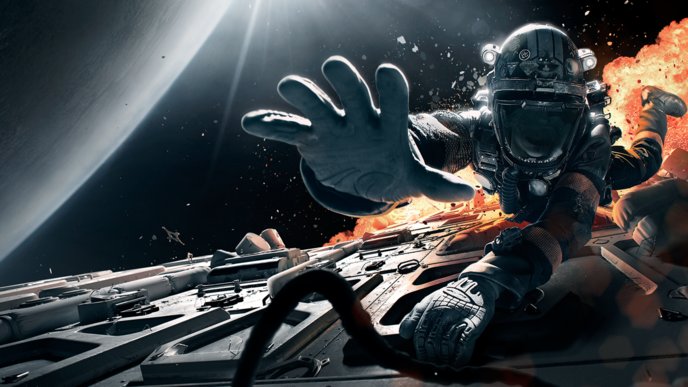
THE EXPANSE and BROOKLYN NINE-NINE cancelled
The Expanse's cancellation was slightly unexpected, with the show drawing immense critical buzz of the kind that SyFy has not enjoyed since the second and early third season of Battlestar Galactica, well over a decade ago. First-run ratings were not as strong as might be wished given the show's relatively high budget (at between $4 and $5 million per episode, the show cost almost twice to make as BSG), but of course the metrics of how ratings are measured have changed dramatically in the last few years. By all accounts The Expanse also enjoyed healthy streams and sales through Amazon.
A key factor in the decision was the show's overseas performance and how it's finances are calculated. SyFy was not produced inhouse but was instead financed and produced by Alcon Entertainment and sold to SyFy. SyFy only had first-run transmission rights in the United States, with Alcon able to sell streaming rights to Amazon and international rights to Netflix. However, SyFy insisted on a six-month delay before Netflix could stream the show, despite overseas viewers having no other legal way of watching the show and thus there would have been no cannibalising of SyFy's US viewership. This decision seems to have cost the show international viewership, with hardcore international fans of the series downloading and torrenting the show long before it could be seen legally.
As a result, SyFy's deal meant that The Expanse's success was extremely dependent on first-run viewing figures and with these running at around 1 to 1.2 million per episode in Season 3, these figures were insufficient to support the high cost of the show (compared to SyFy's inhouse programming, such as the considerably cheaper - and vastly cheaper-looking - The Magicians).
Alcon Entertainment are shopping the show to other networks, which means that they may be able to find the show a new home elsewhere. Netflix may or may not be interested, given the lukewarm international figures. Amazon, who have recently been picking up almost every single SF and fantasy property of note (including Wheel of Time, Conan the Barbarian, Lord of the Rings, Ringworld, The Three-Body Problem and Snow Crash), may be a safer bet. Amazon in particular would find The Expanse's budget to be relatively cheap by their standards and they would probably prefer to have a show they can get on the air every year rather than waiting 18-24 months between seasons (The Expanse has gone about 14 months between each season). The momentum of just being able to continue production immediately rather than ramping up on a new show may also be attractive.
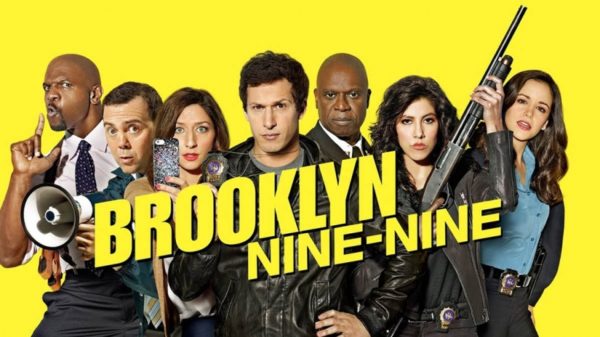
Meanwhile, Fox have cancelled Brooklyn Nine-Nine, their most critically-acclaimed comedy series. Brooklyn Nine-Nine's cancellation was more widely expected, with the show's viewing figures dropping by over half over its five-season run. Some fans were hoping for a reprieve, as viewing figures held relatively firm from Season 4 to Season 5 and the show enjoys widespread global popularity (in the UK it unusually has both reasonable audiences on Channel 4 and then again on Netflix). However, Fox have decided to swap out one of their TV drama nights for sports, which rendered the point moot. A whole swathe of other shows (such as Last Man on Earth) have also been axed to make room for this change in the schedule.
There has been hope that the show might be saved. Netflix are a possibility based on their success with the show internationally, and compared to most of their shows Brooklyn Nine-Nine would be incredibly cheap to make, as well as easily being able to get on the air every year. However, it's unclear if Fox would be willing to make the show for a company they are increasingly seeing as an adversary in the marketplace.
Possibly more likely is US streaming service Hulu. Hulu are are looking to beef up an original programming lineup strengthened by The Handmaid's Tale. Provisional talks between Hulu and Fox have already apparently taken place, with interest from other parties.
Hopefully both shows are saved, particularly The Expanse which was roughly only a third of the way through adapting James S.A. Corey's novel series.
Tuesday, 20 March 2018
Parks and Recreation: The Complete Series
Pawnee, Indiana. The Parks and Recreation department of the local government is pulled between two forces: the apathetic director, Ron Swanson, a staunch libertarian who is opposed to government spending, and the over-eager, hyper-confident deputy director Leslie Knope, who believes in the positive potential of government to make people's lives better. When local musician Andy Dwyer falls into a big pit on derelict land and breaks his legs, his girlfriend Ann Perkins inspires Leslie to turn the land into a new park...and starts a journey that will take numerous people to destinies they were not expecting.
Parks and Recreation is an American sitcom that ran for seven seasons and 125 episodes between 2009 and 2015. It started life as a conceptual spin-off from the American version of The Office, sharing writers and crewmembers with that show and also employing the same mockumentary format, but having its own distinct storyline, characters and theme. It was also conceived as a comedy vehicle for comedienne Amy Poehler (Mean Girls, Blades of Destiny, The Ex). After a rocky start, it became one of the most critically-acclaimed comedies on American television.
The show's first season establishes the fictional town of Pawnee, Indiana and focuses on Leslie (Poehler)'s attempts to turn a local waste ground into a park, only to face the slow, soul-destroying gears of local government, apathy from her boss and opposition from those who want to turn the ground to commercial purposes. The first season is the weakest, mainly because it struggles to find a solid direction for the characters. The writers seem tempted at the start of the show to make Leslie well-meaning but bumbling and incompetent for easy laughs, which is sometimes funny but mostly tedious, and also feels like a retread of The Office. By the time the show moves into its second season, the writers have decided to make Leslie hyper-competent and good at her job, with difficulties and comedy arising from the opposition she faces rather than her own weaknesses. This immediately gives the show much more of an empathetic quality, with the audience rooting for Leslie and sharing her frustration at the increasingly ridiculous problems she has to overcome.
However, the main reason Parks and Recreation works is the fact that the cast and characters are simply excellent. Ron Swanson (Nick Offerman), the show's breakout character, is a libertarian who hates government and believes in self-reliance, but he is also a man of honour whose taciturn exterior belies his affection for his frien...sorry, workplace proximity associates. He gets almost all of the show's best lines. April Ludgate (Aubrey Plaza) is a quiet and self-declared lazy rebel who tries to avoid work and emotion, but gradually over the course of the series becomes a committed, hard-worker with an affinity for animals. Andy Dwyer (Chris Pratt) is a dumb goofball who is also a surprisingly good musician. He also enjoys creating characters such as "Burt Macklin, FBI" and "Johnny Karate", a children's entertainer. Tom Haverford (Aziz Ansari) is a budding mogul who initially falls into a number of get-rich-quick schemes, but in later seasons develops real business acumen and becomes more successful. Ann Perkins (Rashida Jones) is the straight man to Leslie's manic ball of energy, whose bemused reactions to the insanity of Pawnee act as a substitute for the audience. It's worth noting that almost all of these actors have gone on to good things since the show ended (Plaza in Legion, Pratt in the Guardians of the Galaxy franchise and wider Marvel Cinematic Universe, Ansari in Master of None and Jones in Angie Tribeca).
Another way the show succeeds is the way it evolves as it goes along. Each season revolves around a particular challenge, project or obstacle which Leslie has to overcome, helped by her friends. Seasons 3 and 4, arguably the show's high point, sees Leslie having to help bring Pawnee back from the brink of bankruptcy, host a massive Harvest Festival, undertake a clandestine romance with a colleague and then run for the city council. Later seasons see characters leave the department and set up their own businesses or join other organisations, before Season 7 (set three years after the rest of the show) breaks up the gang altogether. Parks and Recreation is a show that enjoys character development and moving people around as they get new jobs and find new interests, contradicting the need of most shows (comedy or otherwise) to create a status quo that works and then milk that for all it's worth. Old characters leave, new ones come in and minor characters rise to major prominence over the course of time. Life can be a bit of a revolving door of experiences and people, and this is something Parks and Recreation celebrates.
Another part of Parks and Recreation's success is the town of Pawnee, Indiana. More than a few critics have said that Parks and Rec is the closest we've ever seen to a live-action version of The Simpsons, not for the core characters or style of humour (which are very different), but for the fact that Pawnee is as insane but impressive a fictional creation as Springfield, Misc. in The Simpsons. As well as the town's geography and businesses, it has a cast of bizarre, minor and regularly recurring characters which gradually accumulate over the course of the seven seasons to such a size that you could populate an actual town with them. These include porn star Brandi Maxxx, reporter Shauna Malwae-Tweep, local fortune heir Bobby Newport, Native American tribal representative-turned casino mogul Ken Hotate ("taking our money back from white people one quarter at a time"), exactingly literal chat show host Perd Hapley and Ron's recurring ex-wife and she-demon from hell, Tammy (Mk. 2). The constant way these characters (and dozens more) flit in and out of the narrative gives the impression of this being a living, real and quite astonishingly dysfunctional town.
There are some negatives. The first season takes a little while to get into gear, and there are a few moments (most notably in Seasons 5 and 6) when it feels like the show has run out ideas and spends a few episodes churning out running gags before hitting on a new direction. The character of Mark - who was set up as a straight man to the insanity of the rest of the cast - feels a bit redundant after Ann took over that role in Season 2 and his departure at the end of that season was a good move. Tom, arguably, doesn't start evolving into a more interesting character than just a selfish jerk until the third season. But for a show that lasts 125 episodes, it has a remarkably high hit rate.
Parks and Recreation (****½) is a funny, thoughtful and warm-hearted show about friendships, the clash of ideology and reality and how people of different convictions can work together for the common good. Brilliantly cast and frequently hilarious, it shows again that Michael Schur is one of the funniest writers working in American television (having previously worked on the US Office and, subsequent to this episode, worked on Brooklyn Nine-Nine and The Good Place). The complete series is available on DVD (UK, USA) and, in the UK, on Amazon Prime Video (which is the only way to see the show at the moment in HD).
Parks and Recreation is an American sitcom that ran for seven seasons and 125 episodes between 2009 and 2015. It started life as a conceptual spin-off from the American version of The Office, sharing writers and crewmembers with that show and also employing the same mockumentary format, but having its own distinct storyline, characters and theme. It was also conceived as a comedy vehicle for comedienne Amy Poehler (Mean Girls, Blades of Destiny, The Ex). After a rocky start, it became one of the most critically-acclaimed comedies on American television.
The show's first season establishes the fictional town of Pawnee, Indiana and focuses on Leslie (Poehler)'s attempts to turn a local waste ground into a park, only to face the slow, soul-destroying gears of local government, apathy from her boss and opposition from those who want to turn the ground to commercial purposes. The first season is the weakest, mainly because it struggles to find a solid direction for the characters. The writers seem tempted at the start of the show to make Leslie well-meaning but bumbling and incompetent for easy laughs, which is sometimes funny but mostly tedious, and also feels like a retread of The Office. By the time the show moves into its second season, the writers have decided to make Leslie hyper-competent and good at her job, with difficulties and comedy arising from the opposition she faces rather than her own weaknesses. This immediately gives the show much more of an empathetic quality, with the audience rooting for Leslie and sharing her frustration at the increasingly ridiculous problems she has to overcome.
Another part of Parks and Recreation's success is the town of Pawnee, Indiana. More than a few critics have said that Parks and Rec is the closest we've ever seen to a live-action version of The Simpsons, not for the core characters or style of humour (which are very different), but for the fact that Pawnee is as insane but impressive a fictional creation as Springfield, Misc. in The Simpsons. As well as the town's geography and businesses, it has a cast of bizarre, minor and regularly recurring characters which gradually accumulate over the course of the seven seasons to such a size that you could populate an actual town with them. These include porn star Brandi Maxxx, reporter Shauna Malwae-Tweep, local fortune heir Bobby Newport, Native American tribal representative-turned casino mogul Ken Hotate ("taking our money back from white people one quarter at a time"), exactingly literal chat show host Perd Hapley and Ron's recurring ex-wife and she-demon from hell, Tammy (Mk. 2). The constant way these characters (and dozens more) flit in and out of the narrative gives the impression of this being a living, real and quite astonishingly dysfunctional town.
There are some negatives. The first season takes a little while to get into gear, and there are a few moments (most notably in Seasons 5 and 6) when it feels like the show has run out ideas and spends a few episodes churning out running gags before hitting on a new direction. The character of Mark - who was set up as a straight man to the insanity of the rest of the cast - feels a bit redundant after Ann took over that role in Season 2 and his departure at the end of that season was a good move. Tom, arguably, doesn't start evolving into a more interesting character than just a selfish jerk until the third season. But for a show that lasts 125 episodes, it has a remarkably high hit rate.
Parks and Recreation (****½) is a funny, thoughtful and warm-hearted show about friendships, the clash of ideology and reality and how people of different convictions can work together for the common good. Brilliantly cast and frequently hilarious, it shows again that Michael Schur is one of the funniest writers working in American television (having previously worked on the US Office and, subsequent to this episode, worked on Brooklyn Nine-Nine and The Good Place). The complete series is available on DVD (UK, USA) and, in the UK, on Amazon Prime Video (which is the only way to see the show at the moment in HD).
Subscribe to:
Posts (Atom)