Showing posts with label nbc. Show all posts

Thursday, 1 August 2024

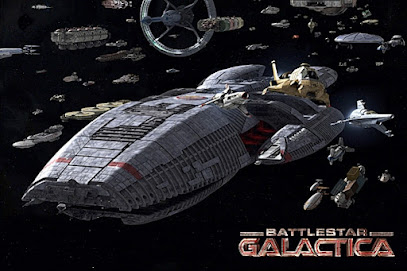
NBC and Peacock drop BATTLESTAR GALACTICA reboot reboot plans

After several years in development hell, NBC and Peacock have abandoned their plans to reboot the Battlestar Galactica reboot.

Back in September 2019, NBC tapped Sam Esmail, the creative force behind Mr. Robot, to develop a fresh take on the Battlestar Galactica franchise for their Peacock streaming service. The franchise had been created by Glen A. Larson and aired a single, huge-budgeted season on ABC in 1978, opening to enormous ratings but shedding them by season's end to be cancelled. A spin-off show, Galactica 1980, aired a single, critically-derided half-season in 1980 before being likewise cancelled.

Ronald D. Moore and David Eick resurrected the show with a grittier reboot in 2003, informed by the War on Terror and the Iraq War. The show ran for four seasons and two spin-off TV movies, concluding in 2010. A further straight-to-DVD movie followed in 2013, and a spin-off show, Caprica, aired a single season in 2010-11. This reboot, produced by NBC for the Sci-Fi Channel (later SyFy), was vastly more acclaimed, winning a Peabody and a Hugo Award.

Despite Esmail's high profile, the project struggled to get off the ground, possibly because Esmail only wanted to write and produce, leaving day-to-day showrunning duties to another producer. Michael Lesslie initially took on the project, only to later depart. Derek Simonds came on board in January 2024 in what appears now to have been a last-ditch effort to save the project.

Confusingly, Lesslie and Esmail made competing statements, the former stating the new show would be a fresh reboot of the premise and Esmail saying the new show would exist within the 2003 show's continuity. In January 2022, Universal announced that the new show would exist alongside a fresh feature film take on the franchise, to be written by X-Men screenwriter Simon Kinberg.

Now NBC have confirmed they are terminating their involvement in the project. No reason was given, but it was likely the long gestation time and expense (albeit minor so far) spent on going nowhere, Esmail not having the same profile and clout that he did back in 2019 when the project was getting off the ground, and the considerably more hostile streaming climate, with Peacock not performing as well as it could have done.

Universal are now shopping the project to other potentially interested parties

Friday, 6 May 2022

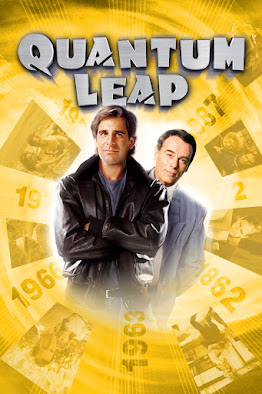
QUANTUM LEAP sequel series greenlit

The Quantum Leap sequel has been formally greenlit for a first season by NBC.

The new series picks up thirty years after the events of the original show (which ran for five seasons from 1989 to 1993) and sees Raymond Lee playing Dr. Ben Seong, who steps into the revived Quantum Leap Accelerator after it is brought out of retirement. He is both continuing the original project of leaping into different people in various timeframes, putting things right where they originally went wrong. However, he also has a secondary mission: to track down the missing Dr. Sam Beckett, who vanished at the end of the original show's run. Scott Bakula, who played Sam in the original show, has reportedly been contacted with a view to potentially reprising his role at some point.

Seong is guided on his mission by Addison (Caitlin Bassett), who will likely serve in a similar role to Sam's helper "Al" in the original series, who was able to appear to him as a hologram only he could see or hear. Dean Stockwell, who played Al in the original series, sadly passed away last year, so will not return in the new series.

Additional castmembers include Ernie Hudson as Herbert "Magic" Williams (who appeared, with a different actor, in a single episode of the original series), Nanrisa Lee as the Quantum Leap head of security and Mason Alexander Park as the head of the AI program.

Steven Lilien and Bryan Wynbrandt are serving as writer-showrunners for the new series, with original Quantum Leap creator Don Bellisario serving as creative consultant and producer alongside original executive producer Deborah Pratt.

The show has completed filming its pilot and will likely be eyeing a late 2022/early 2023 debut on NBC and streaming service Peacock.

Tuesday, 8 March 2022

Ernie Hudson joins QUANTUM LEAP sequel pilot

NBC's Quantum Leap reboot/continuation is moving ahead with casting for its pilot episode. Raymond Lee (Kevin Can F Himself, Mozart in the Jungle) has been tapped to play the new lead, presumably a new leaper moving back and forth in time, whilst Ernie Hudson (Ghostbusters) will co-lead, presumably in the new holographic advisor role.


The new Quantum Leap series is a "Next Generation" style of story, picking up thirty years after the events of the original series. The Quantum Leap Accelerator has been mothballed after Dr. Sam Beckett's disappearance, but a new team reactivates it with a view to sending a second leaper back in time.

The search for Sam Beckett is believed to be a key storyline, with Scott Bakula apparently sounded out about reprising his role. Bakula is not expected to appear in the pilot, but may appear if a series order is given. Sadly, Dean Stockwell, who played hologram Al in the original, passed away last year.

Original Quantum Leap creator Donald Bellisario is attached to the new project as a producer and creative consultant, but the writing team is all-new. Helen Shaver will direct the pilot.

Thursday, 10 February 2022

QUANTUM LEAP continuation picks up its pilot director

NBC has tapped the acclaimed director Helen Shaver to direct the pilot episode of their Quantum Leap reboot/continuation.


Shaver has a lengthy and storied career as an actress, producer and director, but in recent years has made her name for directing high-profile shows including Station Eleven, Lovecraft Country, Snowpiercer, Westworld, 13 Reasons Why, Vikings, Orphan Black and Person of Interest.

Shaver will also executive produce the pilot and may return to work on the first season further if the show is picked up.

The Quantum Leap pilot has been written by Steven Lilien and Bryan Wynbrandt, with original Quantum Leap writer-producer Donald P. Bellisario serving as a producer and consultant.

The show is set thirty years after the events of the original show and sees a new team of scientists trying to figure out how the Quantum Leap Accelerator works and if it is possible to use it to track down the still-missing Dr. Sam Beckett. The show will mostly serve up new adventures with a new cast, with the fate of Sam Beckett serving as a lingering mystery. Original star Scott Bakula is not currently attached, but is understood to be in talks with NBC over being kept informed on its status and may join it later on.

So far this is only a pilot order, with NBC waiting on pushing the trigger on a full season order.

Friday, 14 January 2022

NBC greenlights QUANTUM LEAP sequel series pilot

NBC has greenlit the pilot for a successor series to Quantum Leap, the popular time travel show which ran for five seasons from 1989 to 1993.


The new series is set thirty years after the previous show ended and will see a new team investigating the disappearance of Dr. Sam Beckett (Scott Bakula) in the original Quantum Leap Accelerator programme. Beckett randomly ping-ponged around time for five years under the watchful eye of the super-computer Ziggy and Beckett's friend and monitor, Admiral Al Calavicci (Dean Stockwell), before disappearing altogether in the series finale, which ended on the sombre note that Sam never returned home, but continued helping people through time. Quantum Leap achieved significant critical and commercial success, making both Bakula and Stockwell household names, before its divisive ending.

Rumours of a remake or continuation have continuously circulated since the original show ended, with most reports circulating about a feature film spin-off or a full remake unconnected to the previous show.

The pilot will be co-written by Steven Lilian and Bryan Wynbrandt, previously best-known for showrunning God Friended Me and working on La Brea, Gotham, Hawaii Five-O, CSI: NY, Alcatra and Kyle XY as writers and/or producers. Original Quantum Leap creator and showrunner Donald P. Bellisario will produce and advise on the project.

Although Dean Stockwell sadly passed away two months ago, it sounds like Scott Bakula may possibly reprise his role, although it sounds like the premise will be searching for his character, so he is not expected to be a regular character, despite the frequent fan suggestion that Sam Beckett take the Al role in advising a new leaper on their mission through time (possibly Sam's daughter or grandchild).

Friday, 7 January 2022

New BATTLESTAR GALACTICA movie and TV projects will be set in a "shared universe"

Two new Battlestar Galactica reboots are currently in the works at NBC/Peacock and Universal. The first is a new television series, to be co-written and produced by Sam Esmail (Mr. Robot) and showrun by Michael Lesslie (the Assassin's Creed movie). The second is a feature film, to be written by Simon Kinberg (X-Men: Dark Phoenix).


It was already a confused situation, with Esmail stating that the new TV show will share continuity with the Ronald D. Moore iteration of the series, with Moore reading the pilot script and giving his blessing to the project. However, Lesslie disagreed, describing the show as a total reboot of the premise. Lesslie subsequently departed the project and no replacement has been named.

At first the movie was also described a total reboot of the premise, but in a fresh interview with Collider, Kinberg has now claimed that the film will occupy a "shared universe" with Esmail's iteration, and is "working closely" with him on the project. Whether that means both movie and TV show will be set in the RDM version of the story and will be heavily related (sharing actors and characters), or one will be a prequel to the other, or the two are in a shared universe but aren't related to the RDM spin of the idea, is completely unclear.

It is also entirely possible that "shared universe" and "continuity" have simply now become Hollywood buzzwords which people say even though they're not technically correct.

Battlestar Galactica's premise is compelling but limited: a race of robots known as the Cylons destroy the Twelve Colonies, twelve planets inhabited by humans in an unclear time period. The surviving humans band together under the last surviving major warship, the battlestar (combined carrier/battleship) Galactica, in a ragtag, fugitive fleet and run across the galaxy in search of the fabled and legendary "Thirteenth Colony," Earth. In 1978 Glen A. Larson wrote and produced a first version of the franchise which was very popular, but cripplingly expensive and cancelled after one season (as was a terrible, low-budget spinoff, Galactica 1980, which saw the fleet arriving at contemporary Earth). In 2003, Ronald D. Moore created a total reboot of the premise which ran for four seasons on SyFy, winning multiple Hugo and Peabody Awards and becoming one of the most critically feted shows on television. The show was well-received for most of its run, but ended on a highly controversial, divisive note. This iteration of the franchise spun off a prequel series, Caprica, which was cancelled after one season, and a further pilot for another series, Blood & Chrome, which did not proceed to series. There have also been successful video and board games based on this version of the series.

The decision to reboot BSG again, whether in a new continuity or not, has also received a mixed reaction. The Ronald D. Moore version of the story, despite its flaws, is widely regarded as definitive. Given the tonal disparity between the two early versions of the premise (a cheesy space opera and a more psychologically convincing, post-9/11 mediation on the ethics of war and terrorism), it's unclear what a third version of the story can do that has already not been done.

The creative talent involved has also been criticised; Esmail is a superb writer and director, but he has made it clear he will be relatively hands-off on the series and is more setting it up before heading off to other projects (dismaying those who only though the project promising because of his involvement). Lesslie's only credit of note was a failed video game adaptation, and Kinberg has arguably only worked on two decent projects (X-Men: Days of Future Past, although that was a collaboration with the much better Jane Goldman, and as a writer on Star Wars: Rebels), with almost all of his other work being disastrously awful, most recently the terrible Apple+ series Invasion and a series of dud comic book movies for Fox, including X-Men: ApocalypseFantastic Four and Dark Phoenix (a second missed bite of that cherry, since he also made a hash of the same idea in X-Men: The Last Stand).

According to Kinberg, they still haven't found a director for the Battlestar Galactica movie, so don't hold your breath on that one. The TV show has several scripts completed and is apparently ready to move forward, but pre-production has not formally begun yet and a series order has not been given, suggesting further development is required. They also need to find a new showrunner to replace Lesslie, assuming Esmail is still not keen on taking up that role himself.

Friday, 26 February 2021

George R.R. Martin's WILD CARDS TV series moves from Hulu to Peacock; SANDKINGS in development at Netflix

Thanks to detective work by the team at Westeros.org, it appears that the long-percolating TV version of the Wild Cards shared universe has moved home. Previously in the works as an NBC-Hulu collaboration, it now appears to have found a new home at NBC's Peacock streaming service.

Peacock launched last April in the United States and is heavily reliant on legacy programming such as The Office and Parks & Recreation. It is unsurprising that they would be looking to bolster their lineup with original fare, and the Wild Cards universe gives them a large roster of superhero characters to develop shows around.

The Wild Cards universe was created by George R.R. Martin in the early 1980s as a roleplaying game setting. Starting in 1987, Martin began editing and publishing linked anthologies of stories from numerous writers in the shared world. Melinda Snodgrass has been heavily involved in the creative side of the universe, and writers including Paul Cornell, David Anthony Durham, Pat Cadigan, Emma Newman, Mark Lawrence, Roger Zelazny, Howard Waldrop, Daniel Abraham, Ty Franck and Walter Jon Williams have contributed stories to the setting. The twenty-ninth book in the series is scheduled for release this year.

Martin's other commitments preclude working on the show, so the heavy-lifting on Wild Cards is being done by Melinda Snodgrass (who previously worked on Star Trek: The Next Generation as a writer and script editor, penning one of the show's most beloved episodes, The Measure of a Man) and Michael Cassutt (Z Nation, The Outer Limits).

Meanwhile, the same source reveals that Martin's novella Sandkings is in development as a feature film at Netflix. Sandkings was previously filmed - heavily reworked by Melinda Snodgrass into a contemporary setting - as the opening episode of the second version of The Outer Limits in 1995.

Friday, 22 January 2021

Seinfeld: The Complete Series

Jerry Seinfeld is a comedian in New York City who is constantly searching for new material. He finds it in the minutiae of everyday life, particularly his interactions with his old friend George Constanza, ex-girlfriend-turned-friend Elaine Benes and next-door neighbour Kramer. The foursome's increasingly odd adventures provide material for Seinfeld's career, but their lack of "hugging and learning" eventually spells their own downfall.


Airing between 1989 and 1998, Seinfeld is an odd entry in the pantheon of Great American Sitcoms. Most American sitcoms had and still have elements of heart-warming effusiveness, friendship and emotion. Characters may screw up or cause mayhem, but at the end of the day their problems would be resolved with the help of their friends or family. Some shows had started experimenting and playing around with this formula (M*A*S*H* with its wartime storytelling, Cheers with its serialised, soap-like character arcs) but Seinfeld was the first one to come along and, if not outright reject, then downplay those elements. One of the show's unofficial mottoes was "no hugging, no learning." Characters would frequently cause untold mayhem through their actions, words or inaction and go on to do exactly the same thing. Seinfeld acknowledged that a lot of lives don't really have an arc of growth and change but instead people finding a way of spinning their experiences into self-validation, even in the face of obvious truth that they've hurt others or themselves.

In this sense the "show about nothing" was really the "show about everything." No anecdote, story or idea was too small or too trivial not to be considered for a storyline. NBC famously blew a fuse early on when an entire episode was spent waiting in the line for a Chinese restaurant and writer-producers Seinfeld and Larry David had to stare them down to get the episode made. Entire episodes revolved around parking spaces, soup and the annoyances of just traversing the subway. Continuing storylines revolved around relationships, family and jobs, in particular George and Elaine's struggles to find interesting jobs that would reward their laziness and dislike of other people.

Unlike many sitcoms, the show did not take too long to find its feet. After a somewhat indifferent pilot, the short-run second season almost immediately established the familiar character dynamics and tone. An "imperial period" of top-quality would extend from at least the third season to the end of the seventh, with the fourth year being particularly impressive for its introduction of a season-spanning arc. An early example of metahumour, the season is about George (Larry David's obvious author-insert character) and Jerry being hired by NBC to make a sitcom Jerry's life. The development of the sitcom-within-a-sitcom allowed the writers to make jokes about the show's own catchphrases, cliches and some of its real off-air drama (such as Larry David's real next-door neighbour who'd become incensed when he based Kramer on him without letting him audition for the role). Arguably no other sitcom would tackle the actual issues of making a sitcom until Episodes in 2011-17, and that was a patchier show.

Likewise, the seventh season opens with George realising he's doomed to a life of loneliness and he quickly tries to rekindle a relationship with his ex, Susan, which then goes overboard and he ends up getting engaged...just before remembering why they split up in the first place, leading to a season of increasingly desperate moves as George tries to escape his fate (the highly-memorable conclusion being the departing Larry David's last-minute hail Mary when he couldn't think of another ending).

David's departure at the end of Season 7 created a creative void in the show which it initially struggled to fill; the first half of Season 8 is the nadir of the show, with bizarre premises and a lack of the detailed, slice-of-life stories that made the show such a success. The show undergoes a creative resurgence in the latter part of the eighth season and into the ninth, however, as the new writing team get to grips with the situation. Infamously, David's return for the finale would prove to be highly controversial, with the episode seemingly determined to make the four friends out to be rather more selfish, amoral and reprehensible than they were usually depicted as being.

Seinfeld's strengths remain its writing, which is still sharp and funny. Guest characters are usually well-drawn and intriguing, with many becoming recurring players as the writers found additional ways of mining them for more stories. In this sense the unusually small regular cast became a bonus, allowing them to thread in other characters as needed without having to balloon the weekly cast out to a huge size (a problem faced by Cheers towards the end of its run). If the writers had material for George's monstrous parents, Elaine's unhinged boss or Jerry's arch-nemesis Newman, they could bring them in and if not, leave them out. The actors mostly do a good job, with Seinfeld himself being the weakest link (by his own cheerful admission) and a key reason why Seinfeld is usually more reacting to the craziness that his three friends have gotten into than driving storylines himself. This kind of generosity in ostensibly the leading man of a successful TV show is quite unusual.

Like any show which runs for nine years and 180 episodes the series does have repetitive tropes which occasionally become wearying: Jerry and George's problems often revolve around their latest girlfriend or relationship issue, with a seemingly never-ending revolving door of attractive actresses passing through the show. It's notable that these relationship stories become better when the partners actually stick around for a bit longer and get better-defined characters. There's also a few episodes where Kramer's latest "whacky hijinks" feel stretched past of the point of lunacy. The continuous character clashes between George and Elaine also make it hard to swallow that these people would be friends and hang out, at least without Jerry being around. These issues do become more marked in the final two seasons, when the show's creative juices are starting to run dry. Some may also find subsequent events - such as Michael Richards' racist-filled tirade against audience members during a standup performance many years later, or Seinfeld dating a teenager at the height of his fame - colour their appreciation of the show in retrospect.

Seinfeld (****½) is an often hilarious, smart and well-played comedy series, arguably the greatest of its time, and one that paved the way for many shows that have come since. Larry David's Curb Your Enthusiasm on HBO takes the Seinfeld formula and propels it into the stratosphere. Similarly, FX's It's Always Sunny in Philadelphia seems to ask what would happen if you made the actual show that Seinfeld is often accused of being, a dystopian nightmare of several hateful characters forced to live and work together and getting into at-times nihilistic misadventures. Some patchy later seasons and over-used tics are minor weaknesses for a show that's aged well. The show is available on DVD and Blu-Ray in the UK and USA. Netflix will begin streaming the show in its entirety later in 2021.

Thursday, 21 May 2020

The Office (USA): The Complete Series

Scranton, Pennsylvania, 2005. A local PBS documentary crew start capturing the everyday lives of the workers at the local branch of Dunder Mifflin Paper Company as part of a series looking at ordinary working Americans. However, the office they choose is under the management of Michael Scott, a small man with big dreams, and increasingly befuddling behaviour of the employees leads to a documentary project that lasts much, much longer than anticipated.


If there is an immutable rule of reality, just as inarguable as the speed of light or that every other Star Trek film is tripe, it is that British sitcoms cannot be transferred to the American market. Fawlty Towers, Red Dwarf and Men Behaving Badly were all remade for a US audience and bombed, heavily. When NBC announced in 2005 that they were remaking Ricky Gervais's breakthrough vehicle, the mockumentary The Office, for the USA, the full (and perhaps slightly smug) expectation was that it would fall flat on its face.

Of course it didn't. Ricky Gervais and Stephen Merchant's sitcom was well-suited to the transition, since sitting in a boring office working hard for poor pay is probably the most relatable and universal experience of human existence for the past seventy-five years, as true in Scranton, Pennsylvania as it was in Slough, Berkshire. Furthermore, Gervais and Merchant's work was itself heavily inspired by the pioneering mockumentary work of Christopher Guest, particularly This is Spinal Tap and Best in Show. The final piece of the puzzle was that veteran American scriptwriter and producer Greg Daniels (The Simpsons) was a good fit for taking their vision to a US market, assembling a talented group of mostly young writers and producers to help him out (chief among them Michael Schur, who would go on to create or co-create three of the greatest comedies of the 2010s: Parks & Recreation, Brooklyn Nine-Nine and The Good Place).

The US version of The Office gets off to an awkward start, with a first season that feels far too close to the British version for comfort (even down to the pilot using the same script, just slightly tweaked). The dynamics of the office are also extremely familiar, with Steve Carell's Michael Scott being well-meaning but self-unaware and prone to gaffs, Rainn Wilson's Dwight Schrute being officious, pedantic and somewhat tedious, Jim (John Krasinski) being the perennial unlucky-in-love straight man and receptionist Pam Beesly (Jenna Fischer) feel unable to escape her underachieving relationship and disappointing career path. These are pretty much 1:1 matches for the British cast of characters.

Fortunately, the American writers show increased confidence over the short first season run and things quickly improve. A big difference to the British version is that the secondary and tertiary cast of the American show is much larger and the expanded episode count gives many of them multiple episodes to shine, which makes the feeling of everyone being in an office a lot more realistic, with even the only-intermittently-seen warehouse workers receiving some development (and, in the case of Crag Robinson's Darryl, eventual promotion to the main cast).

The show is anchored in Steve Carell's performance as Scott. At first glance Scott and Ricky Gervais's David Brent are clones, but a key difference soon emerges: Brent seemed to know, albeit deeply buried underneath his bluster, that he was a small and underachieving man. Scott is much more oblivious of his failings. However, whilst Brent was also not a particularly good manager or businessman (basically coasting on his subordinate salesmen's reasonably competent performance), Scott is shown to actually be a really good salesman when push comes to shove, and although his humour is often inappropriate for the workplace, he is generally good at helping (or rather, letting through inaction) his staff deal with their various problems. Keeping this tightrope performance going is difficult, but it's impressive how Scott keeps it up for seven whole seasons (that's what she said™).

The other cornerstone of the show is the slow-burning romance between Jim and Pam, which like Tim and Dawn's relationship in the British original, is centred in their friendship and mutual desire to play pranks on Dwight but gradually becomes more serious when Pam realises her current relationship is unsatisfying. The romance was so key to the British original that it wasn't really resolved until the series finale (and several attempts to revisit the show have foundered because of the dubious decision to focus on David Brent alone, not the rest of the cast), but fortunately (since it would have gotten maddening otherwise) the US version of The Office pushes the button on it by the end of Season 3 and then spends a six further seasons exploring the development of the romance, with marriage and kids following. This risks being twee, so it's a welcome surprise when the writers show the relationship has its ups and downs, with a realistic complication introduced in the final season when Jim gets the opportunity to follow the job of his dreams in Philadelphia but Pam is less willing to uproot their family. This ends up being one of the best explorations of a long-term romance in television history, avoiding the problems that a lot of shows have when the "will they/won't they" tension is resolved.

The other castmembers all get their time in the sun, but the show does have one major fly in its character roster: Andy Bernard, played by Ed Helms. Andy joins the cast in Season 3 as one of a "new intake" of workers from another branch which is absorbed into Scranton and is initially presented as hyper-competitive and unpleasant with an anger management problem. This appears to have been down to the original plan being to keep the character around in a short-term recurring role and then get rid of him, but Ed Helms' huge success in the Hangover movies caused a rethink. Andy went off to anger management therapy and came back a changed man, a relatively nice (if low-key) guy with a sideline in singing and playing banjo. In fact, he's a bit of a sap, and in a supporting character role that's vaguely amusing and sometimes sympathetic (even if his on-off again romance with receptionist Erin - Unbreakable Kimmy Schmidt's excellent Ellie Kemper - is astonishingly dull) that's absolutely fine. Unfortunately, in Season 8 it appears that Helms (or his agent) leveraged his movie profile to get him promoted to replace Steve Carell as the show's star, which is when the wheels of the series not so much come off as are ejected with terrifying explosive force and the directionless remnants are allowed to crash into the ground and explode. Fortunately, Helms was called in to make The Hangover 3 and is missing from more than half of the final season, allowing the show to regain most of its former quality.

The Office (USA) is an inconsistent show, sometimes maddeningly so. Its initially rocky first season, when it is too much in the shadow of the British original, soon expands into an "imperial period" of quality in Seasons 2-4 that can withstand comparison to the best seasons of any other show. There's then a three-season slow decline to the end of Season 7, during which time the show is still certainly watchable with some absolutely outstanding moments and individual episodes but also a lot of wheel-spinning, and then Season 8 is dreadful, despite the heroic efforts of recurring guest stars James Spader (who can be hilarious but his character has been teleported in from a completely different universe) and Catherine Tate, but there's a marked return to form in Season 9, culminating in a genuinely effecting final run of episodes and one of the best TV sitcom finales of all time.

The US version of The Office (***½) is, at 201 episodes, a daunting prospect to watch, especially compared to the UK version's slim and breezy 14 instalments. But it's mostly worth it, with genuinely funny (if often cringe-inducing) moments and strong characterisation helping the show transition from its early, more realistic feel to the decidedly implausible plot developments of its later seasons. The cast is exemplary and, at its best, this is a show that can withstand comparisons to the greatest of all sitcoms (especially episodes like Dinner Party, which comfortably outshines anything in the British original). However, it is also inconsistent in quality over the long run, and the disappointing run of episodes late in the show's life means that it will likely be outshone in history by the shorter, funnier and much more consistent Parks & Recreation and the conceptually much bolder The Good Place. The complete series is available to watch in the UK on Amazon Prime Video. In the US it is currently available on Netflix, but will leave the service imminently in favour of NBC's new streaming platform, Peacock.

Monday, 4 May 2020

BATTLESTAR GALACTICA 3.0 gets its showrunner, confirmed to be another remake

The third TV version of Battlestar Galactica (fourth if you count Galactica 1980 as a separate thing, which you probably shouldn't) is heading to the screen with a new showrunner appointed.


Michael Lesslie (AMC's The Little Drummer Girl, MacBeth, Assassin's Creed) has been tapped to take the lead as writer, co-creator and showrunner on the project. Sam Esmail (Mr. Robot) is serving as co-creator, writer and executive producer, and may direct the first episode. However, it sounds like Esmail's role may be more in launching the project and then stepping back, which will probably dismay those who were only interested in the project because of Esmail's involvement.

The new Battlestar Galactica was originally touted as not a reboot or reimagining, but instead as a new chapter in the universe created by Ronald D. Moore for the 2003-09 SyFy series. Indeed, Esmail called Moore to get his blessing to develop the idea before taking it to NBC. However, in today's statement, Lesslie says the new series will pay tribute to both Moore and the original 1978-80 series created and run by Glen A. Larson. The press release also says it will be set in a "reimagined world," suggesting it will offer a new, fresh take on the franchise.

The news will likely not go down well among fans of either Battlestar iteration, perhaps feeling that between the bright and optimistic original take on the idea and Moore's much darker, grittier iteration, there really isn't anywhere else to take the premise. We will see as it the idea develops further.

The third Battlestar Galactica will launch on NBC's streaming service, Peacock, with a production schedule to be decided once the pandemic has ended.

Tuesday, 17 September 2019

BATTLESTAR GALACTICA reboot to be rebooted, for some reason

The Battlestar Galactica reboot is getting a reboot, because that's how things work now.


NBC has tapped Sam Esmail, the creative genius behind Mr. Robot, to take charge of a third iteration of the Battlestar Galactica franchise. The series will spearhead NBC Universal's new streaming service, which has the decidedly underwhelming name of "Peacock."

Battlestar Galactica was created by Glen A. Larson and aired as a single season on ABC in 1978-79, followed by a half-season, mid-season replacement sequel series called Galactica 1980, which is best being never watched or remembered. The original Battlestar was quite popular, but the absolutely titanic budget for the series prevented it from continuing.

In 2003 the Sci-Fi Channel, as it was then called, rebooted the show with Ronald D. Moore as executive producer and showrunner. The rebooted Galactica was a darker, moodier affair, much-informed by 9/11 and the War on Terror. With its low-fi aesthetics (no lasers, cute kids or robot dogs) and gritty attitude, the show won a whole new legion of fans as well as widespread critical acclaim, including Hugo and Peabody awards and multiple Emmy Awards in technical categories. The New York Times declared it one of the twenty best shows of the 21st century so far - a peer of The Wire, The Americans and Breaking Bad - just a few months ago.

Battlestar Galactica 2.0 concluded in 2009 with a highly divisive finale - one arguably even more polarising than Game of Thrones' or Lost's - before following it up with an unsuccessful spin-off show, Caprica, and a one-off TV movie, Blood and Chrome, in 2013. This iteration of the franchise has continued to be developed in video games, such as the excellent Battlestar Galactica: Deadlock, and a well-received board game and new miniatures game.

News that a third version of the show is in development has already been met with scepticism. The original 1978 version of the show was promising but cheesy, so the idea of rebooting it was quite valid and Moore more than delivered on the promise inherent in the premise, even if he didn't quite stick the landing. The question arises what a third version of the same idea could deliver.

The one interesting thing about the idea is the creative talent involved. Previously, X-Men director Bryan Singer had been attached to a film reboot (for the second time, having previously worked on a TV version in the late 1990s and early 2000s that was superseded by Moore's), which would have been the wrong medium. Sam Esmail is also a genuinely provocative and talented writer and director, whose Mr. Robot (which concludes with its fourth season early next year) is one of the best shows currently airing. Esmail's take on BSG could be very interesting, although it remains to be seen what he could bring to the table that is genuinely different. Certainly Ronald D. Moore seems intrigued by the idea, and has given Esmail his blessing to develop a fresh take on the franchise.

Battlestar Galactica 3.0 remains in development, but if NBC pull the trigger it will likely be fast-tracked to debut next year.

UPDATE: Sam Esmail has taken to Twitter to confirm that the new show will not be a reboot of Moore's version of the show, but will instead "explore a new story in the mythology whilst remaining true to the spirit of Battlestar. What this means precisely remains to be seen, but it may be an indication that the new show could be set within the Moore continuity but in a previously unseen time frame, such as the original exodus from Kobol to the Twelve Colonies, or the settling of the Thirteenth Colony. More information as we get it.

Sunday, 13 May 2018

The Good Place: Seasons 1-2

Eleanor Shellstrop is killed by freak accident involving shopping trolleys and an erectile dysfunction advertising truck. She wakes up in a surprisingly non-denominational afterlife and is told that, thanks to a life dedicated to charity and selflessness, she has made it to "the good place." Unfortunately, there's been a mistake. Eleanor is superficial, selfish, self-centred and cynical. Terrified at this mistake being discovered, Eleanor sets out on a quest to become a better person...whatever that means.


The Good Place is a sitcom riffing on some pretty weighty themes: life, death, religion, morality, existentialism and ethics. Fortunately, it's also an extremely funny show. Created by Michael Schur, modern American TV's sitcom-whisperer (he cut his teeth on the American Office before co-creating Parks and Recreation and Brooklyn Nine-Nine), it's a high concept that the show repeatedly explores and deconstructs. It's also, startlingly, a heavily serialised show. The Good Place is not a status quo sitcom, it's an ongoing, continuing narrative. The fact that each episode is called a "Chapter" and the numbering continues between seasons confirms this.

Thematically the show is an exploration of whether our characters are set in stone by immutable factors, or if we can change ourselves for the better, and if doing so out of fear (in this case, the fear of going to "the bad place") is still morally a good thing if the results are positive and beneficial, for the individual or the community. Students of ethics and philosophy will get a buzz out of some very funny jokes revolving around Kant, Plato and Aristotle.

Schur knows that such musings aren't going to be for everyone, so also grounds the comedy through the character of Eleanor, who has no particular interest in such ideas. The exceptionally-talented Kristen Bell (Veronica Mars, Heroes, FanboysFrozen) is as watchable and funny as ever as Eleanor, depicting her as a selfish woman who is only out for #1 but rapidly evolves as a person when she finds herself in the afterlife and having to make up for her mistakes after the fact. William Jackson Harper is also exceptional as Chidi, a neurotic ethics professor whose help Eleanor enlists to become a better person. Rounding out the main cast are Jameela Jamil as uber-socialite Tahani, Manny Jacinto as Jianyu (a Buddhist monk who is more - or less - than he seems), D'Arcy Carden as Janet (a personal assistant who constructs and maintains the good place) and the mighty Ted Danson as Michael, the sort-of angel who designed this particular version of the good place. The cast is exceptional, with great chemistry.


The show's continuously developing plot and short-order seasons (each season is only 13 episodes long, each only 22 minutes in length) makes it both easy to catch up with and addictive to watch. For a high-concept sitcom not to exploit its ideas until they're dry but instead relentlessly finding new ground is unusual, but works very well.

The show does have a couple of weaknesses. First, it moves so fast that sometimes it feels a bit too fast, and a couple of holding-pattern episodes to let viewers catch their breath might be welcome. Secondly, and this is mildly spoilerific, the show presses a big reset button at several key points in the story, junking the character (but not story) development we've seen over multiple episodes and resetting the characters to their Episode 1 status. There's a good story reason for this and the cast copes with it quite well, but it can be frustrating to see our characters playing "getting to know you" again when we've already seen that twice before. Hopefully this will stop with the upcoming third season and the writers will let the characters grow more effectively.

The first two seasons of The Good Place (****½) are funny, well-characterised, cleverer than you'd think and extremely enjoyable, with the writers and actors on the top of their game. The Good Place airs on NBC in the US and on Netflix in much of the rest of the world.

Tuesday, 20 March 2018

Parks and Recreation: The Complete Series

Pawnee, Indiana. The Parks and Recreation department of the local government is pulled between two forces: the apathetic director, Ron Swanson, a staunch libertarian who is opposed to government spending, and the over-eager, hyper-confident deputy director Leslie Knope, who believes in the positive potential of government to make people's lives better. When local musician Andy Dwyer falls into a big pit on derelict land and breaks his legs, his girlfriend Ann Perkins inspires Leslie to turn the land into a new park...and starts a journey that will take numerous people to destinies they were not expecting.


Parks and Recreation is an American sitcom that ran for seven seasons and 125 episodes between 2009 and 2015. It started life as a conceptual spin-off from the American version of The Office, sharing writers and crewmembers with that show and also employing the same mockumentary format, but having its own distinct storyline, characters and theme. It was also conceived as a comedy vehicle for comedienne Amy Poehler (Mean Girls, Blades of Destiny, The Ex). After a rocky start, it became one of the most critically-acclaimed comedies on American television.

The show's first season establishes the fictional town of Pawnee, Indiana and focuses on Leslie (Poehler)'s attempts to turn a local waste ground into a park, only to face the slow, soul-destroying gears of local government, apathy from her boss and opposition from those who want to turn the ground to commercial purposes. The first season is the weakest, mainly because it struggles to find a solid direction for the characters. The writers seem tempted at the start of the show to make Leslie well-meaning but bumbling and incompetent for easy laughs, which is sometimes funny but mostly tedious, and also feels like a retread of The Office. By the time the show moves into its second season, the writers have decided to make Leslie hyper-competent and good at her job, with difficulties and comedy arising from the opposition she faces rather than her own weaknesses. This immediately gives the show much more of an empathetic quality, with the audience rooting for Leslie and sharing her frustration at the increasingly ridiculous problems she has to overcome.

However, the main reason Parks and Recreation works is the fact that the cast and characters are simply excellent. Ron Swanson (Nick Offerman), the show's breakout character, is a libertarian who hates government and believes in self-reliance, but he is also a man of honour whose taciturn exterior belies his affection for his frien...sorry, workplace proximity associates. He gets almost all of the show's best lines. April Ludgate (Aubrey Plaza) is a quiet and self-declared lazy rebel who tries to avoid work and emotion, but gradually over the course of the series becomes a committed, hard-worker with an affinity for animals. Andy Dwyer (Chris Pratt) is a dumb goofball who is also a surprisingly good musician. He also enjoys creating characters such as "Burt Macklin, FBI" and "Johnny Karate", a children's entertainer. Tom Haverford (Aziz Ansari) is a budding mogul who initially falls into a number of get-rich-quick schemes, but in later seasons develops real business acumen and becomes more successful. Ann Perkins (Rashida Jones) is the straight man to Leslie's manic ball of energy, whose bemused reactions to the insanity of Pawnee act as a substitute for the audience. It's worth noting that almost all of these actors have gone on to good things since the show ended (Plaza in Legion, Pratt in the Guardians of the Galaxy franchise and wider Marvel Cinematic Universe, Ansari in Master of None and Jones in Angie Tribeca).


Another way the show succeeds is the way it evolves as it goes along. Each season revolves around a particular challenge, project or obstacle which Leslie has to overcome, helped by her friends. Seasons 3 and 4, arguably the show's high point, sees Leslie having to help bring Pawnee back from the brink of bankruptcy, host a massive Harvest Festival, undertake a clandestine romance with a colleague and then run for the city council. Later seasons see characters leave the department and set up their own businesses or join other organisations, before Season 7 (set three years after the rest of the show) breaks up the gang altogether. Parks and Recreation is a show that enjoys character development and moving people around as they get new jobs and find new interests, contradicting the need of most shows (comedy or otherwise) to create a status quo that works and then milk that for all it's worth. Old characters leave, new ones come in and minor characters rise to major prominence over the course of time. Life can be a bit of a revolving door of experiences and people, and this is something Parks and Recreation celebrates.

Another part of Parks and Recreation's success is the town of Pawnee, Indiana. More than a few critics have said that Parks and Rec is the closest we've ever seen to a live-action version of The Simpsons, not for the core characters or style of humour (which are very different), but for the fact that Pawnee is as insane but impressive a fictional creation as Springfield, Misc. in The Simpsons. As well as the town's geography and businesses, it has a cast of bizarre, minor and regularly recurring characters which gradually accumulate over the course of the seven seasons to such a size that you could populate an actual town with them. These include porn star Brandi Maxxx, reporter Shauna Malwae-Tweep, local fortune heir Bobby Newport, Native American tribal representative-turned casino mogul Ken Hotate ("taking our money back from white people one quarter at a time"), exactingly literal chat show host Perd Hapley and Ron's recurring ex-wife and she-demon from hell, Tammy (Mk. 2). The constant way these characters (and dozens more) flit in and out of the narrative gives the impression of this being a living, real and quite astonishingly dysfunctional town.

There are some negatives. The first season takes a little while to get into gear, and there are a few moments (most notably in Seasons 5 and 6) when it feels like the show has run out ideas and spends a few episodes churning out running gags before hitting on a new direction. The character of Mark - who was set up as a straight man to the insanity of the rest of the cast - feels a bit redundant after Ann took over that role in Season 2 and his departure at the end of that season was a good move. Tom, arguably, doesn't start evolving into a more interesting character than just a selfish jerk until the third season.  But for a show that lasts 125 episodes, it has a remarkably high hit rate.

Parks and Recreation (****½) is a funny, thoughtful and warm-hearted show about friendships, the clash of ideology and reality and how people of different convictions can work together for the common good. Brilliantly cast and frequently hilarious, it shows again that Michael Schur is one of the funniest writers working in American television (having previously worked on the US Office and, subsequent to this episode, worked on Brooklyn Nine-Nine and The Good Place). The complete series is available on DVD (UK, USA) and, in the UK, on Amazon Prime Video (which is the only way to see the show at the moment in HD).

Friday, 14 March 2014

First images from CONSTANTINE released

The first images from the upcoming NBC series Constantine have been released. Both show title character John Constantine, played by British actor Matt Ryan.


Constantine is based on the classic DC Comics title Hellblazer and focuses on a chain-smoking Liverpudlian con-man who helps defend the world from supernatural forces. Keanu Reeves starred in a 2005 movie version which got a lukewarm critical reception.


The pilot for the new series was produced by David S. Goyer (writer of Dark City, the Blade trilogy and Christopher Nolan's Batman films, as well as, less inspiringly, Man of Steel), written by Daniel Cerone (Dexter) and directed by Neil Marshall (The Descent, Black Sails, Game of Thrones).