Showing posts with label playstation. Show all posts

Sunday, 6 March 2022

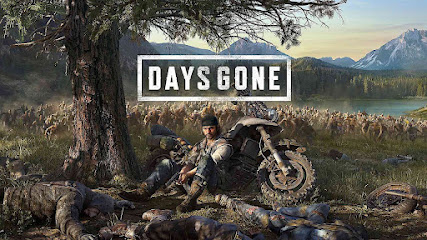
Days Gone

A devastating virus has killed more than a third of the world's population and reduced millions more into violent, monstrous creatures called Freakers. Bikers Deacon St. John and William "Boozer" Gray, along with Deacon's wife Sarah, attempt to escape from the tidal wave of Freakers but are separated; Sarah, wounded and taken to a refugee camp which is subsequently overrun, is assumed dead. Two years later, Deacon and Boozer are working as couriers and hunters between several refuges in rural Oregon. With Boozer injured by a savage cult known as "Rippers," Deacon uncovers evidence that Sarah may still be alive. He resolves to find a way to travel south to learn the truth.


There's been lot of trends in video games in the last decade or so that have led to groans of over-familiarity. The idea of an open-world zombie survival game may sound particularly dispiriting, like several different gaming trends mashed together by committee.

Days Gone does not immediately alleviate concerns. The opening hours of the game are stodgy and predictable, with you roaming over a map ticking off icons, collecting a whole ton of different items, engaging in some light crafting and killing zombies either in melee, through gunplay or stealth. The opening hours of the story are not particularly compelling and the characters not hugely likeable, despite the presence of some very solid actors who also provide the visual models for their characters. Playing a character who not just sounds like Sam Witwer (Battlestar Galactica, Smallville, Supergirl) but looks like him is initially mildly disconcerting, but soon becomes fun.


However, something very odd happens as Days Gone progresses. It gets better. A lot better. The opening area of the game, consisting of tight roads and dirt paths through towering ravines and dreary, craggy valleys, expands into a much more fun-to-explore, semi-desert environment. Later on it expands to a mountainous region and then the infamous Crater Lake area of southern Oregon, here faithfully replicated. The story slowly becomes more interesting, bringing in NERO (the fictional agency tasked with wiping out the zombie plague), various cults and the several different settlements that Deacon allies with, each with its own cast of characters.

The central narrative, which draws heavily on Sons of Anarchy and The Walking Dead for inspiration, expands and becomes much more intriguing. The story is structured like a TV series, with season-long threats established which Deacon has to overcome through a series of episode-like individual missions. Unlike The Walking Dead, which has become infamous for dragging two or three episodes' worth of plot across entire sixteen-episode seasons, Days Gone does not hang around. Major threats are introduced and dispatched in relatively short order through relatively tightly-structured missions. The pacing is punchy, breaking up the game's imposing 60-hour length into shorter narrative arcs, each with its own location, cast of characters and subplots.


Mechanically, the game has you being given missions to do in various locations. These take the format of story missions, with plenty of pre-rendered cutscenes, and optional side-quests, like taking down various bandit camps, reactivating NERO refugee camps or destroying Freaker nests. The game's combat, driving (Deacon gets around by using his own, highly customisable bike) and stealth are all initially serviceable, but become more enjoyable as the game progresses and you unlock new skills. Skill points are not massively commonplace, making the choice of when to choose to gain new skills more meaningful than in most games of this type. You can also upgrade your health, stamina and "focus," effectively a reservoir of energy that allows you to enter a bullet-time-like state (which is occasionally useful but mostly is not, and can be avoided). There's also a fast-travel system, which to be honest is pretty pointless: the game's map is relatively fast to traverse and the vistas are so pretty that it's more enjoyable just to drive everywhere.

All of this initially feels same old same old, and Days Gone's biggest sin is not doing enough to make its opening hours distinctive. Dying Light overcame open world fatigue and map icon-hoovering tedium with fast-paced parkour and first-person zombie-slaying action, whilst most games of this type show their hands early, by giving you a steadily escalating number of options and skills in the opening hours of a game (although often at the cost of later hours of the game turning into repetitive grinds). However, by drop-feeding new ideas, activities, areas and mission types consistently across its length, Days Gone maintains greater interest in the long run. ~45 hours into the game a completely new, major activity is dropped into your lap providing hours' worth of entertainment. The game does a surprising job of staying fresh and each set of new missions and new characters is more compelling than the last.

Problems with the game do persist. It's far too late in the game when you can finally upgrade your bike's petrol tank to the point you don't have to worry about running out every five minutes or so. I'm a bit over crafting at this point as a game mechanic, and although Days Gone's crafting system is fairly minimal, it still feels like it could have been removed without too much trouble. The game's stealth system is pretty much solely built around one weapon (the very fun crossbow) but the weapon is slow to reload and sometimes clumsy to use; you also cannot move bodies, so stealth-infiltrations of enemy camps are very difficult to pull off without detection. There's also something of an epilogue hinting at another big story to come, which unfortunately does not seem likely to happen (despite selling between 6 and 9 million copies, a sequel is apparently not on the cards).

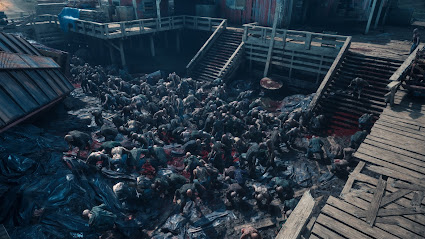
But I forgive the game for all of its flaws for its killer app: the Hordes. These are vast accumulations of Freakers, the largest numbering some 500 individuals, which swarm over the landscape like locusts. The first time you see one of these things it's very easy to freak out. Engaging a horde initially appears utterly impossible, and the game spends some time recommending you don't even think about engaging them. But, once you have upgraded your stamina and you've unlocked large area-of-effect weapons like napalm bombs and proximity bombs, dealing with Hordes becomes more viable and easily the game's highlight. It is tremendous fun to track down each Horde and then choose to engage them by day (which usually involves fighting them underground or in caves) or night (when you can fight them in the open) and working out what tactics and weapons to use.

Days Gone (****) is a slow-burn of a game, whose opening hours do not impress and which suffers from moments of predictable open-world jank throughout. But give the game enough time, and a rich story, interesting cast of characters and some fantastic action setpieces eventually emerge. The game is available now on PlayStation 4 and PC.

Wednesday, 20 October 2021

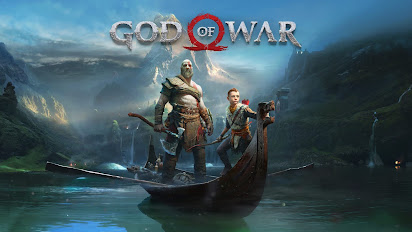
PlayStation mega-franchise GOD OF WAR coming to PC

Sony have confirmed that one of their signature PlayStation franchises, God of War, is making the jump to the PC format, with the latest game in the series hitting PC as soon as January.


The God of War franchise began in 2005 with the eponymous debut game on PlayStation 2. It was followed by God of War II (2007), also on PlayStation 2, and God of War III (2010) on PlayStation 3. After a host of spin-off and mobile games, the second era of the franchise began in 2018 with a soft reboot/semi-sequel on PlayStation 4, also called God of War. The series follows a Spartan warrior named Kratos who becomes the tool and servant of the Greek god Ares, something he bitterly comes to regret. The original trilogy was set in the Greek period , whilst the second era is set in the Norse time period.

The franchise has sold over 50 million copies to date (20 million of those of the latest God of War alone) and has been highly critically acclaimed. The next game in the series, God of War: Ragnarok, is due for release in 2022, though I'd expect to wait a while for a PC version of that.

This is the latest in a slew of games that have been ported from PlayStation to PC, following on from the success of Horizon Zero Dawn and Days Gone, with Uncharted 4 also on its way. This is arguably the most significant such move so far, as the God of War franchise is seen as one of Sony's biggest and most exclusive series, arguably behind only the likes of Gran Turismo and The Last of Us.

The move has been necessitated by the growing cost of developing video games, with remuneration from a sole platform now being seen as more difficult to achieve than it was in the past. Porting exclusives to PC allows for a new revenue stream several years after the game's original release, whilst the time period involved (so far all the ported games have had to wait at least two years) still makes the argument for getting a PlayStation compelling. PC owners will be particularly happy, since all Xbox releases are now automatically coming out on PC as well, making the platform the only place where you can freely mix and match games from two of the three console giants (Nintendo are, so far, resistant to doing something similar).

God of War will launch on PC on 14 January 2022.

Thursday, 27 May 2021

UNCHARTED 4 - and maybe the whole series - coming to PC

In eye-opening news, Sony has finally unlocked the cabinet holding the crown jewels and offered to sell them to PC players.


Sony revealed the plan to port Uncharted 4: A Thief's End to PC in a recent presentation. Sony confirmed that the PC releases of both Horizon: Zero Dawn and Days Gone have been very successful and they see more PC ports as a way of improving future revenue streams.

However, the Uncharted series is a bit of a different beast to the other two titles. Produced by Sony subsidiary Naughty Dog, the series is one of the biggest-selling PlayStation exclusives of all time, having sold just under 42 million copies of five games. The series comprises Uncharted: Drake's Fortune (2007), Uncharted 2: Among Thieves (2009), Uncharted 3: Drake's Deception (2011), Uncharted 4: A Thief's End (2016) and Uncharted: The Lost Legacy (2017). The series, which draws plot inspiration from the Tomb Raider and Indiana Jones franchises and gameplay ideas from Gears of War, follows treasure hunter Nathan Drake and a number of allies around the world as they get into various misadventures. 

Uncharted 4 is the biggest-selling PlayStation 4 exclusive of all time (and second-biggest-selling game overall, behind only Grand Theft Auto V), whilst Uncharted 3, 2 and 1 respectively rank as the third, fourth and ninth biggest-selling PlayStation 3 exclusives of all time. One of the series' few competitors is a fellow Naughty Dog series, The Last of Us, which has sold almost as many copies of just two titles.

Reports are conflicted whether just Uncharted 4 is crossing to PC, or if the earlier three games are coming over as well in a remastered form (which could then presumably also be offered for sale on PlayStation 5). Still, Sony making any Uncharted game available on another platform is a startling development, and encouraging to those holding out for games like Spider-Man and Bloodborne.

Friday, 9 April 2021

Unrest at Sony as company re-focuses on AAA games at the expense of smaller titles

Jason Schreier at Bloomberg has a fascinating report on unrest and uncertainty at the Sony Studios group of video game developers.

Days Gone, a relatively well-received Sony exclusive from 2019. Sony have shot down plans for a sequel, but the game is getting a second shot at success via a PC release later in 2021.

Sony's PlayStation video game console has been the leading console in four successive generations of hardware: the original PlayStation (1994) emerged triumphant over the Nintendo 64 and Sega Saturn, whilst the PlayStation 2 (2000) outsold the original Microsoft Xbox, Sega Dreamcast and Nintendo GameCube. The PlayStation 3 (2006) initially lost ground to the Microsoft Xbox 360 (released a year earlier), but clawed back the lead to emerge the more successful console, although both were outsold by the Nintendo Wii, which had pivoted to focus on younger gamers. The PlayStation 4 (2013) much more comfortably defeated the Xbox One and Wii U.

The PlayStation 5 was launched at the end of 2020, almost simultaneously with the Xbox Series X, with sales of both consoles being surprisingly comparable. There was a widespread expectation that the PlayStation 5 would, again, comfortably outsell the Microsoft rival. Sony's success is rooted in two factors: their utter market domination in Japan and other parts of Asia, where Xbox sales are almost negligible; and their catalogue of exclusive titles not available on other systems, including the Uncharted, Last of Us, God of War, Horizon, Gran Turismo, Tekken, Ratchet & Clank and Spider-Man franchises.

However, in recent years Xbox has deployed a formidable new asset to make their brand more attractive: Xbox Game Pass. Best summed-up as "Netflix for video games," the pass allows gamers to play a large catalogue of hundreds of games for a monthly subscription fee which is far less than the cost of a single video game. With many people buying a game, playing it through once and never touching it again, such a service is hugely more attractive than a much bigger, one-off payment for a title of limited utility. The Xbox Game Pass is also platform-agnostic, being available not just on the Xbox console but also on PC, tablet and smartphones. Microsoft has even offered to make the service available on competitor consoles, including PlayStation and Nintendo Switch, indicating they see the Game Pass as being the future of their video game strategy rather than constantly escalating (and ever-more-expensive) hardware battles.

Simultaneously, Microsoft has gone on an immense spending spree, buying up video game studios by the dozen, to bolster their exclusive games library. This is an area where Microsoft has struggled, with only a small number of popular, exclusive franchises such as Gears of War, Halo and Forza. Their recent acquisition of Bethesda has given them access to several massive franchises, including Fallout, The Elder Scrolls and Doom, as well as critically respected series such as Wolfenstein, Dishonored and Prey. Their acquisition of Obsidian and inXile Studios has also given them access to credible studios with an interest in making challenging RPGs with reactive gameplay.

These moves seem to have given Microsoft a leg-up over the previous generation, resulting in a much closer race between Microsoft and Sony this time out. In addition, both consoles are being negatively impacted by global chip shortages leading to a lack of stock being available, with Microsoft perhaps edging it slightly with console availability, giving Microsoft a chance to make a better case for their console.

None of these things are fatal for Sony - whose dependence on their PlayStation range of products has increased dramatically in recent decades as their former dominance in the TV and hi-fi sectors has collapsed - but clearly they have the company somewhat rattled, and looking for steps they can take to compete.

Sony have their own subscription service, PlayStation Plus, as well as a streaming service called PlayStation Now, which allows gamers to stream PS games without a console at all, but both services feel limited compared to Xbox Game Pass and Sony has shown limited enthusiasm for turning the services into a real competitor. This is because Microsoft have a lot of financial firepower coming in from other quarters and are happier to become platform-agnostic, whilst Sony's business model does rely on their hardware becoming profitable, at least in the second half of its shelf life. Still, the competition of Game Pass will likely force Sony to develop these services further.

Sony have also taken the unprecedented step of making some of their former exclusives available on other platforms. Horizon Zero Dawn had a successful launch on PC in 2020, and Days Gone will launch on PC this year. The real test will be if Sony brings out the Uncharted or Last of Us series on PC, or the much-requested 2015 PlayStation exclusive Bloodborne, but there is no sign of this as yet.

Based on Schreier's report, Sony's main response to Microsoft's growing momentum is to double down on the areas where they are already strong: exclusive franchises developed by strong teams. To do this, they are reducing the number of sub-AAA games they're making, apparently dropping "small games that only sell in Japan" (a market that they've probably lost out to the Switch on anyway) and prioritising AAA blockbusters, as well as tightly controlling costs. It sounds like Sony are becoming incredibly risk-averse, which seems like a bad idea when the next generation of video games will require innovation and out-of-the-box thinking, even moreso than normal. The result has been a brain drain as developers at several Sony studios have quit.

Schreier's report does reveal some additional information of note: a thorough Last of Us remaster/remake for PS5 is currently in the works at Naughty Dog, with a remake of the original Uncharted possibly to follow. A fifth Uncharted game is also early in development, with some reports it might be a prequel. A Days Gone 2 has apparently been proposed and turned down, with the development team responsible for that game working on a new project instead.