Showing posts with label rebellion studios. Show all posts

Saturday, 27 December 2025

Sniper Elite 3

June 1942, North Africa. The Germans have taken Tobruk, but American sniper Karl Fairburne distinguishes himself on the battlefield. A skilled marksman who works best alone, Karl is recruited to help Allied intelligence track down General Franz Vahlen, a German engineer who is working on a rumoured "superweapon" to help the Axis win the war. Fairburne has to fight his way across several German strongholds in the northern Sahara and along the Mediterranean coast to track down and destroy Vahlen's project.

Defying traditional chronology, Sniper Elite 3 is the chronologically earliest game in the Sniper Elite series, but the developers eschew the chance to give its square-jawed, squared-headed, testosterone -embodied hero any kind of origin story. Karl Fairburne is a good sniper and is given a frankly preposterous set of missions to single-handedly infiltrate a bunch of Nazi fortresses to discover what's going with a secret project. Karl just says "okay," and that's about it. The game is basically about you killing many, many Nazis, and has no interest in putting anything in the way of that.

I had previously played Sniper Elite 4, which was solidly enjoyable, and had been planning to visit the rest of the series, but as usual plans were somewhat delayed. Going back to the previous game in the series is an interesting experience. Sniper Elite 3 was released in 2014, three years before its successor, and was designed to work on the PlayStation 3 and Xbox 360, meaning it had to work with much greater limitations of memory. This means the maps are smaller, the set-pieces less impressive and the graphics less accomplished.

However, for an eleven-year-old game, it scales nicely on modern hardware and is still very much a good time. The smaller maps do mean a more focused game, with a faster completion time (this game can be put away in under 8 hours, about two-thirds the length of Sniper Elite 4, so if you do check it out, make sure you get it on sale). Large-scale sniper duels across immense maps aren't so much the order of the day here, with the closer quarters instead requiring players to more freely mix and match long-range and close-quarters combat on the fly, moving from stealth to head-on confrontations more liberally. The game generally does a good job of dealing with this, even if some of its tricks become a bit predictable (like the end of every mission - the exfiltration bit - usually being accompanied by the arrival of large numbers of enemy reinforcements between you and the exit).

The game's selling point is its ridiculously gory "kill-cam," which shows your bullet tearing up the internal organs of the bad guys in unnecessary, but sometimes comical, detail. Setting up trick shots, trying to shoot three enemies in a line with the same bullet etc can yield more experience points (allowing you to requisition better equipment between missions) and achievements. Sniping is entertaining, moreso as close-quarters combat can be more hit or miss: using your silenced sidearm can only guarantee kills on headshots and the various submachine guns have the accuracy of a drunk camel trying to perfectly touch down a moon lander.

The map design is pretty strong, given the technical constraints they were under, and the tension in the game can revolve around the effort expended to get into a good sniping positions versus that enemies will generally locate you within two to three kills and start swarming your location. Your character is more fragile than most video game protagonists so preserving your own life becomes a major priority when considering avenues of attack.

The plot is entertaining bobbins (and is actually based on a real German plan, though it didn't develop as far as during the game), character development is non-existent but also not required, but the game is graphically solid with some excellent sound design. If you want to while away two afternoons or so dispatching ludicrous numbers of bad guys with a chunky array of weapons, Sniper Elite 3 ticks the box quite nicely.

On the negative side, the game's AI is not always the best (and is particularly poor at counter-sniping), and a plethora of bugs remain in the game. Attempting to assassinate one high-priority target proved redundant when he instead fell through the ground and plunged screaming to die on the bottom of the map. Getting caught on the edges of object geometry, usually at the worst possible moment, is depressingly common. This is not the most polished game in history, though I've certainly experienced far worse.

Sniper Elite 3 (***½) executes well what it set out to do: a series of interesting, challenging sniper missions, with a dark sense of humour and some satisfying action, but is showing its age with limited map sizes and some minor jank. Just try not to pay too much for it.

Thank you for reading The Wertzone. To help me provide better content, please consider contributing to my Patreon page and other funding methods.

Sunday, 6 April 2025

Atomfall

Cumbria, 1962. An amnesiac awakens with no memory of their past or purpose. They are, somehow, in the security zone surrounding the Windscale atomic plant. In 1957, the plant suffered a partial nuclear meltdown. Thousands were evacuated, but hundreds decided to remain, with the military sent in to secure the area. But some of the locals have adopted strange beliefs, becoming raiders or "druids", conducting pagan rites in the forest. The memory-addled stranger may be a key to unlocking the mysteries of "the Interchange" and helping one of the numerous factions in the zone achieve victory and escape.


Atomfall is a survival action game from Rebellion, the team behind the Sniper Elite series and, way back in the day, the likes of Alien vs. Predator 2, as well as the owners of the 2000AD comic book and its numerous spin-offs (including Judge Dredd). The game is something of a change of pace from them, drawing influences from a huge number of pop media sources to create something that's interesting, though perhaps a little under-explored.

Played from a first-person perspective, you guide your character - about whom you know exactly nothing, not even their gender (since the character is unvoiced) - through the four districts of the Windscale Exclusion Zone. The game makes a very bold and interesting choice by eschewing the normal quest system of such games, instead giving you "leads," bits of information relating to the situation at hand. These lands may tie into the main story, or various side-quests or faction missions (or some mixture thereof). You can follow a single lead to progress the story, but sometimes continuing your exploration may find other leads related to the same event or character, revealing more information. Someone who first appears to be a trustworthy ally may turn out to be ruthless and amoral monster if you compare notes from different sources. This is a very interesting idea which kind of works, though the game's diligence in tracking leads in your journal does sometimes start to resemble a standard quest log.


Although the game has been compared a lot to the Fallout franchise from the name and the retrofuturistic vibe, the game is not really an RPG. There are skill trees you can advance along but these are fairly limited. There are dialogue choices but often there's nothing stopping you from asking every single choice, without it blocking off progression (that only happens through your actions, not words). The vibe is a lot closer to the STALKER franchise, which recently celebrated a big hit with the splendid STALKER 2: Heart of Chornobyl. You have a very limited inventory, can only carry a small number of weapons and supplies, and you rely on crafting skills to create new items in the field. There are merchants in the game (at least one per zone), although there is no currency. Instead you have to barter items you have for items they have, which is a very interesting spin on things. 

Combat is serviceable, with a reasonable variety of weapons: you have the standard submachine guns, rifles, shotguns, grenades and pistols, as well melee weapons such as knives and, very appropriately, cricket bats. There is also a bow for stealth. Ammo is extremely scarce, meaning that you quickly have to master the art of melee combat unless you want to blow all of the ammo you've spent an hour scavenging in two minutes. Stealth is, unfortunately, not very good. The enemy can spot you easily in long grass from quite a distance (making the value of long grass questionable) and, at absolute best, you'll only take down one enemy from a group from stealth before the rest of their comrades are alerted. Given that Rebellion have a very robust stealth system in their Sniper Elite series, it's a bit baffling at how poor Atomfall's is. Still, at least stealth is not an overpowered insta-win button, which is the opposing end of the problem. Enemy AI is generally good though, as is usual, the human enemies are far more interesting to fight than the various mutated creatures. The game also technically allows you to pursue a nonlethal playthrough, although that is tough, or kill every single character in the game (tougher due to respawning areas). In both cases you can still finish the game.


An important part of the game is exploration. Leads don't take you to every corner of every map, and important side-quests can only be picked up by spotting an interesting building on the horizon and heading over to take a look. Curiosity is well-rewarded, with optional bunkers, cellars and ruins often yielding fresh supplies, though sometimes at the cost of more combat. Quests can determine the hostility of factions, and aligning with a faction leader can see their forces stand down and allow you to pass, or even help you against other enemies or mutants. The four districts are not huge, but each is very well-designed and dense with points of interest. The four maps are also linked by a central structure, the Interchange, a base of operations which sprawls with sub-levels and areas sealed off. Getting the Interchange up and running, and opening all the areas and wings, is very satisfying, reminiscent of the space station in Prey, though rather faster to accomplish.

The tone of the game is fairly serious, though there is a thin vein of black humour running through things. British cultural references abound: multiple nods to Doctor Who (including those terrifying gas mask enemies from the Empty Child two-parter), Judge Dredd, Quatermass, Dan Dare, When the Wind Blows and even Last of the Summer Wine can be detected. One moment the game is making you think of the utterly terrifying nuclear war TV movie Threads, and the next the bucolic cottages and winding country lanes are instead making you think of Postman Pat. Tonal variation is something the game does very well.


The game entertains and amuses, but only relatively briefly. I put the game away at just under 16 hours, including unlocking three of the apparent six endings (the others require replaying the last few missions again). Normally I'm the first to applaud a game which resists the temptation to be a 150-hour bloatathon, but Atomfall risks falling on the other side of the coins. A lot of characters, factions and backstory are decidedly under-developed, and the central mystery of who you are and what you are doing in Cumbria never really gets addressed. The identity of the mysterious "Voice on the Telephone" is only alluded to, and you only get a partial explanation for what happened during the original Windscale disaster. Atomfall often feels too much like an extended demo or proof-of-concept for a larger game which has more room to breathe. Still, the game's size does mean its focus and pacing is pretty good.


Atomfall (***½) has a lot to recommend it, with an interesting atmosphere, solid story, fun exploration, great art design and a lot of player freedom. But the combat is only ever serviceable, stealth is pretty borked and other game systems (crafting, upgrades, skills) are just okay at best. The short length of the game is refreshing in some respects, but asks a lot of the player in terms of things being left unexplained. Atomfall is solid but feels like it needs an expansion or sequel to start achieving more of its potential.

The game is available now on PC, PlayStation 4 and 5, and XBox One and XBox Series X.

Thank you for reading The Wertzone. To help me provide better content, please consider contributing to my Patreon page and other funding methods.

Tuesday, 16 June 2020

Animated JUDGE DREDD series in development

It's been confirmed - via a concept art and video leak - that a Judge Dredd animated TV series is in development.


Judge Dredd is a British comic book series which has been running continuously in the weekly 2000AD comic since 1977 and the monthly Judge Dredd Megazine since 1990, so an animated series is true to the series' roots. There's already been one animated mini-series, Superfiend, which aired in 2014 as a thank you to fans of the 2012 live-action film starring Karl Urban, who've been campaigning incessantly since then for a sequel.

Rebellion Studios are developing Mega-City One, a live-action TV series about rookie Judges in the titular city, with the possibility of Urban reprising his role as Dredd on a recurring (but not regular) basis (he's very keen on the idea). The project has been in development since 2017, but has not proceeded due to Rebellion not managing to attract a production partner so far.

The animated series, starring Dredd more directly (potentially voiced by Urban, we hope), is a good potential companion piece and will allow for more spectacular adventures than a live-action budget may be able to accommodate. This also strongly suggests that Netflix may be the target partner, as they are keen on having live action shows with animated companion pieces (as with Altered Carbon and The Witcher).

Whether the development pitch gets greenlit is another matter, but an adult-focused Judge Dredd TV show is very much something I never thought I wanted until now. It's a great idea, especially if they adapt the classic stories from the comics run like Apocalypse War and The Dark Judges.

Friday, 17 April 2020

Sniper Elite 4

Italy, 1943. The Allies, having captured the island of Sicily, are preparing the invasion of the Italian mainland. SOE agent Karl Fairburne is sent undercover into Italy to work with local partisans to eliminate key German forces ahead of the invasion. In the process, he learns of a new German missile programme which could spell disaster for the invasion, and races to sabotage it.


Sniper Elite 4 is, as subtly indicated by the title, the fourth game in Rebellion Studios' Sniper Elite series, although chronologically the second (Sniper Elite V2, a remake of the first game in the series, is set in Berlin in 1945; Sniper Elite III is set in North Africa in 1942). The game stands completely alone with its own storyline, so prior familiarity with the series is not required.

As the title also hints, the game casts the player as an SOE (Special Operations Executive) sniper, tasked with completing various mission objectives. Calling Fairburne a sniper is somewhat limited, as he is also adept in close-quarters combat with knife or pistol and can fend off larger numbers of enemies with a submachine gun. He is more of an all-purpose commando whose first weapon of preference may be the sniper rifle but is also capable of using any means necessary to get the job done.

The game unfolds over eight missions, each one of which takes place on a separate, quite large map. Fairburne can usually spend some time studying mission objectives and talking to special planners before the operation begins, unlocking secondary objectives at the same time. Once the mission begins Fairburne is usually alone against a very large number of enemy soldiers, although on a couple of missions he does have support and help from partisans, and can call in air strikes to help with some objectives.


Sniper Elite 4 is an action game that borrows elements from much more realistic tactical games, and its difficulty levels can be set to provide wildly varying experiences. On the most difficult settings, weapons are affected by realistic physics with all player aids (like the special target showing the drop-off of sniper bullets over long distancse) turned off. On the easiest settings, the game is much more forgiving and gives you a lot more health and dumbs down the enemy AI.

The game is a solid, enjoyable tactical shooter and it's refreshing to play a game that borrows liberally from open-world game whilst retaining a core focus on what you're supposed to be doing, which is combat. It reminded me very much of the first two (and arguably still the best) Far Cry games, which had open-ish worlds but made sure you stayed on track with your objectives, unlike the later ones which threw increasingly absurd distractions at you.

That said, Sniper Elite 4 does have a slightly odd feel to it. The game feels like a stealth title: Fairburne is not indestructible and is often alone far behind enemy lines, so in many cases it feels like you should be ghosting into enemy bases, achieving objectives, assassinating enemy generals etc and then leaving without a trace. With some of the missions you can get quite far pursuing a stealth option, with knife takedowns and silenced pistols helping ease your way to the target. However, you also learn early on that this is unnecessary. The AI divides each map into several discrete zones, with the enemies in each zone operating separately to the next. This sometimes sees you loudly sniping, machine-gunning and grenading your way through one zone whilst the enemies a few hundred feet away in the next are seemingly oblivious to your presence. Even if you do cause enough chaos to alert the entire map, the enemy don't think to destroy documents or evacuate the high-value general. Causing mayhem is often more fun and far faster than stealthily creeping around the map.

Sniping is the most fun part of the game, with you having to find the best locations to shoot from, identifying key enemies using binoculars to mark enemy targets before trying to take them down, and then firing. If you spend too long in one firing spot the enemy can triangulate your position and even call in air strikes on your head, forcing you to relocate regularly. Sniper duels with enemy snipers can be quite a lot of fun. You can also cheese the AI: if the enemy triangulate your position they'll send everyone in the zone after you, which allows you to set up traps and kills zones where you pick off the enemy piecemeal, often clearing vast sectors of the map of enemies in one go.

More formidable enemies like tanks and APCs can complicate matters, although there's some nice options for taking them down: you can snipe the gunner and driver of a tank via their view ports and then use explosives to destroy the immobilised vehicle. It's a high-risk strategy though, and where possible avoiding them is a better idea.

The shooting and action in Sniper Elite 4 (****) is great, the AI is generally impressive although easy to hoodwink and the level design is pretty robust. The story is completely forgettable and the characters - including chisel-jawed, wood-headed Fairburne - are cliches, but the setting is graphically attractive with some superb sound design. At 12 hours or so in length, the game is slight enough to warrant holding out for a sale, but generally speaking this is an entertaining slice of WWII shooting which requires a bit more thought than your average action game. It is available now on PC, PlayStation 4 and X-Box One.

Monday, 25 November 2019

Classic Amiga game developers Bitmap Brothers bought out by Rebellion Studios

Rebellion Studios have bought the Bitmap Brothers, a stylish British video games development company who released a string of cult hits on the Commodore Amiga platform in the 1980s and 1990s.

For gamers of a certain generation,it's impossible to see this and not hear the crowd vendor screaming "ICE CREAM! ICE CREAM!"

Their early games Xenon and Speedball (both 1988) won them some acclaim, but it was their respective sequels that really took the Bitmaps into the mainstream. The Bitmaps were also famous for their constant invention and shifting between genres. Xenon and Xenon II: Megablast (1989) were shoot 'em ups, whilst Speedball and Speedball II: Brutal Deluxe (1990) were futuristic sports games. Cadaver (1990) was an isometric RPG. Gods (1991) and Magic Pockets (1991) were stylish platformers, whilst The Chaos Engine (1993) was a revamped version of the classic Gauntlet, a four-player action game. The Chaos Engine 2 (1996) was the last game from their "classic area."

With the Amiga platform sadly dying in the late 1990s, the Bitmaps moved into PC gaming with the real-time strategy game Z (1996). It was a moderate success, but the sequel, Z: Steel Soldiers (2001) did not fare well. With funding drying up, the Bitmaps moved to ports and updated versions of the older games for mobile, PC and other platforms, with mixed results.

Rebellion's purchase means that the Bitmap Brothers will have significant funding for the first time in almost two decades. They are already planning remasters of their older, classic games and also sequels which, for the first time, will be given the budget they deserve.

Although it's questionable if the Bitmaps can recapture their 1990s heyday, it's good to see one of the best development companies of the decade rescued.

Wednesday, 8 July 2015

GROUND CONTROL released on Steam

Steam have added the classic Ground Control real-time strategy game series to their store.

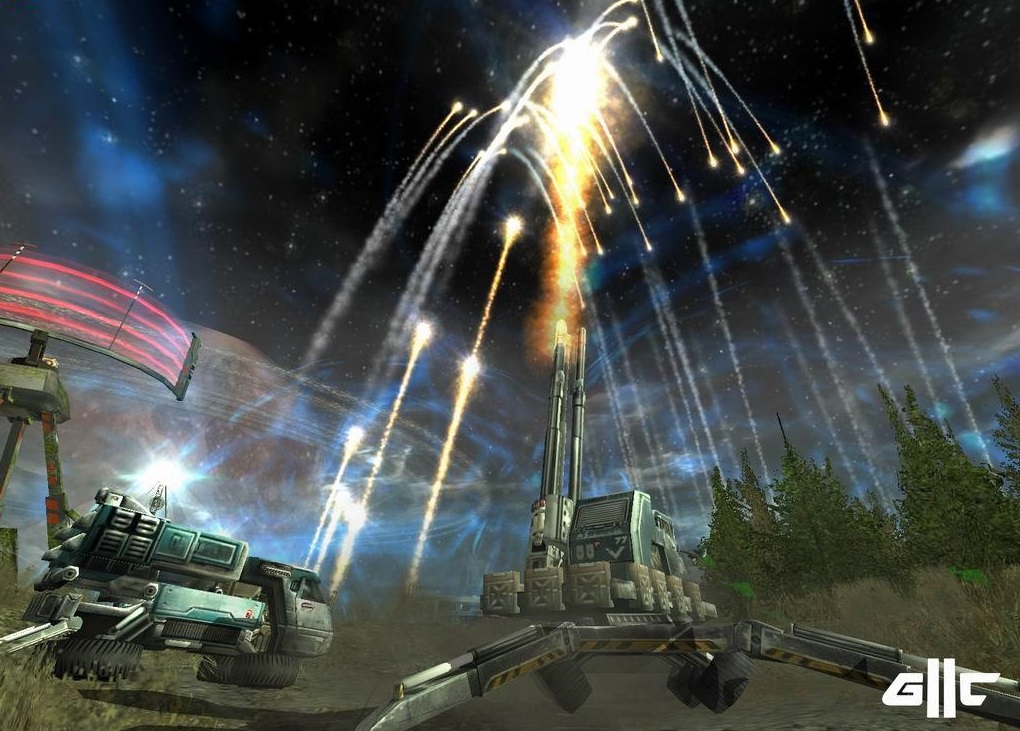
The Ground Control games have the best artillery units in any games, ever.

Ground Control and its expansion, Dark Conspiracy, are available under the title Ground Control Anthology. Ground Control II: Operation Exodus is available separately or as part of a bundle deal with the anthology. The anthology and GCII are also available DRM-free on GoG.

Ground Control was originally released in 2000 and was groundbreaking in its day. It had a full 3D map and camera, had no base-building or mid-mission reinforcing and - controversially - no mid-mission saving. It was a challenging game that rewarded tactically ingenious play, but was also furiously action-packed and has some visuals that were jaw-dropping at the time and remain pretty impressive today. Its minimalist UI also puts most modern strategy games to shame. It's absolutely brilliant, the equal of the likes of Homeworld and far superior to the likes of Dawn of War, and is highly recommended.

The sequel has better visuals and allows mid-mission saving and reinforcing, so is a bit less hardcore. It also has a better story and more unit variety with asymmetrical factions (the original game is more balanced between the two sides, although the mercenaries in the expansion bring a bit more variety to the table). Both are among the very best RTS games ever made, and are very highly recommended.