Showing posts with label the matrix. Show all posts

Saturday, 4 December 2021

A Potted History of Cyberpunk: Part 3


See Part 1 and Part 2.

As with any new movement, it’s barely even started before people start saying it’s over. In the case of cyberpunk, the genre was facing declarations of its mortality before the ink was cool on William Gibson’s Sprawl trilogy. But through the late 1980s and early 1990s, key works in the genre continued to appear from new talent.


The Queen of Cyberpunk

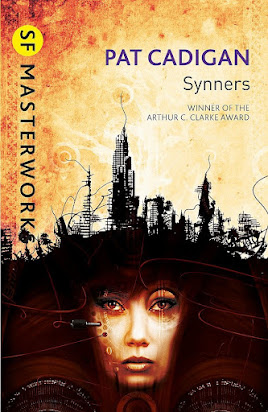
Cyberpunk had been, at least so far, a male-dominated subgenre. In 1987 Pat Cadigan became the first woman to publish a major work of the genre, Mindplayers. In this novel a young woman faces mental delusions after using a stolen cyber-interface and has to be “cured” by a type of mental hacker, a mindplayer. Cadigan’s novel delved into the interrelationship between technology and identity in a way that recalled Philip K. Dick. She expanded on many of these themes in sequel novellas and the related novel Fools (1992).

Her second novel, Synners (1991), is a more epic exploration of cyberpunk ideas. It is set closer to the present day than most cyberpunk works, in a more recognisable version of Los Angeles, as individuals from both sides of the law get swept up in an impending technological crisis.

Cadigan moved on to explore other types of fiction (ironically just after The Guardian proclaimed her the “Queen of Cyberpunk” in 1994), but in later years returned to the genre thanks to her work on the Alita: Battle Angel franchise, penning a novelisation and an original novel in the setting of the 2019 movie.

Other women writing in the genre soon gained prominence, most notably Lisa Mason for her debut novel Arachne (1990) and Melissa Scott for her 1994 novel, Trouble and Her Friends (1994).

Playing in a Cyberpunk World

Given the technological nature of cyberpunk narratives, it wasn’t long at all before cyberpunk stories started appear in the form of video games. One of the first was The Screamer (1985), a CRPG featuring, unusually for the time, real-time combat. The Megami Tensei and Metal Gear series both began in 1987, having cyberpunk themes even if the settings were not outright cyberpunk.

It wasn’t until the 1990s the technology existed to really do cyberpunk games justice. Captive (1990) was a cyberpunk take on Dungeon Master, a first-person, real-time “dungeon” crawl, with the dungeons now being technologically-advanced bases and the enemies being robots. The game was enjoyable, but a fairly obvious SF remix of an earlier game. Its sequel, Liberation (1993), was vastly more ambitious. Liberation created a huge cyberpunk city in (primitive) 3D where every building could be searched and explored, and the player had to follow a chain of clues to find an imprisoned captive. In a similar vein was the Mercenary trilogy – Mercenary (1985), Damocles (1990) and The Dion Crisis (1992) – the latter two of which featured an entire star system (complete with relativistic effects as you travelled between different worlds), though its cyberpunk credentials were less impressive.

Particularly notable was Flashback (1992), a platform game with an incredibly-animated main character, heavily inspired by Prince of Persia (1989) and Another World (1990). Flashback was a significantly longer game with a much more involved cyberpunk story, featuring the main character having his memory erased by invading aliens and having to fight to retrieve it whilst defeating the invaders. The game was hugely successful, spawning a direct sequel, Fade to Black (1995) and a remake (2013).

Also in 1993, Bullfrog Productions released one of the greatest cyberpunk games of all time. Syndicate saw the player taking control of a super-corporation complete with its own paramilitary force, which the player can upgrade and develop by taking over rival territory. The game casts the player as a morally dubious corporate business leader who can pursue his or her agenda through outright violence, more surgical assassination techniques or using a “persuadatron” to override people’s implants and turning them into unwitting slaves. Syndicate was a huge success and was succeeded by Syndicate: American Revolt (1993) and Syndicate Wars (1996), as well as an uninspired first-person remake, Syndicate (2012) and a superb “spiritual successor,” Satellite Reign (2015), which expanded impressively on the original game’s themes in a massive, open-world cyberpunk city.

Almost as influential was Beneath a Steel Sky (1993), a huge adventure game featuring an epic narrative set in a futuristic city. The game’s visual design was created by Watchmen artist Dave Gibbons and the game was a big hit. The developers were side-tracked by the Broken Sword series, which was a massive hit, but released a long-awaited sequel, Beyond a Steel Sky, in 2020. In 1997 a similar adventure game was released based on the film Blade Runner, and was a cult success.

That same year Squaresoft released Final Fantasy VII, the first game in their long-running fantasy series to incorporate cyberpunk ideas such as class struggle, industrial squalor and biological-machine interfaces. The game was a colossal success, resulting in a remake in 2020 and additional games in the series exploring similar ideas.

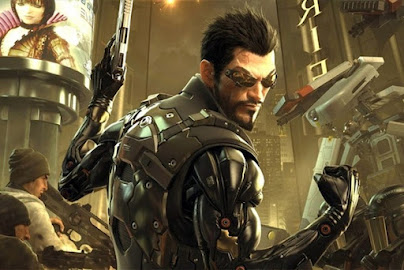
In 2000, Ion Storm released what many consider the ultimate cyberpunk video game: Deus Ex. Set in the near future, the game focuses on augmented humans caught up in a complex global conspiracy. The game allowed for massive, unprecedented and rarely-matched-since amounts of player freedom and influence on the outcome of the plot. Widely regarded as one of the single finest and most important video games ever made, it has enjoyed a sequel, Invisible War (2003) and three prequels, Human Revolution (2011), The Fall (2013) and Mankind Divided (2016). Human Revolution and Mankind Divided delved more deeply into cyberpunk themes of transhumanism, identity and corporate corruption.

Cyberpunk became more of a background setting for video games such as Mirror’s Edge (2008), Hard Reset (2011) and Far Cry: Blood Dragon (2013). More in-depth exploration of cyberpunk themes came in games like Transistor (2014) and the Watch_Dogs series (2014-present), which depicts the transitional period as a more modern world gives way to a cyberpunk future.

The largest and most popular cyberpunk video game of all time – and the most contentious – launched in 2020. Cyberpunk 2077, based on Mike Pondsmith’s Cyberpunk tabletop RPG, features jaw-dropping graphics and impressive freedom to explore a futuristic city, coupled with a compelling, rich storyline and memorable characters. However, the game launched with a plethora of technical issues and missing features, which gave the game a mixed reception. Launched a few months earlier, the much smaller, tighter and more focused Cloudpunk sees the player as a sky taxi driver undertaking some very odd jobs over the course of one strange night, set in a beautifully-realised city.

Cyberpunk continues to be a rich genre and source of ideas for future video games to mine.


Satirising the Genre

Heading into the 1990s, cyberpunk was well-established enough for writers to start poking fun at it. Of course, satirical takes on the genre had existed before, with Judge Dredd starting barely after the genre really even got off the ground. But as the genre had evolved, a slight tendency for it to become po-faced and self-serious had developed.

In 1992, Neal Stephenson poked fun at the genre in his seminal work Snow Crash. Main character Hiro Protagonist (a deliberate pun) is a pizza delivery driver and hacker who discovers a computer virus that can affect the human mind in the real world, leading to a dizzying journey of discovery taking in Sumerian history and mythology, political struggle and cryptography (expanded on his non-cyberpunk epic, Cryptonomicon, and its prequel/sequel trilogy, The Baroque Cycle). The novel is part of cyberpunk but also challenges and subverts the genre.

Similarly metafictional is Headcrash (1995), by the genre-namer himself, Bruce Bethke. The novel features a protagonist who sets himself up in an online VR community as a cool, trend-setting guy only to realise he is one of millions of people trying to do the same thing and as a result has just become another kind of anonymous everyman. Bethke used the novel to communicate his disdain for the sub-genre of cyberpunk which simply copied Neuromancer, a derivative strain he called “Neuromantics.”

Not satirical, as such, but certainly revisionist, was Jeff Noon’s seminal novel Vurt (1993). This book featured a cyberpunk-like narrative, but rather than relying on computers and technology, it instead employed biological devices to create a shared hallucination which any human can access through colour-coded feathers. The novel thus achieves much of the same impact as cyberpunk through a different means. The novel was hugely successful and was followed by a sequel, Pollen (1995), and prequel, Nymphomation (1997).


Enter the Matrix

Ironically, it was well after the highwater mark of cyberpunk as a distinct literary genre that it finally broke through to the mainstream with a huge, hit movie. The Matrix, written and directed by the Wachowskis, was a complex and mind-bending story about a young hacker who discovers that the real world is a lie, a computer simulation generated to entertain the human race, who in reality are imprisoned living batteries for a machine intelligence. With visceral kung fu action, mind-boggling philosophical asides and astonishingly cool production and costume design, The Matrix was a box office and critical smash, as was its collection of animated prequel films, The Animatrix (2003).

Unfortunately, the two sequel movies proper, The Matrix Reloaded and The Matrix Revolutions (both 2003) were less well-regarded, criticised for obtuse plotting and emphasising action over the storytelling. Debates over the trilogy’s place in the cyberpunk genre continue (the film features no kind of overt class struggle, a key part of the literary genre, though the theme of humans being cogs in a machine is present), but it was important for making certain cyberpunk ideas, such as machine-human interfaces, more readily accepted than they had been previously. The series will return later this year with a new entry, The Matrix Resurrections.

Integration

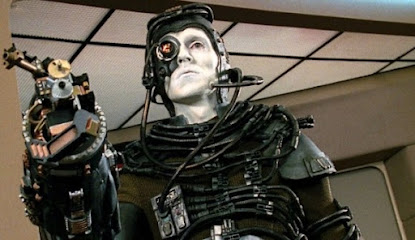
As the years passed, cyberpunk as a discrete genre became less of a readily-identified thing. “Cyberpunk novels” became less commonplace, with elements of cyberpunk instead being integrated into more established SF genres. Peter F. Hamilton’s sprawling space operas are primarily in that genre, but also feature machine-brain interfaces and towering cities of mega-skyscrapers familiar to cyberpunk fans. Richard Morgan’s Altered Carbon (2002, adapted for television in 2018), a hyperviolent, body-swapping corporate thriller set in a far future San Francisco, was praised as a modern cyberpunk classic, but its sequels set on other worlds are almost in completely different genres. J. Michael Straczynski’s Babylon 5 television series is a space opera but also featuring virtual reality cybernets and computer simulations so real they cannot be told apart from real life. Even Star Trek, the most traditional of SF universes, dabbled in cyberpunk ideas by introducing the holodeck and biological-machine hybrid races such as the Borg.

Cyberpunk was arguably also defeated by real life. As a genre, cyberpunk is mostly near-future and posits a future of massively overcrowded cities. But the world’s population is clearly never going to get to the point to require such ridiculously massive cities with mile-tall residential blocks. Real-life computer development has been in some ways more advanced than posited by early cyberpunk – which mostly failed to predict the arrival of smartphones – but also failed to account for the fact that humans are likely too squeamish to accept the level of body modification and invasive brain procedures posited by the genre. With hackers and computer viruses taking down power plants and damaging infrastructure, the idea of wiring a computer interface straight into your cerebral cortex has become distinctly less edifying.

But in some respects, by exploring ideas of massive social and economic unrest caused by technology, the gaping and dramatically-growing equality gap between rich and poor, and the rise of systemic exploitation and those rebelling against it, maybe cyberpunk ended up being far more prescient than it first appeared. In many respects we are now living in a cyberpunk world, albeit one featuring slightly less neon than was imagined in the past.

Thank you for reading The Wertzone. To help me provide better content, please consider contributing to my Patreon page and other funding methods, which will also get you exclusive content weeks before it goes live on my blogs.

Thursday, 9 September 2021

Warner Brothers drops enigmatic trailer for THE MATRIX RESURRECTIONS

As promised a couple of days back, Warner Brothers have dropped the trailer for The Matrix Resurrections, the fourth film in the Matrix franchises and the first new film entry to the series since 2003's The Matrix Revolutions.


The trailer opens with Neil Patrick Harris, apparently playing a psychiatrist, seeing his patient Thomas Anderson, played once again by Keanu Reeves. Reeves apparently has no memory of his life as Neo aka "The One." The setting is no longer The City, the ambiguous mega-metropolis of the original film trilogy, but a more realistic San Francisco, coated in warm, distinctly un-Matrixy colours. Thomas reports strange dreams, seeing the city in lines of code, and flashes of images (some new, some from the original movies), including one of himself blinded, being operated on by machines. Thomas meets a stranger in a cafe (Carrie Ann Moss), is seen quaffing blue pills like they are candy, is intrigued by flocks of birds in the sky and by a copy of Alice in Wonderland. He also sees images of himself as an old man. Eventually he flushes the blue pills down a sink, and accepts a red pill offered by a man strangely familiar yet completely different (Yahya Abdul-Mateen II).

Anderson is approached by a young woman (Jessica Henwick) who offers to show him the truth and calls him "Neo." She guides him through a door that acts as a shortcut to another part of the world, where he meets Trinity, this time her body apparently riven by lines of green code. The strange man spars with Anderson in a familiar dojo, angering him until he unleashes a blast of power.  We then see the world outside the Matrix, with the Machines still harvesting humans in immense vertical battery piles and a hovership hiding in the ruins of an old city. Trinity and Anderson meet on a rooftop in San Francisco, whilst the young woman fights Agents. She guides several other characters through a portal from what appears to be a cinema onto a speeding train, chased by rocket launcher-wielding enemies. We see Trinity apparently awakening from the Matrix, the strange man finding reality becoming liquid, a lot more fighting scenes and Anderson stopping hundreds of bullets in mid-air. Anderson is then told by another stranger (Jonathan Groff) that it's very exciting to go back to the start, "back to the Matrix."

The Matrix Resurrections hits cinemas and, in the United States, HBO Max on 22 December.

Tuesday, 7 September 2021

Warner Brothers drop teasers for THE MATRIX RESURRECTIONS

Warner Brothers has started the marketing cycle for their upcoming fourth Matrix movie, The Matrix Resurrections.


They've revamped the OG 1999 Matrix website, What is the Matrix?, and it now offers you a choice of red and blue pills. The pills take you to different teaser clips where a voice creepily identifies what time it is for you.

The Matrix Resurrections seemingly picks up twenty-odd years after the events of The Matrix Revolutions, which ended in a truce between the human rebels and the machine AIs after they joined forces to defeat Agent Smith, but something strange has clearly happened in the interim. Old characters are back, but with new names and limited or no memory of what happened to them the first time around. Some characters also seem to be back in new bodies, or with new faces. Early previews have hinted at a much stranger (and probably even more divisive) film than the soulless cash-in many were expecting.

A full trailer is expected on Thursday. The film itself will be released on 22 December this year in cinemas and, in the United States, on HBO Max.

The film sees the return of Keanu Reeves, Carrie-Ann Moss, Lambert Wilson, Daniel Bernhardt and Jada Pinkett Smith from the original trilogy, with new casting additions including Yahya Abdul-Mateen II, Neil Patrick Harris, Jessica Yu Li Henwick, Toby Onwumere, Max Riemelt and Christina Ricci. The film is directed by Lana Wachowski (who co-directed the original trilogy) and co-written by Lana Wachowski with David Mitchell (yes, that one) and Aleksandar Hemon.

Monday, 1 February 2021

THE MATRIX 4 gets its final name: THE MATRIX RESURRECTIONS

It's official (ish): the fourth Matrix film will be called The Matrix Resurrections.

The title scheme follows on from The Matrix (1999), The Matrix Reloaded (2003) and The Matrix Revolutions (2003).

The title also makes sense, bearing in mind that the film is resurrecting the Matrix franchise after eighteen years and also bringing back the characters of Neo (Keanu Reeves) and Trinity (Carrie-Ann Moss), who both appeared to die in the previous movie. How they return is a key plot point of the new film.

In addition to Reeves and Moss, the film is also bringing back Jada Pinkett Smith as Niobe, Lambert Wilson as the Merovingian and Daniel Bernhadt as Agent Johnson from the original trilogy. Hugo Weaving was asked to return as Agent Smith but was unavailable due to scheduling conflicts; conversely Laurence Fishburne was not asked to return as Morpheus, despite canonically surviving the events of The Matrix Revolutions.

The Matrix Resurrections is currently scheduled for release on 22 December this year, COVID pandemic permitting.

Friday, 4 September 2020

The Matrix Revolutions

The AIs and machines are preparing for a final assault on Zion, the last surviving stronghold of the human race. Neo has been offered the chance to spare humanity from annihilation by rebooting the Matrix, an act which will start everything - the war, Zion, the prophecy - again from scratch, but has refused. With humanity's lifespan now measured in hours, Neo in a coma and the Matrix itself being overrun by the rogue Agent Smith program, it appears that all hope has been lost.

The Matrix Revolutions is a curious movie. If The Matrix was the paradigm-shifting, classic original which blended cyberpunk and Hong Kong cinema, then The Matrix Reloaded was the bigger, faster, "more!" sequel with more fights, more explosions, more CGI and more scope and scale. Also a lot more exposition, and hundreds of times more Hugo Weaving (the film asked us, "How much Hugo Weaving is too much Hugo Weaving?" and still never found a satisfactory answer). The Matrix Revolutions then has to be the weird one, starting off with a strange sequence with Neo lost in the Matrix before he is rescued (in a surprisingly non-drawn out manner) by his friends. From there the crew splits in two, with one team racing back to Zion before it comes under attack by the Sentinel army and the other making its way to the machine city, Zero One, to try to broker a peace. Much of the rest of the film is split between the adventures of the two hovercraft and the defenders in Zion.

This structure is fine as far as it goes, but it does rather obviously have a flaw: not a lot of the film (apart from the very start and the very ending) takes place in the Matrix itself, which given that's what the whole trilogy is about feels weird. Instead we're spending a lot of time with characters we've barely met or seen, apart from Morpheus who really doesn't have a lot to do in the movie (you start to realise why so many stories kill the "wise old mentor" character once the protagonist and thus the story outgrows them).

We do get some great action set pieces, such as the Mjolnir's running battle with a Sentinel fleet through miles of underground tunnels, and the assault on Zion is impressively apocalyptic, even if the script is writing cheques that 2003 CGI can't quite cash. The scenes in which thousands of Sentinels sweep through the Zion Dock and there's so many of them they look like a liquid is impressive, albeit somewhat nonsensical (and it's unclear why, if the Sentinels can do that, they don't just scour the Dock clean in a matter of seconds). The film succeeds in ramping up the stakes, although the fact that none of our regular characters are involved in this battle does remove some of the dramatic tension.

Neo and Trinity get a rough ride in the film, having to battle a human possessed by Agent Smith (Ian Bliss - as Bane - doesn't get enough plaudits for his spot-on impression of Hugo Weaving's Smith) before hitting (rater literally) Zero One and confronting the machines' governing core AI, the amusingly-named Deus Ex Machina. For those who enjoy the Matrix films because they get to see Keanu Reeves kicking a lot of butt, Reeves has surprisingly little of that to do in this movie before the big finale. The ending is also surprising, with perhaps the lack of a massive, apocalyptic finale that people were expecting. Instead, the film draws for its resolution on the idea of an negotiated settlement, a deal between humans and the machines, rather than the machines being wiped out altogether.

This resolution disappointed a lot of fans - who wanted a more definitive, final ending rather than what felt like setup for more sequels - but it does have some virtues. The overwhelming superiority of the machines makes any kind of outright human victory over them implausible in the extreme, so resolving the story in another, logical way which was well-established beforehand is a good move. It also pays off the fans who watched The Animatrix beforehand, which made it clear that the machines are thinking, feeling, sentient beings who have very good reasons to hate and distrust humanity, and the war isn't as one-sided as it seems. Of course, for the 99% of viewers who hadn't (and probably still haven't now) seen The Animatrix, it's an altogether less resonant conclusion.

There are plenty of other things to like about The Matrix Revolutions, such as the lack of overlong, overwrought martial arts scenes (something that bogged down Reloaded), replaced by more realistic fistfights outside the Matrix; the top score (this film easily has the best original score of the three, and the least reliant on pre-existing songs); the relatively intelligent (if not entirely emotionally satisfying) finale; and the reasonably impressive action set-pieces. There are also other things to dislike: some of the elements in the ending are not entirely clear (is Neo dead or not?), the personal stakes in the Zion battle are low (we don't really know these people very well) and, although the film is trying to respect the audience's intelligence by not spelling out every little thing, sometimes this results in obfuscation. For example, I spent ages trying to work out what the machines were doing to Neo's body and how that saved the day before I realised they were activating the source code in the One program, resulting in the Matrix rebooting and removing the "infection" in the process. In short, doing exactly what the Architect told us it would do in the previous movie. It's a smarter ending than I first gave it credit for, but it still feels not well-communicated.

The Matrix Revolutions (***½) can't hold a candle to the tight focus and wild inventiveness of the original film, but it's still a watchable and entertaining action movie, and has both better pacing and a stronger structure than The Matrix Reloaded, and far less overwrought fight scenes. So much of the film taking place outside of the Matrix itself is a bit of a risk, confirming that the "real" post-apocalyptic future is less interesting than it might first appear, but broadly speaking the movie works okay and delivers an interesting, if underwhelming finale. I'm interested in seeing where Lana Wachowski can take the franchise in the forthcoming fourth film in the series. The film is available as part of a box set with its predecessors in the UK and USA.

Sunday, 30 August 2020

The Matrix Reloaded

The AIs who control the world have decreed the destruction of Zion, the last free human city. As a vast army of Sentinels digs towards Zion, Neo must use his developing powers to help end the war from inside the Matrix. A message from the Oracle leads him towards a meeting with the Architect, whose revelations will change everything. But both sides in the war have reckoned without a wild card, the return of a program that should have been destroyed but has instead gone rogue and started spreading like a virus with only one purpose in mind: the end of everything.

It took four years for the Wachowskis to deliver their sequel to their 1999 paradigm-shifting action classic, The Matrix. As they developed ideas for the project, they realised they couldn't fit them into one movie so split it in two, with the two halves released six months apart. All the cool kids were doing this back in 2003, with Peter Jackson filming his three-part Lord of the Rings adaptation in one block and then releasing the films at one-year intervals. This was a huge success. The Matrix sequels had a rather more mixed reception.

The Matrix Reloaded does do a few very good things. The action scenes are stronger, the actors having trained for far longer and more in-depth for their martial arts scenes. There's far more spectacular stunts (the opening sequence with Trinity single-handedly destroying an office block and then engaging in aerial combat with an Agent remains outstanding), more worldbuilding, huge plot revelations and some clever ideas sprinkled amongst the action, although the philosophising of the first film has mostly fallen by the wayside.

Unfortunately, the film's good elements are dented by the fact that the pacing is poor. The Matrix Reloaded has a fairly simple plot progression: Neo has to meet with the Oracle, strike a deal with the deceitful (and randomly French) Merovingian and then follow a path to meet the Architect, whilst fairly nascent subplots follow a rivalry between Morpheus and Zion's military commander and the gathering of Zion's forces to oppose the machine army. This could easily have been done in under 90 minutes with plenty of time for cool action scenes, but for some reason the Wachowskis decided they had to use every single penny of the budget (twice that of the first film). As a result we get an absolutely absurd fight sequence between Neo and several hundred Agent Smith clones, which the technology is not quite able to deliver: the all-CG scenes between a blatantly fake Keanu Reeves and lots of claymation-looking Hugo Weavings are particularly painful. Even more offensive, because it is simply not important to the plot, is a hallway fight scene between Neo and the Merovingian's mediocre bodyguards which feels like it goes on longer than the Hundred Years' War. There's also a rave/dance party in Zion near the start of the film which feels a bit pointless (although prefiguring the Wachowski's love of showing people having a good time, which would inform their later Netflix project Sense8).

Other action sequences also go on a bit too long, but they are at least a lot more varied and fun: Seraph and Neo's first meeting taking the form of a friendly table-based martial arts battle is as daft as a brush, but so technically impressive that it's less of a problem. The massive battle sequence on the freeway is also a bit bloated, but it has a lot more combatants and is very impressively handled. There's also some nice character beats, such as Morpheus - who's clearly been trained up by Neo and his new powers in the meantime - relishing the chance to go toe-to-toe with an Agent on more even terms.

The film was heavily criticised for the revelatory sequence with Neo and the Architect. Partially I think this was the fault of the extended gap between the films, during which time fans had come up with all sorts of theories on the Internet, some of them fairly compelling. The most constant and pernicious of these was that the "real world" was another level of the Matrix, and a lot of people were unhappy this wasn't the case. Personally I was relieved, because I think the Wachowskis would have lost the mass audience if they'd gone too wankery with the premise (in the event it would be another decade before Christopher Nolan played that card, more or less successfully, with Inception). And as it turns out a lot of the fans were right, the real world situation was another layer of control, just not in the way they were expecting. Still, I think the problem with the scene is, both ergo and concordantly, more in its presentation than the plot revelations it contains.

The film also has another problem: bits of it are missing. The Wachowskis wanted to make The Matrix Reloaded a genuine multimedia experience™, with synergy© between different franchise brand products™. The result is that to get the best out of the movie, you need to have watched the animated short film collection The Animatrix and played the video game Enter the Matrix beforehand. Which obviously about 99.5% of viewers had not done (and, seventeen years after release, doing either is a bit difficult with The Animatrix not being available in all territories and Enter the Matrix not being playable on modern systems, not that you'd want it to be; it's not a good game). As a result, references to the final mission of the Osiris or the Logos crew and Niobe being constantly treated as a big deal when they're missing from most of the film feel a bit weird.

Still, the film does a lot that's right. The Wachowskis realising that they had a gift that would not stop giving in the form of Hugo Weaving and making 1000% use of him in the sequels was a good move. The expansion of the world and the cast is mostly successful and the action sequences and effects are technically impressive, until they become over-egged and self-indulgent.

The Matrix Reloaded (***) is a watchable, sometimes fun but overlong, overwrought and over-budgeted sequel to a great movie. It does a lot that's good and is never less than interesting, but with more judicious editing it could have been sharper, tighter and more compelling. The film is available as part of a box set with its predecessor and sequel in the UK and USA.

Saturday, 29 August 2020

Wertzone Classics: The Matrix

Computer programmer Thomas Anderson, who sports the hacking alias "Neo," is contacted by the mysterious Morpheus, a hacking paragon who offers to share with him information about a rumoured computer network known as the Matrix. Evading detention by sunglasses-wearing Agents, Neo meets Morpheus and learns the truth: the entire human race has been enslaved by advanced AIs to be used as batteries to power their systems. The Matrix is a computer simulation of the past, used to keep humans unaware of their true, nightmarish existence. Morpheus offers Neo the chance to escape the dream and help bring about the liberty of the human race.

Released in 1999, The Matrix rapidly became one of the most highly-acclaimed science fiction action films of its era. Its impact was heightened by the perceived disappointment of that year's Star Wars film, The Phantom Menace, and the fact that at the time of its release a number of other films (such as Dark City, eXistenZ and The Thirteenth Floor) had been recently released tackling similar themes but had failed to make much impact. The Matrix struck gold with a more high-concept, simply-relatable premise (what if our lives are an illusion?), a large number of impressive action scenes, some intriguing-if-shallow philosophical asides on free will and an extraordinarily great cast, particularly the impressive find of the then-unknown Carrie Ann Moss and rising talent Hugo Weaving, as well as hugely career-boosting turns from Keanu Reeves and Laurence Fishburne.

One of the reasons The Matrix works is the idea it borrows from various Hong Kong action cinema and Japanese anime movies, namely the fact that the action is justified by the plot, as are the increasingly insane stunts, action set pieces and martial arts on display. For once, implausible action scenes, balletic martial arts scenes and frenetic gunplay is justified by the hyper-real setting of the Matrix itself, and the ability of both the Agents and Morpheus's band of rebels to twist the simulation to their own benefit.

The Matrix is also helped by its challenging budget. This has been overstated a bit over the years - $70 million in 1999 was still a solid sum of money (comparable to the budget of Independence Day three years earlier) - but the budget was still relatively low given some of the ideas and concepts that the Wachowskis wanted to pull off, forcing the effects team to consider low-fi solutions to problems (such as doing most fight scenes in-camera with the actual actors suspended on wires) given the limited amount of CG they could call upon. This gives the film a lot of credibility with the actors often undertaking their own stunts, allowing impressive close-ups even mid-fight.

From a philosophical viewpoint, the film muses on various real-world influences such as Jean Baudrillard's Simulacres et Simulation (Baudrillard found the film's understanding of his ideas to be flawed) and elements from Descartes, Kant and Taoism. The film uses these ideas somewhat clumsily - expression and economy of dialogue is clearly not a priority, as evidenced during lengthy exposition scenes from Morpheus - but in doing so it brought them to a much wider audience and inspired newer ideas. The central concept in the film, that reality is not real but a computer-generated illusion, was later expanded on by Nick Bostrom in his 2003 simulation hypothesis.

However, the real success of The Matrix is in its establishment of a new world and mythos that is interesting and engaging, if not hugely convincing in this film (the two sequels and, more successfully, the animated spin-off project The Animatrix expand and explore on elements that feel under-explored here). The notion of the machines using humans as batteries rather than, for example, far more cost-effective geothermal or nuclear energy is a bit preposterous until The Animatrix reveals that it was humanity's repeated aggression against the AIs, who initially only wanted peace after achieving sentience and independence, that led to the AIs decision to enslave humanity and use them as a fuel source out of both a need for revenge but also a humanitarian reluctance to fully wipe out their creators.

Twenty-one years on from release, The Matrix (****½) remains a highly watchable movie. The action is convincing and impressive, the cast is magnetically engaging and help overcome an occasionally clumsy script, and the philosophical ideas and allusions add intelligence (or at least a veneer of it) to the SF action adventure mix. The film is available as part of a box set with its two sequels in the UK and USA.

Monday, 24 January 2011

Two new MATRIX films on the way?

The rumour mill is reporting that the Wachowski Brothers and Keanu Reeves have met up to discuss a new two-movie Matrix project. The new films would be in 3D and would probably feature bullet-time and further the thoroughly confused mythology of the second and third movies.


My enthusiasm for this news is sorely lacking. The first film was solid, the second was rather boring and the third fell flat but was livened up by the battle for Zion (just don't ask why the defending battlemechs didn't have any armour or protection for the pilots). A fourth and fifth instalment would seem to be totally superfluous, especially if it means they resurrect Neo and invalidate his sacrifice from the end of the third film. Still, this is just a rumour so far.