Showing posts with label bryan cogman. Show all posts

Tuesday, 19 July 2022

HBO dishes the dirt on GAME OF THRONES spin-off ideas

In a wide-ranging article at The Hollywood Reporter, insiders at HBO have spoken for the first time about the various attempts to bring a Game of Thrones spin-off to the table.
HBO reached a deal with Game of Thrones showrunners David Benioff and Dan Weiss in 2016 to end the show after eight seasons. Almost immediately HBO began exploring ideas for a spin-off, with an eagerness that surprised industry watchers.

HBO had never made a spin-off show to any of their series before. The closest they had come was around 2005 when a spin-off from The Wire, provisionally called The Hall and revolving around the character of Tommy Carcetti as he became Mayor of Baltimore, had gotten quite far into development before it was canned, and the resulting work was folded into the political storyline in Seasons 4 and 5 of the main show. A few years later HBO bought the rights to remake the BBC TV series I, Claudius and investigated turning it into a spin-off/sequel to its underrated historical drama, Rome, even using the same sets (which were, and still are, standing in a film studio outside Rome) and a similar format. HBO eventually broke their rule by producing two movie extensions to two of their most acclaimed series, Deadwood: The Movie (2019) and The Sopranos: The Many Saints of Newark (2021), but only after the Game of Thrones spin-off train had started moving.

George R.R. Martin himself came up with two ideas: The Tales of Dunk & Egg, based on his novellas about Ser Duncan the Tall and his squire, Egg, as they wandered the Seven Kingdoms about ninety years before the events of the main series. The novellas mix large-scale politics with much smaller-scale, "slice of life" adventure stories. Martin felt the juxtaposition with the vast scale and epic events of Game of Thrones was interesting. HBO agreed, but also felt that maybe adapting those novellas was aiming too small. Martin's other proposal was for a series called The Dance of the Dragons, about a civil war between two branches of the Targaryens when both sides were equipped with dragons. HBO liked that idea better, but felt conversely it was too similar to Game of Thrones itself. HBO, awkwardly, wanted something that captured the epic scale and politics of the original but was not so obviously related to it.

A number of other ideas were discussed, some of them pretty frivolous. One idea about a team of early heroes, including a warrior, a smith, a crone etc, who become the inspiration for the gods of the Seven Kingdoms was shot down pretty quickly. Other proposals were made, including (according to other rumours) for potential sequels to the main series revolving around popular characters, but Martin seemed largely unenthused by any ideas about sequels and these ideas were also limited by actor availability: many of the actors from Thrones, despite loving it, were only too happy to leave the brutal filming schedule behind to pursue other projects.

HBO eventually narrowed things down to five ideas: The Dance of the Dragons, with Carly Wray attached to write; a show about the Doom of Valyria with the alleged title Empire of Ash from Max Borenstein; a show about the warrior-queen Nymeria from Brian Helgeland; a show about the Long Night from Jane Goldman; and a series about Aegon the Conqueror from Rand Ravich and Far Shariat which would have revealed Aegon as a drunken lout (!).

During this development process Carly Wray decided not to pursue the Dance project, apparently feeling she wanted the series to start with the war kicking off whilst Martin wanted a slow-burn opening much like Thrones, with at least a full season preceding the start of the conflict. Bryan Cogman, who had penned some of Thrones' best-received episodes, was brought in to develop the idea further. However, HBO eventually put all of these other projects on hold to pursue the one that stood out to them: the Long Night project.

The show never had a final title, although The Longest Night was Martin's preferred one. Set five thousand years before the main series, the show would have expanded on the creation of the White Walkers and the advent of the Long Night, a generation-lasting winter in which Westeros was almost destroyed by hordes of undead invading from the far north. During this time Westeros is a patchwork quilt of primitive, Bronze Age-esque kingdoms, some so small you could ride across them in a day, and ill-prepared to withstand such an invasion. The show would have had to create human drama out of characters and ideas from the novels which are larger-than-life legends, like Lann the Clever and Bran the Builder.

HBO gave a pilot order and spent a reported $30-35 million on building sets and hiring a cast led by Naomi Watts and John Simm. The pilot episode, entitled Bloodmoon, was shot but HBO started having second thoughts. There'd been a change in leadership at the company and The Longest Night was seen as a gamble, being very different in tone and atmosphere to Thrones. There were also no dragons, and the epic scale may have been somewhat lost with smaller kingdoms and more primitive castles and towns. The Children of the Forest would also be major, ongoing characters, but they had made relatively little impact on the original show. Martin himself also seemed unsure about the project, as he had relatively little background material or notes about this period of Westerosi history, and was not able to readily or quickly answer lore questions from the writers.

More significant, although nobody at HBO has ever said this, is that the final season of Game of Thrones aired around this time and attracted controversial opinions about its ending. Although many aspects of the final season were criticised, the way the White Walkers were very quickly defeated in a single episode was particularly savaged by both fans and critics. Suddenly basing an entire series around the rise of the White Walkers and in which they were primary antagonists didn't seem like a great idea any more.

The Longest Night was cancelled, apparently a huge shock to the creative team who'd felt so confident about the project that they'd been already re-editing the pilot based on feedback and had started breaking the first season.

Almost immediately after this decision was made, HBO decided to go back to basics. They tapped Martin again and agreed that the Dance of Dragons project seemed like a better idea. Martin had already expanded his history of the Dance as part of an entire book about the Targaryens, Fire and Blood, which meant the production team would have hundreds of pages of source material to drawn upon. The dragons and the civil war in Westeros parts of Game of Thrones had been well-received, so doubling down on those elements seemed obvious. HBO and Martin were also able to quickly assemble a creative team who had their full confidence (Bryan Cogman having moved onto a deal at Amazon, acting as a creative consultant on their Lord of the Rings show before developing an original project). Ryan Condal, a friend of Martin's for around a decade and a proven showrunner from Colony (as well as getting a good rep for a Conan the Barbarian proposal he'd been shopping at Amazon), was tapped to develop the project whilst Game of Thrones super-director Miguel Sapochnik was also hired to work on the show (getting Sapochnik again was seen as a coup, as his work on Thrones had made him a hot property and he'd been somewhat reluctant to return).

Since House of the Dragon entered pre-production, HBO has gotten back into the Westeros business in a big way. They are now developing multiple new spin-off projects, including:

  • A fresh take on The Tales of Dunk and Egg from The Secret Life of Walter Mitty writer Steven Conrad.
  • A show about Corlys Velaryon, the Sea Snake, with the working title The Nine Voyages of the Sea Snake. A major character in House of the Dragon (played by Steven Toussaint), this show would depict him as a young man when he embarked on nine "great voyages" to remote corners of the world, including Qarth, fabled Asshai and the Thousand Islands. Rome writer-producer Bruno Heller is still developing this idea.
  •  A show called The Ten Thousand Ships, revolving around Princess Nymeria of Ny Sar, a princess of the Rhoyner who leads her people to safety when her country is destroyed the Valyrians. Their fleet of ships flees across the Summer Sea in search of safety, addressing issues of food, water and internal politics whilst searching for a new home. Think of a fantasy version of Battlestar Galactica. Person of Interest writer Amanda Segel is currently developing this project.
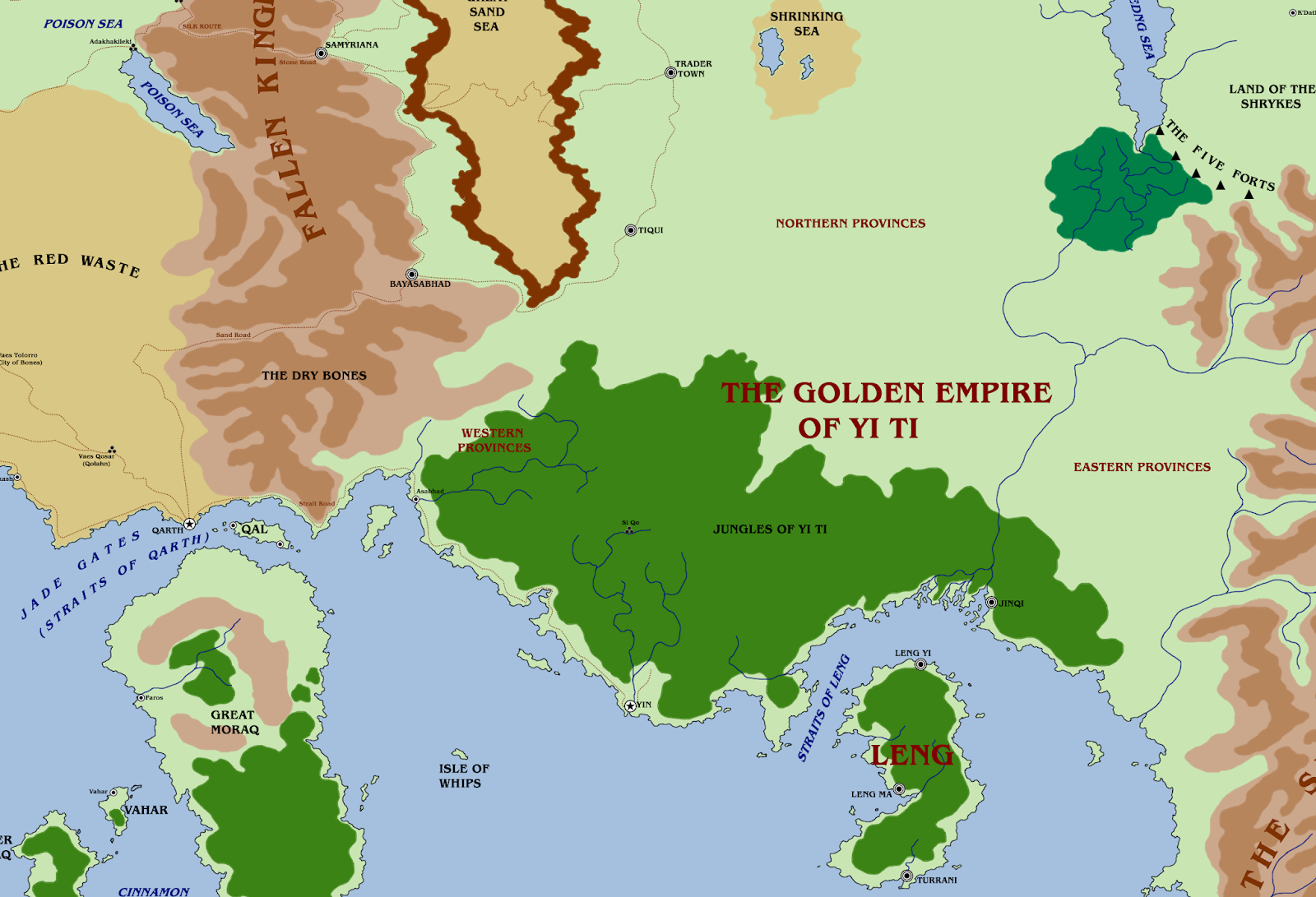
  • An animated show set in the Golden Empire of Yi Ti.
  • A sequel to Game of Thrones revolving around the character of Jon Snow. Actor Kit Harington himself proposed the idea to HBO and Martin, getting them intrigued enough to put the project into development under the very working title Snow.

In addition to these, HBO also mulled over an idea called Flea Bottom, a peasant's eye view of great events from the poor quarter of King's Landing, possibly an expansion of an idea Martin himself mentioned several times called Spear Carriers, which would have adopted an alternative Rosencrantz and Guildenstern-style perspective of major events from minor POV characters. These ideas are currently on hold.

A lot is riding on the success of House of the Dragon, but it has assembled a top cast and crew and the project has Martin's approval. HBO may also be buoyed that despite repeated attempts by rivals, no true successor to Game of Thrones has emerged (Netflix's The Witcher may have come closest) in popular media. And it will be interesting to see if any of the other spin-off ideas make it to the screen.

Monday, 12 October 2020

Fire Cannot Kill a Dragon by James Hibberd

Game of Thrones is the most successful show in the history of HBO, rising from humble beginnings in 2011 to become the biggest TV drama on the planet. In 2019 the show wrapped after eight seasons and 73 episodes to deliver one of the most negatively-received final seasons in recent memory. Journalist James Hibberd, who was allowed on set of the show every year from the second season onwards, has written a behind-the-scenes account of the commissioning, writing and making of the show, referring to hundreds of interviews he undertook whilst the show was on air and more undertaken since. Among the people he's spoken to are George R.R. Martin, David Benioff and D.B. Weiss, and vast numbers of the cast, from the smallest bit-part player to leading actors Kit Harington, Peter Dinklage and Emilia Clarke. This is the oft-contentious story of the making of the show that changed television.

TV companion books are a bit of a dying art these days, with the Internet and its plethora of fan blogs and wikis making them feel a bit redundant. Game of Thrones is so huge - and controversial - that it can overcome that problem and James Hibberd is well-placed to write such a companion volume given his access to the writers, the sets and the actors (via his work at Entertainment Weekly covering the show). He starts at the beginning, with George R.R. Martin starting writing the Song of Ice and Fire novel series in 1991, and proceeds through David Benioff and Dan Weiss picking up the books, wooing Martin to letting them and HBO have the rights, and their difficult struggle to get a pilot made, and the difficult process of admitting that they'd messed up the pilot and had to hope that HBO would give them a second chance. From there things proceed roughly chronologically until the end of the show.

The first thing that has to be noted is that this is not an "unauthorised" guide to the making of the show, but a HBO-approved product (complete with HBO-provided photographs). If you're expecting to find dirt and gossip, you're not going to find it here. Anything majorly contentious has been finely exercised from the text. Hibberd also doesn't add much in the way of authorial opinion, letting events stand for themselves and quoting other critics in determining if a plot twist or story turn was successful or not.

Despite this, the book's fact checking clearly left something to be desired. On the very first page of the book we're told that the Battle of the Bastards was filmed in October 2014; it was actually a year later (my friend, who was a weary extra on the set of Hardhome, noted that was when they were filming that battle). A few pages later we're told that George R.R. Martin started writing A Game of Thrones in 1993 but it was actually in 1991. A few other, similar errors crop up through the book and it does feel like a bit more attention to detail would not have gone amiss.

Once that hurdle is overcome, there is much to enjoy. Hibberd is a solid writer who knows how to handle and place quotes, and how to interview subjects, and to his credit he does avoid repeating a lot of stories and information that close watchers of the show have heard a thousand times already. Some of the familiar anecdotes do get trotted out yet again but there's a lot more information here that I hadn't ever heard before, such as director David Nutter almost dying in Iceland when his car crashed during a blizzard on a location scout and it if had rolled in a different direction, it would have plummeted off a sheer drop. Other stories are less dramatic but amusing: the weather in Iceland during Season 2 was so bad that scenes were often shot right outside the hotel the cast and crew were staying in, with constructive camera angles being used to hide that fact and actors having to perform in full view of all the guests in the dining room. During Season 1 they didn't have any security and David Benioff had to personally stand guard over Robert Baratheon's tent to stop curious bystanders from making off with props. And so forth.

These stories are amusing bits of trivia but somewhat inconsequential. Meatier are the controversies. The book doesn't shy away from many of these, spending a surprising amount of time debating the merits of Daenerys and Khal Drogo's relationship at the start of the show with the writers and actors, and the different ways they approached it in both the pilot and the reshoot with different actresses, and on the depiction of the Sansa-Ramsay-Theon relationship in Season 5. There's also a lot of open discussion about the weak Dorne storyline in Season 5 and how it didn't work and they had to scramble to try to fix it later on. Other controversies are completely ignored though, with a particularly criticised Cersei/Jaime scene in Season 4 getting no mention at all.

Even more interesting are the moments when people get a bit too honest. It's clear from the writing that some of the producers encouraged something of a "fratboy" relationship with other cast and crew, and sometimes pushed things too far, resulting in tense moments on set. The most honest and outspoken actor in the book is Liam Cunningham, who cuts through the normal Hollywood PR banter (which to be fair most of the cast try to avoid, but sometimes fall into it by rote) to deliver some real honesty on some of the conditions of shooting. His pointblank refusal to film some scenes because he felt they betrayed his character and made Davos less of a relatable figure is quite startling. He also stands up for Stephen Dillane, who played Stannis Baratheon and had made some dismissive comments of the show (Dillane didn't take part in the new interviews for the book), noting that Dillane always did good work, had a strong work ethic and a withering sense of humour that didn't always come across well in interviews.

The thing most people will be interested in is the reception to the finale. Benioff, Weiss and Martin don't really talk about it, but plenty of the actors, several HBO executives and Bryan Cogman do, and note how things may or may have not worked as well as they'd hoped. However, there is a bit of a disappointing PR answer that maybe the ending will be looked upon differently in another ten years.

Hibberd has certainly written an above-average TV companion book here, with plenty of interesting stories and funny moments of trivia, but it's one that also has some glaring holes. Ramin Djawadi's memorable score (the one thing almost uniformly praised about the series) goes almost completely unmentioned, the work of Elastic and Angus Wall on the memorable title sequence is also disregarded and the CG teams tasked with bringing the locations and creatures to life are also not quoted. It's good to see the writers and actors being self-deprecating and owning various problems and mistakes, but there's also a few moments when it feels like the book pulls its punches and doesn't delve deeper into behind the scenes issues. The book's real achievement may be in getting Benioff and Weiss to admit what many had suspected all along: they really wanted to be making movies all along, they always planned to prioritise big battles and effects over character and theme (Benioff's daft assertion that themes are only for eighth-grade book reports is mentioned several times) and that without Martin's books to rest on, they lost confidence in how to proceed and struggled more without source material.

Fire Cannot Kill a Dragon (***½) is readable and fun, packed with fresh anecdotes and interesting trivia about the making of Game of Thrones. In some areas it is insightful and revelatory, getting further into why certain baffling decisions were taken, but in others it leans back and goes out of its way to avoid criticism or controversy. It certainly doesn't trouble the quality of The Deep Space Nine Companion, which twenty years after release still represents the gold standard of a TV companion volume. But it's certainly worth reading if you're interesting in what happened behind the scenes on the biggest show of the decade. The book is available now in the UK and USA.

Saturday, 27 July 2019

LORD OF THE RINGS: THE SECOND AGE confirms full creative line-up

Amazon has revealed the full creative line-up behind its Lord of the Rings prequel series set in the Second Age of Middle-earth's history.


J.D. Payne and Patrick McKay (various unproduced scripts) are the head writers and showrunners on the project.

J.A. Bayona (The Orphanage, A Monster Calls, Jurassic World: Fallen Kingdom) is directing the first two episodes and will serve as executive producer alongside his regular collaborator Belen Atienza.

Lindsey Weber (10 Cloverfield Lane), Bruce Richmond (Game of Thrones, Westworld), Gene Kelly (Boardwalk Empire) and former Amazon head of genre programming Sharon Tal Yguado are serving as executive producers on the project.

Gennifer Hutchison (Breaking Bad), Jason Cahill (The Sopranos, Halt and Catch Fire), Helen Shang (Hannibal) and Justin Doble (Stranger Things) are serving as writer-producers.

Bryan Cogman (Game of Thrones) and Stephany Folsom (Toy Story 4) are serving as consulting producers and writers. Ron Ames (The Aviator) is also serving as a producer.

Kate Hawley (Suicide Squad) is serving as main costume designer, with Rich Heinrichs (The Last Jedi) as production designer and Jason Smith (The Revenant) as visual effects supervisor.

Tolkien scholar Tom Shippey is serving as a creative consultant on the project, alongside famed Tolkien artist John Howe as an illustrator and concept artist. Howe also served in this capacity on Peter Jackson's Lord of the Rings movie trilogy.

Production of Lord of the Rings: The Second Age (not necessarily the final title) will begin with some preliminary shooting next month in New Zealand, followed by the full production schedule kicking in next Spring. On that basis, the show is unlikely to air before mid-2021.

Wednesday, 3 July 2019

LORD OF THE RINGS: THE SECOND AGE gets director, new writers and confirmed filming location

Amazon's upcoming TV series, The Lord of the Rings: The Second Age*, has acquired its first director.


J.A. Bayona will direct the first two episodes of the series. Spanish director Bayona won critical acclaim for his movies The Orphanage (2007), The Impossible (2012) and A Monster Calls (2016). He also directed the first two episodes of Penny Dreadful in 2014. More recently, he directed Jurassic Park: Fallen Kingdom (2018).

Gennifer Hutchison has also been added to the writers' room. Hutchison is best-known for writing five episodes of Breaking Bad and eight of its spin-off show, Better Call Saul. She was also on the production staff of The Strain.

The series will start production next month in Auckland, New Zealand. Peter Jackson's six previous Middle-earth movies were shot in New Zealand, but it looked like the new series was going to move filming to Scotland after positive discussions there. New Zealand Prime Minister Jacina Ardern made a personal telephone call to Jeff Bezos, the head of Amazon, to secure the deal for New Zealand instead, although it remains possible there will be a small amount of filming in Scotland.

* possibly not the final title

Sunday, 26 May 2019

Game of Thrones: Season 8.5

So, the second half of Game of Thrones' final season. Those were very definitely three episodes of television.


Game of Thrones is a series that, at its best, was impeccably acted, beautifully atmospheric and boasting tremendous production value and a soundtrack to die for. At its worst, it was over-melodramatic, confused in theme, badly-written, lacking in direction and relied too much on CG and spectacle to overcome its weaknesses. A perennial problem with Thrones is that it could be both of these things in the same episode. This has been going on since at least the first season, which managed to cram two of the best scenes in the series - Cersei and Ned Stark's confrontation in the garden of the Red Keep, and the thwarting of Ned Stark's attempted "coup" - with one of the very worst - Littlefinger explaining his character motivation and objectives to two random prostitutes for absolutely no reason - into the same hour.

But as the show continued, the ratio of strong material to weak tilted more firmly towards the latter. It would be simplistic to say that the show was great whilst it followed George R.R. Martin's novels closely (as it did for the first four seasons) and awful when it moved away (in the latter four seasons), rather that the show suffered when it not longer had a clear direction. The producers' hesitancy in whether or not they were going to adapt storylines from the fourth and fifth novels in the series is a clear example of this, resulting in the dire mangling of both the Dorne and Iron Island storylines because of a failure to commit to them early on, as they instead half-heartedly nodded at them in Seasons 5 and 6 and then rapidly retreated from them, to the confusion of fans and actors alike. The show needed a firm plan for the final four seasons to map out character and story arcs, and its failure to do this (or to stick to any such plan if it existed) irrevocably weakened the lead-up to the finale.

The final two seasons of Game of Thrones have suffered from a related problem: rushing. David Benioff and D.B. Weiss chose to end Game of Thrones in just thirteen episodes in the final two seasons rather than the standard twenty. This part of the story is one that George R.R. Martin envisages taking (at least) two thousand-page novels totalling just under a million words; for comparison the first four seasons of the show covered about 2,300 pages totalling just over a million words. Even taking into account that the show has pulled out hundreds of characters and dozens of storylines, it was clear that this was going to be rushed. I just don't think anyone was expecting it to be this rushed. Some episodes in earlier seasons could be criticised for a slow pace and lack of story development as characters sat around talking to one another; but often those same episodes were praised for their dialogue, acting and for firmly establishing relationships and setting up important worldbuilding and story elements for later on. Game of Thrones was never as subtle in its storytelling and characterisation as HBO forebears such as The Sopranos, Deadwood and The Wire, but at its best it wasn't far off.


These final three episodes show the consequence of rushing your story and prioritising the plot resolution over characterisation. In this sense Game of Thrones makes the reverse mistake to Lost (another show with a problematic final season), which chose to focus on characters over plot and provided (mostly) satisfying character finales whilst providing only perfunctory story resolutions: after six seasons of setting up intricate mysteries, the show ended with...a fistfight on a clifftop and then the characters chilling out decades later in the afterlife? Game of Thrones goes in the opposite direction and provides all the big battles, last-minute betrayals and bittersweet moral dilemmas fans might have been hoping for, but to get there it has characters being either much stupider or much smarter than they usually are or going through torturous character development that really needs about two full seasons to unfold convincingly in about three scenes (or in Daenerys' case, mostly offscreen in the gap between the fourth and fifth episodes, which was a...bold choice).

Going into specifics, The Last of the Starks may not be the worst episode of the entire series, but it is cheerfully the dumbest, featuring a fleet of medieval-era ships equipped with advanced ground-to-air missile capabilities (including the ability to fire through or around solid matter) and cloaking devices. What should be a shocking and upsetting moment instead turns into a moment of outright, laugh-out-loud comedy, undoing the good work early on of a fun post-battle celebration scene.


The Bells, by contrast, may be the most visually impressive hour of television ever filmed. Both the CGI and the practical effects are overwhelmingly impressive, Ramin Djawadi's score elevates everything to the next level and Miguel Sapochnik's ground-level camera work as a city dies is frequently breathtaking. There are problems with logic (the high-tech AA wooden missile system from the previous episode is now apparently non-functional because reasons) and character, but the brute force of visual spectacle and atmosphere almost overwhelms it. This is television created through brute force shock and awe, with all subtlety and nuance pounded into rubble. It's undeniably impressive and, with better character work and build-up, it could have been one of the show's finest hours. Instead it has to settle for being an undeniably visceral experience that completely rewrites audience expectations for the level of production value television is capable of achieving.

The Iron Throne ends the series and has to satisfy eight years of audience expectations. How much it succeeds will vary tremendously by each viewer, but I found it to be a mixed bag. Some characters have note-perfect endings, others have reasonable endings but without a lot of good setup for them and others just end in an extremely random (verging on non sequitur, in the case of Bronn) place. It isn't the unmitigated disaster it's been described as in some places, but neither is it satisfying overall, nor hitting the bittersweet tone it's clearly aiming for. If anything, the ending for quite a few of the characters feels a bit too neat and happy, which is not something Game of Thrones should ever be accused of.

In the final analysis, these last three episodes again represent Game of Thrones at its very best and its very worst. Fantastic casting, acting, production value, effects, music and costumes let down by sloppy planning and extremely variable writing. But for better and worse, it is done and it has completely rewritten the rules of television as we know. The coming decade of television will be written and produced in Game of Thrones' shadow, and it will be interesting in an increasingly fragmented landscape if another show can come along and ever have the same kind of impact.


804: The Last of the Starks (*½)
805: The Bells (***½)
806: The Iron Throne (**½)

Tuesday, 21 May 2019

Bryan Cogman joining Amazon's LORD OF THE RINGS project

The One Ring has broken a story that Bryan Cogman, a writer-producer on HBO's Game of Thrones, has taken over Amazon's Lord of the Rings project as showrunner and writer, although Variety is reporting that his role may be more modest.


The news is backed up by a blog post from George R.R. Martin, who confirmed yesterday that Cogman was working on the project, and by Amazon confirming that they had hired Cogman to work on multiple projects for them several months ago. Cogman was also recently spotted consulting with Rafe Judkins, the showrunner of Amazon's Wheel of Time TV series, suggesting that he will also be involved in advising on other projects.

JD Payne and Patrick McKay had previously been announced as the showrunners for the project but some fans had speculated on their hiring, as their experience was restricted to writing the first drafts of Star Trek: Beyond and Godzilla: King of the Monsters. Payne and McKay seem to have spearheaded a major change in the project, which was originally mooted as an "adventures of young Aragorn" story, but will now be a more grandiose epic following the forging of the Rings of Power in the Second Age. Payne and McKay remain attached to the project as writers, but now working with Cogman. It's unclear if they are acting as co-showrunners together.

Bryan Cogman is noted as the "third head of the dragon" on Game of Thrones, keeping and maintaining the lore and ensuring the fidelity of the series to George R.R. Martin's novels. He wrote 11 episodes of the series, including several of the most critically-lauded in the show's history (and this season's sole episode to be met with blanket acclaim, A Knight of the Seven Kingdoms). He has been widely cited as the best writer to work on the series, particularly by those who wanted the story to hew closer to the novels.

Cogman's hiring will dramatically increase faith that Amazon's Lord of the Rings show will be faithful to the tone of Tolkien's novels. Production of the series is expected to begin in August in Scotland.

Update: Variety has confirmed that Cogman has joined Lord of the Rings but has so far only listed his role as "consultant." Oddly, Amazon have not commented firmly on the situation despite conflicting reports in the press.

It should be noted that with production of the first season slate to begin in just three months the bulk of the writing for the season should be complete, which suggests that Cogman may be getting a consulting credit for Season 1 and won't formally step up to a senior producing role until Season 2.

Further Update: The Amazon executive who orchestrated the deal with New Line Cinema and the Tolkien Estate - the largest in television history - has left the company after an internal realignment. Sharon Tal Yguado was responsible for the deal, which involved $250 million upfront for the rights (a demand flatly rejected by HBO, who refused to bid, whilst Netflix only offered $100 million) and a firm commitment of at least $100 million per season for a five-season package. The deal has been described as foolhardy by many Hollywood commentators and critics, especially as it also contained a punishing schedule where the show had to start filming within two years (which expires in November 2019) or the rights reverted. Yguado hired Payne and McKay, who are regarded as strong up-and-comers in Hollywood but have never run a show before.

Whether this has a bearing on Cogman being brought in is unclear, but it appears that there is a major realignment going on regarding the project at Amazon Studios.

Saturday, 15 September 2018

Amazon signs development deal with GAME OF THRONES writer Bryan Cogman

Amazon Studios has signed a long-term exclusive development deal with Game of Thrones writer/producer Bryan Cogman. Cogman has worked on the show since Season 1, writing ten episodes so far, and is considered to be the "keeper of the lore" for the show, with his episodes notable for featuring more references to worldbuilding details than those by producer-showrunners David Benioff and D.B. Weiss.


The deal is an exclusive one, meaning that Cogman will not be able to develop further a pilot script he wrote for a potential Game of Thrones spin-off show for HBO. This script was one of three (out of five) shelved by HBO early in the development process, but kept on standby in case HBO decided not to proceed with the front-running project, The Long Night, or the backup choice, a rumoured Valyria-focused series.

Cogman's scripts rank amongst some of the finest written for Game of Thrones (particularly The Broken Man, starring Ian McShane in a memorable guest shot), so it'll be interesting to see what he brings to Amazon's table. It sounds like he will be working on new projects, but there may be scope for him to work on some of Amazon's other in-development genre projects such as Wheel of Time, Conan the Barbarian, Culture or the Lord of the Rings prequel show.

I've spoken several times to Bryan over the years and found him to be a pleasant and knowledgeable writer. Congratulations to him for the next phase of his career.

Wednesday, 20 September 2017

Bryan Cogman joins GAME OF THRONES spin-off team

The Game of Thrones spin-off development team has expanded even further. In addition to the four previously-announced projects in development, it's been confirmed that a fifth project is in the works, to be helmed by Bryan Cogman.

Bryan Cogman, Executive Story Editor/Writer.

Cogman is a writer-producer on Game of Thrones itself, having written ten episodes of the series to date (more than anyone else bar producers David Benioff and D.B. Weiss). He's also been the informal "keeper of the lore" on the series, keeping track of changes between the book and TV canons and having a hand in many of the worldbuilding featurettes on the DVD and Blu-Ray box sets. He's the only person currently working on Game of Thrones to be given a shot at working on the spin-off.

George R.R. Martin has confirmed that he's worked with Cogman on developing some ideas for the spin-off. Intriguingly, Martin has said that Cogman's project will be an "adaptation", in contrast to the other four series which are all original ideas.

Martin has previously ruled out a series based on Robert's Rebellion, saying it would just be "joining the dots" and all the major plot revelations from the war will be revealed in the books or TV series. He has also ruled out a series based on the Dunk & Egg prequel novellas, since he has only written three of a possible twelve (maximum) stories in the series and wants more in print before he commits to a TV deal.

On the surface this really only leaves one potential other possibility: a TV series based on the Dance of Dragons and the lead-up to it, previously explored in Martin's short stories The Princess and the Queen and The Rogue Prince. This story has several possibilities for drama: it tells the story of the deaths of the original Targaryen dragons and the near-ruin of the house. It features a major civil war and political scheming, and several exciting and unpredictable plot twists. There are heroes and villains on both sides of the war, as well as huge battles and several major dragon-on-dragon fights (which would be something different from Game of Thrones itself). Although the budgetary considerations would be daunting, Season 7 of Game of Thrones shows that HBO are willing to spend big to get big results. If they use The Rogue Prince as the basis of the start of the story, they could also start quite small and then build up to the start of the war over one or two seasons to gauge interest before committing the big bucks.

It is also possible that Martin has given Cogman are sneak-peek at The Sons of the Dragon, the novella about Aegon the Conqueror's sons Aenys and Maegor that will appear in next month's Book of Swords anthology. Of course, if GRRM is using the term quite loosely, then an "adaptation" could apply to almost any story or episode from The World of Ice and Fire or the upcoming Fire and Blood, Volume I, which expands the potential sources for the story quite widely.

HBO continue to develop the five projects and will likely select one or two to move to the pilot stage next year. HBO hopes to have a show ready to go within a year or two of Game of Thrones concluding in late 2018 or early 2019.

Friday, 19 June 2015

Game of Thrones: Season 5

Westeros is trying to recover from the devastation of the War of the Five Kings. Bandits and raiders are rife in the countryside and the Greyjoys and Stannis Baratheon remain in arms against King Tommen. In King's Landing, the machinations of the Queen Regent threaten to shatter the alliance between Houses Lannister and Tyrell, whilst Jon Snow's determination to forge an alliance with the wildlings proves controversial with his brothers in the Night's Watch. Far across the sea, Daenerys's attempts to restore peace to the ancient city of Meereen are threatened by a band of rebels enraged by her decision to ban slavery and by the fact that she has lost control of her dragons.


Much will be written about the fifth season of Game of Thrones in the months and years to come. This was always going to be the season in which George R.R. Martin's novels and David Benioff and D.B. Weiss's TV show were going to dramatically diverge from one another, the near-inevitable result of both the needs of dramatisation (which would likely not bear the introspection and subtlety of the fourth and fifth books in the series) and the fact that the TV show is now outpacing the books, requiring both outright invention on the part of the producers as well as drawing on elements from books as-yet unreleased, or even unwritten.

This process has mixed results. In some cases, the adaptation continues to hit its sweet spot of getting complex stories from the novels across on screen in a simpler form, but one that is also clearer, more concise and retaining the thematic essentials whilst paring away unnecessary (if still interesting) supporting material and characters. King's Landing particularly benefits from this, with lots of minor politics involving new or vanishingly minor characters swept aside in favour of a more ruthless focus on Cersei's growing hatred of the Tyrells and the arrival of the High Sparrow, played with flawless passion by Jonathan Pryce. This culminates in the excellent, distressing "Walk of Shame" sequence, in which Lena Headey knocks it out of the park as Cersei is humiliated to the point where even the most hardened viewer may feel sorry for her, despite her many crimes.

Almost as well-handled (until its conclusion) is the story at the Wall. Lots of minor crises within the Night's Watch are jettisoned in favour of Jon Snow being given a more decisive story arc: becoming Lord Commander, leading a fleet to rescue the wildlings, getting in over his head at the Battle of Hardhome and then being forced to flee but at least having secured a new alliance.


Then we have the infamous Dornish storyline. This is botched, and botched quite badly. It's a waste of both superlative casting (Alexander Siddig is fantastic, but doesn't have much to do) and beautiful scenery (the result of Spain being added to the shooting locations), with the show delivering the feeblest fight sequence in its history, some of the most risible dialogue and, in the relationship between Tyene Sand and Bronn, who is old enough to be her grandfather, some of its most cringe-inducing flirting (despite the heroic efforts of both actors). There are moments where you can see why the producers thought it was a good idea, such as the "reasonable" negotiations between Jaime and Doran and the final scene with Jaime and Myrcella, but it could be argued that the producers should have followed their first instincts and simply not gone to Dorne at all. The fact that the story is also missing its key scene from the books (the one that made the whole story in the books make sense) also hurts it badly.

Then we have Meereen and the Winterfell/Stannis situation, which can both be described as "problematic". The Meereen story is simplified from the books, which might be a good thing, with less interchangeable characters, less factions and less politics involving minor tertiary characters. However, the TV series fails to replace these elements with anything more interesting. Instead we have repeated (and redundant) scenes of the Sons of the Harpy slaughtering curiously ineffectual Unsullied by the dozen and repeated (and redundant) scenes of Daenerys musing on opening the fighting pits or not. There are some golden moments here, such as Tyrion and Daenerys finally meeting and the final, epic showdown in the Great Pit, but otherwise it's a story left spinning its wheels for too long.

The Winterfell story is even more variable. Combining the wildly disparate and disjointed Brienne, Sansa, Theon and Ramsay arcs from the novels into one storyline that fuses them together is a bold move and one that actually makes sense and almost works. It is sabotaged by again benching characters for long periods (Brienne's Season 5 storyline can be summed up as "The Woman Who Stared At Masonry"), running roughshod over motivations (Littlefinger seems uncharacteristically uninformed and stupid) and introducing controversy for controversy's sake (the ending to the sixth episode). Excellent acting by all involved does elevate the story and some scenes are genuinely brilliant. Roose Bolton's matter-of-fact recounting of Ramsay's conception seems to disturb even the unflappably demented Ramsay, whilst Alfie Allen sells Theon's internal struggle to become his old self again with tragic intensity. Sophie Turner also rises above some questionable story twists to deliver some of her finest moments in the role of Sansa to date.

However, it is Stannis's storyline that walks off with the prize for the most howl-inducingly frustrating. Since his introduction in Season 2, the show's depiction of the character has suffered in comparison to the novels, where he is one of Martin's most subtle and complex characters. His motivations are simple on the surface but more complex underneath and he is a character that is determined more by bad PR than reality (the common observation that Stannis humourless is undercut by occasional, very dry almost-quips). Fleetingly, the TV show has shown the same character such as during his determination at the Blackwater and in his first meeting with Jon Snow. But it's not until Season 5 that it seems to nail his character: correcting the grammar of the Night's Watch, nodding approvingly over Jon Snow's leadership tactics and being more fatherly with his daughter. Of course, it was a trap, all done to make his preposterous and utterly unconvincing about-heel turn towards the end of the ninth episode all the more painful to watch. Stephen Dillane was superb in the role, but it does feel like the TV show's producers and writers fundamentally misunderstood the character throughout the series.


Almost as disappointing is the end to Jon Snow's storyline. In A Dance with Dragons, Jon gradually sends away his most experienced men to man the other castles on the Wall, inadvertently removing the Night's Watch officers who were at the Fist of the First Men and fought the White Walkers there. This leaves behind a cabal of men who haven't seen the true threat from the north and whom it feels convincing would turn on and betray their commander. In the TV series this does not happen, and Castle Black is stuffed full of rangers who have just seen thousands of corpses rise from the dead and the White Walkers themselves in the full terrible majesty of their power. The notion that the Watch would betray Jon under such circumstances is laughable, not helped by the climactic Caesar moment being staged in a manner more befitting Monty Python (with the assassins neatly lined up in a row to each stab Jon and utter their catchphrase, and he politely doesn't keel over until they're all done). Poor stuff.

There are other moments in the fifth season of Game of Thrones when it feels like the show is dealing with pure myth: the voyage through the ruins of Valyria is a genuinely awe-inspiring moment of magic and the Battle of Hardhome is the best action sequence conceived for the series so far, a full-on zombie rumble that would do Sam Raimi proud and which blows every single zombie action sequence in five seasons of The Walking Dead completely out of the water. The depiction of Braavos is pretty good, and the scenes in the House of Black and White are creepy. The scenes with the dragons are amazing, the more frequent use of CGI establishing shots gives the show a sense of scale that favourably compares with the best films and the production values remain jaw-dropping. The show still has the best cast on television. It remains, even in its weakest moments, watchable.

But there's also the feeling that the fifth season is a little too disjointed, more willing to lean on lazy coincidence and cliche than previous seasons. There's also a distressing lack of attention to detail, with Dorne's location on the title sequence map not being quite right, Jon Snow's fleet apparently landing on the wrong side of the Wall and the plausible military side of things being completely thrown out the window (if Stannis was really a master tactician, he would never do the things he does in the finale).

The fifth season of Game of Thrones is the weakest to date, delivering some of the worst moments and episodes, but it still manages to shine with some real moments of dramatic power. It certainly leaves things in an interesting place going forwards, even if it feels implausible that this huge story (even the TV show's truncated version) can be wrapped up in just twenty more episodes. But we will see how the sixth and penultimate season handles things next year.


501: The Wars to Come (***½)
502: The House of Black and White (***½)
503: High Sparrow (***½)
504: Sons of the Harpy (****)
505: Kill the Boy (****½)
506: Unbowed, Unbent, Unbroken (**½)
507: The Gift (****)
508: Hardhome (*****)
509: The Dance of Dragons (****)
510: Mother's Mercy (***½)

Forthcoming: Season 6 (March/April 2016)

Sunday, 23 June 2013

Game of Thrones: Season 3, Episodes 6-10

The second half of the third season of Game of Thrones is more inconsistent than the first. After the strongest five-episode run in the history of the series (seven, if you count the last two episodes of Season 2), the show suddenly screeches into fillersville and some of the worst excesses of Season 2 come back to haunt the viewer: characters wheel-spinning for episodes on end and lots of characters tramping around Northern Irish woods and vaguely hoping it looks like they are thousands of miles apart from one another.


The Climb is the weakest episode of the season, though it still has some very strong moments such as the barbed confrontation between Olenna Tyrell and Tywin Lannister. Diana Rigg and Charles Dance bring their all to this scene of courtesy and threats and it pays off very well. The actual Wall-climbing sequences are visually hugely impressive, amongst the best things the show has ever done, but the saccharine final image and the uncharacteristically awful CGI in the final shot let down the hard work elsewhere. Aiden Gillen, whose performance as Littlefinger has been underwhelming throughout the whole series so far, gets a rare opportunity to shine in the role during his closing monologue, which is one of the more disturbing scenes the series has done. However, in the middle we have a whole load of random scenes thrown together to see what sticks, and it doesn't really work.

George R.R. Martin has written the two best episodes of the whole show so far, so it's a bit disappointing that The Bear and the Maiden Fair does not rank on the same level. It's solid, and certainly a welcome improvement on The Climb, but it lacks the oomph of his other episodes. The stand-out scene of the episode, Jaime Lannister's Big Damn Hero moment, was even moved over from another episode. Dany's confrontation with the Yunkish envoy is also very good (with some exceptional dragon CGI). Theon's appearance may be one torture scene too many for people (but fortunately the last one of the season), although it does confirm what the novels only later vaguely infer. Gendry standing in for Edric Storm is also a good example of a change from the books that is economical and makes sense, though the route Melisandre takes him to get back to Dragonstone - going hundreds of miles out of their way to King's Landing - does not.


Second Sons is also pretty decent, with the titular mercenaries being well-introduced. Ed Skrein nails Daario's arrogance and it's good they dropped his flamboyant appearance from the books (one of the more unconvincing elements in the books is Daenerys falling for a blue-haired ponce), although I'm not sure going for the long-haired pretty boy look was a viable replacement. Tyrion's wedding is a suitably grim affair, the Dragonstone scenes are very well-done (Liam Cunningham is killing it this year as Davos) and the long-awaited 'Sam the Slayer' scene is handled well.

The Rains of Castamere is the most talked-about episode of TV drama this year, and it's easy to see why. The build-up to the infamous Red Wedding is handled well, with some great tonal variations (especially due to David Bradley's superb performance as the loathsome Walder Frey) and a late-building sense of dread. The concluding ten minutes is one of the best sequences in the history of the show, with Michelle Fairley, Richard Madden and Michael McElhatton all delivering stand-out performances. Both Jon and (thankfully) Bran's stories also suddenly kick into high gear. We also get a great action sequence as three of Dany's retainers storm the gates of Yunkai to great effect. Whilst it's not quite as well-paced and measured as And Now His Watch is Ended, it's not far off and of course the final scene is even more powerful and impressive.


Mhysa, the season finale, has to settle for merely being a well-written epilogue. There's an interesting feeling of melancholy as certain characters cross paths for what might be the only time in the whole series (Sam and Bran, most notably) and others take hugely significant decisions (the Dragonstone scenes avoid repetition from earlier storylines and get Stannis's story onto a different track). Other storylines are let down by the promise of more filler and wheel-spinning: Arya looks set to spend most of Season 4 yet again traipsing around the Riverlands. Pairing her with the Hound for longer than in the book is a really good idea, but I'm not sure I can take a whole season of it. The revelation of Ramsay Snow's true name and nature, and Theon's final capitulation to his will is a terrific scene (though it doesn't quite justify the static nature of their story through the whole season), as is the brief ironborn sequence on Pyke. Unfortunately, another key scene - where Tywin lies the smackdown on Joffrey - is underwhelming, with none of the normally-reliable actors hitting the highs of the corresponding book scene. Some terrific and iconic dialogue, such as where Tyrion and Tywin share for a moment the horror that they may have put a new Mad King on the throne and Tywin ominously hints he won't let that come to pass, is also lost, which is a shame.

The most awkward moment of the episode is in Daenerys's storyline. After a strong and decisive start to her storyline this season, it just tails off at the end, not helped by that awkward crowd-surfing scene with its unintended-but-still-uncomfortable overtones of the great white saviour. This can be subverted by what's coming up in Daenerys's storyline, but for now it feels like a really weak way to end the season compared to the very obvious alternative option.


306: The Climb (***)
307: The Bear and the Maiden Fair (***½)
308: Second Sons (****)
309: The Rains of Castamere (*****)
310: Mhysa (****½)

Forthcoming: Season 4 of Game of Thrones will start airing in March or April of 2014. Season 3 should be released on DVD and Blu-Ray in February or March 2014.

Monday, 6 May 2013

Game of Thrones: Season 3, Episodes 1-5

The first half of the third season of Game of Thrones - adapting the first chunk of the novel A Storm of Swords - is a major improvement on the second season. Last year, the need to compress the massive Clash of Kings into just ten episodes, bringing in many new characters, locations and storylines whilst servicing the existing characters (and in some cases, such as with Daenerys, Robb and Jon, bringing in lots of new material to make up for their lack of material in the book), resulted in a season that was disjointed, muddied and with pacing that was all over the place. Whilst individual scenes were well-written and well-acted, the show as a whole suffered (apart from the final two episodes, particularly Blackwater, which were excellent).

Season 3 money shot alert!

With Season 3, the producers have ten episodes to adapt a lot less material from a book (A Storm of Swords has been split over the third and fourth seasons), meaning that we get more of a strong focus on storylines and on characters. Thematic elements, which fell by the wayside in the crammed second season, have been allowed to re-emerge. Changes to the story feel a bit more natural and organic this year, and overall the series has regained some of the strengths of the first season. It's also benefited from the confidence installed by the popular success of the second season, particularly the much more ambitious and frequent use of CGI to flesh out the world. The success of the third season (so far) is all the more notable because they've had to bring in a lot of new characters, such as Olenna Tyrell, Thoros of Myr and the Reeds, and integrate them into the already-packed storyline.

It hasn't been completely plain sailing, of course. In particular, the third season cops some flak from the mistakes of the second. By reducing the complexity of the military movements of Robb, Tywin and Edmure's armies in the second season, the producers removed much of the motivations for Edmure Tully's actions in the third (not to mention the producers are now paying for not introducing the Blackfish and Edmure in the first season; the people I watch the show with who are not book-readers were pretty much lost by this development). Thus the show needs to back up and unconvincingly retcon the military actions of House Tully from last season. In addition, the writers have rather badly messed up the clarity of the storylines relating to House Frey and House Karstark, resulting in the entire Robb/Catelyn side of the story descending into a mess (and Michelle Fairley is a superb actress, but her constant state of grief for numerous episodes in a row is a little wearying).

Elsewhere, the storyline perks up considerably. In Astapor Daenerys takes charge of her own destiny and Emilia Clarke's acting takes a major step up from her wheel-spinning arc in the second season. The re-addition of Ian McElhinney to the cast as Ser Barristan Selmy is also a major plus, creating an interesting dynamic with Iain Glen's Ser Jorah Mormont that both actors spark off with aplomb. Even the dragons have more to do, and Nathalie Emmanuel's Missandei appears to be a solid replacement for the ill-advised dispatch of Irri at the end of the second season. The translation scenes (where the slave-masters of Astapor insult Daenerys without being aware she can speak their language) bring an element of black humour to the story which is appreciated at this stage.


The Brotherhood Without Banners part of the story has also lived up to its billing, particularly with the superb casting of Paul Kaye as Thoros of Myr (one of those left-field choices that has worked out brilliantly) and Richard Dormer's able performance as Ser Beric Dondarrion. The sequences in King's Landing are as watchable as ever, and are even taken up a notch by the arrival of Dame Diana Rigg as Olenna Tyrell, the Queen of Thorns. Rigg's performance is awesome, combining intelligence with a dangerous cunning, and she lifts every scene she is in. The Dragonstone scenes are also good, with Stephen Dillane making even the defeated Stannis seem sympathetic, especially once we get to see his disturbing home life (fleshed out by an excellent turn from Tara Fitzgerald as the demented Selyse and a charming performance from Kerry Ingram as their disfigured daughter, Shireen).

The scenes beyond the Wall are a little lacking, however. Ciaran Hinds makes for a great Mance Rayder, but the character is lacking some of the nuance from the novels. Mackenzie Crook has so far been under-utilised as Orell and Kristofer Hivju is one of those casting ideas which looks awesome in theory but hasn't quite worked out in practice yet (though it's still early days for him). Speaking of which, the master of 'good on paper but lacking in practice' remains Aidan Gillen's stilted and uncomfortable performance as Littlefinger. Given Gillen's evident acting talents from other projects, the blame for this can perhaps be placed on the writing (TV Littlefinger is a considerably less complex and far more obviously villainous character than in the novels). However, Gillen's decision to adopt a Christian Bale, Batman-style grow for his voice is presumably his own and adds an unwelcome element in incomprehensible surreality to what is already the show's Achilles' heel.

Despite these issues, the show as a whole has definitely rediscovered some form this season, benefiting from a tighter focus on characters and storylines and less sprawl (or, rather, less sprawl-per-episode). This season has already given us one of the very best episodes of the series so far with And Now His Watch is Ended, in which the pacing is excellent, the action beats are measured and the performances are stunning. The following episode is almost as good, and with Nikolaj Coster-Waldau's angry confession of why he really killed the Mad King, the show may have found its best-acted single scene to date.

301: Valar Dohaeris (****)
302: Dark Wings, Dark Words (****½)
303: Walk of Punishment (****½)
304: And Now His Watch is Ended (*****)
305: Kissed by Fire (****½)

Forthcoming: The Climb (5/5/13), The Bear and the Maiden Fair (12/5/13), Second Sons (19/5/13), The Rains of Castamere (2/6/13), Mhysa (9/6/13)

Note: there will be an extra one-week break between episodes eight and nine to accommodate the Memorial Weekend holiday in the United States (last year the show took a major ratings hit from it, so HBO is skipping it this year).

Monday, 6 August 2012

GAME OF THRONES & WINDS OF WINTER news

A round-up of some recent news about Game of Thrones and the books it is based on.


First up, HBO has found its Riverrun. With filming of Season 3 of the show now entering its second month, shooting is focusing on the ancestral castle of House Tully. Gosford Castle in County Armagh is standing in for the castle, apparently with both exteriors and interiors being filmed there.


Looks like an excellent match for the castle from the books, though presumably the Red Fork and Tumblestone rivers will be added later with CGI.

George R.R. Martin has also conducted an in-depth interview with the Spanish ASoIaF website Asshai.com. Martin's interviews for several years have focused on the TV series and very general questions, so it's good to see a plot and character-focused exchange like this one. Note that there will be spoilers for those who have not yet read A Dance with Dragons. In a separate interview Martin has also stated that he now has 200 completed and semi-finalised manuscript pages for The Winds of Winter, as well as a further 200 pages in draft form. This means that roughly a quarter of The Winds of Winter exists in at least an initial form, but given how the writing went on A Dance with Dragons it is not really possible to extrapolate a potential release date from this info.

The next A Song of Ice and Fire-related releases will be Inside HBO's Game of Thrones by Bryan Cogman (25 September), an insider's guide to the TV series, and The Lands of Ice and Fire by Jonathan Roberts (30 October), the first-ever canon collection of maps of the world of Westeros and Essos, approved by GRRM.

Wednesday, 28 March 2012

GAME OF THRONES companion book announced

HBO have announced that a companion book for the Game of Thrones TV series will be released in the autumn.


Inside HBO's Game of Thrones is a volume that mixes fictional background details with behind-the-scenes information, maps, family trees and interviews with castmembers. The book is 192 pages long and will feature over 300 colour photographs and illustrations, along with eight gatefold images. The book is written by Bryan Cogman, the show's 'keeper of the mythos' and writer of two episodes of the TV series. George R.R. Martin supplies a preface and showrunners David Benioff and D.B. Weiss an introduction. The book will be published on 19 September this year by Chronicle Books in the USA. It will be available in the UK via the British HBO merchandise site.

The book should not be confused with The World of Ice and Fire, an in-universe companion volume to the book series, which will likely be published in 2013.