Showing posts with label doctor who at 60. Show all posts

Friday, 24 November 2023

DOCTOR WHO celebrates its 60th anniversary

Doctor Who has turned sixty years old. The BBC's longest-running drama series aired for the first time on 23 November 1963. Sixty years, forty seasons, exactly 300 stories, 871 episodes, fourteen Doctors and 57 (ish) companions later, the show is still going strong, with a trio of anniversary specials due to start airing on Saturday, seeing David Tennant return to the role of the Doctor.


Doctor Who was created by a team at the BBC, consisting of Sydney Newman, Donald Wilson, Alice Frick, Donald Bull, Anthony Coburn, C.E. Webber, David Whittaker, Mervyn Pinfield and Verity Lambert, who became the show's first executive producer and effective showrunner. The show was designed to fill a Saturday evening gap that had opened between the sports and a music show, with the BBC reasoning they needed a show that could hold the attention of sports fans and ease younger viewers into the pop show.

After incoming Head of Drama Sydney Newman expressed a wish to develop a science fiction idea, the BBC realised it could draw upon a pre-existing stockpile of sets, props and costumes developed for various historical shows over the years, to be used in a time travel series. The production team realised they could also alternate historical and educational stories with science fiction "fun" episodes. Although the development team came up with various aspects of the show, Newman is usually credited as the show's creator for coming up with the name, the premise and the idea of a time-travelling machine larger inside than out.

Ron Grainer and Delia Derbyshire developed the show's distinct music, whilst Bernard Lodge and Norman Taylor created the show's distinctive title sequence, echoes of which can be found in more modern versions.

The original cast. From left to right: Ian Chesterton (William Russell), the First Doctor (William Hartnell), Barbara Wright (Jacqueline Hill) and Susan (Carole Ann Ford).

For the cast, veteran British film actor William Hartnell was cast as the role of the Doctor, a mysterious alien from another world in possession of a TARDIS (Time And Relative Dimensions In Space), a machine capable of travelling anywhere and anywhen. He was accompanied on his travels his granddaughter Susan (Carole Ann Ford). In the very first episode, An Unearthly Child, Susan's schoolteachers Ian Chesterton (William Russell) and Barbara Wright (Jacqueline Hill), become mystified by Susan's incredible brilliance in certain areas but shocking ignorance at others, and decide to travel to her address to talk to her grandfather. However, the address is for a junkyard. They find the TARDIS disguised as a police telephone box, but soon stumble inside and are stunned at its far larger interior dimensions. The Doctor, panicking at the unexpected discovery, launches the TARDIS but loses control of its navigation systems, which are apparently malfunctioning. Over the course of many adventures, the Doctor attempts to return Ian and Barbara to their home time safely. On their travels, they journey to ancient Rome and the court of Marco Polo, are shrunk to the size of insects and encounter their most persistent foe, the Daleks of Skaro.

The show's gruelling production schedule (producing over 40 episodes a year back in those days) took a toll on both cast and crew. Within just three years, the last person left standing from the show's launch was Hartnell, and he was suffering from increasing ill health. When he decided to quit the show early in its fourth season, it was assumed that would be it: you can't have a show called Doctor Who without the Doctor, can you?
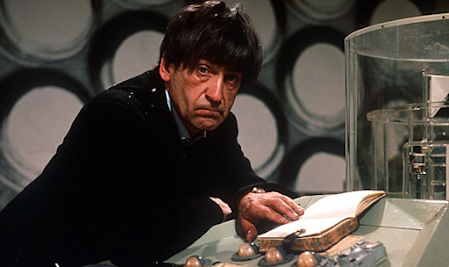
Patrick Troughton as the Second Doctor (1966-69).

However, the production team hit on the idea that, since the Doctor was an alien, he could perhaps "die" but then be reborn in a new, younger body. Hartnell was consulted on the idea and he gave it his approval, even suggesting his own replacement: Patrick Troughton. Troughton was duly cast and the Doctor changed his appearance for the first time at the end of the classic serial The Tenth Planet, which was also notable for introducing the Cybermen.

The reign of the Second Doctor was more consistent - he was joined by Highlander Jamie McCrimmon (Frazer Hines) for almost its entire length as his companion - but saw some changes in the format. The historical stories, which had never been hugely popular, were quietly dropped. The Doctor would still continue to visit historical periods but now would encounter science fiction threats there. There was a renewed focus on monsters, and the Second Doctor's reign saw the introduction of the Ice Warriors, Macra and the Great Intelligence, all of whom would return in the modern era of the show. Towards the end of the Second Doctor's run, he visited Earth in the near future and encountered a military organisation known as UNIT (United Nations Intelligence Taskforce), ironically inspired by the various times the Doctor had defeated alien incursions with the help of local military or government forces.

Troughton decided that three years was the optimal time to remain on Doctor Who without being typecast; the so-called "Troughton Rule" of each Doctor staying for three years or three seasons would be followed by seven succeeding Doctors, with three staying for an even shorter period and only two for a longer period. With his departure at the end of the sixth season, airing in 1969, the BBC decided to revamp the show by making it in full colour, which came at the cost of reducing the episode count to a more modest 26 episodes a year.

Jon Pertwee as the Third Doctor (1970-74).

Inspired by faster-moving US SF productions like Star Trek, not to mention the gadgets and action of the James Bond movies, there was a shift to more action. To save on costs, the TARDIS was grounded, with the Third Doctor, now played by Jon Pertwee, exiled to Earth by his own race, the Time Lords, for breaking their rules on non-interference. The Doctor joined UNIT as its scientific advisor and gained not just new companions but also a whole set of new allies, led by the formidable Brigadier Lethbridge-Stewart (Nicholas Courtney). The Doctor also gained a nemesis, in the form of the evil Time Lord known as the Master (Roger Delgado). Their Holmes-and-Moriarty-like banter and bickering became a hallmark of the Third Doctor's reign. This era also saw the first multi-Doctor celebration in The Three Doctors (1973), where Pertwee, Troughton and Hartnell's Doctors are united by time travel to face the threat of the insane Time Lord known as Omega. Pertwee stayed in the role for five years (1970-74), electing to leave after Roger Delgado's death in a tragic car crash.

Tom Baker as the Fourth Doctor (1974-81).

For the Fourth Doctor (1974-81), the BBC decided to cast the relatively unknown Tom Baker in the role. Baker's eccentric mannerisms, deep booming voice and idiosyncratic humour soon won him legions of fans, and his run on the show would generate many of the best-regarded Doctor Who stories of all time: The Ark in Space, Genesis of the Daleks, Pyramids of Mars, The Talons of Weng-Chiang, The Deadly Assassin, The Robots of Death, City of Death and more. Under Baker's reign, the show hits its highest-ever audience figures of over 16 million, and achieved its first breakthrough in the United States, with Baker stories airing on PBS creating a small but devoted following (including future Simpsons creator Matt Groening).

Peter Davison as the Fifth Doctor (1981-84).

Baker stayed in the role for seven years, still a record, and may have stayed for longer, but incoming new producer John Nathan-Turner was keen for a revamp, feeling the show needed to be revitalised for the 1980s. For Baker's last season a new, more electronic theme tune and title sequence was developed, younger companions were introduced and Baker's tendency to adlib dialogue and improvise on set was heavily reigned in. Baker quit at the end of the eighteenth season and was replaced by the younger Peter Davison as the Fifth Doctor (1981-84). During Davison's tenure it became clearer that the show's low budget was becoming extremely problematic in keeping the show relevant, and viewers interested, especially in the face of increasingly stiff competition from big-budget, glossy American shows. However, generally strong scripts ensured that Davison's reign was remembered fondly.

Colin Baker as the Sixth Doctor (1984-86).

Davison was succeeded by Colin Baker as the Sixth Doctor (1984-86), with the plan being that Baker's Doctor would be unpredictable and unstable, even dangerous, before evolving into a more civilised version of the Doctor. Unfortunately, this simply made him unlikeable out of the gate. Incoming, new BBC executives disliked the show and tried to kill it, but viewing figures remained reasonable. After an eighteen-month hiatus after Baker's first season, the show was brought back with a drastically cut episode count (to just 14 half-hour episodes) and a shift to a midweek timeslot opposite Britain's most popular show, Coronation Street, carefully designed to make the show unviable.

Sylvester McCoy as the Seventh Doctor (1987-89, 96).

Baker was also fired and replaced by Sylvester McCoy as the Seventh Doctor (1987-89), a comedian best known for an act involving putting ferrets in his trousers. Against the odds, McCoy played his Doctor as a master-manipulator and cunning instigator of plots, developing a formidable bond with his companion Ace (Sophie Aldred), a teenager from a rough London estate who thrives when taken on adventures in time and space. McCoy's era generated several classic stories and was on a creative and critical high when the BBC decided to "rest" show after its 26th season in 1989.

Paul McGann as the Eighth Doctor (1996).

Doctor Who spent sixteen years in the wilderness, with only a single TV special in 1996 starring Paul McGann as the short-lived Eighth Doctor. The show continued to generate considerable income for the BBC through VHS and, later, DVD sales, toys, models, video games, comic books and a vast range of novels and short story collections (including stories by Russell T. Davies, Steven Moffat, Paul Cornell and Mark Gatiss, amongst many others). The BBC kept trying to relaunch the show as a big-budget movie, but could not attract significant Hollywood interest.

Christopher Eccleston as the Ninth Doctor (2005).

Finally, the BBC resurrected Doctor Who in 2005. Russell T. Davies, one of the hottest British TV writers in the business and a lifelong Doctor Who fan, picked up the reigns after the success of his dramas Queer as Folk, The Second Coming and Casanova. He returned the show to Saturday night primetime and recruited Christopher Eccleston to the play role of the Ninth Doctor, with former pop star Billie Piper playing his companion Rose. The new show shared continuity with the old, but was softly rebooted, with a new premise which saw the Doctor as the last survivor of his race after they were annihilated in the Great Time War against the Daleks.

David Tennant as the Tenth Doctor (2005-10).

The show saw impressive viewing figures on its return, with young children particularly swept up in its charm. The show started shifting vast amounts of merchandise, and picked up steam on BBC America in the US. There was an early hiccup when Eccleston quit after just one season due to creative differences with one of the directors, but he was quickly replaced by David Tennant as the Tenth Doctor (2005-10). Tennant's performance came to be regarded as iconic, on a par with that of Tom Baker for the classic show, and his popularity was impressive. He did three full seasons as the Doctor and a series of specials. During Davies' run he also extended the franchise's reach to other shows, with the adult-focused Torchwood (2006-11) and the kid-friendly Sarah-Jane Adventures (2007-11) both launching on his watch.

Matt Smith as the Eleventh Doctor (2010-13).

Tennant's departure coincided with that of Davies, and the immensely popular writer Steven Moffat picked to succeed Davies. He brought in Matt Smith as the Eleventh Doctor (2010-13), who brought a younger energy to proceedings. Under Smith's sure hand, the show experienced arguably the zenith of its appeal and fame, achieving a major, breakthrough success in profile in the United States. The 50th anniversary special, Day of the Doctor, aired in cinemas worldwide and saw huge viewing figures achieved.

Peter Capaldi as the Twelfth Doctor (2013-17).

The reign of the Twelfth Doctor (2013-17), played by Peter Capaldi, was critically acclaimed, particular for the episode Heaven Sent, but saw complaints about convoluted plotting. The show also experienced budget problems during this time, airing increasingly intermittently and dropping its episode count. There was also speculation that Moffat had stayed too long (eight years, only one less than John Nathan-Turner in the 1980s); he departed alongside Capaldi.

Jodie Whittaker as the Thirteenth Doctor (2017-22).

Capaldi was succeeded by Jodie Whittaker as the Thirteenth Doctor (2017-22), the first actress to play the role. Chris Chibnall, who had been writing for the show since the Russell T. Davies era, became showrunner off the back of his hot detective show Broadchurch (2013-17). The show became more filmic during this period, with most sophisticated effects and expansive location filming in South Africa. However, the budget continued to be squeezed, with the show dropping to just ten episodes per season and extremely long gaps between seasons (not helped by the COVID pandemic). The show also moved from Saturday to Sunday nights, and the Christmas Special was dropped in favour of a New Year's Special that attracted far less attention. The show's critical acclaim dropped to its lowest level since its return in 2005, with criticism of the overlarge cast (which sometimes left the Doctor with little screen time), leaden pacing and a curious decision to retcon the Doctor's origins. Viewing figures also fell significantly during this period.

David Tennant as the Fourteenth Doctor (2022-23).

Despite early discussions about a five-season run and story arc, Whittaker and Chibnall decided to leave after three seasons and a series of special episodes; ironically, their very last episode as also their best, and best-regarded. In a shock move, the BBC was able to recruit Russell T. Davies to return to the show. Davies had gained international stature after leaving Who in 2010 through a series of prestige dramas, including Years and Years and It's a Sin. Davies used his return to leverage impressive results: Doctor Who would return to Saturday nights, the Christmas Special would return, the entire Doctor Who archive would be made available via the BBC iPlayer, the show would move to an independent production company (Bad Wolf, founded by Davies' former friends and coworkers from during his original tenure on the show) and Disney+ would co-fund the series and distribute it internationally on its streaming platform. For the show's 60th Anniversary, Davies would also bring back Tennant, albeit playing the distinctive Fourteenth Doctor rather than the return of the Tenth.

Ncuti Gatwa as the Fifteenth Doctor (2023-??).

It would be confirmed that Tennant's return would be limited, with Scottish-Rwandan actor Ncuti Gatwa cast as the Fifteenth Doctor, to debut in the 2023 Christmas Special. Gatwa is already filming his second season as the Doctor months before his first is due to air.

The appeal of Doctor Who is fairly obvious: the show can go anywhere in space or time. Despite a gradual accumulation of lore, backstory and story arcs over six decades, the show is mostly focused on standalone stories than anyone can enjoy. The show has always been aimed at family audiences, as Davies once said, to appeal to everyone from eight to eighty. The show features action, but the Doctor is reluctant to kill or use violence, preferring thinking and negotiation. The concept of regeneration, as well as the revolving door of companions, constantly allows the show to refresh itself every few years, with constant media interest in the next actor to take on the role.

That Doctor Who is still being made after sixty years is incredible. Hopefully it will go on at least sixty years more.

Saturday, 4 November 2023

DOCTOR WHO's first Dalek story gets major revamp for 60th anniversary

The BBC has confirmed that the very first Doctor Who story to feature the Daleks is to get a makeover and revamp for the imminent 60th Anniversary of the franchise.

Originally airing across seven episodes in late 1963 and early 1964, The Daleks was the first story to feature the titular tinpot menace, and the second-ever Doctor Who serial. The first serial, An Unearthly Child, which introduced the Doctor, the TARDIS and the first-ever companions (Susan, Ian and Barbara), had aired to fairly poor ratings, suggesting the new show would be cancelled before it ever really got off the ground. However, The Daleks was a smash-hit, almost tripling ratings over the course of its run and encouraging thousands of British schoolchildren to run around their playgrounds yelling "Exterminate!"

For the 60th anniversary, the serial has been re-edited from its original near three-hour runtime down to a breezier 75 minutes. Mark Ayres has contributed a re-edited musical score, building on the work of original composer Tristram Cary. Most impressively, the 75-minute cut has been completely colourised, with more than a year's work going into the process (the original six seasons of Doctor Who were recorded in black-and-white).

The original version of the serial will remain available on BBC iPlayer.

In the serial, the Doctor (William Hartnell), his granddaughter Susan (Carole Ann Ford) and their reluctant new companions Ian (William Russell) and Barbara (Jacqueline Hill) arrive on the planet Skaro, where an energy drain prevents the TARDIS from leaving. Outside they find a forest that has been completely petrified and evidence of a massive nuclear war in the recent past. They also discover an eerily empty, technologically-advanced city. Of course, the city is not as abandoned as first appears, and the Doctor is soon introduced to his most infamous foes.

The Daleks was originally written by Terry Nation and directed by Christopher Barry (episodes 1-2, 4-5) and Richard Martin (3, 6-7). The executive producer - today's equivalent of a showrunner - was Verity Lambert, and the script editor was David Whitaker. The serial aired from 21 December 1963 to 1 February 1964. The Daleks were designed by Raymond Cusick.

In 1965 the serial was adapted as the first Doctor Who feature film, Dr. Who and the Daleks, starring Peter Cushing as the Doctor.

The revamped version of The Daleks will be released on the BBC iPlayer on 23 November, the actual 60th Anniversary of the franchise.

Wednesday, 25 October 2023

BBC and Disney+ confirm DOCTOR WHO airdates

The BBC and its international partner, Disney+, have confirmed the dates that will finally see Doctor Who return to the airwaves. The three 60th Anniversary special episodes will air on 25 November, 2 December and 9 December respectively. The episodes will air in the UK on BBC1 and be simultaneously released for international audiences on Disney+. The three episodes (The Star Beast, Wild Blue Yonder and The Giggle) see David Tennant playing the Fourteenth Doctor, extremely confused over why his new face resembles that of his previous, tenth incarnation.


An additional special episode will air during the festive season, possibly on Christmas Day, featuring the first full adventure for Ncuti Gatwa as the Fifteenth Doctor. Series 14 of the show (since its return in 2005; the show's 40th season overall since 1963) will start airing in early 2024. Next year's Christmas special is already in the bag and production is currently underway on Series 15, as part of returning showrunner Russell T. Davies' plan to return the show to airing annually without any multi-year breaks.

The new behind-the-scenes companion show, Doctor Who: Unleashed will launch at the same time, with each episode becoming available on BBC3, BBC iPlayer and Disney+ after each new episode airs.

The 60th Anniversary itself falls on 23 November.

Friday, 13 October 2023

Entire (existing) run of DOCTOR WHO to be available on BBC iPlayer

The BBC have confirmed that the entire run of iconic science fiction series Doctor Who will be available on the BBC iPlayer streaming service from the start of November.

Returning showrunner Russell T. Davies has confirmed that he leveraged the deal as part of the conditions for his return to the franchise. Previously the BBC had only made the "new" run of the show - the one starting in 2005 with Christopher Eccleston as the Doctor and subsequently carrying on through the David Tennant, Matt Smith, Peter Capaldi and Jodie Whittaker eras - available on the iPlayer whilst keeping the "old" run (from 1963 to 1989) available on legacy media or on the BritBox paid-for streaming service.

The move will see almost 800 episodes of Doctor Who available in one location for one time. Unfortunately, it will not be the complete run of the show: 97 episodes from the first six seasons (1963-69) remain missing following the BBC's junking policy of old episodes in the 1970s. Some of these missing episodes have been reconstructed for DVD and Blu-Ray with still photographs and audio recordings (the audio for all the episodes has survived), or the use of animation and the original audio tracks. It's unclear if these reconstructions will be made available as well.

It's also unclear if the episodes will include those that have been upscaled for release on Blu-Ray in the last few years, or just the standard versions. The BBC has confirmed that it will be adding subtitles, audio description and sign language to every single episode for the first time.

As well as both eras of Doctor Who, spin-off shows Torchwood, The Sarah Jane Adventures and Class will also be available, along the 1996 TV movie (starring Paul McGann as the Eighth Doctor), the various mini-episodes produced over the years, and every episode of behind-the-scenes show Doctor Who Confidential. The new service will also include some sixty new special features produced for the show's 60th Anniversary (due on 23 November), and thousands of documents and photographs, many rescanned at 8K for the first time.

So far the BBC has not confirmed if the two Doctor Who 1960s theatrical feature films - Dr. Who and the Daleks and Daleks: Invasion Earth 2150 AD - will be included.

Davies and the BBC have so far declined to confirm when three new episodes produced for the show's 60th Anniversary will air, except they will be in the month of November. David Tennant plays the Fourteenth Doctor, who has to find out why his new incarnation is identical to his Tenth. Ncuti Gatwa will take over as the Fifteenth Doctor for a Christmas Special airing in December, and then at least the next two full seasons of the show, the first to air in early 2024.

Davies has also confirmed that his plan is to produce at least nine new episodes of Doctor Who a year, with no more multi-year breaks between seasons, and there are plans for spin-off shows exploring other aspects of the setting (a new show revolving around Earth defence force UNIT is rumoured, but unconfirmed).

Saturday, 23 September 2023

New DOCTOR WHO 60th anniversary specials trailer unveiled

The BBC has unveiled a new trailer for their upcoming trilogy of special episodes which will celebrate Doctor Who's 60th anniversary.

The trailer sees the Fourteenth Doctor (David Tennant) - who for unclear reasons has the exact same face and personality as his tenth incarnation - arriving on contemporary Earth to find the planet in danger (as per usual). A key to the puzzle lies with his former companion Donna Noble (Catherine Tate), but the last time they met, the Doctor had to wipe her memory of him to save her life. Should she remember who he is, the results could be fatal.

The trailer confirms the return of Kate Lethbridge-Stewart (Jemma Redgrave), the head of UNIT, and also the arrival on Earth of the mysterious Beep the Meep (voiced by Miriam Margoyles) and their alien pursuers. Also appearing in this trilogy is a mysterious toyshop owner (Neil Patrick Harris), who appears to be an old acquaintance of the Doctor.

The Fourteenth Doctor has to save the planet, stop his companion's head exploding and pave the way for the arrival of his fifteenth incarnation (to be played by Ncuti Gatwa), all in just three episodes.

Doctor Who returns to the BBC and, internationally, Disney+, around the time of the anniversary on 23 November, although precise airdates have yet to be confirmed. As well as the three new episodes, there will be a Christmas special around 25 December before an eight-episode full season airs in the spring.

Saturday, 13 May 2023

DOCTOR WHO gets 60th anniversary episode titles and new trailer

The BBC has unveiled a short trailer for its upcoming Doctor Who 60th anniversary specials. The BBC will air three special episodes in November to commemorate the anniversary, and now we know what they're called.


The first episode is called The Star Beast and sees the newly-regenerated Fourteenth Doctor (David Tennant) arriving on contemporary Earth, confused as hell as to why his new incarnation looks identical to his tenth. The Doctor is drawn into a conflict between the cute Beep the Meep and the monstrous Wrarth Warriors, who are pursuing the fluffball for reasons unknown. Also involved is the Doctor's former companion Donna Noble (Catherine Tate), her daughter Rose (Yasmin Finney) and grandfather Wilfred Mott (the late Bernard Cribbins, in his final Doctor Who appearance).

The second episode is called Wild Blue Yonder and sees the Doctor and Donna confront a mysterious showman (Neil Patrick Harris).

The third episode is called The Giggle and nobody is talking about that one. It's presumed that this episode will explain why the Fourteenth Doctor resembles the Tenth, and will see his regeneration into the Fifteenth Doctor (Ncuti Gatwa).

All three episodes are written by Russell T. Davies and directed by Rachel Talalay, Tom Kingsley and Chanya Button respectively.

We won't have to wait too long for more Doctor Who, either. The Fifteenth Doctor will get his first full outing in the Doctor Who Christmas Special (the first since 2017), presumed to be aired on Christmas Day this year, and then Series 14 proper, consisting of eight episodes, will follow in early 2024 and see the Fifteenth Doctor joined by new companion Ruby Sunday, to be played by Millie Gibson.

Monday, 24 October 2022

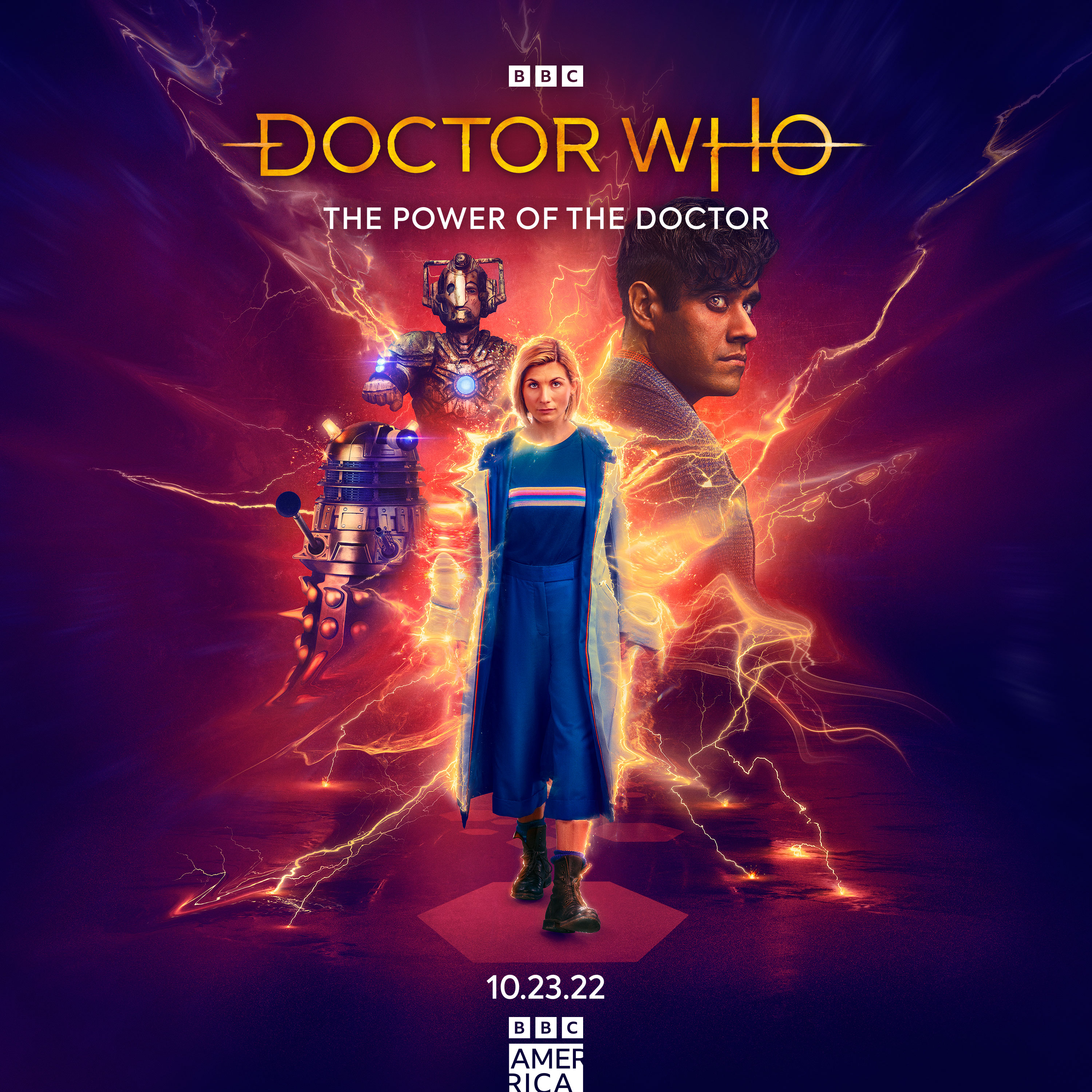
DOCTOR WHO special sets new records and tees up the show's 60th Anniversary year

The BBC has aired the final episode of Doctor Who to feature Jodie Whittaker as the Thirteenth Doctor, setting several records for the show (and possibly two world records) in the process. It also set things up for the show's 60th anniversary in 2023, which will see Russell T. Davies return as showrunner after a thirteen-year gap.

Note that this article contains SPOILERS for the episode in question.


The Power of the Doctor marked the end of the Thirteenth Doctor's run, 4 years, 9 months and 28 days after her first appearance. Remarkably, this makes Whittaker the second-longest-serving Doctor in terms of appearances, behind only Tom Baker (who played the Doctor for 6 years, 9 months and 13 days from 1974 to 1981). However, due to the extremely low number of episodes produced in this time, she only ranks ninth in terms of screentime. And arguably both the Seventh and Eight Doctors were "in station" for longer (almost nine years apiece), as the show was on hiatus after their runs ended but without a regeneration scene.

The episode saw the return of Janet Fielding as former companion to the Fifth Doctor, Tegan Jovanka and Sophie Aldred as Dorothy, aka "Ace," former companion to the Seventh Doctor. Tegan last appeared on-screen in 1984 and Ace in 1989, and was the incumbent companion when the show went off-air for its first long hiatus.

However, the episode also saw the surprise return of three additional companions in extended cameos: Mel Bush (Bonnie Langford), who last appeared on screen in 1987; Jo Jones (nee Grant) (Katy Manning), who last appeared in Doctor Who in 1973 (but did have a guest appearance on The Sarah Jane Adventures in 2010); and, most remarkably, original companion Ian Chesterton (William Russell), who last appeared on-screen in 1965.

Russell's return sets potentially two world records. The first is the record for the longest hiatus between the same actor reprising the same role. This was formerly set by an actor on British soap opera Coronation Street who left in 1968 and returned for a storyline in 2011 (a gap of 43 years). For Russell this gap is over 57 years, which easily beats that record. The second is the record for length of time between the same actor's first and last appearances in the same show as the same character, as Russell appeared in the very first episode of Doctor Who, An Unearthly Child, which aired on 23 November 1963, giving us a run of just under 59 years.

The episode also established several records within Doctor Who itself, including the episode with the largest number of different Doctors appearing. As well as Whittaker as the Thirteenth Doctor, the episode saw David Bradley reprise his role as the First Doctor (subbing for the deceased William Hartnell, as he has in several previous episodes); Peter Davison as the Fifth Doctor (for the first time since 2007); Colin Baker as the Sixth Doctor (for the first time since 1986); Sylvester McCoy as the Seventh Doctor (for the first time since 1996); and Paul McGann as the Eighth Doctor (for the first time since 2013). The episode also sees the return of the Fugitive Doctor, played by Jo Martin, and marks the first appearance by David Tennant as the Fourteenth Doctor, who inexplicably has an identical appearance to his tenth incarnation. Sacha Dhawan, who plays the Master, also spends some time in the episode playing the Doctor, making for a total of nine actors playing the role in one episode.

Eight companions appearing in the story is not a record, however, as The Five Doctors (1983) featured the appearance of no less than ten companions.

The episode ended in an unusual fashion with a sequence written by the returning Russell T. Davies, with David Tennant being unveiled as the Fourteenth Doctor. Tennant previously played the Tenth Doctor from 2005 to 2010, returning for the 50th Anniversary Special in 2013. The reason for the new Doctor being identical to a former incarnation is unknown, and likely a prime driver of the plot for the 60th Anniversary year. 

The BBC has now confirmed previous reports that there will be three anniversary specials airing in November 2023, with Tennant in place for all of them before he regenerates into the Fifteenth Doctor, to be played by Ncuti Gatwa. Gatwa's first full appearance will be in a Christmas special to air in December 2023, followed by the full fourteenth series in early 2024. It is known for the specials that Catherine Tate is also returning as former companion Rose Temple-Noble and Bernard Cribbins as Wilfred, his final role before he sadly passed away after the completion of filming, whilst Neil Patrick Harris is playing a villainous role.