Showing posts with label nicholas meyer. Show all posts

Friday, 28 May 2021

Star Trek VI: The Undiscovered Country

The Klingon moon Praxis has exploded, disrupting the Empire's energy production and polluting the atmosphere of the Klingon homeworld. The United Federation of Planets sees the catastrophe as an opportunity, offering assistance in repairing the damage in return for a lasting peace. The Klingon Chancellor travels to Earth to negotiate the treaty but is killed, his assassination pinned on Captain Kirk, a well-known enemy of the Klingon Empire. With Kirk and McCoy imprisoned, it falls to Captain Spock and the Enterprise crew to exonerate their comrades, rescue them and stop those who are determined to end the chances of peace forever.


With the release of Star Trek V in 1989, it was felt that the time of the original Star Trek crew had come to an end, and the next film would star the Next Generation crew. However, Paramount were not keen on waiting until The Next Generation finished before making a new movie in the franchise. Plans for a prequel film set at Starfleet Academy also failed to excite anyone. At the same time, the collapse of the Berlin Wall and the end of the Cold War was firing up the excitement of Leonard Nimoy and Wrath of Khan writer-director (and Voyage Home co-writer) Nicholas Meyer, who saw the opportunity for a great analogy with real-life events. The frugal Meyer's involvement worked for Paramount, who wanted to make the film for less money than the disastrous Final Frontier, and also for Nimoy, who had pondered directing but knew it would annoy co-star Shatner; Meyer was a neutral figure everyone respected and whose work on two previous movies had been lauded. The meme that "every odd-numbered Star Trek film is rubbish" had started gathering pace by this time as well, so the fact the next movie was an even-numbered one and Meyer had worked on the two previous even-numbered films was encouraging.

Star Trek VI is not a subtle film. The comparisons to contemporary politics are fairly obvious, with the destruction of Praxis being basically Chernobyl in space, and the Klingon-Federation peace talks are the end of the Cold War by any other name. However, the film does start building a genuine sense of mystery. When the Enterprise fires on the Klingon ship, despite its records showing a full set of torpedoes on board, it creates a paradox that Spock, Scotty, Chekov and Uhura have to work to unravel. This is great fun - Star Trek usually handles mysteries well, at least those that do not bog down in technobabble - and is preceded by some very powerful scenes employing actors of the calibre of David Warner and Christopher Plummer (an old friend of Shatner's, who's clearly having an absolute whale of a time) as they debate realpolitik and quote Shakespeare. There some startling scenes as Kirk has to confront his racism towards the Klingons, inspired by his constant struggles with them and their murder of his son (in The Search for Spock). Characterisation is strong and the actors do well with the material, Meyer again getting a great performance out of Shatner (though he seems more willing to let some hammier takes go through, possibly due to a lack of time and money) and Nimoy showing up with his A-game, having understandably lost the will to live during The Final Frontier.

The film also features George Takei's best performance as Sulu, as well as giving him much more to do as the Captain of the Excelsior. More disappointing is the absence of Saavik, who was originally supposed to be the traitor on the Enterprise. Kim Cattrall auditioned for the part and impressed Nimoy and Meyer, but was unimpressed to learn she would be the third actress to play the role and turned it down. The producers agreed to rewrites making her a new character, Valeris (Cattrall even named her). However, the script was not adjusted to fit a more Vulcan-like character, leaving Saavik's more emotional tendencies (a result of her supposed half-Romulan heritage, although that revelation had been cut out of The Wrath of Khan) in place with a supposedly purely-Vulcan character. Cattrall does as good a job as she can as Valeris, but the character is somewhat under-written as a result of the changes.

The sequences on Rura Penthe are also disappointing; the lack of budget results in unconvincing sets and iffy alien makeup, though Iman gives a good performance as Martia, and the sequence relies a lot on Shatner and DeForest Kelley's effortless banter to get through it.

The film has a rousing climax with a solid space battle, and it's good to see the constantly-hamstrung USS Excelsior finally cutting loose and showing what it is capable of. The fact that this time everyone knew they were making their last full picture together makes for a more final and emotional ending, enhanced by the fact that the film launched in Star Trek's 25th anniversary year and that Gene Roddenberry sadly passed away shortly before the premiere. 

Star Trek VI: The Undiscovered Country (****) is not as accomplished as either The Wrath of Khan or The Voyage Home, but comfortably emerges as the third-best Star Trek film, with some excellent characters and storylines and some great dialogue. Only a few clunky scenes and budget constraints hold it back from matching the earlier two Meyer films.

Sunday, 23 May 2021

Wertzone Classics: Star Trek II: The Wrath of Khan

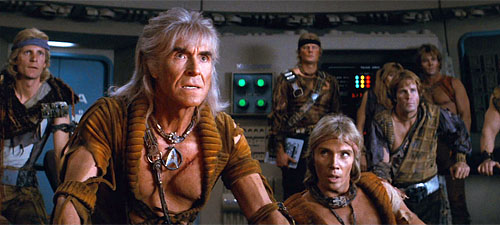
The Genesis Device: a machine of capable of terraforming a lifeless body into a terrestrial planet within hours. But it also has the potential to be used as a terrible weapon. The USS Reliant is assigned to help the Genesis science team find a planet to test the device, but inadvertently stumbles across the exiled home of genetically-engineered tyrant Khan Noonian Singh and the crew of the sleeper ship SS Botany Bay. Khan seizes control of the Reliant and develops a plan with two objectives: the capture of the Genesis Device, and the death of the man who sent him into exile for fifteen years, Admiral James T. Kirk.


If there's a list of "what not to do" when you make a popcorn-selling, blockbuster film, Star Trek II breaks every rule on it. You shouldn't make a film in which the hero and villain never come face-to-face; you should never make a film where the plot is a sequel to a single episode of television which aired fifteen years earlier (certainly not in 1982, when you can't even buy that episode on VHS); you should not have a film completely lacking in any kind of romance plot; you should not have your villain in an inferior spacecraft to the good guys; and you probably shouldn't pepper the film with quotes from literature and ensure the script is full of thematic richness.

It's by breaking every one of those rules that Star Trek II: The Wrath of Khan became not only the finest Star Trek movie ever made (a position it retains with near-contemptuous ease forty years on), but a genuinely great science fiction movie, one of the very best of the 1980s which marks a place on the podium alongside the likes of Aliens, The Terminator, Back to the Future, Predator, The Empire Strikes Back. It certainly saved the Star Trek franchise after the over-indulgence of Star Trek: The Motion Picture nearly sank it, and set the scene for everything that followed, including two direct sequels and a plethora of spin-off TV shows.

The Wrath of Khan works on every single level. Franchise newcomers Harve Bennett (writing) and Nicholas Meyer (directing) brought both a fresh viewpoint but also respect for the property when coming aboard. Bennett watched every single episode of Star Trek ever made to come up with ideas for the story, whilst Meyer engaged the actors in long conversations about their characters and motivations. The actors, who were generally not tested by the material in The Motion Picture, are given much richer material here. There seems to be more dialogue in the opening half-hour of this film than there is the entirety of its forebear, and it's great stuff. Kirk is struggling with a full-blown midlife crisis, moving between self-pity and frustration, and the oft-mocked Shatner sells that extremely well. Shatner in fact gives a career-best performance in this movie and its sequel, with the scripts calling on him to plumb emotional depths he is rarely asked to do elsewhere. DeForest Kelley also delivers impressively as McCoy tries to help his friend whilst calling him on his BS. Leonard Nimoy gives a terrific performance as Spock, as you'd expect, but goes above and beyond the call of duty, especially in his scenes at the end of the film.

The rest of the crew are under-serviced as normal, but do at least get a few good scenes: James Doohan's Scotty has to deal with the death of a family member in service and Walter Koenig's Chekov gets a promotion to first officer of the USS Reliant and more involved in the story. Nichelle Nichols and George Takei get relatively short shrift (Sulu had more material where it's revealed he's been promoted to Captain and is going out on one last hurrah, but it was cut in production). Newcomer Kirstie Alley gets a lot more great material as Lt. Saavik and is a very fine addition to the crew, and it's a shame she did not return in subsequent films. Oddly, a line referencing the fact that Saavik is actually half-Romulan, half-Vulcan was cut from the movie (and not restored in any one of the half-dozen or so different cuts and edits of the movie released over the years), whilst a later joke by McCoy referring to this fact is left in, somewhat confusingly, but it's not a major issue.

Towering over the film, however, is Ricardo Montalbán, reprising his role as Khan from the 1967 TV episode Space Seed. Montalbán was nervous at reprising the role after such a long break, especially since he'd been playing the moral Mr. Roarke on Fantasy Island for five years and was concerned about his image. However, it only took a single re-viewing of the original episode to find the character again. Montalbán is a magnetic, charismatic presence who dominates the film but never overwhelms it. Whether it's quoting Moby Dick or plotting his vengeance on Kirk, he's a formidable opponent and comfortably earns his reputation as Star Trek's greatest single villain, with his defeat coming as a result of his own hubris and inexperience at commanding a starship rather than some deus ex machina moment.

The film was famously produced for a tiny budget (barely a quarter that of The Motion Picture), restricting most of the action to the Enterprise bridge (which pulls double duty as the bridge of the Reliant) and other sets inherited from the original movie, and the Regula I space station. Fortunately, a positive studio reception to early footage saw the effects footage expanded, and the visual effects in the space battles between the Enterprise and Reliant remain outstanding four decades on. The battles are well-handled, depicting the two ships as lumbering battleships able to both dish out and withstand tremendous amounts of punishment, but every hit still hurts and can still kill people. The Enterprise is a larger, more powerful ship but the Reliant gets the drop on it in the first fight, making for an evenly-matched climactic battle in the Mutara Nebula (impressively depicted with gas and fluid tanks). The battle is also tremendously visceral, with decks collapsing and crewmen getting crushed, burned or subjected to lethal radiation in a manner that hadn't been seen previously on Trek (and led to the movie getting a hitherto unthinkable "15" certificate in the UK).

Arguably the most influential, important scene in the movie in terms of technical legacy is the still-impressive sequence depicting the Genesis Device terraforming a planet. Completely generated in a computer in 1981, it is one of the first 100% computer-generated scenes to ever appear in a movie (certainly one that wasn't a simple wireframe). The team behind it went on to other things; they later rebranded themselves under the name "Pixar."

Particularly worthy of mention is James Horner's score, which re-uses a few elements from his earlier movies (particularly Battle for the Planets) but mostly consists of new material. His new overture, used for flybys of the Enterprise and the main title theme, is an instant classic. Of course, what really got people talking when the movie was released was the jaw-dropping ending, which in the pre-Internet age had successfully been kept secret in a manner unlikely to be replicated today (and rumours about it had been deflected by the opening scene of the film, which misled audiences). It's still an emotionally powerful moment played by the actors in a convincing and almost poetic manner. In fact, despite the sometimes hokey dialogue as related above, the movie has a number of iconic lines and quotes (mostly from A Tale of Two Cities and Moby Dick) which help give the movie a thematically satisfying through-line. This is a movie about not just revenge, but age, finding your right place in the world and the fact that the needs of the many outweigh the needs of the few (or indeed, the one). There's also satisfying attention paid to not copping out on the story. The writers couldn't conceive of a way that Khan and Kirk could meet without Kirk being killed, so they simply don't meet. And whilst victory is eventually won, it is only at a hard, hard cost.

Star Trek II: The Wrath of Khan (*****) is a great movie about revenge, family, the road not travelled and aging. It's also a terrific action movie, but one where the action is not allowed to outweigh the characterisation. It's simply a classic science fiction movie and represents the standard that Star Trek would occasionally, at its very best, match (in episodes like The Best of Both Worlds, The Inner Light, The Visitor and In the Pale Moonlight), but never exceed.

A note on versions: Star Trek II has been reissued and re-released more than any other Star Trek film, and three distinct versions now exist. The original, 113-minute theatrical cut remains very fine and can be found on the 2009 Blu-Ray collected edition of the first ten films. An extended or "TV" cut, three minutes longer, adds a few scenes that were cut from the theatrical version of the film (such as Kirk's shuttle approaching the Enterprise and Kirk meeting Peter Preston in Engineering). The Director's Cut, overseen by Nicholas Meyer and released on DVD in 2002 and Blu-Ray in 2016 (as a digitally-remastered version which rebuilds the movie from scratch from the original film elements), is now definitive. It recuts several scenes to incorporate more dialogue and characterisation and confirms that Preston is Scotty's nephew. The Blu-Ray version did accidentally omit a scene where Kirk tells McCoy and Saavik that David is his son. This version of the film has also been listed several times for 4K release, which for some reason has never appeared.

Note: I previously reviewed the film here.

Monday, 25 September 2017

STAR TREK DISCOVERY: first impressions

The first two episodes of Star Trek: Discovery have aired in the US and are now available on Netflix in most other countries. Here's my thoughts after watching both episodes.

CAUTION: SPOILERS FOR BOTH EPISODES


First up, the first two episodes, The Vulcan Hello and Battle at the Binary Stars, are a single two-hour episode, and really should have been presented as such. Dividing the two episodes doesn't help either half (and shutting the second episode behind a paywall in the US is a really bad idea). Secondly, the two episodes combined are a prologue to the rest of the series. We know that the premise of Star Trek: Discovery is that it will cover the adventures of the USS Discovery during a time of renewed Federation/Klingon hostilities, ten years before the events of the original series. These first two episodes establish the reason for the renewal of hostilities, but the Discovery itself and Captain Lorca (Jason Isaacs) are both MIA, which is a weird choice. At the end of these two hours we may have gotten to know a couple of the characters but we really don't know how the series itself will play out week-by-week.

Instead the two episodes focus strongly on Michael Burnham (Sonequa Martin-Green), a Starfleet officer who had been been raised on Vulcan after her parents were murdered in a Klingon border skirmish. Burnham is a mass of contradictions, her human emotions straining against Vulcan logical training and conditioning, which leads to a couple of bad choices which stain her reputation. Burnham is the executive officer of the USS Shenzhou, serving under Captain Philippa Georgiou (Michelle Yeoh), who has mentored Burnham extensively and considers her now ready to step up as a captain in her own right, just before a crisis gives her an opportunity to show those skills...and she fails. The two-parter ends with Burnham being court-martialed for mutiny and imprisoned.

There's a lot to unpack here and a full review will have to wait until the season (or at least the first half, which is airing as a discrete mini-season with a break over Christmas) is complete. It's a brave idea to show such a flawed central character in Star Trek and have them disgraced and having made several bad calls before the pilot is over. It's even odder to have them making those decisions for stupid reasons. Sarek reveals that the Vulcans would attack Klingon ships on sight, attacking with overwhelming force until they had earned the Klingons respect. With the Shenzhou already outgunned and then, seconds later, massively outnumbered by the Klingon reinforcements, this option - logical under other circumstances - is clearly not viable, but Burnham pursues it regardless of the change in circumstance. I'm hoping this is a well-thought out character flaw - Burnham's need to win Vulcan respect results in her pursuing courses of action through dogma which even Vulcans would reject - rather than bad writing, but I am not hopeful on that point.


Performance-wise, the episode is a strong success. Doug Jones is exceptional as Lt. Commander Saru and Martin-Green gives an excellent performance, especially compared to her less-developed role on The Walking Dead. Michelle Yeoh is, of course, utterly superb. The Klingon actors fare less well: the new Klingon makeup is incredibly restrictive and inhibits emoting. The need for all the Klingons to speak Klingon all the time also massively restricts their performance. Whilst the TNG-era Klingons could be theatrical and OTT, they at least got across their passion and the actors could go to town with the roles. The Klingon actors here might be doing exceptional work, but with both the make-up and language choice constraining them, we can't really tell. This is something they need to address moving forwards, otherwise the Klingons are going to be a pretty tedious enemy.

Effects-wise the show is quite impressive, with tons of ambitious tracking shots and full-on space battles. Things aren't as hectic and nonsensical as with the Abrams movies and some of the shots are breathtaking. However, there's less attention paid to things like strategy in the space battles, which devolve into lots of ships flying around firing at things randomly. Ship design could also be better: the Shenzhou is derivative of earlier designs (particularly the NX-01 Enterprise and Akira) and the Klingons are a baffling mish-mash of random designs which don't follow very logically on from established Klingon designs.

Discovery's connections with the rest of the Star Trek canon are questionable: Spock having an adopted human sister he never once mentioned ever seems...unlikely. The Shenzhou looks more advanced than Picard's Enterprise-D, let alone the Constitution-class Enterprise which (according to the timeline) is already in service at this point in Star Trek history (with Spock on board) under Captain Pike. And the less said about the awkward new Klingon design the better.

As the two-parter draws to a close, it has certainly set up an interesting paradigm that is worth exploring further. In terms of effects, casting and performances the show is very promising, but the writing needs to be better, the characterisation more coherent and the show really needs to start paying attention to the canon and stop trying to change things just for the sake of change (if you're going to do that, why even make a Star Trek show in the first place?). Based on this evidence, Discovery still has it all to play for and The Expanse is in no danger of losing its title as "Best Space Opera Show Currently on Air" just yet.

Star Trek: Discovery airs every Sunday on CBS All Access in the States and every Monday on Netflix in most of the rest of the world.

Thursday, 3 August 2017

CBS planning a second STAR TREK series...which is also a prequel

CBS's Star Trek: Discovery finally starts airing in September and it'll be interesting to see how well the show does. The series has already made a strong profit from overseas sales (mostly through Netflix) before it even arrives on CBS All Access in the United States, so it will be interesting to see how well it does. However, not willing to let the grass grow below their feet, CBS are already planning a second new Star Trek series.

Anyone up for 10 episodes of Khan hanging out in a spaceship in a desert? Anyone?

This new idea is...a bit unnecessary. Nicholas Meyer, who has been providing writing and production assistance on Discovery, is revisiting arguably his greatest triumph - Star Trek II: The Wrath of Khan - to plan a series (possibly a limited mini-series) exploring what happened to Khan and his band of genetically-engineered exiles on Ceti Alpha V during the fifteen years between the Original Series episode Space Seed and the events of the movie.

I should, of course, point out that The Wrath of Khan answered this pretty well: the guys and girls played chess a lot, read Moby Dick way too much, and a bunch of them died. And that's kind of it.

CBS, please listen. What most fans want is a new series set 20+ years after the events of TNG, DS9 and Voyager, really exploring the Final Frontier and setting up new characters and events that should have the chance to be as iconic as what has come before. This constant stream of reboots and prequels is unoriginal and denying a new generation of viewers the chance to get their own crew of characters to relate to. I suspect Discovery will be good and this new Meyer series will probably be good, but neither have the freedom to tell stories the way they may want, as both are handicapped by canon and continuity (or risk ignoring it and irritating fans, as the unwarranted changes to the Klingons have already shown). Let's see something new, cool and interesting.

Thursday, 1 September 2016

Bryan Fuller spills more info on AMERICAN GODS and STAR TREK: DISCOVERY

Nerd World Report have a lengthy interview with Bryan Fuller, the producer/showrunner behind both Starz's American Gods and CBS's Star Trek: Discovery.


Fuller packs in a fair bit of info from both shows, including:

American Gods

The first, nine-episode season will cover roughly a quarter of Neil Gaiman's novel. A major and infamous event involving the goddess Bilquis will be in Episode 1.

Bryan Fuller read the novel of American Gods about a year after it was originally published, so was a fan of the book a long time before the TV show was conceived.


Star Trek: Discovery

The show opens with a two-part episode. Part 1 is co-written by Bryan Fuller and Alex Kurtzman and Part 2 is written by Nicholas Meyer.

The main character is nicknamed "Number One" in honour of Majel Barrett's character from the original Star Trek pilot, The Cage, but isn't exactly the same character.

It's not fully decided yet if the show will have a totally new score or will pay tribute to music from previous series.

Originally the series was conceived as being able to take place in either the original (or "Prime") timeline or the Abramsverse (aka "Kelvin Timeline"). Kurtzman and Fuller settled on the Prime timeline because it meant they didn't have to track what was going on in the movies and vice versa (although I suspect the legal issues played their part as well).

Both shows are being shot in Toronto, with American Gods wrapping up production shortly and Star Trek: Discovery now in pre-production. Both shows are expected to air in early 2017.

Thursday, 11 August 2016

STAR TREK: DISCOVERY will be yet another STAR TREK prequel for no apparent reason

Star Trek is very much a franchise based on the idea on going out into the universe and exploring strange new worlds and civilisations and boldly going where no one has gone before. So that makes the news that CBS's Star Trek: Discovery is going to be yet another redundant prequel a bit perplexing.


Executive producer and showrunner Bryan Fuller has confirmed that Star Trek: Discovery will be set about ten years before the time of Kirk, Spock and company. It will be a time when the Federation is still exploring new parts of the galaxy, when the Klingons are still hostile and when no-one's heard from the Romulans for ninety years. Other Trek staple species like the Cardassians, Ferengi and Borg are still decades away from being contacted.

Great, I guess? Discovery will be the third Star Trek project in a row - after the 2001-04 TV show Star Trek: Enterprise and the new alternate-continuity movies launched in 2009 - to go back in time and be a prequel or alternate take on stories we've already seen. And it's getting a bit stale, to be honest.

Star Trek is fundamentally about pushing things forward and doing new things. No-one is going to argue that the triple punch of Star Trek: The Next Generation, Deep Space Nine and Voyager (aka the 24th Century series) did exhaust an enormous amount of story possibilities as well as building up some complex continuity over the course of fourteen years, but a new Star Trek series set twenty or fifty years after them - effectively a Next Next Generation - would dispense with such issues as well as tipping its hat at what came before and allowing bold writers to chart out completely different concepts. Bryan Fuller's Star Trek: Federation concept, which depicted a faltering and weak Federation about to collapse and being reinspired by the adventures of a new USS Enterprise commanded by a distant descendant of James T. Kirk, was cheesy as hell but at least it allowed for the possibility of exploring new worlds and doing new things.

This isn't to say that Discovery will be a bad show. I'd be surprised if it was, with the likes of Fuller and Nicholas Meyer writing episodes, and the 13 episode run should allow for tighter storytelling with less filler and space-anomaly-of-the-week episodes. But it's also going to be constrained in its storytelling by concerns over continuity and we know that nothing is really going to get shaken up. It'll be Star Trek boldly going exactly where it's been before and that's really not cutting it anymore. But hopefully, if Discovery is a big success, we'll see another show that takes the much-needed leap forwards into the 25th Century and delivers to us something that really is fresh, interesting and new.

More interesting is the idea that the "main character" will be a lieutenant commander on the Discovery and the main cast focus and dynamic won't be the traditional bridge crew setup. Fuller also confirmed there would be more aliens, the show would feature robots and would also be inspired by a key event referenced in the original series but not shown. The only incident which might apply is the destruction of the USS Farragut, when a young Lt. Kirk escaped from a space monster that killed his captain and most of his crew. However, that seems to contradict Fuller's stance that there won't be any original series characters in Discovery, at least to start with.

Star Trek: Discovery debuts in January 2017 on CBS All Access in the United States, on SPACE in Canada and on Netflix in most of the rest of the world.

Thursday, 28 July 2016

STAR TREK: DISCOVERY already profitable before production begins

Star Trek: Discovery, the new Star Trek TV series that will launch in January, has already started generating a profit for CBS. Which is pretty good going considering not a single frame of footage has been shot for it yet (discounting some CG test shots released at the weekend).


Hollywood accounting is bizarre and obscure at the best of times, but this is an extreme example. CBS has pre-sold the show to Space in Canada and to Netflix in pretty much the rest of the world. Combined with a recent bump in subscribers to CBS All Access (where the show will debut), taking it over two million subscribers, this has made the show profitable. It is currently in pre-production in Toronto with filming next expected to start until September.

As part the announcement, CBS also confirmed that Season 1 of the show will consist of thirteen episodes.


Sunday, 24 July 2016

New STAR TREK TV series given a name and setting

CBS have confirmed that their new Star Trek series will be called Star Trek: Discovery. The new series will follow a mission involving the USS Discovery (NCC-1031), a Federation starship, and will be set in the "Prime" timeline (i.e. the same timeline and continuity as the original series, The Next Generation, Deep Space Nine and Voyager).


Executive producer Bryan Fuller would not confirm precisely when in the timeline the show would be set. He previously shot down a rumour that the show would be set between Star Trek VI: The Undiscovered Country and Star Trek: The Next Generation and suggested that characters and actors from the previous shows could appear in later seasons of the new series, hinting at a post-Voyager timeframe. However, the USS Discovery is a deliberately retro design (drawing on Ralph McQuarrie's 1970s concept art for Star Trek: The Motion Picture) and its early design number suggests it's an old ship, predating even the original Enterprise. Fans have already speculated that it's an old ship pulled back into service for some reason, or the vessel is carried forwards in time as part of the new storyline.

Little else is known at the moment, save that filming starts in September, the series will consist of between 10 and 13 episodes and the show will debut in January on CBS before moving onto CBS All Access in the States. Space will air the show in Canada and Netflix will broadcast the series in most other territories.

Saturday, 25 June 2016

Star Trek at 50: Returning to the Final Frontier

In January 2017, CBS will air the first new television episode of Star Trek in twelve years. It will be just over twenty-nine years since Star Trek: The Next Generation debuted, and just over fifty since the franchise started in the first place.


A new Star Trek TV show has been on the cards since Enterprise was cancelled in 2005, but development was delayed by the divorce between CBS and Paramount that saw the Star Trek rights split between the two companies. When Paramount began releasing its new Star Trek movies under the oversight of J.J. Abrams, CBS was also uncertain how to respond. It did not have the rights to make a TV show set in the Abramsverse and relations between the two companies were cool enough to make it unlikely they could get them.

A few things changed CBS's minds. One was the re-release of the original series and then The Next Generation in high definition. Although neither was the smash success they were hoping (and the prospects of a remastering of DS9 and Voyager now seem unlikely), both did reasonably well in international sales and performances on platforms such as Netflix. CBS were planning to set up their own platform, CBS All Access, and saw Star Trek as a potential vehicle to help get it off the ground.

In November 2015 CBS announced that it had commissioned a new Star Trek TV series, to debut on CBS proper with an event premiere in January 2017 but then to be followed by new episodes released exclusively through CBS All Access. International sales would be through more traditional channels.

Star Trek fans were initially disheartened by the news, feeling that locking Star Trek away behind a paywall for a minority service (the chances of CBSAA effectively challenging Netflix and Amazon are non-existent) in its fiftieth year was massively disrespectful to the legacy of the franchise. The news at Alex Kurtzman, who had worked on Star Trek (2009) and Star Trek Into Darkness, was the prime mover behind the series was also greeted with scepticism, although he is generally better working in television (such as on the excellent Fringe) than on film (such as the less-excellent Transformers movies).

However, in the months since then there has been a steady stream of good news. CBS announced that the showrunner for the new project would be Bryan Fuller. Fuller cut his teeth with several Deep Space Nine scripts before becoming a writer-producer on Voyager. He then worked on original, critically-acclaimed (if not massively popular) shows like Wonderfalls and Dead Like Me before working on the first season of Heroes, where he wrote several of the most popular episodes. His departure before Season 2 was cited as a key reason why the show's quality dramatically declined. His later work was highly acclaimed, particularly Pushing Daisies and Hannibal. Whilst developing Star Trek he was also working on the TV adaptation of Neil Gaiman's novel American Gods for Starz, which is now shooting. Fuller brings a tremendous depth of experience in creating quality television with a deep knowledge and love of the Star Trek franchise.

Even more impressively, if that was possible, CBS announced that they had recruited Nicholas Meyer to provide support, advice and scripts. Meyer is the director of Star Trek II: The Wrath of Khan and Star Trek VI: The Undiscovered Country, as well as co-writing both movies and Star Trek IV: The Voyager Home. Those are the three most critically-acclaimed films in the history of the movie franchise. Meyer was also clever enough to take breaks between the films and only come back to work on the franchise when he was inspired by new ideas. Bringing Meyer on board was a very canny move, designed to appeal to old-skool Star Trek fans. Rod Roddenberry, the son of the late Gene Roddenberry, was also involved in the series as an advisor.


The premise of the new series is not known, although it is generally believed that the new series will not be set in the "Abramsverse" of the new movies, as CBS do not have the rights to it and there has been no formal announcement of a deal between CBS and Paramount to allow it. Based on comments from Fuller and alleged leaks from CBS, the new series may be set in the 71-year-gap between the opening scenes of Star Trek: Generations and Star Trek: The Next Generation, but with a new ship and crew (not the Enterprise-B and C which were active during that period). The new series will apparently consist of 13 episodes telling one long, serialised story. There is also a strong rumour that the new series may adopt an anthology format, with future seasons able to move between time periods of Star Trek history and allow it to tell all-new stories or involve characters from prior series where appropriate.

Update: Bryan Fuller has shot down some of these rumours, denying both the pre-TNG timeframe and the anthology format. However, he has confirmed that the series will look to revisit previous Star Trek characters further down the line. It sounds extremely likely that the new show will still be set in the original timeline and probably post-TNG, post-DS9 and post-Voyager. Official confirmation of that has still not arrived, however.

We do know that the new series will shoot in Toronto between September and the start of 2017, and that the series will debut in January 2017. Casting should be announced in the next few weeks. 

Fan reaction to the rumours and to the news of Meyer and Fuller's involvement was overwhelmingly positive, but soured a bit when CBS (and Paramount) took legal action against several Star Trek fan series that were in production. The Star Trek fan community had been producing films and even web series for more than a decade, such as Phase II, New Voyages and Of Gods and Men. Remarkably, these had become popular enough to allow them to include veteran Star Trek actors such as Walter Koenig, Nichelle Nichols and George Takei.

In 2015 a fan film called Axanar crossed a red line when it sought to raise funds from crowdfunding sites and use the money to pay professional editors, writers and actors. CBS and Paramount initiated legal action. Axanar won support from many fans and Star Trek Beyond director Justin Lin, as well as J.J. Abrams. However, an attempt by Lin and Abrams to get the motion dismissed backfired, with CBS and Paramount instead issuing guidelines that effectively made any fan films of feature length impossible. Some fans had regarded the Axanar project with scepticism and were unhappy with the allegedly profiteering nature of the project, but others decried what they saw as an attack on the fan community that had kept Star Trek alive in the long years between series.

Star Trek returns to television screens in 2017 and it remains to be seen in precisely what format and how well it does. But it does show that there remains an appetite for the venerable SF franchise fifty years on from its origins, and there is still interest in exploring strange new worlds and seeking out new life and civilisations.

Monday, 23 May 2016

Star Trek at 50: Crossing the Generations

Star Trek IV: The Voyage Home had been a major box office success upon its release in 1986, but the original crew's thunder had been stolen a little by the launch of Star Trek: The Next Generation a year later. With that series established as a success, Paramount were keen to continue developing the movie series.


In order to retain William Shatner as Captain Kirk, Paramount had made an informal agreement for him to direct the fifth movie in the series. This followed Leonard Nimoy's directing of the third and fourth movies, both of which had been judged highly successful. Shatner's screen directing career was more limited than Nimoy's, limited to ten episodes of his TV series TJ Hooker, but he was certainly familiar with the process as well as knowing his fellow actors well and having the support of the filming crew, which would be a mixture of experienced personnel from the previous movies and staff from Star Trek: The Next Generation. Harve Bennett, who had produced every movie since The Wrath of Khan, also stayed on as producer for this film and helped break the story.

The premise was that the Enterprise crew were going to meet God, something Gene Roddenberry had been pushing for for a long time. However, the twist envisaged by both Shatner and Bennett was that it would be an alien posing as a deity who would manipulate people into following him through faith. Although the premise was judged strong, further rewrites were believed to be necessary to make the story stronger. This turned out to be impossible as the 1988 Writer's Strike took hold, forcing the movie to shoot with a script that had been less revised than was ideal.

Unexpectedly, the shoot turned out to be quite enjoyable. Even those actors who had experienced personal acrimony or issues with Shatner - most famously George Takei - found that Shatner as a director worked quite well. In particular, Shatner enjoyed getting his fellow actors involved in physical activities despite their age (they were then all well into their fifties and James Doohan was approaching his seventies), which they respected. They also appreciated the fact that Shatner kept backstage drama - such as budget cuts and constant interference from the studio - away from the rest of the cast.

As it turned out, Star Trek V: The Final Frontier nearly killed the franchise. The movie opened in the summer of 1989, in a crowded sequel season, playing against Ghostbusters II and Indiana Jones and the Last Crusade as well as Tim Burton's Batman. The film took home $63 million, a franchise low, against a franchise high budget of $33 million. The reviews were also terrible. Shatner accepted the blame, although also pointing out issues such as the script development being cut short by the strike and constant budget cuts meaning they had to use a less experienced special effects company.

Over the next year or so Paramount began to question the future fate of Star Trek on the big screen. The massive burst of popularity that Star Trek: The Next Generation underwent through its third season caused them to change their mind, as this resulted in renewed goodwill to the franchise on the eve of its 25th anniversary. Harve Bennett was asked to develop a new script which would act as a prequel to the series, featuring new, younger actors playing Kirk, Spock and McCoy at Starfleet Academy. This script went through several versions, but as momentum gathered pace the original series actors began to see the benefits of returning in a new film. There was a feeling that they did not want Star Trek V to be their goodbye to the franchise. Bennett was asked to jettison his previous work for a new story involving the old crew but he was not interested in this idea and decided to leave the series after spending ten years working on it.


Paramount began considering new writers and reached out to Leonard Nimoy for ideas. Nimoy went to see Nicholas Meyer, the director of Star Trek II and co-writer of Star Trek IV, and they started throwing concepts around. Meyer was thinking about contemporary issues and suddenly had the thought of the "the wall coming down in space", a reference to the then-recent fall of the Berlin Wall and the resulting end of Communism in Europe. He came up with the story that the Klingon Empire experienced a massive ecological disaster (comparable to Chernobyl) and this sparked the idea of glasnost with the Federation, but forces on both sides working to undermine it, including - unintentionally - Kirk. Nimoy took the idea to Paramount, who immediately saw potential in it, and Nimoy asked Meyer to direct. Nimoy himself was a preferred choice, but Nimoy foresaw possible difficulties with Shatner if Nimoy directed his third Trek movie to Shatner's one. Meyer agreed. Gene Roddenberry was brought on board as a consultant, but fervently disliked the movie's militaristic and naval tone. Meyer described one argument as being extremely passionate and angry, and he later felt ashamed of himself. Meyer particularly took issue with Roddenberry arguing that Saavik (a returning character from Star Trek II and III) would never betray Kirk, as Meyer himself had created the character. Ultimately, actor scheduling issues meant that Saavik had to be removed from the script and replaced with a similar Vulcan character, Valeris.

As with Star Trek V, there were significant struggles over the budget. Eventually, the sixth movie would come in at $27 million, $6 million less than the previous movie. Money was saved by redressing Star Trek: The Next Generation sets wherever possible, as well as reusing the already-built Enterprise, Excelsior and Klingon Bird-of-Prey models, as well as overhauling the Klingon battlecruiser model built for Star Trek: The Motion Picture.

Star Trek VI: The Undiscovered Country was released on 6 December 1991 and was an unexpected hit, grossing just under $100 million. The critical reception was much stronger for the film and some of the marketing for the movie - most notably a guest appearance by Leonard Nimoy as Spock on a Star Trek: The Next Generation two-part episode called Unification - was highly praised. Amusingly, the only real scorn was reserved for the movie's opening special effect in which a massive explosion in space only propagates in two dimensions rather than three. Enough of a fuss was made about this by fans that a similar stellar explosion in the following movie was explicitly shown to be a sphere.


Gene Roddenberry passed away barely six weeks before the film opened. The movie was dedicated to him. In addition, the castmembers' signatures appeared at the end of the film as they expressly said goodbye to the characters they had been portraying for a quarter of a century. The movie marked the final appearances by Nichelle Nichols (to date) and DeForest Kelley in a Star Trek production.

Behind the scenes, Paramount were very happy with the movie's rate of return versus its budget and began planning a seventh film. Star Trek: The Next Generation was planned to end with its sixth season and it was decided to bring the new cast and crew to the big screen. When it was decided to expand this to seven seasons, Paramount declined to change the release date for the movie, forcing the crew to begin development of the film whilst work on the final season of the TV show was underway (everyone involved later admitted that this was a mistake). The seventh movie would feature Walter Koenig and James Doohan in brief cameos, with William Shatner taking a larger role in a story which would teamed him up with Patrick Stewart's Jean-Luc Picard to defeat a mutual enemy.

Saturday, 21 May 2016

Who should the next STAR TREK captain be?

CBS's new Star Trek show is currently in development, with scripts being written and shooting due to start in August or September. The question that is now starting to arise is about casting.

The current rumours are that the new show will take place between the events of the original movies and The Next Generation, that is the seventy-one year gap between Star Trek VI: The Undiscovered Country (which took place in 2293) and the events of Encounter at Farpoint (which took place in 2364). According to rumour, the show will adopt an anthology format and will swap ships, crews, characters and premises every season whilst still taking place in a shared universe, similar to Fargo and True Detective.

So the question to ask, is who will play the first captain on the new show? Let's throw some names out there.


Nathan Fillion

For: After the recent and rather abrupt cancellation of Castle, he's free. He's the right age (45) and has some starship-captaining experience (from Firefly). He would, of course, attract tons of viewers and fans just on name value alone. The geek audience would be very happy.

Against: I'm not sure if it's a strike as such, but it's a very obvious and safe choice. CBS and the creative team might be wanting something a bit less obvious. Fillion himself might be looking for a longer-term gig to fill in after Castle.


Rosario Dawson

For: She's a good actress (most importantly) and she's also a firm favourite of showrunner Bryan Fuller, who named her and Angela Bassett (see below) as his favourite candidates for the role long before he got the showrunner gig.

Against: Nothing too bad, but she is signed up to star in The Defenders for Netflix (although that isn't due to start shooting until early 2017) and guest-star in Iron Fist and the second season of Jessica Jones before then.


Stephen Dillane

For: He's got that middle-aged, slightly grumpy but heartfelt British thing going on that Patrick Stewart had. He'd bring in some Game of Thrones fans. He's a bloody good actor.

Against: He doesn't seem to be the biggest fan of genre work, and was downbeat on his Game of Thrones role, although that might have more been the show rather than the genre.


Angela Bassett

For: She's a great actress with tremendous and impressive range. She was Bryan Fuller's #1 pick for the job back in 2013.

Against: She's already a regular on American Horror Story, although that would still leave her some spare time. However, she recently specifically ruled herself out of the running (although noting it'd be cool) because she didn't want to take more time away from her family life.


Michelle Forbes

For: She's a supremely talented actress with fantastic form on multiple genre series, including True Blood, Orphan Black and Battlestar Galactica...not to mention a little show called Star Trek: The Next Generation.

Against: She had recurring role across three seasons as Ro Laren on Star Trek: The Next Generation. That was long enough ago not to necessarily rule her out of a new role on a new series, but it may be more interesting to hold back until a later season and maybe explore what happened to Ro twenty-five years after we last saw her. Forbes herself was lukewarm about the idea of becoming a regular on The Next Generation, remaining only a recurring guest star, and later turned down a regular, starring role on Deep Space Nine, so might be reluctant to return to the franchise, even if it was just for a short-term gig.


Gina Torres

For: She's got SF form from Angel and Firefly, and she's a favourite of Fuller's from both Pushing Daisies and Hannibal. Her current gigs are mostly in animation and voiceover work, so she might be free for this.

Against: Not really seeing anything major against her, apart from her ongoing role in Suits.


Tony Todd

For: Well, he's the only actor we know who's auditioned for a role on the series, although not which role. He's an established Star Trek performer, having played both Worf's brother Kurn on The Next Generation and the older version of Jake Sisko in Deep Space Nine. He's a very accomplished actor with a much larger range than he may be known for from his signature horror character, Candyman.

Against: At 61 he may be considered a little too old for the role, but he's in great shape for his age. CBS may prefer to go for a bigger or at least more "current" name.


David Tennant

For: It's fricking David Tennant. Imagine the craziness of a former Doctor Who becoming Captain of the USS Whatever It's Called (NCC-TARDIS).

Against: The filming dates sound like they might clash with the filming of the third and final season of Broadchurch, but wouldn't rule him out for appearing in subsequent seasons.


George Takei

For: The crowd would go wild. Sulu is one of the more popular and under-explored Original Series characters. Depending on where in the timeline exactly the series is situation, Takei would be the right age to play a much older Sulu, possibly promoted to Admiral and after he's moved on from captaining the Excelsior.

Against: At 79, we'd assume that Sulu would have been promoted out of the captain's chair, so he probably wouldn't be the lead character. But having him, Walter Koenig or Nichelle Nichols show up in a role would be a very nice gesture in the show's 50th anniversary year.

Wednesday, 18 May 2016

First teaser trailer for new STAR TREK series

CBS have unveiled the first teaser trailer for the new Star Trek series...which hasn't actually started shooting yet.


So we get the new logo and confirmation that it's coming to CBS and CBS All Access.

According to credible rumours, the new series will be in an anthology format with each season taking place with a different cast at different moments in the Star Trek timeline. Apparently this will be the original or prime timeline as CBS does not have the rights to use the JJ Abrams timeline without making a new deal. Allegedly, the first season is taking place somewhere in the seventy-one year gap between Star Trek VI: The Undiscovered Country (and Star Trek: Generations, which takes place the same year) and the start of Star Trek: The Next Generation. Apparently the first season, which will be between 10 and 13 episodes long, will be heavily serialised and set on a starship, but not on an Enterprise.


None of this has been concerned, but the "NEW CREWS" (plural) part of the teaser does hint that the anthology idea may be spot-on.

The new series is being helmed by Trek old-hands Alex Kurtzman (who worked on the Abrams movies), Nicholas Meyer (the director/co-writer of Star Trek II and VI, and co-writer of IV) and Bryan Fuller (who worked as a writer on Deep Space Nine and writer-producer on Voyager). No casting information has been announced yet. The show is slated to begin shooting in August or September in Toronto and will debut on CBS in January 2017.


No subtitle has been announced. If it is an anthology, it may follow the American Horror Story precedent of having a different title each season. If it doesn't, things may get rather confusing very quickly, as people discuss Star Trek (2017), Star Trek (1966) and Star Trek (2009). Seriously, I'd accept Star Trek Colon Insert Subtitle Here, Star Trek or Star Trek: Thingy at this juncture.

Friday, 13 May 2016

Star Trek at 50: The Genesis Trilogy

In December 1979, Paramount Pictures released Star Trek: The Motion Picture, a lavish, big-budget adaptation of the Star Trek TV series to the big screen. In public, they were confident and enthusiastic. Behind the scenes they were in a state of panic. The film's budget had tripled during production and post-production, and early reviews had not been the kindest. In the event, the movie did quite well and brought home a solid profit.

Leonard Nimoy was still not entirely comfortable with playing Spock when asked back for Star Trek II. He returned after he was told he would get a memorable death scene. His enjoyment of making the film and his involvement in creative decisions led to him committing wholeheartedly to the character for the rest of his career.


The Paramount executives quietly shuffled Gene Roddenberry into a consulting role, blaming his constant rewrites and creative meddling for causing the budget inflation on the first movie. This wasn't entirely fair, as Paramount's own prevaricating over the script, whether there were making a movie or a TV series, hiring a perfectionist director and delaying hiring an effects team until after the last possible minute all played their roles in pushing the costs upwards. But Roddenberry had certainly been the leading advocate of making a slow-paced, 2001-style cerebral film instead of an action film, which Paramount now considered a mistake.

To make the sequel, Paramount brought on board veteran TV writer and producer Harve Bennett. Bennett knew how to make projects quickly but with integrity, delivering excellent value for money and finding the cleverest ways to extract maximum bang for their buck. He was also a good judge of character and an excellent negotiator. When he called Leonard Nimoy to judge his interest in the project, Nimoy expressed concerns that the character of Spock was played out. Bennett offered him the chance for an amazing, emotional and intense death scene. Nimoy thought briefly about it and then accepted.

Bennett was an excellent producer and writer, but had a slight problem in that he'd never watched the original Star Trek series. He holed up in an office at Paramount with a screening room and all 79 episodes of the series. He made notes on each episode, searching for inspiration. Towards the end of the first season, he was intrigued by the episode Space Seed. In this episode a genetically-engineered dictator and tyrant, Khan Noonien Singh, is found on a sleeper ship in deep space. He and his followers are at first grateful to Kirk and the Enterprise crew for rescuing him, but then he tries to take over the ship with the help of a crew woman who has fallen in love with him. Khan is defeated and he and his crew are exiled on the planet Ceti Alpha V, a verdant but untamed paradise planet. Kirk promises to check up on Khan, but this never happened in later episodes. Bennett was pleased that there hadn't been a sequel as it meant he could re-use Khan as the villain for the movie. The first draft revolved around Khan manipulating Kirk's hitherto unknown son into fighting against his father. Additional drafts, plotted with the help of Jack B. Sowards, introduced a devastating Starfleet superweapon known as the Omega System that Khan is trying to steal.

Paramount and the team were pleased with the rapid progress that was being made, but they hit on a snag that it was unlikely that the Federation would create a planet-destroying weapon of mass destruction (fears of similarities with the Death Star of Star Wars may have played a part). Bennett and Soward struggled with this until the art director, Michael Minor, suggested that it could be a terraforming device instead: an object of profoundly peaceful intent that is perverted into a weapon. Bennett literally hugged Minor, declaring that he had "saved Star Trek." The Omega System was retitled the Genesis Device.

A new draft was produced which featured Spock dying very early in the script, a shocking move inspired by Psycho. Negative fan reaction after the script leak led to the studio backing away on the idea of Spock dying. Bennett hit upon a sneaky idea, however, by showing Spock dying in the opening minutes of the film only for it to turn out to be a training simulation. This would trick viewers into thinking that the story had been changed so Spock wouldn't die at all. Instead, his death was moved to the back end of the film and turned into a heroic, "blaze of glory" ending that Leonard Nimoy felt was quite moving. Although the script was becoming more familiar, it was still a bit flabby and Bennett felt a fresh pair of eyes would be useful. Nicholas Meyer, the director of Time After Time, was recommended to him. Meyer had no experience of Trek so viewed the script as a stand-alone move. He made a list of everything he liked from the previous drafts and delivered a streamlined, focused version in just two weeks. This new script had more action, space battles and explosions but also developed a strong thematic link of ageing, the next generation coming up and taking over and the old generation passing away. Meyer linked this in with the Genesis Device to create a theme of death, life and rebirth that underlines the space battles and impassioned speeches between Kirk and Khan. This impressed Paramount and Bennett so much that they offered him the job of directing the movie.

Ricardo Montalban was 61 years old and suffering from back problems when the film was shot, but still practised a formidable daily exercise regime and was in better shape than some of his younger co-stars.

Everything was in place...except for the villain. Bennett had assumed that someone in casting had checked with Ricardo Montalban's availability and his willingness to reprise the role. Casting had assumed he'd done it. In a bit of a panic, Bennett contacted Montalban. The veteran actor was uncertain if he could reprise the role, and was concerned if playing a cold-blooded villain would upset fans of his character Mr. Roarke on Fantasy Island. However, he was impressed by the script and quickly got back into character. The producers were especially impressed with Montalban's formidable physical condition: despite being in his sixties and having a back condition, Montalban still vigorously worked out every day. After the movie came out some viewers complained about Khan's "prosthetic chest", which both the producers and Montalban found deeply amusing. Initial script drafts had depicted a lengthy confrontation between Kirk and Khan, including one suggestion that fight using swords, but Meyer had disregarded these. Unable to come up with a plausible way Kirk would survive a direct confrontation (given Khan's genetically-engineered superior strength, speed and stamina), he simply didn't have them meet at all, instead exchanging threats and glowers through viewscreens.

The rest of the Star Trek cast reunited for the film with Meyer keen to give each character their moment in the sun: McCoy and Spock have a series of witty exchanges in the spirit of the TV series, whilst Scotty's nephew joins the crew. Scotty is incredibly proud, but then distraught when he dies in the opening engagement with the Reliant. Sulu is promoted to Captain of the USS Excelsior, but agrees to do "one last training mission" for Kirk. This scene was cut and in the event George Takei had to wait ten years until Star Trek VI showed him commanding the Excelsior. Bennett and Meyer liked the ship name and held onto it for the next movie. Uhura also had more dialogue and scenes, acting as a conduit of information to the bridge in a more naval command-and-control role than in the series. Finally, Chekov was promoted to first officer of the USS Reliant and forced to betray his shipmates with the use of mind-controlling eels. Meyer was worried about this plot element, feeling it was corny, but felt that casting the respected actor Paul Winfield as Captain Terrell helped sell the scene. He also cast an up-and-coming young actress, Kirstie Alley, as Spock's Vulcan protege, Lt. Saavik.

Leonard Nimoy was excited to film Spock's death scene, but when the day of filming arrived he surprised Meyer and Bennett by telling them that he had thoroughly enjoyed making the film and the more collaborative atmosphere of production. He asked them if there was a way he could return in the future if necessary, especially since Paramount had already begun talking about a third film. The death scene was rewritten to include a sequence where Spock mind melds with Dr. McCoy, and a new shot showing his funeral casket lying on the surface of the newly-created Genesis Planet was added in post production.

Star Trek II's visual effects, although fewer in number and simpler than The Motion Picture's, received praise for their clarity and quality.

Shooting began on 9 November 1981 and concluded on 29 January 1982. To reduce costs, a very large chunk of the film took place on just one set: the bridge of the Enterprise, which then doubled as the simulator room at Starfleet Academy and then as the bridge of the USS Reliant, the ship Khan steals and turns against the Federation. Initially the producers were going to depict the Reliant as a ship of the same class as the Enterprise so they could use the same model, but the special effects crew threw a fit. They hated the big, bulky and elaborate Enterprise model and said it'd be cheaper to design and build a whole new model. Bennett and Meyer agreed and the Reliant became a Miranda-class starship, smaller but more manoeuvrable than the Enterprise. The Reliant in fact became the first non-Constitution-class Federation starship to appear in the Star Trek franchise. Compared to the laborious post-production process for The Motion Picture, Star Trek II's visual effects process was more streamlined and even had time to allow for experimental shots, such as using cloud and water tanks to generate the concluding battle in the Mutara Nebula. Production of the effects also proceeded alongside shooting rather than afterwards, allowing closer integration of the effects into live-action scenes.

One area were there were problems was depicting the rapid terraforming of a planet in the Genesis Project demonstration video. Effects supervisor Jim Veilleux was frustrated and turned to Lucasfilm, who had an embryonic studio dabbling in the earliest computer-generated visual effects. They agreed to provide a wholly computer-generated 60-second animation showing the Genesis Device terraforming a planet from a ball of rock into an Earthlike world. This was the first scene in a live-action movie to be generated completely through CGI. The Lucasfilm Computer Graphics Group used the scene as a demonstration of what they could do: a few years later they spun off as a new company called Pixar.

Star Trek II: The Wrath of Khan was released on 4 June 1982, barely four months after shooting finished. It was a lean, tight and focused movie. It had been made for $11.2 million (which was considered pretty cheap even then), came in at an audience-friendly 112 minutes and was immediately showered with praise by both fans and critics alike. The film opened to a $14.3 million weekend, at that time an all-time record, and took home $80 million in the United States and $97 million in total. Although this was down on The Motion Picture, it was vastly more profitable compared to the film's production costs. There was tremendous approval of the film's action scenes and visual effects sequences, but a lot of praise was lavished on Montalban and Shatner's palpable mutual hatred, the themes of death and rebirth, on the extraordinary musical score by newcomer James Horner and on the film's focus. Even Gene Roddenberry, who had had little to do with the movie, grudgingly accepted it was "exciting".

Star Trek III introduced several of the franchise's most iconic spacecraft designs, including (pictured here) the USS Excelsior and the Spacedock station orbiting above Earth. The movie also introduced the Oberth-class science vessel and the Klingon Bird of Prey.

Paramount quickly moved forwards with a third Star Trek movie. Harve Bennett agreed to return as producer and it was decided to make the movie a direct sequel to The Wrath of Khan. They decided that the plot would focus on the return of Spock, but Bennett was keen that the resurrection could only come at a profound personal cost to Kirk. Working backwards through the script, he decided that Kirk was lose his son, David (introduced in the previous movie), he would be forced out of Starfleet and that the Enterprise would be destroyed. Nicholas Meyer was asked to return, but Meyer was unhappy with the way the final edit of the film was handled by Paramount (including much more blatant foreshadowing of Spock's survival than Meyer had intended) and decided to sit the movie out. Bennett hit on the idea of Nimoy himself directing: the actor had been directing TV episodes, plays and smaller TV films for over a decade and had familiarity with the franchise, the cast and the crew (many of them returning from The Wrath of Khan). Nimoy relished the challenge, especially since he didn't have to appear in front of the camera apart from right at the very end of the movie.

As with The Wrath of Khan it was decided to have a memorable villain, and the first draft focused on the Romulans, including a return for their Bird-of-Prey class warship from the episode Balance of Terror, now updated to a new design. However, it was later decided to change the villains to the Klingons, who a more general audience would be more familiar with. Nimoy decided to cast Christopher Lloyd as the Klingon Captain Kruge, citing his dramatic work rather than his comedy role on Taxi which viewers were more familiar with. Nimoy was particularly praised for his direction of his friend and co-star Shatner, reigning in his tendency to chew the scenery. George Takei was also impressed by how Nimoy and Bennett handled him complaining about a massive security guard calling him "Tiny," which Takei found unnecessary. However, watching the complete sequence back (including the "Don't call me Tiny," rejoinder after Sulu kicks the guard's butt) impressed Takei, who immediately apologised.


Spock's return was well-received by fans, especially given it was achieved with difficulty and only at cost.

The visual effects team had more work to do on this film, including designing no less than four iconic new designs: the Federation Spacedock, the Oberth-class USS Grissom, the Klingon Bird-of-Prey and of course the colossal USS Excelsior. All of these designs would go on to feature heavily in future Trek films and TV series. In particular, Nimoy and Bennett were able to increase the visual effects budget by reusing numerous sets, props and costumes from The Wrath of Khan, and by using an interior set for the Genesis Planet rather than most costly exterior shooting. As a result, the film's budget of $16 million (almost 50% higher than The Wrath of Khan's) went a lot further, allowing for the elaborate planet set to break apart as the Genesis Planet disintegrates and for a lengthy sequence showing the destruction of the Enterprise. Bennett was annoyed when Gene Roddenberry, who loathed the idea of destroying the ship, leaked word of the ship's destruction to fans, resulting in derogatory letters being sent in. The visual effects crew, who hated the badly-wired and unwieldy Enterprise model with a passion, were keen to take a hammer to the model to destroy it completely, but were stopped by Bennett and Nimoy, in case it was needed in the future.

Star Trek III: The Search for Spock was released on 1 June 1984. The film took $87 million worldwide and was considered a success, but the critical reception was more muted. Some reviews were critical of the obvious sets used to depict the Genesis Planet (although some said they enjoyed this was a throwback to the original series) but for the most part Nimoy's direction was praised, along with the visual effects. The film was the first in the series to be criticised for relying on continuity from the previous movie and not doing enough to work as a stand-alone film.

Paramount were keen to continue the franchise, but wanted a change of direction: this coincided with both Nimoy and Bennett's feelings as well, that the fourth movie should be a break away from the past. Nimoy in particular was to change gears and make a film that was lighter, more comedic and less reliant on staples such as warp drive, phasers and menacing villains. However, Bennett was also keen that lingering continuity issues from the previous films - such as the knowledge of the Genesis Device being made public, the Klingon outrage after the death of Kruge and Kirk and his crew being fired from Starfleet and facing criminal charges - should be addressed. However, the whole plan was nearly derailed when Shatner refused to sign up for the movie unless he got a bit pay rise. Paramount, possibly as a negotiating ploy, asked Bennet and Nimoy to consider a new film set in Starfleet Academy with the characters played by younger actors. It seems that this threat, combined with a more modest pay increase and production approval, convinced Shatner to sign on. New ideas came on board, such as time travel and the idea of something on contemporary Earth that doesn't exist in the future being key to saving the day. The idea of using humpback whales appealed to Nimoy, who wanted to include a message about conservation but not to the detriment of the drama. Wrath of Khan writer-director Nicholas Meyer returned to polish the script and help integrate the best ideas from the development process.

Star Trek IV's contemporary setting led to a well-received change of pace, but also introduced production headaches for director Leonard Nimoy.

The new film invoked time travel so that he bulk of the film was set in contemporary San Francisco. Real locations were used wherever possible to help keep costs down, along with props and models being reused from the previous movies. The Reliant model, for example, was re-employed to depict the USS Saratoga and the Klingon Bird-of-Prey, Earth Spacedock and the Excelsior models were broken out of storage. The only major new model constructed for the film was the alien probe which menaces Earth in the opening and closing sections.

Nimoy found that directing the film was a more daunting task than The Search for Spock, since he had to appear on-screen as well as direct. There were also logistical difficulties with filming scenes involving traffic (which required set-ups taking 30 minutes each) and extras recruited off the street. There were also some positive nods to long-term fans of the series, such as using the US Navy's Enterprise aircraft carrier (although the ship was actually at sea, so the USS Ranger was substituted). The film also nearly cast long-term Star Trek fan Eddie Murphy in a role as a professor, but Murphy wanted to play an alien or Starfleet officer instead. The issue was resolved when he went to film The Golden Child instead, a decision he later regretted.

Star Trek IV: The Voyage Home was released on 26 November 1986. The film was marketed differently from its predecessors, with emphasis placed on the contemporary setting, the more comedic tone and the fact there was no need to be familiar with the franchise to enjoy the film. Traditional fans were dismayed by some of these elements, such as the whales, but found that the movie handled them far better than was expected and were happy with the ending, in which Kirk is demoted from Admiral to Captain and placed in command of a new USS Enterprise. The movie attracted both critical and commercial praise and took home over $133 million, just $6 million shy of The Motion Picture's take but on less than half the cost (The Voyage Home came in on a $21 million budget).

Star Trek IV ended with the crew given a new Enterprise...but Paramount had a slightly different direction in mind for the future of the franchise.

Paramount was extremely happy with the film's profitability and critical acclaim. It was also astonished by the franchise's longevity, and the fact that the original series was still generating significant revenue in syndication twenty years after it debuted. However, the wage increases for the original actors had become significant and Paramount wanted to approach the franchise from a different angle.

On 10 October 1986, one month before The Voyage Home debuted, Paramount announced that Star Trek was coming home to television with a new, weekly TV series featuring a new ship and a new crew: Star Trek: The Next Generation.