Showing posts with label superman. Show all posts

Thursday, 15 December 2022

Henry Cavill to be replaced as Superman amidst major DC shakeup

The DC film universe is undergoing a major shakeup, with new creative lead James Gunn and actor Henry Cavill confirming that the latter will not return as Superman.
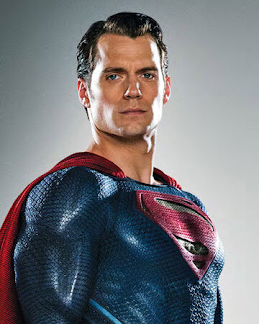
The current iteration of the DC film universe launched in 2013 with Zack Snyder's Man of Steel, featuring Cavill as Clark Kent/Superman. Cavill went on to reprise the role as a key player in Batman v. Superman: Dawn of Justice (2016) and Justice League (2017), whilst also cameoing in Black Adam (2022).

However, the DC film universe has had a divisive critical reception and a highly variable box office take, generally trailing the rival Marvel Cinematic Universe. Several proposed total reboots of the series have apparently been proposed at Warner Brothers, but shot down each time due to the popularity of the actors involved, particularly Cavill, Jason Momoa as Aquaman, Gal Gadot as Wonder Woman and Ben Affleck as an older version of Batman.

The appointment of James Gunn seems to have finally turned the corner on that argument, with it now looking likely that a totally fresh approach will be taken to the DC movie universe with new actors hired for all of the major roles. Plans for further films in the Aquaman and Wonder Woman series have also been cancelled and those roles are likely to be recast as well.

However, some of the existing actors may continue in the new version of the franchise in new roles. According to Gunn and some reports from within Warner Brothers (although Gunn has suggested these are unreliable), their new take on Superman will look for a younger actor to take on the role of a fresher-faced Clark Kent just starting his career at The Daily Planet. The new film will not be a total reboot or origin story for Superman, since most people are now familiar with that.

The news is particularly surprising as DC had re-committed to Cavill returning in the role just a couple of months ago, after a years-long fan campaign. Fans today seemed united in their annoyance at the news, with many asking DC and Gunn to reconsider the decision. Reportedly, Gunn and his team are looking at retaining Cavill in a new role in their new continuity.

The existence of a continuity-heavy DC film universe will reportedly not impact ongoing character-centric film series that exist in isolation of a wider continuity, with both the recent Robert Pattinson version of Batman and Joaquin Phoenix's Joker set to return in new films continuing their stories.

What this also means for Peacemaker, the highly popular TV series spun off from Gunn's own film The Suicide Squad and is set to return for a second season, remains to be seen.

As for Cavill, his next move is unknown. He quit The Witcher in October, reportedly to focus on his return as Superman, but other rumours suggested creative differences with the production team, who have deviated from the source material (of which Cavill is a noted fan) significantly in their TV adaptation. Cavill has been linked to the role of James Bond for some years, although there has been no official announcement and some reports that the producers of that franchise are also looking to cast younger (although, at 39, Cavill, could likely play the role for a decade or more going forwards).

Cavill may reprise his role as Sherlock Holmes in the popular Enola Holmes series of films for Netflix, and maybe in a spinoff centered on his character. Cavill was also reportedly connected to the upcoming resurgence of the Mass Effect franchise, of which he is also a noted fan, although whether this was a voice role for the Mass Effect 5 video game or an acting role in Amazon's in-development Mass Effect television series remains unclear.

Saturday, 29 October 2022

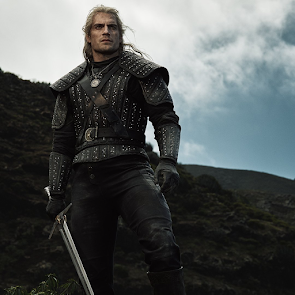
THE WITCHER renewed for a fourth season, but without Henry Cavill

In startling news, Henry Cavill has confirmed he is moving on from the role of Geralt of Rivia. He has played the role in two seasons of Netflix's The Witcher, and recently completed filming for the third season, due to air in the summer of 2023. However, he will not be back for the newly-confirmed fourth season. Instead, his role will be taken by Liam Hemsworth.

Cavill has played the role of Geralt since the first season of The Witcher aired in 2019. He is a noted huge fan of the character from Andrzej Sapkowski's novel series and the CD Projekt Red video game series. Cavill has since waxed lyrical about his love of science fiction and fantasy fiction and his addiction to PC gaming.

The critical reception to The Witcher has been mixed, but nobody can doubt Cavill's capability in the role, and he has been highly praised for his performance.

The reasons for Cavill's departure are vague, but he recently re-committed to playing Superman in the DC film universe under incoming new creative head James Gunn, and will apparently play the role in small doses in other films as well as a new solo movie, potentially clashing with the intensive filming schedule for The Witcher.

The news will likely fuel conspiracy theorists, as The Witcher writing team was recently criticised by a former writer who said that his love of the source material was not shared by some of his fellow writers, who instead mocked and belittled the books and video games. Cavill is a noted fan of the books and games.

Liam Hemsworth is seven years Cavill's junior and is best-known for playing Gale in the Hunger Games movie series.

It will be sad to see Cavill go, but at least we have one more full season with him in the role first.

Tuesday, 25 October 2022

James Gunn appointed head of DC films, animation and television

In a surprise move but one that also kinda makes sense, Warner Brothers have appointed director James Gunn as the head of DC films, animation and television. Gunn will have complete control over the direction of the DC universe on screen, effectively becoming the counterpart of his boss at Marvel, Kevin Feige. Gunn will work alongside producer Peter Safran, with whom he previously collaborated on the Peacemaker TV series.

Gunn will handle creative development of the DC screen universe moving forwards, whilst Safran will handle business and production. Gunn will also complete his existing commitments for Marvel, including The Guardians of the Galaxy Holiday Special (which launches on Disney+ next month) and post-production on Guardians of the Galaxy Vol. 3 (which will hit cinemas on 5 May 2023).

Gunn established himself as a superhero player by directing Guardians of the Galaxy (2014) and Guardians of the Galaxy, Vol. 2 (2017) for Marvel. He also provided assistance and advice to the Russo Brothers on the use of the Guardians in Infinity War (2018) and Endgame (2019). He was then fired after Disney "discovered" seven-year-old inappropriate tweets, which Gunn had already discussed at length and apologised for in 2012. Marvel later reversed the decision after a public backlash. In the interim Gunn moved to DC to direct The Suicide Squad (2021), which was well-reviewed but a box office disappointment (due to opening during the COVID pandemic and being available on the same day on HBO Max). He then wrote all eight episodes of the first season of spin-off show Peacemaker and directed five of them, which were very well-received, before returning to Marvel to shoot Guardians of the Galaxy, Vol. 3.

Those expecting Gunn to completely blank slate the DC film universe and start afresh will likely be disappointed, with Henry Cavill confirming his return to the franchise as Superman just yesterday. It looks like Gunn will aim to "soft reboot" the franchise instead in the same manner as The Suicide Squad did to its predecessor, keeping those actors and characters who are popular and who worked but easing off on continuity references in favour of new stories.

Monday, 5 July 2021

RIP Richard Donner

The news has broken that director Richard Donner - who created the first superhero mega-blockbuster with Superman, setting the scene for all that followed - has passed away at the age of 91.

Donner, a native of the Bronx in New York City, started his career in television as an actor. However, he decided his skills lay more behind the camera and became first an assistant director and then a full director of commercials and television, starting out in westerns such as Wanted: Dead or Alive and The Rifleman. In the 1960s he became a prolific TV director for shows like Get Smart, The Fugitive and The Man from U.N.C.L.E. Arguably his best-known work in this time period was Nightmare at 20,000 Feet, an episode of The Twilight Zone starring William Shatner and which showcased his talent for building suspense on a tight budget.

He directed his first feature, X-15, in 1961 but his TV work kept him busy, and he only directed two more films that decade, Salt and Pepper (1968) and Lola (1969). His fourth film, the horror thriller The Omen (1976), was a surprise smash hit and made his name. Whilst debating what project to tackle next, he was contacted by Ilya and Alexander Salkind, who had bought the film rights to DC Comics' Superman character in 1973. They had developed an epic story spanning two movies and been through a long list of directors, including George Lucas, who had passed to make Star Wars, and Steven Spielberg, who was already committed to Close Encounters of the Third Kind. Donner had been committed to making The Omen II, but the Salkinds changed his mind by offering him $1 million. The Salkinds delivered the script for the two movies, totalling 550 pages, which Donner considered to be more than twice as long as was feasible to fit into two two-hour films. A hasty rewrite cut the script down to something sane.

Donner spent eighteen months shooting Superman and about three-quarters of Superman II; budget concerns led the team to halting work on the second film and focusing on the first movie, which was released to critical acclaim and massive commercial success in 1978. Donner had a falling-out with the Salkinds during the publicity tour for the film and they decided not to invite him back for Superman II and instead asked producer Richard Lester to complete the film. Lester did so, offering Donner a co-director's credit which Donner angrily refused. The move was highly controversial, with multiple actors expressing anger over the situation (Donner had been a highly popular presence on set) and multiple crewmembers declining to return, either out of loyalty to Donner or because they found Lester impossible to work with (including mild-mannered composer John Williams).

Despite the controversy, Superman II was released to critical acclaim in 1980. In 2006, as part of the publicity drive for Bryan Singer's Superman Returns, Donner finally completed his Director's Cut of the film, using material moved into the first Superman film during production as well as material that had never seen the light of day before, as well as unused footage from the first film.

Donner's career initially appeared damaged by the controversy, as his next films Inside Moves (1980) and The Toy (1982) did not do well. However, he returned to prominence with a Steven Spielberg collaboration which became a huge cult hit, The Goonies (1985), and the cult fantasy film Ladyhawke (1985). His next monster smash hit was Lethal Weapon (1987). He returned for the sequels Lethal Weapon 2 (1989), 3 (1992) and 4 (1998). He also enjoyed success with Scrooged (1988) and Maverick (1994). He also served as a producer on Bryan Singer's X-Men (2000). His last film before retirement was the Bruce Willis action thriller 16 Blocks (2006).

Richard Donner was an old-school Hollywood director who managed the difficult transition to the behemothic blockbusters of the 1980s and 1990s. He enjoyed a lengthy career in television and film, working alongside many of Hollywood's greatest actors. Widely-praised by his acting colleagues for his integrity and affability on set, as well as his refusal to take nonsense from studio bureaucrats, he had an eye for detail, character, atmosphere and action, and was as adept at suspenseful horror as he was wide-scale action and character comedy. To this day, he can be said to have directed the two finest Superman movies ever made (despite the attempts of others). He will certainly be missed.

Friday, 26 February 2021

JJ Abrams developing a new stand-alone SUPERMAN movie

In somewhat surprising news, J.J. Abrams is working on a new Superman film project at Warner Brothers alongside writer Ta-Nehisi Coates. Similarly to the in-production The Batman, the film is envisaged a stand-alone project not related to the wider DC Extended Universe (their version of the Marvel Cinematic Universe).

After a few years of fruitlessly competing with Marvel, Warner Brothers have apparently reconsidered their ideas about a linked superhero universe, with a new approach which mixes a linked universe of films (comprising Man of Steel, Batman vs. Superman: Dawn of Justice, Wonder Woman, Aquaman, Wonder Woman 1984Zack Snyder's Justice League and the forthcoming The Flash) and the ability and freedom to revisit those characters in a stand-alone context with different actors involved.

Abrams set up a development deal worth $500 million with Warner Brothers in 2019, whilst Coates - a respected writer of both fiction and history texts - has enjoyed acclaimed recent runs on both the Black Panther and Captain America comic books for Marvel.

Some reports are suggesting that the film will explore the idea of an African-American (well, African-American-Kryptonian) Superman. There is precedent for this in the comics, where "black Supermen" appeared several times in alternate-universe stories about the character. The most substantial such take on the character is an alternate-reality version revolving around the character of Kalel, who like his white counterpart is the last refugee of Krypton. He is raised by the poor Ellis family and dubbed Calvin, and becomes the Superman of his world. He also becomes President of the United States, in an unusual twist on the familiar mythos.

Michael B. Jordan (The Wire, Creed, Black Panther) reportedly met with Warner Brothers a few years ago to discuss a possible appearance as Superman in a project which did not move forward at that time. Whether there is scope for Jordan to be involved in this project is unclear.

Henry Cavill, who has played Superman in the DCEU since 2013's Man of Steel, reportedly was in talks to resume his role early last year. Apparently WB had earlier felt that Cavill had runs his course in the role, but reversed that decision when Cavill enjoyed an explosion in popularity due to his appearance in the television series The Witcher and several other film roles such as Man from U.N.C.L.E. and Mission Impossible: Fallout. However, it appears that WB's preference is to retain Cavill as a supporting player version of Superman in other DCEU films (likening his role to that of the Hulk in the MCU) rather than building further films around him.

Thursday, 28 May 2020

Henry Cavill to resume his role as Superman

In a surprise move, Henry Cavill is in serious talks with Warner Brothers about resuming his role as Superman in the DC Movie Universe.


Cavill first played the role in the risible Man of Steel (2013), although Cavill himself was fine in the role, his role was just badly written and indifferently directed. He reappeared as the co-lead in Batman v Superman: Dawn of Justice (2016), alongside Ben Affleck's Batman, and then in a supporting role in Justice League (2017). Multiple discussions over a new Superman solo movie stalled and the fate of the DC Movie Universe was thrown into doubt after Affleck quit as Batman. However, with several more films in the setting doing extremely well (Wonder Woman, Shazam! and Joker, although the latter's place in the extended universe canon seems debatable), it appears that Warner Brothers have decided against a full reboot as yet and are keener to retain the services of one of their big hitters.

Cavill's growing stardom outside the role has also likely played a role. Cavill picked up great notices for his appearances in films such as Man from U.N.C.L.E. (2015) and Mission Impossible: Fallout (2018), as well as the TV series The Witcher. Cavill has also gained a lot of "geek-cred" for his social media appearances discussing his love of video games and painting Warhammer miniatures (to the point where a character based on Cavill is appearing in next month's Total War: Warhammer II update), which DC would like to tap into.

Apparently Warner Brothers are still cool on a new full solo Superman movie, instead envisaging Superman's role going forwards as a bit like the Hulk's in the MCU, as a solid supporting player. Indeed, Cavill was meant to appear in Shazam! in a brief cameo, but his appearance was pulled late in the day. It sounds like Warner Brothers are now keen to bring him back into the fold and see how he does, with a view to revisiting the solo movie option further down the road.

Wednesday, 18 April 2018

Happy 80th Birthday to Superman

Today - or, more accurately, some time between today and early May - is the 80th birthday of Superman, the Man of Steel. He debuted in Action Comics #1 which hit newsstands in late April or early May 1938* and has regularly appeared in comics, on TV and in movies almost continuously since then.


The character was created by writer Jerry Siegel and artist Joe Shuster, high school friends in Cleveland, Ohio. They had begun developing the character privately in 1933, going through many different iterations (including one with him as a dubious alien with mental powers and another where's he's an ordinary guy with no powers, just an incredible sense of heroism). By early 1938 they'd started working for DC Comics and sold the rights to the character to them in return for being published, a decision they would later bitterly rue, as they and their families would battle for control of the rights for decades.

The character debuted in Action Comics #1 and by mid-1939 had migrated to his own spin-off title, Superman. Both Action Comics and Superman remain ongoing today, with Action Comics #1000 also coming out this month (the publication rate of the comic was changed a few years ago to twice a month, apparently deliberately so the 1,000th issue would be published on the 80th anniversary of the character). Superman was an immediately hugely popular character, with the comics selling hundreds of thousands of copies a month.

Although some elements of the Superman mythos were present from the start - such as Lois Lane and the Clark Kent alter-ego - others took time to come together. In particular, Superman's powers and limitations varied wildly from writer to writer. Editor Mort Weisinger, who was in charge of the character and comics from 1941 to 1970, insisted on the development of a coherent world and backstory for the character. This led in turn to the creation of the shared DC Comics Universe, codified in Superman #76 in 1952 when Superman finally met and teamed up with Batman for the first time. After several other run-ins with fellow DC heroes, Superman led the creation of the Justice League in March 1960, alongside Batman, Wonder Woman, Green Lantern, the Flash, Aquaman and Martian Manhunter.

In the 1960s DC Comics was blindsided by the abrupt rise to power of Marvel Comics. Under Stan Lee's stewardship, Marvel was seen as more colourful, more exciting, more current and less staid than the DC characters. Most importantly, the Marvel characters were allowed to have private lives, love lives and be flawed characters, unlike the "perfect" DC heroes. Marvel overtook DC in sales late in the decade and DC rarely challenged them for the title again. Superman was seen as old-hat, but the release of the highly successful Superman: The Movie in 1978 saw the character reassessed. New writers and editors came on board and the comic was taken in a more serious direction; this culminated in 1992 in the Death of Superman storyline, with the issue where Superman "dies" selling over 6 million copies, making it the biggest-selling single comic book issue of all time. Naturally, he returned a few months later.

Superman was first depicted in another medium in 1940 in The Adventures of Superman, a radio drama starring Bud Collyer as the Man of Steel. The radio drama ran for eleven years. Collyer also voiced the character of Superman in seventeen short animated cartoons, produced by Paramount Pictures in 1942 and 1943.

Kirk Alyn was the first actor to play Superman in live-action, in a 15-part Columbia film serial produced in 1948. The serial received mixed reviews, mainly due to the inability to show Superman flying, so these sequences were replaced with animation.

George Reeves became the first well-known actor to play Superman, starting in 1951 in the theatrically-released film Superman and the Mole Men, and then for six seasons and 104 episodes of a TV show called The Adventures of Superman (1952-58). This series was much more successful, mainly due to the use of back projection to show Superman in flight (if somewhat unconvincingly). The show was riding high when star George Reeves tragically died (under bizarre circumstances) in 1959, leading to the cancellation of the series.

In 1978 Warner Brothers released Superman (sometimes called Superman: The Movie), starring Christopher Reeve. The movie was a monster, worldwide hit and spawned three direct sequels: Superman II (1980), Superman III (1983) and the woeful Superman IV: The Quest for Peace (1987), as well as a spin-off, Supergirl (1984). Beginning in the late 1980s a sequence of Superman TV series was put into production, mostly featuring Superman as a young man or at the very start of his days of superheroism: Superboy (1988-92), Lois & Clark: The New Adventures of Superman (1993-97) and Smallville (2001-11).

After a surprisingly long hiatus (despite attempts by Kevin Smith and Tim Burton to resurrect the franchise), Superman returned to the movie screen in 2006 with the patchy Superman Returns, followed in 2013 by the terrible Man of Steel, which marked the beginning of the rocky (to put it mildly) DC Cinematic Universe. Superman returned in Batman v Superman: Dawn of Justice (2016) and Justice League (2017). British actor Henry Cavill portrays Superman in the DC Cinematic Universe, and is notable as the first non-American to play the role.

It's easy to be cynical about Superman. He's an all-American hero who is indestructible, can see through walls and has super hearing, making stories involving him rather bereft of tension (unless the writer resorts to cliches such as robot doubles or kryptonite). Attempts to make the character "dark" or "gritty" misfire for missing the point of the character (most notably in Man of Steel). But at his best, when portrayed by actors like Christopher Reeve and written by good writers with a solid grasp of the mythos, he can be an intriguing and well-developed character. He's also a character who has withstood multiple reinterpretations, from John Cleese's British take on the character (where Superman's spaceship crashes outside Weston-super-Mare rather than Smallville) to Mark Millar's darker Red Son, where Superman was raised in the Soviet Union and becomes a Big Brother-like figure.

The Big S has many more stories left in him and it will be interesting to see where writers take him in the future.


* The confusion is caused by the fact that street dates for "funny books" weren't vigorously enforced in the 1930s. According to The Encyclopedia of Superheroes on Film and Television, the earliest copies of the comic were sent to distributors starting on 18 April 1938 and some bookstores and convenience stores would have put them on sale immediately, whilst others would have honoured the official release date in early May (confusingly, the actual comic's cover date is June 1938).

Sunday, 15 October 2017

Slugfest: Inside the Epic 50-Year Battle between Marvel & DC by Reed Tucker

In 1961 DC Comics was the biggest comic company in the United States. Its superhero comics - Batman, Superman and Wonder Woman - were the most popular in the world and it had absolutely no competition of note. But that same year Atlas Comics was branded Marvel and its editor Stan Lee and artist Jack Kirby released a new comic called The Fantastic Four. Within a decade Marvel had displaced DC as the biggest comics company in the US and snatched away a lot of talent and critical acclaim that had gone to DC. DC fought back, starting formidable Superman and Batman movie franchises and releasing a series of artistic, critically-acclaimed comic books in the 1980s and 1990s from the likes of Alan Moore and Neil Gaiman. But in the early 2000s Marvel finally entered the movie scene in force with X-Men and Spider-Man, and never looked back.


This non-fiction book looks into the 50-year competition between DC and Marvel, the two titans of comic book publishing. Reed Tucker has exhaustively interviewed many key players involved and scoured the archives for interviews with those who are no longer with us. The result is a potential interesting book that examines the corporate battle between the venerable establishment figure and the plucky upstart newbie.

Or at least it's a potentially interesting book that tries to do that. The opening chapters expand on this, detailing how Stan Lee took over a moribund company and injected some 1960s inventiveness, irreverence and character development to win over young fans from the older, more moribund publisher. We're told that Marvel focused more on the characters' internal lives, on the distrust with which they are treated by the government (helping young readers identify with similarly confused and mistrusted characters) and gave their writers and artists much greater freedom to express themselves, throwing away the style guides DC saddled their readers with. Marvel also used real locations, particularly in and around New York, which excited readers more than stories set in completely fictional locales like Gotham and Metropolis.

All of this stuff is great, but Reed never really moves on from this basic assumption: Marvel was the plucky underdog with greater creative energy and freedom, and DC was the staid old man taken by surprise by what the youngster was doing and whose attempts to replicate it by "getting down with the kids" were embarrassing. That applies very well to the 1960s and the early 1970s. However, some of Reed's conclusions and anecdotage are questionable: he challenges the wisdom of DC poaching Jack Kirby from Marvel and putting them on the Jimmy Olsen comic book, but this was both Kirby's own choice (so he wouldn't cost anyone a job on another comic, as the Jimmy Olsen book didn't have a permanent artist at the time) and also allowed him to set up his own, more original books later on by introducing characters like Darkseid.

By the time the 1980s have rolled around, Reed is still expanding on Marvel being the plucky underdog beating the boring old figure of DC, but seems to contradict himself by then talking about DC's artistic achievements with books like Swamp ThingWatchmen and Sandman, as well as how Marvel had become the biggest-selling comic book company, making DC the underdogs. Aware that this is getting repetitive, he switches to studying the film business and how DC got some great movies made whilst Marvel flirted with moderately successful TV shows but otherwise couldn't get a decent movie on screen until twenty-two years later. This is interesting, with some great stories of bizarre behind-the-scenes battles and the film companies not "getting" comic books at all, but again it lacks depth.

The book is ultimately a bit constrained by its premise, and it's to Tucker's credit that he remains laser-focused on the interrelationship between Marvel and DC. It would have been very easy to get sidetracked in the internal history of the two companies and discuss more creative decisions, but Tucker stays on point throughout. This does mean the book veers towards the more corporate side of things rather than the creative one, which I think will be of less interest to those keen to learn more about the origins of superhero characters or how the books developed. But it has some value: this is an under-told aspect of the comic book story and Tucker keeps the story ticking over nicely.

Slugfest (***½) is a readable and intriguing book about the titanic competition between the two biggest comic book companies in the United States. It's also a bit on the repetitive side, with not as much depth as perhaps might be wished, and a lack of information on the creative choices as opposed to business ones. It's still a good story, well-told and interesting, but one for hardcore comic book fans only. The book is available now in the UK and USA.

Monday, 10 February 2014

The Lego Movie

In a world made of Lego bricks, Emmet Brickowski is an ordinary engineer. He is content with his strictly regimented life, brushing his teeth, going to work, listening to music and eating all on a set schedule. He builds things according to the instructions and has never had an original thought in his head...apart from a secret desire to build a double-decker sofa.


Brickowski is thus shocked to discover the Piece of Resistance, an enigmatic device that is the only thing that can stop 'The Kragle', a superweapon controlled by Lord Business. This discovery was prophesied, marking Brickowski out to be 'The Special', a hero figure. But when it becomes clear that Emmet has no imagination or ability to build things without instructions, his allies must rally round and help him achieve his destiny.


The Lego Movie is, wait for it, a movie based on Lego, the Danish construction toy which is probably the single most popular toy line ever created. Lego can be used for many things, but one of the things it lacks is a narrative, with modern Lego sets often being based on pre-existing popular franchises. Cleverly, the film takes this idea and runs with it as its central theme.

The Lego Movie is a story about the struggle between order, pre-planning and logic (exemplified by the instructions and themed Lego sets) and chaos, creative freedom and throwing things together to see what happens (exemplified by putting things together randomly to see what you get). This is a bit of a bold choice as it seems to be saying that if you're offered the choice between a £300 Star Wars-themed set which requires you to vigorously follow the instructions and a cheap, random assortment of bricks you can make anything out of, you should go for the latter every time, something Lego accountants might not be too happy with. This theme is then developed into the idea that creative freedom is better than following orthodoxy and that everyone who manages to create something interesting and make their own choices is 'special'. It's fairly straightforward and simple as themes go, but it is used and explored in unusual depth.

The film is well-characterised with some fine vocal performances. The casting is fairly geek-tastic, mixing big names (Morgan Freeman, Liam Neeson, Will Ferrell, Elizabeth Banks) and TV comedy stars (Chris Pratt from Parks and Recreation, Alison Brie from Community, Will Arnett from Arrested Development, Charlie Day from It's Always Sunny in Philadelphia). Relatively big names like Channing Tatum and, randomly, Shaquille O'Neal also make cameo appearances. The characters are a mix of newcomers, like Emmet (Pratt) and Wyldstyle (Banks), and crossover characters from Lego's vast array of licences. Batman (Arnett) is the most prominent such character, though we also get brief appearances from the likes of Superman (Tatum), Gandalf and Dumbledore. The big-name characters mostly appear for comical purposes (Dumbledore and Gandalf getting into an old wise man beard-off argument; Superman trying desperately to avoid hanging out with a fanboying Green Lantern) and a few make 'shocking', audience-pleasing surprise twist appearances, at least one of which brought the house down. The vocal performances are all accomplished and do a good job of selling the characters.

The animation is pretty good, especially as it deliberately dials back shiny CGI in favour of a more 'used' aesthetic that makes all of the Lego pieces used in the film look like they've been taken out of someone's box, mixed up and then constructed. In many places the animation looks like stop motion rather than the CGI it really is. The animation is inventive and the film-makers strike a good balance between making things fast-moving and fun and going for sensory overload.


The story is also surprisingly decent, mainly because the directors are not interested in making a simple movie that follows a cliched coming of age storyline. Instead the film attempts to deconstruct the Hero's Journey by casting doubt on the whole idea of 'the chosen one' and suggesting that violence and explosions aren't the answer to everything (although, cheesily, there's still quite a lot of Lego-ified violence and brick-based explosions in the film in a good example of having your cake and eating it). Most animated kids' films these days include some sort of sop to the adult audience, whether it's risque jokes that fly over the kids' heads or amusingly ironic vocal performances, but The Lego Movie takes things a whole step further by trying to simultaneously play around with and undercut the cliches and tropes of modern CG kids' movies whilst also crafting a film that kids will enjoy.

They more or less pull this off, though there's a few moments towards the ending (including one 2001: A Space Odyssey-esque moment that I suspect will be very divisive; the kids I saw the film with seemed to hate it and couldn't wait for the film to return to its previous mode, which fortunately it does) when the movie's preoccupation with not being a predictable kid's film risks it instead flying up its own posterior. It does manage to - just about - avoid that, helped by some very funny final moments (and the last line and 'cliffhanger ending' are superb) and a resolution that is both original and spectacular.

Unfortunately, the writers' creative angst is detectable on screen and as a result the films suffers from pacing and character issues which prevent it from going toe-to-toe with, say, Pixar's big hitters (films like Up and Wall-E are far more consistent in quality and have vastly more emotional depth to them). Predictably, the film's female characters have a couple of moments in the sun and are then sidelined for the rest of the movie whilst the boys get on with resolving everything (reflecting gender issues with Lego toys in general). The film's worldbuilding is also inconsistent: at various moments the characters seem able to build anything out of anything in seconds to solve problems, but at others are utterly stumped at what to do next, despite being still presumably able to construct a jet fighter out of some rocks and a couple of street lights.

Ultimately, The Lego Movie (****) is brash, fun and tries to be more than just another commercial to sell toys. Indeed, in some respects it is wickedly subversive in doing the exact opposite of what you'd expect a toy tie-in film to do. There's also some real narrative ambition here. There's some great moments of character, some good laughs and a lot of visual invention. But the film also overreaches, and denies itself from achieving true greatness by occasionally tying itself in knots in trying to be both an entertaining kid's movie and a revisionist mickey-take of kids' movies to keep the adults awake. Certainly enjoyable and well worth watching for its ambition, The Lego Movie is on general release now.

Friday, 6 December 2013

Man of Steel

Man of Steel is, technically, the first on-screen reboot of the Superman mythos since 1978's Superman: The Movie. Produced by the Christopher Nolan, written by David Goyer and directed by Zack Snyder (300, Watchmen), it's an attempt to bring the moral ambiguity and 'grittiness' of Nolan and Goyer's Dark Knight trilogy of Batman films to the Superman franchise, and set up a new shared universe of films based on DC comics characters.


Things start promisingly with a visit to Krypton, depicted as something between Avatar (the Cameron movie) and Dune, with a mixture of ultra-advanced technology and feuding nobles. Russell Crowe plays Jor-El, here depicted as a scientist trying to save his world from imminent destruction but, in typical Russell Crowe style, is also capable of laying waste to entire platoons of soldiers single-handedly. Crow runs afoul of Michael Shannon's General Zod during a coup but still manages to blast his infant son (eventually a capable and reasonably good Henry Cavill) into space before the planet explodes. Zod and his cohorts are sentenced to eternal imprisonment in the Phantom Zone, which works out about as well as it ever does.

The infant Kal-El arrives on Earth and is found and raised by Kent family near Smallville, Kansas. Kal-El aka Clark's crazy powers and abilities soon manifest and his human parents (ably played by Kevin Costner and Diane Lane) are soon spending their time running around quashing rumours that their son is a space alien and instilling him with noble human values. Clark attempts to lie low in a number of fairly innocuous jobs but his tendency to rush into dangerous situations to rescue people soon attracts the attention of a reporter, Lois Lane (Amy Adams). Clark discovers a Kryptonian ship which he can use with technology from his own crashed vessel to create an interactive AI based on his father's personality. This allows him to learn about his heritage, but also sends out an automated SOS which lures Zod and his crazy crew to the planet. Cue a lot of carnage as showdown follows showdown until the film climaxes.

The storyline is, in principle, a good idea. The film avoids any mention of Lex Luthor or Kryptonite, and the use of Krypton, Zod and Jor-El as an AI are all good notions that give the story a personal investment for Superman whilst allowing the origin story part of the narrative to flow into the actual present-day storyline. Unfortunately, this doesn't work out in practise. The film's first hour, just under half the total running time, is overwhelmed by backstory and exposition. The Krypton sequences with Russell Crowe are pretty good, with a strong visual identity and Crowe - easily the best performer in the movie - doing some excellent work, grounding the fantastical landscapes and events in more relatable issues of family. Michael Shannon is a bit thuggish and lacking in nuance as Zod (especially as the film goes on and he gets more shouty), but he has credible motivations and presence. The Krypton sequence is imaginative and involving, but also overlong.

Once on Earth, the film becomes a confused morass of flashbacks (many of them pretty pointless) and present-day story. Kevin Costner is very good as Superman's human father, right up until he gets what is, by a considerable distance, the stupidest, most pointless and most unconvincing death scene in the history of cinema. The overwhelming stupidity of this sequence, not to mention that it was completely unnecessary, may be the film's lowest point. Some individual sequences such as Superman saving the crew of an oil rig or learning to fly by first jumping really high (a nod to early versions of the character who couldn't fly at all, only jump miles at a time) are much more successful. Amy Adams's Lois Lane, who soon enters the story, is also really good. She plays Lois as a smart, intelligent reporter in her thirties who is more plausible than other takes on the character. Crucially, she is also aware of who Superman is from the off. This is an obviously different take on the character relationship, avoiding the whole 'wears glasses as a disguse' cliche, even if it makes no sense whatsoever (Perry meets Superman but later falls for the old 'glasses' trick hook, line and sinker). But still, points for trying on that score. More disappointing is that Adams and Cavill don't really have much chemistry, and their eventual romance is utterly unconvincing.

The film continues to try hard to succeed: Zod's plans for Earth are actually somewhat logical and make sense. They also give hope to Clark that one day Krypton can live again, which should lead to greater moral confusion over what is the right thing to do. But this never happens: Clark decides early on to defend Earth no matter the cost and never budges from that, making these attempts to complicate things fail outright.

This leads into the film's climactic action sequences which are, on the whole, highly disappointing. The action sequences are over-indulgent and seem to go on forever. They also frequently lack context or conviction: seeing two invulnerable beings fight one another knowing they can't hurt one another makes for zero tension. The CGI is also flat-out terrible in these battles, rather bafflingly since Krypton is so impressive at the start of the film. The character-replacement CGI is unconvincing, the placing of the actors' faces on CGI bodies is amateurish and some of the flight and movement CGI is worse than the twelve-year-old original Spider-Man movie. Usually in 2013 the very least you can say about an otherwise terrible movie is that the effects are good, but Man of Steel can't even manage that right. The final battle also indulges in some dubiously lingering shots of collapsing skyscrapers with hundreds of people in them (or about to be squashed by them) which makes for uneasy viewing in a Superman feature.

Man of Steel (**) shows hints of a fertile imagination and originality (mostly in the opening act set on Krypton) whilst showcasing a few good performances, but these are soon buried by inane dialogue, terrible action sequences, poor CGI and a total collapse in logic at several key points in the film. Man of Steel is not only not very good, but even manages to make Superman Returns look like a capable and competent film in comparison. Overall, not recommended.

Tuesday, 5 October 2010

Major HOBBIT and SUPERMAN announcements

Deadline is reporting that Peter Jackson is all set to go to direct the two Hobbit movies. Warner Brothers is apparently going to shoulder the financial burdens of the film that chaos-stricken MGM cannot handle, to the tune of $500 million for two films in 3D, to be released in December 2012 and 2013. Production now looks like starting in January 2011.


Sounds good and Deadline are usually pretty accurate with their stories, with the caveat that nothing should be fully believed until the other industry-watchers start reporting it. A major hurdle still to be cleared is the ongoing dispute between the film-makers and the unions, with the film-makers revealing they are looking at five other countries as alternate filming locations (including Canada).

Meanwhile, Warner Brothers have also hired Zack Snyder to direct their new Superman film. Snyder, the director of 300 and Watchmen, will start work on the movie next year. He will be working from a script by David Goyer and Christopher Nolan, the team behind the new Batman films, whilst Christopher Nolan works as a producer on the project (Nolan himself is getting work on the third Batman picture underway). Little else is known, except that Snyder claims that Brandon Routh, who played Superman in Bryan Singer's Superman Returns, is unlikely to return in the title role. Oh, and General Zod is current front-runner for the main villain (good call; Lex Luthor is great, but overused).

An interesting and unexpected choice. Watchmen had a mixed critical reception and was only a modest box office success, whilst both it and 300 relied to a degree on the director's trademark slow motion, visceral and violent style, which would not seem an immediate fit for Superman. Interesting to see how this works out.