Wednesday, 30 June 2021

WHEEL OF TIME TV series reveals logo and confirms 2021 release

Amazon Prime Television have unveiled the logo for their Wheel of Time TV series and confirmed the previously-strongly-rumoured 2021 release date.

It was previously revealed that Orbit Books are preparing to release their TV tie-in editions of The Eye of the World, the first Wheel of Time novel and the one the first season of the TV show is expected to adapt, on 4 November. Other rumours have suggested that Amazon is targeting Friday 26 November - Black Friday - as a possible launch date, which seems reasonable.

The TV version of the Wheel of Time logo starts off with a spinning disc - which rapidly reveals itself as the sigil of the Aes Sedai in the Age of Legends, what we known of as the yin-yang symbol of balance and dualism, which then turns into the ring version of the ouroboros symbol, of a snake eating its own tail, a symbol in the books representing eternity.

The Wheel of Time is one of the most successful epic fantasy series of all time, selling just under 100 million copies since the first novel was published in 1990. Robert Jordan wrote eleven novels in the series before sadly passing away in 2007; Brandon Sanderson completed the final three books in the series from Jordan's notes and outlines. Set in both a distant future and a distant past (since time is cyclical in the books), the books tell the tale of the rise of the Dragon Reborn, the first man in three and a half millennia able to wield the One Power. Only women have been able to use the One Power safely since every man able to use the Power was cursed to go mad and die. Prophecy states that only the Dragon Reborn can save the world again, but many Aes Sedai - the main organisation of women wielders of the Power - believe that the Dragon Reborn should be destroyed or imprisoned when he is identified. The novels and TV series begin when an Aes Sedai named Moiraine arrives in a remote village called Emond's Field, having believed she has identified three possible candidates for the Dragon Reborn. But she also discovers unexpected secrets in the village and it's a much larger party that sets out for the Aes Sedai stronghold, Tar Valon.

The Wheel of Time TV series stars regular actors Rosamund Pike as Moiraine, Daniel Henney as Lan, Madeleine Madden as Egwene, Zoe Robbins as Nynaeve, Josha Stradowski as Rand, Marcus Rutherford as Perrin, and Barney Harris as Mat. Guest stars include Michael McElhatton as Tam, Alvaro Morte as Logain, Hammed Animashaun as Loial, Alexandre Willaume as Thom, Johann Myers as Padan Fain, Maria Doyle Kennedy as Illa, Kate Fleetwood as Liandrin, Abdul Salis as Eamon Valda, Stuart Graham as Geofram Bornhald, Kae Alexander as Min and Sophie Okonedo as Siuan.

Tuesday, 29 June 2021

GOOD OMENS renewed for a second season at Amazon

In somewhat surprising news, Amazon Prime Television has renewed Good Omens for a second season, despite the first season adapting the novel in its entirety.

Neil Gaiman and Terry Pratchett co-wrote the original novel for publication in 1990. However, even before the book hit shelves they sat down and mapped out a potential sequel, producing an outline. Their subsequent stratospheric career trajectories made it impossible for them to write the book, despite periodically hoping to look at the project again. The second season of Good Omens sounds like it will draw upon this material for inspiration.

Neil Gaiman will again produce, co-showrun and co-write the series, this time alongside John Finnemore. Gaiman confirmed the show is already in pre-production with sets being built, and will shoot in Scotland. David Tennant and Michael Sheen will reprise their starring roles.

Season 2 of Good Omens will shoot later this year for a 2022-23 debut on Amazon.

Monday, 28 June 2021

Apple TV's FOUNDATION TV series gets airdate and new trailer

Apple TV's Foundation series, based on the novels by Isaac Asimov, now has an airdate. The TV show will debut on 24 September this year.


Set more than twenty thousand years in the future, the Foundation novels depict the fall of the Galactic Empire. After twelve millennia of rule, the Empire has become corrupt, decadent and ripe for collapse, a fact not fully appreciated by its rulers. Mathematician Hari Seldon has created a form of statistical analysis he calls "psychohistory," which can predict the future within remarkable degrees of accuracy. Seldon's discovery predicts the collapse of the Empire and thirty thousand years of barbarity. But Seldon believes the interregnum can be reduced to just one millennia if a repository of lore and scientific knowledge is created: a Foundation for the next era of human existence. Much of the tension in the early part of the story comes from those in the Empire who believe Seldon's predictions and want to help him, and those who believe that Seldon is a liar and doom-monger who is bringing about the very apocalypse he has merely predicted.

Asimov started writing the series as a short story sequence in 1942, collecting the original stories and novellas into three fixup novels: Foundation (1951), Foundation and Empire (1952) and Second Foundation (1953), collectively known as The Foundation Trilogy. The trilogy sold extremely well and became one of the biggest-selling science fiction series of the age, winning a special "Best Series" Hugo Award in 1966. Asimov only returned to the series with Foundation's Edge (1982) after a publisher offered him a staggering sum of money to do so. The story continued in Foundation and Earth (1986), the chronologically-final Foundation novel. It left the story unresolved, but did reveal that the Foundation universe was the same as the Robots universe, creating a much bigger shared universe spanning more than a dozen novels and twenty thousand years of future history. Asimov struggled to come up with a way of continuing the saga before instead choosing to rewrite a prequel duology about Hari Seldon, comprising Prelude to Foundation (1988) and Forward the Foundation (1993). Asimov died in 1992, shortly after completing Forward the Foundation. Other writers continued the Foundation saga in authorised prequels and sequels of varying quality.

Foundation has been hugely influential on later franchises such as Star Trek and Star Wars; the city-planet of Coruscant in the latter is a nod at the city-planet of Trantor in Foundation.

The Foundation TV series stars Jared Harris as Hari Seldon; Lee Pace as Brother Day, the Emperor of the Galaxy; Lou Llobell as Gaal Dornick; Leah Harvey as Salvor Hardin; Laura Birn as Eto Demerzel; Cassian Bilton as Brother Dawn and Terrence Mann as Brother Dusk. The series has been executive produced by David S. Goyer and Josh Friedman and was shot in Limerick, Ireland. The first season will consist of ten episodes. The first season seems to draw on elements in Prelude to Foundation, Forward the Foundation and Foundation, as well as some significant changes to the story (such as the ruling Emperor replacing himself through cloning).

Wertzone Classics: Men at Arms by Terry Pratchett

Captain Sam Vimes of the Ankh-Morpork City Watch is getting married. It's an occasion of great happiness and joy, marred by a massive explosion at the Assassins' Guild and the theft of an unknown artefact. The Guilds don't want the Watch involved and the Patrician doesn't want Vimes involved, but bodies are soon piling up. Someone out there has a weapon that kill people instantly at a long, long range and its up to the City Watch and their new intake to stop them. Somehow.

When Terry Pratchett introduced the City Watch in the classic Discworld novel Guards! Guards! it always felt like he was deliberately setting up a premise and cast of characters who could go on to recur regularly through the series. It's a bit surprising that it took him seven novels to get back to the Watch and their adventures, but when he did, he did it with style.

Once again, Pratchett engages with amusing cliches - Captain Vimes is only three days from retirement and we all know what that means in a police procedural - and once again also undercuts a simple satire with some outstanding character and story depth. There's a harder edge to this story than most Discworld novels, with a somewhat higher body count (including among some of the sympathetic protagonists), all arranged around a genuinely intriguing mystery. There's a great nod to hardbitten detective stories, with Sam Vimes as the cynical, weathered old cop doggedly pursuing the case in the face of opposition, with Corporal Carrot as his enthusiastic young sidekick. As you'd expect, though, Pratchett subverts this setup early on and takes the story in more interesting directions.

The novel benefits from being the first one written with Stephen Briggs' Streets of Ankh-Morpork guidebook to hand, meaning that Pratchett could plot things like rooftop chases and the routes of various characters on a big map of the city. This immediately gives the city more of a lived-in feel. But the writing is far more important in giving Ankh-Morpork a lived-in reality to it. Previous to Men at Arms, Ankh-Morpork was simply a great setting. From this novel onwards - and to this very day - it simply became the greatest metropolis ever presented in a fantasy series, a city that absolutely convinces from the tip of the Tower of Art to the depths of the sluggish River Ankh and from the office of the Patrician to the lowliest criminals on the streets. For the backdrop to an ostensibly comedic series, that's quite an accomplishment.

On top of this, Pratchett brings a rich level of characterisation. Both Vimes and Carrot take a step up, and the troll-and-dwarf pairing of Detritus (returning from Moving Pictures, as does Gaspode) and Cuddy is absolutely fantastic. Angua is also a very fine addition to the cast. Pratchett also uses the novel to intelligently investigate ethnic tensions in a divided city as well as political intrigue between the guilds and the government, as well as analysing the dangers of those who live in the "glories" of the past rather than trying to help the present.

Pratchett also still brings the funny. As usual there is intelligent wordplay, some smart references (Detritus's swift promotion to a Full Metal Jacket-style drill sergeant is as terrifying as it is funny) and, when called for, some more straightforward gags peppered through the book.

The real success of Men at Arms (*****) is Pratchett taking things he'd previously been good at in isolation and here combining them into an outstandingly successful combination, furthering the run of the Discworld series' first "imperial period" of quality. The novel is available in the UK and USA and I previously reviewed it here.

Saturday, 26 June 2021

Wertzone Classics: BattleTech: Mercenary Collection

AD 3022. The Inner Sphere of human space is embroiled in the closing stages of the Third Succession War, a series of conflicts between the Great Houses for power and territory. Largely unaffected by the conflict is the Aurigan Coalition, a minor power among the Periphery States which has flourished under the rule of House Arano. Lady Kamea Arano is about to take her place as the head of the house when her uncle launches a brutal coup. Kamea disappears and one of her guardians, a MechWarrior of impressive skill, is rescued by a band of mercenaries. Three years later Kamea re-emerges with an offer to her former allies to help her reclaim her throne.

Originally released in 2018, BattleTech is a turn-based strategy game set in the shared BattleTech and MechWarrior universe. That universe began as a tabletop wargame but expanded into board games, novels, video games and even a short-lived animated series. Created by Harebrained Schemes and with the original BattleTech co-creator Jordan Weisman in charge of development, it was the first BattleTech video game that got close to the franchise's original roots.

It was reasonably successful, and has since been re-released with its three expansions (Flashpoint, Urban Warfare and Heavy Metal) included. So the question is it worthwhile picking up the game with these additions included? My original 2018 review of BattleTech can be found here.

To recap, the game has you playing a MechWarrior, the pilot of a BattleMech, a massive, building-sized walking death machine. MechWarriors are the elite troops of the 31st Century, a time period when five great powers and numerous smaller ones and mercenaries fight for control of the Inner Sphere, the vast region of space claimed by humanity (there are no aliens in the BattleTech universe). Over the course of a lengthy story-driven campaign, interspersed with huge numbers of side-missions and procedurally-generated jobs, you build up a mercenary company from scratch, hiring pilots, training their skills, buying or salvaging more BattleMechs, equipping them and fighting in detailed, tactically tense engagements on a variety of planets. The game contains a number of interesting, interlocking systems which gives rise to an immense amount of satisfying player choice, realised via chunky, engaging combat missions. The game is effectively XCOM: Pacific Rim, and is every bit as fun and compelling as that sounds.

The original game did have problems, though, with too-long animations and a difficulty curve that was less of a curve and more of a barbed-wire wall, with occasional spikes making progress difficult without a lot of tedious grinding.

The Mercenary Collection, via the three expansions included within, immediately eliminates these problems via a host of new features. The most notable is that the game's engine has been reworked and a number of new options presented, which dramatically speed up gameplay by allowing you to skip more tedious animations or remove mid-battle animated sequences altogether. There is a more granular difficulty setting for those who find the game too much of a cakewalk or too tough. There are more mid-game special events to liven things up, and the DLC missions and features integrate into the campaign, giving you a greater variety of maps to fight on, as well as more mechs and weapons to deploy in battle.

The game also gives you the opportunity to start in "Career Mode," which jettisons the storyline altogether in favour of a new setup with you taking on the task of setting up your mercenary company from scratch and guiding them across the Rimward Periphery without any story material to worry about. This mode is fun for veteran players who know what they are doing, as they can immediately access some of the DLC material that is otherwise gated until you finish the campaign. For newcomers I'd recommend following the story, which does a better job of managing the difficulty curve of the game.

The first DLC, Flashpoint, adds a number of new story-based mini-campaigns (aka flashpoints) to the game. These campaigns have their own stories, characters and twists and turns, and can give you a lot of rewards and experience. There's some fun elements in these missions, and they add a fairly large number of handcrafted missions which relieve the occasional grind of procedurally-generated, somewhat bland missions. However, the flashpoints oddly don't trigger until you've finished the story campaign, which oddly leaves you too heavily levelled for the low-level flashpoints (which will become a cakewalk). The flashpoints are best experienced in Career Mode, but the tougher missions do have some twists that may check even experienced MechWarriors, such as missions that force the player to use Light or Medium 'Mechs, forcing them to leave the Assaults at home.

The second DLC, Urban Warfare, introduces the new city environment which is a huge amount of fun to play in. Skyscrapers break sightlines, and jump jet-equipped 'Mechs can suddenly find themselves with a lot more tactical options than before (though also run the risk of the building they are standing on being shot out from under them). Ten more flashpoints are added with interesting new storylines.

The third DLC, Heavy Metal, adds multiple new BattleMechs, including the mobile artillery Bullshark 'Mech, and tons of new weapons, including the COIL laser which can make Light 'Mechs much more formidable weapons platforms. The expansion also features a new story campaign that ultimately pits the player's company in the middle of a showdown between two of the BattleTech universe's most formidable warriors, the Bounty Hunter and the Black Widow.

These expansions add a lot more content and variety to the game and, like the Enemy Within expansion for XCOM: Enemy Unknown or the War of the Chosen expansion for XCOM 2, they improve on the original game as well, taking something that was already very solid and making it richer, more interesting and more compelling. This version of the game also allows for much greater modding capability, and the mods available via Nexus are impressive, with some extending the game's setting to incorporate the entire Inner Sphere and extending the timeline to bring in those old BattleTech favourite antagonists, the Clans.

BattleTech: Mercenary Collection (*****) is, at least for now, the definitive version of the BattleTech experience and an outstandingly rich, turn-based strategy game. It is available on PC now (and is currently on a reasonably generous deal on Steam).

Tuesday, 22 June 2021

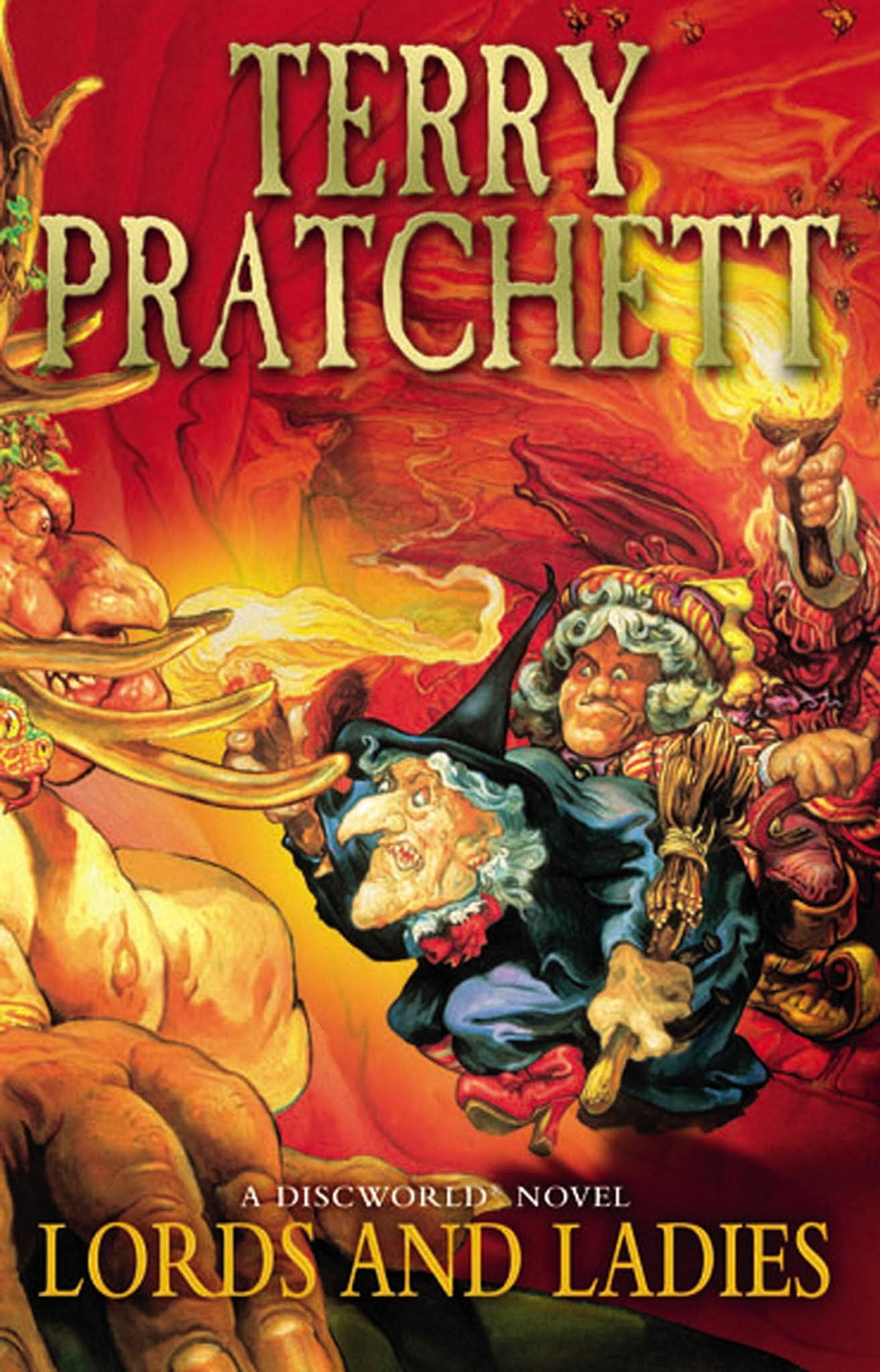
Wertzone Classics: Lords and Ladies by Terry Pratchett

Returning to their home kingdom of Lancre after travelling across the Disc, witches Nanny Ogg and Granny Weatherwax discover that a new coven of hip, young witches has arisen in their absence. Magrat is disconcerted to discover that plans for her marriage to King Verence are steaming ahead without her involvement, with guests arriving from all over. On top of those issues, an invasion of beings from another dimension is at hand. It falls to the witches of Lancre and an unlikely assortment of allies - an annoyed orangutan, a legion of ninja morris dancers and a terminally frisky dwarf in a wig - to rise to the occasion.


Lords and Ladies is intriguing as the first Discworld novel to rely heavily on pre-existing continuity, a point Terry Pratchett was so concerned about he includes a warning about it (and a quick recap of prior books) in the start of the novel. The book is the fourth in the "Witches" sub-series following on from Equal Rites, Wyrd Sisters and Witches Abroad, but it also intersects and crosses over with the "Ankh-Morpork Wizards" sub-series, previously established in Moving Pictures and Reaper Man. Think of it as The Avengers of the Discworld Literary Universe, or something.

Those fairly moderate (and likely overstated) continuity concerns out of the way, Lords and Ladies is a fun romp which fairly effortlessly fits into the upper tier of Discworld novels. By this point in the series, Pratchett had moved on from satirising fantasy as a whole and was far more interested in examining the human condition through the idiosyncratic lens of the Discworld. However, he was fairly regularly being bombarded (or at least lightly shelled) by fan letters asking where the elves* were. The Disc had dwarfs, trolls, pixies and fairies after all, so elves should be around. Their only mention thusfar had been The Light Fantastic, where Twoflower mooned over elves as being beautiful and graceful and Rincewind reacted the same way as when someone says, "Well, say what you will but that Mr. Hitler had some good ideas." That idea had clearly been rattling around for a while before Pratchett finally decided to give it a good airing.

The modern epic fantasy idea of elves as graceful, noble beings was a somewhat unusual one when compared to folklore, where elves are presented more as mischievous tricksters, if not outright evil. Pratchett decided to tap that field of inspiration for his elves here, who as much more Aes Sidhe than noble Legolas, and all the more interesting for it. The Aes Sidhe - the elves of Irish mythology - are a fascinating study in cruelty and alieness, and Pratchett's exploration of them here in a fantasy context would remain unmatched until, arguably, Peadar Ó Guilín's recent and hugely enjoyable Call duology.

The novel is divided into two halves. The first is fairly familiar, with the witches dealing with more mundane concerns in Lancre, Magrat getting annoyed at finding out people are trying to arrange her life without asking her and Nanny and Granny trying to deal with the fact that they're not getting any younger and they are risk of being out to pasture by fresh, new blood (with some very odd ideas). This sequence feels slight but still funny, and quite clever (how Granny Weatherwax defeats the younger witch trying to take her down a notch is both), interspersed with a road trip as the Ankh-Morpork wizards travel to Lancre through a series of increasingly bizarre adventures, culminating in one of the funniest scenes in the entire series as their coach is held up by noted lowwayman Casanunda (here returning from Witches Abroad).

The second half of the novel, after the elves show up, abruptly shifts gears into the rather unexpected Die Hard with an Elfgeance as the Lancre regulars have to tool up and take down the elves with a gusto that Professor Hugo Dyson (a noted elf-hater who mocked his friend JRR Tolkien about them rather gleefully) would no doubt approve of. In fact, given Pratchett's general reluctance to use violence as the ultimate solution to problems, the transformation of the story into what is possibly the closest he gets to writing an all-out action novel is rather surprising, even moreso for how accomplished it is. Pratchett being Pratchett, he also has to throw in some clever references to quantum theory along the way, culminating in his unique solution to Schrodinger's Paradox.

Characterisation is solid throughout and Magrat gets fleshed out a lot more than in previous books, whilst Granny Weatherwax continues her evolution into arguably Pratchett's finest protagonist. The book also gives much-needed depth to Ridcully, whose character could formerly be defined as "blusteringly pompous," but here emerges as a smarter, shrewder and more romantic character than previously. There's also some subtle foreshadowing of later novels as Ponder Stibbons' experiences here set up his investigation of other-universe theory, leading to further shenanigans down the road. A slight crack here is the continued degeneration of the Bursar into mental instability and illness and it being played solely for laughs, which feels a bit obvious and risks becoming stale (Pratchett just about  maintains it here, but by Interesting Times the joke has worn thin).

In overall terms, Lords and Ladies (*****) emerges as one of the strongest books in the series, and the second part of a formidable one-two punch after Small Gods. Pratchett shows he can play a story more strongly for laughs and even action, and still craft something as entertaining and memorable as that earlier, slightly more serious book about the exploitation of religious faith. The novel is available now in the UK and USA. I previously reviewed the novel here.

* Throughout the Discworld series Pratchett uses the more grammatically correct "dwarfs" rather than Tolkienian "dwarves" for the plural of that species, but even he had to admit that "elfs" looks weird and went with Tollers on that one.

Tuesday, 15 June 2021

What we know about STARFIELD

Bethesda did a reveal of their upcoming CRPG Starfield on Sunday. With the game still almost eighteen months away, it was more of a prolonged teaser than a deep dive on the game's systems. Still, eager-eyed fans have been scouring the trailer (thanks to Reddit), an accompanying behind-the-scenes look at the game and various interviews done by the team over the last few days (mostly behind paywalls) and have assembled a surprising amount of information on the setting and background. A summary follows.

  • Release Date: 11 November 2022
  • Platforms: Xbox Series S/X, Xbox Game Pass via compatible devices, PC
  • Inon Zur (Fallout 3, Fallout 4, Fallout 76) providing the soundtrack.
  • Built using the new Creation Engine 2 (presumably an upgraded Creation Engine 1, which was used to make Skyrim and, modified further, Fallout 4 and Fallout 76).
  • The game is a "bit more hardcore of a roleplaying game" than Bethesda's last few games. The game brings back roleplaying systems they have not used in a while. In particular, your character's customisable background is a much bigger part of the game.
  • The game was inspired by the Traveller tabletop RPG (which Bethesda had the rights to in the 1990s, but didn't do anything with).
  • The game will feature big changes to the traditional Bethesda way of doing things (probably related to you having your own spacecraft) but will also lean hard into some of their normal approaches. The designers call the game "Skyrim in space."
  • The team did field research at Space X's headquarters and rocket factory. The art direction vibe was given as "NASApunk."
  • The game was directed to have a "more realistic" feel, with lower tech than other SF games. However, there are some conceits to space opera tropes such as sound and visible lasers in space.

The game is heavily based around your ship. It is unknown if this is the only ship you have or if you can buy/acquire others later on: 

  • The ship is called the Frontier and was either built by Nova Galactic, or it's a Nova Galactic-class vessel. Its registry is NG1350.
  • The ship is armed with two distinct cannon systems and a missile launcher.
  • The ship appears to have artificial gravity and an FTL drive, the GFLA (Graviton Field Loop Array), which is a fancy name for the theoretical Alcubierre Drive, a type of warp drive.
  • However, according to Todd Howard there are no FTL communications. So you can fly to other stars at FTL speeds, but you can't make a Zoom call across interstellar distances.
  • The ship has a big navigation table which shows gravitational waves propagating in space, suggesting the ship may harness these waves for travel and maybe artificial gravity.
  • The same table has around twenty star systems marked on it, though half the table is obscured. That may indicate 20-40 systems are visitable in the game, or only a few them can actually be reached.
  • Every switch, button, toggle and screen in the game was designed with a function. You won't be able to press every button yourself, but they have a purpose in mind.
  • The ship has a robot engineer/servant called Vasco. Obviously, the Internet already loves him.

The background lore appears to be as follows:

  • The game is set "a bit more" than 300 years in the future. A photograph in the trailer is date-stamped 2320, so it's possible the game will take place in 2321-30 or thereabouts.
  • The player-character works for Constellation, the "last" human organisation interested in interstellar exploration. This suggests that interstellar settlement and colonisation has either failed or the idea of exploration for its own sake has become unpopular.
  • The dominant government appears to the United Colonies. The United Colonies has two military wings, UC Vanguard and SysDef, presumably Systems Defence.
  • The Freestar Collective is mentioned. This may be part of the UC or a separate, external human government.
  • The Crimson Raiders and Crimson Fleet appears to be a loosely-organised coalition of pirates and bandits, possibly this game's equivalent to Fallout's raiders and Elder Scrolls' bandits as a low-level threat you'll encounter throughout the game. The Raiders seem to have been plaguing the Freestar Collective but have recently started appearing in UC space.
  • The United Colonies has an organisation or agency called MAST, the Military, Administrative and Scientific Triumvirate.
  • "Ranger" is a rank, probably in Constellation but possibly in MAST, Vanguard or SysDef.
  • Mentioned planets or star systems include Cheyenne, Sagan, Lunara and Narion.
  • A city or base called New Atlantis is located on the planet Jerrison in the Alpha Centauri star system (our nearest interstellar neighbour).
  • "Cydonia Security" is mentioned. Cydonia is a region on Mars, indicating that Mars has been colonised.
  • Various patches and emblems mention "the Livingstone Project," the "Ferrera 4 Expedition," the "New Discoveries Expedition," "The 10th Planet" and the "New Age Resolution."
  • A company called Chronomark makes watches (presumably smart watches) for use by Constellation. Chronomark was founded in 2188, seemingly confirming that Starfield does not take place in the Fallout universe (humanity is still living in the ruins of the atomic war in 2188 and is barely doing any better in 2287 in Fallout 4, only forty years before the events of Starfield) and is its own setting.
  • There are two real-life books in the ship: Sailing Alone Around the World (1900) by Joshua Slocum is about the first solo circumnavigation of the Earth (Slocum later vanished on another expedition in 1909). Omega: The Last Days of the World (1898) by Camille Flammarion is a disaster novel about the Earth being destroyed by cometary fragments. This may hint that Earth has been destroyed or too badly damaged in this future, forcing humanity to flee into space.
  • An unusual artifact/object has been discovered, which is being studied. The object may be some kind of FTL gateway, and might be the focus of the Livingstone Project. The object may be alien in origin.
  • Aliens will be in the game, but it sounds like they will not be playable, or commonplace, and the game's story may revolve around First Contact.

Bethesda will be gradually unveiling more info about the game ahead of its launch in November 2022.

Iain M. Banks's CULTURE universe to get two new companion volumes

Iain M. Banks's Culture universe is one of the most accomplished in all of science fiction and fantasy, and is now getting two companion volumes.


Iain Banks wrote copious notes for the setting, along with his own illustrations of spacecraft, people, places and hardware. Orbit Books, in collaboration with Banks's close friend and colleague Ken MacLeod, is to now present this material in two volumes. The first is entitled The Culture: The Drawings and will focus on Banks's illustrations. The second, presumably The Culture: The Notes, will be a companion guide to the series drawing on Banks's own background material and information for the setting.

The two new books replace what was originally one project, The Culture: Notes & Drawings, once it was realised the material was too large to fit comfortably into one book.

The Culture novels are Consider Phlebas (1987), The Player of Games (1990), Use of Weapons (1991), Excession (1996), Inversions (1998), Look to Windward (2000), Matter (2008), Surface Detail (2010) and The Hydrogen Sonata (2012). Iain Banks passed away in 2013.

Monday, 14 June 2021

Star Trek: Insurrection

The United Federation of Planets is faring badly in its war with the Dominion and seeks to bolster its chances through an alliance with the Son'a, who require resources that are only available on a remote planet. The Federation agrees to help move the indigenous population so the Son'a can seize these resources. However, a malfunctioning Lt. Commander Data exposes the Federation presence, triggering an inadvertent first contact situation. Captain Picard and the USS Enterprise arrive to retrieve their errant officer and uncover a much more complex situation is unfolding, one that endangers the very morals of the Federation.


After the enormous success of First Contact, a darker action movie, Paramount decided that the next Star Trek movie should be lighter in tone. Michael Piller, renowned for writing many of the finest episodes of Trek, was called in to write a script that could serve as the "first-ever Star Trek date movie," a request that was...dubious at best. Paramount wanted a film that was closer in tone to The Voyage Home, with light comedy and a warmer feel, rooted in the character relationships.

What they ended up with was a two-hour episode of Star Trek: The Next Generation. Not Yesterday's Enterprise or The Inner Light Next Generation, but one of those middling Season 5 episodes that is absolutely fine but you completely forget it exists until you bump into it on a full series rewatch, mildly enjoy whilst it's on and immediately forget about the second it's over.

The film starts off well with some solid humour as Picard and Worf (whose presence in the film despite being on Deep Space Nine as a regular character at the time, is briefly but effectively explained) have to gather up the errant Data by using Gilbert and Sullivan songs to distract him. The story then gets into a moral quandary as the Bak'u not only don't want to be removed, but might well die if they are moved. Since they are not native to the planet, the Prime Directive doesn't strictly apply, although basic morality does. However, the Son'a are also suffering from their own problems, which the planet holds the key to answering.

What could be a really thorny moral quandary is let down almost immediately by portraying the Son'a as repulsive in both appearance and morals, with their leader Ru'afo (a fine, scenery-chewing turn by F. Murray Abraham) being ruthless, amoral and prone to using violence as his solution to all problems. So the Enterprise crew siding with the Bak'u is pretty much a given from the start of the film. Also, the film suggests that the Enterprise crew are really going out on a limb by risking their careers to help the Bak'u, but it's more the case that the Starfleet Admiral helping the Son'a is going off the reservation by himself, so the "insurrection" of the title never really gets going.

As I said, the film is fine. It has some spectacular scenery, a few good set-pieces between the recovery of Data's shuttle and the space battle between the Enterprise-E and the Son'a in the nebula, and the supporting cast is all solid with none of them being spectacular. But the film bogs down with technobabble. The tension between the transporter inhibitor defences and the attacking Son'a drones is weak, at best, and the film never really adequately explains why the Federation are so keen to ally with the Son'a, who seem to be a small civilisation of limited use in the war with the Dominion (which gets several mentions at the start of the film and is then dropped immediately, which seems odd).

Star Trek: Insurrection (***) continues the curse of the odd-numbered Star Trek films by being, well, not terrible, but certainly inoffensive. Some reliably solid performances by Patrick Stewart, Brent Spiner and the rest of the cast fail to make up for a film that's simply blandly forgettable.

Sunday, 13 June 2021

Obsidian Entertainment unveil THE OUTER WORLDS 2 with self-mocking trailer

Obsidian Entertainment have announced the existence of The Outer Worlds 2, a sequel to their well-received 2019 CRPG.

The trailer takes a mocking shot at hype-building announcement trailers that reveal very little about the game other than using stock concepts like "slow-motion action" and "main character silhouetted against the horizon," before doing exactly the same thing. Obsidian separately revealed that the game will be set in a new star system to the original game and will feature a brand-new cast of characters.

Unlike The Outer Worlds, which was released by Take Two Interactive who, among other things, insisted on an exclusivity period on the Epic Games Store, the sequel will be published by Microsoft (who acquired Obsidian two years ago) and should get a wider release on Steam and Xbox Game Pass. The game will also be console-exclusive to the Xbox Series X/S.

As well as The Outer Worlds 2, other teams at Obsidian are working on an Elder Scrolls-esque fantasy CRPG set in their Pillars of Eternity world, Avowed; diminutive crafting/survival game Grounded; and a mysterious new CRPG about which nothing is known.