Showing posts with label angel. Show all posts

Thursday, 27 August 2026

RIP Dolly Parton

Dolly Parton, pop culture titan of the 20th and early 21st Century, has sadly passed away at the age of 80.


Parton was born in 1946 in Tennessee and became one of the United States's best-known country singers. She was known for her musical giga-hits, including "Nine to Five," "Jolene," and "I Will Always Love You," as well as her acting career and her philanthropy, including an international literary programme for children that positively impacted millions of lives.

I usually cover the passing of people with genre connections, though if anyone was universally beloved enough to overcome that, certainly it would be Dolly Parton. However, she did have several minor and perhaps surprising ties to genre fiction. In 2011, she voiced a role in the animated fantasy film Gnomeo & Juliet, which was her penultimate acting role. However, far more significant was her ownership of Sandollar Productions.

In 1996, the production company played a key role in bringing the television series Buffy the Vampire Slayer to the screen, and was credited as a production partner on the show for all seven seasons (Parton herself declined a producer's credit, not wanting her name to overshadow the cast). Parton watched and enjoyed the show, and arranged parties and gifts for the cast and crew during its early seasons. Sandollar went on to produce spin-off series Angel as well. Star Sarah Michelle Gellar has expressed her admiration and gratitude for Parton's support.

An international legend and icon, Dolly Parton will certainly be greatly missed.

Sunday, 27 October 2024

SLAYERS & VAMPIRES: THE ORAL HISTORY OF BUFFY THE VAMPIRE SLAYER & ANGEL by Edward Gross and Mark A. Altman

In 1997, Buffy the Vampire Slayer started airing. Over the course of seven seasons, it became a pop culture phenomenon and one of the most critically-acclaimed network TV shows of all time. It spawned a hit spin-off show, Angel, which ran for five seasons and did almost as well. The shows introduced a mixture of comedy, horror and character drama that became a template for many series and movies that followed them, but creator Joss Whedon would become an increasingly polarising and controversial figure.


The story of the development of Buffy and Angel has been told before, but Mark Altman and Edward Gross take a slightly difference tack with this 2017 volume by leaning heavily on oral accounts provided by the writing staff and some of the actors. This is a similar format to their earlier two Star Trek books and subsequent volume on Battlestar Galactica (and they have since produced similar volumes on James Bond, Star Wars and John Wick).

Reading in 2024, the book has a slightly different feel due to the well-publicised allegations from 2021 that Whedon created a toxic working atmosphere on Buffy and Angel before he departed both shows (the final two seasons of Buffy were helmed by Marti Noxon and Angel was overseen by a succession of different showrunners, including David Greenwalt, Tim Minear and Jeffrey Bell). These allegations followed earlier complaints that Whedon had bullied castmembers on the 2017 film Justice League, which he'd overseen reshoots on. This book, which just predates those allegations, is surprisingly candid on the fact that working conditions, particularly on Buffy, were often difficult and sometimes unprofessional.

Compared to the authors' other book on Battlestar, this tome is a little more disappointing. This is partially because it tries to cram much more in: twelve seasons of Buffy and Angel, not to mention some bleed-over into discussions about Firefly (the production and abrupt cancellation of which had consequences for Whedon's other shows), as opposed to six seasons of Battlestar (the four for the newer version of the show, the original and Galactica 1980). This means there is less time for discussion of individual episodes, with only the most prominent episodes getting a lot of coverage. Unfortunately there's a lot of repetition here for anyone who's familiar with coverage of the show from web articles and magazine articles back in the day.

There's also an issue in that actors seem much less willing to take part in the project: there's a much greater reliance here on stock interviews rather than new interviews undertaken just for this book. Only Charisma Carpenter and James Marsters get a lot of new discussion time, Nicholas Brendon gets almost none and stars Sarah Michelle Gellar and David Boreanaz are primarily quoted from pre-existing interviews. This absence sees some Buffy critics called in to discuss the show's meaning and accomplishments, and no offence to their expertise, but there's dozens of books out there which have the space to do that a lot better.

The book does do better with the writers' contributions, with the likes of Tim Minear and Dave Greenwalt having a lot to say about television writing and production. Whedon himself gets quoted a fair bit but did not give new interviews for the book, unlike Ron Moore for the Battlestar tome, which makes for a less compelling read. There is some interesting stuff about the mythologising of Whedon, though, and even his most ardent friends and supporters in the book acknowledge he could be mercurial and difficult to work with.

The most fascinating material comes from interviews with Carpenter, who acknowledges her own faults on-set (getting a new haircut or tattoo mid-filming of an episode) and struggling with self-confidence issues, whilst struggling with her treatment by Whedon, who could be kind and generous to her one moment (like giving her a lead role on Angel in the first place) and harsh and judgemental the next.

There is much in the book that is interesting: Minear's journey in adapting to the writing of the show and driving it forwards, and his take-no-prisoners attitude which fascinated Whedon as much as it could annoy other people, is particularly noteworthy. The book also has a genuine emotional moment as it recounts Glenn Quinn's difficulties working on the show and the attempts by co-stars David Boreanaz and Christian Kane to help him out which ultimately did not pan out, with Quinn dying of an accidental drug overdose in 2002.

Compared to the Battlestar tome, Slayers & Vampires: The Complete, Uncensored, Unauthorized, Oral History of Buffy the Vampire Slayer & Angel (***½) falls a little flat as it has nowhere near as many cast and crew contributing new material to it, forcing it to fall back on well-known anecdotes and interviews, as well as critical analyses that doesn't feel entirely appropriate to the book. There's also too many seasons and episodes to cover even in the generous 520 pages of material here (the Battlestar book gets 200 pages more, and it feels like the two franchises maybe should have inverted that). But there is enough new material, especially on the writing and production process of both shows, to make it worthwhile to established fans.

Thank you for reading The Wertzone. To help me provide better content, please consider contributing to my Patreon page and other funding methods.

Tuesday, 13 December 2022

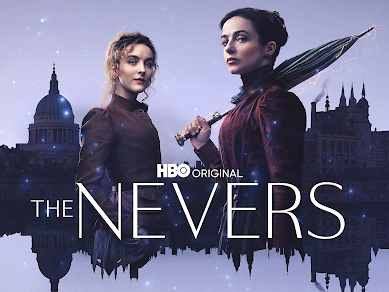
THE NEVERS cancelled at HBO

In not-entirely surprising news, HBO has cancelled its Victorian supernatural drama series The Nevers. However, it has more surprisingly made the move ahead of the broadcast of its second batch of episodes.

The Nevers was created by Joss Whedon and was in development at HBO for some considerable time before it entered production in 2019. However, its development and production were overshadowed by accusations of bullying and unpleasant behaviour by Joss Whedon on the set of the film Justice League (2017), for which Whedon oversaw extensive reshoots. Warner Brothers initially sided with Whedon, but this became less tenable as more actors came forwards with stories of improper behaviour. Whedon abruptly resigned from working on The Nevers after principle photography on the first half of the first season (hugely complicated by the COVID pandemic) was completed but before it was edited.

The first half of the first season aired in May 2021 to a generally positive critical response, although again it was overshadowed by a second wave of allegations about Whedon, this time stemming from his work on Buffy the Vampire Slayer and Angel from 1996 to 2004, where again he was accused of bullying and toxic behaviour.

The critical and commercial reception to The Nevers - the show enjoyed reasonable first-season ratings on HBO - meant that HBO did undertake a salvage operation on the series, appointing Philippa Goslett as the new showrunner and teeing up ideas for a second full season. It appears that the original plan was to let the second half of the season air and then see if it had legs to go on without Whedon's influence. However, the recent merger of Warner Brothers and Discovery has led to many shows, some of them bigger than The Nevers, being cancelled for finance and business reasons rather than popularity ones. It's somewhat unsurprising that The Nevers was deemed much more expendable in this new environment.

Production of the second batch of episodes was fully completed and apparently news of the cancellation came early enough that they were able to craft the season finale into a full series finale. The second batch of episodes should air in 2023, although it's not entirely clear where: the existing episodes have been pulled from HBO Max (alongside those of Westworld). It looks like the episodes may resurface as part of the new ad-supported streaming service that Warner Brothers is reportedly developing.

Wednesday, 10 February 2021

Multiple BUFFY THE VAMPIRE SLAYER stars speak out against Joss Whedon

Multiple cast and crew who worked on the television series Buffy the Vampire Slayer and its spin-off series, Angel, have spoken out against showrunner/creator Joss Whedon, claiming he created a toxic and bullying atmosphere on set.

Charisma Carpenter, who played Cordelia Chase on three seasons of Buffy and the first four seasons of Angel, made the first statement earlier today, stating that Whedon threatened to fire her as a joke and made unflattering statements about her figure and personal appearance, including after she became pregnant in the fourth season of Angel. Carpenter had previously complained that Whedon had effectively fired her from Angel after she became pregnant with no discussion of finding ways of incorporating her pregnancy and allowing her to remain on the show, and Whedon resented her for forcing him to change his storyline for the series. She was killed off during a one-off appearance in Season 5 after being promised that she would not, in fact, be killed off.

Carpenter's statement was quickly picked up and boosted by Amber Benson, who played Tara in Seasons 4-6 of Buffy. Benson confirmed that the show had a toxic atmosphere as a result of Whedon's personality and bullying tactics.

The show's star, Sara Michelle Gellar, then made a brief Instagram statement in which she said she'd forever be proud to have her name associated with that of Buffy the Vampire Slayer, but not that of Joss Whedon.

Michelle Trachtenberg, who played Dawn Summers in Seasons 5-7 of Buffy, has also offered her support and said that Whedon's behaviour was "inappropriate." She later amended her statement to say that Whedon was not allowed to be alone with her in the same room during filming on Buffy.

Clare Kramer, who played the villainous Glory in Season 5 of Buffy, also offered her support for these reports.

The statements come after a year of allegations that Joss Whedon bullied and belittled actor Ray Fisher on the set of the 2017 movie Justice League (an allegation supported by co-star Jason Momoa). Wonder Woman actress Gal Gadot also reported some difficulties in working with Whedon. Buffy actor James Marsters, who played Spike on both Buffy and Angel and was briefly involved in developing a spin-off series, last year recounted Whedon reacting badly to Spike's popularity, feeling that he had to keep Spike on the show rather than facing a fan backlash and reacting poorly to the situation (at one point grabbing the actor and telling him that he was "dead").

Buffy stunt actor and coordinator Jeff Pruitt also reported last year that Whedon had started off the show well, but by Season 4 had become an "egomaniac" due to the success of the series and had resorted to bullying cast and crewmembers, even interfering in Pruitt's relationship with stuntwoman Sophia Crawford, which led to him quitting at the end of that season and Crawford the following season.

In 2017, Whedon's ex-wife Kai Cole posted an article claiming that Whedon was unfaithful to her with several actresses from his shows and was mentally abusive to her in the process. Whedon's representatives did not dispute this point.

Whedon's most recent project was a new TV series for HBO, called The Nevers. Work had been completed on the first six episodes of the series, which HBO is showing in April, but Whedon quit the show last November. A second batch of four to six episodes (delayed by the COVID pandemic) is progressing with replacement showrunner Philippa Goslett in charge.

It was reported last year that Whedon was in talks to rejoin the Marvel Cinematic Universe, which he'd quit following a falling-out with Marvel head honcho Isaac Perlmutter over the film Avengers: Age of Ultron. With Perlmutter removed from any responsibility for the films in favour of MCU producer Kevin Feige, Whedon was reportedly interested in stepping back into a role. However, one imagines this is now highly unlikely to happen.

This is potentially a developing story, and more if it emerges.

UPDATE: Anthony Stewart Head, who played Giles on all seven seasons of Buffy the Vampire Slayer, notes that he did not see any inappropriate behaviour on set but is fully supportive of the actors coming forwards. He notes that he was already a very experienced and relatively famous actor when he appeared in the show, so the power dynamics he had with Whedon were very different, and if he'd been aware of inappropriate behaviour he would have spoken out at the time.

Actor James C. Leary, who played the recurring role of Clem in the last three seasons of Buffy, has also voiced his support for those coming forwards.

Eliza Dushku, who played Faith in twenty episodes of Buffy and six of Angel, has voiced her support as well.

J. August Richards, who played Gunn in Seasons 2-5 of Angel and in a guest role in Season 1, has also spoken of his support for Charisma Carpenter.

James Marsters, who played Spike in Seasons 2 and 4-7 of Buffy and Season 5 of Angel, has added his support. He had previously reported unpleasant interactions with Whedon during the making of Buffy, particularly Whedon's anger over how popular Spike was and how he felt that interfered with his storytelling.

Marti Noxon, who was effectively the showrunner of Buffy the Vampire Slayer after Whedon stepped back to oversee Angel and Firefly as well, has also voiced her support.

Jose Molina, who worked as a writer and script editor on Firefly, alleges that Whedon liked to boast about bullying women in the workplace, in particular taking joy in making a female writer "cry twice in one meeting."

Adam Busch, who played Warren in Seasons 5 and 6 of Buffy the Vampire Slayer, has added his support to Charisma Carpenter.

Emma Caulfield, who played Anya on Seasons 3-7 of Buffy (and is currently playing Dottie on WandaVision), has also voiced her support.

David Boreanaz, who played Angel on the first three seasons of Buffy (and recurring in later seasons) and was the star of the spin-off show, has also offered his support to Charisma Carpenter.

Amy Acker, who played Fred on Angel and Whiskey on Whedon's later show Dollhouse, has offered her support as well.

Sunday, 24 November 2019

She Saved the World...a Lot: A BUFFY THE VAMPIRE SLAYER Retrospective

Originally airing between 1997 and 2003 (and loosely based on a 1992 movie), Buffy the Vampire Slayer was one of the most popular genre TV shows of the 1990s. Created and produced by Joss Whedon, the show spawned a larger franchise – the “Buffyverse” – which came to incorporate novels, video and board games and a canonical, eleven-year comic series which continued the story from the TV show. It also spawned a spin-off show, Angel, which ran from 1999 to 2004. Almost every book, TV show and movie featuring supernatural creatures in a modern setting published since 1997, from The Dresden Files to Sookie Stackhouse (itself adapted to TV as True Blood) to the Twilight series, lives in Buffy’s shadow.


Buffy started as a joke: Joss Whedon getting annoyed at yet another helpless young woman going down the wrong alley or trusting the wrong guy and getting killed by a (usually male) monster or serial killer. Working as a scriptwriter on the mega-hit sitcom Roseanne gave the very young Whedon some pull in Hollywood, so he wrote a spec script which started with the same scene, but this time the young woman defeats the monster and kills it in hand-to-hand combat. The resulting movie made some noise on release for its casting of the then-hot Luke Perry (from Beverly Hills 90210) and Kristy Swanson (seen as a potential up-and-comer) in the title role, and did okay at the box office. Whedon was unhappy with the final film, which had dramatically cut his script, removed most of the best lines and exorcised the final set-piece battle in which the school gym is spectacularly blown up. He was also extremely unhappy with Donald Sutherland’s performance and felt his vision for the film had been butchered, turned more into a comedy than the comedy-horror hybrid he’d envisaged. He moved on, becoming a script doctor working on films such as Twister, Speed and Toy Story, and tried to forget about the experience.

Unexpectedly, 20th Century Fox didn’t forget about it. The movie had performed perfunctorily at the box office but picked up a long tail on home video and rental, making a pleasing amount of money and working as a kitsch cult favourite, although not enough to justify a film sequel. Along with the film’s producers they worked on the idea of turning the film into an ongoing TV series instead and invited Joss back to write for the show and run it. Whedon agreed, surprising many in the business as he turned his back on the lucrative world of movies for TV, where he had much greater creative control instead. Whedon’s last film script at this time was the first draft of Alien: Resurrection, which was also butchered by the director and in rewrites, causing him to later remake the same idea (of a disparate crew of reluctant allies working on a transport ship in the future) as a TV show…but that’s another story.

Buffy the Vampire Slayer was produced by Fox but aired on the WB network, where it picked up very strong audience figures for the young channel. The show was a near-instant success, propelling its young and photogenic cast onto the covers of magazines worldwide. More startlingly, it attracted a degree of critical acclaim. After a few ropy opening episodes, the Season 1 finale and then most of Season 2 saw a huge uptick in the show’s critical reception, as Whedon took the show in unexpectedly dark directions.

The doomed relatonship between Buffy (Sarah Michelle Gellar) and Angel (David Boreanaz) provided the main dramatic thrust for the first three seasons of the show.

The show’s premise is broadly similar to the movie’s (which, confusingly, in the show canon is referenced only in the form of Whedon’s original script, not the final product). Into every generation is born a Slayer, one teenage girl in all the world who has the strength, speed and stamina to fight against the vampires, demons and other forces of darkness. When one Slayer dies another is called. An organisation known as the Watchers’ Council identifies potential Slayers before they are called and helps train and prepare them for the role, but in the case of Buffy Summers they completely miss the signs. Buffy thus has to train and learn how to be a Slayer at the same time as dealing with ordinary teenage concerns: dating, studying and family trauma (her parents have recently divorced).

For the show, Buffy relocates to Sunnydale, California, a fictional town which just happens to be built on top of the Hellmouth, a portal leading to a myriad of unpleasant hell dimensions. The Hellmouth has been relatively quiet for seventy years (although there’s still more supernatural activity than normal there) but has recently become more active due to the presence of the Master, a vampire lord who has been imprisoned nearby. As the Master’s prison weakens, so the Hellmouth gets more active and more weird stuff starts happening.

Buffy is aided in her task of guarding the Hellmouth by a new Watcher, Rupert Giles, and two friends who discover Buffy’s secret in her first week in her new high school: Xander Harris and Willow Rosenberg. This foursome forms the core of the “Scooby Gang.” Over the course of the seven seasons, there are numerous additions to and departures from the Gang, but this core group remains (mostly) constant. The presence of the Hellmouth helps the writers explain why Buffy is constantly coming up against weird creatures in the same location, the show lacking the budget to have her constantly on the road travelling to trouble spots (as is suggested is the normal life of a Slayer); the WB’s later supernatural, demon-hunting series (now on the CW), Supernatural, actually employs this idea instead.

The show’s initial focus is on action, with Buffy fighting a new “monster of the week” each episode, including crazed Inca mummies, a giant praying mantis (probably the nadir of the show’s episodes) and – apparently – a serial-killing sentient puppet. However, she also has a recurring problem in the form of the Master’s plan to break free and open the Hellmouth, thus ending the world (or flooding it with demons). The show also gives Buffy a potential love interest, Angel, a “reformed” vampire who has had his soul restored by a gypsy curse. The twelve-episode first season culminates in a final battle where the Master is defeated.

Although the later seasons are much longer (22 episodes apiece), the first season establishes the show’s basic format: a threat – the “Big Bad” – is established in the opening episodes, which at first is in the background and vague and then grows more powerful, usually becoming prominent by mid-season, where there is usually a twist or reversal which ups the stakes and drives the back half of the season. Buffy also has personal challenges to face at the same time, involving romance, her academic career or her family life. With some variations, each season of the show broadly follows this arc, with occasional moderate changes in format driven by events such as Buffy and her friends graduating from high school to college at the end of Season 3. Whedon chose this format over the “one big story unfolding across the entire series” approach favoured by one of his favourite shows, Babylon 5, because it gave greater closure to each season (making it less problematic if the show was unexpectedly cancelled). However, he later acknowledged this was somewhat contrived – a new threat showing up in September that was normally defeated by May, with there being no threat at all over the summer – and seeded in more long-running story arcs into the later seasons, whilst also including a series-long, ongoing threat in the spin-off show Angel (that of evil law firm Wolfram & Hart).

Spike (James Marsters) was an early-series villain who returned later on as a friend and ally.

The reasons for Buffy the Vampire Slayer’s commercial and popular success were obvious: the young and photogenic cast and the stories mixing action, drama, soap opera elements and romance. The reasons for its critical success were initially less clear; contemporary young dramas such as Charmed, Roswell and Dawson’s Creek seemed to be somewhat more risibly received by adult critics whilst Buffy was wowing them as early as the end of Season 1. The reasons for this are numerous. The first is that Buffy is the rare show that completely masters tonal variation, a hallmark of Joss Whedon’s work (who also does the same thing in Angel, Firefly and the two Avengers movies he worked on). Buffy is an intense teenage character drama one minute, an all-out action show the next and then a comedy. During and after Season 4 it also developed a nice line in unexpected experimentation, with one episode taking place almost completely without dialogue and another being a musical filled with original songs referencing and pushing forwards the plot.

The second is that the show has pretty good dialogue. Whedon – 32 when the first season aired – knew he wasn’t “down with the kids” so developed his own language cadence and lexicon for the show which both felt real (the weird teenager in-references and jokes feel genuine) but weren’t based on real contemporary slang, also preventing the show from dating. More cleverly, he was also able to make Giles sound like a genuine English guy (thanks to Whedon spending three years in the UK as a teenager) and developed more elaborate and flowery dialogue for the vampire characters who had lived for centuries.

The third is that Buffy is self-aware, and usually the first to poke fun at itself. Its premise and even the name of the show are batty and weird, and it leans into it. The fact that all vampires seem to inexplicably learn kickboxing in the time between dying and raising from the grave is noted, and Buffy’s tendency to give wonderfully uplifting speeches but which then can get a bit repetitive becomes a recurring gag in the final season. Giles’s tendency to get immediately knocked out by whatever threat has arisen is also noted, with the other characters starting to worry he’ll “wake up in a coma.” For those who think metacommentary in a TV show is a new thing, watching twenty-three-year-old episodes where characters mock the dramatic angst and doomed tragedy of the Angel/Buffy relationship can be amusing.

The fourth reason is that Buffy is a metaphor, and a successful one. The show uses the vampires, werewolves and supernatural creatures as reflections and stand-ins for the traumas of life, at first applied to teenagers and later to life in general. An unpopular girl is so fed up at being ignored and lonely that she literally fades out of view and becomes completely invisible. The most popular girl in the year, Cordelia, is constantly being complimented and having sycophants hang on her every word, but is lonely and unhappy until joining Buffy’s crew gives her a sense of purpose and fulfilment (despite Buffy’s group being considered weird rejects and outcasts at school) because they are actually achieving something. In Season 2, Buffy loses her virginity to Angel, inadvertently breaking his curse and turning him back into a vicious, amoral killer, a nod at the “nice guys” who turn into arseholes the second they get what they want from the girl. More controversially, numerous young, lonely and male students are shown dabbling with various dark arts to kill or hurt their fellow students, often after being rejected by female crushes. One even pulls out a gun in school, although this is to kill himself rather than his classmates, but this was so problematic in the wake of the Columbine massacre that the episode was delayed by several months.

The metaphors are usually reasonably elegant, but occasionally get preachy: Willow’s addiction to using magic in Season 6 is a worthwhile storyline, but is clumsily presented, with Willow visiting “magic dens” where people get off on doing spells like they’re 1960s acid-trippers. This wasn’t so much “on the nose” as “snapping the nose clean off.” Faith’s third season descent into being a “bad girl” is also pretty clichéd, saved only by Eliza Dushku’s performance and her later redemptive arc on Angel (which then feeds back into Buffy’s final season).

The relationship between Tara (Amber Benson) and Willow (Alyson Hannigan) was extremely popular with viewers, and the resolution to it remains controversial.

As Buffy went on it matured, and the audience matured with it. The final three seasons (the sixth, in particular) are sometimes criticised for going “too dark,” with Buffy embarking on an inappropriate, creepy and mutually destructive relationship with the vampire Spike (who, unlike Angel, doesn’t have a soul) and several popular supporting characters being killed off. In the case of Buffy’s mother, this felt necessary to drive a new wave of storylines about Buffy’s independence and making her stand alone, but in the case of the extremely popular Tara it felt less justified and more gratuitous (and problematic, with Tara being a then-rare example of a lesbian character in a happy relationship). 

The addition of Buffy’s “sister” (actually a magical construct) Dawn to the show also upset some fans, who felt it added an element of soap opera to the show and also contributed to the ever-expanding cast, which added some story variety but also dissipated the tight focus on the core foursome. Whedon certainly seemed to have issues jettisoning actors he’d befriended once their main contribution to the story was done, having the likes of Oz, Anya and even Spike hanging around for maybe a season too long apiece as he tried to work out what to do with them. The final season, which has about a dozen new recurring characters (between multiple villains, new allies and the “potential Slayers” Buffy takes under her wing) showing up, is particularly guilty of this. Another element which has aged poorly is Xander’s borderline sexism towards girls in the first season which thankfully improves dramatically in the second.

Buffy the Vampire Slayer isn’t perfect, but it’s one of those shows where the imperfections make it more interesting. It’s a show that tried to wear several hats simultaneously – action, comedy, romance, horror – and actually succeeded in doing so. It could be funny, scary and thought-provoking, and occasionally (in the case of the harrowing Season 5 episode The Body, comfortably one of the best episodes of television ever made) genuinely tear-jerking. It was also a show way ahead of its time in many respects, with the series doing metacommentary, genre savviness and social commentary arguably better than most shows attempting the same today.

Buffy has aged like a fine wine (apart from some of the dodgier effects and a half-arsed HD remaster which should be avoided like the plague) and is still richly compelling and entertaining television, the forerunner of so many modern shows, books and movies which have never quite managed to hit all the same notes simultaneously. If you’ve never seen it, I recommend giving it a whirl, and if it’s been a while since you last visited Sunnydale, you might be surprised at how welcoming the Hellmouth can be on a return trip.

Thank you for reading The Wertzone. To help me provide better content, please consider contributing to my Patreon page and other funding methods, which will also get you exclusive content weeks before it goes live on my blogs.

Monday, 8 July 2019

Angel: Season 5

Angel and his team have made a deal with the devil, joining forces with their former enemies at Wolfram & Hart following their mutual battle against the evil Jasmine. Angel believes his team can rehabilitate the law firm and turn them into a force for good, but some (including their old allies from Sunnydale) believe they will be corrupted and swallowed by the beast. The return of an old friend turned enemy turned unreliable ally causes Angel to question his place in the world...and the loss of another friend threatens to destroy the team altogether.


Angel's fifth and final season is an interesting one. The fourth season (and to some extent the second and third as well) had gone into an incredibly dark, intense and serialised direction which the studio had not been entirely comfortable with. For the fifth season they wanted more stand-alone episodes and a lighter tone, which the show initially struggles a little bit with. It's hard to go as dark as Angel did in Season 4 and then reel it back in.

Moving the action to Wolfram & Hart shakes things up nicely, bringing in new and former recurring characters (like Mercedes McNab's Harmony and Christian Kane's Lindsey) and setting up a new paradigm. This allows the show to switch back to a monster/case-of-the-week storyline (albeit with serialised subplots continuing between episodes, such as Fred and Wesley's growing attraction) without it feeling too contrived. The addition of Spike to the cast takes a bit more work, since his sacrifice at the end of Buffy gave the character a powerful send-off and bringing him back to chase ratings on the sister show is a bit cheesy. That said, the addition of Spike - a second vampire with a soul - helps Angel's character, by causing him to question his own place and purpose in the world. James Marsters is good as usual and the writers find things for Spike to do to develop the story and characters without him dominating the show (as arguably he did on occasion in Seasons 4-7 of Buffy).

In the second half of the season the writers seemed to realise the writing was on the wall for the show, so started layering in more serialised storytelling, setting up both an absolutely shocking, heart-wrenching plot twist that comes out of nowhere (and is beautifully sold by all the actors, particularly Alexis Denisof and a never-better Amy Acker) and a final confrontation with the forces of evil, an all-star group of villains which, it turns out, the first half of the season was cleverly setting up and foreshadowing. This gives Angel - both the show and character - its mission statement back, to present a band of people fighting the good fight against the forces of darkness, no matter the cost. If Buffy was about growing up, Angel is about working out what to do with the rest of your life and if you can find something to believe in and fight for. It's a universal theme, but one arguably rarely presented as well and without cliche as in this show.

Angel's fifth season (****½) falters slightly early on but recovers to deliver a second half which sums up the character, the show and the entire Buffyverse in tone, and gives the show and the universe one of the best, messiest and most realistic endings an SFF show has ever had. It is available now as part of the complete series boxed set (UK, USA).

Monday, 24 June 2019

Angel: Season 4

Angel is trapped in a coffin at the bottom of the ocean. Wesley, feeling betrayed by his friends, has turned into a hard-bitten, demon-killing mercenary. Cordelia is missing and Lorne has relocated to to Vegas. Connor, Fred and Gunn are carrying on the good fight, but outnumbered and outgunned there are limits to what they can do. As the gang set out to gather their friends, a much greater threat is gathering force and is about to unleash an evil upon the world that nobody, not even the demonic law firm Wolfram & Hart, are prepared to deal with.


The fourth season of Angel is the most polarising. It's the show's darkest season, at times seemingly delighting in finding ways of sending characters already in dire straits to an even lower and more depressing state. However, it's also the most serialised season and the writers spend a lot of time delighting in one-upping one another with ever more elaborate and challenging cliffhangers and dramatic plot twists, most of which (just about) hang together.

It helps that the previous seasons established both this tight-knit group of characters and their enemies in Wolfram & Hart so well, so when the show rolls hand grenades into both camps in the form of "the Beast" (a seemingly unstoppable killing machine) there's a lot of good drama to be mined. Previously-established secondary characters are killed off at a rate of knots, and the show has to draft in some heavy guns from previous seasons (not to mention Buffy) to help tackle the threat, which makes the story feel genuinely high-stakes.

This year also benefits from better pacing than the third season, with a more heavily serialised arc split into chapters separated by stand-alones (which nevertheless further either characterisation or subplots related to the main arc). There's also a lot to do, from rescuing Angel to getting Wesley back on-team (or at least on speaking terms again) to identifying the Beast and formulating a plan to deal with it. More than most Buffy and Angel seasons, it earns its 22-episode running time.

Although the pacing is excellent and the general storyline very good - arguably the strongest season arc Angel ever tackled - some characters suffer, a lot. Behind-the-scenes shenanigans led to Cordelia's character being effectively thrown under a bus for most of the season and then shuffled off to Ambiguous Coma Land. Given Charisma Carpenter's excellent performance in the third season as she changed Cordelia into being the show's strong, moral centre, that's a bitter disappointment. Even worse is what happens to Angel's son, Connor. Connor is a moody teenager, which automatically makes him hard to like, but whilst the similarly-initially-unpopular character of Dawn on Buffy was allowed to change and grow and eventually earn her place on the team, Connor stays a mopey teenager all season. He also ends up being everyone's patsy, played like a fool by multiple enemies. His late-season redemption isn't enough to save the character and the producers have to shuffle him off the show in the most embarrassing way possible once they realise they can't redeem the character.

The fourth season of Angel (****) is divisive, being both a compelling rollercoaster of interesting storylines, and a sustained character assassination which renders at least two major characters unlikable for no real particular reason. It is available now as part of the complete series boxed set (UK, USA).

Wednesday, 8 May 2019

Angel: Season 3

The team at Angel Investigations are on top form, solving new mysteries and enhanced by the addition of Winifred Burkle - an astrophysicist with a gift for science and research - to the team. As Fred settles in (having spent five years imprisoned in another dimension), the team have to face the consequences of past actions, as Wolfram & Hart continue to undermine their operation and Darla returns...with a surprise for Angel.


The second season of Angel was a success, with a great main story arc and lots of excellent character development, especially for Angel, a character you'd assume by now had been fully explored. The third season is more or less a direct sequel to the second, but the writers pull back on some elements they feel had already been explored in sufficient depth, such as making Angel a darker character or having Wolfram & Hart constantly being behind whatever evil is going on in any given episode.

They also - thankfully - don't explore the camp fantasy world of Pylea again. Although a nice change of pace, Pylea outstayed its welcome at the end of Season 2 and we can do without going there again. Instead, the consequences of the Pylea trip play out several times over the course of the season, particularly for Fred (a winning performance by Amy Acker) and Cordelia (an ever-improving Charisma Carpenter).

If Season 3 has a major problem, it's in its structure and pacing. The writers clearly decided that some storylines in previous seasons had been allowed to dominate too many episodes, so this season each story arc unfolds much more intensely, usually over 3-4 episodes max, separated by stand-alone episodes. This means that stories have much greater verve and pacing, but it also means that the growing narrative momentum of the season keeps being reset with stand-alone episodes, which vary in quality immensely. The story arcs, revolving around the return of Darla, the campaign against Angel by his old enemy Daniel Holtz (a fine performance by Keith Szarabajaka) and the birth of a child with a surprising destiny, are all pretty solid, but the gaps between the stories feel contrived at best.

The season also makes a series of curious decisions regarding characterisation which are still highly controversial. Wesley has been getting more ruthless and capable since the first season, but the way he goes full-on dark and borderline amoral at the end of the season feels a bit undercooked. It makes him a far more interesting character in the final two seasons, sure, but the way he gets there feels implausible. There's also the implication that Wesley, a thirty-something guy who's been around the block a few times, makes the decisions he does because he gets turned down by a woman he likes, which feels like a very juvenile motivation point.

There's also the treatment of Cordelia as a character. Through most of Season 3 she undergoes tremendous growth and improvement as a member of the team and ends up being arguably the most well-adjusted and empathetic member of the crew, which given where she started so long ago (in Buffy Season 1) is remarkable. The end of the season throws this development into some doubt. This is less of a problem in Season 3 itself, but paves the way for Season 4, where Cordelia's character is thrown under the bus in a manner that is still highly contentious.

Still, Angel's third season (****) is highly watchable with some impressive storylines, cliffhangers and dramatic moments. Character development is a mixed bag, and some of the stand-alone episodes are painful, but overall it remains a solid addition to the series, and paves the way for the more impressive (if more controversial) fourth year. It is available now as part of the complete series boxed set (UKUSA).

Tuesday, 16 April 2019

Angel: Season 2

Angel Investigations is expanding, fighting the good fight against evil from a new headquarters and recruiting expert vampire fighter Charles Gunn and finding a new informant in the form of Lorne, the Host. But when demonic law firm Wolfram & Hart resurrects Angel's sire and old lover Darla, it sets a chain of events in motion. To defeat their plan, Angel has to alienate his friends and risk his soul.


The first season of Angel, a spin-off from Buffy the Vampire Slayer focusing on the broody vampire-with-a-soul, was an entertaining but diffuse collection of episodes which varied widely in quality. However, in the second half of the season the show coalesced with the addition of Wesley as a regular character and became much more dynamic, climaxing with the explosive season finale in which Darla is resurrected.

Season 2 picks up on this thread with Darla playing mind games with Angel and throwing him off his game. Early episodes feel a bit Season 1-ish with a few stand-alone episodes, but these are mostly excellent. Are You Now or Have You Ever Been is a fantastic stand-alone drama which answers the question of what just Angel was doing for the century between regaining his soul and deciding to ally with Buffy and start redeeming himself, and Guise Will Be Guise is an entertaining Wesley solo adventure.

The meat of the season is the relationship between Darla and Angel and its impact on other characters such as Wolfram & Hart lawyers Lindsey ("evil hand!") and Lilah. This creates a complex, messy and compelling ten-episode story arc as Angel's commitment to doing the right thing are tested as he tries to help Darla find redemption, and then (once Darla joins forces with a returning Drusilla, from Buffy) vows to destroy her, alienating his team in the process.

Both Buffy and Angel work best when dealing with moral conundrums and difficult character relationships, and this story allows the writers to explore that to the hilt. Excellent performances - especially from Julie Benz (who was supposed to appear in one episode of Buffy and then die, so was doing pretty well here) - and genuinely surprising plot twists keep the story moving in a gripping fashion.

The season does fall down in a few areas. One of these is that it's never really explained why or how Angel and his team are able to rent out such a massive hotel in LA that is in a fully usable condition. Given their money troubles in Season 1 when they were renting a tiny office, it's unclear how they can afford this building. This is paid more attention to in Season 3, but is a niggling oddity in Season 2. Another is that there's so much going on this season that other storylines from Season 1 are minimised or ignored. Kate Lockley's storyline feels a bit undercooked in particular (Elisabeth Rohm's decision to quit the show to become a regular on Law & Order being very understandable as a result).

The season then ends in a curious manner. Perhaps feeling that the season had gotten a bit too dark and depressing, the writers decided to visit Pylea, the home dimension of Lorne, a karaoke bar-owning friendly demon who helps Angel out over the course of the season. Angel goes a bit Hercules/Xena in the final four episodes of the season, with lots of unconvincing castle sets and exteriors, and the crew helping the people rise up against their evil overlords. It's Angel's most bizarre and out-of-place story and hugely divisive amongst fans. I kind of like the whacky change of pace and the way it helps Angel come back from his dark place, but at four episodes the mini-arc is roughly twice as long as it really should be. The best thing the arc does is introduce Amy Acker as new regular character Fred, whose importance becomes much clearer in subsequent seasons.

Angel's second season (****½) is a significant improvement over the first, with a much more riveting story arc and more interesting character developments. It's a rollercoaster of darkness and grit, ending in an unexpected blaze of camp. It is available now as part of the complete series boxed set (UKUSA).

Saturday, 23 March 2019

Angel: Season 1

Having helped Buffy Summers, the Slayer, defeat the evil Mayor and save Sunnydale from destruction, the infamous vampire-with-a-soul Angel has relocated to Los Angeles to open a new front in the war against evil. He rapidly joins forces with former Sunnydale associate Cordelia Chase and newcomer Doyle (a half-demon with visions of people in trouble) to continue the good fight, guided by the mysterious "Powers That Be" and opposed by a supernatural law firm, Wolfram & Hart.


Way back in the day, when it was first announced that Buffy the Vampire Slayer was spinning off Angel into his own series I could only groan. Angel, particularly in his "good" mode, was not the most compelling character on Buffy and if often felt like him hanging around was inhibiting Buffy's character development. As it turned out, I was wrong and the Angel/Buffy relationship was also damaging Angel's own character. Freed from that relationship, Angel quickly becomes a more interesting character in his own show.

It helps, of course, that Buffy has already done the heavy lifting of introducing Angel and establishing his detailed backstory and motivations, so the show is able to jump much more into doing its own thing: establishing Angel as a private detective (!) working in LA, helping the helpless. This slightly goofy premise would be more wince-inducing if the show itself took it seriously. Instead, Angel's semi-Batman antics are roundly mocked (including his early-season use of a Bruce Wayne-style utility belt packed with unlikely gadgets) and drama is mined from both the standard supernatural shenanigans and more mundane concerns, like Angel and his associates needing money to keep going.

The first half of the season has its moments, but also has a lot of monster-of-the-week episodes where Doyle gets a vision, Cordelia does research and Angel kicks backside. This dynamic is fine, but a tad repetitive. We're not in Buffy Season 1 territory of low production values and some dire scripts here, but the show is a far cry from its later, much more compelling self. Things improve markedly in the second half of the season, as Wesley Wyndham-Pryce (from Buffy's third season) joins as a new regular character and J. August Richards' Gunn joins a recurring ally. The dynamics at Wolfram & Hart also become more interesting. Whilst Buffy had a "Big Bad" which changed every season, Angel more realistically has a "Big Bad" that constantly unfolds and develops across its entire five-season run, complete with its own internal machinations and betrayals which makes for some compelling drama.

Still, Angel still feels like it's running with its training wheels on until the two-part story where Faith arrives in LA (after events in Buffy Season 4) to cause even more mayhem. This results in one of the finest fight scenes that either Buffy or Angel ever did, followed by a remarkably powerful story of redemption that will unfold across the next three seasons. Combined with Wesley levelling up as a badass (after being tortured by Faith for hours knocks some of the Giles-ness out of him) and Wolfram & Hart becoming a much more threatening enemy in the genuinely surprising season finale, Angel's first season goes out on a high, paving the way for the superior second year.

Angel's first season (***½) takes a little whilst to get going, but once it does it kicks into high gear and never looks back, becoming a worthy companion to Buffy the Vampire Slayer and in some respects (such as general episode consistency) its superior. It is available now as part of the complete series boxed set (UK, USA).

Tuesday, 6 May 2014

Gratuitous Lists: Top Ten SFF Finales

Welcome to a new feature on the blog, where I list things in a list format because everyone likes lists. However, no-one (well, me) likes the incessant arguing over the placement of things on lists rather than their actual merits, so I'm not doing that.

Here is a list of what I think are the best final episodes of SFF TV series over the years, listed in no particular order but with my favourite one at the end. So, let's do this.

Blake's 7: Blake
Season 4, Episode 13, aired 21 December 1981

"Well, this doesn't look good."


An ending so unexpected that people are still talking about it thirty-three years later. In the closing moments of the final episode of the series, our long-missing idealistic hero, Blake, is revealed to have become a mercenary fighting for money and has betrayed his former comrades to the tyrannical Federation. His morally ambiguous second-in-command-turned-leader Avon guns him down...only for it to be revealed that Blake was still fighting the good fight all along and had a larger plan in mind. Cue Federation soldiers appearing and executing the entire regular cast of the show. The series ends by fading to black as Avon - apparently - is shot dead as well.

Bleak and nihilistic doesn't even begin to cover it, although it was later revealed that the show was never meant to end this way. A planned fifth season would have revealed that most of the characters would be still alive, having been stunned rather than killed. The BBC's announcement that this was final episode took the cast and crew as much by surprise as anyone, but for many years they suggested this had been the plan all along. So, not quite as ballsy as it first appeared, but still a jaw-dropping way to end the series. The rest of the episode is pretty good as well, with its famously cash-strapped effects team doing a reasonable job of depicting the crash-landing of our heroes' ship, Scorpio, on the surface of Gauda Prime.


Chuck: Chuck versus the Goodbye
Season 5, Episode 13, aired 27 January 2012

When in doubt, finish on a beach with an amnesia storyline. Actually, don't, unless your show is as good as Chuck.


For five seasons Chuck trod a careful path between out-and-out comedy, spy hijinks and a romance centred in the gradual development of lead character Chuck Bartowski from a loser working in an electrical store to a convincing secret agent able to woo his team-mate Sarah Walker. That made the decision the showrunners took in its final few episodes, with the erasing of Sarah's memories meaning she had no idea about their relationship, all the braver. Still, trope-savvy fans were expecting her memory to be restored in the final episode and All To Be Well. That didn't happen, with the series ending with Chuck apparently realising he had to win over Sarah from scratch. A surprising ending that didn't take the cop-out route and also featured some fantastic other scenes, such as the main villain being defeated to Jeff and Lester's memorable cover version of "Take on Me" by A-Ha, Morgan finally winning Casey's respect and several callbacks to the very first episode of the series.


Firefly: Objects in Space
Season 1, Episode 14, aired 13 December 2002

"Well, here I am."


Firefly was never meant to end with this episode, of course, but it makes for a surprisingly fitting denouncement and arguably its finest hour. The crew are trapped in deep space as a bounty hunter stalks their ship, trying to capture River Tam and getting embroiled in a battle of wits with her. The episode is moody and intense, tremendously well-written and directed by Joss Whedon (who later said it was the one piece of work he'd use to represent everything he's ever done) and featuring lengthy allusions to the work of Jean-Paul Sartre (the DVD commentary is worth a listen on this score) as well as knockout performances from Summer Glau and Richard Brooks as Jubal Early. The episode also features the eventual acceptance of River Tam into the ranks of the crew, ending a thematic storyline begun back in the pilot. But, yeah, this was an ending that came too soon.


Star Trek: The Next Generation: All Good Things...
Season 7, Episode 25, aired 23 May 1994

For a show about exploring deep space in the far future, ending with a poker game and gratuitous cleavage shot is an interesting stylistic choice.


After seven seasons, Star Trek: The Next Generation bowed out with a relentlessly entertaining romp that served as a greatest hits of the show's past. Q returns, keen to finish the trial he began in the pilot episode (and inadvertently hinting that maybe the whole thing was a pointless test, with humanity itself poised to evolve into the Q at some point in the distant future) and Picard has to find a way of allowing humanity to survive. The episode is rammed so full of plot holes that it doesn't even begin to make sense, but it's worth it to kick back and enjoy seeing the likes of Tasha Yar and Romulan Commander Tomalak again, as well as the futuristic, three-nacelled Enterprise cutting through Klingon warships like they're butter. A comprehensively superior way for TNG to bow out than its series of indifferent spin-off movies.


Buffy the Vampire Slayer: Chosen
Season 7, Episode 22, aired 20 May 2003

For the show that once blew up a high school as a form of cathartic release and commentary on growing up, going the whole hog and nuking the entire town was really the only way to top it.

When Buffy started, the title character was trying to avoid her role as the 'chosen one' whose destiny is to save the world. Seven seasons and several world-saving antics later (including at the cost of her own life, twice) the series, ironically, ends by doing exactly what Buffy wanted back in the beginning: by taking her status as the chosen one away by gifting the powers of the Slayer on hundreds of other girls all over the world. It's a surprisingly effective and clever ending given they couldn't kill her again or have her lose this final battle, this time against the very nature of evil itself.

As a finale the episode works on all sorts of other levels as well, with Willow finally moving on from her PTSD at the death of Tara and her resulting brush with evil in the previous season and Spike embracing his role as a hero. Only the death of Anya, which goes almost completely unnoticed by anyone apart from Xander, strikes a duff note. But the mistakes can be forgiven for those final shots of Sunnydale - the suburban American dream hiding the nightmare of the Hellmouth - being destroyed and the gang standing around wondering what to do next, the world their oyster. It's an ending ripe with possibilities, which the 'canon' Season 8 and 9 comics have really failed to live up to. Still, as endings go which wrap things up but leave room for more adventures, this is a very strong one.


Star Trek: Deep Space Nine: What You Leave Behind
Season 7, Episode 25, aired 2 June 1999

It's important for a finale to give emotional closure to the character arcs we have followed over the course of many years. But if you have 500 starships blowing the living crap out of one another, that helps too.


If TNG ended with a fun romp, its darker, superior spin-off DS9 ended with an epic tragedy. Hundreds of millions are killed as the Federation, Romulan Empire and Klingons join forces to destroy the Dominion forces in the Alpha Quadrant once and for all and the Dominion chooses to go down in a Götterdämmerung of fire and slaughter rather than surrender. Unlike the Picard-heavy TNG finale, the DS9 closer gives every character a moment to shine. Bashir and Dax finally (after seven years and numerous twists and turns, including one of them dying) get it together, O'Brien tires of the insanity of life on the frontier and gets to take his long-suffering family home and both Kira and Rom get promotions. But it's the way the show comes full circle to the events of the pilot episode, with Sisko fulfilling the role the Prophets laid out for him way back then, that satisfies the most. There's also the fact that the show doesn't sugar-coat its ending, with 'poor, simple' Garak getting the pardon he's been craving for so long, only to find his home is a blasted wasteland that will take decades to rebuild. And in the middle of everything, the producers even find time for a much-needed moment when the Klingon revelry in death and chaos repulses their Federation allies, an antidote for a franchise that has too-often depicted these sociopathic thugs as cuddly good guys.

All the more impressive is that Deep Space Nine, unlike it's near-rival Babylon 5, was not planned out ahead of time, yet the finale does a fantastic job of tying up all of the loose ends, making sure every character's fate is at least addressed and ending on the simple note of Jake looking out into space for his missing father. Its elegance makes the absolute ham-fisted butchering of the finales to Voyager and Enterprise years later look all the worse.


Babylon 5: Sleeping in Light
Season 5, Episode 22, aired 25 November 1998

Babylon 5: our last, best hope for pizza. I may have misread that.

Five years in the planning, Babylon 5's final episode is a quiet coda to everything that came before. Set twenty years after the rest of the series, it touches base with most of the characters and shows how their lives were changed by their experiences fighting the Shadows and Psi Corps, and what impact that had on them as people. Whilst the focus is on Sheridan's dying days as he knows the end foretold by Lorien has come, there's also time to touch base with the rest of the cast (including actors tragically no longer with us, such as Richard Biggs and Jeff Conaway) and see if it was indeed "all worth it". It's a brave and atypical choice to end the series this way, with showrunner and head (and, for most of its run, only) writer J. Michael Straczynski being the guy to turn the lights off ahead of the station's final demolition.


Avatar: The Last Airbender: Sozin's Comet Part 4: Avatar Aang
Season 3, Episode 21, aired 19 July 2008

Okay, he's 13 and she's 15 (there's a Weird Al Yankovic song in there somewhere), but he's just defeated Mark Hamill in epic single combat, so arguably justified.

Over the course of its three seasons, the anime-influenced animated series Avatar: The Last Airbender dedicated itself to telling just one story, one with a definitive beginning, middle and end. This final episode delivers what the previous sixty episodes had been building towards: the showdown between Aang and Fire Lord Ozai. The episode delivers on that score, with a magical battle that outclasses all the others in the show to date. Simultaneously Katara has to take down Azula in her own epic battle, and Sokka and his friends have to somehow destroy an entire Fire Nation sky armada before it can wipe out the Earth Kingdom. Cue enormous explosions and lots of destruction. But in the end it's the characters fates which are more important and the decision to end the series in Iroh's tea shop is an inspired one. It's a rich and satisfying ending that no amount of M. Night Syamalaning or inconsistent spin-offs can weaken.


Life on Mars/Ashes to Ashes
Season 3, Episode 8, aired 21 May 2010

"Pub?" "The interdimensionally weird one down the road that acts as the crossroads between life and death? Okay."

From the moment Sam Tyler was hit by a car in 2006 and somehow woke up in 1973, viewers were on the edge of their seat wondering what the hell was going on. Life on Mars itself had a strange and surreal ending which was a bit too open-ended, explained when a year later we got the spin-off/sequel series Ashes to Ashes, in which Alex Drake finds herself joining Team Gene Hunt in the 1980s. Over the course of three seasons Ashes to Ashes stepped out from its predecessor's shadow to deliver a different spin on the same premise. The final season, in which the team are hounded by the devil-like Jim Keats, perhaps steps a little bit too far into the territory of the weird and surreal, but the final episode offers a logical explanation for everything that's happened. It's also a depressing, heartbreaking end for many of these characters...but it is lightened in those final moments as Gene Hunt delivers his spiel to his latest time-slipped recruit and David Bowie's "Heroes" blasts into life over the end credits.

And to my favourite:

Angel: Not Fade Away
Season 5, Episode 22, aired 19 May 2004

"Let's go to Caprica, Agents of SHIELD, Bones and Person of Interest. Sorry, work. I meant to say work."
 
There are several reasons why I find Buffy's spin-off to be better than its parent show: the presence of a story arc spanning the whole series (as opposed to just one season), the theme of redemption and consequence that is much more devastatingly explored and its more adult view of the world, being a show about taking responsibility for your own decisions rather than moving through adolescence and finding yourself. It's also a show with more weight, with a gradually building sense of doom really from the moment Doyle buys the farm halfway through Season 1. By the end of Season 5 our characters have been, in some cases literally, to hell and back. Some of the heroes have fallen along the way - Cordelia is dead and Fred, her body possessed by the demon Illyria, is gone and almost certainly not coming back - but the threat remains as it has done from the first episode: the demonic law firm Wolfram and Hart. In the final episode of the series Angel and his comrades take down the Circle of the Black Thorn, thereby declaring war against the Senior Partners. No longer willing to tolerate Angel's defiance, the Senior Partners unleash the armies of hell on Los Angeles. The series ends with Angel pondering that he's always wanted to kill a dragon. "Let's go to work."

It's an ending that's amusing for being simply way beyond the show's budget to deliver properly, so cutting away before the fight begins is the only way it can be done. It also thematically makes sense: Angel was always about the fight and the struggle for what is right, no matter the odds. It's a battle with casualties. Wesley falls along the way and Lorne, though still alive, has his soul irreparably damaged when he coldly executes Lindsey on Angel's orders. There is also hope. Whilst the odds may be against our heroes (several thousand versus four), it helps that two of them are undead vampires with centuries of experience in combat and one is, er, a dark goddess from beyond the dawn of time. The After the Fall comic indeed suggests they are victorious...at the cost of Gunn being turned into a vampire and Los Angeles descending into the pits of hell (but who'd notice?).

But as a way of ending a series without either being too saccharine or taking the mickey out of the audience's intelligence, Angel finds just the right balance, and is thus my favourite TV show finale of all time. This week.


Bubbling Under

The BBC's Merlin (2008-12) is never going to be winning prizes for greatest genre show of all time, but it was a moderately entertaining show throughout its run that kept up the tension over whether Merlin's magical abilities would be discovered quite well. The final episode focuses on the revelation of Merlin's abilities to the mortally wounded Arthur and the resulting fall-out from that discovery. Perhaps they should have revealed it earlier, but basing the finale around the revelation and the impact on the characters was a good choice. The final scene showing the ancient Merlin hiking around modern-day Glastonbury, not so much.

Meanwhile, the short-lived Space: Above and Beyond (1996) may have been pretty terrible for most of its run before a late-season improvement in quality, but its final episode is striking enough that it's still talked about today. Several characters are apparently killed off, others are trapped on a planet and only two of the heroes survive to get back to their bunks. It's a surprisingly bleak ending. Even if the show had returned, it would be hard to see how they'd have pulled everyone out of the fire without it being seriously unconvincing.

On a lighter note, the final episode of Spaced (1999-2001) got the gang back together after splitting them up and ended on a high. The combination of Take That's "Back For Good" and a main battle tank is particularly memorable. A scene retroactively added later on confirming that Tim and Daisy do get it on and have a family is a little too on-the-nose, but the original episode ended in a way that was just perfect.

The short-lived Ultraviolet (1998) - aka The Show That Gave Unto The World Idris Elba - was brilliance incarnate, but the fact that writing, producing and directing it almost killed the creator meant that the planned second season was never made. This was almost certainly for the best, as the show's final episode is now a note-perfect battle of wills between the leader of the Code Vs (vampires) and the main characters which gradually intensifies as the vampires' true plans to trigger nuclear armageddon to darken the skies for centuries to come - obviously to their benefit - is revealed. Amazing stuff, especially when Stephen Moyer's vampire character is resurrected and promptly flees to the set of True Blood.

Finally, and a close contender for this list, was the final episode of Quantum Leap. For a show so resolutely optimistic and hopeful to end on such a downer - Sam Beckett never returns home and never sees his friend Al again - was an unexpected, brave choice. This was controversial at the time, with the feeling that showrunner Donald Bellisario was being too cruel to the characters after five years of putting them through the wringer. But seen from twenty years down the line, this was an appropriate choice, allowing Sam to go on and help thousands more people.


The Wertzone Special Award For The Episode That Should Have Been The Last One Of Its Series

Four years of fleeing across the galaxy only to get irradiated to death in what briefly appears to be Brooklyn? Best. Ending. Ever.


Battlestar Galactica: Revelations

If the rebooted Battlestar Galactica had ended with its mid-Season 4 finale, it would probably still rank as one of the greatest SFF shows of all time (despite a seriously below-par third and fourth season). Revelations was not only the best episode of the series in more than a year, it delivered the single most gut-punching SF cliffhanger since the ending of Blake's 7. The 30,000+ survivors of humanity, chased halfway across the galaxy by marauding robotic murderers, finally reach their long-dreamt-of safe haven, the thirteenth colony of Earth, only to find it a burned-out radioactive ruin. The final tracking shot takes in our speechless characters' reactions as they gaze across the river at the obliterated remnants of their hopes and dreams and abruptly cuts to black.

Sadly, BSG came back with another half-season of increasingly bizarre and bemusing plot turns until it turns out that it was all a fake-out and there was another planet called Earth our characters finally stumble across thanks to mystical magic music pumped out across the galaxy by some disembodied super-intelligence via the resurrected ghost-thing of a regular character, resulting in the colonisation of 'our' Earth 150,000 years in the past. Except they then had to explain why the fossil record shows that humankind evolved here on Earth, resulting in some quite ridiculous hoop-jumping that feels like the writers are simply taking the piss out of the audience's intelligence. Going out on the note that Japanese robots may one day destroy us sent exactly the wrong message, whilst going to the "All Along the Watchtower" well for the fifteen hundredth time that season was just an indulgence too far.

That just goes to show that you can have too much of a good thing. But the other shows on this list show you can have an ending that is satisfying, wraps things up and remains true to the spirit of the series. Let's hope that some of our present-day big hitters, like Game of Thrones and Orphan Black, get resolutions that are as satisfying.