Showing posts with label epic games. Show all posts

Monday, 20 November 2023

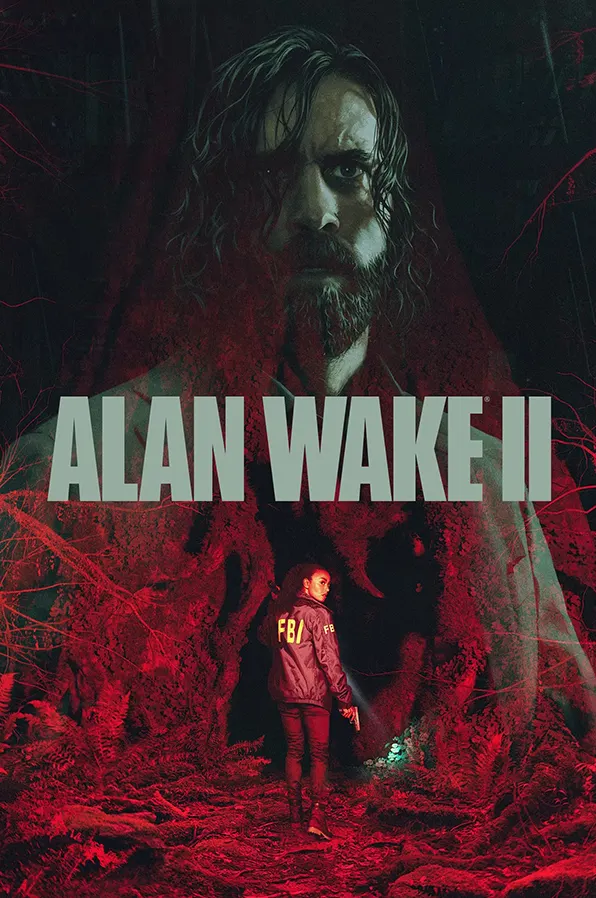
Alan Wake II

2023, Bright Falls, Washington State. A spate of unexplained murders bring FBI agents Saga Anderson and Alex Casey to the remote, sleepy town. They find a town still uneasy over the memories of thirteen years before, when there was another spate of murders and the disappearance and presumed death of infamous author Alan Wake. Anderson and Casey's investigations confirm that the supernatural forces that Wake had to deal with have indeed returned, possibly thanks to a mysterious cult. Meanwhile, Wake himself remains trapped in the Dark Place, a dimension beyond our own, where he strives to find a way back to reality.


Alan Wake, originally released in 2010 and remastered in 2021, was an interesting but flawed game. It had a great story, characters and premise, but struggled to find the gameplay thread in its morass of noir and horror influences. The game degenerated into being a repetitive action-shooter, Wake throwing flashbang grenades and fending off enemies with shotguns and handguns. This wasn't awful, but it was something of a tonal mismatch. Alan Wake also ended on a cliffhanger (and, after two more DLCs, another cliffhanger) which people have been left pondering ever since.

Thanks to the surprise success of their 2019 supernatural action game, Control, Remedy have had the resources to finally deliver a sequel to Alan Wake. Even more remarkable is how they've accomplished this: a game with AAA production values delivered on a modest budget (reportedly only $50 million) in just three years. Much more remarkable than that is how incredibly good the game is. I'm not sure I've seen such a gulf in quality between one game in a series and its direct sequel, even given such a large gap in release dates.

Alan Wake II, on the surface, resembles its forebear. You're still trudging through the forests of the Pacific North-West, defending yourself with various guns and a flashlight. You're still fighting off "Taken," effectively zombies, dead humans motivated by the evil Dark Presence. You're still mixing combat, puzzle-solving and narrative beats. Your adventure is still being narrated over-earnestly by Alan Wake himself. But the sequel simply nails every single one of these facets far better than its forebear.

The first big change is the addition of a new viewpoint character, Saga Anderson. Saga stands in for new players, who've perhaps heard of Alan Wake but haven't played it ahead of this sequel. Saga's story takes her to the town of Bright Falls and the nearby Cauldron Lake, both key locations from the original game, as well as further afield to new areas, such as the town of Watery and a nearby amusement park (Coffee World!) and lighthouse. Saga's story is anchored in the "real world" and it's interesting to see her gradually bump into characters and locations that tie in with Wake's story from the original game. Saga has two major assets: her friend and FBI partner Alex Casey, who shares the same name as Wake's signature detective hero; and her "Mind Place," a mental technique which allows her to analyse clues and keep abreast of the game's sprawling narrative. At almost any point in the game, Saga can slip into her Mind Place and digest her latest discoveries.

The second big change is in structure. Alan Wake was a very linear game where Wake travelled from the start of one level to the next, occasionally facing larger arena areas which were more open (usually for combat or even a boss fight). Famously, the game was developed as an open-world title but that was changed late in the day to improve pacing. The sequel isn't a full open-world game but instead is more similar to a Metroidvania, being divided into several areas, with each being explorable at will but having various areas sealed off by environmental elements or by literal gates. As the game progresses you gain access to tools to allow you to access these areas later on.

There's also a change here in terms of collectibles. Alan Wake had thermoses lying around which you could collect and then do absolutely nothing with. Alan Wake II has three types of collectible: lunchboxes tying in with Wake's books; mysterious nursery rhymes attached to puzzles; and sealed containers belonging to the mysterious Cult of the Tree. These collectibles are each attached to their own storyline chain and unlock additional weapons, abilities and equipment for Saga. They are not essential, but they make her journey easier, and fill in additional backstory and worldbuilding details. Tracking down these things also allows you to explore more of each map, sometimes finding other equipment caches along the way.

Another big change is combat. It's now been under-emphasised compared to the first game. Combat is somewhat rarer, more lethal and more of a resource-managing challenge, more in line with the recent Resident Evil remakes. This is better than the original Alan Wake, where Wake was only somewhat less of a competent death-dealing gunsmith than Max Payne, with much more tension. Unfortunately, this makes the decision to base one key setpiece moment near the game's conclusion around waves of combat fairly inexplicable, resulting in the game's steepest difficulty spike.

All of this applies to Saga. It's not a major spoiler to say at a key moment in the game, we rejoin Alan in the Dark Place and have to help him try to escape. The Dark Place in this game resembles a twisted, shadowy version of New York City, complete with subways, theatres, a creepy hotel and Alan's apartment. Traversing the Dark Place is more complex than the real world. Alan doesn't have Saga's Mind Place, but he does have his Writer's Room. At any point Alan can switch to this room and use it to analyse the plot, like Saga, but unlike her he can also change the plot. In a mechanic that recalls the superb Dishonored 2 mission "A Crack in the Slab," Alan can flash back to earlier points in the story and thus in time, when an area may look completely different. Alan can take advantage of this to get past sealed-off areas or discover fresh clues about what's going on and how he can escape.

You can soon choose to switch between the two characters at will, choosing whether to mainline all of Saga's story first and then all of Alan's, or maybe alternate at the end of every chapter. Despite being trapped in different universes, Alan and Saga develop a link that allows them to work together to help defeat the Dark Presence. This works all rather splendidly. Alan and Saga's stories have different feels and tones, so the ability to switch between them whenever Alan's over-earnest monologues or Saga's family concerns get a bit too much is appreciated.

Alan Wake II is also surprisingly funny. The first game had some laughs, but the sequel takes things up a notch with comedic zero-budget adverts from a pair of Finnish brothers and, as is now well-known, a full-blown musical number that makes up an entire chapter of the game. Quite a few characters are also now pretty over the whole "shocked by supernatural stuff" thing and whose only reaction to some fresh eruption of inexplicable weirdness is a world-weary sigh. This is especially noticeable when characters from the Federal Bureau of Control show up and are utterly unphased by the Dark Presence doing its thing; they've seen this stuff before in Control.

Ah yes, the Remedy Connected Universe. As is well-know now, Alan Wake and its sequel both take place in the same universe as Control, which the game is quite upfront about (you'll meet an FBC agent probably around an hour into the game, maybe less). Some Control characters show up, and Saga gets to read a bunch of reports from the FBC on the Cauldron Lake phenomenon. Alan Wake II could have maybe been a bit more low-key on this, as a few times I felt almost penalised for not having finished Control (I started it when it came out, but got sidetracked by other games), but it's not too bad. More amusing are the very deep cuts to Remedy's other games, Quantum Break and the first two Max Payne titles; Remedy doesn't own those IPs any more, so they have to rename characters (Martin Hatch becomes Warlin Door; Max Payne becomes the fictional Alex Casey) but the general ideas come across well. Players less well-versed in Remedy lore might miss out on the meaning of some Easter Eggs, but the game mostly tells you what you need to know within the game itself.

Alan Wake II also looks utterly stupendous, easily the best-looking video game in the world right now. Character animations are impressive (though some characters - like Casey - seem a lot stiffer than others), but it's the lighting effects and environmental graphics in the forests or on the not-New York subway which are completely mindblowing. This does come at the cost of hefty systems requirements on PC, with even my new 4090 graphics card occasionally chugging unless DLSS was switched on. Consoles are broadly fine, but it's going to be a good few years before most PC players will be able to experience this game at maximum settings.

Alan Wake II (****½) comes very close to being an outright masterpiece. It is very well-paced, it has a ton of content - Wake and Saga's stories are each individually as long as Alan Wake in its entirety, meaning this game is twice the size and length of its forebear - the horror elements are far more effective, the atmosphere is superb and the writing is easily Remedy's best to date. There are very nice links to all of Remedy's previous games (bar possibly Death Rally), but playing those titles is not strictly necessary to enjoy this game (the Control references do push the limit on that, though), and for a horror game, it has a brilliant sense of humour. It has some fantastic gameplay mechanics and several setpiece events which are clear challengers for the best gaming moments of the year (especially the horrific murder investigation in the hotel, the ludicrous rock opera and a 15-minute Finnish arthouse film completely contained within the game). It is a fantastic-looking game, and the soundtrack is outrageously good. It has earned its Game of the Year nominations, being a worth competitor to the likes of Baldur's Gate III and Cyberpunk 2077: Phantom Liberty.

Complaints are few. The game is let down a little by its combat, especially the decision to base an entire key moment around an absolute ton of combat despite it not being the game's forte. The story and lore is pretty dense at times, requiring you to pay close attention or miss out on key plot points. The game's ending is great, with some excellent twists, but also somewhat ambiguous, left afloat for the two forthcoming DLC episodes which will continue the storyline. The game's steep system requirements and Epic-exclusive status (to be fair, Epic also paid for the game's development and are its publishers, so the game wouldn't even exist without them) will also put off many PC gamers.

Overall these complaints are slight. Alan Wake II is Remedy's best game to date, a rich horror narrative with compelling gameplay which improves over its predecessor on every single front.

Alan Wake II is available now on PC, PlayStation 5 and Xbox Series X/S.

Thank you for reading The Wertzone. To help me provide better content, please consider contributing to my Patreon page and other funding methods.

Friday, 4 October 2019

Red Dead Redemption 2 to hit PC in November as an Epic Store exclusive! (for a month)

Rockstar Games' Red Dead Redemption 2, the most successful horse-riding simulator of all time, is heading to PC on 5 November after a year as  a console exclusive. The game will also launch exclusively on the controversial Epic Store, although in this case the exclusivity period is a modest one month rather than the 6-12 months some other games have been locked down for.


The game has sold over 25 million copies on X-Box One and PlayStation 4, with the PC version expected to add significantly more impressive graphics and more varied control options, as well as more missions and activities. Red Dead Online, the game's multiplayer component, will also be included.

Monday, 10 June 2019

THE OUTER WORLDS gets release date

Obsidian Entertainment's science fiction roleplaying game The Outer Worlds has been given a release date: 25 October 2019.


The game, an original title in a brand new universe, sees the character (who can be fully customised by the player) waking up from cryo-sleep in the remote Halcyon system, which is dominated by powerful corporations. The player finds themselves embroiled in a struggle between the different factions and can choose which side to support and which characters to align with.

Created by the team behind the original Fallout and Vampire: The Masquerade - Bloodlines, the game will be available on PlayStation 4, X-Box One and PC via the Windows and Epic Game Stores (with a Steam release to follow in 2020).

Thursday, 21 March 2019

Epic vs. Valve: The Battle for PC Gaming

For the past fifteen years, the PC gaming market has been dominated by one retailer above all others: Steam. An online sales, downloading and gaming service, Steam is run by Valve Corporation and has utterly dominated the market since launch, fending off several competitors along the way. But that has now changed, with Fortnite developers Epic Games launching a rival service that means to do nothing less than smash Valve's monopoly forever.

The Epic Store launcher.

Steam was launched in late 2003 as a system for updating Valve's online games, titles like Counter-Strike, Day of Defeat and Team Fortress Classic, keeping players all in sync with one another and allowing new maps and patches to be rolled out quickly and efficiently. In 2004 the service transitioned to a store, selling new games. It was mostly ignored until the November 2004 release of Half-Life 2, arguably the most eagerly-anticipated video game in history up until that time. It was the sequel to Half-Life, the 1998 game that rewrote the first person shooter rulebook and established Valve as a force to be reckoned with in the PC gaming scene.

Half-Life 2 launched with the required use of Steam. You could buy Half-Life 2 in stores, but to install it you had to also install Steam and sign up to the online service. In 2004, when not every gamer was online and certainly most gamers did not expect to have to sign up to an online service to play a single-player-only game (Half-Life 2's multiplayer mode wasn't patched in until months later), this idea was hugely controversial. Gaming communities rebelled, some gamers tried to report Valve for breaches of the law (no such claim was ever upheld) and so on. But Half-Life 2 was anticipated in a manner almost no other game in history was, and the sheer juggernaut force of the game's hype and its overwhelmingly positive critical reception saw gamers swallow their pride and buy the game in their millions. In many cases, they used the service to buy and download the game at midnight on release day, and were playing hours before their friends could get to the shops to pick up their copies.

After Half-Life 2 showed that online PC sales were viable, other publishers signed up to the service and more and more games appeared there. Valve had been either lucky or prescient, as 2004 arguably marked the last highwater for PC gaming in the 2000s. The 2005 release of the X-Box 360, followed a few months later by the release of the PlayStation 3, saw a huge crash in PC gaming sales. Within just a couple of years, the number of big titles being developed for PC dropped significantly. 2007-08 was arguably the nadir of PC gaming history, with few big titles coming out, almost no PC exclusives doing well (The Witcher, from CDProjket, being an honourable exception) and the platform being almost dead on its feet.

Remarkably, though, Steam had continued to grow in popularity and success. Valve jumped on the rise of indie gaming, adding lots of popular, low-budget titles to the platform. Valve also pushed their big sales hard. They won back support from big publishers through various tactics designed to promote sales. Rockstar Games had released the PC version of Grand Theft Auto IV after a long delay, but noted that although initial sales had not been as high as the console versions, the "long tail" of the game was significant, with sales picking up years later every time the game was put in a sale, making it far more profitable in the long run on the PC platform. By the start of the 2010s the platform had recovered most of its losses, bolstered by the arrival of Kickstarter as a platform for funding niche, mid-tier games. By the end of 2018, Steam had 150 million accounts (30 million more than Netflix) and dominated the PC gaming market with a share of between 18 and 20% (but 75% of the online market). According to some reports, Microsoft has offered over $20 billion to buy the service and the company behind it outright, but Valve's owner, Gabe Newell (who worked for Microsoft in the 1990s, quitting to co-found Valve), had rejected such overtures out of hand.

Understandably, other services have tried to compete with Steam. CDProjekt launched GoG (Good Old Games) as a rival service which focuses on getting older games updated to work on modern hardware. Their main selling point is not using an form of DRM (Digital Rights Management), which they feel hinders the customer experience. Meanwhile, Electronic Arts, UbiSoft and Blizzard-Activision launched rival services to exclusively launch their games, respectively Origin, UPlay and BattleNet (although many UPlay games are also available on Steam). With relatively small game catalogues and niche target audiences, these services have existed alongside Steam, rather than trying to compete directly with it.

This has now changed thanks to a company whose pedigree in PC gaming is even older than Valve's: Epic Games.

Founded in 1991, Epic Games spent the 1990s releasing a large number of low- and mid-budged action games before releasing their first 3D shooter in 1999, Unreal. Unreal was followed by both sequels and the immensely successful multiplayer spinoff series, Unreal Tournament. In 2006 launched a new single-player focused series on console, Gears of War, which was immensely successful. They also made immense amounts of money by licensing their Unreal Engine to other companies and publishers. In 2017 they redeployed the Unreal Engine to make a new, fun and lighthearted co-op shooter called Fortnite: Save the World, and its multiplayer spin-off, Fortnite: Battle Royale. Better known just as Fortnite, the game has become the biggest global success story since Minecraft, with Epic Games making significant profits from the game's downloadable extras and content.

Late last year, Epic Games launched the Epic Store, which they proudly proclaimed was going to take the fight directly to Valve. At first gamers chuckled and moved on: many companies had vowed to do the same thing and all had failed. But then Epic Games started doing something that no other would-be Steam-killer had done before: actively seeking out PC gaming developers and offering them staggering sums of money for a 12-month exclusivity period on PC. In addition, Epic Games offered to take only a 12% cut of the sales of games, as opposed to Valve's huge 30%. Developers, watching profit margins drop steadily over the years due to an inability to keep development costs down and also an inability to raise prices accordingly due to market saturation, started signing up enthusiastically.

The first casualty was Metro: Exodus. The third game in a popular first-person shooter series, following on from Metro 2033 (2010) and Metro: Last Light (2013), Metro: Exodus's Ukrainian developers were offered a huge sum of money for a 12-month exclusivity period. They agreed. Fans of the series and more casual gamers railed angrily against the development, citing it was bad form for a company to wall off a game behind a new service, especially a new service that did not have the ease of use or many of the most basic features of Steam. They were also suspicious of Tencent, a Chinese company accused of spying on customers, which had acquired a 40% stake in Epic in 2012. Despite these complaints, Metro: Exodus sold exceptionally well on release, outselling Metro: Last Light more than two-and-a-half times on launch day.

Last week Epic flexed its muscles by locking in Phoenix Point to an exclusivity period. Phoenix Point is the eagerly-awaited new turn-based tactics game from X-COM creator Julian Gollop and his company Snapshot Games. Using an approach similar to Firaxis's recent XCOM games, the game goes for a more simulated-based approach and has been praised for its gameplay decisions. For a tiny company like Snapshot the deal was apparently "impossible to resist," as the money offered could keep the company going for "years." For fans, the anger was much more palpable this time around and also more readily supported: Phoenix Point had been crowdfunded with the explicit promise that the game would be available on Steam and GoG on release day, and that was now not going to happen. Possibly the most eagerly-awaited PC game of 2019 became reviled overnight, with an absolute flood of refund requests pouring in.

But this has not stopped Epic's onslaught. In the last few days they have announced a blizzard of new acquisitions and deals. Obsidian Entertainment's The Outer Worlds, another of the most eagerly-awaited games of 2019, has joined the exclusivity deal (or, more accurately, publisher Take Two signed up for them). Quantic Dream, known for their moody console games with jaw-dropping graphics, were offered a deal so lucrative that they have gone back and dusted down all of their previous games going back to 2010 for release through Epic (comprising Heavy Rain, Beyond Two Souls and Detroit: Become Human). Remedy Entertainment's promising Control has also signed up, along with RTS Industries of Titan and The Sinking City. The full list is extensive and surprising, encompassing many mid-range upcoming PC games, which are the bread and butter of the platform.

This is nothing less than a full-scale assault on Valve's control of the PC gaming business. Whether it can be sustained is unclear, but it represents the biggest challenge to Steam's supremacy in over a decade. Valve will have to respond and in some respects it already has, promising to fix long-standing problems like people gaming the review system and offensive zero-budget, zero-effort games being shovelled onto the platform. The real test, I think, will come when a real AAA big-hitter that should be on Steam goes Epic Store exclusive. Take Two putting some games exclusively on Epic has to be a major concern. It's an open industry secret that Take Two and Rockstar Games are prepping a PC version of Red Dead Redemption 2, 2018's biggest game on console, for release likely in 2020. If they decided to make that game an Epic exclusive, it would be a huge and fundamental blow to Steam's position in the marketplace.

This battle could determine how PC games are bought, sold and played in the 2020s, so is hugely significant. But it may also be futile, as waiting in the wings is Google's Stadia system, which may offer a completely different, more Netflix-esque approach altogether. How this pans out will be very interesting, and no doubt contentious.

Saturday, 5 December 2015

Bulletstorm

Space mercenary Grayson Hunt has been betrayed by his former commanding officer, Sarrano, who is now trying to kill him. Hunt tracks down Sarrano and forces his ship to crash on Stygia, formerly a pleasant colony world now overrun by mercs and the fercious wildlife. The battle between the two continues, with Grayson's obsession for revenge clouding all other priorities.


Bulletstorm is a first-person shooter with a fairly thin story (kill everything in sight) designed to support two  fairly unusual gameplay mechanics. The first is the "Killshot" system, which awards you more points for the more imaginative, visceral and spectacular ways of killing an enemy. The game unlocks more controls, mechanics and way for doing this, resulting in an ever-escalating sense of mayhem to the game. The second is the fabled "Kick" mechanic. Previously seen in the underappreciated Dark Messiah of Might and Magic, the "Kick" mechanic sees you introducing enemies to your character's foot, delivered into them at apparently hyperkinetic velocities capable of  sending a ten-foot-tall mutant clad in body armour flying about thirty feet in a given direction.

Bulletstorm is not a particularly subtle game, but it is quite a fun one. Dispatching vast hordes of enemies (occasionally this borders on Serious Sam levels of farcical numbers) with guns and The Kick is the order of the day, intercut by some spectacular vistas, some excellent graphics and a story that is basic but delivered very well. The game shows some amusing meta-awareness of its own status as a meathead bro-shooter, but doesn't go overboard with this. The game makes it clear that Grayson is an absolutely reprehensible idiot and seeing him called out on his stupidity by both his friends and enemies is quite satisfying. The other characters are well-drawn, particularly your constant companion Ishi who you have to half-lobotomise in the opening sequence of the game (to save his life) and he never really forgives you for it. In fact, the game's musings (restrained as they are) on violence and morality, combined with the rather Dubai-esque backdrops of the devastated cityscape most of the game occurs in, makes Bulletstorm feel like a very bizarre but appropriate companion game to Spec Ops: The Line. It's a comparison that weirdly works well.


The action is satisfying, the graphics are impressive and the story, characters and writing are all better and cleverer than they really have any right to be. However, it is a short game, there are quite a lot of cut scenes and also far too many Quick Time Events, where player agency is removed in favour of the designers frothing at the mouth to show you how awesome this bit they've planned is (but rarely is). The game is also ridiculously easy, which apparently is deliberate: the designers wanted everyone to be able to finish the game, show off their killstreaks and get to the (groan) cliffhanger ending. That's great, but it does make playing the game a bit of a mindless affair at times.

Bullestorm (***½) is certainly not worth paying full price for, but if you can find it as a budget release it's a fast-paced, fun shooter with a bit more depth than is normally found in games of this kind. It is available now on PC, X-Box 360 (UK, USA) and PlayStation 3 (UK, USA).