Showing posts with label dishonored. Show all posts

Monday, 17 February 2025

RIP Viktor Antonov

News has sadly broken that Viktor Antonov, the artist and visual designer on video games such as Half-Life 2 and Dishonored, has passed away at the far-too-young age of 52.


Born in Sofia, Bulgaria in 1972, Antonov got his start in the video game business as an artist. He worked on Redneck Rampage (1997) and its various mission packs, followed by a Quake II expansion and Kingpin: Life of Crime (1999), with its gritty, crumbling tenement locations. He started working with Valve whilst Half-Life 2 (2004) was in development and quickly became the game's art director. He spent a lot of time looking at locations in his native Bulgaria, as well as other Eastern European countries, to serve as reference points for the game's sprawling City 17, the neighbouring settlement of Ravenholm and more. Half-Life 2's recent 20th anniversary saw Antonov interviewed about his work on the game.

Antonov was feted for the incredible world design of Half-Life 2 and was hired by Arkane Studios to work on the city of Dunwall for Dishonored (2012). Antonov again knocked it out of the park, creating a realistic, immersive steampunk city of crumbling buildings and diesel-punk-ish brutalism. Antonov then moved into consultancy work, advising on the visual design of Fallout 4 (2015), Dishonored 2 (2016), DOOM (2016) and Prey (2017). He returned to full-time art direction with "Project DG," a game for Eschatology Entertainment, a company he himself had co-founded in 2022.

Visual and graphic design is a key component of video games, but most games are made by art teams and committees. Antonov was unusual in putting his unique touch on a game's environments that was immediately recognisable as his own. Anyone playing Half-Life 2 or its expansions, or Dishonored or its sequel, knows immediately they are in an "Antonovian" landscape. Hopefully he did enough work on "Project DG" that we'll be able to spend at least some more time with one of his worlds.

A great artist who specialised in creating worlds that fused the fantastical and the realistic, he will be missed.

Tuesday, 19 September 2023

RUMOUR: Bethesda were planning OBLIVION and FALLOUT 3 remasters back in 2020, along with a possible DISHONORED 3

A leaked schedule for Bethesda video games from 2020 suggests that the company was at least planning remasters for two of their older titles, as well as a new game in one of their biggest franchises.


The leak appears to have been an accidental release of information as part of Microsoft's ongoing battle to clear international legal hurdles preventing its acquisition of Activision-Blizzard. The schedule has known projects on which did eventually release (such as Redfall and Starfield), as well as unannounced games including Dishonored 3. The leak also suggests that Microsoft envisages just a three-year wait for The Elder Scrolls VI, the follow-up to the much-acclaimed 2011 title The Elder Scrolls V: Skyrim.

Even though the list is official, we should take it with a grain of salt as it is very clearly outdated. The list is pre-COVID, and the COVID pandemic caused massive delays and multiple project cancellations in many companies. It's not clear which of the projects on the list remain extant (beyond the already-confirmed Elder Scrolls VI).

The list also indicates that both The Elder Scrolls IV: Oblivion (2006) and Fallout 3 (2008) are to be remastered, not remade. This would likely be a moderate graphical overhaul and some minor technical and UI improvements (similar to the recent, somewhat underwhelming Red Dead Redemption remaster) but otherwise leaving the games alone.

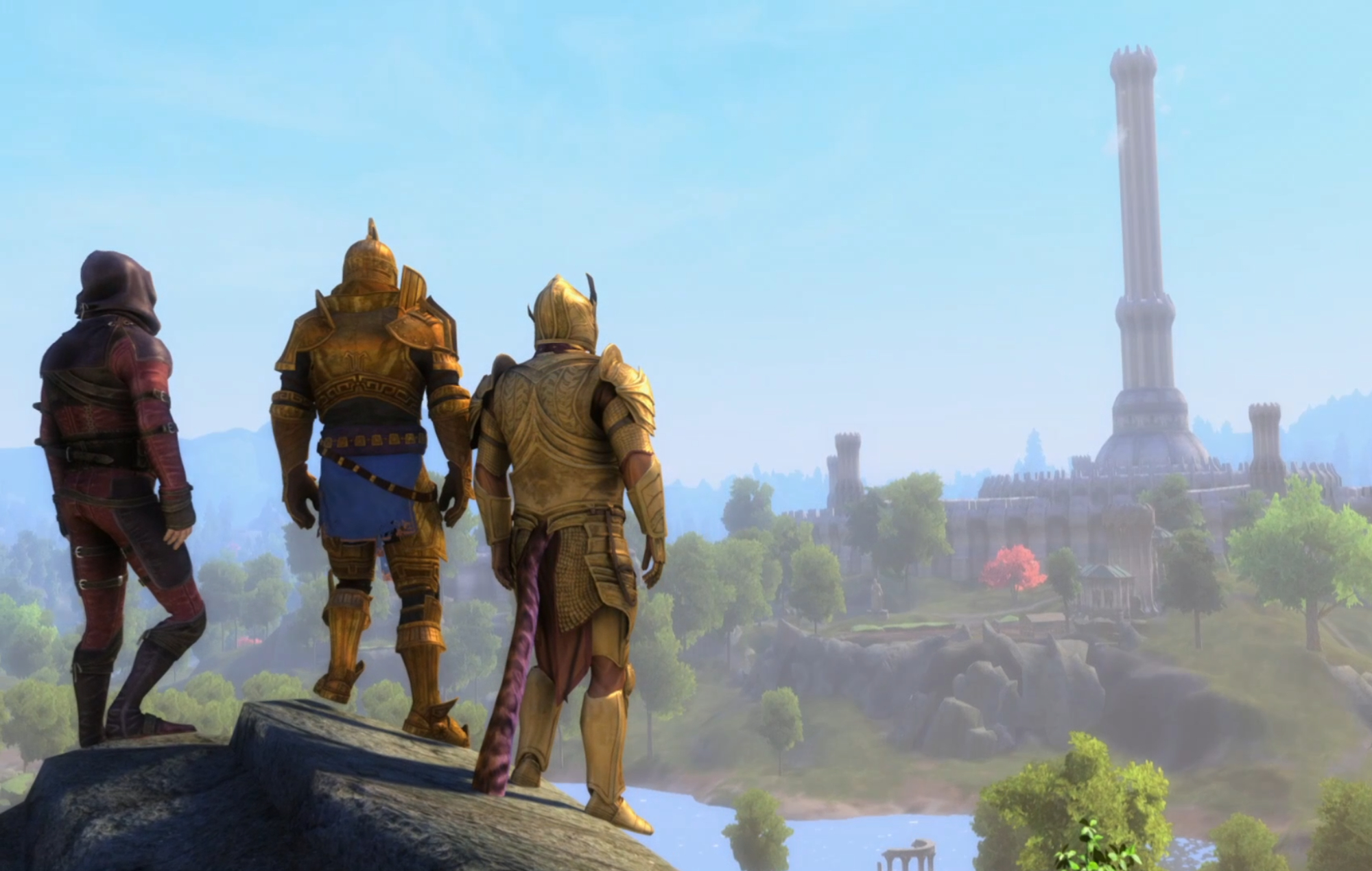
This is notable as a group of fans have been remaking Oblivion for the past decade with considerably more advanced graphics and a full UI overhaul drawing on later Bethesda games like Fallout 4 (2015, itself already confirmed as getting a next-gen remaster and re-release next year). This project, known as Skyblivion, is currently due for release in 2025 and has Bethesda's support (as well as persistent rumours that Bethesda may make it an official release if the quality is high enough). An Oblivion remaster may be redundant in that case, but it's worth noting that back in 2020 there was widespread scepticism over any of these fan remasters actually being finished. Three years later and with more in-depth coverage of the project's development, Skyblivion does indeed appear very close to completion.

Dishonored 3 is a welcome idea. Dishonored (2012) and Dishonored 2 (2016) are two of the greatest video games of the last decade and cemented Arkane Studios' reputation for great game design and fantastic worldbuilding. Deathloop (2021) - set in the same world albeit in a different game genre - also did well. However, the underwhelming commercial performance of Prey (2017) and Redfall (2023) has somewhat damaged Arkane's reputation, alongside the departure of much of the OG team at the company behind its earlier games. There will be likely scepticism that the remnants can deliver a worthwhile successor, especially as stand-alone expansion Dishonored: Death of the Outsider (2017) delivered a pretty final ending to the story of the series. Deathloop takes place in the same world and does open up some more narrative possibilities for that setting, so a further game in the series might have some legs to it.

Finally, the list suggest that The Elder Scrolls VI will follow three years after the release of Starfield. Given Starfield's two-year delay from the list, that suggests they may be envisaging a 2026 release date for Elder Scrolls VI. With Bethesda only recently spooling up full-time work on the game, that feels very optimistic. Many fans have been projecting a release date of 2028 on the low end to 2030 on the higher.

The leak is interesting, but as yet none of the projects mentioned on it beyond Elder Scrolls VI and the Fallout 4 remaster have been formally confirmed.

Monday, 30 August 2021

Dishonored: Death of the Outsider

Fifteen years ago, the assassin Billie Lurk betrayed her friend and mentor, Daud. For all that time she has sought solace and redemption. Having aided Emily Kaldwin regain her throne, Billie now goes in search of the long-missing Daud, tracking him down to an unsavoury district of Karnaca. But the reunion does not go smoothly, and Billie is left with a daunting task: to eliminate the Outsider, the god-like being who dwells in the Void and whose influence has shifted the course of history for more than four thousand years.


Dishonored 2 is one of the greatest games of the 2010s, a triumph of atmosphere and outstanding game design that even goes beyond its excellent predecessor. Its brilliance was marred by a technically-compromised launch which took months to resolve, which put off buyers. The game sold, at best, mediocrely and well below Bethesda's expectations. Arkane Lyon started work on a new game, Deathloop (due out next month) but were able to sneak in an expansion to Dishonored 2, which became the stand-alone game Death of the Outsider.

Death of the Outsider is a mixed bag. For those who enjoy Dishonored rich, unusual atmosphere and its focus on stealth, the game continues to deliver those aspects in spades. However, it does feel cut-down. It is only half the length of Dishonored 2 itself and does re-use one level twice and repurposes another from Dishonored 2. Time and budget constraints feel apparent in the game as it bumps up against those limits constantly. Billie only has three Void powers and a limited set of equipment compared to the previous arsenals wielded by Corvo, Daud and Emily, which leaves her feeling underpowered compared to the other protagonists. However, she can use her powers much more often as her mana bar refills to maximum automatically (a great idea that should be backported to the older games, frankly) and there's no need to hunt for mana potions. Her powers are also extremely impressive, especially Semblance which allows her to take on another character's appearance (even a major NPC) to pass through secure areas, and a drone-like ability to astrally scout out levels for routes and hidden passages.

Level design is as formidably excellent as always, with the bank heist making up the central setpiece of the game being particularly brilliant, especially if you decide to put the entire bank to sleep by poisoning the airducts. Unlike other parts of the series where people are knocked out for the duration of the level, here they can be woken up by loud noises or you accidentally bumping them, adding a lot of complexity to how you traverse the area (you can knock people out properly, but there's an achievement for doing the level without resorting to that). It's not quite as good as the Clockwork Mansion or the time-travel manor house from Dishonored 2, or the Boyle Mansion from the first game, but it's pretty damn good.

Unfortunately, the area surrounding the level is less well-designed. The game has the absolute nadir quest moment of the franchise when either a bug or a poorly-thought-out bit of design prevents you from carrying unconscious bodies through a level transition zone, forcing you to fight your way through a building to the front door with almost no capacity for stealth. It's easily the most disappointing moment of the whole series in denying you a choice in how to proceed and forcing you to resort to violence.

The game's plot builds satisfyingly as it goes along and the ending is unexpectedly thoughtful and interesting, with the ultimate resolution of the story (and the entire series to date) resting on a meaningful decision you have to make. It wraps up the story that began in the first game quite well, and sees Arkane putting a line under the franchise for now. I hope they return to this world, but if they do it'll apparently be a completely different location and in a different time period.

Dishonored: Death of the Outsider (****) gives you more Dishonored to play, which is always a good thing, but time and budget pressures mean a somewhat less-polished experience than the previous games in the series, with a few cut corners. But the bank heist mission is up there with the best levels in the franchise and the story and character arcs develop and end well. Disappointing when compared to the greatness of what came before, but on its own terms still a very well-designed game. The game is available now on PC, Xbox One and PlayStation 4.

Sunday, 15 August 2021

RUMOUR: Netflix developing a DISHONORED TV series

File this under "fairly tenuous" at the moment, but a report is floating around that Netflix has put a TV show based on the Dishonored video game series into development.


The news comes from the geek site Giant Freakin Robot, who have a patchy record when it comes to rumours. However, it also comes eighteen months after writer Gennifer Hutchison tweeted that she was a huge fan of the video game series and wanted to write a TV show based on the books.

Hutchison has serious credibility, having been a writer on Breaking Bad (for which she won an Emmy, with the rest of the writing staff) and Better Call Saul as well as Amazon's Lord of the Rings prequel series (she also started her career as an assistant on The X-Files). Rumour has it that she's been courted for a showrunner position on several projects in the past but has stayed loyal to Vince Gilligan and the Breaking Bad/Better Call Saul team, but with that franchise wrapping its last season (at least until it was delayed by a medical complaint for star Bob Odenkirk), she appears to be free to take on bigger commitments.

Whether Hutchison is involved in this Netflix project - which may or may not even exist - is unknown, but it'd be a bit odd for a writer of her calibre to not be involved after expressing interest. Also, whilst Dishonored is well-regarded critically, it was not a top-tier, mega-selling video game franchise, and wouldn't be at #1 (or even in the top ten) on the list of video game properties to be turned into a TV show unless a major creative talent wanted to do it.

The Dishonored video game series consists of two mainline entries and three expansions: Dishonored (2012), The Knife of Dunwall (2013), The Brigmore Witches (2013), Dishonored 2 (2016) and Death of the Outsider (2017). Set in a fictional world reminiscent of 18th/19th Century Europe, fusing sorcery and steampunk, the story in the games beings with the assassination of the ruler of the Empire of the Isles. Her bodyguard Corvo is framed for the murder by the new Lord Regent, who embarks on a reign of terror whilst keeping the Empress's daughter, Emily, and heir out of sight. Aided by a group of government and military insiders who want to restore Emily to the throne, Corvo breaks out of Coldwine Prison and embarks on a series of daring raids and infiltration missions in the city of Dunwall designed to expose the Lord Regent's conspiracy and track down the man who murdered the Empress. However, Corvo is also marked by the Outsider, a strange being who lives in the Void beyond the material world. This grants Corvo amazing powers, but at a dubious cost to his soul and sanity. Later games in the series, spanning a period of more than fifteen years, feature other characters such as the assassins Daud and Billie Lurk, and a grown-up Emily.

As well as the video games, the series has also spawned a trilogy of novels, a comic book series and a tabletop roleplaying game. The creators of the game, Arkane, a subsidiary of Bethesda, have indicated they would like to return to the world in the future, but in the meantime are focusing on two other games in new universes, Deathloop and Redfall.

Whether this is a real project or not remains to be seen, but I have to say it's one of the few game series that absolutely would make a great TV show, with a cast of excellent characters and a solid story set in a fascinating and very different kind of fantasy world with some great worldbuilding.

Monday, 9 August 2021

Wertzone Classics: Dishonored 2

Fifteen years have passed since the assassination of Empress Jessamine, the tyrannical six-month rule of the Lord Ruler and the restoration of Princess Emily Kaldwin to the throne. Under the guidance of her rescuer, bodyguard and (eventually-admitted, scandalously) father, Corvo Attano, Emily has tried to guide the Empire of the Isles as best she can. When a coup takes place led by the witch Delilah and her father is neutralised, Emily is imprisoned, but her captors are unaware that her father has been teaching her his infamous skills of stealth and deception. Emily flees to the southern city of Karnaca and prepares to retake her throne, no matter the cost.

Dishonored, released back in 2012, was a breath of fresh air. Building on the groundwork established by the earlier Thief, Deus Ex and System Shock series in offering the player tremendous freedom in how they approached their objective, with a more modern user interface and better AI, it was a solid success both critically and commercially. It spawned two excellent expansions, The Knife of Dunwall and The Brigmore Witches, and, four years later, a full sequel (which yes, I've been extremely tardy in getting to).

Dishonored 2 is very much an evolution rather than a revolution. The same structure as the earlier game applies, with the game again using a recurring hub - in this case a ship - as a base of operations for Emily and her slowly growing number of allies to plot their next move. Once the next objective has been set, Emily travels to a new part of the city of Karnaca and is left to it. You can choose which option to take, whether to to engage in an all-out, frontal assault with a high casualty rate or a stealthier approach, using a combination of magical powers and the intricacies of the outstanding level design to find a way of sneaking up on your objective. You can also choose to exactingly explore every level for the optional objectives of stealing every single penny, object d'art and magical rune and bone charm, or simply proceed straight to your goal. You can choose to kill the primary target of the mission or find a way of removing them nonlethally from play, or in a few cases finding a way of converting them to your cause.

These decisions have a dramatic effect on the game's length, which can range from under ten hours for a confrontational, all-out violent approach to more than double that for a more exacting, stealth-based run-through, and also its tone. A violent approach which leaves the streets littered with corpses impacts on the game's "chaos" rating, with the city becoming more violent and unstable with later levels seeing more guards deployed and Emily's allies becoming less optimistic and even starting to fear her. A peaceful, stealth-based option sees Emily learning to become a better ruler, engaging more with the plight of the poor people on the streets and finding ways of turning her destructive enemies into more positive forces for later reconstruction. Even choosing a more positive approach can be more complicated than it first appears, with sometimes what appears to be a good choice having negative consequences and vice versa, which only becomes clear through exacting research of the various documents and audio files littering each level. The game has a large number of different endings based on your moral choices through the game, greatly rewarding replayability. The game also gives you the chance to replay it as Corvo (the protagonist of the first game), with a different skill set, though it has to be said this narratively doesn't make anywhere near as much sense as playing as Emily. The game also gives you the choice to play through it without using any magical powers at all, which is a formidable challenge should you also try to go for a stealth run on a higher difficulty level.

The game's story unfolds intriguingly, with Emily learning more about her enemy Delilah through written records, other characters' accounts and, in one dramatic moment, a temporally-warped ability to view her rise to power. The game takes into account that not everyone played the original game's expansions (which introduced Delilah and saw her go up against the arch-assassin Daud), so uses Emily's ignorance of those events as a way to get everyone up to speed on the plot.

Dishonored 2 takes advantage of sister studio id's formidable graphics tech (used to develop the Doom reboot) to deliver a stunning visual experience. The original Dishonored had impressive lighting and environments for its time, but its character models were underwhelming. The sequel has no such trouble, with fantastic, detailed visuals throughout. If anything, the graphics might be too good, with it sometimes hard to distinguish between collectables and background bits of scenery. In particular, it's sometimes impossible to work out when a piece of paper stuck to a wall is a bit of flavour or an actual letter with in-game information critical to the mission, which does mean a fair bit more random clicking on everything in sight than should really be the case. The atmosphere of the game is also a nice contrast with the original game, with the foggy, London-influenced metropolis of Dunwall giving way (mostly) to the tropical, sun-drenched, Mediterranean-ish city of Karnaca.

The level design is also gorgeous. It's not exaggeration to say that Dishonored 2 has some of the best level design in recent gaming history, with logically-constructed areas which pack secrets, hidden rooms, black market shops and alternate routes into often constrained spaces. Although Dishonored 2 was developed with the more powerful PlayStation 4 and Xbox One in mind, meaning the memory-mandated small levels of the original game are no longer an issue, the designers admirably resist going for the easy option of making each level as huge as possible, preferring to retain the tightly-curated design of the first game. They do let some missions sprawl a bit more though, with sometimes an entire elaborate urban level (most of it purely optional) surrounding the mansion or palace which is the primary objective of the mission at hand.

Particular mention, redundant at this point though it is, must be made of the game's two stand-out pieces of level design. The Clockwork Mansion is the ultimate express of Dishonored's steampunk ethos, an entire building whose internal walls, rooms and furniture can move around, rotate and switch places based on levers the player pulls. The first time you see the entire level around you transform into something else is quite something, and the fact that Arkane play fair and don't use magic to explain this, with instead each part of the transformation worked out in exacting and realistic detail, is all the more stunning. Even more remarkable is that you can skip the entire transforming aspect of the mission if you want to do a stealth run, instead finding your way "backstage" behind the walls and making your way to the mission objective without alerting anyone. You can also do both, doing a stealth run at first and then backtracking through the mansion, triggering its transformations, to find all its secrets and hidden objectives.

A later mission, "Crack in the Slab", takes the player to a mansion which has become unstuck in time. By using a special device, the player can "see" what is going on inside the mansion on the other side of the temporal barrier and then transport themselves back to that period. So for example, you find a destroyed room in the present day, position yourself correctly, and use the temporal device to check for guards in the previous timeline. Once sure they are not present, you can warp back to the previous time period, clear the obstacle and then return to the present again. The attention to detail here is jaw-dropping: some characters are present in both timelines and by killing their past selves, their present-day incarnations abruptly vanish. Similarly, you can change events in the past which also change the present-day version of the mansion, which can abruptly shift from ruin to fully-functioning home to a boarded-up-but-intact version. The ripples in time extend outwards: leave the mansion and you might find previously-maimed allies are now fully intact, and the feuding warzone you previously passed through is now a peaceful, well-ordered district under just rule. It's easily the most brain-meltingly impressive implementation of time travel in a video game to date.

Even the "ordinary" missions are a delight. The spooky Addemire Institute you visit early on is a masterclass in packing a lot of detail and player options into a small space, whilst the Grand Palace is a terrific, expectation-defying piece of design, more like a 1970s Bond villain's headquarters then yet another medieval edifice.

It's hard to find fault with Dishonored 2. The thematic idea of Emily learning how to become a better ruler or a tyrant based on player choices is well-implemented, the level design is among the very best in class and, even five years after release, it's a gorgeous game with an even better soundtrack than its predecessor. Perhaps the story premise - oh no, Emily's been deposed again! - could have been a bit more original. The original release was a bit buggy, but those issues have long since been fixed. The new ship base of operations is a bit less interesting than the pub in the original game, maybe. Beyond that there's no complaints to be had here.

Dishonored 2 (*****) is a fantastic game that takes everything good about its predecessor and improves on it, sometimes dramatically so. The game is available now on PC, PlayStation 4 and Xbox One. A self-contained expansion, Death of the Outsider, was later released to middling reviews (and I'll be getting to that shortly).

Wednesday, 27 September 2017

Cities of Fantasy: Dunwall

Dunwall is a sprawling, industrial city located on the south coast of the island of Gristol. Dunwall has existed for centuries, dominating the whale oil trade around the Isles, but in recent decades it has grown in importance and become the capital city of the Empire of the Isles, spanning the major islands of Tyvia, Morley, Gristol and Serkonos. It is a city riven by internal strife between the aristocratic class and the workers, which has led to violence and, occasionally, outright rebellions.


Location
Dunwall is located on the south coast of Gristol, at the mouth of the enormous River Wrenhaven as it twists and turns before meeting the Ocean. The city commands the head of a wide bay opening out into a gulf formed by Gristol to the north and the island of Serkonos to the south. Regular ferry services run across to the city of Bastillan a few dozen miles to the south-west on the north coast of Serkonos.


Physical Description
Dunwall sprawls across approximately twenty square miles. The city is cut in two by the Wrenhaven. There are three significant bridges in the western part of the city, but in the east there is only Kaldwin's Bridge, which is tall enough to allow large ships to pass underneath it. Frequent ferry services run between the north and south sides of the river in the eastern part of the city.

Draper's Ward, the Clock Tower, the Boyle Mansion, the Estate District, the Old Waterfront, Tower District, Dunwall Tower and Coldridge Prison are located in the northern part of the city. The High Overseer's Office, Slaughterhouse Row, the Legal District, the Golden Cat, the Distillery District, the Hound Pits Pub, the Old Port District, the Chamber of Commerce and the Rudshore Financial District (aka the "Flooded District") are located in the southern. Also significant is Kingsparrow Island, topped by an enormous lighthouse, located several miles out into the bay.

Other locations include the Civil Service District, Tailors' District, Dunwall Water District, the Rust District,

The Mutcherhaven District is located to the north of the city, outside the old city walls on the river. The infamous Brigmore Manor is located here. The New Mercantile District is also located in this region.


History

An ancient civilisation once existed on Gristol, more than four thousand years ago. The fate of this civilisation is unknown (but may be linked to the Great Burning, an ancient cataclysm which marked the beginning of the modern calendar), although it is known to have practiced black magic. One of the consequences of this magic was the apotheosis of a young man to become the Outsider, a trickster being of formidable power. Three thousand years later another kingdom or empire arose on Gristol which worshipped the Outsider as a god and created numerous magical trinkets or artifacts. The destruction of this empire saw many of these artifacts thrown into the sea. Over centuries, many of these totemic items have washed back up in Dunwall.

Modern Dunwall began as a small whaling village. It rapidly grew in size and prestige, it's strategic location seeing it attract huge amounts of traffic from passing ships. The town's centralised location behind sturdy walls and located on bluffs towering some 125 feet above the surrounding territory meant it was very difficult to attack, and it slowly began to expand in military power and prestige.

Within a few centuries Dunwall had come to conquer all of the island of Gristol. Its economic power became indomitable and it came to command all trade on the southern seas, to the irritation of some of the other cities. The sea lanes to the north are harder to traverse and downright dangerous in winter, when icebergs can threaten ships, so Dunwall's dominance of the southern sealanes became a major problem. Finally, approximately 1,620 years after the Great Burning, the four islands fell into warfare. Gristol's economic and military might, not to mention its huge population, saw it win the War of the Four Crowns in 1625; Tyvia, Morley and Serkonos surrendered and accepted Gristol's rule. Finlay Morgengaard I was duly crowned Emperor of the Empire of the Isles in 1626.


The Empire's power was further consolidated by the rise of a state religon, the Abbey of the Everyman, which was founded in Dunwall in 1701. Dunwall had formerly been a religiously tolerant city, but the Abbey brooked no opposition, deeming all followers of other gods and creeds as heretics (and reserving a special hatred for the Outsider). Under the leadership of the first High Overseer, John Clavering, the Abbey led the Rectification War, cleansing the cities of Gristol of heresy. The war ended in 1708 with the Siege of Whitecliff. In 1711 Emperor Yefim Olaskir decreed that the Abbey was now the State Religion of the Empire.

By the end of the century the Empire had further consolidated its power and began the widespread exploitation of Morley, particularly its mines and its fertile fields. The people of Morley came to feel mistreated by the Gristolians, and were particularly resentful of the Abbey forcing their beliefs on them. In 1801, enraged by religious strife, famine and oppression, the people of Morley rose up in rebellion. They launched a military uprising which caught the imperial forces by surprise and secured territory on Morley before launching attacks on Gristol. Rebels from Morley managed to infiltrate Dunwall and assassinated Empress Larisa Olaskir in a surprise attack; the reprisals by the Empire were swift and terrifying.

The rebellion ended after two years, the Empire proving victorious due to its superior navy and vastly superior resources. Several cities in Morley were destroyed and there were widespread atrocities. Famine swept the island and thousands died, hundreds of thousands more fleeing to other islands. It would be generations before Morley would begin recovering from the rebellion, and the lesson of what happened to those who defied the Empire was not lost on the other islands and cities.

By 1810 the Empire had begun explorations of the vast Pandyssian supercontinent located several months' travel to the east of the Empire of the Isles. Exploitation of that landmass proved impractical due to both the vast travel times and also to the continent's own hostility, particularly down to the plagues which seemed widespread there. In addition, the Outsider, relatively quiet for centuries, took a sudden interest in those who had travelled to Pandyssia and returned.


In 1825 Jessamine Kaldwin became Empress of the Isles. A trusting and honourable ruler, Jessamine was concerned with justice, fairness and ruling for all of the citizens of the Isles, not just the aristocracy and merchants. Her willingness to stand up for the poor and to try to improve their lot, as well as an apparent coolness to the ruthlessness of the Abbey of the Everyman, soon won her a lot of enemies in the Empire. Kaldwin was protected by a bodyguard, Corvo Attano, a warrior without compare, and advised by Hiram Burrows, the Royal Spymaster, whose ability to root out plots against her was legendary.

Eventually, Burrows turned against the Empress, apparently distraught by her trusting nature, her refusal to take a husband, and the fact that the Empire seemed destined to pass to Jessamine's daughter Emily, a bastard born of unknown parentage. In 1835 the Rat Plague struck Dunwall, killing thousands, and Jessamine's response to the crisis was insufficient; in 1837 Burrows commissioned the assassin Daud to kill the Empress and frame her Royal Protector, Corvo Attano for the deed. Attano was imprisoned in Coldridge Prison whilst Burrows assumed the mantle of Lord Regent and imprisoned Emily Kaldwin.

In events that are now well-known, there was a popular uprising against the Lord Regent, Burrows was killed (betrayed, in part by Daud, who came to bitterly resent what he had done) and Corvo Attano, aided by the Outsider, rescued Emily and restored her to the rule of the Empire. Fifteen years later, in 1852, the now-adult Emily was deposed by the Brigmore Witches. Aided by Corvo Attano, now confirmed to be her father, Emily escaped to the southern city of Karnaca, gathered resources and allies and then retook her throne.


Origin and Influences
Dunwall is the primary location of the 2012 video game Dishonored and its expansions, The Knife of Dunwall and The Brigmore Witches (both 2013). It also appears at the start and end of Dishonored 2 (2016) and in its stand-alone expansion Dishonored: The Death of the Outsider(2017)

Arkane Studios created the Dishonored franchise for their new owners Bethesda, wanting to create and develop a new video game series in which players were given objectives but also total freedom on how to achieve those objectives, either with blood and violence or stealth. They were heavily inspired in structure by both the Deus Ex and Thief video game series, which had been dormant for many years when development began. New instalments in both series surprisingly arrived during and after development of Dishonored.

The visual design of the city of Dunwall was led by Viktor Antonov, who had created the starkly beautiful City 17 for the classic 2004 video game Half-Life 2. Whilst City 17 was inspired by crumbling post-Soviet Eastern European and Russian cities, Dunwall was inspired by Victorian London. Indeed, the first design document for Dishonored had it set in the real London of 1666, the last year of the plague and on the eve of the Great Fire. This shifted when the designers decided to incorporate elements of magic and steampunk design, but not before Antonov had visited London and Edinburgh and taken substantial amounts of photographs to help inform the later design of the game.

During development, the city of New Crobuzon (from China Mieville's Bas-Lag novels, most notably Perdido Street Station) was cited as a strong inspiration. The City, the steampunk setting for the Thief trilogy of video games, was also an influence on both the design of Dunwall and the gameplay. Although the game originally had a historical setting, the decision to move to a fictional one resulted in the designers creating a substantial amount of lore and worldbuilding for the game.

Dishonored was released in 2012 to immense critical acclaim, which only continued with its expansions and sequel, the latter set in the more Mediterranean-influenced city of Karnaca. It is assumed that Arkane will return to the setting with more games.

See also: Dunwall at Dishonored Wiki.

Thank you for reading The Wertzone. To help me provide better content, please consider contributing to my Patreon page and other funding methods, which will also get you exclusive content weeks before it goes live on my blogs. The Cities of Fantasy series is debuting on my Patreon feed and you can read it there one month before being published on the Wertzone.

Tuesday, 24 June 2014

Thief (2014)

The master thief Garrett returns to his home, the City, after a year away. His last memories are of his protege, Erin, falling into a field of light during a ceremony conducted by weird cultists. As Garrett tries to get back to his old life of thievery, aided by his friend and sometimes-employer Basso, he is struck by visions of the ceremony suggesting that something is not quite right, something that could destroy the City if left unchecked.


Thief is a reboot and revival of the classic Thief Trilogy of video games: The Dark Project (1998), The Metal Age (2002) and Deadly Shadows (2004). These games were hugely influential in their introduction of stealth elements to video games, with importance placed not on combat and killing enemies but on the player sneaking past foes and 'ghosting' through levels to complete objectives with the enemy not even being away of their presence. The SF roleplaying game Deus Ex (2000) also followed a similar strategy, though gave players more tools to choose stealth, combat or other options as they wished.

When Eidos Montreal released Deus Ex: Human Revolution in 2011, they received praise for managing the difficult feat of making a game that honoured its predecessor's freeform choices and design whilst also making the title more accessible and approachable to modern gamers. Hopes were high that they could manage a similar balancing act with Thief. However, it is far more questionable if they have succeeded.

The newest incarnation of Thief is, at least superficially, similar to its forebears. You have a large hub area in the City where you can buy supplies, carry out opportunistic robberies or undertake minor side-quests for a number of different employers. There is also a main storyline that you can dip into and out of at will. Garrett is not very good at combat (although he does receive upgrades as the game progresses and can hold his own more effectively later on), so stealth is the order of the day. Hiding in shadows, moving quietly and making use of both the environment and tools such as rope arrows are all essential to avoid tedious fights which will usually end with Garrett's death. The game puts a large amount of importance on light, with enemies only being able to spot you motionless in well-lit areas. Water arrows can be used to extinguish torches and Garrett has a special 'swooping' move which can be used to move rapidly through lit areas whilst only briefly confusing guards, rather than fully alerting them to your presence.

All of this is theoretically good stuff, and the game is at its best in tense moments where you have infiltrated the heart of a dangerous location and one wrong move can spell disaster. However, it also feels a bit too stage-managed. Unlike the previous titles, you can only use rope arrows on certain, specific beams of wood, which makes no sense. The game also discourages you from using certain lit routes by making the light sources indestructible gas lamps (which inexplicably can't be smashed by any of the tools at your disposal, including explosives) or oil lamps instead of torches. Exactly how oil lamps in the City work when they have no external controls of any kind is something the game leaves a mystery. The game then goes a step further into hand-holding by allowing you to jump and climb walls in certain contextual circumstances, usually by sign-painting climbable walls in white paint or sticking very large and obvious grills on them. Thief seems to delight in giving you an array of options and toys to play with and then arbitrarily places restrictions on how and when you can use them.


There's still usually a variety of different ways of accomplishing each task, but these boil down into two or three approaches per mission that everyone will experience. The original Thief trilogy was more of a simulation, which let you run riot with the tools and abilities in the game in large, sandbox-like levels, with dozens of viable approaches for each situation at hand. The new Thief never comes close to replicating that experience, which is a shame. Sequels should expand and improve upon their forebears, so for this game to be more limited than what came before is disappointing.

Even worse for Thief, and something completely unexpected by the design team, was the release of Dishonored in late 2012. A homage and love letter to the Thief series (amongst others), Dishonored featured a mix of stealth, combat and magic in a weirdpunk world that felt more like the original Thief games than the official reboot does. Dishonored did place more emphasis on magic and combat, but it was also extremely atmospheric with a well-designed world, a reasonably well-written (if not particularly original) storyline and a well-defined supporting cast of characters. Thief, on the other hand, features a wafer-thin and superficial backdrop, a badly-written and corny storyline and a largely forgettable cast of cliches. If you haven't played or are not interested in playing Dishonored, such a comparison may be meaningless, but between the two games Thief definitely stands as the weaker.

None of this is to say that Thief is a terrible game. As the first title in a new franchise it would have gotten a much more favourable reception, and there is much to enjoy about it. The game is decently long: doing all the side-quests will take it well over 20 hours, and successfully 'ghosting' some of the trickier missions gives a real sense of achievement. There are a couple of missions, most notably the excursion to the lunatic asylum, which are chillingly atmospheric and well-designed. And, as superficial as they are, the game systems are intermittently effective at creating the illusion of being a master thief. It never really lasts very long, however, and in the endgame Thief loses whatever grasp it had on being a stealth title and turns into a linear action adventure with you dodging explosions, defeating your enemies in a series of boss fights and completing the game in the exact one way the designers want you to, to get a tediously predictable cliffhanger ending. I should probably also mention the mutant enemies who have super senses, can't be disabled with a takedown and have lights coming out of their eyes making it hard to hide from them, which comfortably lift from Far Cry's Trigens the title of "Most Pointless and Annoying Cheap Enemy Ever". A woeful game design decision.

Thief (***) is an enjoyable stealth game that fails to live up to the titles that came before it and is distinctly less accomplished than the similar Dishonored but, when taken on its own merits, is entertaining enough to merit a play-through or two. But the title falls way short of its potential, and fails to replicate the magic the design team brought to their Deus Ex reboot. The game is available now in the UK (PC, X-Box 360, PlayStation 3, X-Box One, PlayStation 4) and USA (PC, X-Box 360, PlayStation 3, X-Box One, PlayStation 4).

Friday, 23 August 2013

Dishonored: The Brigmore Witches

The assassin Daud has discovered a threat to the city of Dunwall. The enigmatic Brigmore Witches are working alongside a powerful woman named Delilah on a project with profound consequences for the Empire. Daud, wracked with guilt over his assassination of the Empress, decides to try to atone for his crime by getting to Brigmore Manor (a tricky task in itself) and defeating Delilah.


The Brigmore Witches is the second and final story-based expansion (following on from The Knife of Dunwall) for last year's excellent stealth game, Dishonored. Once again you take control of the assassin Daud - one of the first game's antagonists - and discover what Daud was up to during the events of the original game (in which you played Corvo, the Empress's bodyguard framed for the crime Daud committed).

The Knife of Dunwall established a new threat to the city in the shape of the Brigmore Witches, led by the mysterious artist Delilah, who is taking advantage of the chaos caused by Corvo's campaign against the Regent to further her own agenda. The Brigmore Witches opens with Daud headed to Brigmore Manor to confront Delilah, but first he needs passage upriver. The only person he knows with a ship is currently locked up in Coldridge Prison, so he must break in to rescue her and then help her repair her boat before they can depart.

Like The Knife of Dunwall, the Brigmore Witches consists of three new areas to explore. Coldridge Prison is partially recycled from the start of the original game (when, as Corvo, you had to break out of the prison). Following that you have to visit Drapers Ward, a district terrorised by two feuding street gangs, and win over both gang leaders to support your mission. The game ends with you assaulting (or infiltrating) Brigmore Manor itself and confronting Delilah. As is traditional in this series, you can accomplish your objectives through full-scale attacks, stealthy infiltrations and striking from the shadows, or 'ghosting', going through locations without people ever being aware you are there. The choice is up to you. The more violent and blatant your activities the more 'chaos' you generate in the city, which results in heavier security being deployed in later missions and also affects which ending you get (which in the case of this expansion has quite a major impact).

Unlike The Knife of Dunwall, where the final area was rather small and limited, all three of the new areas are extensive in size and consist of sub-areas. Drapers Ward has both a large riverfront area and a large textile mill to explore, whilst Brigmore Manor consists of both extensive grounds and the large, rambling manor itself with its confusing array of levels, sub-levels, attics, traps and hidden rooms. This expansion is both larger and features more content, more choices and more satisfying challenges. However, it's still fairly brief at about five hours in length and players who haven't experienced the franchise at all are advised to wait for the Dishonored: Game of the Year Edition in a couple of months which will include the original game and both expansions for a reasonable price.

The Brigmore Witches (****) sees the original Dishonored bowing out with style, with a satisfying narrative, some great gameplay and some good development of the character of Daud. The game has a tragic, maudlin atmosphere which pays off nicely in the ending (even the 'good' ending has a bittersweet quality to it). It's still relatively short, but packed with replayability.

Tuesday, 23 April 2013

Dishonored: The Knife of Dunwall

Daud is a killer, the greatest assassin in the city of Dunwall. His most recent mission was to kill the Empress Kaldwin, but what should have been his greatest success has also caused him to doubt the path he is on. An overheard remark about someone called 'Delilah' intrigues him and leads him onto a new mission, to find out who this person is and what she wants.


The Knife of Dunwall is the first bit of DLC (downloadable content) expanding on the storyline of Dishonored, one of the best games of last year. Players of that game will recall that Daud was the sworn enemy of the game's protagonist, Corvo, and their paths intersected several times through the game. The Knife of Dunwall and a forthcoming second DLC both focus on Daud and reveal what he was up to whilst Corvo was in prison and during the events of the first game.

Players of Dishonored should be instantly at home. Daud has many of the same powers, abilities and items as Corvo, or near-equivalents (instead of a magical heart he was a special vision power which shows him where secret items are located). He can blink around maps, scale buildings and carry out lethal assassinations or silent takedowns with just as much ease. One difference is that Daud, having a voice actor, is not a silent protagonist and speaks during the game (though not often, as he's fairly taciturn, as befitting the morally ambiguous-but-badass assassin trope; see also Fett, Boba), and thus has a bit more of a personality.

The game takes place over three maps. The first two are huge and sprawling districts of the city, with Daud given objectives he can complete through stealth, trickery or all-out assault. As with the main game, you can complete missions through 'ghosting' (going through the level so no-one knows you were ever there) or through non-lethal routes (knocking enemies out rather than killing them), though with The Knife of Dunwall this is a lot harder. Enemies tend to patrol in groups, making it trickier to take them down silently, and they tend to congregate in small areas, making stealthing or ghosting past them much more difficult, especially if there are tasks to be undertaken in the area. You have some new equipment to help out though, with the stun mines being particularly useful to those who prefer a non-lethal approach to things.

Unfortunately, the DLC will not take you long to finish. The first two maps are extensive. Exploring every nook and cranny and taking a stealth approach resulted in them lasting about two hours each, which compared favourably to the original game. The last map is much smaller, revisiting the Flooded District of the original game, and even for a stealth player will likely take less than an hour to finish. In total, the DLC lasted me a bit under five hours, not unreasonable for £8 but likely to leave a lot of players asking for more. The writing is fairly solid, with an interesting character arc revolving around one of Daud's fellow assassins which ends rather unexpectedly. A sequel DLC, which picks up after The Knife of Dunwall's somewhat cliffhangery ending, will follow later this year.

The Knife of Dunwall (****) is a worthwhile - if brief - companion title to Dishonored. Revisiting Dunwall in Daud's shoes is fun, and if you really enjoyed Dishonored you'll likely really enjoy this. Those looking for a longer experience may be advised to wait until the next expansion is released to play both together.

Sunday, 28 October 2012

Dishonored

The city of Dunwall and its surrounding territories are ruled by the Empress Kaldwin, a fair and strong ruler. When she is assassinated and her daughter Emily kidnapped, her bodyguard Corvo Attano is held responsible and imprisoned. After six months, a brutal new regime under the Lord Regent has been established and the city placed in a state of fear. When Corvo is rescued by loyalists to the old regime, he is given the tools to carry out a series of missions aimed at removing the Lord Regent, rescuing Princess Emily and restoring justice to Dunwall. But a virulent plague and uncertain loyalties amongst the various factions make Corvo's job a lot harder as he must decide to take the path of blood-soaked vengeance or striking surgically from the shadows.


Dishonored is a first-person action game developed by Arkane Studios, with several of the developers of the Thief, Deus Ex and Half-Life franchises working on it. It is a richly atmospheric game which, refreshingly, rewards you for avoiding violence, chaos and killing (though still allowing you to pursue that course if you really want to).

The game places you in the role of Corvo, a bodyguard-turned-secret agent. You have a variety of tools at your disposal to carry out missions, including magical powers (the ability to blink - teleport short distances - is essential) and equipment including crossbows with sleep darts to knock out foes. You can also knock out unsuspecting enemies with sneak attacks and, if really necessary, use firearms and swords for direct combat. You can also use your magical powers to possess other creatures (including human characters) for brief periods. Each mission is set in a substantial area of the city of Dunwall, with you able to scale buildings using your powers and hide in the shadows from unsuspecting guards, or try a frontal assault option and wade through rivers of blood on your way to your objective. However, using violence and killing people increases the amount of chaos present in the city, which affects the number of guards (and rats) on later levels, and their alertness.

Dishonored's biggest success is its setting, with Dunwall being a grimy industrial city with a tech level more like Victorian England than a traditional high fantasy location. There are echoes of steampunk and China Mieville's world of Bas-Lag in the setting, which is a fascinating place to explore. There are also numerous books, posters, notes and audio logs dotted around the city which unveil its history in some depth and add to a feeling of immersion in the game. The depiction of grimy tenement blocks, rich manor houses and immense official structures (such as prisons, fortresses and fortified lighthouses) is remarkable, giving the game a tremendous sense of place. These settings also reward exploration, with Corvo often able to find bonus items and cash by thoroughly exploring every area rather than blitzing straight through.

The game's freedom has been its main talking point, with players having multiple paths to victory. This is true to a large degree, although there are still only a finite number of ways to proceed. The game is open enough to allow for two or three playthroughs using different styles (to unlock the several different endings), although arguably the game's freedom is not sufficient to justify more than that. With no multiplayer, the game's long-term replayability may be in doubt, though the (often difficult-to-achieve) achievements do help with that issue.

The writing and the characterisation in the game is fairly solid, and there's much amusement to be gained by eavesdropping on conversations from the shadows or spying through keyholes (sometimes learning something valuable that opens up new ideas and objectives). The game gives out an achievement for 'ghosting', which is not only getting through the game without killing anyone but getting through the game without anyone being aware you were even present. Achieving this is highly satisfying. The game also allows you to complete it without ever having to kill anyone, even assassination targets, which is an improvement over the recent Deus Ex: Human Revolution, which was impossible to complete without killing at least three mid-game bosses.

The game is well-paced, with missions taking anything up to three hours apiece to carry out if you are thoughtful and methodical. There have been complaints by some players about the game being too short, although to complete the game in much less than eight hours or so is only possible if you take the frontal assault option, which seems to be missing some of the point of the game. For my first playthrough I took a non-lethal course, methodically exploring each mission to start with and then picking up the pace in the later missions (where there is a much greater sense of urgency to events). This led me to completing the game in just under twelve hours, a very satisfactory amount of game for my money (and also leaving several other endings and playstyles available to be explored).

Dishonored (****½) is an intelligent and atmospheric game which gives the player a lot of freedom in how they choose to approach it and what they want to get out of the game. Surveying a target from a rooftop, coming up with a plan to get in without being seen and executing that plan successfully is great fun; when the plan goes awry and having to come up with a new idea on the fly even moreso. The game does falter a little towards the end, with a sequence set in a flooded part of the city going on a bit too long and the player being railroaded into the nearest thing the game has to a boss fight, but overall this is a rich and compelling game experience.

The game is available now on PC (UK, USA), X-Box 360 (UK, USA) and PlayStation 3 (UK, USA).

Thursday, 26 April 2012

DISHONORED trailer

Bethesda and Arkane have released the first full trailer for Disonhored, their highly-promising steampunk stealth 'em-up. Whilst made up of cut-scenes, the trailer showcases some of the things you'll be able to do in the full game. The game is due for release later in 2012.

Monday, 12 March 2012

First footage of DISHONORED

One of the potential sleeper hits for this year in gaming is Dishonored, a steampunk game being developed by some of the creators of Deus Ex, Thief: Deadly Shadows and Arx Fatalis. The game is notable for its offbeat feel, its steampunk setting and some interesting character designs. It could well be one of the first games in the 'New Weird' subgenre to appear.

In this video, creators Harvey Smith and Raphael Colantino discuss how the game works. It basically sounds like a steampunk Bioshock mixed in with elements of Deus Ex, such as being given missions and then total freedom on how you execute them, varying between stealth, combat and information-gathering. Potentially interesting is an eavesdropping system, where pausing and spying on enemies before engaging them could lead to your objectives changing on the fly.


Originally mooted for summer 2012, a final release date for the game has not yet been revealed. It will be published by Bethesda who, in the wake of the enormous success of Skyrim, are probably going to be content to wait until Dishonored is fully ready before releasing it.