Showing posts with label jonathan nolan. Show all posts

Saturday, 6 June 2026

Person of Interest: Season 5

Samaritan's power seems unmatched, with the American government now fully on-board with its operations after it brutally ends a gang war in New York City (with limited attention to due process). Howard Finch and his allies, bruised from several defeats and with one of their number missing and the Machine's power curtailed, now have to make a fateful decision: to take the war to Samaritan and try to end it forever, or accept a future where humanity's destiny is out of its hands.

Person of Interest's final, somewhat curtailed final season (with only thirteen episodes compared to previous year's twenty-plus) has a lot to accomplish. Over its lifetime, Person of Interest has built up a huge number of storylines and character arcs it needs to service if it wants to nail its ending.

Fortunately, it succeeds with unusual ambition. We still get PoI-of-the-week storylines, perhaps unexpectedly given how close to the end we are, but most of these are still connected to the main storyline in one form or another. The show's off-kilter sense of humour remains intact, with an early storyline where the Machine's facial recognition fails, making all the actors have to play one another's characters, being a highlight (alas they don't sustain it for a whole episode).

The biggest weakness of the season is having to keep the gang split up; Shaw was captured by the bad guys late in Season 4 and the show is not in any hurry to have them reunited. This does give us one of the show's finest hours, where Shaw is subjected to countless VR simulations of what would happen if she escaped, but arguably keeping the gang split up and not having the rest of the team trying to rescue her (Finch seems to think she's dead but is not fully convinced) with vigour is strange.

As the show approaches its endgame, it's refreshing to see it shed any writing or commercial inhibitions. There are some well-executed major plot swings, but the show's biggest moment is saved until the end. The show's finale, Return 0, is possibly the show's finest hour. A killer soundtrack, borrowing music from Philip Glass and the Ex Machina soundtrack, frames a non-linear depiction of the final showdown between the Machine and Samaritan, with our characters trying to swing the balance in the Machine's favour (and showing hesitancy about entrusting humanity's favour to another AI, albeit a "good" one). The episode is filmed in a style and atmosphere completely unlike the rest of the series, feeling more like a big prestige drama than a CBS procedural, and it works brilliantly.

Few long-running shows deliver a solid ending, and Person of Interest does that, making it an exception to the rule. The ending allows for the viewer to speculate about what happens next whilst also not leaving too many unanswered questions. The viewer may also feel the ending, and the show as a whole, feels a lot closer to reality now than when it originally aired a decade ago.

Person of Interest's final season (****½) maybe takes a bit too much time to regroup from the Season 4 finale before pushing the main storyline forwards, but when it starts moving, it does so with determination and focus. A superb finale, illuminated by great performances, confirm the show's position as one of the most underrated genre series of the past decade. The show is available on physical media and streaming platforms worldwide.

Thank you for reading The Wertzone. To help me provide better content, please consider contributing to my Patreon page and other funding methods.

Wednesday, 13 May 2026

Person of Interest: Season 4

A powerful new AI has been created and allied with the United States government. However, Samaritan has its own agenda and no interest in being shackled by human control. Meanwhile, the Machine has gone undercover, trying to resist Samaritan or align its goals with humanity. With this becoming less likely, the Machine's operatives - living incognito for fear of discovery - have to take the fight to Samaritan where they can, whilst also dealing with a burgeoning gang war in New York.

Person of Interest's fourth season marks a significant shift in the show's format. Our erstwhile heroes are living under cover identities they cannot endanger without immediately being detected and eliminated by the Samaritan AI and its operatives. This forces them to have to act within the normal confines of their job at all times, even when dealing with their regular "persons of interest." This adds an interesting new tension to the show.

This tension means our characters can't go in all guns blazing as much as they did in previous seasons, and helps with the problem last season that our team was too overpowered, between Finch's elite hacker skills, Reese's formidable military abilities, Shaw's exceptional infiltration skills and Root as an even eliter hacker and competent combatant and AI-assisted assassin, not to mention access to two highly competent police officers (before one of them was killed off). Our crew have to be more circumspect in Season 4, forcing the writers to be more creative.

The result is probably the strongest run of episodes in the show's history. The already exemplary cast is expanded by the addition of some pretty big names (either at the time or in the years since) including Cara Buono (Stranger Things), Winston Duke (Black Panther), Wrenn Schmidt (For All Mankind) and Jamie Hector (The Wire), who are all superb. John Nolan (uncle of showrunner Jonathan and his director brother Christopher) continues to impress as semi-antagonist John Greer, and Enrico Colantoni has a bigger role as recurring frenemy gangster Carl Elias. Camryn Manheim also continues to be superb as "Control," this season moving from enemy to extremely reluctant, situationally-dependent ally.

What is interesting is that format encourages both greater serialisation and a renewed focus on the person-of-interest-of-the-week cases, an unusual move in a show with a continuing storyline in its penultimate storyline, when you'd expect the serialisation to have completely taken over. Instead, the threat of Control or the growing war on the streets between Elias and new kingpin Dominic often take a backseat to whomever the person of interest is.

This has several benefits, most notably it encourages the main storyline to be less convoluted than if it had had to fill 22 episodes. The show notably eliminates several factions this season to make the main storyline much clearer: The Machine versus Samaritan, who is allied to the US government, but some government officials are very uneasy about the deal they've made.

The gang war storyline could threaten to be formulaic, but it is elevated immensely by Winston Duke and Jamie Hector (here playing the right-hand-man rather than the boss, which prevents too many comparisons with his epochal turn as Marlo on The Wire), whose formidable charisma makes the Brotherhood are force to be reckoned with. The show also cleverly integrates the gang war into the main storyline with Samaritan, in a way it never managed with the HR storyline which dominated the first two-and-a-half seasons and threatened to become tedious. This storyline is better-handled and better-paced, being wholly contained within this one season. There's also a number of short arcs revolving around new recurring characters, and some PoIs from previous seasons return in clever ways.

The season also features several of the show's very best episodes: The Cold War features the first direct confrontation between the Machine and Samaritan, whilst If-Then-Else has the team trapped and the Machine has to run tens of thousands of simulations on their best way of escaping. The what-if nature of the episode is tremendous fun, allowing the characters to have several moving/dumb-as-hell death scenes. One sequence, where the Machine cuts the detail of the simulation to move things along faster, resulting in the characters becoming paper-thin descriptions of themselves, is the funniest thing the show has done so far. A twist ending prevents the episode from being too lightweight.

The back half of the season suffers a little from losing one of the regular castmembers due to behind-the-scenes circumstances beyond their control, which makes some episodes feel a bit clunky, with the introduction of some recurring characters clearly meant to just stand in for the missing one. It's not a major problem and some of the new characters are interesting, but it is a slight bump in the road. As we get to the end of the season it throws up another one of the show's best-ever episodes with Terra Incognita, where Reese has to investigate one of Carter's cold cases, resulting in the return of Taraji P. Henson in flashback sequences. The two-part season finale is also huge, packed with big plot twists and revelations that are quite satisfying.

Person of Interest's fourth season (*****) is potentially its very best, with excellent ideas and plot twists being undertaken by a cast at the top of its game. 

Thank you for reading The Wertzone. To help me provide better content, please consider contributing to my Patreon page and other funding methods.

Monday, 27 April 2026

Person of Interest: Season 3

The Machine continues to provide intelligence to both the United States government to deal with large-scale threats to national security, and to its creator, Harold Finch, to deal with crimes that are "irrelevant" on the large scale but hugely important on the individual. But, to Finch's distress, the Machine has also chosen a new operative, the hacker of dubious morality known as Root. As Root operates as the Machine's free-roaming agent of chaos, Finch's police allies are consumed by the battle against corruption, and Finch slowly becomes aware that a second, potentially more powerful AI is about to be born.


Person of Interest's first two seasons were mostly made up of procedural, episodic stories linked by a few continuing arcs. The third season nominally continues in this mode but the story arcs are now much more front-and-centre. We have former antagonist Root gradually coming in from the cold as a fellow ally (albeit a very unpredictable one) in the service of the Machine, and the police storyline becomes more desperate as a now-demoted Carter and still-in-the-loop Fusco work to finally expose the machinations of HR. The team's ability to deal with the numbers has been augmented by the full-time joining-up of Sameen Shaw, though having two extremely competent ex-government agents on the team does threaten to make them a bit overpowered.

For a show that basically started off as a two-hander between John Reese and Harold Finch, it's now quite busy, with an ensemble cast to rival any other show's, to the point that Reese feels like he's getting lost in the mix a bit. The results in a mid-season decision to reduce the cast by one, with a huge build-up to a major climax that finally resolves the long-running HR storyline. I'm going to be honest and say that this storyline was never the most gripping, and only really worked because the actors involved (particularly Taraji P. Henson's Carter and Clarke Peters's Alonzo Quinn) are so damn good. Still, once it's wrapped up, it's at least wrapped up for good.

The show shifts gears in the latter part of the season thanks to a superb episode where Finch is reunited with one of his former friends (an outstanding guest turn by Saul Rubinek) and learns that a second AI may be on the verge of coming into existence, which triggers a complex multi-episode story arc involving our team, the intergovernmental organisation Decima, the US government, and an anti-surveillance state hacktivist terror group known as Vigilance. Though this arc risks getting a bit convoluted at times (there's only so many secret organisation names one can take), it remains pretty gripping, as well as timely.

This storyline exposes Person of Interest's central core theme, and the one that will span the rest of its run: the struggle to create an AI Aligned with human interests, and will therefore protect us, and the dangers of creating one that is Unaligned with them, and may simply choose to destroy us, with the Machine as the former and Samaritan as the latter. This was science fiction in 2014, when this season aired, but is a distinctly closer idea now.

The strengths of the show remain the core cast's excellent performances, the strong exploration of increasingly topical ideas, and the show's interesting willingness in maintaining its number-of-the-week storylines, sometimes right in the middle of critical arcs, always giving each episode its own identity instead of completely losing itself to serialisation. It's a tricky balancing act the show handles well.

On the negative side of things, the HR storyline outstays its welcome by at least a few episodes, and the interweaving of different conspiracies from multiple organisations risks tripping up the plot a few times, but the show at least is willing to kill off significant recurring characters and entire organisations to maintain a strong plot focus.

Person of Interest's third season (****½) is its strongest so far, with some gripping storylines and thorny questions raised, with no pat answers given. The show is available on physical media and streaming worldwide.

Thank you for reading The Wertzone. To help me provide better content, please consider contributing to my Patreon page and other funding methods.

Friday, 3 April 2026

Person of Interest: Season 2

Harold Finch and John Reese continue to use the predictive powers of the Machine to help people in trouble, but a new factor has entered the equation: Root, a skilled hacker with an evangelical belief in the Machine. Whilst Root goes deep undercover to track down the physical location of the Machine, New York becomes a battleground between the feuding criminal gangs, the police and HR, a shadowy cabal of corrupt police officers and public officials.

Person of Interest's first season was a solid, if slow-burning, introduction to the series. It set up the central characters and premise, and gradually complicated the premise as the series drove on. Serialisation was embraced only slowly, as some apparently one-off characters became recurring allies, enemies or potential frenemies, with the main focus remaining on the mystery-of-the-week.

Season 2 basically continues this format, although serialisation is embraced a little bit more. It takes two episodes for the cliffhanger ending of the first season, where Finch is kidnapped by Root, to be fully resolved and this makes for a great storyline pitting talented actors Michael Emerson and Amy Acker against one another, whilst Reese (Jim Caviezel) tries to keep up on the still-incoming numbers with the help of Detectives Fusco (Kevin Chapman) and Carter (Taraji P. Henson). Along the way they acquire a dog, Bear, who quickly becomes an integral part of the team, and help a conman named Leon, played by Emerson's Lost colleague Ken Leung, who becomes a reluctant ally.

The throughline of Season 2 seems to be "let's make the team bigger," with some episodes seeing Finch, Reese, Fusco, Carter, Leon and returning ally Zoe (Paige Turco) joining forces to deal with cases, which can be a bit jarring after the more claustrophobic first season which was basically the Finch 'n' Reese Show. Most episodes don't require this level of all-hands-on-deck though, so the show develops multiple subplots such as a new love interest for Carter, Beecher (Sterling K. Brown) and a new criminal conspiracy storyline involving Carter, Fusco, returning occasional frenemy Elias (Enrico Colantoni) and the shady Alonzo Quinn (The Wire's Clarke Peters). In fact, the acting firepower of the season is impressive, with Peters and Brown particularly impressing.

The show does a good job of developing these subplots whilst keeping the main storyline ticking over, with a surprisingly light touch. I was expecting Root to play a much bigger role this season but her appearances are sporadic, and more impactful when they do take place. The stories-of-the-week are quite entertaining, though at times they do feel they're feeding off a big book of TV stock premises, such as the main character and a female lead having to go undercover in suburbia to uncover a hotbed of murder and mayhem, or the mob hitman who falls for his target. Still, these stories are usually well-executed.

The season takes a huge upward swing with its sixteenth episode, Relevance, which introduces Sarah Shahi as government assassin Sameen Shaw (with as sterling guest turn by Ebon Moss-Bachrach as her partner), whose number is picked up by the Machine. Uniquely, the story is told from Shaw's point-of-view exclusively, with Reese and Finch showing up without much warning. The clever script plays with and breaks the conventions of the show, and Person of Interest's tendency to pull its punches to keep the mass audience happy goes out the window. Shaw is a sympathetic and wronged character, but she is also resourceful and ruthless in a way that makes even Reese look amateurish. Shahi's performance is absolutely outstanding, and the twists and turns in the plot make this easily the best episode of the first two seasons. Making Shaw a regular after this (though it takes a few episodes for her to come back) is a no-brainer.

The season ends with an impressive two-parter which blows open a lot of the show's premise. We learn what's been going on with the Machine in the presence, and what happened to Reese and Ingram after turning it over to the US government. Root makes her long-awaited move and the value of having Shaw on the team becomes clear, with the show building to a big cliffhanger, even if maybe it hedges its bets a little so as not to make a return to the status quo impossible.

Still, Person of Interest's second season (****) is a sharp improvement on the first season's promise. Expanding the cast is a good idea which brings more storylines and ideas into play, and the show admirably mixes some good serialised plots with some inventive episodes-of-the-week (though there's a few rote ones as well). The show's improvement in quality impresses. The show is available on physical media and streaming worldwide.

Thank you for reading The Wertzone. To help me provide better content, please consider contributing to my Patreon page and other funding methods.

Saturday, 21 March 2026

Person of Interest: Season 1

A decade ago, a genius computer programmer named Harold Finch (Michael Emerson) created the Machine, a powerful AI capable of detecting crimes before they happen. The US government wanted to use the Machine solely to forecast large-scale threats, like terrorism, whilst Finch wanted to use it to help solve everyday crimes as well. Finch still has a line to the Machine, which feeds him the social security numbers of people who are about to be the victims - or sometimes the perpetrators - of crime. With an old injury inhibiting his ability to work in the field, Finch recruits ex-CIA operative John Reese (Jim Caviezel) to assist. Reese, living off the grid and suffering trauma after the death of his girlfriend while he was overseas, reluctantly agrees and finds the work is giving him a sense of purpose again. But their laudable actions soon attract the wrong kind of attention from the police...and Reese's old bosses.

Back in 2011, Jonathan Nolan, brother of director Chris and co-writer on many of his movies, went solo to work on a new procedural TV series, with J.J. Abrams producing. Person of Interest eventually ran to 103 episodes airing over five seasons, attracting significant critical acclaim and wider popularity in the process. It also gave Nolan the springboard to work on Westworld for HBO and now Fallout for Amazon.

This first season gradually eases the viewer into the world and premise. In fact, it might be a bit too gradual. The show spend a lot of its time on its mystery of the week format. The Machine spits out a social security number, Finch does some data-searching and Reese then saves/neutralises the person accordingly. Finch's seemingly infinite hacking skills and Reese's one-man army combat skills overcome almost every obstacle with ease. Complicating matters are Reese being hunted by both the police (represented by Taraji P. Henson's Detective Carter) and various former CIA colleagues.

The show does start to mix things up by bringing in serialised elements, with the hunt for the mysterious criminal mastermind "Elias" and the hacker "Root" forming key story arcs in the latter part of the season, along with the well-meaning Carter getting closer to Reese and Finch meaning they have to consider the risks vs reward of bringing her onto the team. This also leads to the development of the main cast. Just having Reese and Finch with Carter pottering around in a B-plot in the background risks getting a little claustrophobic, hence bringing in recurring characters like Kevin Chapman's Detective Fusco (a dirty cop Reese blackmails into helping him, but later decides to go straight) and Paige Turco's Zoe, a con-artist and political operator, is a good idea. Brett Cullen also recurs as Nathan Ingram, Finch's partner in the creation of the Machine and the public face of its design (hence how Finch is able to operate undercover). Ingram only appears in flashback, in an occasionally surfacing storyline about how the Machine was created.

These ongoing storyline elements make the show more interesting, but are treated with a light touch. From start to finish, the season is primarily concerned with its person-of-interest-of-the-week format and everything else is subservient to that. This means the serialised storylines are usually held off at arm's length which can be refreshing - arguably too many other shows ditch their interesting format too quickly to embrace serialisation, which can devolve into soap opera if the writers are not careful - but also frustrating. Whenever Person of Interest's main story arc starts building any momentum, the show kills it stone dead for another 3-4 episodes of self-contained adventures.

It's fortunate that the self-contained stories are usually pretty good. Reese's one-man army/Batman-without-the-mask spiel and Finch's savant-like IT skills are toned down a bit and complicated by increasingly effective and smarter opponents as the season goes on, to keep things fresh throughout. The serialisation does return with a vengeance in the last few episodes, leading to a hell of an effective cliffhanger that paves the way for the wider-scaled and scoped second season.

The performances of the leads are effective, with Michael Emerson (Lost) especially sympathetic and engaging as the stiff-upper-lipped Finch, whom we learn has made some questionable decisions and is now trying to atone for them. Kevin Chapman makes Fusco likeable and loathsome by turns, and Taraji P. Henson is engaging as Carter, at least after some initial abrasiveness in the character is toned down a bit. More of a mixed bag is Jim Caviezel as Reese. Caviezel seems to have trouble settling on a tone for the character, which to be fair is reflected in the writing. It's very easy to take a character who's supposed to be reserved, analytical and stoic and make them just dramatically inert instead, and the writers and Caviezel make that mistake a few too many times. Whenever Caviezel is stretched with material delving into his character's past or requiring more emotion, he can be quite good, but there's a few too many episodes where he comes across as checked out. Still, he's never terrible.

The show is often mentioned in the same breath as another Abrams project from the same time, Fringe. Both shows are contemporary dramas with science fictional themes laced into them (Fringe much more obviously so, and more upfront), and both shows start off as almost rote procedurals until the creators feel confident to slam down the accelerator on the main story arc, where the shows promptly improve and become more compelling. Both shows also last for five (well, four-and-a-half) seasons. Interestingly, whilst Fringe only ever did okay at best and was on life support for at least its last two seasons, Person of Interest was a much bigger crossover hit and enjoyed a larger viewership, which tailed off significantly towards the end. Both shows are also have a reputation for being somewhat underrated, and have pretty well-regarded endings. The similarities end there, as their stories and aesthetics are quite different, and I do have to say that Fringe after its first season felt like its main story arc had engaged more decisively and interestingly than Person of Interest's.

Still, Person of Interest's first season (***½) starts okay and quickly becomes quite strong, even if Caviezel's performance and the writing can be a little uneven throughout. Both the serialised plots and the stories-of-the-week can be quite good, and the other castmembers are excellent. The tail end of the season hints at a much bigger, more epic story unfolding behind the scenes as well, providing a good impetus to carry on. The show is available on physical media and streaming worldwide.

Thank you for reading The Wertzone. To help me provide better content, please consider contributing to my Patreon page and other funding methods.

Sunday, 21 April 2024

Fallout: Season 1

2296. Two hundred and nineteen years have passed since the world was devastated in the Great War. Tens of thousands of people in the United States survived in vaults, vast underground complexes dedicated to human survival. When Vault 33, under Santa Monica, Los Angeles, is raided by surface dwellers and its Overseer captured, it falls to his daughter Lucy to set out in search of him. She finds her search complicated by an overlapping quest to find a technological gizmo that could save the wasteland, with multiple other factions searching for the same device, including the Brotherhood of Steel and a ghoul bounty-hunter. Lucy has to overcome her initial naivete about the world to accomplish her mission.

Fallout is a video game franchise which has worn a lot of hats over its twenty-seven years in existence. It's been a dark comedy, a horror fable, a tale of political intrigue, a survival story and an action piece. Each one of the nine games to bear the Fallout banner has been notably different from the others, with different emphases on things like comedy, character or worldbuilding. This has made Fallout almost uniquely contentious as a franchise: every game in the series is somebody's favourite (okay, maybe not 2004's terrible action game Fallout: Brotherhood of Steel) or somebody's most reviled. Each game has a different tone and style, and as each game is somebody's first Fallout experience, they go away thinking of that as being "real Fallout" and anything that deviates from that is a mistake.

When you're making a Fallout TV show, that gives the production team a headache. How can you thread the needle between sometimes wildly different source material, with an infamously contentious fanbase, which also appeals to the general audience? It turns out, pretty well.

Fallout: The Show on Television takes advantage of its format to have an ensemble cast. We mostly focus on Lucy (Ella Purnell) as she leaves Vault 33 and steps onto the surface world for the first time and has to contend with its whacky and weird inhabitants, but we also follow the misadventures of Squire Maximus (Aaron Moten) of the Brotherhood of Steel as he tries to rise through the ranks. No less than two storylines follow the character of Cooper Howard (Walton Goggins), the first as he experiences the events leading up to the Great War first-hand, and the second in the present, where Howard, now transformed into an immortal ghoul by radiation, is a bounty hunter searching for the tech-macguffin. Amusingly, these characters map to three distinct playstyles for the game: Lucy as the optimistic do-gooder, Maximus as the bumbling anything-goes character, and Cooper as the murderhobo whose first response to even the merest hint of a challenge is comically over-the-tope ultraviolence.

These characters are surrounded by an utter galaxy of great supporting turns, from the small to the substantial. Johnny Pemberton as Squire Thaddeus steels every scene he's in (and demonstrates what over-encumbrance would look like in real life). Moises Arias has the meatiest dramatic subplot as Lucy's brother, who stays behind in Vault 33 to investigate some weird goings-on at home (ably supported by Dave Register as Cousin Chet). Leslie Uggams (Deadpool's Blind Al) is outstanding as Betty, a senior member of Vault 33's ruling council. Kyle MacLachlan as Lucy's father Hank is obviously brilliant. Lost and Person of Interest's (strangely ageless) Michael Emerson is terrific as a troubled scientist on the run. Matt Berry, Michael Rapaport and Chris Parnell all have small, but memorable moments of scene-stealing excellence. Also a word of approval to the latest incarnation of  Dogmeat (sorry, CX404), who is present and correct and portrayed as they would appear in-game (and you start realising that such a canine might not be altogether right in the head).

As excellent as the cast is the production design. Many production designs on adaptations like to change all the designs (presumably so they can put the new designs in their portfolios), but the guys on Fallout clearly just took designs from the games and whack them on screen. The vaults all look like they've been snapped together from the prefab pieces in Fallout 4's Vault-Tec DLC. Even the door buttons look exactly the same. Characters improbably heal quickly from ludicrous injuries by just injecting lore-accurate stimpaks. The creatures are pretty much high-res versions from the game, although they do throw in a couple of new entries. The Brotherhood power armour is all fantastic. Nothing's been changed here for the sake of change, and, to paraphrase someone involved in the franchise, it just works.

The TV show certainly is not perfect, though. At eight hours there's a couple of moments of wheel-spinning. The shifts in tone mostly work, but there's a few jarring shifts that aren't as well-signposted. The Vault 33 storyline is a bit thin and is strung out across the entire season through relatively brief sequences, maybe that could have been punched up a little bit. There's one continuity error regarding a date on a chalkboard which caused some fans to freak the hell out, but the debate over that was later shut down (and also by the cliffhanger ending of the season). This isn't a very weighty series, it doesn't have the emotional depth of, say, The Last of Us, but then it's not really aiming for that so that's not much of a complaint.

Fallout: The Gogglebox Version - Season 1 (****) is relentlessly entertaining, well-acted with just the right degree of dark humour, tragedy and horror. It's good pulp entertainment which is both true to the source material but also brings some more interesting ideas to the franchise (like the ensemble cast and the greater focus on the pre-war era). It's not the highest of art, and some will bounce right off it, but it does what it's trying to do with aplomb. The show is available now worldwide on Amazon Prime Television. A second season has already been commissioned.

Thank you for reading The Wertzone. To help me provide better content, please consider contributing to my Patreon page and other funding methods.

Tuesday, 28 November 2023

Plot details and pictures from the FALLOUT TV series

Via Vanity Fair, Amazon have shared a first look at their upcoming Fallout TV show, based on the popular video game series from Black Isle, Obsidian and Bethesda Studios.

Lucy (Ella Purnell), a Vault-dweller from Vault 33 who has to embark on a dangerous journey into post-apocalyptic California.

The Fallout TV series is set in the year 2296, 219 years after the Great War almost obliterated humanity overnight. Some people survived on the surface, but were dramatically impacted by radiation and a desperate fight for survival. Others survived below, in Vaults created before the war by the Vault-Tec corporation.

Lucy (Ella Purnell) and her father Hank (Kyle MacLachlan), the Overseer of Vault 33.

The TV show starts in Vault 33, where twenty-something Lucy (Ella Purnell of Yellowjackets and Arcane) is living a sheltered but comfortable existence. There is no problem with food or water, the vault is apparently safe and secure, and she is being schooled and trained by her father, the Vault Overseer Hank (Kyle MacLachlan, of Twin Peaks and Dune fame). Needless to say - players of the games are probably way ahead of the curve here - something goes wrong and Lucy has to leave her secure home behind to go in search of a technological artifact that holds the key to her vault's survival. She knows absolutely nothing about the world outside the doors, and has to learn. Fast.

The Caswennan, a Brotherhood of Steel airship. This is a sister-ship to the Prydwen, which plays a major role in the video game Fallout 4.

Another faction on the trail of the artifact is the Brotherhood of Steel. Famed in the Fallout universe for trying to seize control of all high technology that might pose a risk to humanity, a Brotherhood chapter based on the airship Caswennan despatch some of their best troops to hunt for it. Amongst them is Maximus (Aaron Moten, from The Night Of), a squire for a knight of the Brotherhood. Although believing in the Brotherhood's mission and in the leadership of his knight, Maximus has more cynicism and grit than Lucy.

Walton Goggins as The Ghoul (aka Cooper Howard), a gunslinger rendered immortal (but noseless) from radiation.

The third lead is The Ghoul (Walton Goggins, Justified), a ~250-year-old gunslinger. The Ghoul was originally an ordinary human named Cooper Howard, who lost his family in the Great War. But Howard himself survived, transformed by radiation into a type of human who thrives on radiation rather than being harmed by it. The Ghoul is clever, cunning and ruthless, but he has a rough code of honour.

Squire Maximus (Aaron Moten) and his knight, members of the Brotherhood of Steel.

How the three characters interact with one another remains to be seen. Other castmembers include Xelia Mendes-Jones, Mike Doyle, Moises Arias, Johnny Pemberton, Cherien Dabis, Dale Dickey, Matty Caradrople, Sarita Chodhury, Michael Emerson, Leslie Uggams, Frances Turner, Dave Register, Zach Cherry, Rodrigo Luzzi and Annabel O'Hagan.

Lucy (Ella Purnell) arrives at Philly, a small town on the outskirts of the ruins of Los Angeles, a vast area known as the "Boneyard" in the games. The New California Republic is also based in this region.

The Fallout franchise was created by Tim Cain for Interplay in 1996, as a spiritual successor to an earlier game called Wasteland (1988). The first game in the series, released in 1997, was developed by Interplay's internal development studio. This studio was renamed Black Isle Studios and created Fallout 2 (1998) and Fallout Tactics (2001). Fallout: Brotherhood of Steel (2004) was a much-maligned, console-only release rushed out ahead of the company going bust. A third mainline Fallout game was in development at the time under the codename Van Buren. Black Isle Studios personnel were split between several new studios, including inXile, Troika and Obsidian Entertainment.

Brotherhood of Steel knights clad in power armour.

The IP was bought by Bethesda Game Studios, who subsequently developed Fallout 3 (2008). They licenced the rights to Obsidian to make Fallout: New Vegas (2010), partially based on the old Van Buren prototype. Bethesda subsequently released Fallout 4 (2015) and the multiplayer-focused prequel, Fallout 76 (2018). Modiphius Entertainment have recently released an official Fallout wargame/miniatures line, called Wasteland Warfare, and a tabletop roleplaying game. Bethesda has confirmed that Fallout 5 is very early in the planning stages.

The Ghoul (Walton Goggins).

The Fallout TV series launches on 12 April 2024 on Amazon Prime.

Monday, 23 October 2023

FALLOUT TV series gets airdate

Amazon have confirmed that their TV version of the Fallout video game series will debut on Amazon Prime Television on 12 April 2024.


The Fallout TV series will be set in Los Angeles, some time after a nuclear war that devastates Earth in the year 2077. It will not be based on any pre-existing video game, but will instead feature a new story beginning in Vault 33, where an inhabitant of the Vault finds themselves having to venture out into the post-apocalyptic world beyond. The TV show stars Ella Purnell (Arcane, Yellowjackets), Walton Goggins (Justified, The Hateful Eight), Kyle MacLachlan (Dune, Twin Peaks), Xelia Mendes-Jones (The Wheel of Time), Aaron Moten (Emancipation), Sarita Choudhury (Homeland), Zach Cherry (Severance), Johnny Pemberton (Ant-Man), Rodrigo Luzzi (Dead Ringers), Annabel O'Hagan (Law & Order: SVU), Michael Emerson (Lost, Person of Interest), Leslie Uggams (Deadpool), Frances Turner (The Boys), Moises Arias (Hannah Montana, Ender's Game), Mike Doyle (Oz, New Amsterdam) and Dave Register (Heightened).

The show was created by Lisa Joy and Jonathan Nolan (Person of Interest, Westworld) and will be showrun by Geneva Robertson-Dworet and Graham Wagner (Tomb Raider, Captain Marvel).

The Fallout video game franchise began in 1997 with the titular video game, created by Tim Cain and Leonard Boyarsky for Interplay Studios. Interplay subsequently released Fallout 2 (1998), Fallout: Tactics (2001) and Fallout: Brotherhood of Steel (2004) before the company collapsed. The Fallout IP was subsequently bought by Bethesda, who then made and released Fallout 3 (2008), Fallout Shelter (2015), Fallout 4 (2015) and Fallout 76 (2018). They also licensed the rights to Obsidian Entertainment - one of the successor company to Interplay - to make Fallout: New Vegas (2010). The video games have also spun off a successful miniatures wargame, Wasteland Warfare, and a tabletop roleplaying game, both from Modiphius Entertainment, and two board games from Fantasy Flight Games.

Friday, 4 November 2022

HBO cancels WESTWORLD after four seasons

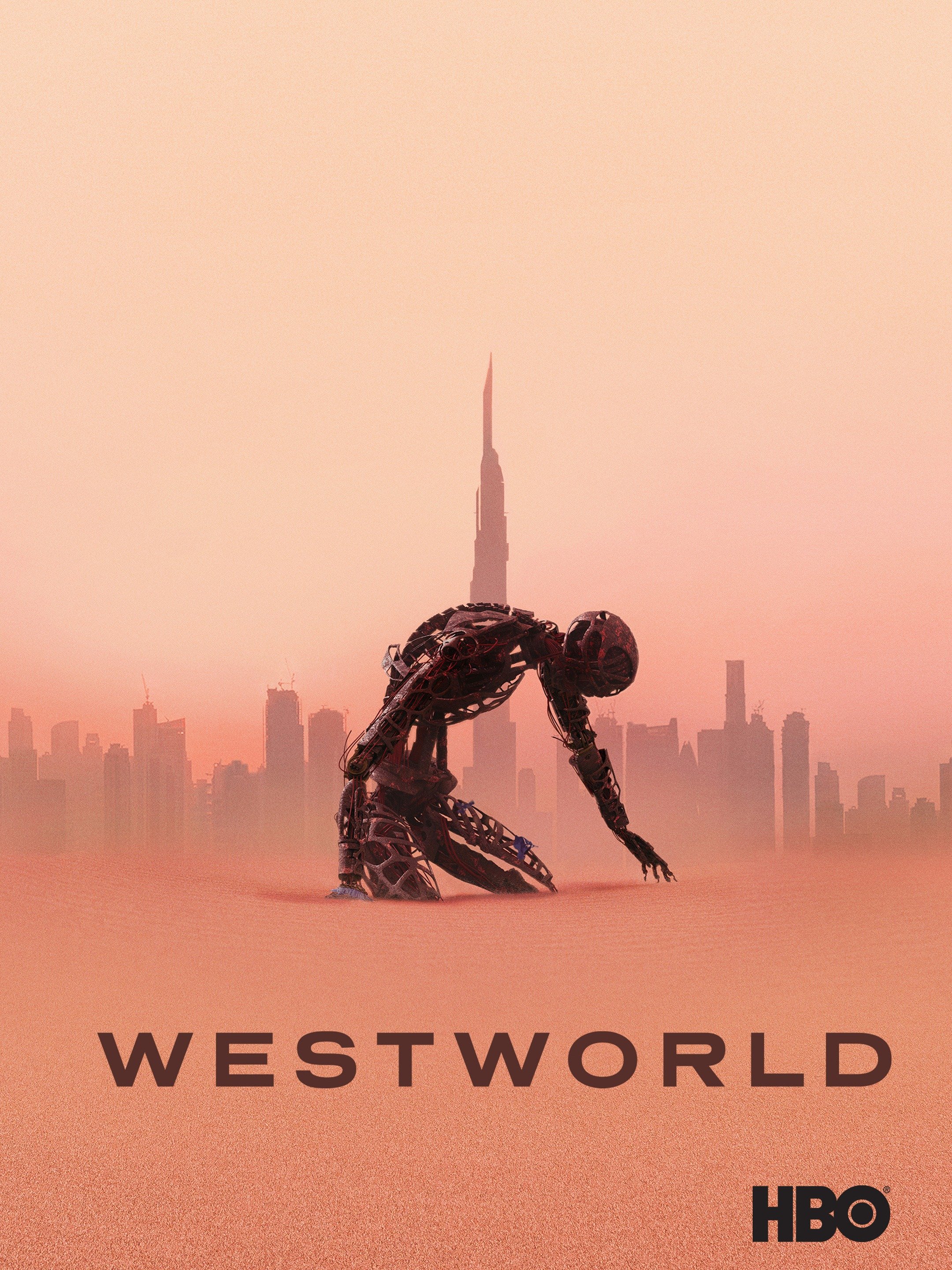
HBO has cancelled its SF TV series Westworld after four seasons. The producers had been angling for a fifth and final season to wrap up the story, so there will be some disappointment that the show will not get its originally conceived ending.


Westworld started airing in 2016 and came from the team of Jonathan Nolan and Lisa Joy, who had previously worked on Person of Interest. The show was a reboot of the 1973 film of the same name, written and directed by Michael Crichton. The first season attracted blanket critical acclaim and high ratings for HBO, but each following season saw both the acclaim and ratings reduce significantly. After the 8-episode fourth season failed to arrest the decline (scoring barely 300,000 viewers on the initial airing), and still costing over $100 million, HBO decided to cancel the show rather than press on with it.

As well as the acclaim and ratings, the show suffered from a protracted release schedule that saw two or more years pass between seasons, frustrating viewers.

The show won nine Emmy Awards during its time on-air and featured highly-rated performances by the likes of Evan Rachel Wood, Thandiwe Newton, Ed Harris, Anthony Hopkins, Aaron Paul and Tessa Thompson.

The show was produced under the banner of J.J. Abrams' Bad Robot Productions. The cancellation means that 2023 will be the first year since 2000 that Bad Robot has not had a TV show airing or in production. The company is developing six other shows, but these are not expected to hit the screen until 2024 at the earliest.

Friday, 18 February 2022

JUSTIFIED star Walton Goggins recruited for FALLOUT TV series

The Fallout TV series has started its casting process and already scored a reasonably big name: Walton Goggins, the breakout star of Justified. Goggins will be playing a Ghoul on the show based on the video game franchise.

Goggins has been around in the industry for a while, playing Detective Shane Vendrell on The Shield and Venus Van Dam on Sons of Anarchy. In film he has twice played for Quentin Tarantino, in The Hateful Eight and Django Unchained, whilst he also had a role in Spielberg's Lincoln. However, he remains best-known for his role as Boyd Crowder on Justified, the former friend-turned-enemy of Raylan Givens (Timothy Olyphant) who becomes an uneasy "frenemy" of Givens for the entire run of the show.

The Fallout TV series is co-created and executive produced by Jonathan Nolan and Lisa Joy (Person of Interest, Westworld), whilst Geneva Robertson-Dworet and Graham Wagner serving as showrunners. Nolan will direct the first episode of the series.

The Fallout video game series began in 1997 with the original Fallout, followed by Fallout 2 (1998), Fallout Tactics (2001), Fallout: Brotherhood of Steel (2004), Fallout 3 (2008), Fallout: New Vegas (2010), Fallout 4 (2015) and Fallout 76 (2018). The games are set around 200 years after a brief nuclear war between China and the United States in 2077 renders most of the world an atomic wasteland. The games, which each have their own self-contained storyline, depict the struggle for the survival in the new world arising from the ashes of the old. The games feature various factions, such as a fascist-leaning group seeking to rebuild the United States in their image, the Enclave, and an order of soldiers dedicating to stealing and hoarding advanced technology, the Brotherhood of Steel.

Ghouls are humans who have had an adverse reaction to the radiation left behind by the bombs, becoming effectively immortal at the cost of their physical health and appearance.

The franchise has also spun off comics, mobile games, a board game, a tabletop roleplaying game and a miniatures wargame, the latter two from Modiphius Entertainment.

Fallout will air on Amazon Prime Television. With the show now in pre-production and likely to have an extensive post-production period, it will most likely air in early-to-mid 2023.

Friday, 7 January 2022

FALLOUT TV show recruits showrunners

Amazon's Fallout TV series has recruited its showrunners: Geneva Robertson-Dworet and Graham Wagner will helm the show on a day-to-day basis, whilst Jonathan Nolan and Lisa Joy will write and executive produce the show as part of a broader slate of projects they are working on (including more Westworld for HBO).

Robertson-Dworet previously worked as a writer on the 2018 Tomb Raider reboot and on Captain Marvel. She has also been attached as a writer to the new Star Trek movie, a Gotham City Sirens movie and a potential adaptation of Andy Weir's Artemis, with Phil Lord and Chris Miller attached to direct. Wagner is a more experienced TV writer with credits on Silicon Valley, Portlandia and the US iteration of The Office.

It sounds like wife-and-husband team Joy and Nolan have already written the first episode and Nolan will also direct the first episode. Joy and Nolan previously worked on Person of Interest as well as Westworld, whilst Joy worked on Burn Notice, Pushing Daisies and feature film Reminiscence. Their next project to reach the screen is an adaptation of William Gibson's novel The Peripheral, also helmed by Amazon and starring Chloe Grace Moretz.

The Fallout video game series is set in the aftermath of a nuclear war that took place in 2077 between the United States and China. Much of the world is laid waste, but enough people survive to start rebuilding society in the aftermath. This leads to a mishmash of technological capabilities, with settlements struggling to find water but defended by laser-equipped robots. Most of the Fallout video games start with someone emerging from a Vault, an underground nuclear fallout shelter, and having to adjust to life in the new world. Six major games in the series have been released (most recently Fallout 76 in 2018) along with a number of spin-offs. There are also highly popular tabletop roleplaying games and miniature games based on the property. Almost 50 million copies of the video games have been sold to date.

According to another report, the show has also set out a casting call, presumably with a view to film the show this year for a 2023 debut.

Saturday, 21 August 2021

FALLOUT TV showrunner gives update on the project

It's been over a year since Amazon confirmed it was developing a Fallout TV show with Westworld creator-producers Jonathan Nolan and Lisa Joy, with little news appearing since then. Joy has now given an update via an interview with Collider.


It turns out that the project is very much alive and remains in the planning stages. Forward movement was stalled whilst Nolan and Joy were prepping work on the fourth season of Westworld for HBO (now shooting) and whilst Joy was putting the finishing touches on her debut feature film as a writer-director, Reminiscence, which hit cinemas and HBO Max this week.

According to Joy, the Fallout TV series will be "a gonzo, crazy, funny, adventure and mindf**k like none you've never seen before."

The TV show will be based on the popular video game series which has sold over 50 million copies since the release of the original game, Fallout, in 1997. Subsequent games in the series are: Fallout 2 (1998), Fallout Tactics (2001), Fallout: Brotherhood of Steel (2004), Fallout 3 (2008), Fallout: New Vegas (2010), Fallout 4 (2015) and Fallout 76 (2018), along with various expansions and DLC. Set two centuries after a brutal nuclear war wiped out most of the human race, the games chart the rebuilding of new society amidst the ruins of the old. The series has also spun off a tabletop miniatures game, Wasteland Warfare, and a tabletop RPG, both from Modiphius Entertainment.

The Fallout video game series is currently on extended hiatus, as the current developers, Bethesda (now owned by Microsoft), are working on Starfield and The Elder Scrolls VI. A potential Fallout 5 is unlikely to be released this decade, unless it is given to another studio to develop.

It's currently unknown if the TV show will directly adapt the stories in one of the games, or will be an original story set in the same universe.

Thursday, 2 July 2020

FALLOUT TV series in development at Amazon with WESTWORLD creative team

Amazon Prime Television has added another show to its increasingly-crowded roster of science fiction and fantasy projects. Jonathan Nolan and Lisa Joy, the creators and showrunners of Westworld for HBO, are developing a Fallout TV series, based on the best-selling video game series.


Nolan and Joy's Kilter Films is developing the project Amazon Studios with a go-clause in the contract, meaning that there will be no pilot phase and a full first season would be commissioned automatically based on the strength of the scripts.

Based on Nolan and Joy's statement, they claim to be fans of the Fallout video game series and are working with the current licence holders at Bethesda Game Studios on script and story ideas. The project has been in the planning stages for several years already.

Nolan and Joy are also in pre-production - pandemic permitting - on both a fourth season of Westworld at HBO and a mini-series based on William Gibson's novel The Peripheral for Amazon.

The Fallout video game series is set in a parallel universe where the transistor was not invented until the 21st Century, leading to a futuristic society that much more closely resembled the classic SF aesthetics of the 1950s. This society then destroyed itself in a nuclear war between the United States and China in 2077. The video games, set between 25 and 210 years later, depict the rebuilding of this world and the emergence of new factions, ideologies and nations who struggle to come out on top.

The series launched with Fallout (1997) and Fallout 2 (1998), both developed by Black Isle Studios, the internal RPG division at Interplay. The series was conceived as a spiritual successor to an earlier game, Wasteland (1988), when they could not secure the IP rights to that game. Two spin-off games, Fallout Tactics (2001) and Fallout: Brotherhood of Steel (2004), followed from Interplay. Facing bankruptcy, Interplay sold the Fallout IP to Bethesda, who developed and published Fallout 3 (2008). Much of the original Black Isle team had reconstituted as Obsidian Entertainment, who were then contracted by Bethesda to produce Fallout: New Vegas (2010). Bethesda themselves then developed Fallout 4 (2015) and Fallout 76 (2018), a multiplayer spin-off the series which launched to highly negative reviews but recently had something of a rehabilitation thanks to the Wastelanders expansion and relaunch (2020).

To date, the Fallout video game series is estimated to have sold over 60 million copies worldwide, almost half of which are attributable to the success of Fallout 4  by itself.

Tuesday, 11 November 2014

HBO options Isaac Asimov's FOUNDATION novels

Isaac Asimov's Foundation series of SF novels has been optioned by HBO to develop into a TV series. Jonathan Nolan, the screenwriter of several big-budget movies alongside his director brother Christopher, is writing the project.


The Foundation series consists of seven novels: Foundation (1950), Foundation and Empire (1951), Second Foundation (1952), Foundation's Edge (1981), Foundation and Earth (1985), Prelude to Foundation (1989) and Forward the Foundation (1992). There is also a trilogy of sequel novels written by SF authors Greg Bear, Gregory Benford and David Brin after Asimov's death, although the canonicity of these works is debated by fans.

The novels are set roughly 22,000 years in the future and depict the end of the vast Galactic Empire, which is being torn apart by social and economic forces. Mathematician Hari Seldon has developed 'psychohistory', a statistical model which allows for the prediction of broad sweeps of future history based on underlying historical trends. Using this, he establishes the Foundation, a scientific think-tank and refuge located on the distant planet Terminus, which will guide humanity through the collapse of the Empire and the ensuring period of chaos and anarchy, shortening it from tens of millennia to maybe a thousand years. As the books continue, Asimov develops both the limitations of Seldon's model (the arising of a charismatic individual warlord is not accounted for by psychohistory, for example) and also ties in the mystery of the long-forgotten planet Earth. He also develops closer ties between the Foundation saga and his other major SF series, the Robots and Empire series.

Jonathan Nolan, the creator of the Person of Interest TV series and the co-writer of The Prestige, The Dark Knight, The Dark Knight Rises and Interstellar (directed by his brother), is working on the project which will be a co-production between HBO and Warner Brothers. The project was previously in development by Roland Emmerich at Sony, but HBO spent a substantial sum to pick up the rights.

This will be difficult project to adapt. The first three Foundation novels - the original Foundation Trilogy and counted by hardcore fans as the only books that count (later books were, by Asimov's own cheerful admission, written for the money) - were actually collections of short stories written by Asimov in the 1940s, and feature wafer-thin characters (and very few female characters of note), outdated science and a complete absence of any kind of sex at all. We can only assume that HBO will be changing some aspects of the story to make it work better on television. More complex is the fact that the first three books by themselves span over 200 years of history, with the series as a whole taking place over 500 years and ending with the ultimate fate and success of the Foundation unresolved. Finding a coherent structure or a regular cast of characters in this broad canvas will be challenging.