Showing posts with label isaac asimov. Show all posts

Saturday, 13 September 2025

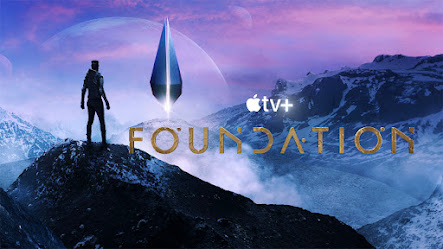
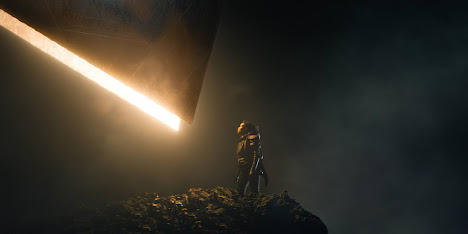
Foundation: Season 3

The Galactic Empire continues its long-expected decline. Thousands of star systems have declared independence or joined the Foundation. But the Foundation itself is divided, with the Traders demanding more and more autonomy and power, and faith in the Seldon Plan is not as absolute as it once was. The arrival of the Mule, a powerful warlord with mentalic abilities, triggers the awakening of Gaal Dornick from her long cryo-slumber, and pitches the galaxy into chaos.

The central conceit of the Foundation storyline is that it is about the impending fall of the Galactic Empire, with the Foundation carrying the hope of humanity across a potential millennia of decline and barbarism before civilised order returns. But the Empire, or at least a shadow of it, chugs along through the early part of the story. The actual "fall" doesn't happen until surprisingly near the end of Asimov's original Foundation Trilogy.

Apple TV's adaptation chronicles that fall in the third and (apparently) fourth seasons of its run. We're now adapting the latter part of the second novel in the trilogy, Foundation and Empire, and the early part of the third, Second Foundation. The Mule has arrived and upset the delicate balance of power between the Foundation and the Empire, enough for the two old rivals to consider joining forces against him. Hari Seldon and Gaal Dornick secretly established a Second Foundation to guide the first from behind the scenes and account for unpredictable variables in the Seldon Plan, but this can only succeed with absolute secrecy, which is compromised by the Mule and his formidable powers. Meanwhile, back on Trantor the Cleonic Dynastic is becoming more unstable; this particular Brother Dusk is very reluctant to cede power and go into the night; Brother Day has abrogated all sense of responsibility, content to live out live in a dissolute life of languid boredom; and Brother Dawn is ambitious, smart and fair-minded, but inexperienced, and whose eagerness to act is as much a weakness as it is boon.

Multiple storylines evolve, taking in New Terminus, Trantor, the Second Foundation, Demerzel, the backstory of the Robot Rebellion and more, anchored on the firmer foundations (ha) of the first two seasons, which had rocky moments but eventually evolved into a solid space opera series. Season 3 has all the ingredients to become the best season so far, simply because it's adapting the most compelling part of Asimov's saga: the struggle between the Foundation(s) and the Mule. Pilou Asbæk plays the Mule with scene-chewing relish, building on his form from shows like 1864 and Game of Thrones, but really the whole cast is on good form this season. Newcomers Synnøve Karlsen and Cody Fern have a tough job playing superficial socialite-influencers, but both show solid chops as their characters reluctantly become agents in the struggle between the Foundation and the Mule. Cassian Bilton also has a great time playing a more measured and competent version of Brother Dawn than we have seen previously.

There's also a whole lot more action. Planets are conquered, space fleets do battle, stars burn, and massive superweapons unleash destruction on a vast scale. The fall of the Empire takes place mostly off-page in Asimov's novels, but here it's shown in its full, terrible, technicolour expanse. Or at least partly, as this storyline is allowed to unfold across two seasons.

I'm not entirely sure that's a good idea. The pacing early in the season is very good but it drops off in the latter. Brother Day (an under-served Lee Pace) spends a lot of time wandering around Trantor's weird underworld of cults, and trying to make an amnesiac person remember something that they're clearly never going to. There seem to be excuses to tread water in a lot of storylines rather than get on with business. They could have easily wrapped up the Mule story here, but given the appeal of the saga, they decided to split it across two full seasons instead. I understand the commercial reasons why, but it doesn't help the pacing (recalling that the books in the original Foundation Trilogy are very slim volumes indeed). The writers do alleviate this as they have been given permission to use references to the Robots novels by Asimov (the rights to which are held by Warner Brothers, who are apparently planning a more faithful adaptation of that saga than the Will Smith movie) for the first time, so can discuss the Laws of Robotics, Daneel etc, allowing them to fill in some awkward blanks in the backstory.

As usual, fidelity to the source material is a constant source of discussion among watchers. Season 3 is much closer to the books than arguably any season before it, but also deviates in some big ways, including one late plot twist that feels like it's doing something different for the sake of being different to the books, rather than because it's logical. Season 4 will have to do the heavy lifting on making that plot twist make sense as I'm not sure this season does a good job of it.

Pacing issues and some questionable plot points undercut a terrific sense of action and good characterisation, meaning that Season 3 of Foundation (****) never quite fulfils its potential, and has to settle for merely being pretty decent rather than outstanding.

The season is available to watch on Apple TV+ now. A fourth season, with a different showrunner and a significant budget cut, has been greenlit to enter production early next year.

Thank you for reading The Wertzone. To help me provide better content, please consider contributing to my Patreon page and other funding methods.

Monday, 11 August 2025

Foundation: Season 2

The Galactic Empire is showing some early signs of the decline prophesised by Hari Seldon and his science of psychohistory. Unnerved, the Genetic Triumvirate of the Cleon Dynasty plan to shore up their position by marrying Queen Sareth I of the Cloud Dominion, a powerful ally, and employing the formidable General Bel Riose to neutralise the Foundation, now resurgent as a religious force in the galaxy. Meanwhile, Gaal Dornick and Salvor Hardin find themselves working together with a copy of Hari Seldon's consciousness to fulfil a key part of his design: the establishment of a Second Foundation.


The first season of Apple TV+'s Foundation was a very qualified, partial success. The vfx, music and general atmosphere and mood were all very accomplished, as were the performances of Lee Pace, Terrence Mann, Cassian Bilton, Lou Llobell, Laura Birn and Jared Harris. The political intrigue and scheming on the Imperial capital world of Trantor was also very well-done, justifying the show's informal tagline of being "Game of Thrones in space." Unfortunately, the show's quality level dipped rather wildly whenever it returned to the storyline of Terminus, the Foundation and Salvor Hardin; the weakest part of Foundation was the actual bit about the Foundation and adapted (loosely) from Isaac Asimov's source material. Pacing was also problematic.

Season 2 picks up the baton by adapting, also loosely, the second novel of the original Foundation Trilogy, Foundation and Empire. However, the season benefits a great deal from having all of its disparate plot threads converge at the same point, meaning the season has a much greater sense of coherence and structure from the start. The addition of Ella-Rae Smith as Queen Sareth, Sandra Yi Sncindiver as Sareth's advisor Rue, and Ben Daniels as Bel Riose are all excellent. The show's conceit of having the same three actors playing not just the Emperor at different stages of life, but clones of them repeating across generations also allows Terrence Mann, Lee Pace and Cassian Bilton to effectively play new characters. The season also has a dramatically increased screen presence for Jared Harris, who's heavy use in the marketing and almost total absence from Season 1 felt a bit like bait-and-switch marketing. Harris is more present in Season 2 and has a more satisfying storyline.

The season builds to an impressively epic finale, though Asimov purists, probably more satisfied by a closer following of the book then the first up to this point, may end up spitting blood at a pretty major divergence from the events in the novels. Those less wedded to the original texts will find much to admire here with impressive dramatic and vfx set-pieces established with solid character arcs and intriguing politicking. It helps that the show is allowed to be a character drama rather than emphasising explosions and action. Pacing is also much-improved, though some of the events with the founding of the Second Foundation threaten to chug a little.

Foundation's second season (****) represents an impressive improvement over the first season, with stronger writing, dialogue and characterisation, although some minor flaws remain. But the show is on a pleasingly improved trajectory.

The season is available to watch on Apple TV+ now. A third season is currently airing on the same service.

Thank you for reading The Wertzone. To help me provide better content, please consider contributing to my Patreon page and other funding methods.

Saturday, 20 November 2021

Foundation: Season 1

More than twenty thousand years in the future, known space has been united under the rule of the Galactic Empire. The Empire has provided stability and peace for twelve millennia, the last four centuries of which have been under the rule of the Genetic Triumvirate of the Cleon Dynasty. The three emperors are enraged when respected mathematician Hari Seldon announces the discovery of psychohistory, a mathematical and statistical modelling which allows the prediction of future events. Seldon predicts nothing less than the collapse of the Empire, plunging humanity into a period of barbarism he expects to last thirty thousand years.


However, Seldon also offers a slither of hope: by creating a repository of knowledge and data, a Foundation for future reconstruction, the period of barbarism may be reduced to a single millennia. The three emperors, disturbed when Seldon's model successfully predicts a devastating terror attack on the capital world of Trantor, allow Seldon and his followers to settle on the remote world of Terminus to build the Foundation. Decades later, Seldon's followers are living a tough life on a brutal and unforgiving world when they find themselves drawn into a conflict with the neighbouring power of Anacreon, which desires nothing less than the annihilation of the Empire...and they want the Foundation's help, willingly or unwillingly, to achieve it.

Isaac Asimov's Foundation saga was, for many years, regarded as one of the untouchable taproot texts of 20th Century science fiction. Originally published as eight short stories and novellas in the 1940s, Asimov combined them with a new story in the early 1950s as three collected "fixup" novels, the infamous Foundation Trilogy. Its tale of plucky scientists and cunning engineers outwitting warlords and generals struck a chord, winning the trilogy a special Hugo Award for Best Series in 1964 (defeating J.R.R. Tolkien's Lord of the Rings along the way). After resisting the notion for many years, Asimov was convinced to return to the universe in the 1980s, penning two further sequel novels. After getting hopelessly stuck after introducing a new idea from way off left-field in those books, he went back to write two prequel novels, the last of which was published just before his death in 1992. These later sequels and prequels did not add much to the appeal of the series, being more concerned with dragging most of Asimov's work into a single "future history" of humanity than in telling a good story.

The first problem facing anyone who wants to adapt the Foundation series is therefore Asimov's own lack of coherence and consistency with the original work. Asimov only ever covered the first half of the Foundation's existence, leaving the chronologically-final novel, Foundation and Earth, with a lot of unresolved story arcs. Asimov's novels are also primarily concerned about people sitting in rooms talking, or sometimes standing in rooms talking, or sometimes sitting on a spaceship talking. Action is brief, occasional and underwhelming, with major and epic events alluded to off-page. Asimov's cast is also predominantly male with female characters playing only minor roles until the last couple of books (and even then not doing very much, at least with their clothes on). Combined with the stories in the opening trilogy being largely disconnected from one another, with many decades falling between each one, with no continuing characters beyond Seldon's holographic image, it makes turning them into a TV show problematic.

David Goyer's attempt to tackle the problem starts promisingly, focusing on the minor side-character of Gaal Dornick who is promoted here into a leading player. Played with grace and skill by newcomer Lou Llobell, Dornick is a psychohistory sceptic and mathematical genius whom Seldon - a headlining turn by actor-of-the-moment Jared Harris - recruits to help keep his project alive when the Empire tries to tear it down. The first episode, which is the most faithful to the books whilst also featuring massive changes, sets up an intriguing universe and story with a lot of promise and some absolutely brain-melting visual imagery. The spacecraft and hardware (mostly rendered through models rather than CG) feel like a vintage 1980s SF cover come to life, whilst the collapse of the Starbridge is one of the most impressive vfx set pieces put on television. It also helps that our antagonist for the episode is Emperor Cleon, or rather the three clones of the Emperor Cleon, with Brother Day (Lee Pace) and Brother Dusk (Terrence Mann) debating executing Seldon or indulging him.

Despite the major changes to the source material, the episode works in setting up the universe and retaining viewer interest. However, things quickly become divisive after this point. The storyline abruptly jumps forward fifty years to Terminus, where Warden Salvor Hardin (Leah Harvey) takes over as the main character. Terminus is barely-habitable rock, superbly realised through atmospheric location filming in volcanic regions of the Canary Islands. However, the story of events on Terminus is thin, and when the Anacreons show up to snarl about honour and vengeance like budget Klingons, you can feel you're watching a less-successful mid-season filler episode of Star Trek from around 1994. Harvey does her best, but saddled with some ripe lines and a poor American accent, it makes her a decidedly less interesting protagonist. Dornick does show up again in a self-contained side-plot, but doesn't really have a lot to do. The Foundation storyline ends up being the weakest element in a TV show called Foundation, which is a bit of a problem.

Fortunately, a wholly-new story has been invented which takes us into the Genetic Dynasty, with Brothers Dusk, Day and the young Dawn (Cassian Bilton) trying to rule over an empire from which they are almost completely separated by class, security and location. This storyline, which also features excellent performances by Laura Birn as the Emperor's right-hand robot, Eto Demerzel and Amy Tyger as a gardener, Azura Odili, is quite interesting and asks big-picture SF questions about cloning, consciousness, power and ethics. Despite being invented out of wholecloth, it's frequently intriguing and becomes moreso when Brother Day departs for the moon known as the Maiden to win the support of the Luminist faith for his policies. On Maiden, the Emperor has to face unique personal challenges and a formidable political opponent, Zephyr Halima (an excellent performance by T'Nia Miller).

This storyline works because it hinges on Lee Pace's superb performance (albeit one that falls squarely within the centre of his range). Pace has become a reliable performer for intense, charismatic roles requiring a degree of intelligence (see also his Thranduil in the Hobbit trilogy, Joe MacMillan in Halt and Catch Fire and Ronan the Accuser in Guardians of the Galaxy and Captain Marvel). Pace quickly becomes the show's most vital player, given that Jared Harris's heavily-trailed role in the series was somewhat...overstated: Hari Seldon is a low-key presence, and doesn't appear in many episodes.

If the Genetic Dynasty and the internal politics of the Empire were the main draw of Foundation, the show would have ended up being pretty solid. However, Foundation goes off-track whenever it tries to actually tackle the storyline involving the Foundation, at which point it veers from its semi-successful goal of being "Game of Thrones in space" to being a very generic action story without many compelling characters. This leaves the show feeling unbalanced, verging on the schizophrenic. Gaal Dornick's story is also potentially intriguing, but far too static, with the story going out of its way to prevent the character from interacting with the other plotlines until the very end but not giving her much to do in the meantime that's worthwhile.

Foundation's first season (***) is very strangely structured and paced. The storylines involving Trantor, the Emperors, the Starbridge and the Maiden are all very solid, verging on the good, but everything on Terminus involving the Anacreons and the Foundations is tedious. The cast is mostly solid, with Lee Pace, Terrance Mann and Jared Harris (in his fleeting appearances) excelling and Lou Llobell giving a great performance, but some of them are much better-served by the material than others. A second season has been commissioned, and will reportedly adapt the much more dynamic storyline from Foundation and Empire about Imperial General Bel Riose militarily confronting the Foundation, which could make for a much stronger narrative. But in its first season, Foundation squanders a lot of its Trantor-set promise on a badly-thought out, generic action story that goes nowhere. The show needs much more consistency if it's to become must-see TV. Right now, it's more "meh, check it out if you're not doing anything else or need some really awesome new desktop backgrounds."

Foundation is available to watch on Apple TV+ worldwide.

Saturday, 9 October 2021

Apple renews FOUNDATION for a second season

Apple TV has renewed its epic space opera series Foundation for a second season.

The show, an adaptation of Isaac Asimov's Foundation novels, is currently halfway through airing its first season on streaming service Apple TV+. Despite a mixed critical reception, the show has apparently picked up an impressive number of viewers, part of a boom in the success of the service alongside its hit football comedy show Ted Lasso (which just concluded its second season and has begun work on a third).

The show's first season adapts storylines from the first novel in the series, Foundation (1951), alongside some elements from prequel novels Prelude to Foundation (1989) and Forward the Foundation (1992). The second season will round off material from Foundation and will start drawing on the second book in the series, Foundation and Empire (1952), including the rise to power of master trader Hober Mallow and the depiction of the conflict between the Foundation and imperial general Bel Riose. It's likely that the series' most famous storyline, the conflict between the Foundation and the genetic mutant known as the Mule, will follow in a potential third season.

Foundation is currently releasing new episodes every Friday worldwide on Apple TV+.

Monday, 28 June 2021

Apple TV's FOUNDATION TV series gets airdate and new trailer

Apple TV's Foundation series, based on the novels by Isaac Asimov, now has an airdate. The TV show will debut on 24 September this year.


Set more than twenty thousand years in the future, the Foundation novels depict the fall of the Galactic Empire. After twelve millennia of rule, the Empire has become corrupt, decadent and ripe for collapse, a fact not fully appreciated by its rulers. Mathematician Hari Seldon has created a form of statistical analysis he calls "psychohistory," which can predict the future within remarkable degrees of accuracy. Seldon's discovery predicts the collapse of the Empire and thirty thousand years of barbarity. But Seldon believes the interregnum can be reduced to just one millennia if a repository of lore and scientific knowledge is created: a Foundation for the next era of human existence. Much of the tension in the early part of the story comes from those in the Empire who believe Seldon's predictions and want to help him, and those who believe that Seldon is a liar and doom-monger who is bringing about the very apocalypse he has merely predicted.

Asimov started writing the series as a short story sequence in 1942, collecting the original stories and novellas into three fixup novels: Foundation (1951), Foundation and Empire (1952) and Second Foundation (1953), collectively known as The Foundation Trilogy. The trilogy sold extremely well and became one of the biggest-selling science fiction series of the age, winning a special "Best Series" Hugo Award in 1966. Asimov only returned to the series with Foundation's Edge (1982) after a publisher offered him a staggering sum of money to do so. The story continued in Foundation and Earth (1986), the chronologically-final Foundation novel. It left the story unresolved, but did reveal that the Foundation universe was the same as the Robots universe, creating a much bigger shared universe spanning more than a dozen novels and twenty thousand years of future history. Asimov struggled to come up with a way of continuing the saga before instead choosing to rewrite a prequel duology about Hari Seldon, comprising Prelude to Foundation (1988) and Forward the Foundation (1993). Asimov died in 1992, shortly after completing Forward the Foundation. Other writers continued the Foundation saga in authorised prequels and sequels of varying quality.

Foundation has been hugely influential on later franchises such as Star Trek and Star Wars; the city-planet of Coruscant in the latter is a nod at the city-planet of Trantor in Foundation.

The Foundation TV series stars Jared Harris as Hari Seldon; Lee Pace as Brother Day, the Emperor of the Galaxy; Lou Llobell as Gaal Dornick; Leah Harvey as Salvor Hardin; Laura Birn as Eto Demerzel; Cassian Bilton as Brother Dawn and Terrence Mann as Brother Dusk. The series has been executive produced by David S. Goyer and Josh Friedman and was shot in Limerick, Ireland. The first season will consist of ten episodes. The first season seems to draw on elements in Prelude to Foundation, Forward the Foundation and Foundation, as well as some significant changes to the story (such as the ruling Emperor replacing himself through cloning).

Monday, 22 June 2020

Apple release first trailer for its FOUNDATION TV series

Apple TV has released the first trailer for its TV mini-series based on the Foundation novels by Isaac Asimov.


Set more than twenty thousand years in the future, Foundation depicts a Galactic Empire that spans hundreds of thousands of star systems with a population in the trillions. The Empire seems prosperous and strong, but mathematician Hari Seldon (Jared Harris) has used incredibly advanced mathematical models - a science he calls "psychohistory" - to predict that the Empire will collapse in a matter of years, ushering in thirty thousand years of barbarism. This creates a storm of controversy, with some citing Seldon as a panic-monger and others thinking he can help resolve a number of looming crises. Eventually Seldon is allowed to found a secret society known as the Foundation, a scientific elite operating from behind the scenes who can reduce the interregnum to a mere single millennium before a new centralised empire arises.

The seven Foundation novels cover the first five hundred years or so of Seldon's Plans, chronicling how the Foundation avoids destruction and helps guide humanity to the next phase of its existence.


The series also stars Lee Pace as Brother Day, Lou Llobell as Gaal, Leah Harvey as Salvor Hardin, Laura Birn as Eto Demerzel, Terrence Mann as Brother Dusk and Cassian Bilton as Brother Dawn.

The show began production at Troy Studios in Limerick, Ireland, last autumn and seemed to be around halfway through its shoot when production was shut down due to the COVID-19 pandemic. Production is expected to resume in the next month or so. Apple has moved ahead with post-production and vfx on the completed episodes, with the hope of finishing work quickly for a 2021 premiere.

Monday, 18 May 2020

The Music of the Book

It has been standard for decades for films and TV shows to have soundtrack albums released. In the last twenty years or so this has extended to video games as well.

A less-tapped market is book soundtracks, although this seems self-evident: films, TV shows and video games have soundtracks as a matter of course, books do not. That makes the official (or semi-official, or even copyright-infringing) book soundtrack something a rarity in the field. But not completely unknown. Here's a few examples.


I Robot by The Alan Parsons Project (1977)

British rock band The Alan Parsons Project conceived of a soundtrack album based on Isaac Asimov's Robots series of science fiction novels and short story collections, particularly the first book, I, Robot, in the mid-1970s. Bandmember Eric Woolfson was particularly enthusiastic for the project and contacted Asimov himself, hoping to make it an official record. Asimov was keen on the idea, but noted that he had sold the media rights to a studio who was planning a big-budget feature film (which ultimately would not be released until 2004, with the most tenuous of connections to Asimov's book), so it could not be an official project but he gave his blessings for a "spiritual tribute" to the book.

For these reasons, the title was adjusted to I Robot (what a copyright difference a comma makes) and specific references to Asimov's universe and characters were omitted, with more general themes related to robots and artificial intelligence instead referenced.

The record did extremely well on release, perhaps helped by being released just days after the film Star Wars, which had re-awoken a hunger for science fiction material in the United States (and, later, in the UK).

Spotify link.

Apple Music link.


The King of Elfland's Daughter by Bob Johnson and Peter Knight (1977)

Founded in 1969, Steeleye Span are one of Britain's most successful folk rock bands, still touring today. In the 1970s, bandmembers Bob Johnson and Peter Knight hit on the idea of adapting the classic fantasy novel The King of Elfland's Daughter for music.

Released in 1924, Lord Dunsany's novel has been cited as one of the taproot texts of modern fantasy, featuring political intrigue, war and adventuring in a well-realised secondary world, all more than a decade before J.R.R. Tolkien released The Hobbit. More obscure today, it was much better-known in the 1970s.

Johnson and Knight worked on the album after leaving Steeleye Span, and combined original music with spoken word excerpts from the novel with a full voice cast. Sir Christopher Lee - inevitably a strong fan of the book - was cast as the King of Elfland and also the narrator.

The album was released in 1978 but did not attract a strong critical reception.

Spotify link.


Jeff Wayne's The War of the Worlds by Jeff Wayne (1978)

In the early 1970s, Jeff Wayne was best-known as David Essex's producer and arranger, but he felt his composing output had declined and he was no longer as creatively satisfied as he had been earlier in his career. His first project had been composing a score for his father Jerry Wayne's West End musical version of Charles Dickens' A Tale of Two Cities (1966), which had gotten him the gig working with Essex. He had also written advertising jingles and soundtracks.

Wayne disclosed his creative frustration to his father and they decided on a more elaborate version of the success they'd already had with A Tale of Two Cities. They read a number of well-known novels to find an appropriate story and they both felt that H.G. Wells' The War of the Worlds (1897) was suitable. Wayne was inspired to expand the project into a full-on rock opera, and commissioned his stepmother Doreen to write a script whilst he worked on the score. Both were completed in early 1976, with recording sessions beginning that May. Wayne asked Essex to help and he readily agreed.

Wayne composed a completely original score with one exception: the "Forever Autumn" section kept reminding him of a Lego commercial he'd scored, which had turned into a very unexpected hit single in Japan. He re-contextualised the song for the opera. Otherwise all of the music was new. Wayne also realised he needed a strong voice for the narrator. He wrote a letter to Richard Burton, care of the theatre in New York where he was working, and was shocked to get a phone call from Burton's manager heartily approving of the idea and inviting him to fly to the States to record the narration. Burton, not always known to be the most diplomatic actor about the material he worked with, enjoyed the process and complimented Wayne on his dialogue. One possible problem was that Burton refused to have the music playing as he spoke, as he felt it was a distraction, so had to work with Wayne and David Essex on fitting the dialogue into the right spaces by instinct, which he nailed on repeated takes.

With the record complete, Wayne's publishers were baffled and nearly refused to release it, only relenting when Wayne produced a special cut of the album with the songs cut down to traditional single lengths. This allowed them to release two singles - "Forever Autumn" and "The Eve of the War" - to promote the record. CBS UK then got behind the project in a big way.

Jeff Wayne's Musical Version of The War of the Worlds was released in June 1978 and was a surprise hit. To date it has sold more than 15 million copies, making it easily the biggest-selling record on this list, and has generated hundreds of millions of dollars in revenue in live tours and media sales.

Spotify link.

Apple Music link.


"The Ballad of Bilbo Baggins" by Leonard Nimoy (1968)

No.


The Songs of Distant Earth by Mike Oldfield (1994)

Mike Oldfield had shot to fame in the early 1970s with his classic Tubular Bells, but had struggled to produce a direct follow-up due to an increasingly sour relationship with Virgin Records. In 1991 he signed with Warner Music, who gave him complete creative freedom and he felt able to rework his original album into Tubular Bells II.

Oldfield discussed his next project with the record label chairman, Rob Dickins, a science fiction fan who was arguably one of the most influential and important figures in British music at the time. Dickins threw up some ideas, including for an album based on Arthur C. Clarke's 1984 novel The Songs of Distant Earth. Oldfield was familiar with Clarke's work but responded more to the title, which he considered evocative, than the novel itself, which he felt was "not one of his best."

Nevertheless, Oldfield flew to Sri Lanka to discuss the project with Clarke and found that Clarke was a fan of his work on the soundtrack to The Killing Fields. Clarke responded well to Oldfield's suggestions and gave Oldfield the creative freedom to open up the book and do some things differently. Oldfield found the recording process taxing, as he felt that his familiar instruments weren't "science fictiony" enough, so he relied more on keyboards and electronic music. At one point, he was so frustrated that he sat down and based out a theme in a few minutes in an absolute rage, and was later astonished that this worked as a process.

Also during recording, Oldfield played the adventure game Myst and was so impressed by it that he included a Myst-like series of puzzles on an enhanced CD-ROM version of the album.

The album was released in 1994 to a middling critical reception, although Clarke gave it his seal of approval.

Spotify link.

Apple Music link.


From the Discworld by Dave Greenslade (1994)

From the Discworld - slightly oddly officially called Terry Pratchett's From the Discworld, which may be creatively accurate but not physically - is a soundtrack album assembled by prog rocker Dave Greenslade and released in 1994. It was an official release created with the full approval of Sir Terry Pratchett.

Greenslade was a member for twenty years of British prog rock band Colosseum before embarking on an eclectic solo career that incorporated transmedia art projects (such as the epicly-titled Pentateuch of the Cosmogony). In the 1980s he switched to soundtracks, producing the music for BBC series including A Very Peculiar Practice, Kinsey, Tales of the Unexpected, Wipe Out, Bird of Prey and Gangsters.

Pratchett was a fan of Greenslade's music and Greenslade was a fan of Pratchett's books, and when they met in 1984 they became fast friends. Eight years later, Greenslade was moved to ask to produce music based on Pratchett's Discworld books and Pratchett agreed. Despite not having a huge amount of musical knowledge, Pratchett also made helpful suggestions, such as "This bit should sound like the opening of the Tory Party Conference," and "Can this bit sound grander? Can we add three more full organs?" Greenslade was also committed to making a soundtrack album, not an album of the songs from the books, so alas "The Hedgehog Can Never Be Buggered At All" did not make the cut. "A Wizard's Staff Has a Knob on the End" did make it in, because it had to, but Pratchett and Greenslade did reluctantly take a knife to an extended reprise that sadly made the subtle and delicate subtext a bit too obvious (or possibly it was a bit too long, but whatever).

The most ambitious track on the album was "Small Gods," which attempted to distil the entire novel (arguably Pratcett's finest and thematically richest) into five minutes. The song is especially notable for guest keyboards from a young Rhianna Pratchett.

The soundtrack was released in 1994 and did not set the charts on fire, although it did have a very long tail. A sequel soundtrack was discussed but never made it into the studio.

Additional Discworld music was produced by Mark Bandola and Rob Lord for the first two Discworld video games - Discworld (1995) and Discworld II: Missing, Presumed...? (1996) - whilst Paul Weir took over composing duties for Discworld Noir (1999). Paul Francis and David Hughes composed the music for Sky One's three Discworld TV serials: Hogfather (2007), The Colour of Magic (2008) and Going Postal (2010).

Spotify link.


A Soundtrack for The Wheel of Time by Robert Berry (2001)

The Wheel of Time got its own custom soundtrack album in 2001, although this was an outgrowth of an earlier project. In 1999 Legend Entertainment released the Wheel of Time video game, a well-made but somewhat incongruous first-person shooter based on Robert Jordan's fantasy series. Robert Berry and Leif Sorbye collaborated on music for the game and considered releasing it as a stand-alone album, but did not have enough material.

Robert Berry reconceived the project as a soundtrack based directly on the books and repurposed themes from the games and created new music for the project.

Berry had an impressive pedigree. As a guitarist, bassist, vocalist and producer he'd been active on the music scene since the 1970s, working with Hush, Keith Emerson and Carl Palmer and several other bands. He'd also worked on soundtracks and as a session player.

Unlike Pratchett, Jordan did not get involved in the creation of the Wheel of Time soundtrack album and had no contact with the composer.

Spotify link.

Apple Music link.


Geidi Primes by Grimes (2010)

Canadian singer-songwriter Claire Boucher - better known as Grimes - released her debut album in 2010. It was a concept album based on Frank Herbert's novel Dune, with the title being a (misspelt) reference to the Harkonnen homeworld of Giedi Prime. Track titles drew inspiration from the book: "Caladan," "Sardaukar Levenbrech," "Zoal, Face Dancer," "Feyd Rautha Dark Heart," and "Shadout Mapes."

Grimes, at the time unknown, released the record in a low key manner, assuming it would disappear without a trace. Instead, it helped propel her towards superstardom, making her later regret some of the most obscure song title choices.

In 2019 Grimes' career came full circle with a return to SF ideas in her fifth studio album, Miss Anthropocene, including songs that will feature in the forthcoming video game Cyberpunk 2077 (due for release in September this year).


Kaladin by The Black Piper (2017)

Kaladin is a soundtrack album based on Brandon Sanderson's novel The Way of Kings (2010), the first in his Stormlight Archive series. The album was created by The Black Piper, a soundtrack collective led by Michael Banhmiller, a veteran of the movie soundtrack industry where he worked on films such as The Jungle Book, Independence Day: Resurgence, The BFG, La La Land and Jason Bourne. Eleven composers eventually ended up working on the project.

Spotify link.

Apple Music link.

There are quite a few others out there, from individual songs to full albums to entire subgenres (the Tolkien-inspired music scene could certainly fill an entire article by itself).


Thank you for reading The Wertzone. To help me provide better content, please consider contributing to my Patreon page and other funding methods, which will also get you exclusive content weeks before it goes live on my blogs.

Tuesday, 22 October 2019

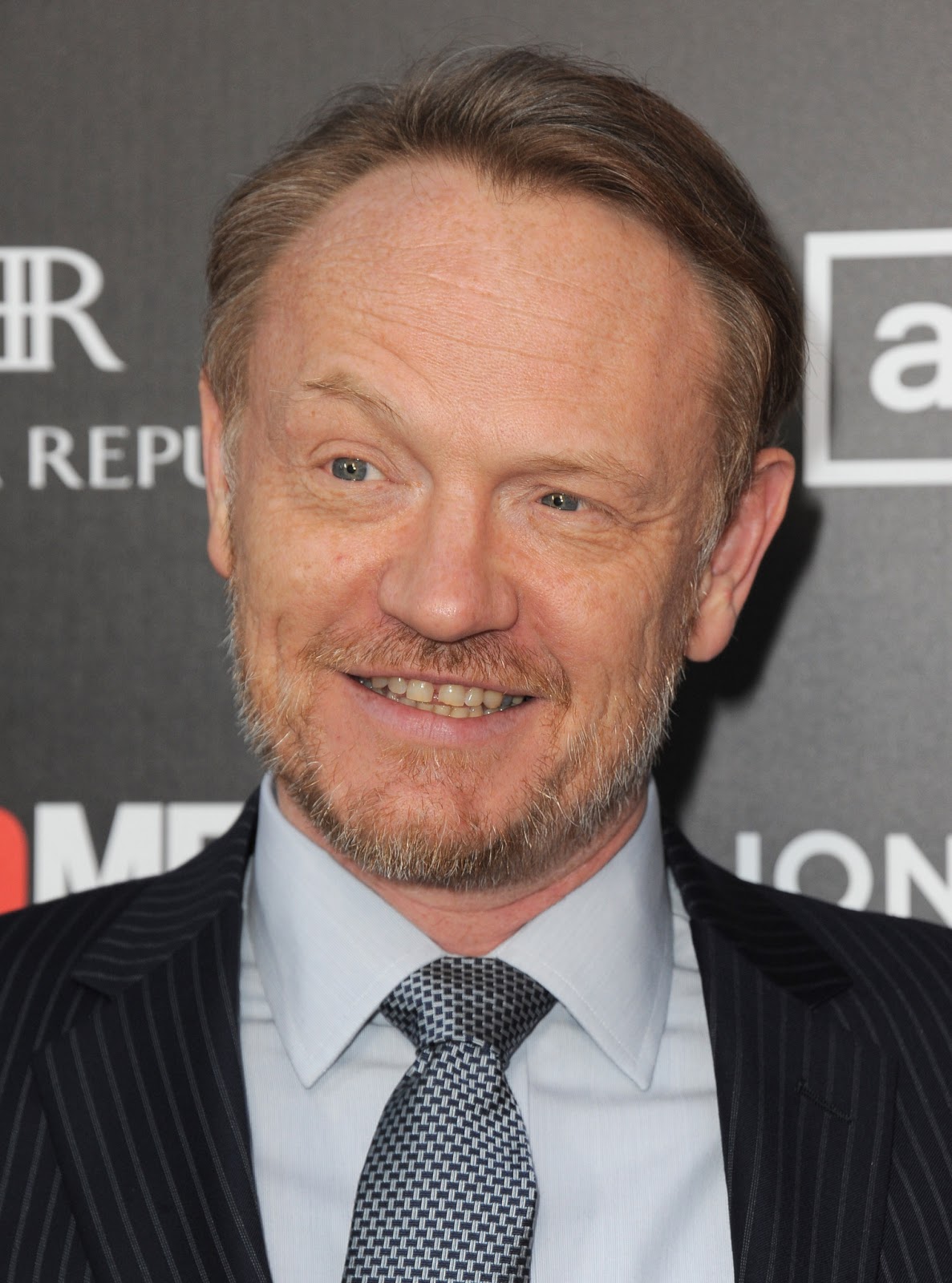
Jared Harris to play Hari Seldon in Apple's adaptation of Isaac Asimov's FOUNDATION

Apple+'s TV adaptation of Isaac Asimov's Foundation novel series is moving forwards with Chernobyl star Jared Harris in the lead role.


Jared Harris, also late of The Expanse and The Terror, is playing Hari Seldon. Seldon is the mathematician who creates psychohistory, a statistical formulation which allows for a modelling of future events by applying statistics to history. Seldon's idea is dismissed as nonsense except for the fact that one of its predictions is coming true: the Galactic Empire, which has endured for twelve thousand years, is showing signs of imminent collapse. According to Seldon's formula, humanity will be plunged into many millennia of darkness before it rises again. In desperation, a band of scientists and politicians create the Foundation, a body which will guide humanity out of the dark ages in a mere single millennia.

Lee Pace (The Hobbit) is playing Brother Day, the current Emperor of the Galactic Empire. Intriguingly, there is no such emperor during the Foundation novels; the emperor of Hari Seldon's time is Cleon II. This suggests that the adaptation will be a rather light one of the books, given the relative lack of continuing characters in the early volumes.

David Goyer (co-writer of Christopher Nolan's Batman trilogy) is the showrunner of the project. Production is set to begin soon for a late 2020 or (more likely) early 2021 debut.

Sunday, 2 September 2018

The Problems with Adapting Isaac Asimov's FOUNDATION

Apple TV have commissioned a 10-episode series based on Isaac Asimov's Foundation series of SF novels. Although a long-acknowledged classic and part of the science fiction canon, the Foundation saga's position in that canon has always been a little bit questionable (especially when contrasted to the ongoing relevance of Asimov's other primary work in that canon, the Robots series starting with I, Robot), especially as more time passes. My position now is that any adaptation of the Foundation series will run into significant problems which will need to be addressed before it is successful.


What is the Foundation saga?

The Foundation series consists of the following seven books:

  1. Foundation (1951, a fix-up novel made up of short stories dating back to 1942)
  2. Foundation and Empire (1952)
  3. Second Foundation (1953)
  4. Foundation's Edge (1982)
  5. Foundation and Earth (1986)
  6. Prelude to Foundation (1989)
  7. Forward the Foundation (1992)
There have been additional "sequels by other hands", most notably the trilogy consisting of Foundation's Fear (1997, by Gregory Benford); Foundation and Chaos (1998, by Greg Bear) and Foundation's Triumph (1999, by David Brin), and the short story collection Foundation's Friends (1989), with stories by authors such as Orson Scott Card and Harry Turtledove.

In addition, Asimov later declared the entire Foundation saga as taking place in the far future of his Robots and Empire universes, the three series retconned into one huge future history spanning twenty thousand years. It is likely that any TV adaptation of the Foundation saga will neglect or entirely abandon this, especially given the copyright issues involved.


What is Foundation about?

The Foundation saga begins approximately 22,000 years in the future. A vast Galactic Empire (of humans only; there are virtually no intelligent alien races in the Foundation universe) has arisen spanning much of the galaxy, centred on the city-planet of Trantor. Earth has long been forgotten. For 12,000 years, the Empire has ensured a relative level of peace and harmony across the galaxy. However, a scientist and mathematician named Hari Seldon has developed a science called psychohistory. Drawing on millennia of statistics, history and studies of human nature, Seldon believes that psychohistory is a reliable means of predicting the future. The Empire's rulers are sceptical, until some economic and military events come to pass in a broadly similar manner to what was predicted.

The Empire becomes concerned because psychohistory is predicting nothing less than a total collapse. The Empire is too old, corrupt and decadent and is now inwards-looking and no longer the great force for good that it once aspired to me. Planetary governors plot rebellion and civil war is brewing. Seldon's studies suggest that when the Empire collapses, it will plunge the human race into 30,000 years of barbarism. He believes this can be reduced to just a single millennia if preparations are made, a secret repository for the knowledge of the Empire is built and a new organisation of scientists, historians and teachers -a Foundation - is set up to help bridge the gap until the Second Empire arises. The Emperor reluctantly agrees and the Foundation is indeed established on the planet Terminus. Soonafter, the Empire begins to fragment and collapse. Seldon doesn't live to see his dream realised, but he leaves behind holographic messages which will play at key points in future history, when his descendants will need his advice.

The first three Foundation books (made up of short stories published over a ten-year time period) cover the first 377 years of the interregnum. They reveal that Seldon has established a hidden "Second Foundation" which guards the secret of psychohistory and can make course-corrections as time passes. They also depict the changing face of the Foundation itself (from an isolated colony of scientists to a military and regional powerhouse in its own right). The primary obstacle in the original trilogy is the rise of the Mule, a mutant with formidable powers, charisma and intelligence whose coming could not be predicted by psychohistory. The Foundation has to defeat the Mule without Seldon's guidance, and later on the Second Foundation is able to use new psychohistorical calculations made after the Muse's defeat to correct the predictions of the future.

Asimov abandoned the series in 1953 and wrote no further books in the setting. His publisher, impressed by the success of reprints in the series in the late 1970s (particularly after the success of Star Wars led to a hunger for more space opera stories), convinced him to revisit the series. Asimov complied with two new books, Foundation's Edge and Foundation and Earth. In these books, set 120 years after the original trilogy, a member of the First Foundation discovers that the Second Foundation has survived before making contact with a very strange world named Gaia, whose existence has ramifications for the future of the entire Foundation project. Later on he has to embark on a mission to find Earth, the original homeworld of humanity.

After writing Foundation and Earth Asimov found himself stymied on how to move forwards and resolve the story, so did not even try. Instead, he returned to the character of Hari Seldon and the founding of the Foundation in Prelude to Foundation and Forward the Foundation, the last novel he completed before his death in 1992.


What are the problems in adapting Foundation to the screen?

I'd say that the series faces several major issues in being adapted faithfully. These are as follows:

1. Structure.

The Foundation saga consists of several episodes which are separated by many decades or centuries. Characters die between stories and new characters are introduced to replace them. The original Foundation trilogy is therefore very episodic, with no single serialised story or cast of characters to follow. This works well in novels, but probably will not work well on TV (unless Apple are taking a Fargo-style approach, which does not seem likely).

2. The central premise is flawed.

Psychohistory, of course, is a modification of various ideas for predicting market trends and historical impulses over decades. However, these trends can be thrown off by the emergence of unexpected charismatic leaders. Asimov seems to have cottoned onto this with the arrival of the Mule in the second book. However, the big death knell for psychohistory was the popularisation of chaos theory from the 1960s to the 1980s, which basically laid out the complexities of such huge systems as being unquantifiable in anything less than the very short term. Asimov seemed to take this on board in writing the later Foundation novels, which seem to throw out psychohistory altogether in favour of a new way of resolving the story ("Galaxia").

3. It doesn't have an ending.

Asimov introduced a lot of new ideas in Foundation's Edge and Foundation and Earth (which feel very much like the first two books of a trilogy), but didn't have a good idea on how to resolve any of them. His solution was to simply not even bother: he went off and wrote prequels instead. Any TV show tackling the story will have to do better than that.

4. It dovetails too much into Asimov's other work

The later Foundation novels see a convergence with Asimov's other series, particularly the Robots saga. Several key plot moments and revelations in Foundation and Earth, Prelude to Foundation and Forward the Foundation rely on reader knowledge of Asimov's earlier books, particularly The Caves of Steel, The Naked Sun, The Robots of Dawn and Robots and Empire. Unless these stories are adapted as well, the later Foundation stories will come to rely on a series of increasingly left-field deus ex machina.

5. Technology.

The Foundation universe lacks AI, robots or even sophisticated computers. There is an in-universe reason given for this (although not until the very end of the series) but any modern viewer watching this show set 22,000 years in the future which apparently doesn't even have anything as smart as Siri will be very weird. The fact that psychohistory is also developed without the assistance of AI is implausible, at best.

6. There are few female characters of note.

The original Foundation trilogy is centred almost entirely on male characters. There are some female characters knocking around, but mostly in secondary roles. The only female protagonist of note in the trilogy is Arkady, contrasted to numerous male characters. The later Foundation books, written in the 1980s, were written in a rather more permissive atmosphere so they are chock-full of attractive women our male protagonists can have sex with, but generally don't do much in the story. We can expect some pretty major changes to this side of the story

7. Other, better-known series have borrowed from it.

Many of the key elements of Foundation have since been used by other films and TV series. The idea of a galactic empire and a city so big it covers an entire planet can be both found in the Star Wars movies, for example, whilst space operas from Babylon 5 to Star Trek have employed some of the space travel and battle tropes created by Foundation. Part of the saga also involves a detailed search for the long-lost planet Earth, which sparks comparisons to Battlestar Galactica (which Asimov was, very briefly, involved with as a consultant on its second season before it was cancelled). The idea of a vast stellar empire tens of thousands of years in the future was also better-used by Frank Herbert in his Dune saga of novels.

Foundation may have originated these concepts, of course, but so many other shows have used them that Foundation may be left looking unoriginal when it arrives on screens.

Given the problems with a straight adaptation, I wouldn't be surprised if the Foundation TV series ends up borrowing the name, a few characters names and perhaps a few basic ideas from the books but otherwise goes off and does its own thing.

FOUNDATION TV show greenlit at Apple

Apple TV has greenlit a TV series based on Isaac Asimov's Foundation series of science fiction novels.


The TV show has been in development at Skydance Television for a while, with writer David Goyer (Man of Steel) working with Josh Friedman (War of the Worlds) on a way of adapting Asimov's seven-volume series into a TV series.

Set 22,000 years in the future, the Foundation saga tells of the collapse of the massive, galaxy-spanning Galactic Empire and how one visionary, Hari Seldon, developers the Foundation as a way of preserving knowledge and civilisation through the centuries of barbarism that must follow.

Apple's initial order is for 10 episodes. It is unclear what part of the books is being adapted, or if this will be an original story set in the same universe.

Sunday, 15 April 2018

FOUNDATION TV series picked up by Apple TV

David Goyer's Foundation TV project, based on Isaac Asimov's dated-but-influential series of seven SF novels, has landed at Apple TV.


Goyer, who wrote Chris Nolan's Dark Knight trilogy and films such as Blade, Dark City and Man of Steel, picked up the project along with Skydance Entertainment when a HBO version helmed by Jonathan Nolan was shelved (in favour of their Westworld series, which has been a big hit). After several studios considered the series, Apple have picked it up as hopefully their first big tentpole original series.

Isaac Asimov's Foundation saga began with a series of short stories published in the 1940s. These became much better-known when they were collected into three "fixup" novels: Foundation (1950), Foundation and Empire (1951) and Second Foundation (1952), collectively known as the Foundation Trilogy. Thirty years later, after being showered with money from his publisher, Asimov returned to the setting in Foundation's Edge (1982) and Foundation and Earth (1986), the latter of which tied together the Foundation setting with his earlier Robots saga, the Empire trilogy and the stand-alone novels The End of Eternity and Nemesis. Indeed, some readers now believe that Asimov intended for all of his SF work to be part of this setting, where it is not explicitly contradicted (with shades of Stephen King's multiverse). Asimov ended his career with two prequels, Prelude to Foundation (1989) and Forward the Foundation (1992). After his death, the "Killer Bs" of science fiction (Gregory Benford, Greg Bear and David Brin) continued the series with three more prequels: Foundation's Fear (1997), Foundation and Chaos (1998) and Foundation's Triumph (1999).

The Foundation saga is set 22,000 years in the future. The Galactic Empire, which has existed for 12,000 years and brought stability to the human-colonised galaxy (there are no aliens in the setting), is starting to fragment and collapse. Statistician and mathematician Hari Seldon has created a science known as "psychohistory" which can predict the future based on previous historical events. Seldon's calculations suggest that the Empire is going to collapse, and in doing so will plunge the galaxy into chaos that will take humanity 30,000 years to recover from. Seldon proposes an alternative plan, the creation of a repository of knowledge and its scientific guardians who will guide humanity out of the darkness and reduce the interregnum to just a single millennium: the Foundation. The first three books span the first three centuries of the Foundation and explore the Empire's collapse, the emergency of a mutant warlord known as the Mule (whose existence could not be foretold by the Seldon Plan) and the conflict between the Foundation and the mysterious Second Foundation, which has been influencing it from behind the scenes. The later books explore what happens when a Foundation scientist and adventurer discovers both Earth and the existence of other forces manipulating events.

There have been multiple attempts to adapt Foundation over the years but these have foundered on the problems of the series' long chronology, its frequent multi-decade time jumps (which preclude the existence of a returning, regular cast) and the fact it is both extremely dated (earning its current genre fame more from nostalgia than quality) and has been hugely influential on later, superior works such as the Dune series and Star Wars, of which a Foundation adaptation may appear derivative.

It will be interesting to see what Goyer comes up with. I suspect a radically different story to what Asimov portrayed in his novels.

Tuesday, 26 April 2016

What will HBO's next big show be?

HBO have a problem, they've had it for a couple of years and it's getting more of a pressing issue as time goes on. In 2018, Game of Thrones will end and HBO will be left, for the very first time since 1998, without a big hit show that everyone is talking about.


Way back in 1998 HBO, still new to the original scripted drama game, debuted Sex and the City. It was a massive success, got lots of people talking and won HBO a huge number of subscriptions. HBO doubled down on this a year later when it began airing The Sopranos, a violent crime series about the life of mob boss who tries to keep his business running under constant surveillance. Over the next decade HBO aired many critically-acclaimed and popular dramas (including Six Feet Under, Carnivale, Deadwood, Big Love, Rome and The Wire, as well as mini-series like Band of Brothers, The Corner and John Adams) but The Sopranos and Sex in the City were the jewels in the network's crown.

Sex and the City ended in 2004. The Sopranos followed suit in 2007 and it looked like HBO might have to survive without a big, successful show on the air. However, by luck the following season they debuted a TV drama series about vampires. True Blood would go on to almost match the success and buzz of The Sopranos (although not quite the same level of critical acclaim). And just at the point that True Blood's critical and commercial success began waning in 2011, they debuted Game of Thrones, which would go on to become the most successful show in the network's history.

According to HBO, they've never "needed" a massive, genre-defining show to lead with. They get a lot of subscriptions for their sports and movie channels, and their original drama and comedy programming has really been an added bonus on top of that. Their top executives seem relatively sanguine about the possibility that they may end up in a situation where they have no massive, subscription-encouraging series on the air for a few years. How the reality of that feels after twenty years of being the top dogs will likely be a different story, however. More of an issue for HBO has been that original scripted cable drama used to be very much the field they owned exclusively, but now other channels such as Starz (Black Sails and Outlander), AMC (The Walking Dead, Breaking Bad) and Showtime (the new Twin Peaks) are fighting for that space, not to mention the competition posed by Netflix and Amazon with their original programming. HBO isn't the automatic "go-to" network any more for talented creators who want to get a pet project on the air any more.

Paradoxically, despite HBO making quite staggering amounts of money, they have also become more risk-averse. They have cancelled shows after producing pilots and canned projects that should appear to be slam-dunk successes. Embarrassingly, some of these projects have gone on to great success on other networks and in other venues (most famously Mad Men, which HBO turned down and went to air with AMC).

More impressive is the fact that HBO turned down no less than three absolutely killer shows based on books which would have been a perfect fit for them and perfect follow-ups for Game of Thrones, being fantasy shows but "different" kinds of fantasy to Thrones. The first of these was The Dark Tower, based on the Stephen King novels. HBO developed this both as a joint TV-film cross-media project and then just as a TV show. However, HBO got cold feet and dropped it. It's been picked up by Sony Pictures as a major film project and shooting starts in a few weeks with Idris Elba and Matthew McConaughey starring. The second was Preacher, based on the violent but critically-acclaimed graphic novel series by Garth Ennis. The series was in an advanced state of development when HBO apparently (and uncharacteristically) got cold feet over the show's controversial stance on religion and dropped it. AMC picked it up and shooting has wrapped on the first season, which should debut in a few months. Early buzz on pilot screenings is extremely positive, and the show should make an excellent companion series for The Walking Dead. Finally, there was American Gods. HBO had developed multiple pilot scripts with Neil Gaiman, the writer of the novel, and had looked virtually certain to greenlight it when they very abruptly dropped it, to the puzzlement of just about everybody. Starz has since picked up the series and production is currently underway in Toronto.

So, we have to ask, what does HBO have on its development plate right now, what is available and what could they do to produce a follow-up hit show to Thrones? Let's take a look.


Westworld

Westworld is based on Michael Crichton's 1973 film of the same name and is set in a futuristic theme park where the robot exhibits start to break free and take control. This has an absolutely stellar cast, with Sir Anthony Hopkins, Ed Harris, Evan Rachel Wood, James Marsden and Thandie Newton starring and Jonathan Nolan writing and directing. The series is in the final stages of filming right now for a debut airdate expected at the end of this year. However, the show has experienced major production problems including a four-month filming shutdown amidst rumours over writing problems and controversy over some of the actors' contracts. In addition, the show seems to be mainly a cerebral affair about the future of artificial intelligence and consciousness, which will make for a stirring SF series (and this is HBO's first-ever outright science fiction show) but is unlikely to win over a mass audience.


Watchmen

Director Zack Snyder (The 300, Man of Steel, Batman vs. Superman: Dawn of Justice) actually made a movie of Watchmen in 2009, to a mixed critical reception (I liked it). However, even the most ardent admirers would have to admit that the film had to rush a lot of Alan Moore's material from the seminal 1985 graphic novel to fit into just two hours, so Snyder has gone to HBO with the intention of re-staging the story as a TV show (possibly drawing on some of the materials published since, such as the Beyond Watchmen project). HBO seem to be interested, but have not formally greenlit the project yet. With Snyder committed to Superman and Justice League movies for some time, this would likely be handled by other writers. To be honest, this could be a really good series, but I suspect it would only work as a mini-series rather than an ongoing, multi-year project.


Foundation

Jonathan Nolan has proposed a TV adaptation of Isaac Asimov's seven Foundation novels to HBO, who have optioned the book rights ahead of further discussions and seeing a script. HBO took the step of buying the rights whilst they were already held by Roland Emmerich (who was developing a film before the buy-off), so seem to be pretty serious about this project. However, Nolan is now working on Westworld so this project has likely been kicked down the curb a fair ways.

Foundation is one of science fiction's most famous series. Set 22,000 years in the future, it chronicles the collapse of the vast Galactic Empire and the attempt by a scientific thinktank, the Foundation, to preserve scientific knowledge and wisdom through an estimated thousand years of barbarism to follow. The novels span roughly the first half of this period, culminating in the rediscovery of the long-forgotten homeworld of humanity, Earth.

This could make for an interesting series, especially if HBO adopt an anthology approach and jump forward decades or centuries between seasons a la True Detective. However, there will have to be a lot of invention for the series as Asimov's view of the future is seriously outdated by this time.


I, Claudius

As has been said a few times, Game of Thrones feels very much like a spiritual successor to Bruno Heller's excellent historical drama series Rome, which aired for two seasons and 23 episodes between 2005 and 2007. Rome was cancelled due to budgetary concerns, something HBO later regretted when they checked the DVD and foreign screening sales. However, HBO left the elaborate outdoor set in Italy standing as a tourist attraction and a filming location for other series and documentaries. In 2011 HBO announced that they were developing a fresh adaptation of Robert Graves's classic novels I, Claudius and Claudius the God, previously filmed by the BBC in 1976. Given that the original plan was for Rome to jump forward to this story in its fourth or fifth season had it stayed on the air anyway, this could be very much a clever way of getting Rome back on the air, potentially using the same sets but sadly (due to a time-skip forward of several decades) not the same actors. However, HBO have not commented on the project in some years, so the enthusiasm for it may have fizzled out, which would be a shame as a new series set in Ancient Rome would be very welcome.


The Warlord Chronicles

HBO don't have the rights to this book trilogy, but Bad Wolf Productions do, having optioned it a few months ago. Bad Wolf also have a co-development deal with both HBO and the BBC, but the BBC are likely too busy with Bad Wolf's His Dark Materials series to take this on as well. Hopefully, HBO will give this a look. Written by Bernard Cornwell (The Last Kingdom, Sharpe), The Warlord Chronicles are a "realistic" take on the legend of King Arthur, set during the 5th and 6th Centuries in a Britain riven by religious and political turmoil. The Roman Empire has collapsed, but some of the Roman settlers and armies remain. The native Britons are trying to re-establish themselves, but the first waves of Saxons are starting to invade from the east. Roman religious cults and the newly-arrived religion of Christianity are struggling against the native pagan druids and other old faiths. It's a time of great danger, enhanced when King Uther Pendragon dies and the protection of his infant son and heir Mordred falls to Uther's bastard child Arthur. Unable to ever become king, Arthur instead takes on the mantle of Warlord.

It's a rich and atmospheric take on the legend of King Arthur, noted for its much greater focus on realism. There were no knights (in the medieval sense), massive stone fortresses or armies in the tens of thousands at this time, so the focus is on fighting with spears and shields, holdfasts are mostly made of wood and a formidable army might only consist of a few hundred - or even a few dozen! - men. Merlin is a randy priest of the old faith, Guinevere is a warrior chief and Lancelot a warrior with tremendous PR skills. The whole story is being related in exacting detail by a warrior of the Round Table, Derfel Cadarn, to some monks. To his horror, they start "sexing up" the stories with magic swords and ladies in lakes, forming the legend as we currently know it.

This would make for a great follow-up to Game of Thrones, especially if handled by a good writer. It might only be a three-season project (the books are quite slim) but there's still plenty of excellent material to get onto the screen.


Wild Cards

This would be a very different kind of story to Thrones, but potentially one with broad appeal. This series of short story collections and "mosaic novels" began in 1987 with Wild Cards and now extends across 23 books and several comics. George R.R. Martin created the universe, edits all of the books and has written several stories for the series, but the stories are the actual creation of many other writers. It seems likely, especially if HBO decides not to proceed with Watchmen, that they'll want to dip their toes into the superhero genre at some point and this story of flawed people who are more likely to be broken or corrupted by their powers than turned into paragons is right up HBO's alley. It would also tie in with HBO's development deal with Martin and give them lots of stories to adapt as well as the freedom to create their own material. The rights were until recently held by SyFy, but are due to lapse imminently.

The premise of the series is that in 1946 an alien virus is released on Earth. Thousands of people are affected: 90% are killed, 9% turn into malformed "Jokers" with useless powers and abilities and 1% into "Aces" or outright superheroes. An alternative history of the 20th Century unfolds as the Aces and Jokers take part in historical events, face discrimination and try to make their own lives in a changed world.


Temeraire

This is a bit more of a stretch because HBO's name has not come up in relation to it. However, it would be a good fit. Years ago, Peter Jackson eyed Naomi Novik's Temeraire novels with the intention of turning them into films. However, first the Tintin trilogy and then the Hobbit movies got in the way. With two Tintin movies still to make and other projects on the fire, Jackson is likely years away from even getting close to making this as a film. A few years back he acknowledged this, combined with the problem of adapting nine books, and confirmed he was repurposing it as a TV series with him only taking a producer's credit.

HBO joining forces with Weta Workshop to make a TV show about dragons fighting for both sides during the Napoleonic Wars? That's a high concept that I think would be up HBO's street and I think could make for an entertaining (if highly-budgeted) show.