Showing posts with label apple tv. Show all posts

Thursday, 2 July 2026

Murderbot: Season 1

An unstoppable killer android has decided it doesn't really want to do all that murdering any more and has decided to strike out on its own, with a personal mission to stay low and watch as much TV as possible. But the self-styled "Murderbot" is drawn into a survey mission on a planet that goes wrong, and discovers that keeping its identity a secret is going to be very difficult.

Murderbot is an Apple TV+ adaptation of Martha Wells's award-festooned Murderbot Diaries series of novellas and short novels, depicting the adventures of the titular Murderbot (note: does not do that much murdering). This first season of ten (short) episodes adapts All Systems Red, the (very short) first book in the series, but adds a lot of new material to flesh out the story.

As adaptations go, Murderbot is solid. I was wary of Alexander Skarsgård's casting as Murderbot, not because of any lack of acting skill, but because I'd always seen Murderbot as a much more anonymous character and Skarsgård has one of the most recognisable faces on television. I shouldn't have had such doubts as Skarsgård is excellent, delivering a performance that is simultaneously very human and very inhuman at the same time. The next-most-famous castmember is the splendid David Dastmalchian as Gurathin, the science team member most suspicious of Murderbot, who does a great job of making Gurathin seem like both a threat and a potential ally. But it's Noma Dumezweni's empathetic performance as Mensah that emerges as the most important, giving the team a strong moral core and Murderbot something to aspire to.

The cast is exemplerary, and this is backed up by the physical production. The show manages to feel appropriately futuristic without the generic vaguely iMac-inspired design a lot of SF shows settle on these days. Production design is impressive, and the effects are, as you'd expect these guys, very good, with a strong sense of physicality even to the all-CGI parts of the battle sequences to make them feel more real.

The show's biggest challenge might be its tone. The Murderbot books are inherently dramatic with a comedic edge to them, but the TV show perhaps leans into the comedy a bit more. This keeps the show feeling light, even its darker moments, and maybe risking being a bit too lightweight. It's again Skarsgård who helps this by ensuring the melancholic and even tragic aspects of Murderbot's situation come through.

The show's biggest comic success is its depiction of the show-within-a-show, Sanctuary Moon, in which surprisingly big hitters (like John Cho, Clark Gregg, DeWanda Wise and Jack McBrayer) get into ludicrous hijinks in short excerpts from Murderbot's favourite media. It feels inevitable at some point that we'll get to see a full episode of this madcap show.

More controversial are the short episode lengths, with most episodes only clocking in at half an hour, some less. This is an unavoidable side-effect of having ten episodes to adapt such a short (sub-150 pages) book. In retrospect it might have been better to have had five hour-long episodes, or to have binge-released the series rather than stretching it out over ten weeks, which risked becoming interminable.

The show does get better as it goes along, and the last few episodes where Murderbot has less to hide and more to sacrifice for its newfound friends, make for a compelling end to the season. But it will be interesting to see where the show goes from here, given the new few books are also extremely short.

Murderbot: Season 1 (****) is available to watch now globally on Apple TV+. A second season is in production right now for airing in 2027. Meanwhile, the eighth Murderbot book, Platform Decay, is due out later this month.

Thank you for reading The Wertzone. To help me provide better content, please consider contributing to my Patreon page and other funding methods.

Saturday, 20 June 2026

Widow's Bay: Season 1

Widow's Bay is a picturesque island off the coast of New England, with wonderful sea views and friendly locals. Mayor Tom Loftis is determined to make Widow's Bay the "new Martha's Vineyard," by getting a feature in a national newspaper and website. But a great many locals are convinced the island is cursed, to Tom's disgust. The tolling of the church bell for the first time in decades and the beginning of a new series of unusual events starts to make even Tom wonder if something really strange is going on.

Widow's Bay is a new Apple TV show that attempts to merge the uncanny weirdness of, say, Twin Peaks, with more comedic sensibilities. Showrunner-writer Katie Dippold (Parks & Recreation) nails the vibe of offbeat humour just perfectly, creating a show that feels like it could be a Stephen King novel with a laughter track (perhaps inevitably, King is a big fan), or maybe a TV version of the movie Cabin in the Woods.

Matthew Rhys (The Americans) stars as Mayor Loftis, the harried everyman who is trying to make the island more attractive to investment and tourism, to the disdain of his constituents who seem to simultaneously decry the state of the economy but also complain about any attempt to fix it. Loftis is a determined believer in science and rationality...up to a point. His assistant Patricia (Kate O'Flynn) still bears the scars of a close encounter with a serial killer when she was a teenager. Local eccentric Wyck Crawford (Stephen Root) claims that disaster is about to befall the island, to Loftis's scorn...until some odd events see him reluctantly seeking Crawford's advice.

The show starts off in an episodic mode, with each episode seeing a different weird event happening on the island, with Loftis investigating and scoffing at any idea there is a supernatural explanation. Early episodes end inconclusively, with it being unclear if supernatural shenanigans are to blame or perhaps sabotage-minded locals keen to keep tourists away. Eventually the show takes a stand and a more serialised storyline develops, as the backstory of the island is developed through flashbacks to 300 years ago. The show is also not afraid to experiment; one self-contained storyline about what appears to be an evil self-help book is particularly genius. The transition from episodic to serialised also works quite well.

Superb performances by leads and bit-players alike anchor the show, with O'Flynn emerging as the most impressive player, stealing scenes from out under her more famous co-stars Rhys and Root. Betty Gilpin (GLOW) also steals the entire flashback episode she leads.

Where the show falters is in two areas. The young teens of the island, led by Loftis's son, are not particularly interesting or sympathetic, making that whole storyline fall a bit flat. The show's pacing also flags on the home straight, with the feeling that maybe eight episodes would have been better than ten to tighten up the narrative. The amount of comic invention on display is impressive, but can feel a little diluted by overuse. An entire episode where one of the characters is out of their mind on drugs also falters, though the idea is handled better than in some other shows.

But it's hard to criticise the show too much. Widow's Bay (****½) is darkly comic, occasionally scary, but mostly a well-played drama and horror where the darkness comes as much from the interior of the characters and their experiences as it does from the exterior, maybe-supernatural causes. The season is available now on Apple TV+. A second season has been greenlit.

Thank you for reading The Wertzone. To help me provide better content, please consider contributing to my Patreon page and other funding methods.

Wednesday, 25 March 2026

FOR ALL MANKIND renewed for sixth and final season

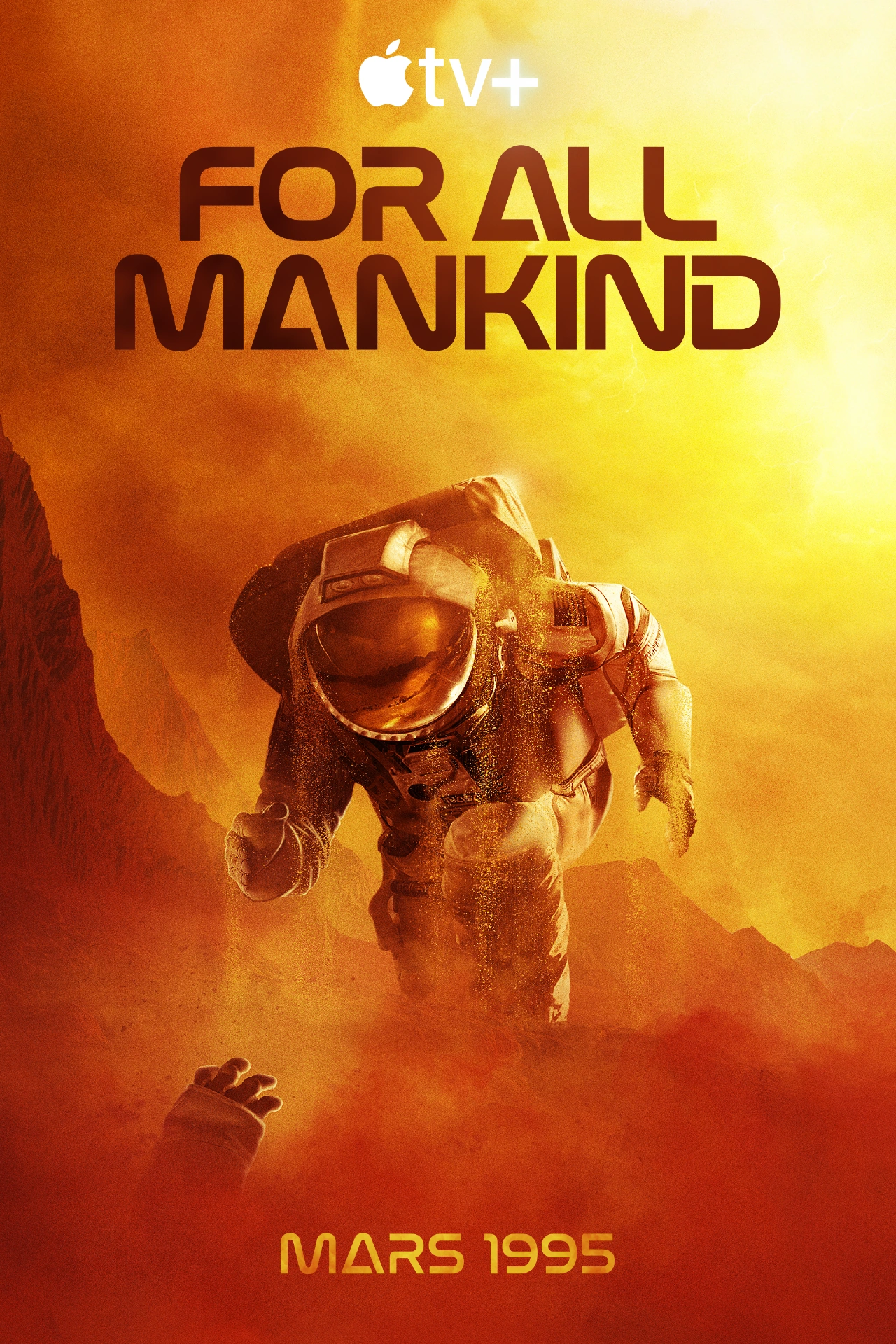
For All Mankind has been renewed for a sixth and final season on Apple TV+. The news broke just before the release of Season 5 on 27 March.


The show explores an alternate history of the late 20th and early 21st centuries. It starts in 1969 with mankind first setting foot on the moon...but instead of Neil Armstrong, it's a Soviet cosmonaut. Furious at being beaten to the punch, President Nixon orders NASA to double down on beating the Soviets in building a permanent moonbase, orbital space stations and eventually the exploration of Mars. Each season is set in a different decade, showing significant technological and sociological change over the course of decades in this world where the Space Race was not won, but became supercharged.

The show has flown under the radar with the general audience, but has been a quiet hit for Apple TV+ and is, alongside The Newsroom, it's longest-running show since the streamer debuted in 2019.

Whilst For All Mankind is wrapping up, the wider franchise might have longer legs. Launching on 29 May, the same day For All Mankind airs its Season 5 finale, Star City explores the events of the first season or so of the show from the Soviet perspective.

Wednesday, 28 January 2026

Brandon Sanderson's COSMERE setting picked up for adaptation by Apple TV

Apple TV+ has closed an "unprecedented" deal to bring the Cosmere universe from American fantasy author Brandon Sanderson to the screen. Apple has apparently prioritised the deal and is planning to develop the Mistborn sequence for film and the Stormlight Archive series for television.


Sanderson's Cosmere setting is the home of almost all of his adult, original fantasy fiction. So far he has published seven novels in the Mistborn sequence (with at least six more planned), five in the Stormlight Archive series (with five more planned), and one each in the Elantris and Warbreaker series. He has also released the White Sand graphic novel trilogy in the setting, and the stand-alone novels The Sunlit Man, Isles of the Emberdark, Tress of the Emerald Sea and Yumi and the Nightmare Painter. A new standalone Cosmere novel, The Fires of December, will be published this year, and a further Mistborn trilogy is planned for release in 2028-30, before he resumes work on the Stormlight Archive. He also has a further trilogy, called Dragonsteel, planned, which will expand on the setting's expansive backstory. In addition to this he has a short story collection in the setting, Arcanum Unbounded, and several short stories and novellas published since. Sanderson has sold over 50 million copies of his books, and raised almost $100 million in crowdfunding projects related to the Cosmere setting, including the most successful project in Kickstarter history.

The Cosmere setting incorporates numerous planets, each with its own extensive worldbuilding, history, cast of characters and different magic system. These worlds are home to different types of magic, derived from different "shards." In the distant past, all the shards were united as one god or entity, but these were shattered by a catastrophic event. The various books explore what happens when the shards are destroyed or gain new owners, who become gods at the expense of their own souls.

The setting has been optioned for both film and television before, but budgetary concerns seem to have stymied producers on how to get them on screen. Sanderson also seemed to become wary of adaptations after working as an advisor on Amazon's Wheel of Time TV series (Sanderson co-wrote the final three novels in the Wheel of Time series after the original author Robert Jordan passed away, using Jordan's notes and outlines). Sanderson felt that the Wheel of Time TV series made too many unnecessary changes to Jordan's source material and lost a lot of the feel in the story in the process.

Sanderson's deal with Apple suggests he will be more closely involved in the process, and will have more approval over scripts and writing choices. He may also write some scripts himself, and will executive produce all the projects. This level of control is unusual, to say the least.

Apple have already put The Stormlight Archive into development, assigning production company Blue Marble (run by Theresa Kang) to make the project a priority. However, I'd be surprised to see anything on-screen this side of 2028 or, more likely, 2029.

Sunday, 28 December 2025

Pluribus: Season 1

The entire world has changed. Every human being has become joined into a hive mind, the result of an alien signal received from a distant star system. Almost every human being. Thirteen people have found themselves naturally immune to the process, including Carol Sturka, a Romantasy author living in Albuquerque, New Mexico. The joined seem to be happy with their lot: every war in the world has ended and a lot of pain and hardship has gone with it. But this is at the cost of individuality and freedom. Aware that the joined are trying to find a way to convert her and the remaining immune, Carol sets out on an ambitious plan: to find a way of reversing the process and saving humanity. She just doesn't know where to start.


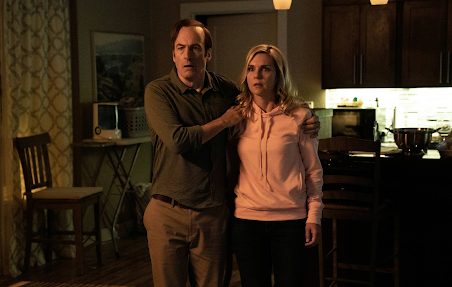
Back the 1990s, Vince Gilligan was a staff writer on The X-Files, writing many of that show's best and most-acclaimed episodes. In 2008 he created Breaking Bad, the story of a chemistry teacher turned drug kingpin by oppressive American healthcare costs. He followed that up with Better Call Saul, a prequel/interquel/sequel, that expanded on the character of Jimmy McGill, who became noted criminal lawyer Saul Goodman, which many critics rated as being even better than its parent show. That project also introduced Gilligan to actress Rhea Seehorn, whose quiet but powerful performance as Kim Wexler was astounding. Seehorn and Gilligan have now re-teamed for Pluribus, a distinctly different kind of show.

The genre here is science fiction: an alien message from 600 light years away has been decoded by secret government researchers and found to include the ingredients for genetic material. This material is basically a virus that rewires humans into a single entity, a hive mind formed by the life experience of all almost-eight billion people on the planet. The logical ramifications of this idea are entertainingly explored: any single person on the planet can do anything that any other human being can do, instantly. A fast food server can fly the most complex aircraft on the planet, a school gym teacher can perform brain surgery at the very highest level achievable. Gilligan is a master of detail, the slow burn and thinking through the logical ramifications of situations, and employs that here to impressive effect.

Carol's continuing immunity to the alien virus is basically a chaos grenade that the hive mind struggles to deal with. The thirteen immune people can still impact the infected: displays of anger or physical violence towards the infected can send them into a fit, so the infected cannot themselves use violence or force to cajole the immune into cooperation, though they claim not to be able to do so anyway due to inherent pacificism. Testing the limits of what the infected can and cannot do becomes an interest of Carol's, as she looks for a way of freeing people from the virus, or even if the individuals still exist on that level.

It's richly interesting stuff, but it feels like the sort of premise you can explore in a novel better than in a TV show. The first episode, depicting the total chaos of the virus taking over and Carol's bewilderment at not knowing what the hell is going on, is dynamic and action-driven, with phenomenal performances and setpieces. The next couple of episodes, which explore the ramifications of both the hive mind's arrival and how Carol can coexist with it, as well as the identities of the other dozen uninfected and what their stories are (and how some have a radically different view of what the joined are than Carol does, with some subtle nods at the American mindset versus that of other cultures), keep up the pace.

Things flag somewhat mid-season and one detects a note of wheel-spinning as the show indulges in flashbacks and plot misdirections: one massive "gotcha!" plot revelation turns out to not be a big deal after all. Things ramp up towards the end as we make more discoveries about the hive mind and what its ultimate goal might now be (it turns out that Carol's ability to strike a good deal with every single lawyer on Earth on the opposite side might be a tad optimistic), and Carol discovers that one of the other uninfected might be even more driven and ruthless in freeing the people than she is. These are strong story elements but seemingly exist only to ramp up to an inevitable cliffhanger ending.

Pluribus's reception has thus been divisive due to its love of the slow burn. In an age of "second screen" viewing, seeing a show happy to take its foot off the gas and just vibe at times with some great cinematography of the New Mexico desert or the jungles of the Darien Gap can be refreshing. But sometimes you feel maybe the show needs to get a move on. When Breaking Bad decided to have a slow episode, it could still use its time to explore character or the details of Walter's drug operation or something else. One of the best-rated episodes of the show is a budget-saving piece of filler featuring Walter and Jesse battling a persistent fly. Pluribus can't quite do this because there are effectively now only fourteen characters alive (the thirteen unjoined plus the hive mind), so you can't bring in a guest character or some newcomers to the regular cast to keep things fresh.

Still, the problem can be a little overblown. The season is only nine episodes long (it might have been even better at seven or eight, a rare thing to say these days), the episodes aren't hugely long (many clock in at around the 40-minute mark) and the show does have superb cinematography, location filming and acting. Rhea Seehorn is absolutely nuclear-hot and we can hope this show gets her the awards she inexplicably missed out on for Better Call Saul, and the rest of the cast is excellent, especially those playing the infected, who all effectively have to play the exact same character expressing itself through different bodies. The show also works well on a thematic level by not lingering on any theme like a TED Talk. There are ideas swirling around here about interconnectedness, loneliness and the morality of enforcing any one ideology on anyone else. So far the show has presented being joined as a bad thing, forced on people against their will, and the desire of the hive mind to add Carol is wrong, but we so far haven't had the other side of the argument: are the people in the hive mind genuinely happier and better off, and would suffer at being separated? Is Pluribus a four-season exploration of the ideas presented in the Star Trek: Voyager episode Tuvix? This remains to be seen.

The first season of Pluribus (****) is beautifully-shot, written and acted, with phenomenal acting, attention to detail and a logical exploration of the premise. Midseason, it definitely slows down so much that the show risks losing the audience's full attention, but it does rally and come back strong for an interesting ending. Whether Season 2 can up the ante to make a longer-form story out of this limited premise viable remains to be seen. The season can be seen worldwide at the moment on Apple TV+. A second season was commissioned at the same time as the first but, slightly inexplicably, is still to enter production.

Thank you for reading The Wertzone. To help me provide better content, please consider contributing to my Patreon page and other funding methods.

Saturday, 13 September 2025

Foundation: Season 3

The Galactic Empire continues its long-expected decline. Thousands of star systems have declared independence or joined the Foundation. But the Foundation itself is divided, with the Traders demanding more and more autonomy and power, and faith in the Seldon Plan is not as absolute as it once was. The arrival of the Mule, a powerful warlord with mentalic abilities, triggers the awakening of Gaal Dornick from her long cryo-slumber, and pitches the galaxy into chaos.

The central conceit of the Foundation storyline is that it is about the impending fall of the Galactic Empire, with the Foundation carrying the hope of humanity across a potential millennia of decline and barbarism before civilised order returns. But the Empire, or at least a shadow of it, chugs along through the early part of the story. The actual "fall" doesn't happen until surprisingly near the end of Asimov's original Foundation Trilogy.

Apple TV's adaptation chronicles that fall in the third and (apparently) fourth seasons of its run. We're now adapting the latter part of the second novel in the trilogy, Foundation and Empire, and the early part of the third, Second Foundation. The Mule has arrived and upset the delicate balance of power between the Foundation and the Empire, enough for the two old rivals to consider joining forces against him. Hari Seldon and Gaal Dornick secretly established a Second Foundation to guide the first from behind the scenes and account for unpredictable variables in the Seldon Plan, but this can only succeed with absolute secrecy, which is compromised by the Mule and his formidable powers. Meanwhile, back on Trantor the Cleonic Dynastic is becoming more unstable; this particular Brother Dusk is very reluctant to cede power and go into the night; Brother Day has abrogated all sense of responsibility, content to live out live in a dissolute life of languid boredom; and Brother Dawn is ambitious, smart and fair-minded, but inexperienced, and whose eagerness to act is as much a weakness as it is boon.

Multiple storylines evolve, taking in New Terminus, Trantor, the Second Foundation, Demerzel, the backstory of the Robot Rebellion and more, anchored on the firmer foundations (ha) of the first two seasons, which had rocky moments but eventually evolved into a solid space opera series. Season 3 has all the ingredients to become the best season so far, simply because it's adapting the most compelling part of Asimov's saga: the struggle between the Foundation(s) and the Mule. Pilou Asbæk plays the Mule with scene-chewing relish, building on his form from shows like 1864 and Game of Thrones, but really the whole cast is on good form this season. Newcomers Synnøve Karlsen and Cody Fern have a tough job playing superficial socialite-influencers, but both show solid chops as their characters reluctantly become agents in the struggle between the Foundation and the Mule. Cassian Bilton also has a great time playing a more measured and competent version of Brother Dawn than we have seen previously.

There's also a whole lot more action. Planets are conquered, space fleets do battle, stars burn, and massive superweapons unleash destruction on a vast scale. The fall of the Empire takes place mostly off-page in Asimov's novels, but here it's shown in its full, terrible, technicolour expanse. Or at least partly, as this storyline is allowed to unfold across two seasons.

I'm not entirely sure that's a good idea. The pacing early in the season is very good but it drops off in the latter. Brother Day (an under-served Lee Pace) spends a lot of time wandering around Trantor's weird underworld of cults, and trying to make an amnesiac person remember something that they're clearly never going to. There seem to be excuses to tread water in a lot of storylines rather than get on with business. They could have easily wrapped up the Mule story here, but given the appeal of the saga, they decided to split it across two full seasons instead. I understand the commercial reasons why, but it doesn't help the pacing (recalling that the books in the original Foundation Trilogy are very slim volumes indeed). The writers do alleviate this as they have been given permission to use references to the Robots novels by Asimov (the rights to which are held by Warner Brothers, who are apparently planning a more faithful adaptation of that saga than the Will Smith movie) for the first time, so can discuss the Laws of Robotics, Daneel etc, allowing them to fill in some awkward blanks in the backstory.

As usual, fidelity to the source material is a constant source of discussion among watchers. Season 3 is much closer to the books than arguably any season before it, but also deviates in some big ways, including one late plot twist that feels like it's doing something different for the sake of being different to the books, rather than because it's logical. Season 4 will have to do the heavy lifting on making that plot twist make sense as I'm not sure this season does a good job of it.

Pacing issues and some questionable plot points undercut a terrific sense of action and good characterisation, meaning that Season 3 of Foundation (****) never quite fulfils its potential, and has to settle for merely being pretty decent rather than outstanding.

The season is available to watch on Apple TV+ now. A fourth season, with a different showrunner and a significant budget cut, has been greenlit to enter production early next year.

Thank you for reading The Wertzone. To help me provide better content, please consider contributing to my Patreon page and other funding methods.

Monday, 11 August 2025

Foundation: Season 2

The Galactic Empire is showing some early signs of the decline prophesised by Hari Seldon and his science of psychohistory. Unnerved, the Genetic Triumvirate of the Cleon Dynasty plan to shore up their position by marrying Queen Sareth I of the Cloud Dominion, a powerful ally, and employing the formidable General Bel Riose to neutralise the Foundation, now resurgent as a religious force in the galaxy. Meanwhile, Gaal Dornick and Salvor Hardin find themselves working together with a copy of Hari Seldon's consciousness to fulfil a key part of his design: the establishment of a Second Foundation.


The first season of Apple TV+'s Foundation was a very qualified, partial success. The vfx, music and general atmosphere and mood were all very accomplished, as were the performances of Lee Pace, Terrence Mann, Cassian Bilton, Lou Llobell, Laura Birn and Jared Harris. The political intrigue and scheming on the Imperial capital world of Trantor was also very well-done, justifying the show's informal tagline of being "Game of Thrones in space." Unfortunately, the show's quality level dipped rather wildly whenever it returned to the storyline of Terminus, the Foundation and Salvor Hardin; the weakest part of Foundation was the actual bit about the Foundation and adapted (loosely) from Isaac Asimov's source material. Pacing was also problematic.

Season 2 picks up the baton by adapting, also loosely, the second novel of the original Foundation Trilogy, Foundation and Empire. However, the season benefits a great deal from having all of its disparate plot threads converge at the same point, meaning the season has a much greater sense of coherence and structure from the start. The addition of Ella-Rae Smith as Queen Sareth, Sandra Yi Sncindiver as Sareth's advisor Rue, and Ben Daniels as Bel Riose are all excellent. The show's conceit of having the same three actors playing not just the Emperor at different stages of life, but clones of them repeating across generations also allows Terrence Mann, Lee Pace and Cassian Bilton to effectively play new characters. The season also has a dramatically increased screen presence for Jared Harris, who's heavy use in the marketing and almost total absence from Season 1 felt a bit like bait-and-switch marketing. Harris is more present in Season 2 and has a more satisfying storyline.

The season builds to an impressively epic finale, though Asimov purists, probably more satisfied by a closer following of the book then the first up to this point, may end up spitting blood at a pretty major divergence from the events in the novels. Those less wedded to the original texts will find much to admire here with impressive dramatic and vfx set-pieces established with solid character arcs and intriguing politicking. It helps that the show is allowed to be a character drama rather than emphasising explosions and action. Pacing is also much-improved, though some of the events with the founding of the Second Foundation threaten to chug a little.

Foundation's second season (****) represents an impressive improvement over the first season, with stronger writing, dialogue and characterisation, although some minor flaws remain. But the show is on a pleasingly improved trajectory.

The season is available to watch on Apple TV+ now. A third season is currently airing on the same service.

Thank you for reading The Wertzone. To help me provide better content, please consider contributing to my Patreon page and other funding methods.

Wednesday, 9 April 2025

First trailer for MURDERBOT adaptation released

Apple TV+ has released the first trailer for Murderbot, their adaptation of Martha Wells' Murderbot Diaries novel/novella series. The show will launch on 16 May 2025 and will consist of ten episodes.


The TV show follows the story of the books, with an android SecUnit breaking its programming to "go rogue," though in this case that means doing jobs for hapless groups of humans between bingeing TV shows.

The show stars Alexander Skarsgard as the titular Murderbot, with David Dastmalchian, Norma Dumezweni, Sabrina Wu, Tattiawna Jones, Akshay Khanna and Tamara Podemski as the humans it has to constantly bail out of trouble. In an amusing device, the series will also feature show-within-a-show The Rise and Fall of Sanctuary Moon, with its own cast including Clarg Gregg, John Cho, DeWanda Wise, Jack McBrayer and Anna Konkle (interesting to see how big a thing this is, given that cast can't be cheap).

Murderbot confirms Apple TV's impressive commitment to the science fiction genre. The streamer is also hosting For All Mankind, Silo, Foundation, the genre-adjacent Mythic Quest and current hit-of-the-moment Severance.

The Murderbot Diaries consists so far of seven books: All Systems Red, Artificial Condition, Rogue Protocol, Exit Strategy, Network Effect, Fugitive Telemetry and System Collapse. These were recently reissued in omnibus editions.

Tuesday, 16 January 2024

For All Mankind: Season 4

2003. Happy Valley has expanded into a full-scale colony on Mars, where technology is being developed to allow humans to capture asteroids and swing them into Mars or Earth orbit to exploit their resources. The United States and Soviet Union are now full-blown allies, marching jointly into the exploration of space. The many workers who lost their livelihoods with the collapse of the oil industry are now finding fresh employment on the Moon and Mars, but the same problems of low pay and class divides follow them. The discovery of a metal-rich asteroid which can solve Earth's shortages in a single swoop spurs a dangerous mission, but political turmoil in Moscow and growing discontent at Happy Valley make the mission anything but straightforward.

For All Mankind's first two seasons staked a claim for the show to be the best slice of science fiction on television at the moment (certainly following the wrapping up of The Expanse). A cool alt-history take on the space race, fantastic visuals and pretty good writing all made for a compelling drama. Season 3 abruptly reversed that course, with hackneyed love triangles and tedious personal drama threatening to undo all the good work achieved in worldbuilding (not the first time this has happened on a Ron Moore-produced show, to be fair).

Season 4 occupies a ground much closer to the former than the latter. Thankfully, it stops and reverses the rot from Season 3. The story is much better, the aggravating love triangle story from Season 3 has been fully exorcised from the show and we're back to the interesting mix of science and alt-reality politics that made the first two seasons compelling. However, the show hasn't fully swung back to that level of quality. There's still some rather far-fetched plotting, and the show's failure to commit to getting rid of its increasingly ancient central character is quite daft.

The season divides its plot between several character arcs. Margo Madison (Wrenn Schmidt) is a reluctant political refugee in the Soviet Union, where her space knowledge is being wasted, until a political realignment brings her to the attention of a new regime. Aleida (Coral Peña), still suffering traumatic after-effects from the bombing of NASA at the end of Season 3, decides on a new career path. Ed Baldwin (Joel Kinnaman), now in his seventies, is comically squatting on Mars and refusing to leave, so NASA has left him in a command position (and, although it's under-explored, possibly studying the impact of low-gravity existence on his ageing body). Newcomer Miles Dale (Toby Kebbell) is a redundant oil worker who gets a new job on Mars, but finds the job isn't all that he thought it might be.

Season 4 balances these storylines well and ties them together nicely at the end of the season, creating a much more cohesive storyline than the spotty third season. This is no mean feat with multiple groups of characters active in the United States, Soviet Union, on Mars and on various spacecraft. The interaction of the storylines is pretty good.

However, the show continues to mix cool realism (the long travel times to Mars and the inability to engage in real-time conversation with Earth) with decidedly bonkers speculative elements (gigantic giga-engines that can steer asteroids). This mix was odd in Season 2 but has become de rigour for the show by this point, and does give us some cool visuals and awesome vfx sequences, so fair enough.

Anyone who's read Kim Stanley Robinson's Mars Trilogy can probably see some of the plot twists coming a mile off, with musings on capitalism-in-spaaaace and how it leads to the predictable repeating of patterns we see on Earth. So the Happy Valley colony quickly becomes a stratified society between the above-deckers and the maintenance workers belowdecks, complete with a black market and secret bars. We're not quite at the point of full independence (I suspect that will rear its head several seasons down the line) but this is a clear transitional story. It's not that original, to be honest, but Kebbell's solid performance as Miles Dale and fellow newcomer Tyner Rushing's great turn as Samantha Massey both help sell it.

On the negative side, the lengths the show goes to in order to keep previous main characters in the frame remains quite implausible. Ed should have been retired at least one season ago, and Kelly has relatively little to do. At least Margo gets a meaty storyline with some intriguing twists. And I'll forgive a lot of these problems for keeping Danny out of the picture this season. On another flipside, the absence of former-President Ellen feels jarringly abrupt, but I suppose her story purpose has been fulfilled.

Season 4 of For All Mankind (****) splendidly improves on the tedious third season and brings us back much closer to the quality of the first two. We're still not back to the show at its best, but this season is a big improvement over last year and opens the story up for a very interesting fifth season.

Thank you for reading The Wertzone. To help me provide better content, please consider contributing to my Patreon page and other funding methods.

Wednesday, 29 March 2023

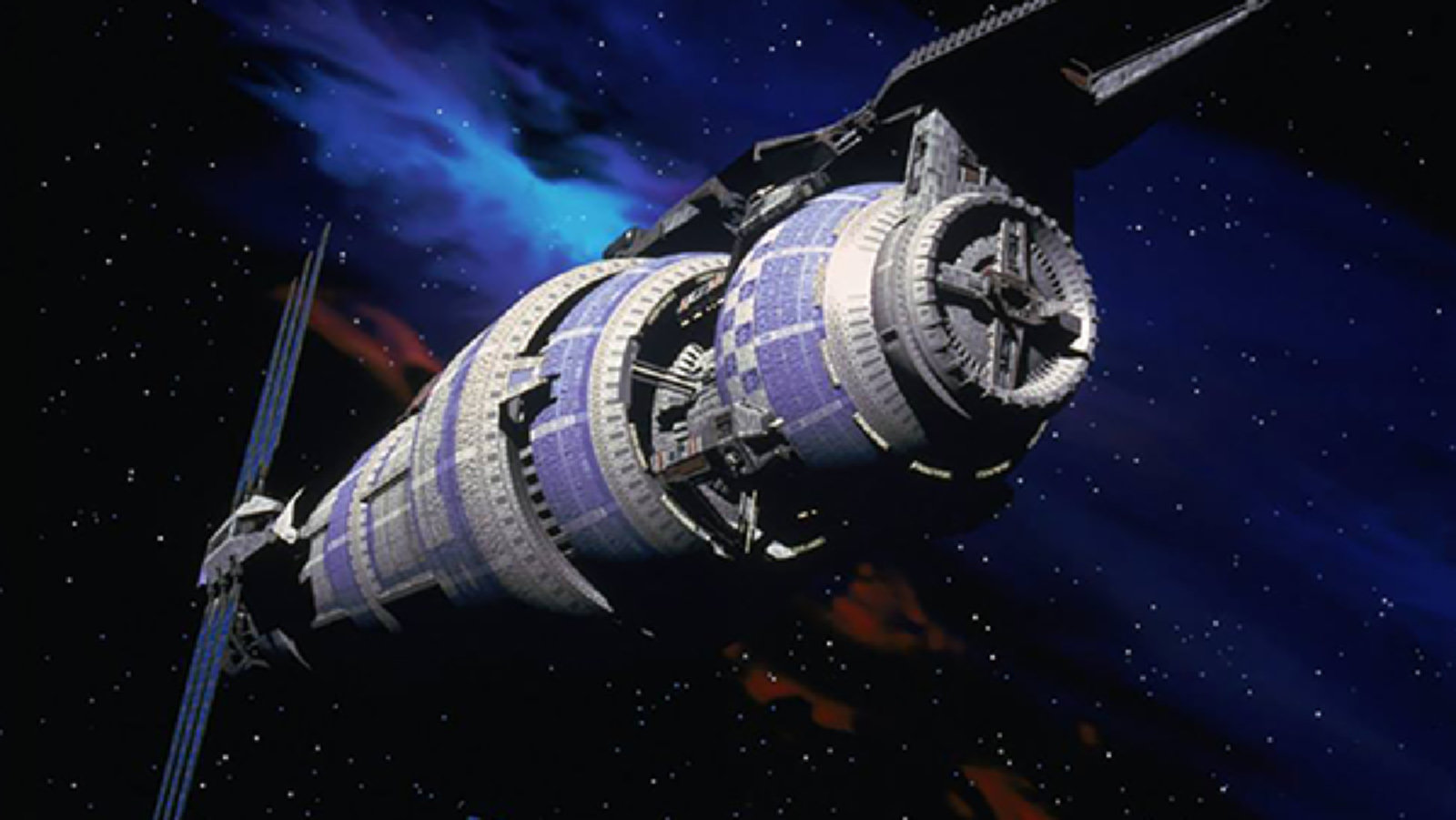
RUMOUR: BABYLON 5 reboot dead at CW, still in development with Warner Brothers

Rumours are swirling that the Babylon 5 reboot project may be getting a renewed lease of life.

As previously related, Warner Brothers put Babylon 5 into development with a whole new fresh lick of paint as a ground-up reboot, with original writer/creator/showrunner J. Michael Straczynski once again in charge. The CW picked up the project and spent two years developing a pilot script (an unusually long time) before the network was sold off to new owners, who promptly smoked almost its entire drama development schedule to focus on cheap reality programming. Although Babylon 5 2.0 wasn't quite dead, it had certainly been dealt a serious injury and did not look likely to survive.

However, Warner Brothers have taken the view that there's no reason to waste all that expensive development work and have been shopping the project to other venues. The most logical option, HBO Max, is seemingly out of the question because they have their own budget and development issues in the wake of the Discovery merger. HBO proper don't seem interested, despite the presence of self-confessed Babylon 5 uberfan George R.R. Martin in the development process over there.

That meant Warner Brothers having to team up with another streamer or network. WB have a good relationship with Netflix, where former Babylon 5 scriptwriter Neil Gaiman (he's also done some other work) is currently working on their adaptation of Sandman. It's also possible that Amazon might be looking for a space opera show to replace the recently-concluded The Expanse. Paramount+ have so much Star Trek on the go that it's improbable they'd want a competing space opera show, but they do also have Halo on the go, suggesting they might be interested if the script was good enough. However, having two space opera franchises in operation might instead just make that possibility even less likely.

Some rumours (cited here) have Apple TV+ circling the property. Apple TV+ also have two ongoing space opera franchises, with the original alt-history From All Mankind charting an alternate history of the 20th and 21st centuries where the Space Race between the USSR and USA never wound down in the 1970s but continued full tilt with missions to Mars. Meanwhile Foundation is a loose adaptation of the Isaac Asimov novel series of the same name. Apple TV+ has also enjoyed success with psychological SF thriller Severance and the partially SF-themed sitcom Mythic Quest (which featured an outstanding literary SF storyline in its second season featuring actors playing authors Isaac Asimov, Ray Bradbury and Ursula K. Le Guin).

However, Apple are possibly about to loose their biggest draw, with football comedy-drama Ted Lasso (itself a Warner Brothers co-production) set to conclude after three seasons. If Apple can't find a direct replacement, they might be looking to establish a broader portfolio of shows with broad appeal. Babylon 5 is often cited as being enormously ahead of its time, featuring serialised storytelling long before it was fashionable, cutting-edge vfx, epic space battles, rich political intrigue and complex characters, often acting in morally flexible ways.

There are all strong arguments, but it does not mean that Babylon 5 reboot will definitely go ahead, at Apple TV+ or elsewhere. It does suggest that the CW was not quite the last, best hope for the project, and there are other interests circling it.

Thursday, 22 September 2022

New Vince Gilligan show lands on Apple TV+ with two-season order

Apple TV+ has given a two-season order to Vince Gilligan's new TV show. The Breaking Bad and Better Call Saul creator is working on the show with Sony Television and will re-team with actress Rhea Seehorn.

Presumably, this is the science fiction idea Gilligan was recently discussing. The show will have a somewhat contemporary setting, but with an SF "twist."

Seehorn played the character of Kim Wexler across all six seasons of Better Call Saul, attracting significant critical acclaim for her performance and an Emmy nomination (although, remarkably, not a win).

Friday, 12 August 2022

For All Mankind: Season 3

1992. The United States and the Soviet Union are preparing for a new phase in their rivalry: a race to get the first people onto the surface of Mars. But they are joined in the fight by Helios, an independent company run by a charismatic, visionary founder who wants in on the action. The three-horse race to Mars gets underway, but political expediency may compromise the integrity of the mission.

Fifteen years ago, Ronald D. Moore had just delivered the first two seasons of Battlestar Galactica, arguably the two greatest seasons of science fiction television in genre history. Brilliant vfx, fantastic acting and strong writing had combined to deliver a show that could very comfortably go head-to-head with any of the A-tier "prestige dramas" airing on the likes of HBO. Season 3 started the same way, but quickly fell of a cliff: imaginative writing and storylines had been replaced by lowest-common-denominator soap opera drama (such as an overreliance on love triangles), the formerly well-thought-out worldbuilding had developed cracks through which you could fly a Mercury-class battlestar, and contrivance and convenience had replaced intelligent plotting.

Unbelievably, the same thing has happened again. The first two seasons of Ronald D. Moore's For All Mankind are brilliant, with superb writing helping deliver fantastic performances and clever storytelling, all supported by some of the best vfx ever seen on the small screen. Season 1 was excellent; Season 2 was better, by a hair.

Season 3 starts off in exactly the same vein with what might be one of its strongest hours. Polaris is a fantastic, self-contained disaster movie with several regular characters stuck on the world's first orbital hotel, which soon develops a fault. Unfolding like a cross between Apollo 13 and one of the best episodes of Thunderbirds, the episode delivers fantastic spectacle rooted in interesting ideas. The next couple of episodes speculate intriguingly on the politics and science behind an increasingly dangerous space race as NASA, the Soviet Space Agency and Helios all compete to get to Mars first, rather than safely. We get one more great episode out of this, Happy Valley, as the race turns dangerous with one of the ships developing a fault, forcing the others to argue about who is going to go back and rescue them.

However, there is a ticking time bomb in For All Mankind that was planted back in Season 2 which explodes with full force in Season 3. Back in Season 2 we got a brief burst of tedious melodrama with a spectacularly unconvincing love triangle subplot that was mind-numbingly dull and unconvincing, but at least was dealt with briefly. In Season 3 this plot is inexplicably brought back, even more inexplicably given massive prominence and then turns into some kind of surreal satire of itself as the season goes on, resulting in deaths, mayhem and explosions in a manner so contrived and unbelievable as to verge on the comical. Episode after episode, you just hope this storyline and the character it centres on, the selfish and utterly unsympathetic Danny, will just end and instead the writers double down on it. It's like watching a football team that's heading to win the World Cup but the coach benches all of his star players to focus on the least-talented players ever to set foot on the pitch.

Although this storyline is the most egregious example of the declining in both writing and plotting this season, it is not the only victim. Another storyline about a character being compromised by Russia ends with them being whisked off to the Soviet Union, presumably by the same teleporter used to capture Jim Hopper in Stranger Things. In another storyline, a character is swept up by a cult-like group who think that NASA is hiding...something. Their bananas ideology is never really explained and their goals and objectives are obtuse, so it's kind of hard to invest in this story or what's going on, especially as the ramping-up of their status from "minor annoyance" to "massive national security threat" takes place so jarringly abruptly that it, again, verges on being silly rather than dramatic. The worldbuilding is also iffy: the United States now has limitless energy thanks to the advent of fusion power, meaning some of the economic issues the country is reported as facing should be non-existent instead of major problems. It's also questionable if the Soviet Union should still be around and if North Korea should be as advanced in this timeline as it appears to be. 

Other problems are perhaps a bit too pedantic. This season mostly takes place in 1995, a full twenty-six years after Season 1, but very little effort has been made to make any of the characters look their age. Joel Kinnaman and Shantel VanSanten look amazing for playing people well into their sixties, whilst Nate Corddry is given some very unconvincing aging makeup (made worse by him having much better aging make up over on Amazon's excellent Paper Girls). It's one of those things you can forget about in a show that's otherwise firing on all cylinders, but here it accentuates the feeling of the wheels coming off the wagon whilst it's rolling downhill.

There are still flashes of greatness. The actors do their solid best with increasingly risible material and newcomer Lev Gorn has a great arc as the Soviet mission commander Grigory Kuznetsov, a hard-wired martinet who cracks (just slightly) to become an effective partner to Danielle Poole on the Mars mission. The political storyline revolving around Ellen Wilson (Jodi Balfour) becoming the first female President of the United States and facing a crisis when her sexuality (and her efforts to hide it) comes to the fore has a lot of legs to it, but is undercooked (and I'm not sure her resolution would really save her career). The show's energy and momentum lifts whenever Sonya Walger returns as Molly Cobb, making it a shame she's is so little of the season. Robert Bailey Jr. has a great subplot as Will Tyler, NASA's first openly gay astronaut, but again this is a story that's shunted to one side with almost indecent haste. There's also some excellent vfx, if not as flawlessly brilliant as in the first two seasons. 

For All Mankind's third season (**½, but ****½ for Polaris and Happy Valley) has some individually great episodes, especially early on, and some great performances, effects and ideas. But it also has some agonisingly painful dumbness in its worldbuilding, its plotting and its characterisation that drags what was one a fantastic show down to mediocrity. The finale does resolve some of the stupider storylines, hopefully permanently, and we can hope that the already-commissioned Season 4 will be a return to form. The season is streaming worldwide right now on Apple TV+.

Thank you for reading The Wertzone. To help me provide better content, please consider contributing to my Patreon page and other funding methods.

Friday, 22 July 2022

FOR ALL MANKIND renewed for a fourth season

Apple+'s alternate history SF series For All Mankind has been renewed for a fourth season.

The series is based on the premise that the Russians beat the Americans to the Moon in 1969, triggering a far more intense space race than in reality, with the two countries racing to get the first space station in orbit and the first permanently-settled lunar base. The currently-airing third season takes the show into the mid-1990s, with the still-extant Soviet Union and United States competing to be the first to reach Mars, and having to content with surprise competition from a private space company.

The show is executive produced by Ronald D. Moore, Matt Wolpert and Ben Nedivi and stars (among many others) Joel Kinnaman, Shantel VanSanten, Jodi Balfour, Sonya Walger and Krys Marshall.

Season 4 will move the timeline into the 2000s. It's unclear what the story will be, but a likely focus is establishing the first permanent Mars colony and maybe even extending manned spaceflight to the moons of Jupiter.

Tuesday, 12 April 2022

FOR ALL MANKIND to return on 10 June

Apple TV+ has confirmed that the third season of For All Mankind will debut on 10 June this year.

The first two seasons of For All Mankind were excellent television. Set in an alternate timeline where the Soviet Union beats the USA to the moon in 1969, the USA responds with a Space Race that is far more ambitious than in reality. By the 1980s (the setting for the second season) both the USA and Soviet Union have bases on the moon and are ploughing ahead with advanced spacecraft programmes that they will hope take them to Mars. Season 3 will primarily take place in 1995, by which time humanity has indeed reached the Red Planet. It is unclear what other changes to the timeline have taken place by this point.

Wednesday, 23 March 2022

Mythic Quest: Season 2

The first major expansion for Mythic Quest has been a huge success, but now the game studio's backers are keen for more content. Ian and Poppy are bereft of ideas, so brainstorm ideas, concepts and even titles for the new expansion, whilst also trying to keep the team's morale up as the competition gets fierce.

The first season of Mythic Quest was a solid success, a funny workplace comedy that used the field of video game development to tell amusing stories about human eccentricities. It did ascend to absolute greatness twice, with the episode A Dark Quiet Death telling a self-contained flashback story with a completely different tone to the rest of the season, and Quarantine using the COVID19 pandemic to tell a surprisingly powerful story about loss, loneliness and self-reliance.

The second season surprisingly repeats the feat. The "normal" episodes of the season once again focus on workplace foibles, character clashes and people struggling with relationships, job ambitions and family issues. The fact they are dealing with these problems whilst working at a video game company gives the show its own unique feel. There is greater character depth this time around, with stories such as the exasperated Ian mentoring game tester Rachel to find out what she really wants to do with her career, whilst Poppy and Ian's competing ideas for a second expansion are cleverly used to show their ongoing struggles with art versus commercial practicality. There's also a nice exploration of Poppy's character as she moves from a technical role to a leadership one, and struggles with that move.

Once again, the show throws an out-of-format curveball that ends up being brilliant, this time in the form of a two-parter. The first part, Backstory, is set entirely in the 1970s and sees the young Carl "C.W." Longbottom struggling to become a science fiction writer. The episode is another brilliantly-written stand-alone, with guest appearances by SF authors like Ursula K. Le Guin, Isaac Asimov and Ray Bradbury (all played by actors, natch) and a somewhat maudlin ending. The second half, Peter, set in the present day, sees the older C.W. trying to reconnect with some of the people from that time period and making an awful job of it. Particularly admirable is the way the two-parter avoids the cliche of C.W. "growing and learning" or becoming a better person or confessing the rather horrendous secret he's been carrying around for so long. Instead the show has the confidence to let C.W.'s actions speak for themselves.

The season rounds off with an unexpected, but logically-set-up, finale. It surprisingly feels more like a series finale than a season cliffhanger, with almost every character in motion, being fired, getting a new role, being promoted, or even being arrested.

The second season of Mythic Quest (****½), like the first, is well-written, well-acted and does some very good character work, except all better than the first season. The out-of-format sixth and seventh episodes are once again even stronger (*****), delivering exceptional performances and real pathos. The second season of Mythic Quest is streaming worldwide now on Apple TV+. A third and fourth season have been commissioned.

Saturday, 20 November 2021

Foundation: Season 1

More than twenty thousand years in the future, known space has been united under the rule of the Galactic Empire. The Empire has provided stability and peace for twelve millennia, the last four centuries of which have been under the rule of the Genetic Triumvirate of the Cleon Dynasty. The three emperors are enraged when respected mathematician Hari Seldon announces the discovery of psychohistory, a mathematical and statistical modelling which allows the prediction of future events. Seldon predicts nothing less than the collapse of the Empire, plunging humanity into a period of barbarism he expects to last thirty thousand years.
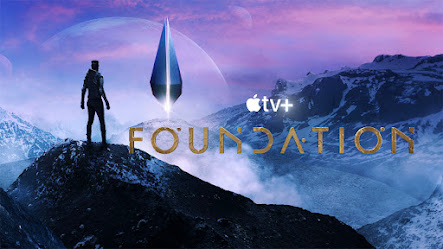

However, Seldon also offers a slither of hope: by creating a repository of knowledge and data, a Foundation for future reconstruction, the period of barbarism may be reduced to a single millennia. The three emperors, disturbed when Seldon's model successfully predicts a devastating terror attack on the capital world of Trantor, allow Seldon and his followers to settle on the remote world of Terminus to build the Foundation. Decades later, Seldon's followers are living a tough life on a brutal and unforgiving world when they find themselves drawn into a conflict with the neighbouring power of Anacreon, which desires nothing less than the annihilation of the Empire...and they want the Foundation's help, willingly or unwillingly, to achieve it.

Isaac Asimov's Foundation saga was, for many years, regarded as one of the untouchable taproot texts of 20th Century science fiction. Originally published as eight short stories and novellas in the 1940s, Asimov combined them with a new story in the early 1950s as three collected "fixup" novels, the infamous Foundation Trilogy. Its tale of plucky scientists and cunning engineers outwitting warlords and generals struck a chord, winning the trilogy a special Hugo Award for Best Series in 1964 (defeating J.R.R. Tolkien's Lord of the Rings along the way). After resisting the notion for many years, Asimov was convinced to return to the universe in the 1980s, penning two further sequel novels. After getting hopelessly stuck after introducing a new idea from way off left-field in those books, he went back to write two prequel novels, the last of which was published just before his death in 1992. These later sequels and prequels did not add much to the appeal of the series, being more concerned with dragging most of Asimov's work into a single "future history" of humanity than in telling a good story.

The first problem facing anyone who wants to adapt the Foundation series is therefore Asimov's own lack of coherence and consistency with the original work. Asimov only ever covered the first half of the Foundation's existence, leaving the chronologically-final novel, Foundation and Earth, with a lot of unresolved story arcs. Asimov's novels are also primarily concerned about people sitting in rooms talking, or sometimes standing in rooms talking, or sometimes sitting on a spaceship talking. Action is brief, occasional and underwhelming, with major and epic events alluded to off-page. Asimov's cast is also predominantly male with female characters playing only minor roles until the last couple of books (and even then not doing very much, at least with their clothes on). Combined with the stories in the opening trilogy being largely disconnected from one another, with many decades falling between each one, with no continuing characters beyond Seldon's holographic image, it makes turning them into a TV show problematic.

David Goyer's attempt to tackle the problem starts promisingly, focusing on the minor side-character of Gaal Dornick who is promoted here into a leading player. Played with grace and skill by newcomer Lou Llobell, Dornick is a psychohistory sceptic and mathematical genius whom Seldon - a headlining turn by actor-of-the-moment Jared Harris - recruits to help keep his project alive when the Empire tries to tear it down. The first episode, which is the most faithful to the books whilst also featuring massive changes, sets up an intriguing universe and story with a lot of promise and some absolutely brain-melting visual imagery. The spacecraft and hardware (mostly rendered through models rather than CG) feel like a vintage 1980s SF cover come to life, whilst the collapse of the Starbridge is one of the most impressive vfx set pieces put on television. It also helps that our antagonist for the episode is Emperor Cleon, or rather the three clones of the Emperor Cleon, with Brother Day (Lee Pace) and Brother Dusk (Terrence Mann) debating executing Seldon or indulging him.

Despite the major changes to the source material, the episode works in setting up the universe and retaining viewer interest. However, things quickly become divisive after this point. The storyline abruptly jumps forward fifty years to Terminus, where Warden Salvor Hardin (Leah Harvey) takes over as the main character. Terminus is barely-habitable rock, superbly realised through atmospheric location filming in volcanic regions of the Canary Islands. However, the story of events on Terminus is thin, and when the Anacreons show up to snarl about honour and vengeance like budget Klingons, you can feel you're watching a less-successful mid-season filler episode of Star Trek from around 1994. Harvey does her best, but saddled with some ripe lines and a poor American accent, it makes her a decidedly less interesting protagonist. Dornick does show up again in a self-contained side-plot, but doesn't really have a lot to do. The Foundation storyline ends up being the weakest element in a TV show called Foundation, which is a bit of a problem.

Fortunately, a wholly-new story has been invented which takes us into the Genetic Dynasty, with Brothers Dusk, Day and the young Dawn (Cassian Bilton) trying to rule over an empire from which they are almost completely separated by class, security and location. This storyline, which also features excellent performances by Laura Birn as the Emperor's right-hand robot, Eto Demerzel and Amy Tyger as a gardener, Azura Odili, is quite interesting and asks big-picture SF questions about cloning, consciousness, power and ethics. Despite being invented out of wholecloth, it's frequently intriguing and becomes moreso when Brother Day departs for the moon known as the Maiden to win the support of the Luminist faith for his policies. On Maiden, the Emperor has to face unique personal challenges and a formidable political opponent, Zephyr Halima (an excellent performance by T'Nia Miller).

This storyline works because it hinges on Lee Pace's superb performance (albeit one that falls squarely within the centre of his range). Pace has become a reliable performer for intense, charismatic roles requiring a degree of intelligence (see also his Thranduil in the Hobbit trilogy, Joe MacMillan in Halt and Catch Fire and Ronan the Accuser in Guardians of the Galaxy and Captain Marvel). Pace quickly becomes the show's most vital player, given that Jared Harris's heavily-trailed role in the series was somewhat...overstated: Hari Seldon is a low-key presence, and doesn't appear in many episodes.

If the Genetic Dynasty and the internal politics of the Empire were the main draw of Foundation, the show would have ended up being pretty solid. However, Foundation goes off-track whenever it tries to actually tackle the storyline involving the Foundation, at which point it veers from its semi-successful goal of being "Game of Thrones in space" to being a very generic action story without many compelling characters. This leaves the show feeling unbalanced, verging on the schizophrenic. Gaal Dornick's story is also potentially intriguing, but far too static, with the story going out of its way to prevent the character from interacting with the other plotlines until the very end but not giving her much to do in the meantime that's worthwhile.

Foundation's first season (***) is very strangely structured and paced. The storylines involving Trantor, the Emperors, the Starbridge and the Maiden are all very solid, verging on the good, but everything on Terminus involving the Anacreons and the Foundations is tedious. The cast is mostly solid, with Lee Pace, Terrance Mann and Jared Harris (in his fleeting appearances) excelling and Lou Llobell giving a great performance, but some of them are much better-served by the material than others. A second season has been commissioned, and will reportedly adapt the much more dynamic storyline from Foundation and Empire about Imperial General Bel Riose militarily confronting the Foundation, which could make for a much stronger narrative. But in its first season, Foundation squanders a lot of its Trantor-set promise on a badly-thought out, generic action story that goes nowhere. The show needs much more consistency if it's to become must-see TV. Right now, it's more "meh, check it out if you're not doing anything else or need some really awesome new desktop backgrounds."

Foundation is available to watch on Apple TV+ worldwide.