Joe Abercrombie has announced the signing of a new three-book deal with HarperCollins Voyager. The new books will be set in an alternative-history version of Europe (so not the First Law world) and will be loosely connected to one another rather than forming a single story, so not a trilogy in the formal sense of the word. The new books will also be aimed a wider audience than his previous books, with the books being able to be read by both adult and youngsters.
The first book will be called Half a King and will be published in July 2014. The sequels, Half the World and Half a War, will follow in January and July 2015. According to Abercrombie:
"With this trilogy I’ve set out to do something a little
different—shorter, tighter, and with a broad, page-turning appeal—while
still giving readers the vivid characters, crunching action, twisting
plots and black humour that I’m known for."
Commissioning editor Jane Johnson at HarperCollins:
"I've never experienced such universal enthusiasm for a project in all my
years at HarperCollins. We received the submission on a Wednesday and
by Thursday afternoon everyone had read and adored it - the whole
building was buzzing with the huge potential for this series. Nick Lake
(Children's), Emma Coode (Voyager) and I discussed a cross-divisional
strategy and on that basis offered immediately. Both Nick and I have
been fans of Joe's adult work since The Blade Itself, but I had no idea he had so many other fans in-house."
According to Joe's blog, Joe's next First Law project (probably a new trilogy) will remain at Gollancz, with a publication date to be determined but unlikely to be before 2017. Joe has also confirmed that his worldwide sales have now reached the ballpark of 3 million.
Friday, 19 July 2013
George R.R. Martin smashes up a guitar; Neil Gaiman approves
At this year's Comic-Con, humorous geek-musicians Paul and Storm performed a rendition of their well-known song 'Write Like the Wind', a plea to George R.R. Martin to write the next Song of Ice and Fire book as fast as possible.
This then happened (filmed by Veronica Belmont from the Sword and Laser podcast):
GRRM is rock and roll. Who knew? Apart from everyone who's read The Armageddon Rag, that is.
This then happened (filmed by Veronica Belmont from the Sword and Laser podcast):
GRRM is rock and roll. Who knew? Apart from everyone who's read The Armageddon Rag, that is.
Patrick Rothfuss's NAME OF THE WIND optioned for television
It has been announced that New Regency Productions and Fox Television have optioned the TV rights to Patrick Rothfuss's novel, The Name of the Wind. If successful, the series would also adapt the other two books in The Kingkiller Chronicle trilogy, The Wise Man's Fear and the forthcoming The Doors of Stone.
Eric Heisserer will be writing the script. Heisserer's previous credits include Final Destination 5 and the unnecessary prequel to The Thing, as well as the reboot of A Nightmare on Elm Street.
There is no word on what network or channel this will air on yet. It's also only an option. A script will need to be written and then greenlit before it moves into production. Given Rothfuss's well-known love of the works of Joss Whedon, which have had 'problems' with Fox in the past, it is surprising that he's agreed to sell the rights to them. Some have suggested that Fox may be intending this project for their FX channel (which is more forgiving of low ratings and usually givest its shows a fairer shake than Fox itself), though that is pure speculation.
It will also be interesting to see how the story is translated to TV. Most of the story is from Kvothe's POV, and in fact there are strong hints that Kvothe is colouring his story for his own ends. How this would be translated onto screen remains to be seen.
Rothfuss recently said that The Doors of Stone should be published some time in 2014.
Eric Heisserer will be writing the script. Heisserer's previous credits include Final Destination 5 and the unnecessary prequel to The Thing, as well as the reboot of A Nightmare on Elm Street.
There is no word on what network or channel this will air on yet. It's also only an option. A script will need to be written and then greenlit before it moves into production. Given Rothfuss's well-known love of the works of Joss Whedon, which have had 'problems' with Fox in the past, it is surprising that he's agreed to sell the rights to them. Some have suggested that Fox may be intending this project for their FX channel (which is more forgiving of low ratings and usually givest its shows a fairer shake than Fox itself), though that is pure speculation.
It will also be interesting to see how the story is translated to TV. Most of the story is from Kvothe's POV, and in fact there are strong hints that Kvothe is colouring his story for his own ends. How this would be translated onto screen remains to be seen.
Rothfuss recently said that The Doors of Stone should be published some time in 2014.
Thursday, 18 July 2013
Metro: Last Light
2034, post-apocalyptic Moscow. A year has passed since the Spartan Rangers discovered and occupied the D6 bunker, making them one of the powerhouses of the Metro. Artyom is now a respected ranger, but is haunted by his decision to nuke the mysterious 'Dark Ones'. When word arrives of a Dark One infant that survived the cataclysm, Artyom sets out to rescue the creature and atone for his actions. Along the way, he discovers that one of the other factions in the Metro has discovered a secret weapon that could turn the tide of power amongst the survivors forever.
Metro: Last Light is the sequel to Metro 2033, picking up where that game left off and building on its storylines and characters. Last Light is pretty unforgiving to those who haven't played the first game, not bothering with backstory or exposition, so I recommend that players either pick up the first game before this one, or make full use of online plot summaries to get them up to speed.
As before, this is a first-person shooter which alternates combat with exploration and survival elements. Combat is great fun and enhanced this time around by the addition of better stealth mechanics: Artyom can knife opponents from the shadows or knock them out if he can sneak up behind them. Given a fairly frugal approach to ammo in the game (although it's not as punishingly stingy as the first game), conserving firepower and resorting to stealth rapidly becomes the first choice in every situation. Stealth is even more important when fighting the game's mutated wildlife, who can't be stealth-killed but can be avoided by hugging the shadows and extinguishing light sources.
The survival element comes in the form of the handy gas mask, which is necessary to survive on the surface and exposed parts of the underground. The mask's filters need to be changed on a regular basis and it can get covered in debris, gunk from exploded enemies and water quite easily, forcing you to wipe it clean. This is fine in general exploration, but mid-combat it can add a panicky moment of blindness which adds to the chaos of combat. The survival element is tremendously enhanced by the impressive visuals and the bleak, lonely atmosphere. Metro: Last Light does atmosphere better than almost any other FPS game I've played.
The moments of bleakness are counterbalanced by the towns (former Metro stations that have been taken over as habitations for survivors), which are bright, warmer and packed with people. The towns are a good place to chill out and restock on supplies before heading out. Unfortunately, as with the first game, they are essentially just shops with only modest improvements in giving you more to do (though a couple of optional missions can be found, along with a dubious strip club and a shooting range mini-game). The towns are crying out for more development, and as with the recent BioShock Infinite there is a feeling that maybe this would have been a stronger game if it had been more of an RPG than a FPS.
Still, an FPS it is and a good one at that. Making the linear corridor FPS (which is what Last Light is, apart from a couple of enormous arena-like outdoor areas where you have more freedom to choose what approach to take next) compelling and interesting is difficult, but 4A Games has managed it by giving the game a sense of place and atmosphere that is second to none. The limited nature of the genre means that you can't explore the people and places as much as you might want to, but through overhead dialogue, some excellent art design and Artyom's own notes, they successfully engross the player in this strange world.
Voice-acting is good and characterisation is fairly strong, although a romance with another character does kind of come out of nowhere. Whilst you spend a good chunk of the game going solo, you also team up with other characters for chunks of it, and they manage to be effective aids in combat without hogging the limelight. One character 'buffs' you by providing you with intelligence on enemy positions and numbers rather than fighting outright, which is a great idea that the game executes well.
Metro: Last Light (****½) is an improvement on its predecessor in almost every department: it's slightly longer, with more impressive graphics, more satisfying combat, vastly superior stealth and a more interesting storyline. On the minus front, it does feel very reminiscent of its forebear, more the second half of the same game rather than a sequel, and arguably the game makes a few too many concessions to the mainstream, with more plentiful ammo and supplies meaning less moments of nerve-shredding terror. Still, it's a bleak, atmospheric and gripping game. It is available now in the UK (PC, PlayStation 3, X-Box 360) and USA (PC, PlayStation 3, X-Box 360).
Metro: Last Light is the sequel to Metro 2033, picking up where that game left off and building on its storylines and characters. Last Light is pretty unforgiving to those who haven't played the first game, not bothering with backstory or exposition, so I recommend that players either pick up the first game before this one, or make full use of online plot summaries to get them up to speed.
As before, this is a first-person shooter which alternates combat with exploration and survival elements. Combat is great fun and enhanced this time around by the addition of better stealth mechanics: Artyom can knife opponents from the shadows or knock them out if he can sneak up behind them. Given a fairly frugal approach to ammo in the game (although it's not as punishingly stingy as the first game), conserving firepower and resorting to stealth rapidly becomes the first choice in every situation. Stealth is even more important when fighting the game's mutated wildlife, who can't be stealth-killed but can be avoided by hugging the shadows and extinguishing light sources.
The survival element comes in the form of the handy gas mask, which is necessary to survive on the surface and exposed parts of the underground. The mask's filters need to be changed on a regular basis and it can get covered in debris, gunk from exploded enemies and water quite easily, forcing you to wipe it clean. This is fine in general exploration, but mid-combat it can add a panicky moment of blindness which adds to the chaos of combat. The survival element is tremendously enhanced by the impressive visuals and the bleak, lonely atmosphere. Metro: Last Light does atmosphere better than almost any other FPS game I've played.
The moments of bleakness are counterbalanced by the towns (former Metro stations that have been taken over as habitations for survivors), which are bright, warmer and packed with people. The towns are a good place to chill out and restock on supplies before heading out. Unfortunately, as with the first game, they are essentially just shops with only modest improvements in giving you more to do (though a couple of optional missions can be found, along with a dubious strip club and a shooting range mini-game). The towns are crying out for more development, and as with the recent BioShock Infinite there is a feeling that maybe this would have been a stronger game if it had been more of an RPG than a FPS.
Still, an FPS it is and a good one at that. Making the linear corridor FPS (which is what Last Light is, apart from a couple of enormous arena-like outdoor areas where you have more freedom to choose what approach to take next) compelling and interesting is difficult, but 4A Games has managed it by giving the game a sense of place and atmosphere that is second to none. The limited nature of the genre means that you can't explore the people and places as much as you might want to, but through overhead dialogue, some excellent art design and Artyom's own notes, they successfully engross the player in this strange world.
Voice-acting is good and characterisation is fairly strong, although a romance with another character does kind of come out of nowhere. Whilst you spend a good chunk of the game going solo, you also team up with other characters for chunks of it, and they manage to be effective aids in combat without hogging the limelight. One character 'buffs' you by providing you with intelligence on enemy positions and numbers rather than fighting outright, which is a great idea that the game executes well.
Metro: Last Light (****½) is an improvement on its predecessor in almost every department: it's slightly longer, with more impressive graphics, more satisfying combat, vastly superior stealth and a more interesting storyline. On the minus front, it does feel very reminiscent of its forebear, more the second half of the same game rather than a sequel, and arguably the game makes a few too many concessions to the mainstream, with more plentiful ammo and supplies meaning less moments of nerve-shredding terror. Still, it's a bleak, atmospheric and gripping game. It is available now in the UK (PC, PlayStation 3, X-Box 360) and USA (PC, PlayStation 3, X-Box 360).
Tuesday, 16 July 2013
Conquering Westeros in CRUSADER KINGS II
The Game of Thrones mod for Crusader Kings II is a free 'reskinning' of the original game which allows you play in Westeros instead of medieval Europe. The mod also features original artwork and music, and some comprehensive engine changes to account for how life works in the Seven Kingdoms.
PC Gamer is running a diary of a campaign in this game. Even if you're not interested in the game, it's worth a read as the player tries to play as a 'more sensible' version of Ned Stark and immeditely runs into unforseen events that cause total chaos. An entertaining read. Part 1 of the diary is here, Part 2 here and Part 3 here. Further updates to the diary will follow every Sunday until it is completed (or Ned dies, which is an occupational hazard).
Monday, 15 July 2013
Design your own PACIFIC RIM Jaeger
Because designing giant robots never gets old. Especially since this one allows you to indulge in national stereotypes.
UK Jaeger puts the hurt down on the monsters whilst the pilots eat crumpets and catch up on their Downton Abbey box sets.
Meanwhile, the USA funds its Jaeger programme with a controversial tie-in with a major fast food retailer. "Go big or go extinct," is criticised on the grounds it suggests the restaurant is threatening to kill its customers unless they go super-sized. Morgan Spurlock to investigate.
Stark Jaeger was uncommonly effective at arctic warfare until it abruptly got killed off without any warning before the end of Film #1.
UK Jaeger puts the hurt down on the monsters whilst the pilots eat crumpets and catch up on their Downton Abbey box sets.
Meanwhile, the USA funds its Jaeger programme with a controversial tie-in with a major fast food retailer. "Go big or go extinct," is criticised on the grounds it suggests the restaurant is threatening to kill its customers unless they go super-sized. Morgan Spurlock to investigate.
Stark Jaeger was uncommonly effective at arctic warfare until it abruptly got killed off without any warning before the end of Film #1.
A Japanese remake of UNFORGIVEN
Back in 1964, Clint Eastwood starred in a movie called A Fistful of Dollars. It's one of the best-known movies of his career and was a remake (if an unofficial one, resulting in a lawsuit) of the Japanese movie Yojimbo. The earlier Magnificent Seven was a (official, this time) remake of Seven Samurai. There's an interesting cross-pollination between the Western and Samurai genres, and now it's getting another iteration with a Japanese remake of Unforgiven.
Yurusarezaru Mono is the story of a respected veteran samurai, Jubei Kamata (Ken Watanabe). Kamata fought for the losing side in the wars that ended the Edo shogunate, but has survived to live as a rancher. When his wife dies and his family falls into poverty, Kamata is reluctantly forced to pick up the sword again as a bounty hunter, setting the scene for a bloody showdown. The film will be released in Japan on 13 September, hopefully with an English-subtitled version to follow.
Saturday, 13 July 2013
The 70th anniversary of the Battle of Kursk
On 5 July 1943,
the armed forces of the Soviet Union and Nazi Germany
met in the biggest and most significant battle since the German defeat at Stalingrad.
The Battle of Kursk, though not as well-known as Stalingrad,
proved to be as significant for the destruction it caused amongst German
personnel and material. The battle ended all chances for the Germans to retake
the strategic initiative on the Eastern Front and grimly set the stage for two
years of heavy fighting that would eventually lead to the Soviet capture of Berlin.
The Battle of Kursk, noted as one of the biggest field battles of the war.
Background
During the Battle of Stalingrad, the Russians successfully
encircled the German Sixth Army fighting within the city, allowing them to
prepare a grander offensive to cut off the German forces trying to seize
Russian oil supplies in the Caucasus region. As it
turned out, the tenacious German defence of Stalingrad
allowed their comrades the time needed to evacuate: hundreds of thousands of
German troops retreated from the Caucasus and managed to
establish a new defensive line several hundred miles to the west, running from Rostov
in the south to Leningrad in the
north. This line was almost straight apart from one major protrusion: the Red
Army had successfully retaken the city of Kursk,
forming an immense (180 miles wide) salient into the German lines.
The German generals immediately saw an opportunity to retake
Kursk and eliminate the Russian
forces surrounding the city. The nature of the salient would allow German
forces to attack simultaneously from the north and south, cutting off the city
and forcing it to surrender. This was the classic German strategy, although it
was also one that the Russians had used to devastating effect on the Germans at
Stalingrad. Despite the likelihood of success, some
German generals (such as Manstein and Guderian, the architects of blitzkrieg)
thought the plan was too risky, as it mean using hundreds of thousands of
German troops to retake a target that was, on its own, of limited value.
Hitler, surprisingly, agreed but also noted that this was the last opportunity
for the Germans to undertake an offensive campaign that they had a good chance
of winning on the Eastern Front. If they succeeded, they could regain the
initiative. If they failed, the war would likely be lost.
Unfortunately for the Germans, the Russians were well aware
of their preference for attacking salients. Once it became clear that Kursk
was a target the Germans could not ignore, the Russians began pouring men,
tanks and artillery guns into the area. They established a defence in depth
consisting of artillery pieces, minefields and anti-tank guns, with huge
numbers of T-34 and KV-1 tanks ready to sweep in and knock out the advancing
enemy panzers. And as the Germans dithered, so the vast area surrounding Kursk
became even more impregnable.
Offensive Delayed
The original German plan had been to launch the offensive at
the start of April 1943, only two months after their defeat at Stalingrad.
At this point Kursk was still
fairly vulnerable to attack, with the Russian military build-up only just
getting underway. Hitler was finally persuaded into approving the operation,
but was unhappy with the performance of the German Panzer IV tank against the
T-34, the Russian mainstay. He wanted the heavier tanks that had been in
development for some time available for use.
The first of these tanks was the Panther, a formidable
machine designed to directly rebuff the T-34. Equipped with a heavier gun and
better armour (though this resulted in less speed), the Panther was -
eventually - the outstanding German tank of the Second World War. Even more
formidable - at least on paper - was the Tiger. Larger, more heavily-armoured
and better-armed than either the T-34 or Panther, the Tiger was a monstrous
machine capable of causing immense damage. The expense of building them meant
they would always be some what rare, but they were a much-needed
force-equaliser against the numerically superior Russian tanks.
The problem was that the deployment of both tanks was
running behind schedule, and the Kursk
offensive was delayed several times due to the manufacturers not meeting their
delivery targets. The Germans finally received enough of both tank to satisfy
Hitler, who set the date for the offensive to begin as 5 July 1943.
The Plan
The German plan called for the 2nd Army to hold the Russians
at bay on the west-facing side of the salient whilst the 9th Army under General
Model attacked the salient from the north and the 4th Panzer Army (under
General Hoth) and Army Detachment Kempf (under General Kempf) attacked from the
south. As early as the end of April Model had become concerned over aerial
reconnaissance that showed the scale of the Soviet build-up, pictures which
convinced even Manstein that the plan was probably too ambitious, but Hitler
had become committed to 'Operation Citadel'. General Guderian, infamous for his
seeming total disregard for Hitler's formidable temper, suggested that Hitler
abandon the operation and indeed all offensive plans for 1943. Instead they
could use Manstein's plan to lure the Russians to attack on the southern front
and then destroy them with a counter-offensive. Hitler's response was
surprisingly downbeat: he agreed with Guderian and said the thought the
operation turned his stomach. But it was the only option on the table and he
was determined to see it through rather than do nothing.
Soviet signal flares are fired ahead of an armoured assault.
Military Forces and the Opening of the Battle
The three-month delay proved costly for the Germans, as the
Russians had time to almost quadruple their own armoured forces in the salient
and lay immense minefields. They brought in 300,000 civilian workers to help
construct these defences rapidly. They constructed a defensive zone almost 190
miles in depth, the result of an almost unprecedented amount of preparation
time: three months in the fast-moving war was almost luxurious. Just under 2
million men and just over 5,000 tanks were deployed in the Kursk
region, backed up by over 25,000 artillery pieces and mortars. More than 3,000
aircraft were also assigned to the defence of the region. Startlingly, the
Russians were able to deploy a minefield density of over 3,000 mines per square
kilometre throughout the forward areas of the salient, enough to immensely slow
down the German advance (or so it was hoped).
On the German side, some 900,000 troops, 3,000 tanks
(including 240 Tigers and over 200 Panthers), 2,000 aircraft and 10,000
artillery pieces and mortars were deployed for the offensive. Not only were the
Germans attacking a numerically superior enemy (not unusual for them), they
were also attacking with a deficiency in material and a lack of available
reinforcements (which was more unusual) if things went wrong.
In terms of tanks, both sides brought an unusually high
number to the battle. The Germans committed 70% of their total available tank
forces on the Eastern Front to the operation. The Russians brought in just
under half of their total tank forces in existence at that time. The Russians
also deployed considerable numbers of anti-tank mines, anti-tank artillery
pieces and anti-tank rifles, resulting in a Russian superiority of both armoured
numbers and also other anti-tank forces. Hitler was relying on the superiority
of the Tigers and Panthers (as well as the newly-deployed Ferdinand tank
destroyer) to turn the tide of numbers.
On the aerial side of things, the air superiority that the
Germans had enjoyed throughout the war was beginning to wane. Constant British
(and now American) air raids on Germany
had called away fighters to defensive duties, and operations in North
Africa were also putting a heavy toll on the Luftwaffe. The Red
Air Force had also been compromised by poor equipment, but by the time of Kursk
this had been remedied by the introduction of the Yak-9 and La-2 fighters and
especially the Sturmovik IL-2 ground attack aircraft (arguably the outstanding
Russian aircraft of the war). The Germans were slower to bring new equipment to
the battle, though an upgraded Stuka and more Focke-Wulf FW-190s did help.
Overall, neither side enjoyed air superiority in terms of equipment over the
battlefield, though the Russians did enjoy numerical superiority.
Probing attacks by German scouts and pioneers were launched
on the evening of 4 July. This resulted in a Russian artillery bombardment just
after midnight which proved less
effective than hoped. A major Red Air Force attack on German airfields was also
fought off with heavy Soviet losses. On the southern face of the salient the
Luftwaffe was able to quickly achieve local superiority to cover the ground
offensive, but in the northern sector the Russians were able to hold the
Germans at bay, resulting in aerial stalemate. The Germans returned fire with
their own artillery bombardment, but this also failed to make much impact on
the Russian positions, which were too well-dug-in.
The Offensive in the North
On the northern sector the Germans launched an overwhelming
attack with mobile artillery and infantry, with Model's plan being to break
open holes in the Russian lines that their panzers could exploit. Given that
the weight of the defences was oriented towards resisting armour, this proved
to be a reasonable decision, though it was criticised at the time. The northern
forces achieved a breakthrough when they successfully identified a weak spot in
the Russian lines between two divisions and drove into the gap, spearheaded by
two dozen Tigers. The Russians fought them off by deploying 90 T-34s, but the
Tigers made a formidable impression: 42 T-34s were destroyed to the loss of
seven Tigers. Despite this impressive showing, the three-hour tank battle
delayed the Germans and allowed the Russians to reinforce and beat off the
attack.
Elsewhere in the northern sector the Germans ran into
repeated problems: the sheer mass of the minefields slowed their advance to a
crawl, which made them easy prey for enemy artillery and mortars. In one area the
Germans achieved a breakthrough by using their Ferdinand tank-destroyers in an
offensive capacity to attack a Russian artillery position, but the destroyers'
lack of machine guns weapons left them easy prey for Russian small arms and
anti-armour weapons.
With the German advanced slowed - only 5 miles' progress was
made on the first day, astonishingly feeble by German standards - the Russians
counter-attacked in force on the second day across the northern sector. The
T-34s spearheading the attack enjoyed superior speed and manoeuvrability to the
Tigers, but were now facing an enemy who could destroy them at range and
shrugged off counter-fire (for too long, the T-34's advantage over the Panzer
IV). The Russians suffered devastating losses in the attack and had to pull
back.
The next few days saw heavy exchanges of fire, but Model
refused to mass his tanks for a sustained assault, fearing the depth of the
Russian minefields and the formidable anti-tank forces arrayed against him. On
12 July he - reluctantly - began preparations for a major armoured offensive
but was caught off-guard by a Red Army advance on Orel
to the north which threatened to encircle him. With little choice, Model
withdraw the entire German 9th Army from the battlefield. Whilst his caution
had preserved his forces remarkably well (only 143 vehicles lost), it had also
failed to achieve anything of note, only to prove the impressive nature of the
Soviet defences. Still, Model's deployment of the Tiger tank was successful,
achieving a kill-to-loss ratio against the until-then superior T-34 that served
as a nasty wake-up call to the Russian commanders that their front-line tank
need improving.
Though limited in speed and number, the superior firepower of the German Tiger inflicted tremendous losses upon the Russian forces during Kursk.
The Offensive in the South
The Germans launched a major assault from the south of the Kursk
salient on 5 July. Unlike the more cautious attacks in the north, the southern
German forces arrayed their tanks in concentrated spearheads. They brought
large amounts of fire to bear on single parts of the Russian line. The Russians
had also failed to anticipate the likely main axis of attack on the southern
front, forcing them to spread out their defences. In short, the attack in the
south allowed the Germans to unleash one of their favourite tactics: bringing
maximum offensive power to bear against a single part of the enemy line,
overwhelming the enemy's superior overall numbers on a local level.
These attacks in the south were impressive, but also exposed
some serious problems. 200 Panthers were ordered into the fight, only for a
dozen of them to break down before they even started action. After further
thirty-three suffered mechanical breakdowns on the battlefield, leading to a
failure rate of almost 25% without taking into account enemy action. The reason
for this was simple: the Tiger had been deployed on a small level since late
1942 (though Kursk represented its
first deployment on a mass scale) and some of its mechanical kinks had been
ironed out (though others remained). The Panther had been rushed almost
straight from the factory to the battlefield with little time for testing. The
Panther's mechanical unreliability proved to be a major headache for the
Germans, with battlefield-reliable Panthers not entering service until August
1944, far too late in the day to change the outcome of the war.
Despite the Panthers' teething troubles, the Germans did
succeed in penetrating the Russian positions and getting to the second
defensive line. Unfortunately, they could not follow up on this success: reinforcements
were slow to arrive and in some cases were halted by katyusha strikes knocking out the bridges behind the German front
units. Unexpected German tank successes forced some of the Russian armour to
dig in. Helped by camouflage, these dug-in tanks worked as stationary (and
hard-to-spot or hear) gun turrets and slowed the German offensive even further.
Russian armour continued to counter-attack, achieving great successes against
the weaker German tanks but continuing to face stiff resistance from the
Tigers: one German Tiger destroyed 22 T-34s single-handed, winning its
commander the Knight's Cross.
German progress in the south was slow but steady, but on 12
July, the same day the northern front collapsed and had to withdraw, they broke
through the Russian lines near the town of Prokhorovka.
The Russians had rushed as much armour as possible to meet the incursion, putting
the pieces in place for the greatest tank battle in history.
The Battle of
Prokhorovka
On the morning of 12 July, General Hoth's 4th Panzer Army
advanced on Prokhorovka, its tanks clustered in one powerful spearhead. The
Russian 5th Tank Guards Army responded, and the two massive armoured forces
collided south-west of the town.
The resulting tank battle was fought on a flat plain
extending across seventeen miles and lasting eight hours in stifling heat. The
numbers involved are disputed, with conservative estimates stating that only
about 900 tanks were involved (593 Russian tanks and 37 self-propelled guns versus
300 German tanks and guns), and more outlandish ones putting the figures closer
to 2,000. Whatever the numbers, it was the biggest tank engagement of the
Second World War. Hundreds of tanks advanced across a relatively narrow front, resulting in
a lengthy, sustained exchange of fire. The fighting was fierce and at
close-quarters, allowing the T-34s to close with and engage the Tigers on a
more equal footing. The Germans achieved aerial superiority over the
battlefield and inflicted tremendous damage on the Russian forces. Despite the
German tenacity and their strength of their tanks, the Russian lines held and
the Germans were forced to withdraw. Both sides left hundreds of tanks
smouldering on the battlefield, but the losses were more devastating for the
Germans, who could ill afford to lose them and were slower replacing them.
Though still formidable, the Battle of Kurk proved the need for an upgraded, more powerful variant of the T-34 to answer the new German tanks.
The Closing Stages
By 16 July the Germans had won some ground and were holding
it, but the lack of reinforcements compared to a steady replenishment of
Russian tanks and troops began to tell. The German breakthroughs were
impressive, but also not as significant as they first appeared: in some places
the Germans still had five rings of defences to penetrate before they could
capture the salient, and they had exhausted themselves battling through the
first two. The Germans had also suffered devastating tank losses, with their
problems compounded by the extremely poor performance of the Panther: out of
the 200 present in the southern sector on 5 July, only 38 were still
operational on the morning of 10 July, to the fury of the tank commanders. Only
a few had been destroyed or captured, with the rest simply failing to work.
On 16 July the attack was called off and the Germans,
exhausted, fell back to their start line. On 3 August the Soviets launched
Operation Polkovodets Rumyantsev, a major military operation designed to retake
the city of Kharkov. Despite German
resistance, the city fell on 23 August. The Germans were forced to retreat
towards Kiev, meaning that not only
had they failed to take the Kursk
salient, but the Russians were able to successfully use the salient as a
springboard for further, successful offensives into the southern part of the
German lines and begin the re-conquest of the Ukraine.
In the north the Russians had launched Operation Kutuzov, an
effort to liberate the city of Orel
north-west of the Kursk salient, on
12 July. This operation forced the Germans to completely abandon the northern
assault on Kursk or risk being
encircled. On 5 August Orel itself
fell, driving the Germans even further back and opening up a possible route for
the Russians to advance on Smolensk.
By the end of the Battle of Kursk, the Germans had suffered
a serious strategic reversal on the Eastern Front. It had lost a substantial
number of its tanks on the Eastern Front, lost two major conquests (Orel and
Kharkov) and was in danger of losing two, much more important cities (Smolensk
and Kiev itself). The technological superiority of the Tiger and - when it
worked - the Panther was proven, but both tanks were expensive to build and
ineffective against the T-34 when it was fielded against them in superior
numbers. Even the technical superiority of the German tanks was lost a few
months later when the Russians (for a modest increase in price) upgraded their
tanks with a new, heavier gun, resulting in the T-34/85. Once again, the T-34
was able to engage German armour at longer ranges without sacrificing their
superior speed.
Kursk was the
last throw of the dice for Hitler on the Eastern Front. Never again would the
Germans be able to mount a large and sustained offensive in the east, and the
stage was set for the infamous Russian offensives of 1944, Operation Bagration.
Thursday, 11 July 2013
David Bradley is the new DOCTOR WHO (sort of)
David Bradley - most recently seen as the worst wedding host ever in Game of Thrones - is playing William Hartnell, the actor who played the very first Doctor Who, in a new docu-drama chronicling the show's creation. The first images of him in the role have been released and are spookily similar to William Hartnell's appearance in the first episode of the series, An Unearthly Child. This is all the more remarkable as Bradley is sixteen years older than Hartnell was when he filmed the episode.
An Adventure in Space and Time will air in November as part of Doctor Who's 50th anniversary celebrations. It will chronicle how the show was created and got on-air. In addition to Bradley as Hartnell, Reece Shearsmith will play Patrick Troughton, the actor who played the Second Doctor. The two surviving castmembers from the first episode of the series cameo in the new drama in small roles: Carole Ann Ford, who played the Doctor's first companion and granddaughter Susan, and William Russell, who played companion Ian Chesterton. The episode is written by long-time Doctor Who scriptwriter and novelist Mark Gatiss.
Meanwhile, Doctor Who itself will be celebrating its 50th anniversary with a special, 'movie-length', episode to air on 23 November, the actual 50th anniversary. Details of the episode are light, although we know that David Tennant is returning as the Tenth Doctor, along with Billie Piper as Rose, and they'll team up with the Eleventh and Clara to battle the Zygons. John Hurt's mysterious 'other Doctor' character will also play a role. The production team are also gearing up to film the Christmas special, which will introduce the Twelfth Doctor. According to showrunner Steven Moffat, the new Doctor has not yet been chosen, but with filming due soon on the Christmas special a decision will have to be made and announced shortly.
David Bradley as William Hartnell (above) in An Adventure in Space and Time (2013). William Hartnell as the First Doctor (below) in An Unearthly Child (1963).
An Adventure in Space and Time will air in November as part of Doctor Who's 50th anniversary celebrations. It will chronicle how the show was created and got on-air. In addition to Bradley as Hartnell, Reece Shearsmith will play Patrick Troughton, the actor who played the Second Doctor. The two surviving castmembers from the first episode of the series cameo in the new drama in small roles: Carole Ann Ford, who played the Doctor's first companion and granddaughter Susan, and William Russell, who played companion Ian Chesterton. The episode is written by long-time Doctor Who scriptwriter and novelist Mark Gatiss.
Meanwhile, Doctor Who itself will be celebrating its 50th anniversary with a special, 'movie-length', episode to air on 23 November, the actual 50th anniversary. Details of the episode are light, although we know that David Tennant is returning as the Tenth Doctor, along with Billie Piper as Rose, and they'll team up with the Eleventh and Clara to battle the Zygons. John Hurt's mysterious 'other Doctor' character will also play a role. The production team are also gearing up to film the Christmas special, which will introduce the Twelfth Doctor. According to showrunner Steven Moffat, the new Doctor has not yet been chosen, but with filming due soon on the Christmas special a decision will have to be made and announced shortly.
Company of Heroes 2
It can be tough for developers to make sequels to best-selling games. Vary the formula too much and people will complain about you moving too far from what the game is about. Don't change things and people will moan that you've produced an overpriced expansion rather than a new title.
This is a problem Relic know well. In 2009 they released Dawn of War II, the sequel to their successful 2004 Warhammer 40,000 RTS. They changed a lot about the game, moving it away from being a real-time strategy game to more of an action RPG: Diablo in space with more than one playable character. Whilst it was a very solid game on its own right, it did feel like a different genre to the first game. Fans complained.
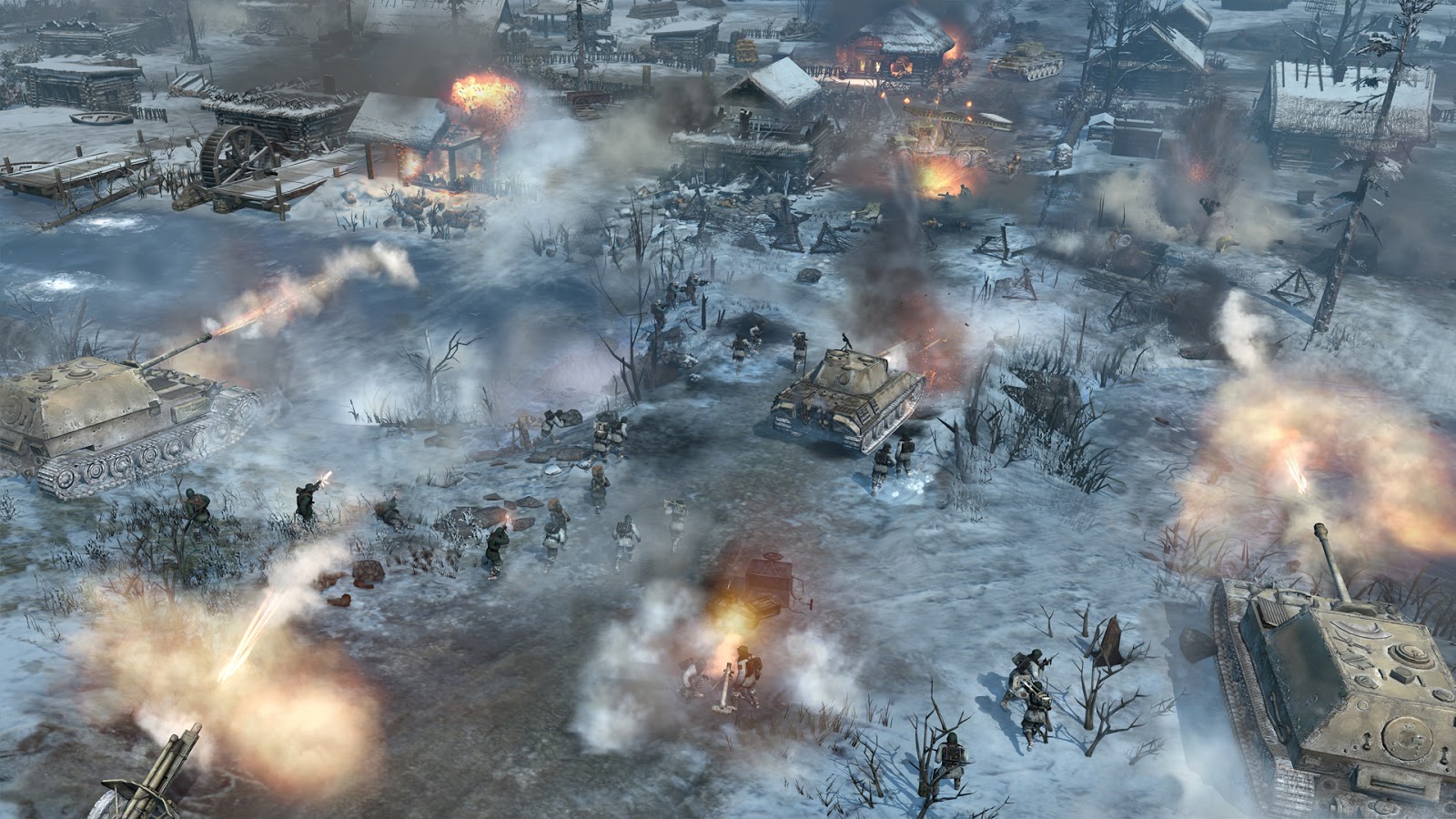
For Company of Heroes 2, Relic's sequel to their very popular 2006 strategy game, they've gone conservative. The shift in focus and time means new sides - the Russians and the German armies of the eastern front - but the improvements over the first game are modest. The graphics are better, but not as improved as you might expect given the seven-year wait for this game. This is less of a dig at Company of Heroes 2 (which is still the best-looking strategy game in existence, at least until Total War: Rome II launches in September) and more of a reflection of how astonishingly far ahead of its time Company of Heroes was in 2006. The sound is a lot better, with booming explosions and realistic machine gun noises, a lot of them sampled from the genuine weapons. Sound design isn't usually something that stands out in games, but Company of Heroes 2's is simply the best I've ever encountered in a game.
In terms of gameplay, things proceed much as before. The battlefield consists of a home zone for each team and a patchwork of territorial zones in between. By capturing territory you boost your resources and can summon new troops to the battlefield more quickly, as well as unlocking fresh abilities through combat. Units gain experience in battle, becoming more accurate or tougher, and so does the commander, unlocking abilities such as recon planes, artillery bombardments or air strikes. Company of Heroes 2 changes things a little by having both locked territories (which are pre-set to provide fuel, ammunition or manpower points) and 'open' ones, which you can set to a particular resource by building on them. This is a nice touch which helps factions if they lose a rare resource zone.
Of course, you have to fight you away across these maps. Infantry can be summoned quickly to the battle and are surprisingly versatile, with anti-tank squads perfectly capable of taking down individual enemy tanks (though they're less effective against larger armoured formations). Snipers can provide both recon and a way of eliminating infantry at range, whilst mortars are formidable short-range artillery units and heavy machine guns are excellent for disrupting enemy charges. In the mid-game armoured cars, anti-tank guns and light tanks appear, and in longer battles expect to see heavy tanks like the T-34 and the Panther enter the fray. So far, so much like Company of Heroes. Improvements are modest rather than revolutionary, although a much stricter 'true sight' system allows for some sneaky tactics and makes things like using smokescreens much more effective (as it removes the enemy unit from sight altogether, rather than making hitting him harder). Some may bemoan the less-effective MG units, which find it tougher to pin down enemy infantry and reduce their effectiveness.
It's all loud and fast-paced but the game retains satisfying tactical elements. It's possible for battles to swing quite wildly from side to side, with armies being driven back to their bases only to burst forth again, reinforced for battle against their exhausted pursuers. It's great stuff, as much now as it was back in 2006.
In terms of structure, there's a single-player campaign which takes place against a backdrop of different parts of the war. This is framed with a former Red Army soldier being interrogated for seditious activities during the war, allowing the narrative to jump from Stalingrad back to the opening of Barbarossa, the siege of Moscow and the battles for Kursk and Berlin. Relic try to do something interesting with this narrative, by focusing on the individual heroism and bravery of the soldiers whilst exposing the brutality of the Soviet regime (which was not much better than the Nazis in terms of the death and destruction it caused). It fails due to weak writing and a feeling that there's too much of a Western (and particularly American) sense of morality impugning on what was a true life-and-death struggle for millions of people. The ambition is laudable but the execution is poor. Individual missions are quite well-designed, especially in the latter part of the campaign, but ultimately there are too many arbitrary restrictions on what units you can or can't use in a mission.
More impressive is the Theatre of War mode, which offers up a variety of different missions to the player. Some are single-player, focused scenarios (such as using a squad of snipers to assassinate enemy officers in a village) whilst others are bigger co-op missions or full-scale battles against veteran enemy forces. The Theatre of War covers events for 1941 only; updates are promised for the future to cover the rest of the conflict. Freed from the restrictive narrative, these scenarios can be more inventive and interesting than the campaign missions.
Of course, multiplayer is a big focus and is as fast, furious and smart as the original game's.
The game also introduces a couple of other ideas. One is the notion of winter itself as a threat, with the temperature suddenly dropping and your soldiers no longer able to fight. Getting them into cover or, better still, to a campfire, becomes a priority. It's a nice idea but it adds an extra level of randomness to the game which most players will likely prefer to do without. Fortunately, it can be switched off for multiplayer. Another new feature is that an NKVD officer will be deployed to your HQ whenever new infantry are deployed; if the infantry retreat to your base, the NKVD officer will shoot them. This simulates Stalin's 'not one step back' doctrine which made Russian soldiers fear retreating more than advancing. Again, it's laudable that Relic try to reflect this, but in practice it's just rather annoying. It's also historically inaccurate that your soldiers won't simply kill the NKVD officer themselves (NKVD troops assigned to Red Army squads occasionally 'fell to enemy fire, honest' during the war if they proved too zealous in punishing their soldiers). Since the retreat order is the best way to avoid being pinned by MG or mortar fire, the game punishing you for using it is something that gets old rather quickly.
Ultimately, Company of Heroes 2 (****½) is a modest evolution of the original game rather than anything too spectacular. The Theatre of War mode is its biggest improvement over the original, along with some exceptional sound design and graphics. Some of the new features meant to convey the atmosphere of the conflict backfire a little, but overall this is an accomplished, impressive and enjoyable RTS. The game is available now in the UK and USA on PC.
This is a problem Relic know well. In 2009 they released Dawn of War II, the sequel to their successful 2004 Warhammer 40,000 RTS. They changed a lot about the game, moving it away from being a real-time strategy game to more of an action RPG: Diablo in space with more than one playable character. Whilst it was a very solid game on its own right, it did feel like a different genre to the first game. Fans complained.
For Company of Heroes 2, Relic's sequel to their very popular 2006 strategy game, they've gone conservative. The shift in focus and time means new sides - the Russians and the German armies of the eastern front - but the improvements over the first game are modest. The graphics are better, but not as improved as you might expect given the seven-year wait for this game. This is less of a dig at Company of Heroes 2 (which is still the best-looking strategy game in existence, at least until Total War: Rome II launches in September) and more of a reflection of how astonishingly far ahead of its time Company of Heroes was in 2006. The sound is a lot better, with booming explosions and realistic machine gun noises, a lot of them sampled from the genuine weapons. Sound design isn't usually something that stands out in games, but Company of Heroes 2's is simply the best I've ever encountered in a game.
In terms of gameplay, things proceed much as before. The battlefield consists of a home zone for each team and a patchwork of territorial zones in between. By capturing territory you boost your resources and can summon new troops to the battlefield more quickly, as well as unlocking fresh abilities through combat. Units gain experience in battle, becoming more accurate or tougher, and so does the commander, unlocking abilities such as recon planes, artillery bombardments or air strikes. Company of Heroes 2 changes things a little by having both locked territories (which are pre-set to provide fuel, ammunition or manpower points) and 'open' ones, which you can set to a particular resource by building on them. This is a nice touch which helps factions if they lose a rare resource zone.
Of course, you have to fight you away across these maps. Infantry can be summoned quickly to the battle and are surprisingly versatile, with anti-tank squads perfectly capable of taking down individual enemy tanks (though they're less effective against larger armoured formations). Snipers can provide both recon and a way of eliminating infantry at range, whilst mortars are formidable short-range artillery units and heavy machine guns are excellent for disrupting enemy charges. In the mid-game armoured cars, anti-tank guns and light tanks appear, and in longer battles expect to see heavy tanks like the T-34 and the Panther enter the fray. So far, so much like Company of Heroes. Improvements are modest rather than revolutionary, although a much stricter 'true sight' system allows for some sneaky tactics and makes things like using smokescreens much more effective (as it removes the enemy unit from sight altogether, rather than making hitting him harder). Some may bemoan the less-effective MG units, which find it tougher to pin down enemy infantry and reduce their effectiveness.
It's all loud and fast-paced but the game retains satisfying tactical elements. It's possible for battles to swing quite wildly from side to side, with armies being driven back to their bases only to burst forth again, reinforced for battle against their exhausted pursuers. It's great stuff, as much now as it was back in 2006.
In terms of structure, there's a single-player campaign which takes place against a backdrop of different parts of the war. This is framed with a former Red Army soldier being interrogated for seditious activities during the war, allowing the narrative to jump from Stalingrad back to the opening of Barbarossa, the siege of Moscow and the battles for Kursk and Berlin. Relic try to do something interesting with this narrative, by focusing on the individual heroism and bravery of the soldiers whilst exposing the brutality of the Soviet regime (which was not much better than the Nazis in terms of the death and destruction it caused). It fails due to weak writing and a feeling that there's too much of a Western (and particularly American) sense of morality impugning on what was a true life-and-death struggle for millions of people. The ambition is laudable but the execution is poor. Individual missions are quite well-designed, especially in the latter part of the campaign, but ultimately there are too many arbitrary restrictions on what units you can or can't use in a mission.
More impressive is the Theatre of War mode, which offers up a variety of different missions to the player. Some are single-player, focused scenarios (such as using a squad of snipers to assassinate enemy officers in a village) whilst others are bigger co-op missions or full-scale battles against veteran enemy forces. The Theatre of War covers events for 1941 only; updates are promised for the future to cover the rest of the conflict. Freed from the restrictive narrative, these scenarios can be more inventive and interesting than the campaign missions.
Of course, multiplayer is a big focus and is as fast, furious and smart as the original game's.
The game also introduces a couple of other ideas. One is the notion of winter itself as a threat, with the temperature suddenly dropping and your soldiers no longer able to fight. Getting them into cover or, better still, to a campfire, becomes a priority. It's a nice idea but it adds an extra level of randomness to the game which most players will likely prefer to do without. Fortunately, it can be switched off for multiplayer. Another new feature is that an NKVD officer will be deployed to your HQ whenever new infantry are deployed; if the infantry retreat to your base, the NKVD officer will shoot them. This simulates Stalin's 'not one step back' doctrine which made Russian soldiers fear retreating more than advancing. Again, it's laudable that Relic try to reflect this, but in practice it's just rather annoying. It's also historically inaccurate that your soldiers won't simply kill the NKVD officer themselves (NKVD troops assigned to Red Army squads occasionally 'fell to enemy fire, honest' during the war if they proved too zealous in punishing their soldiers). Since the retreat order is the best way to avoid being pinned by MG or mortar fire, the game punishing you for using it is something that gets old rather quickly.
Ultimately, Company of Heroes 2 (****½) is a modest evolution of the original game rather than anything too spectacular. The Theatre of War mode is its biggest improvement over the original, along with some exceptional sound design and graphics. Some of the new features meant to convey the atmosphere of the conflict backfire a little, but overall this is an accomplished, impressive and enjoyable RTS. The game is available now in the UK and USA on PC.
Subscribe to:
Posts (Atom)