Showing posts with label amc. Show all posts

Wednesday, 20 November 2024

The Walking Dead: Season 8

The communities of Alexandria, Hilltop and the Kingdom have joined forces to oppose the Saviors, but they have been betrayed by one group of potential allies whilst another, Oceanside, tries to stay out of the fighting. An early victory isolates the Sanctuary and allows Rick's forces to go on the offensive against the isolated Savior secondary bases, but Negan remains a dangerous and resourceful foe. As the tides of war ebb and flow, the outcome remains unpredictable.


The eighth season of The Walking Dead optimistically promises "all-out war!" as it adapts the story arc from the comics of the same name. The early episodes lean into this, with an almost constant stream of battles, sieges, cunning stratagems and unexpected reversals. Neither side consistently wins or consistently loses (although the number of Savior losses in the opening episodes makes their later resurgence seem improbable), a nice change from most media accounts of conflicts where the good guys keep losing until the last second and then pull off a single win and win everything and hit the jackpot.

The battles in the opening episodes make for an exciting start to the season, but are a bit overwrought. Given the show's shock-jock tactics of killing two fan-favourite characters in the Season 7 opener, almost everybody develops thick plot armour and almost nobody of consequence dies (no, Alexandrians who may have been around for three seasons but only have five lines of dialogue in their entire tenure of the show do not count). This makes the stakes feel a bit undercooked. Instead we have a lot of battles - consisting of characters pointing weirdly recoilless guns at one another with CG muzzle flashes, sometimes with allies running right in front of them whilst they're firing - without much in the way of stakes to them.

The show does try to get around this by aiming for character-rooted emotional arcs: Ezekiel suffers a crisis of command after losing too many of his people in the war; Morgan being torn between not killing and protecting his friends causes a mental health crisis; Carl, recognising some proto-Negan-ness in his own character, decides to become a better person; Eugene trying to work out if Negan or Rick will better appreciate his skills; Gabriel rediscovers his faith in adversity, and so forth. Some of these character arcs are satisfying, others just feel they're there to help the show spin its wheels.

Yes, the greatest enemy of The Walking Dead is neither Negan nor the walkers, but the show's problematic pacing. A relentless foe of the franchise since it made the entire second season take place on a farm, it drags Season 8 down into the mud. Making the war last the entire season, sixteen episodes, after last season's sixteen episodes of scene-setting, was a huge mistake, resulting in several episodes where not much materially changes, even as bullets are flying. The show really feels like it doesn't have a clue what to do next when it sends the characters back to the Junkyard, again, to try to win over the Scavengers, again, only for them to betray our heroes, again. At eight episodes to end the war, perhaps with another eight exploring the aftermath (here relegated to a very abrupt-seeming vignette at the end of the season finale), the storyline would have been much tighter and more satisfying.

The season does have a few stronger elements. Dwight trying to balance his survival against being the mole inside Negan's organisation is a fun storyline, and Steven Ogg (best known as Grand Theft Auto V's redoubtable Trevor) arguably steals the season as Simon, whose charismatic backstabbing is highly entertaining. This all makes up for a subdued Jeffrey Dean Morgan, whose undeniable charisma and acting talent feels a bit let down by the inconsistent quality of the scripts for Negan. When he brings it, he's great, but when he doesn't, his story falls flat.

Mid-season the show does dispatch one long-term regular to try to up the ante, but the choice of character to kill is illogical, badly-handled and feels like a bit of a slap in the face of the actor (who famously had just bought a house near the studio because they'd been assured they'd be around for a while longer) and also comic fans, where the character in question survives all the way to the end of the saga. They do try to make the sacrifice have some weight and long-term impact on the story, but it's badly-conceived.

The season finale is also a bit of a damp squib, with the plan to win the day being incredibly illogical and desperately dependent on absolutely nothing going wrong, and the rapidity with which the losing side gives in to the winning side feels a bit implausible. One decision by Rick is also laughably unconvincing: I get what they were going for, but I do not buy at all that Rick of all people would make that choice. That said, Maggie does benefit from this storyline, coming across as a stronger and more decisive leader, and potentially setting up a conflict between her and Rick which could be genuinely interesting.

Season 8 of The Walking Dead (***) is not terrible, but it is badly-paced, overdrawn and overwrought, with some curious character choices and unconvincing plot decisions. There is, however, a lot of half-decent action, and the ebb and flow of the conflict is more interesting than how wars are usually depicted in fiction. This is possibly the weakest season of the show, but those who have settled in for the long haul should find enough here to just about keep going (along with the promise of a better final three seasons coming up, although that is debatable). The show can be seen on multiple streaming platforms worldwide, right now.

Thank you for reading The Wertzone. To help me provide better content, please consider contributing to my Patreon page and other funding methods.

Sunday, 10 November 2024

The Walking Dead: Season 7

Rick Grimes and his long-standing band of companions have initiated hostilities with a group of extorters called the Saviors, thinking them just the latest in a long line of gangs of thugs and bandits they've been dealing with in the two years since civilisation fell. But the Saviors are a far larger, far more dangerous and far more unpredictable group than any they've come across since, under the leadership of the charismatic and capricious Negan. The Saviors take control of Alexandria, forcing Rick's group to work for them and executing two of their number to make sure they are taken seriously. The group is divided on how, or even to, resist, whilst others of their number find more of the network of settlements that Hilltop was just one of, and gradually realise that the Saviors have made a lot of enemies, something they might be able to turn to their advantage.

It's been a minute since we last touched base with The Walking Dead, Robert Kirkman's comic turned Frank Darabont's lawsuit target turned epic zombie apocalypse turned slightly frustrating nation-building exercise. I got so frustrated with the show's pacing being all over the place that I decided to tune out until it was over, which took slightly longer than expected, not helped by the seasons immediately following my hiatus being soundly criticised even by hardcore fans.

As a recap, Season 6 saw the gang take over the town of Alexandria, whose citizenry can be best described as nice-but-dim. Rick and his gang of hardened survivors had to take over the town for their own good, almost turning into villains in the process, a highly interesting idea that the show immediately squandered (the town is immediately attacked by feral lunatics known as Wolves and a massive zombie horde, and only Rick and The Gang have the cojones to sort them out whilst the Alexandrians just gawp), as is often the case with The Walking Dead. The latter part of the season flirted with an even more interesting storyline in which Rick and The Gang are manipulated into fighting the Saviors by the duplicitous Gregory, leader of Hilltop. The show could have had the Saviors as a more reasonable group, so Rick's pre-emptive attack was an illegitimate act and the resulting counter-strike by Negan was more justified, but again that would have made the show too interesting, so we are reassured at every second moment that the Saviors are evil, almost killing two of our heroes on a whim and subjecting multiple towns to tyranny, murder and extortion.

Still, the season was the most action-packed The Walking Dead has ever been and, whilst logic had not so much left the building but screamed out of town in a jet fighter at Mach 5, never to be seen again, there's no arguing it was fun to watch in a very dumb kind of way. This is what I call the "Game of Thrones Season 7 Effect," where character and plot logic have been sacrificed on the altar of visceral action and some sick special effects, but the latter are executed so well you kinda don't mind (and The Walking Dead was never the most subtle study in character interplay in the first place).

Season 7 continues in much the same vein. The season opens with the infamous episode where Negan gets to pontificate at Rick and, via an unnecessarily drawn-out, tension-building exercise, kills two of the regular characters in a very gory fashion. Despite the undeniable gut-punch of seeing two solid characters (one of whom has been around since the very beginning, or almost) go out, it also feels like someone at AMC decided this was going to be their Wal-Mart own-brand version of the Red Wedding and milked it for every nanosecond. The result is possibly the worst episode of the show to date, devolving into that most curious of beasts, extremely boring torture-porn.

Once the show gets over that hump, it sets about exploring its new paradigm with entertaining relish. The Saviors live at the Sanctuary, a massive factory-turned-fortress, and are extorting the people of three settlements, Alexandria, Hilltop and the Kingdom. There are also two other settlements nearby which know about the Saviors but have remained undetected: the Junkyard, home to a bunch of inexplicable weirdos known as the Scavengers; and Oceanside, home to a bunch of women whose menfolk were all killed by the Saviors, buying them time to escape and establish a secret stronghold on Chesapeake Bay. Handily, Carol and Morgan have already established contact with the Kingdom, a town built in and around an old zoo and ruled by a flamboyant ruler known as King Ezekiel (who feels like he has been airdropped into the show from the Renfair Hallmark version of Game of Thrones, but is easily one of the most entertaining characters on the show so we'll allow it), whilst Tara, who went missing at the end of Season 6 and literally nobody at all noticed, has established less-cordial relations with Oceanside.

Season 7 is, as usual, divided into two eight-episode sub-arcs. In the first Rick and The Gang are trying to make their new position of working for the Saviors fly, with some characters angrily planning revenge on Negan and the Saviors but others arguing for patience and time to regroup. Daryl has been taken prisoner by the Saviors so we get to explore the Sanctuary via him (and returning Season 6 bit-players Dwight and Sherry), whilst Maggie is trying to consolidate the Hilltop in their alliance, whilst fighting a rather one-sided rivalry with Gregory. Tara's visit to Oceanside is rather tedious, in the lowest-rated episode of the entire series, which I thought was a bit harsh; there's more than a few episodes before this in which absolutely nothing happens, whilst this at least had some solid walker-killing. A storyline in which Morgan struggles with his vow not to kill whilst Carol needs a time-out in a cottage is...okay, I guess, but only works because of the two actors.

Inevitably, after a few more Alexandrians are killed and Negan turns out to be even more loony-tunes than we first thought, Team Rick decides to fight and starts banding the communities into a big army. The weak link here are the Scavengers who are blatantly, obviously untrustworthy from the off and Rick's efforts to bring them into the alliance are ludicrous (and the fact we get the exact same story in Season 8 beggars belief). Negan also ends up moving from genuinely threatening figure at the end of Season 6 to pantomime dame, flouncing around and straining to find reasons not to kill the more popular characters blessed with plot armour. Jeffrey Dean Morgan always gives a great performance but there are a few moments where even he seems to be asking, "why am I not killing every person in this room?"

Things do get better as the season wraps up, with the web of alliances coming to fruition in a surprisingly messy finale with double-crosses and plot twists and some solid action beats. The season does quite well on this front with a few good set-pieces such as Michonne and Rick taking down 300 walkers with a weaponised steel cable, and later clearing out a funfair by themselves. The storyline in the Kingdom is unexpectedly a highlight, its daftness (Ezekiel has a CGI pet tiger) giving way to a much edgier story as they try to work reasonably alongside the Saviors but ultimately realise they can't.

Season 7 of The Walking Dead is trying to do something that most long-running post-apocalyptic media tries to do and often falters in the process: transitioning from the post-apocalypse to the post-post-apocalypse, from simple survival to nation-building. Running from zombies in the immediate aftermath of disaster with plentiful supplies to scavenge, not many survivors and tons of guns lying around (in a US-set story, anyway) is easily turned into compelling drama. Working out how to get reliable supplies of food and water, especially with a brutal local government around? Not so much, or at least it's trickier. The Fallout franchise had a similar problem with the early games set just after the nuclear war giving way to the later games set 200 years later with tons of factions and even nation-states arising, and the game developers too often falling back on post-apocalyptic tropes even where they no longer made sense, because it was easier.

The Walking Dead is to be commended for trying this tricky transition in its seventh season (***½) and it doesn't fare as badly as I was expecting, with some nice character arcs and action setpieces. But the show struggles with selling some of its plot points and ideas, and the whiff of contrivance as Rick's group need a bunch of allies to fight the Saviors and immediately meet a bunch of allies to fight the Saviors is high. The result is an entertaining-enough season of television, which recovers from a cynical and crappy start to deliver some satisfying resolution, even if you can't quite buy all the steps along the way. The show can be seen on multiple streaming platforms worldwide right now.

Thank you for reading The Wertzone. To help me provide better content, please consider contributing to my Patreon page and other funding methods.

Thursday, 12 May 2022

AMC picks up the rights for ALAN WAKE TV series

American cable network AMC have picked up the TV rights to the cult video game Alan Wake, created by Finnish developers Remedy Entertainment.

Originally released in 2010, Alan Wake told the story of the titular protagonist, a novelist who travels to Bright Falls, Washington for a break to try to break his writer's block. However, his wife goes missing, apparently kidnapped by a supernatural force, and Alan discovers a strange dimension known as "the Dark Place" impinging on the real world. Aided by various allies, Alan tries to defeat this force and locate his missing wife. The story continued in a standalone expansion, Alan Wake's American Nightmare (2012).

In 2019 Remedy released Control, a new game about a team investigating "Altered World Events" from their headquarters in New York City. The game and its expansions eventually confirm that they take place in the same universe as Alan Wake, and events from the game play a major role in Control's second expansion, AWE. Last year, Remedy released a remastered version of Alan Wake and formally announced that Alan Wake 2 was in development, hopefully for release in 2023.

Work on an Alan Wake TV show began in 2018, with Legion's Peter Calloway set to serve as showrunner and Remedy's Sam Lake (the writer of Alan Wake) serving as producer and consultant.

AMC's previous shows include The Walking Dead, Better Call Saul, Breaking Bad, Mad Men and Preacher.

Thursday, 28 April 2022

Changes for the WALKING DEAD and DUNE TV series

The Walking Dead is gearing up to end its run, but there are changes afoot for its spin-off shows.

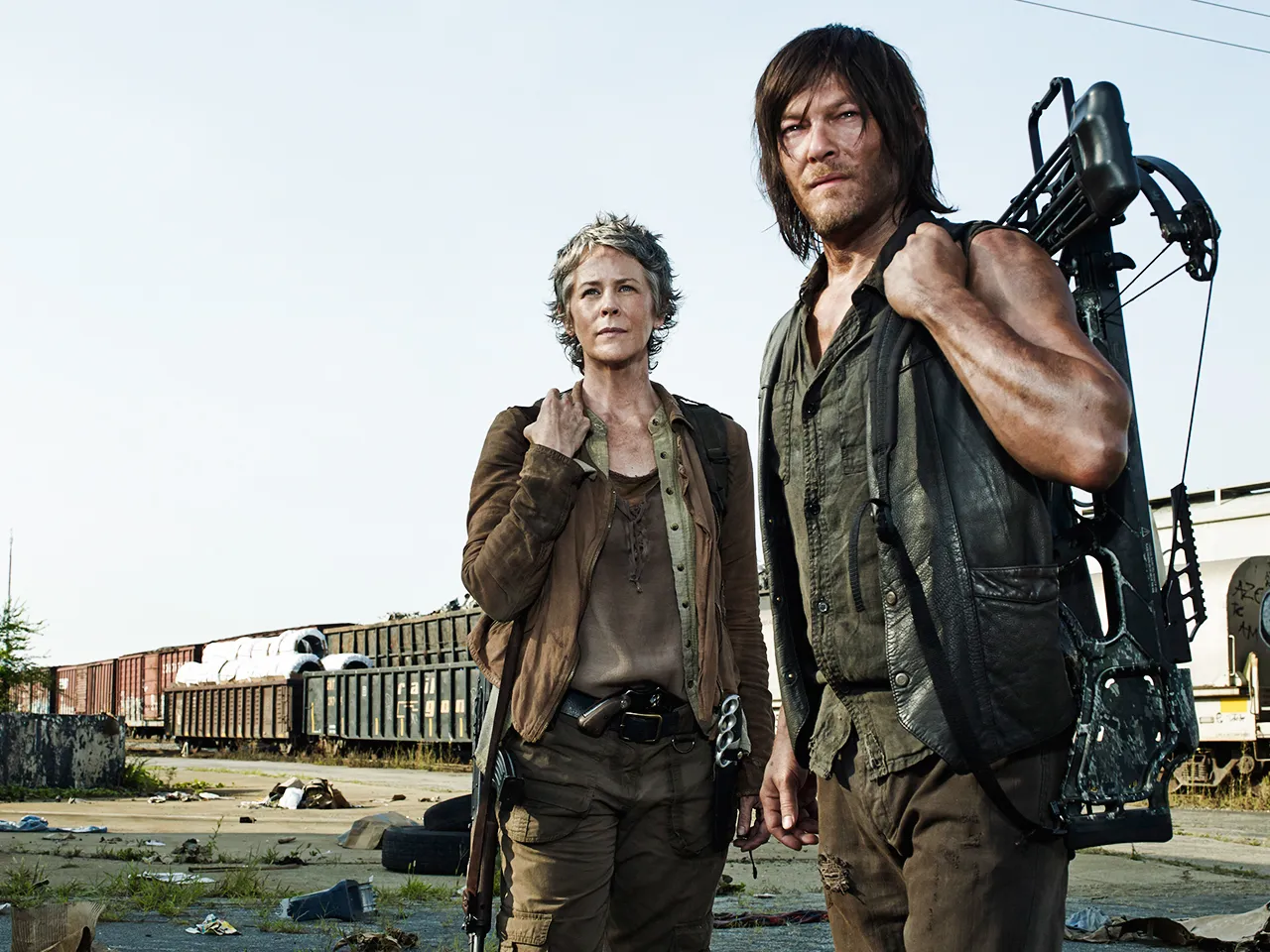
As noted previously, AMC is planning a number of new spin-off shows from The Walking Dead, beyond the existing Fear the Walking Dead and The Walking Dead: World Beyond. The first of the new spin-offs was planned to focus on the characters of Carol (Melissa McBride) and Daryl (Norman Reedus) after the events of the series. This is significant as McBride and Reedus are the only Season 1 regulars still on the show in its final season, and arguably are the two most popular characters and actors on the series.

However, Melissa McBride has now withdrawn from the project due to scheduling issues. Unlike the existing shows, which film principally in Georgia in the United States, the new show will shoot in Europe for cost-saving reasons. McBride is unable to relocate to Europe for the required filming dates. As a result, the new show is being rejigged to focus on Daryl only.

Anthology series Tales of the Walking Dead is currently shooting and a further spin-off, Isles of the Dead, which will see Maggie (Lauren Cohan) and Negan (Jeffrey Dean Morgan) relocating to a ruined New York City, is in pre-production.

Meanwhile, HBO Max is continuing to develop Dune: The Sisterhood, a Bene Gesserit-focused spin-off from the movies directed by Denis Villeneuve. The series was due to have Villeneuve direct its first two episodes, but the proposed filming dates clash, ironically, with those for the film Dune: Part Two. Chernobyl and Breaking Bad director Johan Renck has been picked to replace him.

Saturday, 12 February 2022

Kevin Can F Himself: Season 1

In the mind of Kevin McRoberts, he has a great life. He lives in a comfortable house in Massachusetts with a beautiful wife, is visited daily by a close coterie of friends and he gets to indulge his childish whims on a regular basis without any thought to responsibility or consequences. His life is a big, happy sitcom. For his wife Allison, life is different: claustrophobic and repetitive, trapping her in a lifetime of misery and trying to indulge the irresponsible manchild in the house. Allison eventually makes a decision on how to free herself, and build a new life for herself in the process.


Kevin Can F Himself is a drama-comedy which is built around a very interesting idea. Every scene in the show focusing on the character of Allison is filmed like a modern, prestige, single-camera drama, with carefully constructed shots and naturalistic dialogue and shooting. Every scene featuring her husband Kevin is shot like a mid-1990s American sitcom, with bright, overlit sets, a multiple-camera setup and a full-on laughter track, with screams of laughter greeting the most tediously inane "jokes." It's like two shows from completely different genres have been mashed into one.

It's a great idea, but it's questionable if it can be sustained over an entire eight-episode season. The good news is yes, it can, although the format definitely creaks a few times over the run. It also helps that the sitcom scenes are very much in the minority of the show, accounting for much less than half of each episode and barely showing up in a couple of episodes. It also helps that the sitcom scenes are sometimes used to push forward the drama part of the story, whilst the serious scenes are sometimes also very (if often very darkly) comedic.

The show is held together by its star, Annie Murphy. Hot off of Schitt's Creek, where she played the spoiled daughter Alexis, here she plays the put-upon Allison with formidable skill. She is adept at scenes of emotional turmoil and dramatic intensity as she is at comedy, and her comedy skills are obviously outrageously good, honed by six seasons on Canada's finest. Murphy's performance is terrific and helps nail Allison's complex characterisation, where although Allison is set up to receive the audience's sympathies, she also does have a number of character flaws and is partially responsible for some of her own misfortune.

Murphy is matched by Mary Hollis Inboden as Patty, a low-key player in the first episode or two who then quickly elevates into becoming a co-lead. Patty is forthright, self-assertive and "tough" in a way that Allison isn't, but whose observations of Allison gradually turning on her inane lifestyle encourages her to also realise that hanging out with the loutish Kevin is tedious and she needs to be doing something more interesting with her life. Patty and Allison's evolution from indifferent neighbours to a near Thelma and Louise level of conspiratorial plotting and support is a brilliantly-played arc.

It's also fair to praise Eric Petersen, who has the toughest job on the show in playing Kevin. Kevin only appears in the sitcom part of the show (aside from a brief dream sequence) so Petersen has to be "on" at 110% all of the time, in that broad, brash and insufferable way that loutish husbands are in sitcoms. Kevin is meant to be loud, obnoxious and irritating, which is easy, but he also has an undercurrent of controlling obsession over his wife and friends, and Petersen nails that darker undercurrent as well.

The show has been called a teardown of sitcoms, which I think misses the point. The show isn't really saying anything about the strengths and minuses of traditional-format sitcoms at all, as instead using the format shifts to reflect the characters' psychologies. Kevin lives his life in a cotton candy cocoon of comfort and privilege, whilst Allison's life is far harder, bleaker and more complicated, and the format shift accentuates that in a very instinctively clever way.

The show does occasionally falter: the only episode that is very heavy on the sitcom format also has the misfortune to coincide with the worst of the sitcom storylines (Kevin turns a basement into an escape room), and the idea of "the sitcom is supposed to be terrible" spills over and almost drags the episode down, until the drama part of the episode saves it. And that's kind of it. The show otherwise sells itself thanks to electric performances and some very clever writing that is often brutally honest about its characters whilst making you sympathise with them.

The first season of Kevin Can F Himself (****½) is, after perhaps a slightly shaky start, funny, tremendously well-acted and quite clever. The show has been renewed for a second season, which will conclude the story, which is probably a good idea as I'm not sure the format can be sustained for 20+ episodes. The season is available to watch on AMC and AMC+ in the United States, and on Amazon Prime Video in much of the rest of the world.

Thursday, 4 March 2021

AMC's THE TERROR arrives in the UK

AMC's acclaimed Arctic drama series, The Terror, is finally available on the BBC in the UK.

Based on Dan Simmons' 2007 novel of the same name, the series is partially a historical account of the ill-fated 1845-48 Franklin Expedition to find the Northwest Passage around Canada, partially a story about Inuit mythology and partially a horror story.

The first season consists of 10 episodes and is available now on the BBC iPlayer. It is also airing weekly on BBC2. A second season, subtitled Infamy, has also been produced with a completely unrelated story, but this is so far not available in the UK.

Wednesday, 10 February 2021

The BBC acquires AMC's THE TERROR

The BBC has acquired AMC's TV series The Terror for UK distribution after a surprisingly long wait.


The Terror is an anthology series revolving around unusual stories involving possible supernatural causes in a historical setting. The first season adapted Dan Simmons' novel The Terror, based around the infamous Franklin Expedition to find the Northwest Passage, resulting in the loss of the icebreaker ships HMS Erebus and Terror, whilst the second is based on an original story called Infamy and is set in a Japanese internment camp in California in World War II.

The first season, starring Ciaran Hinds, Jared Harris, Greta Scacchi and Tobias Menzies, aired in the spring of 2018, making it an unusually long wait for the show to be available on a UK broadcaster.

The BBC has not yet set a date for the series, but have noted noted it will be broadcast on BBC2 and will also be available on the BBC iPlayer.

Wednesday, 9 September 2020

AMC confirms the end of THE WALKING DEAD

 AMC have announced that The Walking Dead will end in 2022 after airing its 11th season, which will be super-sized as a result, with 24 episodes as opposed to the usual run of 16 episodes.

The Walking Dead began airing in 2010 under the stewardship of Frank Darabont (The Shawshank Redemption, The Green Mile). Based on Robert Kirkman's successful comic book series - which ran for 193 issues between 2003 and 2019 - the series follows a band of survivors in the aftermath of a zombie apocalypse, which mostly takes place off-screen. The focal character is Rick Grimes (Andrew Lincoln), a sheriff who is caught up in the apocalypse along with his family, best friend and some random other survivors. Over the course of the show, the initial band of survivors changes composition many times (until only two actors from Season 1 are still in the regular cast in Season 11) and it evolves from a desperate, isolated band to a group of community-leaders and nation-builders. The zombies, although everpresent, decline as the main threat in favour of other human communities of varying degrees of morality and corruption.

The show quickly became the biggest thing on television for several years, until being displaced by HBO's Game of Thrones. Recent seasons have seen sharp declines in viewing figures and critical appreciation, but with an ending in sight and a climax to build towards (which for various reasons will have to be very different to the ending in the comic book), it'll be interesting to see if the show can win back some sceptical, long-departed fans.

The show's first spin-off series, Fear the Walking Dead, is continuing to air on AMC and a second spin-off, The Walking Dead: World Beyond, set ten years after the apocalypse, is due to launch in the next couple of months. World Beyond is a limited series planned to run for just two seasons. AMC have also confirmed they will be launching a third spin-off, which will follow the adventures of Daryl (Norman Reedus) and Carol (Melissa McBride), the most popular characters from The Walking Dead and the last two Season 1 characters standing. A series of TV movies focusing on Rick Grimes is also in the planning stages.

AMC is also developing Tales of the Walking Dead, an anthology series set in the same universe involving both new and old characters from different points in the series timeline.

Thursday, 19 March 2020

Halt and Catch Fire: Season 4

1993. The Internet is just starting to take off. Gordon Clark and Joe MacMillan have formed an early Internet Service Provider, CalNect, to help people access the web but decide to sell it when much bigger companies muscle into the scene. Inspired by Gordon's daughter, Haley, they set up a new web directory service, Comet, which rapidly takes off to the chagrin of Gordon's now ex-wife Donna, whose competing service Rover struggles to compete. Cameron returns to the USA to work on a video game, but soon finds herself drawn back to Joe as all the characters get mixed up in the birth of the Internet Age.


Over the course of three previous seasons, Halt and Catch Fire explored the explosion of personal computing in the USA, the creation of the earliest online networks and the realisation of what a digital future could hold. In the fourth season the characters are, for once, ahead of the curve and predict the rise of the Internet, enjoying considerable success in the process before they are beaten back by the arrival of mega-players like AOL.

As with previous seasons, the show works because it doesn't posit that the characters made all the key discoveries of the period. Instead they are shown as being part of a wider tech movement, with success coming to those who navigate the rocks and shoals of the nascent worldwide web or, more frequently, are luckily in the right place at the right time.

The arc of the season - and arguably the whole series - is about connections, the literal computer connections that drive the businesses and also about the relationships the characters have forged with one another and how those relationships will proceed. Donna is cut off from the rest of the characters for most of the season and it's interesting to see how differently she behaves when removed from the company of those who really know her. Joe has gotten over his "monumental arsehole" schtick from Season 3 and is firmly on Gordon's side throughout the season, which is good to see. The time jump - Season 4 spans most of 1993 and 1994, picking up more than three years after the previous season ended - also allows Gordon and Donna's children to become more important characters, particularly Haley (a superb performance by Susanna Skaggs), and contribute much more to events whilst also discovering their own identities.

The season unfolds much as the first three have, with problems arising, the characters facing them down and then a late-season twist putting them on a different path. This time the twist is much more powerful and profound, and resets the board, allowing them to face the next challenge.

What that challenge is, we don't know because the fourth season of Halt and Catch Fire was deliberately designed as its last. It's not important what happens to the character next, only that we know they go on and keep succeeding and keep thriving whilst leading inextricably to the modern age. Halt and Catch Fire's position as the most underrated drama of the 2010s feel secured because it is a show that knows when to focus on the technical and business sides of the story and when to engage in the emotional side of the characters. It is gripping and rewarding.

The fourth and final season of Halt and Catch Fire (*****) may be the finest season of the entire series (although it's a close tie with Season 2) and is compelling, addictive television. The series is available to watch now on Amazon Prime in the UK and USA.

Sunday, 8 March 2020

Halt and Catch Fire: Season 3

1986. Nascent online community and games network Mutiny has left Texas and moved to San Francisco to be closer to the heart of the action. Joe McMillan is also in town, having set up his own antivirus company. Mutiny enjoys tremendous success, but the shape of its future direction becomes hotly debated between anarchic founder Cameron and cooler-headed businesswoman Donna, with Gordon feeling caught in the middle. With new hardware on the horizon and a visionary engineer in Europe working on connecting the world's different networks together, it's a time of great opportunity...and risk.


Halt and Catch Fire is the slow-burning AMC drama that was designed - at least in part - to fill the void left behind by the end of Mad Men, swapping the 1960s for the 1980s and guys in suits smoking cigarettes for a more varied bunch of geeks laying the foundation of the digital world we all now exist in. It certainly didn't replace Mad Men in terms of cultural cachet and audience popularity, although it certainly matched it in terms of sheer critical acclaim, and exceeded it in terms of being leaner and more focused.

The third season of Halt and Catch Fire sees almost the entire cast relocate to San Francisco, the sort of plot movement that feels a little contrived but is also not entirely unrealistic. During the real computer boom of the mid-1980s, entire companies did up sticks and move to Silicon Valley to be closer to the centre of the action. The season retains its focus on our five regulars from the first two seasons (Joe, Cameron, Donna, Gordon and Bos) but adds new characters in the form of Ryan (Manish Dayal), a Mutiny software engineer who decamps to Joe's company, and Diane (Annabeth Gish), a potential investor in the company.

The main storyline this season follows Mutiny's troubles as it tries to adjust to an increasingly crowded marketplace and the increasing tension between Cameron's desire to stay true to the company's independent, punky roots and Donna's wish to make the company more successful through standard business practices, such as opening the company to investment and considering potential buyers. Gordon, who is now working at Mutiny as an engineer, is somewhat caught in the middle, whilst Bos tries to placate all sides. In a mostly separate storyline, Joe has given up on his more caring, forgiving outlook from last season and has gone all-in on his ruthless business side, pushing his company to the heights of success at the cost of trampling on all his friends in the way.

This multi-pronged approach separates the characters for huge parts of the season, but last-minute, unexpected plot reversals bring things crashing down and the gang eventually starts reuniting to face new challenges, helped by a time skip to the dawn of the internet age. In just ten episodes, Halt and Catch Fire packs a huge amount into the season and keeps each storyline moving along swiftly.

In terms of overall quality, I didn't enjoy this season quite as much as Season 2. The characters are a bit too separated and Joe's transformation into a semi-paranoid, ruthless businessman feels a little too cliche and a little too close to the real behaviour of John McAffee. There are also moments when the business storyline with Cameron and Donna bogs down a little for an episode or two, whilst the show deals with Gordon's illness from Season 2 by mostly ignoring it, which feels like an odd choice. The fact that this is really an eight-episode season with a two-episode coda does help it regain focus, however, and once the characters are firing on all cylinders again it becomes compulsive viewing

The third season of Halt and Catch Fire (****½) has a few minor stumbling blocks, but overall is gripping and compelling television of the highest order. The series is available to watch now on Amazon Prime in the UK and USA.

Sunday, 19 January 2020

Halt and Catch Fire: Season 2

Mid-1985. After releasing two models of the Cardiff Giant computer, Cardiff Electric is sold off and Gordon Clark gets a big payday. Joe MacMillan gets nothing. Rather than being annoyed by this, Joe moves on with his life and joins his new girlfriend's father's oil company. Donna and Cameron have started a software business, Mutiny, specialising in online gaming. The gang are inadvertently reunited when Joe hits on the idea of using the oil company's mainframe to set up network servers for online computing, and stress-tests it with Mutiny's service. What seems to be an equitable arrangement for all involved is then tested when the oil company CEO realises how much money could be made from this new field.


Halt and Catch Fire may be the longest-running example of the "mundane drama," a type of drama where everyday, relatively standard situations are turned into gripping stories where the stakes feel much higher than they really are (HBO's Show Me a Hero, about housing zoning disputes in 1980s Yonkers, may be the ultimate example of how to take something that sounds dull as dishwater and turns it into sheer brilliance). The 1980s period setting and the stories revolving around the creation of the foundation of the computer systems and networks we all use today do give added relevance to the premise.

The first season of Halt and Catch Fire was solid, but suffered a little from being not sure what direction to take with the tone. The show sometimes played things straight and sometimes went a bit weird, veering towards being an "8-bit Mr. Robot" without fully committing to that level of strangeness. Season 2 lands exactly where it wants to be, more offbeat and stylised than the first season but without going as fully strange as Mr. Robot and remaining fully accessible.

Season 2 instead, refreshingly, focuses on a contrite Joe as he tries to make amends for the things he did to his supposed friends in the first season and ends up helping them out...only to have the decisions taken out of his hands by his decidedly money-grubbing boss, Jacob (James Cromwell making you wonder why we haven't seen him playing more villains in his career). Joe's attempts to try to make things right inevitably lead to more disasters. This makes the viewer more sympathetic to Joe than in the first season, when most of the problems resulted from his own arrogance, and Lee Pace carries off the shift in character marvellously.

The rest of the cast does sterling work, especially Kerry Bishe and Mackenzie Davies as their software business runs into rocky waters and they try to negotiate the needs of a business with Cameron's desire to to stay true to her punk socialist roots. Scoot McNairy as Gordon does feel a little isolated from the rest of the cast, as the writers didn't want to have everyone involved in the same storyline, so Gordon gets to go off and do some soul-searching and self-discovery which is good for the character but also the only moments in which the show threatens to be anything less than brilliant in this run.

Events intensify as the season continues and more things go wrong than you could possibly imagine, until the series gets its first outstanding moment of awesome (set to a particularly accomplished Joy Division cover) and the plotting and character arcs come together in a fusion of storytelling that is magnificent to behold.

Halt and Catch Fire's second season (*****) is compelling, brilliantly-written and acted television. It does leave the question about where the series can go next, with the answer feeling perhaps a little contrived, but the series has certainly earned the viewer's trust in seeing if it can pull it off. The series is available to watch now on Amazon Prime in the UK and USA.

Tuesday, 31 December 2019

Halt and Catch Fire: Season 1

May, 1983. Ex-IBM sales executive Joe MacMillan joins Cardiff Electric, a software development company based in Austin, Texas. MacMillan has a remarkable ambition, to develop a PC that is a direct competitor to IBM. He recruits hardware engineer Gordon Clark and BIOS programmer Cameron Howe to help in the project, which soon involves cloning IBM's software (risking legal action in the process) and developing sophisticated and expensive new technology which threatens to bankrupt the business. But Joe's ambition will not be thwarted by costs or practicalities.


Halt and Catch Fire is almost certainly the most underrated drama series of the 2010s. Airing to small audiences on AMC, it completed its four season run by dint of being relatively cheap to make and to the critical kudos it picked up during its run, from 2014 to 2017. In the years since it went off the air, the show has picked up a lot more critical retrorespect but still hasn't quite permeated the audience consciousness even in the same way as, say, The Americans or Atlanta.

The show's relatively dull-sounding premise doesn't really help it. This is a period piece about the early (ish) days of the computer business, which doesn't really sound like the most exciting basis for an ongoing TV show. The cast is perhaps a bit more interesting. Lee Pace, hot off the press of playing Thranduil in Peter Jackson's Hobbit trilogy and Ronan the Accuser in Guardians of the Galaxy and poised for a big Hollywood movie career, signed up to Halt and Catch Fire after working on those projects, a sign of his regard for the scripts. Mackenzie Davis was less well-known before working on the show, but it certainly helped her career develop, with roles in Blade Runner 2049, Terminator: Dark Fate and arguably Black Mirror's most popular episode, San Junipero, all following.

The first season of Halt and Catch Fire starts off feeling a bit more like Mad Men but in the 1980s with more computers and less advertising, with Pace's smooth advertising exec Joe MacMillan coming across like Don Draper with added bisexuality. The show rapidly moves away from that, instead leaning into more of a slightly offbeat tone that gets more pronounced and more interesting through the show's run, becoming a bit more of an 8-bit Mr. Robot. It never goes as full intense-weird as that show though, remaining grounded throughout its run. It's this tone of being a traditional drama but with one tone in the oddball, accessible but occasionally weird, that makes the show interesting.

The performances of the four leads make the show work. Joe is smooth, slicked back and confident, but masks a more troubled family background and issues with commitment. Pace finds additional layers of the character which make him more relatable although not always sympathetic: Joe is a seriously damaged human being and it's to both the writers and Pace's credit that they avoid slipping into cliche. Scoot McNairy provides an able foil in the role of Gordon, a more hands-on practical engineer and family man who lacks Joe's big picture vision as he is more of a details guy. Kerry Bishé provides excellent support as Gordon's wife Donna (the two re-teaming as a husband-and-wife couple from the movie Argo), whose character rapidly expands from that of supporting character to co-lead. The show flirts with traditional relationship drama when delving into their marriage but expertly finds new ways of exploring the oldest of relationship ideas in the show. The central quartet is rounded out by Mackenzie Davis's Cameron, a loose cannon genius programmer with commitment and addiction issues who at first might make the viewer wince due to being a walking bag of tropes, but rapidly becomes a far more interesting character thanks again to the writers and Davis finding extra depths in the role.

At just ten episodes, the first season moves relatively quickly and presents our protagonists with fresh challenges every week. The stakes feel kind of low overall - at no point in the series is anyone's life in danger, for example - but the financial implications for the company and the people who work there are ramped up and the show makes it clear that the livelihoods of hundreds of people are on the line.

Events come together and it feels like the ending might be a little too neat, probably a result of renewal not being seen as certain (or even likely, for such a niche premise). But fortunately Halt and Catch Fire did gets its later seasons, which number among some of the finest of the decade. This first season (****) is a slow burner but rewards the patient viewer. It is available to watch now on Amazon Prime in the UK and USA.

Tuesday, 12 November 2019

Into the Badlands: Season 3

The Widow and Madam Chau are engaged in a bloody war to finally determine who will control the Badlands. Sunny is living free in the wilderness beyond with his son, Henry. When Henry falls ill, Sunny is forced to reunite with his old allies to seek out a way of saving him. But Bajie's distress signal has attracted the wrong sort of attention, and an army of warriors imbued with the dark power invades the Badlands...


Into the Badlands may be the best-kept genre secret on television from the last few years. A post-apocalyptic fantasy inspired by the best of Hong Kong action cinema, it's not quite like anything else on air. It's a frenetic martial arts epic and now, unfortunately, it is over.

It goes out in style though. The third and final season is a chunky sixteen episodes in length and depicts a much broader, more epic story than previously. It focuses on a society at war but where hope is held alive by conviction and belief. The invading army, led by the aptly-named Pilgrim, are motivated by a prophecy, but it is unclear how reliable the prophecy may be. For the war-ravaged people of the Badlands, the Widow is trying to offer them hope of a better life afterwards, but until the war is won this vision cannot be delivered. For Sunny his task is more straightforward: he must survive and hopes to raise his son in a better world.

The scope of the series means that the pacing rarely flags (a much more serious problem for Badlands' increasingly tired AMC sister show, The Walking Dead), although the extra episode count does feel a little unnecessary. A few later episodes, heavy on flashbacks or sequences of characters being imprisoned and working out how to escape, do feel like they may have struggled to tell more worthwhile stories, but Badlands is pretty good at handling filler material. It uses it as a way of exploring added character depth or revealing more backstory, and sometimes quite inventively, so it wears the increased length reasonably well.

The third season also benefits from an improved set of villains. Marton Csokas' Baron Quinn was, how shall we say, a less-than-compelling villain and it was a relief to see him off at the end of Season 2. Babou Ceesay makes a more interesting antagonist as the newly-arrived Pilgrim, whilst promoting the recurring Sherman Augustus into a regular as Nathaniel Moon was a great idea, as he adds gravitas to the cast. A possible weak point is that the new character of Castor (Game of Thrones' Dean-Charles Chapman) feels a little underdeveloped given his heavy screentime in the early part of the season.

The returning cast all do great work, with the lead trio of Daniel Wu (Sunny), Nick Frost (Bajie) and Emily Beecham (the Widow) all being outstanding as normal. All three characters get a lot of development this season and more depth added. Lewis Tan is also a welcome addition to the core cast this season. The show also figures out what to do with MK (Aramis Knight) after two seasons of flapping around a bit with him, which is great news. Even better is that Orla Brady (Lydia), who had little to do in Season 2, has a much stronger storyline and presence this season, more fitting an actress of her calibre.

In almost every aspect, the third season of Into the Badlands is the best, with some of the finest storytelling, acting and action of the entire series. It is let down by a few minor issues. The violence in Season 3 does feel a bit more excessive than previously. Badlands has always had action, blood and carnage, but it's never really dwelt on it or been gratuitous in how it's handled. This season that's definitely not the case and there's a few scenes which do feel genuinely unpleasant. It's only a few scenes out of sixteen episodes, but it feels like a creative misstep (similar to the growing reliance on shock-gore in The Walking Dead from the midpoint of the series onwards) and takes attention away from the still-breathtaking fight choreography.

Into the Badlands' final season (****½) is a compelling, fast-paced pulp epic. It's well-acted, beautifully choreographed and has a genuinely enjoyable story. Some gratuitous violence and a few wheel-spinning scenes late in the season detract a little, but otherwise the series comes to a fine and worthwhile close. The season is available now in the USA and on Amazon Prime in the UK.

Tuesday, 11 September 2018

Into the Badlands: Season 2

Baron Quinn's machinations have come to naught. His former Regent, Sunny, is now a slave in a mine outside the Badlands' borders. The Widow's military campaign threatens the lands now governed by Quinn's son, whilst Veil has given birth to her and Sunny's son. MK is being trained in the use of his unusual powers by those who know it best. But nothing is quite as it seems and a new sequence of events threatens to plunge the Badlands into chaos once more.


The first season of Into the Badlands was terrific pulp fun, a show operating on clearly a limited budget but one that told a solid story using some superb actors and fight choreography. The second season is a serious improvement. The show's had a hefty budget increase, with lots more use of CGI, more sets and even more spectacular action scenes. More importantly, the story is a lot stronger this time around, more firmly rooted in the characters and their interpersonal relationships.

Which is not to say that Into the Badlands has lost its edge. The show remains resolutely bonkers, with characters backstabbing one another on the regular, hordes of extras being killed at the drop of a hat and some episodes featuring more story developments than some shows manage in entire seasons. The pace is sometimes too frenetic, with the show feeling like it has too many ideas to jam into its runtime despite Season 2 having twice the episodes of the first season.


The series feels more epic, a combination of the greater episode count, the aforementioned budget increase and the fact that the show is now shot in Ireland, which gives it more bang for its buck than shooting in Louisiana (which requires several changes of location for major characters, since they clearly can't recreate the same environments perfectly). It does mean that the show's former specific geographic setting - the Badlands were supposed to be between the Rocky Mountains and the Mississippi - becomes rather vaguer in the second season until the producers just give up. There's more of a political feeling to the second season as well, with the Widow vs. Quinn conflict of the first season opening up with the other barons and their factions introduced and explored.

This is all great stuff, but it's really the characters that drive the show forward. Everyone gets their time in the sun. Sunny (Daniel Wu) is more driven and relentless in his quest to escape and return home, Veil (Madeleine Mantock) gets far more screentime as she finds herself in an awkward situation and the Widow (Emily Beecham) remains as driven and impressive a character as ever. Waldo (Stephen Lang) gets a lot more to do as well and the show benefits from his gravitas. Lydia (Orla Brady) doesn't have much to do, though, and one of the season's weaker points is how it seems to be constantly trying to find something for her to do, resulting in a number of tedious subplots until she finally rejoins the main story near the end of the season.


The best character of the second season, though, is newcomer Bajie, played with charisma by Nick Frost (Shaun of the Dead, Hot Fuzz, Paul). Once you get used to the odd site of Frost without Simon Pegg being nearby, he turns in an excellent performance laden with humour but also showing an unexpected dramatic depth, especially once his backstory is revealed later in the season. Earlier on he proves to be an able foil for Sunny, and you eventually realise he's playing the Pigsy to Sunny's Monkey King (Into the Badlands is based, albeit loosely, on the classic Chinese novel Journey to the West), complete with his own impressive (if shambolic) fighting style.

There's not much to knock the second season of Into the Badlands (****½) for. Sometimes the pacing is a little too fast, and maybe a few plot twists would be more effective or emotionally devastating if they'd been allowed time to breathe, but beyond that it's as compelling and fun a slice of pulp fiction as the first season, but with much better production values, effects and even better fight sequences. Hugely enjoyable. The season is available in the United States on DVD and Blu-Ray, and in the UK on Amazon Prime Video.

Tuesday, 24 July 2018

Into the Badlands: Season 1

Five hundred years after the old world fell, the Badlands are controlled by six barons. They control the lands between the Rocky Mountains and the Mississippi; nothing is said to lie beyond their borders except wasteland and death. Sunny, the regent (chief soldier) and most trusted servant of Baron Quinn, is convinced that something does exist beyond the Badlands, a safe home for his lover Veil and their unborn son. His discovery of a young boy with strange powers, MK, catalyses his plan to flee the Badlands, just as full-scale war erupts between Quinn and a rival baron, the Widow, who is also searching for the boy.


Into the Badlands is an American pulp action series airing on the cable channel AMC, very loosely based on the classic Chinese novel Journey to the West. The series depicts a post-apocalyptic feudal society that has developed after the collapse of modern society, where a few cars and some electricity have survived but guns have not, forcing everyone to use martial arts and swords in combat. The show has a highly contrived premise (to put it mildly) but it doesn't really matter because the show is so much fun.

The show succeeds thanks to its cast, who play their parts (mostly) to perfection. Chinese-American actor Daniel Wu was cast as Sunny for both his impressive martial arts skills but also his charisma and brooding presence, occasionally tempered by moments of vulnerability (especially where Veil is concerned) and his tortured loyalty to Baron Quinn (Marton Csokas). Orla Brady brings an impressive amount of class and presence to the role of Lydia, Quinn's older wife who is locked in a battle of wills with his new, younger bride Jade (Sarah Bolger, finally allowed to shine after being criminally underused in The Tudors). Aramis Knight is effective as the mysterious MK, but doesn't have a lot to do apart from looking permanently confused. Madeleine Mantock (The Tomorrow People, the forthcoming Charmed reboot) also impresses in a small role as Veil. Emily Beecham proves to be a great antagonist as the Widow, with Ally Ioannides impressing as Tilda, her teenage protege whose loyalties are also tested as the story proceeds. A weak link is Csokas, who's never been particularly great (his Celeborn in the Lord of the Rings movies was arguably the weakest link in an otherwise exceptional cast) and here veers between high camp and scenery-chewing ham with no layers to be found.

The other key element to the show's success is the action. Elaborate fight sequences and impressive stunts abound, with fights that move from clinical, brutal efficiency to epic engagements featuring impressive wirework. More than a touch of Crouching Tiger, Hidden Dragon can be found here.

The show's first season also benefits from its low episode count. In just six episodes the show has to set up the world, establish a large cast of characters and let a complex storyline run its course, complete with big action scenes and moments of impressive dramatic action. This focus benefits the season, also the budget does not. Like its network mate, The Walking Dead, Into the Badlands is clearly operating under a very low budget compared to many of the other shows on air at the moment and sometimes struggles to sell larger and more epic moments on screen, relying on pre-existing locations and the impressive stunt team to overcome the clearly limited number of sets.

The first season of Into the Badlands (****) is not high art, but it's pulp fun with a mostly great cast and some very impressive fight scenes which overcome questionable worldbuilding and limited production values. The season is available now in the USA (DVD, Blu-Ray). It is also available to watch for Amazon Prime subscribers in the UK.

Tuesday, 29 May 2018

THE WALKING DEAD to lose its star this year

In a surprising move, it's been confirmed that Andrew Lincoln, who plays main protagonist Rick Grimes, will depart The Walking Dead halfway through the upcoming ninth season. This comes shortly after the news that Lauren Cohen (Maggie) will drop down to a recurring character next year after she was cast in ABC's new show, Whiskey Cavalier.


The Walking Dead is of course known for its frequent shifts in cast, but Lincoln has played a major role on the show since the very first episode of the series aired in 2010. Cohen has also been a relatively major player since she joined in Season 2. The move leaves Norman Reedus as Daryl Dixon and Melissa McBride as Carol Peletier as the sole two surviving regular characters from the first two seasons on the show. Reportedly AMC has offered Reedus a substantial salary hike to take over as the surviving character. Chandler Riggs, who played Rick's son Carl, was abruptly killed off in Season 8 for no immediately discernible reason, leading to a negative backlash by the fans and the actor (and his family).

Of course, it's not a given that the character of Rick Grimes will be killed off, although given the circumstances of the zombie apocalypse it's hard to see him just walking off into the sunset.

The casting changes have been a bit bemusing, as it was generally assumed that Rick would either make it through the whole show or would die at some point, handing off to either his son Carl or Maggie, who has gained impressive leadership skills over the course of the series whilst becoming a mother and losing her entire family to the zombie apocalypse.

The long-term future of The Walking Dead remains open to question, with some rumours suggesting it will end after Season 10 in 2019-20. AMC have been bullish, claiming that the show could last effectively forever with regular shake-ups in cast, but this has never been taken entirely seriously by critics. In particular, the show remains the target of multiple lawsuits from original producer Frank Darabont and comic creator Robert Kirkman. If these lawsuits are successful, AMC could potentially lose every single dollar of profit they've made on the show in eight years, which might sour their enthusiasm for it. Another possibility is that spin-off show Fear the Walking Dead, which has seen improvements its critical reception recently, might step up to take over the parent show's timeslot, possibly with a further spin-off put into development.

Sunday, 28 January 2018

Trailers and airdate for the TV adaptation of Dan Simmons' THE TERROR

AMC is bringing Dan Simmons' classic historical horror novel The Terror to the screen. The mini-series will debut on 26 March. They have now released two trailers for the series:


Set in 1845-48, the story follows the voyage of two Royal Navy icebreakers, HMS Erebus and HMS Terror, as they try to sail through the Arctic Archipelago north of Canada in search of the rumoured Northwest Passage around North America and into the Pacific. The story mixes historical fact - the Franklin Expedition was a real, infamous event and in fact the wrecks of both ships have been discovered in the last few years - and supernatural fiction.

The Terror consists of ten episodes and stars Ciaran Hinds (Rome, Game of Thrones) as John Franklin, Jared Harris (The Expanse) as Francise Crozier, Tobias Menzies (Game of Thrones, Outlander, Rome) as James Fitzjames and Nieve Nielsen (The New World) as Silence.

Wednesday, 15 November 2017

AMC to air Dan Simmons' THE TERROR in Spring 2018

AMC's drama series The Terror, based on the Dan Simmons novel, is provisionally scheduled to air in April 2018. It will air on AMC in the United States and on Amazon in most of the rest of the world.


AMC are working on The Terror as an anthology format, similar to Fargo or American Horror Story. The first season will adapt Simmons' novel across 10 episodes; later seasons will either be original stories or adaptations of other books with a horror or supernatural twist. The first season has been written by David Kajganich

The first season will star Jared Harris as Francis Crozier, Tobias Menzies (Outlander, Game of Thrones) as James Fitzjames and Ciaran Hinds as John Franklin. The story follows the ill-fated Franklin Expedition, an attempt to find the Northwest Passage around Canada using two ships, HMS Erebus and HMS Terror. In real life, the two ships were trapped by ice and the crew are believed to have perished from starvation and exposure; Simmons' novel provides an alternate, supernatural explanation.

Saturday, 4 November 2017

The impact of the Amazon/Tolkien deal on the WHEEL OF TIME TV show

The news broke last night that Amazon are in talks with Warner Brothers about making a big-budget TV series based on J.R.R. Tolkien's The Lord of the Rings, despite the perception that Peter Jackson's movie trilogy is too recent and a remake at this time is unnecessary. What's been less reported is how this will impact on Sony's TV version of Robert Jordan's Wheel of Time novels, which were widely expected would end up at Amazon.


To rewind, in April 2017 it was confirmed that Sony TV had optioned the rights to The Wheel of Time in a complex deal involving the Robert Jordan Estate (aka the Bandersnatch Group) and Red Eagle Entertainment. A few months earlier it was heavily rumoured that Amazon were seriously considering making the series, as Amazon chief executive Jeff Bezos is a huge fan of SF and fantasy in general (he had a cameo in the latest Star Trek movie, Beyond) and - apparently - Wheel of Time is one of his favourite book series. Amazon also recently reorganised their TV production division, cancelling several smaller shows and Bezos mandating the acquisition of a big-budget SFF project to compete with Game of Thrones on HBO. Wheel of Time was a no-brainer for this treatment.

However, seven months after Sony confirmed it had optioned the book rights, no production partner has been confirmed. Although not completely unusual - many years between optioning a property and greenlighting it is not unheard of - it was expected that studios would move quickly to snatch up the rights to a property that could comfortably go toe-to-toe with Game of Thrones in terms of epic scenes, number of characters and scale. Now it appears we know why there's been radio silence: Warner Brothers have been (quietly) shopping around their new Lord of the Rings TV project around at the same time. Although studios appear to be dubious about making a new LotR screen project so soon after Jackson's film series, they are also weighing carefully the benefits of picking up a much more well-known franchise which would get a lot of viewers from the off.

This leaves The Wheel of Time TV project in an awkward place. WoT was - comfortably - the biggest and most successful epic fantasy series not currently under an option, so it had a degree of brand value in the marketplace. With Middle-earth in play, that is no longer the case and the problems of adapting Wheel - its immense visual effects requirements, high budget and the challenges of adapting 14 books totalling 4 million words (eight times the length of Lord of the Rings) in a reasonable timeframe - may have come into greater focus.

It's worth looking now at the channels and broadcasters who may be in the running to adapt WoT and see how likely they are to follow through:

Amazon

Amazon are in deep discussion with Warner Brothers over the LotR TV show and Jeff Bezos is a noted fan of the books. He is personally involved in negotiations. They are clearly taking this approach very seriously. However, they have not committed yet. WB are asking for an astonishing amount of money up-front (totalling a third of a billion dollars) and are not bringing anything new to the table. Only The Lord of the Rings is on offer, with perhaps a possibility of The Hobbit as well, but none of Tolkien's other Middle-earth books are included in the deal, so no new material can be brought to the screen that hasn't been adapted previously. Although the deal is tempting, Amazon will likely have to weight up the benefits of the brand name and value versus the likely criticisms they will get for not going for a more original project.

If Amazon passes on LotR I could see them picking up WoT. This is a new project (for the screen) but also one that will last easily six or seven seasons (at least) and they can cross-market the show with the books and other merchandise. Amazon also appear to be the only company in the running who can stump up the significant budget that Wheel of Time will require. However, I strongly suspect that they will be more inclined to go with LotR if they can make the finances work.

HBO

HBO have already shot down the LotR project, citing their ongoing commitment to Game of Thrones and its in-development spin-offs. I think we can comfortably say that if they're not going to pick up LotR, they're not going to pick up Wheel of Time either. HBO are now 100% out of the picture.

Showtime

Showtime have committed to Patrick Rothfuss's Kingkiller Chronicle prequel TV show. Until this project succeeds or fails, Showtime are also unlikely to seriously consider Wheel of Time.

AMC

Sony and AMC have an excellent prior relationship from Breaking Bad and I suspect AMC will be seriously considering the advantages of adapting Wheel of Time to add to their enviable SFF programming, which currently includes The Walking Dead and Preacher. However, AMC's preferred business model has them making shows for a very, very low budget and just making them look impressive, allowing them to maximise profits. They have already faced heavy criticism for the shoestring budget that The Walking Dead is made under, despite the show's massive global success. It is unlikely that AMC would give The Wheel of Time the $6-7 million per episode budget it will need as a minimal starting point. Still, AMC may still be in the picture if they can be persuaded to loosen the pursestrings.

Starz

Starz are also enjoying a spectacular surge in genre programming, with both Outlander and American Gods doing very well. Wheel of Time would be an enviable addition to their lineup, and Starz certainly are prepared to spend more money than AMC. They may be tempted to take another look at Wheel of Time if Amazon are now out of the picture.

FX

FX have been quietly building a slate of excellent shows recently, including Fargo, Legion, American Horror Story, Archer, The Americans and Atlanta. A high-budget, high-profile fantasy show is precisely what they are missing, and they also aired Red Eagle's proof-of-concept Wheel of Time pilot thing a couple of years ago, for which they received a lot of interest from viewers.

CBS

I'd previously dismissed CBS as being a likely home for the show, since their budgets for network shows are pretty small. Since then, however, they've launched the CBS All Access platform and achieved significant success with Star Trek: Discovery, which has a budget of $7 million per episode. If CBS wish to maintain momentum with the All Access project they will need another high-profile killer app, and Wheel of Time could well be it.

SyFy

SyFy has achieved some success with the TV show The Expanse, but has recently cancelled several shows and their bandwidth for making lots of big-budget shows at once is limited. I consider SyFy to have only an outside shot at the moment.

Netflix

Netflix would seem like a very probability on the list. They have developed a portfolio of shows, but they don't yet have an epic fantasy show to go toe-to-toe with GoT. It would seem likely that they would be interested. However, Netflix have gotten into significant debt to deliver their current slate of of shows and have axed expensive series such as Sense8 and House of Cards (it was widely reported that the sixth season would be the final one even before they axed Kevin Spacey) in favour of much cheaper programming, such as GLOW and American Vandal. Although Netflix's overall programming budget is increasing, the amount they are willing to pay per-show is definitely decreasing (although they have noted this may increase again, and certainly Stranger Things is not a cheap show to make). Wheel of Time would likely remain of interest to them, however, and if they decide a new high-profile show is needed they would likely stump up more money.

ETA: Netflix are developing a TV series based on The Witcher video games and books by Andrzej Sapkowksi, which likely would reduce their interest in another top-tier fantasy show.

Conclusion

The Amazon/LotR discussions are troubling to Wheel of Time fans as they would seem to shut down the most logical pairing of network and project. However, other networks remain in play. I would say at the moment that Starz, AMC and FX may now all be more likelier destinations for the project, with CBS All Access and Netflix as outsider players. If Amazon choose not to proceed with LotR, I suspect they would also take another look at Wheel of Time.

More concerning will be oversaturation of the market: if, by 2021 or thereabouts, we have a Kingkiller Chronicle TV show, a GoTspin-off (or two), a Lord of the Rings TV series and additional seasons of Shannara and American Gods all on air at the same time, it might be felt that further fantasy series would be redundant. As usual, time will tell.

Monday, 12 June 2017

The Walking Dead: Season 6

Rick Grimes and his fellow survivors have found a new home in the town of Alexandria. The original inhabitants were organised but lacking in steel, not having seen off the challenges experienced by Rick and his companions. Having helped defend the town from threats within and without, Rick finds himself the de facto new leader of the community and has to take action against an imminent new danger: a vast horde of walkers located in a nearby quarry who are on the verge of breaking out and destroying the town. Beyond that, there are other threats lurking outside the walls, a band of raiders called the Wolves...and another, more mysterious group called the Saviors.


The Walking Dead is probably the most frustrating show on television (although it's also traded that title a few times with Game of Thrones in its most recent two seasons). It's beautifully shot, fantastically scored and has an outstanding cast of excellent actors. The writing and characterisation, however, is highly variable and the show's tone can go all over the place, from slightly cartoonish ultraviolence to gritty realism to funny character interactions and back again, often in a very clunky fashion. By far the show's biggest problem, however, has been pacing and structure. The series has had sixteen episodes per season since its third year, which is very generous by modern American cable standards, but it has struggled, sometimes excruciatingly, with filling that time with consistently gripping drama. From its third through fifth seasons, The Walking Dead has made wheel-spinning into an almost admirable art form.

For its sixth year, the show takes a different tack and one that is quite successful in solving this problem. The first half of the season revolves around two entwined events: Rick and his friends driving off a walker horde at the same time some opportunistic scavengers called the Wolves attack Alexandria. This results in a complex, two-front battle which becomes even more challenging when part of the horde splits off and crashes the party in town. This results in The Walking Dead's most action-packed storyline to date, with eight episodes of building tension, drama and all-out warfare. The series has often been criticised for sometimes forgetting there's even zombies around (although that was kind of Robert Kirkman's point, the zombies are merely the mechanism by which civilisation falls whilst he is far more interested in the social dynamics of reconstruction) but that complaint is certainly dismissed this season. The first few episodes of the show have our characters going to war, engaging the walkers in a full-scale, all-out offensive to save their new home.

It's all splendid stuff. The characters get their moments in the sun, Carol and Tara get new romantic partners, someone gives Daryl a rocket launcher and we're reunited with (slightly inexplicably) fan-favourite bit-player Morgan, who finally joins the cast full-time and gives us the possibly the show's most bizarre stand-alone episode in which he learns aikido from a random dude in the woods and his goat. This episode is gloriously insane, makes very little sense and seems to think it's very profound, which makes it awesomely enjoyable (if not quite for the reasons the writers intended). The first half of the season is The Walking Dead at its very strongest and most gripping, even if the decision to "kill" Glen and hide his fate for three episodes remains utterly moronic.

The second half starts going a bit wonky almost immediately. The end of the battle for Alexandria sees several characters introduced at the end of Season 5 brutally murdered apparently just to keep the cast costs down, which is less tragic than just annoying. Things pick up with a fantastic Daryl/Rick road trip episode in which they meet a charismatic new character called Jesus and then learn about the existence of a network of other settlements. At this point the show's allusions to the Fallout video game series (which have always been present, if not in the actual setting, then in the general post-apocalyptic tone) pick up as Rick moves from being on the defensive to gaining a view of a new civilisation arising from the survivors, that maybe they do all have a future. Having snatched away the possibility of a cure for the Turn in Season 5, The Walking Dead makes up for it by giving us a sliver of hope that maybe things will turn out okay.

There is, of course, a problem: the newly-contacted settlements are being extorted for food and ammo by a group called the Saviors. The show very nearly does something great here by having Rick and co immediately agree to attack them without actually talking to them first, which is a startlingly ruthless (and strategically unsound) move, and thus instigate hostilities. Unfortunately the series provides a get-out clause by revealing that they're the same group that attacked them earlier in the season (and had to be sorted out by Daryl and his rocket launcher), immediately giving Team Rick the moral high ground. This only increases when we get to meet the Saviours and discover just what a bunch of bad 'uns they are. Even so, the show makes some very interesting dramatic choices, such as having our first major interaction with the group come through a group of ruthless women who have sworn in with them, resulting in an unexpectedly feminist episode where they take Carol and Maggie prisoner and we're waiting for Rick to burst in and save them, but this turns out to be unnecessary because Carol and Maggie know how to take care of business by themselves.

So if the second half of the season falters compared to the first half, at least it's making interesting and original storytelling decisions, deploying its large cast of characters in dramatically compelling ways and keeping things ticking over nicely. And then it really all goes horribly wrong in the finale.

The Season 6 finale of The Walking Dead has been justly reviled by very large numbers of both critics and fans. One of the most interesting things about the Saviors before this point is that they're nasty and ruthless, but arguably not outright evil (their insistence on murdering one person as an example has to be countered with Rick's willingness to murder all of them without even knowing anything about them), and in fact seem to be what Team Rick were on their way to becoming given a few more months. The Saviors have some wins and losses, and seem to be a match for our heroes without totally overwhelming them (as, say, the Governor did initially). In the Season 6 finale the Saviors become psychic super-savants, capable of working out exactly what roads (ut of the utter maze of highways, back roads and side-trails sprawling outside Washington, DC our heroes are going to take and blocking them off expertly, building petrol-strewn barricades in minutes and knowing precisely where our characters will stop to get out of their truck to risk a cross-country run so they can set an elaborate trap. It's the most unconvincing, contrived bit of writing I've seen in years and is embarrassingly stupid. The silliness of this ending takes away from the introduction of Negan, the Saviors' much-foreshadowed leader, played with relish by the always-good Jeffrey Dean Morgan, and really reduces the impact of his ruthless execution of one of our heroes (not that you find out who that is until Season 7).

So the sixth season of The Walking Dead (****) is very nearly the best (and is certainly the best-structured and paced), but then makes a series of writing decisions throughout the season which are needlessly annoying, particularly its reliance on fake-out deaths. But as frustrating as it can be, The Walking Dead can also be, particularly in its quieter moments of just dwelling on the world after the fall, surprisingly atmospheric and thoughtful. The show's never-ending quest for consistency continues. The season is available now on DVD (UK, USA) and Blu-Ray (UK, USA).