Peter Jackson has suggested that, for the first time, the Tolkien Estate may be amenable to allowing films based on J.R.R. Tolkien's The Silmarillion to be made. The Silmarillion tells nothing less than the entire epic prehistory of Middle-earth, spanning thousands of years of history and backstory, setting the scene for the better-known events of The Hobbit and The Lord of the Rings.
This marks a substantial shift in the Tolkien Estate's position. J.R.R. Tolkien himself sold the film rights to The Hobbit and The Lord of the Rings in 1969 to generate funds for his grandchildren's education. Tolkien had despaired after earlier approaches for a film version of varying degrees of daftness, adopting a "cash or kudos" approach: either a highly respectable, artistic film or a huge amount of money. The animated Hobbit and Lord of the Rings adaptations, and Peter Jackson's two movie trilogies, were derived from these rights. He did not sell the rights to The Silmarillion since it was unfinished and unpublished; in the event, it was not published until 1977, four years after Tolkien's passing.
However, the Estate, under the stewardship of Tolkien's youngest son Christopher, stridently opposed approaches for additional rights, meaning that The Silmarillion and later books using Tolkien's hitherto unpublished writings, like Unfinished Tales and the twelve-volume History of Middle-earth series, were off-limits. Back in 2017, Christopher Tolkien retired and the Estate relented enough to allow additional, small rights (such as material related to the island kingdom of Númenor) to be licensed by Amazon for their Rings of Power TV series. Since Christopher Tolkien's passing in 2020, it appears that the Estate may have become more amenable to discussions.
To be clear, no new deal has been signed and Peter Jackson has only committed to saying that discussions have and will continue to happen, with the new composition of the Estate (including family members who actually appeared in Jackson's movie trilogy in cameo roles, earning some ire from the older members in the process) more open to at least discussing ideas. Warner Brothers have also gotten involved in some of those discussions.
The Silmarillion is unlikely to ever be adapted in full itself, being too dense and vast in scope, but one can easily imagine pulling episodes out and expanding them into films. Indeed, Tolkien himself did this with several narratives that his son Christopher later published as discrete books, resulting in the volumes The Children of Húrin, Beren and Lúthien and The Fall of Gondolin.
If it came to pass, it might address a major problem for Warner Brothers in trying to create more Middle-earth films. The Lord of the Rings is, by far, the meatiest thing Tolkien ever wrote. Splitting the far slimmer Hobbit into three big movies resulted in an overlong and tedious work lacking much of the charm of the original book. The in-development movies The Hunt for Gollum and The Shadow of the Past sound mildly ridiculous, taking very short episodes from Lord of the Rings (one mostly occurring off-page as well) and trying to make full movies out of them. And Amazon have likewise found with Rings of Power that trying to fill a lot of screen-time with a paucity of source material can easily backfire on you.
The Silmarillion wouldn't necessarily be a slam-dunk success either. The work is tragic and bittersweet, with the "good" guys frequently losing battles against the evil, original Dark Lord Morgoth (of whom Sauron is a middling-at-best servant), and the "good guys" often riven by internal conflicts against one another rather than the true foe. There are also, very strictly, no Hobbits in the work, and humans do not play a major role until halfway or more through the narrative. This might be a harder sell than the original Lord of the Rings. Still, at least it would be a more sensible idea than some of the other attempts to make more Middle-earth material. More developments as they are reported.
Peter Jackson has confirmed he is producing a new, frankly unnecessary Lord of the Rings film, to accompany the other new, frankly unnecessary Lord of the Rings film he is already producing.
Jackson is already producing the borderline spurious Lord of the Rings: The Hunt for Gollum, a new film directed by Andy Serkis, who also returns to star as Gollum. The film, set between The Hobbit and Lord of the Rings, will depict the various attempts by the wizard Gandalf and his ally Aragorn to locate Gollum and learn more about his mysterious ring. Despite having minimal source material available, the film will reunite multiple castmembers from the original movie trilogy, though will likely recast the role of Aragorn due to Viggo Mortensen looking twenty-six years older than when he made those films. This film is due for release on 17 December 2027.
Jackson has now confirmed that, having scraped the bottom of the barrel, he has punched right through it and is now halfway to Earth's core with a furtherLord of the Rings-branded movie. The Lord of the Rings: The Shadow of the Past will apparently expand on the "missing chapters" from the original film, The Fellowship of the Ring, filling in the section between the Hobbits leaving the Shire and arriving in Bree. In the original novel, this section sees the Hobbits pass through Buckland, the part of the Shire east of the River Brandywine, where they regroup at Crickhollow and touch base with their friend Fatty Bolger (the infamous "fifth Hobbit," who stays behind in the Shire whilst the main crew go on their epic adventure). They then enter the Old Forest, running afoul of Old Man Willow and meeting the enigmatically jovial Tom Bombadil and his wife Goldberry, before being pursued by Barrow-wights whilst crossing nearby moorland. Rescued by Bombadil, they resume their journey to Bree.
The original writing team had expressed regret at having to exercise this material for time and tonal reasons, though co-writer Philippa Boyens noted on the DVD that it's wholly possible the Hobbits still had those adventures, they just happen off-screen in the movie.
Noted Middle-earth fan and shortly-to-be-unemployed talk show host Stephen Colbert will co-write the film with Boyens and Peter McGee, whilst Peter Jackson and Fran Walsh will produce. A framing device will see Sam, Merry and Pippin (presumably a returning Sean Astin, Dominic Monaghan and Billy Boyd, though they are not 100% confirmed) reflect on the "missing episode" from some years after the War of the Ring. This will presumably allow their naturally-aged appearances and presumably CGI de-aged versions for the bulk of the action (where they presumably will need to be joined by Elijah Wood). The project does not yet have a director attached or a release date mooted, though it will need to be some time after The Hunt for Gollum's release in 2027.
Rumours that Warner Brothers are developing a full nine-hour trilogy based on a three-paragraph conversation between Frodo, Bilbo and Gloin at the Council of Elrond cannot be substantiated at this time. Yet.
Warner Brothers have released the trailer for their animated film, The Lord of the Rings: The War of the Rohirrim, set in the same continuity as Peter Jackson's live-action movie trilogy.
The film takes place about 250 years before the events of The Lord of the Rings and is the story of Helm Hammerhand, the ninth King of Rohan, at a time when his kingdom faced serious threats from within and without.
The film is directed by Kenji Kamiyama (Ghost in the Shell: Stand Alone Complex), from a script by Phoebe Gittins and Arty Papageorgiou. Philippa Boyens, who was a writer-producer on the Lord of the Rings live-action trilogy, is a producer on this project. Peter Jackson is loosely affiliated as a producer/consultant.
The film stars Brian Cox as Helm Hammerhand, Gaia Wise as Hèra, Luke Pasqualino as Wulf, Laurence Ubong Williams as Fréaláf Hildeson and Shaun Dooley as Freca. Miranda Otto reprises her film role as Éowyn, serving as the film's narrator.
The film will hit cinemas on 11 December this year.
Warner Brothers has confirmed it is working on a new Middle-earth movie. Joining the six extant films (nine if you count the animated features from the 1970s and 1980s), the Amazon TV show and incoming animated feature War of the Rohirrim is Lord of the Rings: The Hunt for Gollum.
The new film will star and be directed by Andy Serkis, who played Gollum in Peter Jackson's movie trilogy. Lord of the Rings and Hobbit co-writers Fran Walsh and Philippa Boyens will work on the screenplay, whilst Peter Jackson will produce and consult. New Line will helm the film for Warner Brothers, as it did the previous trilogies, and Weta will again provide visual effects.
The film has a tentative release date of "2026," suggesting that Warner Brothers will get the wheels moving on it soon.
The attention this year is on a cinematic re-release for the original Lord of the Rings trilogy, overseen by Jackson, and animated film Lord of the Rings: War of the Rohirrim. Directed by Kenji Kamiyama, the animated film is set 260 years before the original trilogy and tells the story of Helm Hammerhand, the Rohirrim king who defends his country from an army of Dunlendings. Brian Cox stars whilst Miranda Otto returns from the trilogy in the role of Éowyn, who is expected to provide voiceover narration. The movie is set for release on 13 December.
Amazon's wholly unrelated TV series The Rings of Power is expected to air its second season before the end of this year, after a mixed reception for its debut season.
Digital Fix has acquired information indicating that a major re-release of Peter Jackson's Lord of the Rings movie trilogy is in the planning stages for late 2021.
December 2021 will - somehow, terrifyingly - mark the 20th anniversary of the release of The Fellowship of the Ring. To celebrate, Peter Jackson's team has been working on a new 4K remaster of the original trilogy and a 4K version of the Hobbit trilogy. Both the original cinematic cut and the extended editions of all six movies are expected to be available. It's unclear if the behind-the-scenes extras will also be remastered; one criticism of the previous HD release of the movies is that the extras were not upgraded as well.
It's unclear if previously unseen material will be available. It's been known for years that extensive footage was shot of "the roads not taken," such as a version of the trilogy where Arwen led the elves at Helm's Deep, but very little of this material has ever been seen. It is likely there will be a new documentary looking back at the legacy of the trilogy, and perhaps some kind of tie in with the Second Age television series currently in production and expected to debut in late 2021 or early 2022.
According to The One Ring, Amazon have decided against filming their Lord of the Rings TV show in New Zealand (where the six Peter Jackson movies were shot) and instead will base their production in Scotland.
This would be a surprising move. Over the last twenty years, Middle-earth has become almost synonymous with New Zealand, with the epic landscapes of the two islands being used to stand in for Tolkien's vivid geography. With New Line and Warner Brothers involved (at least tangentially) in the new project and with early talk suggesting that the TV series might seek visual continuity with the Jackson movies, it was assumed that shooting would take place in New Zealand.
If The One Ring's report is correct, production will be based at the studio complex located in Leith, just outside Edinburgh, in a new studio complex.
The One Ring is a Tolkien fansite which attracted widespread attention when it gained exclusive access to the filming of Jackson's original trilogy in 1999-2003, regularly breaking stories and featuring exclusive content. They don't seem to have the same access to Amazon, and recently claimed the series would focus on the adventures of young Aragorn. Instead, Amazon have confirmed (twice) that the series will be set in the Second Age of Middle-earth. However, local press have backed up the report by saying that Amazon is leasing the required studio space, which is difficult to keep secret.
If true, it sounds like Season 1 of the show will be shot between August 2019 and spring 2020, to debut on Amazon Prime probably in early 2021.
Amazon has hired producers JD Payne and Patrick McKay to helm their Lord of the Rings prequel TV series.
Payne and McKay wrote the first draft of Star Trek Beyond (which was later replaced by the shooting script written by Roberto Orci and Simon Pegg) and have also written several unproduced screenplays, including one based on the Micronauts franchise and others under the titles Boilerplate (based on a graphic novel) and Goliath. They are part of the writer's room for the upcoming Godzilla vs. Kong.
And that's it. Amazon has hired two guys who've never actually gotten anything in front of a camera before to helm their biggest and highest-profile TV project to date (and already the most expensive TV show in history).
This is interesting but bizarre news. It seems to me that half of Hollywood (not to mention the rest of the world's film and TV industry) should be queuing up to get involved in this project, and the fact they aren't is concerning. There have been multiple reports from Hollywood sources that the project is seen as a bit of a white elephant which could do damage to careers unless very carefully handled, and this seems to be keeping more experienced staff at bay.
Of course, Payne and McKay may deliver an excellent, great TV show when it airs in 2021, but the fact that Amazon had to go with people who've never actually gotten something on screen before is odd. In contrast, Game of Thrones' David Benioff had several novels and multiple screenplays produced before he landed that job, and Peter Jackson had multiple feature films produced in a career spanning more than a decade before landing The Lord of the Rings, and both of them raised eyebrows for the scale of those projects due to a perceived lack of experience. Peter Jackson will at least be tangentially involved in this new project in an advisory capacity.
It'll be interesting to see how this unfolds going forward. With Amazon on a tight time limit to get the show in production before the end of 2019, news on casting, shooting locations and more should emerge in the next few months.
UPDATE: After the below was reported, Jackson clarified that he is involved in the new Amazon TV series, but he won't be acting as showrunner due to a lack of experience. Instead, he is advising and helping Amazon put the TV production crew together but otherwise will take a hands-off role on the project.
ORIGINAL STORY: According to The One Ring, Peter Jackson has confirmed that he is not working on Amazon's Lord of the Rings prequel TV series.
To recap, Amazon are developing a TV series set before the events of the Lord of the Rings movie trilogy (but, thanks to New Line's involvement, still using the same aesthetics) and focusing on the adventures of a young Aragorn. This series is being developed with the blessings of the Tolkien Estate, but they have not given Amazon the rights to use any new material (such as licensing The Silmarillion or Unfinished Tales) beyond the rights to The Lord of the Rings they already have, licensed from New Line and Warner Brothers. They also don't have any rights to The Hobbit (which are held by MGM, who apparently complicated the filming of the Hobbit trilogy to the extent that no-one is keen to work with them again).
Previously, it had been reported that Jackson had talked to New Line and Amazon about the project. If so, it appears that those talks have not led to Jackson signing on in any major capacity. According to The One Ring, the miniatures, costumes and surviving sets from the films may be re-used, and it's possible that Weta will work on the project.
It is possible that Jackson may end up in some kind of advisory role, and I suspect Amazon will shovel money at him to direct the first episode, but it sounds like he will not be the showrunner.
Due to licensing issues, the Lord of the Rings TV series needs to enter production in 2020, likely for a 2021 broadcast, or Amazon will lose the rights. Given that this is the most expensive TV licensing deal in history, Amazon need to find a showrunner, writer and production team sharpish.
Amazon is in talks with Peter Jackson about him possibly being involved in the new Lord of the Rings TV series they are developing.
As previously reported, Amazon, New Line and the Tolkien Estate came together late last year to commission a new TV series which will be set between The Hobbit and The Lord of the Rings. Due to the rights issues with MGM (which were overcome only with incredibly expensive difficulties and ever greater creative ones to make the three Hobbit movies), the new TV series will draw on Lord of the Rings and its appendices alone.
Peter Jackson was not involved in these initial talks and it was unclear if the TV series was going to be set in the same continuity as his existing movies, meaning they would use the existing production design, or if they would be complete reboots, potentially paving the way for a fresh take on the classic Lord of the Rings story once the initial prequel series wrapped up. Based on the new report from The Hollywood Reporter (print edition), it sounds like the series can now officially take place in the same continuity as Jackson's existing films. This potentially opens up the possibility of Jackson, Philippa Boyens and Fran Walsh contributing scripts, and Weta Workshop providing the effects for the project.
Jackson's full role is unclear, but it sounds like it may be a producer and advisory role. I suspect Amazon will also try to tempt Jackson to direct the first episode to attract the maximum amount of attention to the project. Jackson's slate of projects is as full as it's been for years - he's working on a TV series based on Naomi Novik's Napoleonic War fantasy Temeraire, is producing a new remake of The Dambusters and is due to direct and co-direct the second and third Tintin movies for Steven Spielberg - but these projects have also all been on hold for a while and it's unclear what Jackson's current venture is, with shooting on the Mortal Engines movie (which he produced) wrapping last year.
Jackson's involvement will likely result in mixed reactions: the Lord of the Ringstrilogy was both critically and commercially acclaimed, but the Hobbit trilogy was critically mauled, particularly for the decision to expand a very slim novel (only one-fifth the length of Lord of the Rings) into three long movies. However, this latter development was apparently forced on Jackson by the studios involved against his wishes for a two-movie project, particularly MGM, who are not involved in the new TV series. In fact, the idea of a "bridging story" linking The Hobbit and Lord of the Rings was developed by Jackson and Guillermo Del Toro some years ago as a stand-alone movie, and it could be that Amazon's new project will now draw on the ideas they developed for that story.
Amazon's decision to tap Jackson was likely driven by the need to get the ball rolling on the series. No showrunner or producer is so far attached to the project and there is no script being developed. Even the premise of the series is unclear, with some believing it may focus on the adventures of the young Aragorn serving in the armies of Gondor and Rohan, or Gollum searching for the Ring, or a combination of several ideas. Amazon want to launch the series in late 2019 or (far more likely now) 2020 to allow them to compete directly with Disney's new streaming service, which will be launching with both a new Marvel Cinematic Universe show and the first-ever Star Wars live action TV series (produced by Jon Favreau). With the Disney service likely to also use the full (and vast) Fox TV and film archive, once that deal is cleared, it presents a formidable threat and competition to Amazon and Netflix.
It remains the case that the TV production team will not have access to The Silmarillion, Unfinished Tales, The Children of Hurin or Beren and Luthien (the posthumously-published Middle-earth books), nor to Tolkien's extensive notes and drafts collected in The History of Middle-earth series. Intriguingly, the new deal did require the Tolkien Estate to sign a new rights deal with New Line and Amazon, as the original deal (signed by J.R.R. Tolkien and United Pictures in 1968) did not stipulate TV rights were included and that clarification was required. This marks the first time that the Tolkien Estate has authorised a new screen adaptation of Tolkien material, a position unthinkable just a year ago before Christopher Tolkien resigned from the board of the estate.
More news is expected about the new Lord of the Rings TV series in the coming months.
The first trailer has been released for Mortal Engines, a movie based on Philip Reeve's YA steampunk novels.
In the Mortal Engines series, entire cities have been converted into vast mobile machines which roam the landscape, gobbling up resources. There are four books in the series, comprising Mortal Engines (2001), Predator's Gold (2003), Infernal Devices (2005) and A Darkling Plain (2006), as well as the side-novella Traction City (2011).
The movie has been produced and co-written by the Lord of the Rings team of Peter Jackson, Fran Walsh and Philippa Boyens. The movie has been directed by Christian Rivers, a long-term collaborator of Jackson's from Weta Workshop. It will be released on 14 December 2018.
In this article I will examine the single most controversial mystery that J.R.R. Tolkien left unresolved in his Middle-earth legendarium, namely...
Do balrogs have wings?
In the first book of The Lord of the Rings, The Fellowship of the Ring, the titular companions have to pass through the Mines of Moria, an ancient dwarven fortress, in order to continue on their way to Mordor. Just when it seems they will survive unharmed, they are attacked by a balrog, a demon of the ancient world who has remained in hiding in the deep places under the earth for thousands of years. Gandalf battles the balrog, is defeated and is apparently killed in the process (spoiler: he gets better).
In the years since the publication of the book fans have struggled with descriptions of the creature, which are contradictory, in particular the notion of the balrog possessing wings.
Tolkien originally created the balrogs in the late 1910s or early 1920s. He envisaged balrogs as being servants of the Dark Lord Morgoth, of a lesser order than dragons but greater than orcs or trolls. The early versions of The Silmarillion, then called The Book of Lost Tales, depict the balrogs as humanoid and varying in size, with the largest being roughly twice the size of a man. They use whips of fire and longswords in battle and are formidable, but can be defeated by both men and elves. In numerous descriptions and appearances, these creatures are never once mentioned as having wings. Indeed, in the original assault on Gondolin a number of balrogs are mentioned as riding on the backs of dragons.
This version of the balrog apparently survived until Tolkien began writing The Lord of the Rings in 1937. When the balrog first appears in Moria, Tolkien describes it thusly:
"A figure strode to the fissure, no more than man-high yet terror seemed to go before it. They could see the furnace-fire of its eyes from afar; its arms were very long; it had a red tongue."
If Tolkien was willing to describe the length of its arms and the colour of its tongue, I think we can assume that it having wings would have been mentioned.
During the extensive rewrites of the book, Tolkien expanded the description of the creature significantly:
“The Balrog reached the bridge. Gandalf stood in the middle of the span, leaning on the staff in his left hand, but in his other hand Glamdring gleamed, cold and white. His enemy halted again, facing him, and the shadow about it reached out like two vast wings. It raised the whip, and the thongs whined and cracked. Fire came from its nostrils. But Gandalf stood firm.
'You cannot pass,' he said. The orcs stood still, and a dead silence fell. 'I am a servant of the Secret Fire, wielder of the flame of Anor. You cannot pass. The dark fire will not avail you, flame of Udûn. Go back to the Shadow! You cannot pass.'
The Balrog made no answer. The fire in it seemed to die, but the darkness grew. It stepped forward slowly onto the bridge, and suddenly it drew itself up to a great height, and its wings were spread from wall to wall; but still Gandalf could be seen, glimmering in the gloom; he seemed small, and altogether alone: grey and bent, like a wizened tree before the onset of a storm.
Ted Nasmith's view seems clear.
In this description the Balrog appears to be a much larger creature and is described as being wreathed in shadow "like wings", rather than the entity having wings itself. These shadows then extend "from wall to wall" like wings, but the wording here is ambiguous enough to allow many fans to believe that Tolkien was talking figuratively and literally, and the balrog actually does have wings.
During the last years of his life, Tolkien reconceptualised much of his legendarium, although very little of this work was completed before his death in 1973. He was going to change the names of several key characters, introduce a different origin for the orcs (feeling that all of them being completely evil was not believable) and also settle on a final and considerably more complex origin story for Galadriel and Celeborn. As part of these changes, he discussed with his son Christopher an idea that there would only be seven balrogs, making their destruction in battle a very significant event. It may be that Tolkien would have answered the wing question as well but he passed before that could be done.
The question of whether balrogs had wings was never addressed to Tolkien himself: only seven years passed between The Lord of the Rings hitting massive success levels (thanks to the 1966 paperback edition of the novel being released in the USA) and his death, and the wing question really only seemed to get going after Ralph Bakshi's 1978 animated movie, which depicts the balrog not only with wings but capable of flight. Artists like John Howe were soon depicting the balrog as winged and Peter Jackson's live-action trilogy likewise features the creature with wings. The question really only became popular thanks to the Internet, and a focal point for Tolkien "purists" who felt that the books did not conclude that the balrogs had wings and it was the simplistic adaptations that had made a mistake.
Answering the question definitively may therefore not be 100% possible, but we should consider the fact that balrogs appear on multiple occasions in The Silmarillion (in both the final version and the earlier Book of Lost Tales draft) and are never mentioned once as having wings. The earliest versions of the balrogs definitively couldn't fly (being reliant on dragon mounts) and it's this version that seems to have survived until the 1930s and the initial writing of The Lord of the Rings. By the time of Tolkien rewriting the book in the late 1940s, the balrog became a much larger and more powerful creature, with Tolkien adding additional details and capabilities. However, we should consider that, if the balrog had wings, why could it not simply fly out of the abyss of Khazad-dum?
For myself, this last point is telling, and in fact the Ralph Bakshi film makes this sequence look ludicrous if the balrog indeed has wings: the balrog is shown flying down to the bridge, is defeated by Gandalf, and simply falls off without trying to fly. The Jackson depiction shows the wings as being of fire and possibly decorative (and Jackson never depicts the balrog flying), which may make a little more sense.
As a result of this:
Answer: On the balance of probability, balrogs do not have wings. However, if they do then they are vestigial or decorative and the creatures are not capable of flight.
Thank you for reading The Wertzone. To help me provide better content, please consider contributing to my Patreon page and other funding methods, which will also get you exclusive content weeks before it goes live on my blogs. The Cities of Fantasy series is debuting on my Patreon feed and you can read it there one month before being published on the Wertzone.
In a surprising and unexpected move, the Tolkien Estate and Warner Brothers are teaming up to to produce a television series based on J.R.R. Tolkien's classic fantasy novel, The Lord of the Rings.
The news comes fourteen years after Peter Jackson completed his epic movie trilogy for New Line Cinema (now owned by Warner Brothers) and just three years after he completed a prequel trilogy, based on The Hobbit. The Lord of the Rings movie trilogy grossed just under $3 billion at the box office (and considerably more in merchandising sales) and considerable critical acclaim, including seventeen Oscars. The Hobbit trilogy, despite a much more mixed critical reception, actually made slightly more money at the box office but off the back of twice the budget, so was less profitable (although this is relative; WB were very happy with $2.3 billion in profit).
However, the Tolkien Estate was unhappy with the movies, with Christopher Tolkien feeling they were special-effects-focused and lacking the soul of the books (although this was before he'd watched them). The Estate was also unhappy with how their legal rights were respected. They ended up fighting at least three legal battles against the studio, the first to secure the correct share of the profits, the second to clear up the rights to The Hobbit and the third to resolve whether the original deal in the 1960s granted the movie producers the rights to make gambling tie-ins, when this was not part of the original deal.
The new deal is said to be enormous, with an up-front rights fee of $250 million and a guaranteed per-season budget of between $100 and $150 million, which would exceed the record-setting $100 million budget of Game of Thrones in its last three seasons. For this reason only three studios are in the running: HBO, Netflix and Amazon. HBO apparently took a brief look, but turned down the deal, feeling it would conflict with their plans to expand their Game of Thrones franchise (although the idea of a fresh Lord of the Rings adaptation, possibly with noted Tolkien fan George R.R. Martin in an advisory role for HBO, is intriguing). Netflix are still in the running but they are currently looking to strip back some of their excess spending in the face of a mounting debt bill, which would not be compatible with this project.
Instead, Amazon seem to be the most likely studio to pick up the deal. Jeff Bezos, the head of Amazon, is personally involved in negotiations and they come just after he mandated the need for a massive, high-profile show to directly compete with Game of Thrones. Bezos, a fan of science fiction and fantasy, is believed to have been eyeing the Wheel of Time TV series in development at Sony, of which he is also reportedly a major fan, but obviously a Middle-earth TV show would have a far higher profile. Amazon TV also have the money to afford to pay the enormous rights and not be too badly damaged if the show tanks.
The reported involvement of the Tolkien Estate is surprising, although it has been suggested that it might be Saul Zaentz's Middle-earth Enterprises (who have held the TV and film rights to both The Hobbit and The Lord of the Rings since the late 1960s) that's involved rather than the Estate directly. This would explain why apparently only The Lord of the Rings is currently in play, possibly with an expansion to include The Hobbit. The rights to the other Middle-earth books, namely The Silmarillion, Unfinished Tales, The Children of Hurin and Beren and Luthien, firmly remain with the Tolkien Estate and are apparently not up for discussion in the current deal.
Given the immense popularity of the Tolkien books and the boost it would give Amazon, it's likely that this deal will go through. The only stumbling block will be the perception that this is far too soon after Peter Jackson movie universe was completed and a TV series launched in ten years might be a better proposition. It's also likely that a TV project of this magnitude will require a heavy-hitting showrunner and creative force to be involved, and unless there is it may founder for a lack of creative talent.
More damaging is the possible impact on Sony's Wheel of Time project, which seemed a natural fit at Amazon and would require the resources that only really Amazon can offer. If Amazon can take up this Middle-earth deal, it may dramatically reduce the likelihood of the Wheel of Time adaptation continuing, at least in the short term.
Epic fantasy as a genre is known for its visual appeal: massive castles, huge armies with banners stirring in the breeze, threatening dragons uncurling wings across the sky and, of course, spectacular and awe-inspiring displays of magic. However, it has taken an extremely long period of time for the genre to reach the big screen and thrive.
Fantasy as a whole has enjoyed a long and storied career on the screen. Early film pioneer Georges Méliès released two films with fantastical undertones, The Boiling Cauldron (1903) and The Impossible Voyage (1904), to follow up his epic A Trip to the Moon (1902). Fritz Lang directed Die Nibelungen (1924), a two-film adaptation of the epic 12th Century poem Nibelungenlied. In the 1930s the genre came more of age, with films such as King Kong, She and Lost Horizon all riffing off the "Lost World" trope of fantasy. In 1939 MGM realased The Wizard of Oz, adapted from Frank Baum's novel series. Arguably the first fantasy film to invoke a vividly-described secondary world, it still fell into the "crossover" genre where the action is detailed from the POV of a person from the real world entering the fantasy one.
The majority of fantasy films still fell into one of several categories: myths adapted for the modern age (most notably, the Greek epics led by effects pioneer Ray Harryhausen from the 1950s to the 1970s), children's films, modern films with a fantastic slant (such as A Matter of Life or Death and It's a Wonderful Life), art pictures (such as Ingmar Bergman's The Seventh Seal) and children's films, including animations from studios such as Disney. Epic fantasy, in its familiar form, was notable for its near total absence from the screen. The closest cinema got was various takes on the Arthurian legend and Greek myths.
It's fitting, therefore, that the first major work secondary world fantasy to make it to the screen was also the first to popularise the idea in print. J.R.R. Tolkien had begun fielding queries about the film rights to The Lord of the Rings almost as soon as it was published. The BBC produced a radio play version in 1956 (which Tolkien hated) and in 1957 three Hollywood producers visited Tolkien at home with a proposed story treatment for a version mixing live action, stop motion and animation. Tolkien was impressed by the amount of work they'd put in and the concept artwork, but was less happy with the script, which had the Fellowship travelling everywhere by giant eagle. Tolkien and his publishers agreed to take a "Cash or kudos" approach, only accepting an offer if it was of serious artistic merit or if a substantial amount of money was offered.
The 1966 Ace Books scandal and the resulting boom in popularity of the novel resulted in additional film interest. In 1968 the Beatles announced a plan to adapt the book with themselves playing key roles and Stanley Kubrick, then hot off 2001: A Space Odyssey, directing (Kubrick later declared the book unfilmable). Tolkien was, oddly, not much encouraged by this plan. In 1969 he instead accepted a titanic amount of money from United Artists for the rights to both The Hobbit and The Lord of the Rings, which he then stored in trust for the education of his grandchildren. In 1970 John Boorman began developing a live action film for UA, but this stalled on the issues of budget and length. Eventually he withdrew, but reapplied some of the effects, sets and costume techniques he'd developed to his 1981 Arthurian epic, Excalibur. In 1977 Rankin/Bass sublet the rights to The Hobbit to release an animated musical TV movie, which was reasonably successful. However, just a year later the first serious attempt to make a Lord of the Rings movie was mounted.
The Lord of the Rings (Mk. 1)
Ralph Bakshi was a pioneer of film animation. Seeking ways of making animation more vivid and more visually impressive, he'd decided to apply the technique of rotoscoping to film. Rotoscoping involves filming live action scenes and then tracing over the top, to create far more realistic movement and facial expressions. Bakshi had also developed a reputation of something of an provocative artist, believing that animated films could deal with adult subject matter and contemporary issues. His first three films - Fritz the Cat (1972), Heavy Traffic (1973) and Coonskin (1975) - had used animation tropes to deal with life in America through satire. In 1977 he released Wizards, a post-apocalyptic fantasy which won a great deal of critical acclaim.
Bakshi was sought out by producer Saul Zaentz, who wanted to make The Lord of the Rings for UA. Bakshi was a fan of the novel and was pleased at the opportunity to make a big-budget, mainstream animated film for a larger audience. The script was written by Peter S. Beagle, the acclaimed novelist who'd written The Last Unicorn. UA put some serious resources into the project, including a budget of $4 million (huge for an animated film) and allowing Bakshi to film extensive live-action sequences - complete with costumes - for rotoscoping.
Released in 1978, The Lord of the Rings was a significant success. It made over $30 million at the box office and had a reasonably good critical reception. However, it was only half the film: despite an accelerated and breathless pace, the film ended just after the Battle of Helm's Deep with the story left incomplete. Bakshi and Zaentz had intended a "Part 2" to follow, but UA had refused to put "Part 1" on the marketing materials, fearing it would put people off to see an incomplete film. The resulting battle of wills dissuaded both sides from making the sequel. Eventually Rankin/Bass released The Return of the King as a separate film in 1980, a sort-of pseudo sequel to both but with added disco-dancing orcs.
Sitting in the audience in New Zealand, the 17-year-old Peter Jackson was taking notes.
Hawk the Slayer
In 1980 British director Terry Marcel filmed and released Hawk the Slayer, a low-budget fantasy film featuring the clash between two brothers. It was inexplicably weird and, by most standards, terrible. It was also just terrible enough to actually be hilarious, naturally ensuring its long-term survival as a cult classic.
SEE HOW IT GLOWS.
Dragonslayer
Released in 1981, Dragonslayer was arguably the first really well-received epic fantasy movie. Set in a fictional realm, it details the attempts by a company of heroes (kind of) to slay the splendidly-named dragon, Vermithrax Perjorative. The movie's cliched premise is actually subverted as the movie continues, with musings on gender roles and the tragedy of the dragon's own existence assuming a central role rather than lots of blood or special effects (although the effects used to realise the dragon would remain the industry standard for many years). Despite strong reviews, the film was a financial failure and was not critically reassessed until years later, when it re-emerged as a classic of the genre.
Conan the Barbarian
Directed by John Milius from a script by Oliver Stone, the first Conan movie (1982) is a triumph of tone, intent and bloody-mindedness over development hell. Conan movies had been planned in vague forms since the 1950s, but a more serious attempt to get the film made had begun back in 1970. Originally the producers had planned a lore-faithful depiction of Robert E. Howard's most famous creation, but by the time Milius and Stone came on board this had changed slightly into a looser take on the original stories that plays fast and loose with the origins of the character. Still, the film is successful in both nailing the decadent desperation of the Hyborian Age and finding the first role that would bring Arnold Schwarzenegger to international stardom (as well as inadvertently launching the writing career of Wheel of Time writer Robert Jordan, as related elsewhere).
The film was followed by a much lighter-hearted sequel, Conan the Destroyer (1985), that was arguably a better straight-up sword and sorcery movie, but lacked the philosophy, introspection, better acting and more thoughtful script of the original film. A 2012 reboot featured Jason Momoa as a far more lore-appropriate Conan (and, frankly, a better actor), but unfortunately saddled him with an inconsistent and incoherent script; after a very strong first half it wanders off into a confusing morass of pointless swordfights. The word is that there will now be a new film returning Schwarzenegger to the role and exploring Conan in his old age as the King of Aquilonia, a storyline itself established by Howard in the original stories.
Krull
Released in 1983, Krull was a massively-budged blockbuster costing almost $50 million. For comparison's sake, its near-contemporary Return of the Jedi cost $35 million. This money paid for a huge number of sets and location shooting, as well as elaborate special effects. The film bombed, taking less than half that at the box office. However, the film has some merit. Particularly intriguing is its blending of epic fantasy and science fiction ideas in favour of fantasy (unlike Star Wars and its sequels, which weighted its blending towards SF), and it was the film that first brought Liam Neeson to the attention of casting directors.
The Princess Bride
Released in 1987, The Princess Bride may still be the finest live-action secondary world (despite references to the real one) fantasy movie ever released. It straddles the genre boundaries between epic fantasy, comedy and fairy tale, with the story of Buttercup and Wesley's true love frequently interrupted by encounters with giants, six-fingered villains and miracle workers-for-hire. The script is hilarious and endlessly quotable, it has just enough of a knowing awareness to it to be funny without putting down the genre it's part of, and the tone is kept just right throughout. It's also a strong enough movie to have major impacts on the genre by itself (with Inigo Montoya likely serving as part inspiration for both Syrio Forel and Oberyn Martell in George R.R. Martin's A Song of Ice and Fire).
Unlike a lot of films in this list, a sequel has never seriously been discussed or proposed. The very idea is inconceivable.
Willow
Released in 1988, Willow was written and produced by George Lucas and directed by Ron Howard. The film was supposed to repeat Lucas's trick with Star Wars, this time in the actual fantasy genre itself. The movie borrows rather liberally from other sources, most notably with the Hobbit-like Nelwyns, but makes for engaging (if lightweight) entertainment and launched the career of Val Kilmer. Lucas planned sequels (of course), but the film was only moderately successful (returning $58 million on a $35 million budget), so these were shelved. A decade later Lucas teamed up with X-Men writer Chris Claremont to tell the rest of the story through the Chronicles of the Shadow War novel trilogy. Rumours of a follow-up abound.
Dragonheart
The late 1980s and early 1990s saw SF's star in the ascendancy in Hollywood, with films like Terminator 2 and the Back to the Future trilogy doing enormous business. Fantasy took a back seat for a while until it began to return to popularity in the middle of the decade.
Released in 1996, Dragonheart was the first movie since its near namesake Dragonslayer to deliver a convincing on-screen dragon. The movie's central premise of a dragonslaying knight and a friendly dragon faking epic battles to the death for monetary profit soon segues into a more traditional epic fantasy narrative, but some good performances and humour make for an entertaining film.
Dungeons and Dragons
There'd been attempts to bring the Dungeons and Dragons franchise to the screen many times before, but these had fallen afoul of budgetary restrictions and clashes for creative control between the big movie studios and TSR, Inc., the owners of the franchise. In 1994 TSR, then in financial difficulties, sold the movie rights to producer Courtney Solomon for a surprisingly small amount of money (to the later dismay of Wizards of the Coast and Hasbro, who had inherited ownership of D&D by the end of the decade).
The resulting movie, released in 2000, was a total mess. Jeremy Irons phoned in his performance as the evil wizard, no-one else you'd ever heard was in it apart from American Beauty's Thora Birch and the CGI was particularly rubbish. The film also doesn't really do much with the D&D licence (a showdown with beholders was cut due to budgetary reasons), and could have been a generic fantasy movie without too much trouble.
Two straight-to-DVD sequels followed, Wrath of a Dragon God (2005) and Book of Vile Darkness (2012), both terrible. Hasbro themselves did produce an animated film based on the first Dragonlance novel, Dragons of Autumn Twilight, in 2008. It was surprisingly not terrible and remains the finest cinematic interpretation of the franchise, but this is really not saying very much.
Recently, Hasbro and Courtney Solomon concluded a long-running legal battle and a massively-budgeted new D&D movie, taking place in the game's signature Forgotten Realms setting, is now in pre-production.
The Lord of the Rings (Mk. 2)
It took a low budget New Zealand film maker to finally bring the epic fantasy genre on to the screen in full force. Peter Jackson had made a string of low-budget, highly entertaining films such as Braindead, Meet the Feebles and Bad Taste, building up a reputation for producing quirky, amusing horror. A more mainstream Hollywood production, The Frighteners, had been a modest success in 1995, so the big studios began courting him for work. Jackson's initial plan had been to adapt The Hobbit as a film, but found that the rights to the film were a legal mess. Instead, he began developing The Lord of the Rings as a two-movie project for Miramax in 1997.
The script had been written and significant pre-production work had been mounted when Miramax ordered that the project be scaled back into a single movie. Jackson refused, as this was impossible. Given the chance to take the work to another studio, he arranged a meeting with New Line Cinema in early 1999. The bosses at New Line were likewise sceptical of the wisdom of a two-film project, but this time from another direction: they argued it should be a trilogy.
With an almost staggering degree of freedom placed on Jackson for a relatively new film-maker, he ran with it and made the project a success. An entire movie industry had to be created from scratch to support the production, and on a pretty modest budget: $90 million per film for the scale of the production was pretty tight even by 1999's standards. The trilogy's success was even more startling given a cast largely made up of unknowns and relying on special effects technology that was then-unproven. Despite a host of doubts and problems, the films made it to the screen in 2001, 2002 and 2003. Each made more money than the one before and attracting startling critical acclaim. In 2004 The Return of the King took home twelve Oscars, equalling the records set before it.
The 2000s Fantasy Boom
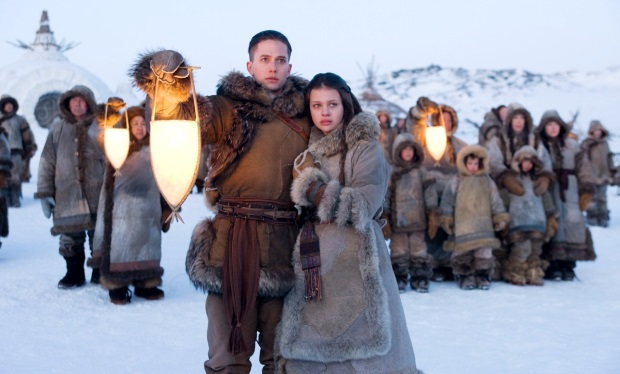
There is inadequate space here to fully explore all of the fantasy films that came out in the wake of The Lord of the Rings. Other books were adapted for the screen, such as Eragon and The Golden Compass, but for the most part these were failures or at least not successful enough to warrant sequels. The Chronicles of Narnia made it to three movies before running out of steam, and an adaptation of the Nickelodeon epic fantasy animated series Avatar: The Last Airbender was a colossal failure both artistically and financially.
A few non-epic fantasy films were successful in this time, such as Guillermo Del Toro's Pan's Labyrinth, but for the most part the post-Lord of the Rings fantasy landscape was littered with failures and bombs. The biggest successes had been in animation, particularly the How to Train Your Dragon franchise. The return to success of science fiction through films such as James Cameron's Avatar, coupled with the growing success of superhero movies, soon saw attention move away from fantasy. It would appear that the only thing that could replicate the success of Tolkien on screen would be, well, more Tolkien on screen.
The Hobbit
The status of The Hobbit's film rights was a complicated mess that took Hollywood lawyers the better part of two decades to finally unravel. But unravel they did, clearing the way for a film adaptation. Peter Jackson wisely declined, instead offering to produce and inviting Guillermo Del Toro to direct a two-film version of the book. A potentially fascinating collaboration was scuppered by politics: the involved studios wanted another blockbuster trilogy. With the legal questions not fully answered and time slipping away, Del Toro moved on to other projects and Jackson felt compelled to step in and save the project.
Released annually between 2012 and 2014, it would be fair to say that the Hobbit trilogy did not achieve quite the same result as the Lord of the Rings. The Hobbit movies see a very short novel (only one-fifth the length of The Lord of the Rings in book form) stretched over three films and almost nine hours. The story isn't strong enough to support this and the films resort to significant amounts of filler to pad out the length. The Hobbit films also make the mistake the earlier trilogy couldn't due to budgetary restrictions, by drowning almost every scene in CGI and prioritising effects over character. Fortunately, Jackson isn't completely blind to this and pulls things back from being a total disaster (as problematic as the trilogy is, it's nowhere near the Star Wars prequel trilogy level of disappointment) to deliver some very fine scenes and, in Smaug, the best dragon yet realised for the screen. But it's certainly an underwhelming work.
If epic fantasy in film had achieved anything, it would be to expose a limitation of the genre: epic fantasy works at its best with time to breathe, to introduce the world and grow the character over a much longer timeframe than a single two hour movie allows. The Lord of the Rings realised this and told its story over, in the extended editions, more than eleven hours, or about the length of a cable drama TV season. This hinted at the way forwards for epic fantasy, not on the big screen but the small.
Spoiler warning: This review is being posted on the film's day of release and some spoilers are discussed.
The company of Thorin Oakenshield has reclaimed the Lonely Mountain, but in the process has unleashed the dragon Smaug on the surrounding lands. With armies gathering to storm the mountain, refugees flooding out of Laketown and Gandalf imprisoned in Dol Guldur, it once again falls to a single hobbit to try to save the day.
The Battle of the Five Armies is the third film in Peter Jackson's Hobbit trilogy, a piece of avant-garde experimental cinema determined to find out if you can extract three movies totalling eight and a half hours from a single 288-page children's novel. If An Unexpected Journey told us "Probably not," and The Desolation of Smaug suggested "No, not at all", The Battle of the Five Armies concludes, "No, and seriously is this poorly-choreographed CGI fight scene going to go on much longer?"
This is not to say that Battle is an unmitigated disaster or is not, in parts, enjoyable, just that this trilogy pretty much ends as it started and continued: some very reasonably well-written scenes between skilled actors (Martin Freeman, Ian McKellan, Cate Blanchett, Richard Armitage etc all on top form), a lot of special effects of varying quality and a lot of shots of orcs trying to stab people who are trying to stab them back, except for some reason the orcs are now almost all computer-generated and distinctly unconvincing.
Based on the end of Desolation, I was expecting an interminable sequence in Laketown as the dragon prepares to arrive and all the dwarves left in the city in the last film help save the day. Instead they all leg it within minutes of the film starting (completely negating the need to have them split up at all) and the entire Laketown episode is done within a quarter of an hour. This is quite cheering, and the film proceeds at a fairly brisk pace as armies gather, Thorin is consumed by the dragon-lust for gold and some tense negotiations unfold between Thranduil, Bard and Thorin. Even the newly-introduced subplot with Gandalf imprisoned in Dol Guldur is resolved with commendable swiftness, complete with shots of Elrond kicking backside and Galadriel reprising her "Evil Crazy Enya" role from Fellowship which was weird enough the first time around.
This focus, a cheering welcome after dubious scenes of ill-judged comedy and the pointless dragon skirmish that seemed to last longer than the Thirty Years War in the previous film, then goes out the window once battle is joined. On the one hand, Jackson uses a bird's eye camera view to very cleverly establish the battlefield and the different fronts that the fight takes place on. With Tolkien's description of the battle taking up just a few lines in the novel, Jackson has to flesh it out to a multi-front battle taking place before the gates of Erebor, in the surrounding hills and then degenerating into messy urban warfare in the ruined streets of Dale. This is all great. On the other, the battle then goes on for well north of an hour of scenes of people whacking one another with swords. To mix this up, Jackson moves away from the big battle scenes after a bit to focus on a series of duels between key protagonists and antagonists, with Legolas, Tauriel and Kili squaring off against Bolg and Thorin taking on the menacing Azog. However, duels are best when they are focused affairs and the mixing of the two duels with one another and with occasional divergences to what Bilbo or Bard is up to drains them of a lot of dramatic tension. Those who hate the "Superelf Legolas" of the previous movie will also not be happy here, with way too many scenes of the CGI version of Orlando Bloom pulling off some crazy acrobatic move against all the odds. One scene of Legolas air-surfing across some falling rocks may actually make you want to drop an EMP bomb on Weta Digital's offices to make them stop.
Oh yes, and at one point four sandworms from Dune show up, do nothing apart from dig some tunnels that some of the orcs use (for no apparent reason, as then tons more arrive overland) and leave.
The trilogy's use of CGI at the expense of the natural beauty of the New Zealand countryside has been one of its biggest problems, and Battle initially seems to rally against that with some great scenes on the banks of the Long Lake filmed apparently entirely on location with nary a CGI vista in site. However, it's not too long before this is abandoned and once again we are in plastic backdrop city. The use of CGI becomes inexplicable here, especially when Dain Ironfoot shows up and everyone gets excited to hear Billy Connolly speak up, only to discover in close-ups that he's an unconvincing CG mannequin. What the actual hell?
The conciseness Jackson shows in the early going of the film is also frittered away as the battle scenes wear on wearily. Bard spends vast amounts of time looking for his children. Stephen Fry's minion character from the previous films get a quite unnecessary and time-consuming subplot of his own where he does precisely nothing. Legolas and Tauriel have to take a side-trip to Gundabad for no reason (a trip of several hundred miles which they accomplish in less than 24 hours with no explanation whatsoever). Jackson also goes a bit weird by pulling out one of the five armies from the books (no wargs here) and replacing them with flying bat-demon things, but then introduces a second army of different orcs. In fact, there's at least six armies fighting at the battle (seven if you count Team Thorin as a distinct faction) just to make things even odder.
Working against this are the actors, who as usual deliver even when faced with awkward exposition or having to act against tennis balls, and Howard Shore's soundtrack. After a fairly unmemorable second movie he comes back strong here with some nice new themes. And Jackson does stick the landing with this one: Battle's ending is fairly focused with a minimum of goodbyes and finding an excellent way of segueing into Fellowship of the Ring whilst staying true to the original novel.
The Battle of the Five Armies (***) starts off very well, gets bogged down in some overlong action scenes, and then recovers for a reasonable ending. But of the three it's the one that suffers the most from the decision to split the slim novel into three films. It's the shortest movie of the six Middle-earth flicks that Jackson has directed, but there are moments when it feels like by far the longest, and it's the one that is most obviously weakened by an over-reliance on computer graphics at the expensive of real actors and a dramatically satisfying script. It's an entertaining popcorn movie, but it cannot be anything other than disappointing to realise it's been released almost thirteen years to the day after The Fellowship of the Ring, which managed to be much more than that and still the greatest epic fantasy movie ever made. The film is on general release now.
Spoiler warning: This review is being posted on the film's day of release and some spoilers are discussed.
Bilbo and the thirteen dwarves have escaped from the orcs on the banks of the Great River and made their way to the home of Beorn. From here they must brave the depths of Mirkwood and cross the Long Lake to finally reach Erebor and conclude their quest. Meanwhile, Gandalf is summoned south to investigate rumours of great evil stirring in the abandoned fortress of Dol Guldur.
The Desolation of Smaug is the middle film of The Hobbit movie trilogy, Peter Jackson's prequel to the Lord of the Rings movies of a decade ago. Its predecessor, An Unexpected Journey, had a mixed reception last year with its lighter tone, great performances and occasional visual splendour being lauded but the overlong running time, over-use of CGI and jarring tonal variances being criticised.
The Desolation of Smaug is, thankfully, a stronger and more consistent movie than its predecessor. Indeed, it feels like Jackson has even listened to his critics, though with most of the trilogy in the can before the first film was released this seems impossible. Still, it may have affected his editing choices. The film is both punchier and pacier than the first movie. Action beats and quieter moments of character-building support one another more organically and there's a distinct lack of totally time-wasting, filler material: no overlong goblin king japery or random moments of erinaceidae resuscitation here. That's not to say there aren't moments that could have been trimmed (most of the action sequences tend to go on a bit longer than they should, though not to the extent of the likes of Man of Steel or The Matrix Reloaded), but generally you can see what Jackson was aiming for and most of his ideas - this time around anyway - are actually good. Sequences that could have bogged down the movie are surprisingly brief: the interlude with Beorn (thankfully much more convincing in motion than the early photographs) is so quick, to the point, effective and then dispensed with that it's hard to believe that Peter Jackson directed the sequence. Presumably a 35-minute version of the scene will be on the extended cut.
Similarly, the trip through Mirkwood unfolds at a rapid, crisp pace, with montages used to depict the wearying journey rather than having it just go on and on. The passage through Mirkwood is one of the areas where the book slows to a crawl and it's rather pleasing that this is one area that the film handles more effectively than the novel. Jackson employs some cleverness - or cliche, depending on your POV - to depict the talking spiders by having the Ring translate their hisses into speech. This idea is not incompatible with what was shown in Rings (with Frodo first hearing Sauron's Black Speech and then what he was saying in Westron) and handily gets around what appeared to be a tonal incompatibility between The Hobbit and Rings (talking animals are present in the former but not in the latter). Jackson again strikes gold by suggesting that Bilbo's surprising viciousness in combat is driven by the Ring and layers some moments of internal struggle into the film, as Bilbo is shown being surprised by this new side to himself, but willing to use it when things get rough. This is a darker, more edgy Bilbo than we saw in the first film and Martin Freeman relishes the chance to play him.
The visit to Thranduil's realm is where the film threatens to go off the rails. Intriguing ideas (like Thranduil being hideously scarred from a previous battle with a dragon but masks it with magic) are presented here and Evangeline Lilly debuts as new character Tauriel, the captain of Thranduil's guard. Tauriel is a more earthly warrior-elf than Liv Tyler's Arwen from the first trilogy, less likely to bog down in emotional self-examination and instead get out and take action. Lilly - who had retired from acting after concluding her role on Lost - provides a stronger performance than some of the material warrants: her flirtation with Kili (Aidan Turner) only really works because both actors sell it so well but some of the dialogue is painful. Fortunately, it's less interminable a relationship than Aragorn and Arwen's constant angsting in the original trilogy.
Less successful is Orlando Bloom's reintroduction as Legolas. Much as the make-up and effects teams do their best, they can't totally hide the fact that Bloom is a decade older (and, a pain I can relate to, just ever so slightly heavier). In particular, he seems to be wearing some contact lenses that look slightly unnatural and make him look a bit more ethereal than in the original film, something I found distracting. Legolas also has no real role in the film: what should have been perhaps a background cameo in the elven-king's hall has been fleshed out into an arse-kicking action hero, the character who took down a mumakil singled-handedly in the original trilogy here turned up to eleven. The scenes where he's using the dwarves' heads as stepping stones to cross a river whilst shooting down multiple orcs are less 'badass' and more 'unconvincing' due to the amount of obvious CGI in use. A scene where he mocks a picture of Gloin's son is also amusing until the film decides to spell out the irony of that son being Legolas's future sparring partner Gimli in neon glittering letters fifty feet tall. Yeah, we got it, Peter.
The Laketown interlude works surprisingly well in the film.
A more surprisingly successful decision is the one to flesh out Laketown. What was a brief waystop in the novel turns into a full episode in the film, complete with scheming intrigue between Stephen Fry's Master of the Lake (not a role that stretches him, but one he plays to the hilt anyway) and Luke Evans's well-played Bard the Bowman. There's also a potentially controversial decision to split the dwarves up here into two camps, but this actually works out well, giving us a leg in both locations where the inevitable showdown with Smaug will unfold.
The film's climax - or the closest we get to one - involves the showdown between Bilbo and Smaug in the caverns of Erebor. This goes pretty well, with Benedict Cumberbatch bringing the requisite level of menace to the dragon, up until the confusing decision is made to give the dwarves an epic battle of their own with Smaug. This results in much running around and jumping on machinery in an over-clever attempt to kill the beast. It appears this scene stems from a perceived (but unnecessary) need to have the dwarves more active in the battle with Smaug, but all it does is reduce the threat of the dragon. Given the flashbacks in the first film showed him storming the fortress and slaughtering hundreds or thousands of dwarves in minutes, the ease with which nine dwaves give him the run-around makes him look like an idiot and the concluding scenes (which are from the novel, where they are much more logical) unfathomable.
Spliced between these scenes are why this had to be a trilogy in the first place: the new storyline where Gandalf travels to Dol Guldur to investigate the mysterious 'Necromancer'. These scenes would be creepier if the Rings-seasoned audience wasn't sick of ancient, mysterious and creepy towers by this point. Gandalf's face-to-face confrontation with the Necromancer is also rather disappointing, and carries less weight than his fight with Saruman in Fellowship of the Ring (the use of Gandalf creating a magical force shield complete with lighting and strobing effects is also rather unnecessary compared to the more subtle effect he uses to stand against the balrog in the original trilogy). Watching through these scenes, one can't but help feel that Tolkien's decision to keep the Necromancer as an off-page threat was the correct one.
Ultimately, The Desolation of Smaug (***½) is more watchable, drags far less and is less twee than its predecessor. The new characters and actors all do great work, the effects are better and more of the dwarves are given their moments in the sun (even Bombur takes a level in badass at one point and turns into an orc-killing machine). New locations, characters and subplots - even non-Tolkien ones - are inserted into the story with more skill than I think many were expecting, and Jackson is able to tie most of the narratives together satisfyingly (the Dol Guldur strand excepted, which still feels too disconnected from everything else). But where the film comes undone - to the point of triggering audible gasps of horror and then anger from the audience I watched the film with - is the exceptionally bad choice of where to end the film. The last act of the film builds and builds to an epic showdown...only to push it off at the last minute to the next film. If this was in just the main storyline it could perhaps be borne, but no less than five plots and subplots are all left on cliffhangers for the final movie, robbing this one of any sense of satisfying climax or catharsis. It's a poor editing choice by Jackson, one which will presumably leave the next film with a very muddled and anti-climactic opening.
The Desolation of Smaug is on general release now and will be released on DVD and Blu-Ray, again twice over, in 2014.