Showing posts with label terry brooks. Show all posts

Monday, 10 March 2025

Terry Brooks announces semi-retirement from writing

Fantasy author Terry Brooks has announced that he is "semi-retiring" from writing at the age of 81. His Shannara setting will continue to be explored through new books by Delilah Dawson, with him providing advice, editing and feedback. Brooks noted that his recent writing had become more difficult mentally and physically for him, and he wanted to bow out before his skills degraded further.


Terry Brooks began his career as a lawyer, and started writing as a spare-time hobby. A fan of Tolkien, he began writing his first Shannara novel in 1968 and completed it in 1974. He submitted it for publication, and Judy-Lynn Del Rey at Ballantine Books picked it up. She worked with Brooks on a thorough revision of the novel for over two years, because she had a firm belief it would be a commercial smash if handled right. Towards the end of the editing period, Ballantine gave Del Rey and her husband Lester their own imprint, Del Rey Books, and they selected Brooks' novel to be one of their first titles.

The Sword of Shannara was published in early 1977 and was an immediate smash hit, despite derisive critical reviews for its alleged similarities to Lord of the Rings. Alongside Stephen Donaldson's Lord Foul's Bane, the first book in The Chronicles of Thomas Covenant, the novel was credited for kickstarting the post-Tolkien epic fantasy boom.

Brooks took a while to capitalise on the success. His planned sequel novel did not work out well, and he eventually junked the book to start over with a new title called The Elfstones of Shannara. Finally published in 1982, the book was more warmly critically-received (and is still often cited as his best novel) for taking the series in a different direction. The Wishsong of Shannara concluded the initial Shannara Trilogy in 1985.

Brooks did not immediately plan to over-exploit the series and instead wrote a new series of comedic fantasies called the Magic Kingdom of Landover series, which saw a person from our world inherit ownership of a fantasy kingdom, with resulting hijinks. The first book was titled Magic Kingdom for Sale - SOLD! (1986) and was succeeded by five more books, published irregularly until 2009. The series never matched Shannara's profile.

He returned to the world of Shannara in with the four-volume Heritage of Shannara series (1990-93) and prequel novel First King of Shannara (1996). His apocalyptic urban fantasy series The Word & Void (1997-99) initially appeared unconnected but was later revealed to be a prequel to the Shannara series, revealing how our world becomes the one seen in the books.

After this point he wrote the Voyage of the Jerle Shannara series (2000-2002), the High Druid of Shannara trilogy (2003-05), Genesis of Shannara trilogy (2006-08), Legends of Shannara duology (2010-11), Paladins of Shannara short story trilogy (2012-13), Dark Legacy of Shannara trilogy (2012-13), Defenders of Shannara series (2014-16) and the Fall of Shannara quartet (2017-20).

Galaphile, due for publication tomorrow (!), is the first novel in the First Druids of Shannara series and will now be the last novel written by Brooks alone. Delilah Dawson will complete the series with Brooks' input.

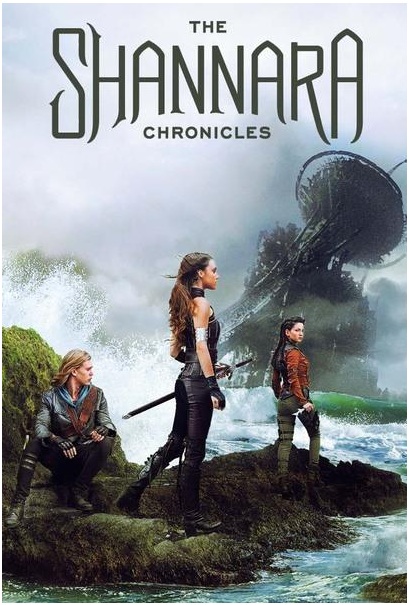
Brooks has also written or co-written several Shannara spin-off books. The series spawned both a 1995 computer game and a TV show that ran for two seasons on MTV in 2016-17 and kick-started the career of Austin Butler.

Brooks has written other works, including the Viridian Deep trilogy (2021-23), Street Freaks (2018), and a writing memoir, Sometimes the Magic Works (2003). He also wrote the novelisations for the films Hook (1991) and Star Wars Episode I: The Phantom Menace (1999).

Delilah Dawson is best-known for her Star Wars work, including the novels Phasma and Black Spire. She also worked on the Rick & Morty, Star Pig and Sparrowhawk comic series. Her original fiction includes the Blud series, Shadow sequence and, alongside Kevin Hearne, the Tales of Pell trilogy.

It's very unusual for an author to end their career gracefully and on their own terms. In a 48-year career, Brooks has published 45 novels in total, 33 of them in the Shannara universe, and sold over 50 million books, making him one of the biggest-selling living epic fantasy authors (possibly the biggest-selling, only behind George R.R. Martin). He was rarely a critical darling, but gained an enthusiastic fanbase by writing energetic, pulp fantasy and by being widely-regarded as one of the nicest guys in the business. Here's to an enjoyable retirement.

Wednesday, 17 January 2018

SHANNARA CHRONICLES cancelled

The Paramount Network has cancelled epic fantasy show The Shannara Chronicles after two seasons.


The TV series, based on the fantasy novels by Terry Brooks, debuted on MTV in 2016 before moving to Spike for its second season last year. Spike has been rebranded the Paramount Network, which is inheriting many of Spike's shows but not Shannara. The fantasy show featured extensive visual effects and location shooting in New Zealand, so was on the expensive side. With the second season (which, by looks alone, had already had a significant budget cut) bringing in only 500,000 viewers even after time-shifted and online viewings were factored in, it's unsurprising that Paramount was unwilling to move forwards with a third season.

The producers, Sonar Entertainment, may choose to shop the show to other channels, but the indifferent audience reaction, poor ratings and relatively high price tag make this unlikely.

The first season of The Shannara Chronicles was mediocre, but had flashes of good fun and had some good performances from the likes of Manu Bennett and Ivana Baquero. The second season (I've seen about half of it so far) was unfortunately notably inferior, looking considerably cheaper with much less story focus and spending too much time on the show's wooden lead.

Shannara follows Legend of the Seeker and Camelot into premature retirement and serves as a reminder to networks that if you want to build on Game of Thrones' success, you really need strong source material and writers who know what they're doing, not just deep wallets.

Wednesday, 4 May 2016

The Shannara Chronicles: Season 1

The Four Lands is threatened with a devastating invasion from demons. Millennia ago, the demons were imprisoned in the Forbidding, an alternative dimension warded shut by the Ellcrys, a giant magical tree. Now the Ellcrys is dying and the Forbidding is failing, allowing the demons to return. It falls to Wil Ohmsford (the half-elven descendant of the Shannara bloodline), Princess Amberle Elessedil and Eretria, a rover girl, to travel across the Four Lands and restore the Ellcrys and the Forbidding.


Terry Brooks's Shannara series holds an important place in the history of epic fantasy. The first novel in the sequence, The Sword of Shannara (1977), was the first big epic fantasy novel to hit the New York Times bestseller list since Tolkien, and along with Stephen Donaldson's Thomas Covenant series ushered in the modern era of fantasy novels. However, The Sword of Shannara has also become a byword for poor-quality fantasy that knocks off Tolkien rather than furthering the development of the genre. Given that the Shannara series (now encompassing twenty-eight novels) has sold almost fifty million copies worldwide, making it one of the biggest-selling fantasy series of all time (only A Song of Ice and Fire, The Wheel of Time, Discworld, Narnia, Middle-earth and Harry Potter - if you count it as epic fantasy - have sold more), it's surprising that it's taken this long for someone to attempt an adaptation.

MTV, sensibly, have ignored the first book in the series (presumably for fear of legal action from New Line) and have instead picked up with the events of the second, The Elfstones of Shannara. These early books in the series were stand-alones, so it's not too much of a problem. It was also a good idea to start with Elfstones as it is possibly the best book Brooks has ever written. MTV also made the very wise choice to emphasise the fact that the Shannara books are set in a post-apocalyptic version of the United States's west coast. Unlike the books, where geography has completely shifted and only vaguely recognisable remnants of the prior age can be seen, the TV show is partially set in the still-recognisable ruins of Seattle and San Francisco and at times adopts a post-apocalyptic vibe far more reminiscent of The 100 rather than Game of Thrones.

These attempts to give The Shannara Chronicles its own character and atmosphere are both laudable and ultimately futile. No design work, exceptional CGI or occasionally inventive genre-bending can make up for serious deficiencies in the script and casting, and the show suffers from both. Dialogue is frequently awful and occasionally reduces the viewer to tears of laughter. Characterisation is deeply flawed, with characters goals and motivations being artificially obvious and change at the whim of the plot. A lot of time is spent on subplots that go nowhere, and there is significant wheel-spinning (a visit to a town called Utopia is total padding). There is also a lot more sex and violence (if mostly of a PG-13 kind) than I remember from the book (including a tiresome  lesbian titillation scene) and a few "shock" twists that serve no purpose.  The villains are charismaless, boring monsters who are more than slightly reminiscent of the orcs from Peter Jackson's Middle-earth movies.

Among the major actors, John Rhys-Davies brings his standard avuncular charm to the role of the elven king but it falls to the charismatic Manu Bennett to single-handedly raise the acting bar for the whole cast. Ivana Baquero builds on the early promise she showed as a child star in Pan's Labyrinth to deliver a good performance as Eretria, ploughing through terrible lines with admirable enthusiasm. Poppy Drayton overcomes early episode woodenness to deliver some better moments as Amberle, but both actresses feel a little wasted on the material. Austin Butler, on the other hand, delivers a flat, one-note performance as Will that never rises above the mediocre. Of the other actors the only one who really stands out is James Remar, a veteran American actor who can chew scenery with the best of them and makes the best of a bad script.

Visually, the show is stunning. Some of the scene-setting CGI is remarkable and the use of the New Zealand landscape is often very well-done. Certainly the show is worth catching in HD if you do plan to watch it. Unfortunately the same cannot be said for the music, which draws on a range of MOR American pop with the occasional more interesting track thrown in (Ruele's title song is, fortunately, very good and props to the show for dropping in Woodkid's excellent "Run Boy Run"). But those looking for an original, sweeping, epic score will be let down badly.

The first season of The Shannara Chronicles (**) isn't a complete waste of time. It's visually impressive and cleverly overcomes both the limitations of the so-so soure material and the inevitable comparisons with other fantasy works by playing to its main strength, the post-apocalyptic setting. But in terms of writing, dialogue, acting (a few honourable exceptions aside) and soundtrack, it's a major disappointment. The season will be released on DVD (UK, USA) and Blu-Ray (UK, USA) on 7 June. It has, somehow, been renewed for a second season to air in 2017.

Friday, 27 November 2015

Opening titles for SHANNARA TV series revealed

MTV have revealed the opening title sequence to The Shannara Chronicles, their TV series based on the Shannara novels by Terry Brooks.


The TV series debuts on MTV on 5 January 2016.

Sunday, 11 October 2015

SHANNARA CHRONICLES gets airdate and trailer

The Shannara Chronicles has gotten its airdate: the ten-episode first season will debut on MTV in the USA on 5 January 2016.


There's also a new trailer (see above) expanding more on the characters and world.

Saturday, 12 September 2015

A History of Epic Fantasy - Part 9

If 1977 was the year that epic fantasy came of age, it took another couple of years for the genre to start unfolding in earnest.


Stephen Donaldson rapidly followed up on Lord Foul's Bane with two sequels, The Illearth War (1978) and The Power That Preserves (1979), completing The Chronicles of Thomas Covenant, the Unbeliever. He then immediately launched into The Second Chronicles of Thomas Covenant, which attempted to answer the lingering questions from the first trilogy, such as whether the Land is real or not, by introducing a second major POV character, Linden Avery. The Wounded Land (1980), The One Tree (1982) and White Gold Wielder (1983) were also big sellers, establishing Donaldson as a successful author.

However, Terry Brooks took a bit longer to follow up on the success of The Sword of Shannara. He'd taken a decade to write the first book and was still writing around his law practice hours. This problem was magnified by his originally-planned sequel being rejected by Del Rey Books when it was three-quarters done (with Brooks struggling with the ending). This necessitated a page one restart and rewrite. This proved fortuitous, for although it delayed the publication of The Elfstones of Shannara until 1982 it also resulted in a rather stronger book than otherwise may have proven the case. The Elfstones of Shannara, although another classic quest narrative, was considerably different to its predecessor (and Tolkien) and was much more warmly received. It's still widely regarded as Brooks's best novel, and forms the basis for the first season of the Shannara TV series due to start airing in January 2016. In fact, Brooks was unusually slow (compared to some of his contemporaries) to exploit the Shannara brand. The third novel, The Wishsong of Shannara, did not appear until 1985 and it would be another five years before he returned to the setting with the four-volume Heritage of Shannara series, after a stint writing the Magic Kingdom of Landover comic fantasy series.

During this period another highly influential work appeared, although it is not epic fantasy in itself. Instead, Gene Wolfe's Book of the New Sun (written as one novel but published in four volumes between 1980 and 1983) belongs to the Dying Earth subgenre of fantasy, being set on Earth in a remote future epoch when the Sun is dimming. Influenced by Jack Vance's Dying Earth series, the Book of the New Sun can be read as a sustained study of fantasy tropes. The "hero", Severian, is a torturer who has committed amoral acts and is only moved to a more repentant life when he falls in love/lust with one of his victims. As the story continues it becomes clear that Severian is some kind of "chosen one", but he is isn't necessarily a benevolent or kind one. In fact, Wolfe makes it clear that Severian is a liar, and the novel is riven with the inconsistencies and contradictions of a supremely unreliable narrator. Wolfe also equips Severian with a number of magical (or highly technologically advanced) weapons and items, such as the execution sword Terminus Est, but unlike many epic fantasies Severian is not dependent on such trinkets, and achieves his destiny by his own means. The Book of the New Sun and its sequel, The Urth of the New Sun, are both rationalised and revisionist fantasies, challenging the conventions of the genre but employing them to make their points. Two sequel series, The Book of the Long Sun and The Book of the Short Sun (the three series combined forming the 12-volume Solar Cycle), are more overtly SF.

More traditional epic fantasy had to wait until 1982, when two more important and influential books arrived within a few months of each other.


Pawn of Prophecy

David Eddings had been a frustrated writer for many years. He'd published an adventure novel, High Hunt, in 1973 but it had not been a big success. In his late forties he was considering his next writing project when he was surprised to see a copy of The Lord of the Rings on a shelf in a bookstore. His reaction was to say "Is that old turkey still around?" Then, leafing through the book, he was shocked to see it was on no less than its 78th printing. Realising there was money in them there epic fantasy hills, he went home, revised an old fantasy map he'd doodled a few years earlier and set to work.

Eddings did not write alone but collaborated with his wife, Leigh. Together they wrote a traditional (but not completely standard) epic fantasy trilogy and started shopping it around. Lester del Rey, searching for a follow-up to The Sword of Shannara, fell on it like a starving man and not only published it but blitzed it with ideas: the three books were chunky, so he divided them into five novels with slightly corny chess-inspired titles. He then decided that co-authored books would not sell (Weis and Hickman, two years later, would prove him wrong on that) so he had them credited to David Eddings alone, something that mildly irked the writers until they were able to change it a decade later. With some canny marketing and more maps than you can shake a stick at, the result was one of the key early works of epic fantasy: The Belgariad.

The Belgariad opens with a farmboy, Garion, discovering that Dark Forces are awake in the world and have taken a Special Interest in him. He is whisked away from his home by the Grumpy Mentor Wizard Belgarath and learns that he is the Chosen One who will both oppose the Dark God and is fated to rule as the High King of Riva. He reluctantly falls in love with a Feisty Princess, Ce'Nedra of Tolnedra, and eventually defeats the bad guys with the help of Prophecy.

The series is pretty standard, but has a few individual flairs. None of the standard fantasy races are involved, the tone is reasonably light-hearted throughout and the characters are all pretty damn reasonable. Sworn blood-enemies become best friends just by chilling with one another for a while and even the bad guys are treated with compassion. In fact, the sequel series (the considerably inferior Malloreon) is largely concerned with bringing in former enemies from the cold to work with them. There is a lot of humour, and although a lot of it is tired and repetitive there are some genuinely good ideas: the prophecy is semi-sentient and at times seems exasperated with the poor material it has to work with (less-whimsical echoes of this may be detected in The Wheel of Time). None of this is earth-shaking stuff, but it does make The Belgariad a little bit more interesting and bearable than it might be otherwise. The series has more recently been repackaged as a Young Adult series, which is a sensible move that has won it over a legion of new fans.


Magician

One of the curses of epic fantasy, and indeed any author who opens with a massive hit, is that authors often find it hard to achieve that success again with another work. The preponderance of long series in fantasy is partly down to this issue. Stephen Donaldson found that his sales more than halved when he completed the then-six volume Thomas Covenant series in 1983 and moved on to Mordant's Need, a less serious, more Zelazny-influenced duology. When he moved on again to space opera, with the brilliant Gap saga, his audience more than halved again. It wasn't until he returned to the Land with The Last Chronicles of Thomas Covenant in 2004 that he found his sales shooting back up again. Frank Herbert experienced the same issues when he moved away from his Dune series.

Raymond Elias Feist's experience is a bit odder. He's sold somewhere in the region of 30 million copies of his thirty novels, which is impressive. However, apparently between one-quarter and one-third of those sales have come from his debut novel alone: Magician.

Feist started writing Magician in 1977, when he was 32 years old. He was a mature student at the University of San Diego and, whilst studying, played roleplaying games with some of his fellow students, initially on Thursday nights and later on Friday nights. One of the other guys in his gaming group, Stephen Abrams, had created his own fantasy world complete with a detailed geography and history. The group collaborated on producing materials for this world, which was dubbed Midkemia. With their permission, Feist started writing a novel set 500 years before the "present" of the setting.

Magician was published by Doubleday in 1982 and was an immediate success, winning some laudatory reviews and soon some big sales. As a debut novel, it has some problems in prose and dialogue, but for the most part it is a fast-paced, action-packed and rather unusual fantasy novel which disposes of many of the key features of the genre.

The book opens with two young boys, Pug and Tomas, living and working in the castle of Crydee, the administrative capital of the lightly-settled Far Coast of the Kingdom of the Isles. This remote, largely-neglected area is thrown into chaos when a strange ship washes up on the nearby rocks and mysterious invaders are soon spotted in the nearby forests and mountains. It is soon revealed that a magical portal has been discovered, linking Midkemia to the world of Kelewan. Kelewan is light in metals and the powerful Tsurani Empire wants to establish a foothold on Midkemia to strip-mine its resources. The Kingdom, allied with the local elven and dwarven kingdoms, soon launches a military campaign against them and the result is a desperate struggle, with the Kingdom's numerical superiority threatened by the Empire's more devastating and powerful use of magic in war. Tomas inherits the magical powers of a long-vanished race and is able to turn the tide against the Tsurani at the risk of his own soul, whilst Pug is captured and taken to Kelewan.


Magician is a novel that pays homage to standard tropes: Pug is an orphan boy with a great destiny, there is a desperate journey through an ancient mine which splits the party of the heroes and there are numerous, large battles. However, the book also dispenses with other cliches: Pug's parentage is utterly irrelevant (they were just peasants and Pug has no bloodline-related fate; sometimes a spade really is just a spade), the ancient magical spirit in the mine is friendly and, very weirdly, there is no main bad guy. There are antagonists, such as the Tsurani Warlord and Guy du Bas-Tyra, but one of them is merely an opportunist and the other is redeemed in one of the sequels. The characters are instead all at the mercy of circumstances. There are no prophecies and no dark lords.

Magician is also, refreshingly, a stand-alone novel. It ends fairly decisively and the narrative is self-contained. Feist did write more material setting up sequels, but this was cut by the editors; his revised edition of the novel, published in 1992, reinstated these elements but the book remains very readable on its own terms. In fact, Feist did such a good job of wrapping up the story that only a relatively small number of readers moved onto the sequels, although still enough for them to sell very, very well.

Magician's impact on the genre can be seen in several key ways. It was the first epic fantasy novel to be spun directly off a roleplaying campaign. It was the first epic fantasy book to be built around collaborative worldbuilding. It also took on board elements of travel between multiple worlds and realities, bringing in both a second planet to serve as a location as well as different planes of reality. Sword and sorcery had dabbled with this (such as in Moorcock's own multiverse) but Feist's version was more orderly and less chaotic.

It also established a slightly iffy precedent for the publishers of epic fantasy to split up novels into smaller volumes for financial gain. Magician is not a very large book (under 300,000 words, maybe even shorter than The Sword of Shannara) but the paperback was split into two volumes for the US paperback, entitled Magician: Apprentice and Magician: Master. The UK edition remained in one volume. Annoyingly, many later and more recent books have suffered from this as well, with a lack of coherence on what makes a book too big for one volume. Obviously Tad Williams's To Green Angel Tower (at 520,000 words) was too big for one volume but it's also clear that George R.R. Martin's A Storm of Swords and A Dance with Dragons (both 420,000 words) - both split in the UK - could have both been one volume each in paperback, and in fact were in the USA. More recently, the UK edition of Pat Rothfuss's The Wise Man's Fear was published in one volume but Brandon Sanderson's Way of Kings and Words of Radiance were both split, despite the books being all the same size and the publisher being the same (Way of Kings has since been reissued in one volume, suggesting that Sanderson's sales are now high enough to justify the one-volume treatment).

Magician was a solid book with some nice humour in it, but epic fantasy as a whole remained a fairly serious field at this point. But fortunately there had already been some attempts to make a funny epic fantasy, and the biggest fantasy series since Tolkien was about to begin with a warm satirising of the genre.

Sunday, 6 September 2015

A History of Epic Fantasy - Part 8

Lester del Rey (1915-93) was a science fiction writer and the editor of the old school. He began his career in the 1930s, during the first golden age of science fiction, writing and editing for several magazines and working alongside such luminaries as John W. Campbell and, later, Damon Knight.


In the 1970s, del Rey went to work for Ballantine Books. His fourth wife, Judy-Lynn, was already working for them and had built up a stellar reputation as an editor, with both Isaac Asimov and Philip K. Dick (giants of the SF field) singing her praises at length. Judy-Lynn had a canny business sense, and in 1976 had heard of a pulp science fiction movie being shot in England by George Lucas (then still riding high on the success of American Graffiti). Despite doubts from the publishers, she successfully negotiated for Ballantine to release a tie-in novel and drafted in Alan Dean Foster to do the job. The novel, Star Wars: From the Adventures of Luke Skywalker, was released in November 1976 - six months before the movie was released - and became an instant bestseller, playing a key role (though now largely forgotten) in building up hype for the film.

The successful work of the del Reys at Ballantine convinced the publishers to give them their own imprint. The imprint started off by reprinting earlier books: a new edition of Arthur C. Clarke's Prelude to Space was the first book published under the imprint in December 1976, followed by the Star Wars paperback in February. That paperback would go on to sell over a million copies over the next year or so, formidably boosting the reputation and negotiating power of Del Rey Books.

Still, these were reprints of other people's work. The del Reys wanted some books of their own to give their new imprint a big boost. Judy-Lynn had been working with an author named Terry Brooks for a couple of years on his debut novel, a large, Tolkien-esque epic fantasy complete with huge battles, elves, dwarves and callow heroes from a rural background searching for a magical talisman of huge power to defeat a dark lord. Brooks had written the novel between 1967 and late 1974, at which point Judy-Lynn had provisionally accepted it for publication. However, the rewriting and editing process took over two years. The unusual amount of work that went into the novel was down to the del Reys' confidence that the novel had enormous commercial potential (despite Lester's preference for science fiction to fantasy) if Brooks could get it just right, in their estimation.

The Sword of Shannara was published at the start of 1977 (with the precise date appearing to be between March and May of that year), preceded by significant advertising and marketing hype. The book immediately hit the New York Times bestseller list (the first work of fantasy to ever do so) and sold tens of thousands of copies in both hardcover and paperback - the novel was, unusually, simultaneously released in both formats. The book also had the phrase "epic fantasy" on the cover, giving the subgenre its defining (if still debatable) name.

The del Reys scored a second major success within a matter of weeks when they released the paperback edition of Lord Foul's Bane, the debut novel by Stephen R. Donaldson. The book had been published at the start of the year in hardcover by Holt, Rinehart & Winston but, as was not uncommon in those days, the paperback reprint rights were put up for sale. Del Rey snapped them up quickly.

The two very different novels, by two very different authors but published by the same company within weeks of each other, pretty much defined the epic fantasy subgenre as we know it and showed that a surprising degree of variation was possible in a genre that would appear, at least initially, to be limited in its scope.


The Sword of Shannara 

Of the two books The Sword of Shannara was the bigger immediate success, despite being critically derided. The novel is very similar to The Lord of the Rings, starting in the pastoral landscape of Shady Vale were a group of callow youths are recruited by the druid Allanon to help fight against the machinations of the Warlock King. An elaborate backstory extending back over thousands of years is revealed, whilst the book features a map depicting the area covered by the story. The book is very similar to The Lord of the Rings, with the exception that the heroes are attempting to find the titular sword rather than already possessing it (as with the One Ring). At a key moment the heroes are separated, with the main character Shea having to proceed into the Northland alone to recover the sword and defeat the enemy. His comrades, meanwhile, lead the defence of the extremely Minas Tirith-esque city of Tyrsis against the invading armies of the Warlock King.

The Sword of Shannara was successful for several reasons. First of all, it was written in a very easy-to-read, comfortable and laidback style, especially when compared to The Lord of the Rings. It is a very approachable story. Secondly, no book quite like this had appeared since The Lord of the Rings (excepting, possibly, A Wizard of Earthsea, and that had very different goals). Fantasy fans wanting more of the same had gone without for over twenty years, so the book, despite its faults, satisfied that hunger. There was also the marketing, with substantial numbers of adverts appearing and the del Reys trading on their reputation in the field to help bring readers on board. The simultaneous paperback publication play a big role as well, encouraging readers to jump on board immediately rather than having to wait a year or more for the paperback.

Also a key fact was that The Sword of Shannara was a stand-alone, rather than the first chunk of a longer story. Sequels (eventually) followed, but The Sword of Shannara was a complete story with a beginning, middle and an end.

That the novel is enormously flawed is of course obvious: the book is far too similar to The Lord of the Rings in structure and in many of the particulars of the plot and characters, with numerous one-to-one correlations possible. The biggest difference also contributes to the novel's problems: the language and dialogue are extremely simplistic, there is limited thematic development and the book really doesn't succeeded in being anything more than a disposable popcorn read. To his credit, the author admitted and acknowledged these flaws, taking the later books in a very different direction to just being Tolkien clones. The later novels also play more with the one really good notion that Brooks inserted in the novel: that the Four Lands are actually a far-future, post-apocalyptic version of the Pacific North-West, with occasional ruins from our age being visible.

What the book did do was that it established that epic fantasy was a commercial genre with legs and tremendous commercial potential.


Lord Foul's Bane

Lord Foul's Bane was a very different book. It centres on the story of Thomas Covenant, a man from our world suffering from leprosy who must undergo a vigorous daily routine of self-checking and medication. His life is appalling. When he wakes up in a fantasy realm called the Land, healed and free from leprosy, he immediately concludes that he has gone mad and is hallucinating. Controversially, he sexually assaults a woman who appears to give him guidance and help; his guilt over this incident comes close to undoing him. As the story continues familiar tropes appear: Covenant and a party of companions must journey across the Land to Mount Thunder to thwart the machinations of Lord Foul the Despiser. Eventually Covenant succeeds, but then finds himself awakening in the real world, once again suffering from leprosy.

Whilst The Sword of Shannara was purely an entertaining romp, Lord Foul's Bane has allusions to literature and is a considerably darker, more controversial work. The book operates on a number of levels, with Covenant serving as an unreliable narrator and the reader unable to be certain that what's happening is real or a fantasy of Covenant's, created to keep him sane. The book keeps asking questions about reality and fantasy, with events in the Land apparently mirroring those in Covenant's "real" life.

The book also foreshadowed the later rise of the so-called "grimdark" movement. The Sword of Shannara had moments of danger and darkness, but generally speaking was a PG affair. Lord Foul's Bane is a colder, more brutal novel. Covenant himself is not a heroic figure and could even be called an antihero at times. His rape of Lena just a few chapters into the novel was hugely shocking and turned off a large number of readers (fewer fantasy novels have been bought in such numbers and then abandoned after a few chapters due to this). The book was also planned as part of a series from the off; although the primary action of the novel is resolved within the book, Lord Foul remains an extant threat at the end, setting the scene for the sequels, The Illearth War and The Power That Preserves (jointly known as The Chronicles of Thomas Covenant, the Unbeliever).

Of the two books, Lord Foul's Bane is the more challenging and difficult to parse. Despite this, it had much greater staying power than The Sword of Shannara. By 2004 more than 10 million copies of Lord Foul's Bane by itself had been sold, almost certainly a significantly higher number than Sword (Brooks has sold about 50 million copies in total of more than thirty novels, with Sword being a relatively small number of them). It dominated the sales of Donaldson's work, with the later books selling less (although still enough to hit the bestseller lists) and his non-Covenant novels selling negligibly in comparison.

The impact of Lord Foul's Bane was that epic, secondary world fantasy could be darker, grittier, more challenging and more difficult than the likes of Tolkien or Brooks, and used as a vehicle to tell other kinds of stories.


Star Wars

Of course, both Lord Foul's Bane and The Sword of Shannara were published in the same year that the original Star Wars movie was released. Although apparently science fiction, Star Wars had many of the familiar trappings of the traditional fantasy story: a young farmboy is taken off for a grand adventure by a sorcerer-mentor figure (who teaches him magic and badass swordfighting), linking up with an unlikely band of companions and then defeating the bad guys in a huge battle at the end (although of course key villains survive to ensure a sequel). The fact that the story was set in space with starships and lasers was almost incidental. More important was the central structure, which other films would borrow in a fantasy context. Films like Hawk the Slayer and Krull could almost be Star Wars movies, except for budgetary reasons it was easier to film them in forests and quarries and just have ordinary swords rather than lightsabres.

The direct impact Star Wars had on fantasy literature was more questionable, but certainly the frequent evocations of the same themes didn't hurt the commercial success of later fantasy writers at all. Indeed, George Lucas himself would attempt to remake Star Wars as a traditional epic fantasy with his 1988 movie Willow; when the movie did badly at the box office, scuppering plans for sequels, Lucas collaborated with X-Men comic writer Chris Claremont on a series of novels continuing Willow's story.

1977 established that there was a hunger for epic fantasy, as exemplified by The Sword of Shannara, Lord Foul's Bane and Star Wars. The long-awaited and posthumous publication of J.R.R. Tolkien's The Silmarillion in the same year also contributed towards this. These books had opened the floodgates, and it was now up for other authors to follow through.

Saturday, 11 July 2015

Trailer for THE SHANNARA CHRONICLES

MTV have released a trailer for The Shannara Chronicles, their ten-episode adaptation of the Terry Brooks epic fantasy novel The Elfstones of Shannara.


The new series will debut in early 2016. If successful, adaptations of some of the other Brooks novels will follow (although, presumably, not all thirty of them).

The trailer looks promising, more promising than the so-so source material (the Shannara books are strictly entry-grade fantasy, although Elfstones is probably the best of them) may have indicated. The books are fairly straightforward epic fantasy, but Brooks does introduce some distinctly weird moments in them and occasionally brings the setting's post-apocalyptic backdrop into use in unexpected ways. The books do evolve as they go along, however, with airships and the hints of advancing technology along the way. The trailer plays up the post-apocalyptic elements more strongly than may have been expected, whilst the visual effects are extraordinarily good. There's also some nice moments of genre self-referencing, particularly the casting of John-Rhys Davis (best known as Gimli in the Lord of the Rings movies) as the King of the Elves.

As a more family-oriented take on fantasy, this should prove an interesting contrast with Game of Thrones and other upcoming fantasy projects.

Friday, 11 July 2014

SHANNARA TV series greenlit

MTV has greenlit a ten-episode TV series based on Terry Brooks's Shannara novels. The first season will be an adaptation of the second novel in the series, The Elfstones of Shannara, presumably on the basis that trying to adapt The Sword of Shannara would result in near-instantaneous lawsuits from the Tolkien Estate and Peter Jackson.


Al Gough and Miles Millar, who produced Smallville, will work as showrunners on the new project, whilst Jon Favreau (the director of the first two Iron Man movies) will act as a producer. Jonathan Liebesman, the director of Battle Los Angeles, Wrath of the Titans and Teenage Mutant Ninja Turtles, will direct the first two episodes.

Friday, 6 December 2013

SHANNARA to become a TV series at...MTV?

Somewhat unexpectedly, MTV has bought the TV rights to Terry Brooks's Shannara series of fantasy novels. John Favreau, the director of the first two Iron Man films, is fuelling the adaptation and may direct the first episode. Smallville showrunners Al Gough and Miles Millar would helm the show on a week-by-week basis. Apparently, MTV has agreed a straight-to-series deal if they like the initial scrips, bypassing the pilot stage.


The plan is to adapt The Elfstones of Shannara, the second novel (the first, The Sword of Shannara, infamously sails a bit too close to the Tolkien winds) as the first season and proceed from there.

The hyperbolic Hollwood Reporter article contains some interesting factual errors:
"The Shannara books are estimated to be the highest-selling un-adapted fantasy book series in the world."
Apart from The Wheel of Time, the Drizzt Do'Urden books and The Dark Tower, of course.
"Brooks is considered to be the second-highest-selling living fantasy author, trailing only Harry Potter mastermind J.K. Rowling."
Not even remotely true. If the previous figures are accurate (26.5 million sales worldwide, 15 million or so in the USA alone), then Brooks has been outsold by Stephen King, Terry Pratchett, R.A. Salvatore, Christopher Paolini, Anne Rice, Stephanie Meyer, Charlaine Harris and George R.R. Martin have outsold him. If, as the article suggests, Brooks's sales are 26 million in the USA alone, that puts his world wide sales likely in the 40-50 million bracket. Even in that case, he's still been outsold by King, Pratchett, Rice and Meyer, and is at parity with Paolini.

Inaccurate reporting aside, this is interesting news. Avoiding The Swords of Shannara, which is both diabolically awful and 'similar' to Lord of the Rings, is a very good idea. The quality of Brooks's writing improves immensely after that first novel. However, given the quality of the source material (readable popcorn entertainment) and the creative forces involved (Smallville was watchable hokum at best), we're probably talking something a lot closer to Legend of the Seeker than Game of Thrones in tone and styling.

Wednesday, 12 September 2012

Terry Brooks's SHANNARA optioned as a TV series

After the success of Game of Thrones, it was only a matter of time before other epic fantasy works were snapped up for translation to the small screen. Now the first has been announced: an adaptation of the Shannara novels by Terry Brooks.


Terry Brooks's Shannara series was optioned several years ago as a big-budget movie to be helmed by Mike Newell, starting with an adaptation of The Elfstones of Shannara. This is the second novel in the series, chosen presumably due to 'significant' similarities between the first book, The Sword of Shannara, and The Lord of the Rings. However, the project stalled in development. Now it seems to have been revived, with Sonar Entertainment and Farah Films adapting Elfstones as a TV series. Sonar, under a different name, was previously responsible for the Lonesome Dove TV mini-series.

Obviously this is just an option, not a greenlight, and so far no director, showrunner or scriptwriter has been attached to the project.