Monday, 24 December 2012
Far Cry 3
A group of American tourists in Bangkok are convinced to visit the isolated Rook Islands, a beautiful tropical paradise off the normal tourist track. Unfortunately the islands are also in a state of civil war, with the native Rakyat tribe battling pirates and drug-runners who have taken over the area. The Americans are taken prisoner by the pirates, but Jason Brody manages to escape and find sanctuary amongst the Rakyat. He is trained in the ways of war, but as he seeks out his friends and tries to take down the pirate leader, Vaas, he risks losing his soul as the violence and conflict intensifies.
Far Cry 3 is the third title in the Far Cry franchise, though it is not a true sequel. It does not share any story or character elements with its two predecessors and can be played fully independently of them. What it does share is the same ethos: a dedication to providing a story-driven single-player experience within a sandbox environment, giving the player immense freedom in deciding how to proceed.
Far Cry 2 was heavily criticised for featuring a similar approach, but not doing enough with it. The game's annoyances - almost non-existent characterisation and of course the frequent road checkpoints with near-instantly respawning enemies which made travel across the map excruciatingly frustrating - overwhelmed the game's conceptual strong points, such as its 'buddy' NPC system and rich atmosphere. The designers of Far Cry 3 seem to have borne the previous title's problems in mind and provided a counter for every one of them whilst reinforcing those elements that did work. In short, Far Cry 3 finally fulfils the potential its predecessor squandered, and redeems the franchise.
The game employs a number of different systems which work in tandem to make it more engrossing for the player. There's a campaign story which you can follow, in which Brody rescues his friends one-by-one before trying to kill Vaas and his ally, the drug-runner Hoyt. However, at the start of the game Brody is a nobody with no combat training and no ability to carry lots of guns around. To improve your chances of survival, you can undertake training missions for the Rakyat or go hunting animals to improve your aim. Skinning these animals also allows you to craft holders, bandoliers and backpacks, allowing you to carry more ammo and gear. However, your map at the start of the game is almost devoid of any useful information: to open up more map information, you have to ascend radio towers and download information from them. Travelling around the islands is also hazardous due to enemy checkpoints and strongholds. To reduce the number of enemies roaming the islands, taking out these outposts is essential. Unlike Far Cry 2's instantly-respawning bases, however, the outposts in Far Cry 3 stay cleared once cleared. In fact, Rakyat forces soon show up and these outposts become havens for resupply and re-equipping between missions. Outposts also generate their own missions, with side-quests, further hunting challenges and assassination assignments becoming available.
In short, there is rarely a lack of something to do in Far Cry 3. It's up to you whether you pursue the single-player storyline to the exclusion of everything else, or put it on hold whilst clearing up all the side-quests first, or (more satisfyingly) mix and match as you proceed. There are whiffs of the Elder Scrolls and GTA series in the game's freeform structure, with the same potential for unintentional dark comedy: laying down a minefield to trap unwary enemies only for the mines to be detonated by a wayward crocodile, or standing triumphant at the entrance to a freshly-liberated outpost only to be run over by a jeep carrying your over-exuberant allies. The game's addition of upgradeable skills and experience points continues the franchise's evolution into a pseudo-RPG, whilst it is a huge improvement over both its predecessors due to its much stronger characters. I can't remember the name of a single NPC from Far Cry 2, but the likes of Vaas, Hoyt and Citra definitely rank amongst the more memorable characters from recent first-person shooters.
Graphically, the game is lush and even beautiful. Whilst not quite the equal of the still-astonishing Crysis in its depiction of a jungle environment, it is still a remarkable graphical environment. Combat is much more satisfying than its predecessor, with a pleasing mix of long-range sniper and close-up assault options. The 'magic binoculars' from Far Cry (and missing from FC2) return, allowing you to 'tag' enemies and keep track of them even through walls. Whilst still being completely nonsensical, they are nevertheless a vital and welcome tool to help plan attacks.
On the negative side, the game is tonally disjointed. The main storyline features a thematic element in which your character's evolution from urban city-dweller to mystical jungle warrior (complete with magical tattoos) is commented on, with a sideline in musings on the corrosive effects of violence on the soul. Whilst it remains interesting that a game which features shooting people in the head actually takes time out to dwell on the consequences of such violence, it's also the case that this element is not particularly developed very far. Also, every violent game of recent note has done this, leading to the suspicion that such an element is being thrown in as a sop to justify its violence rather than a genuine attempt at commentary. Less philosophically, the game sometimes feels like a bit of a mish-mash between a linear, story-driven adventure and an open-world free-for-all, with the two sides of the game not meshing as well as they could.
Ultimately, Far Cry 3 (****½) is a ridiculous amount of fun. As a pure first-person shooter, it's the finest example the genre has thrown up in several years. It's a careful and successful refinement of the best elements of its predecessors, with the negative factors mostly removed. Whilst not as broodingly atmospheric as the recent Dishonored, in terms of a game being a sheer joy to play, it's a triumphant success and one of the best games of the year. The game is available now on the PC (UK, USA), X-Box 360 (UK, USA) and PlayStation 3 (UK, USA).
Far Cry 3 is the third title in the Far Cry franchise, though it is not a true sequel. It does not share any story or character elements with its two predecessors and can be played fully independently of them. What it does share is the same ethos: a dedication to providing a story-driven single-player experience within a sandbox environment, giving the player immense freedom in deciding how to proceed.
Far Cry 2 was heavily criticised for featuring a similar approach, but not doing enough with it. The game's annoyances - almost non-existent characterisation and of course the frequent road checkpoints with near-instantly respawning enemies which made travel across the map excruciatingly frustrating - overwhelmed the game's conceptual strong points, such as its 'buddy' NPC system and rich atmosphere. The designers of Far Cry 3 seem to have borne the previous title's problems in mind and provided a counter for every one of them whilst reinforcing those elements that did work. In short, Far Cry 3 finally fulfils the potential its predecessor squandered, and redeems the franchise.
The game employs a number of different systems which work in tandem to make it more engrossing for the player. There's a campaign story which you can follow, in which Brody rescues his friends one-by-one before trying to kill Vaas and his ally, the drug-runner Hoyt. However, at the start of the game Brody is a nobody with no combat training and no ability to carry lots of guns around. To improve your chances of survival, you can undertake training missions for the Rakyat or go hunting animals to improve your aim. Skinning these animals also allows you to craft holders, bandoliers and backpacks, allowing you to carry more ammo and gear. However, your map at the start of the game is almost devoid of any useful information: to open up more map information, you have to ascend radio towers and download information from them. Travelling around the islands is also hazardous due to enemy checkpoints and strongholds. To reduce the number of enemies roaming the islands, taking out these outposts is essential. Unlike Far Cry 2's instantly-respawning bases, however, the outposts in Far Cry 3 stay cleared once cleared. In fact, Rakyat forces soon show up and these outposts become havens for resupply and re-equipping between missions. Outposts also generate their own missions, with side-quests, further hunting challenges and assassination assignments becoming available.
In short, there is rarely a lack of something to do in Far Cry 3. It's up to you whether you pursue the single-player storyline to the exclusion of everything else, or put it on hold whilst clearing up all the side-quests first, or (more satisfyingly) mix and match as you proceed. There are whiffs of the Elder Scrolls and GTA series in the game's freeform structure, with the same potential for unintentional dark comedy: laying down a minefield to trap unwary enemies only for the mines to be detonated by a wayward crocodile, or standing triumphant at the entrance to a freshly-liberated outpost only to be run over by a jeep carrying your over-exuberant allies. The game's addition of upgradeable skills and experience points continues the franchise's evolution into a pseudo-RPG, whilst it is a huge improvement over both its predecessors due to its much stronger characters. I can't remember the name of a single NPC from Far Cry 2, but the likes of Vaas, Hoyt and Citra definitely rank amongst the more memorable characters from recent first-person shooters.
Graphically, the game is lush and even beautiful. Whilst not quite the equal of the still-astonishing Crysis in its depiction of a jungle environment, it is still a remarkable graphical environment. Combat is much more satisfying than its predecessor, with a pleasing mix of long-range sniper and close-up assault options. The 'magic binoculars' from Far Cry (and missing from FC2) return, allowing you to 'tag' enemies and keep track of them even through walls. Whilst still being completely nonsensical, they are nevertheless a vital and welcome tool to help plan attacks.
On the negative side, the game is tonally disjointed. The main storyline features a thematic element in which your character's evolution from urban city-dweller to mystical jungle warrior (complete with magical tattoos) is commented on, with a sideline in musings on the corrosive effects of violence on the soul. Whilst it remains interesting that a game which features shooting people in the head actually takes time out to dwell on the consequences of such violence, it's also the case that this element is not particularly developed very far. Also, every violent game of recent note has done this, leading to the suspicion that such an element is being thrown in as a sop to justify its violence rather than a genuine attempt at commentary. Less philosophically, the game sometimes feels like a bit of a mish-mash between a linear, story-driven adventure and an open-world free-for-all, with the two sides of the game not meshing as well as they could.
Ultimately, Far Cry 3 (****½) is a ridiculous amount of fun. As a pure first-person shooter, it's the finest example the genre has thrown up in several years. It's a careful and successful refinement of the best elements of its predecessors, with the negative factors mostly removed. Whilst not as broodingly atmospheric as the recent Dishonored, in terms of a game being a sheer joy to play, it's a triumphant success and one of the best games of the year. The game is available now on the PC (UK, USA), X-Box 360 (UK, USA) and PlayStation 3 (UK, USA).
Cover art for Christopher Priest's THE ADJACENT
Given that waits for a new Christopher Priest novel are often measured in half-decades (or, in the case of the last one, a full decade), it feels like we're being spoiled with a new book so soon after his previous one. The Adjacent will be published in June 2013 and now has some cover art:
Priest calls this the longest and most complicated book he's ever written, which coming from the author of The Affirmation and The Separation is saying something.
Sunday, 23 December 2012
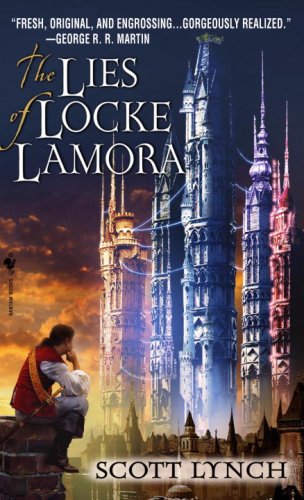
A LIES OF LOCKE LAMORA TV series?
The new Gollancz catalogue reveals some interesting information about Scott Lynch's Gentleman Bastard series.
For the obvious question, the catalogue reveals (on page 47) that the latest hand-in date for The Republic of Thieves (the third book in the series) is at the end of January. If Lynch can hit this date, the book will be published in July. Of course, after almost six years of getting hopes up, I wouldn't be too surprised if this date is not achieved.
More intriguingly, the press info also reveals that The Lies of Locke Lamora has been 'optioned for television'. I can find no information at all about that elsewhere online, which is odd as that kind of news is normally formally announced to the trade magazines before anywhere else.
More news as I get it.
For the obvious question, the catalogue reveals (on page 47) that the latest hand-in date for The Republic of Thieves (the third book in the series) is at the end of January. If Lynch can hit this date, the book will be published in July. Of course, after almost six years of getting hopes up, I wouldn't be too surprised if this date is not achieved.
More intriguingly, the press info also reveals that The Lies of Locke Lamora has been 'optioned for television'. I can find no information at all about that elsewhere online, which is odd as that kind of news is normally formally announced to the trade magazines before anywhere else.
More news as I get it.
Friday, 14 December 2012
The Hobbit: An Unexpected Journey
Many years ago, the dwarves of Erebor, the Lonely Mountain, were driven from their home by Smaug, last of the great dragons. Thorin Oakenshield, the grandson of the last King of Erebor, has vowed to reclaim his home and called upon the dwarven clans of Middle-earth to aid him. Rebuffed, he instead plans a daring raid of a few chosen dwarves to slay Smaug whilst he sleeps. To aid them, Gandalf the Grey has promised to recruit a skilled burglar: Bilbo Baggins, a hobbit of the Shire. Their journey will take them through forests and caverns, all the while being tracked by an old enemy of Thorin's...
An Unexpected Journey is the first movie in a trilogy based on J.R.R. Tolkien's 1937 novel, The Hobbit. That's Tolkien's short novel which, by word-count, is just under a fifth of the length of The Lord of the Rings. There's been enormous controversy about director Peter Jackson's decision to split The Hobbit into three three-hour films, with a fear that there simply isn't enough story to warrant it and this will result in padding. That is the threat that constantly hangs over the film and to be fair, it mostly avoids it by making a major change: Jackson has decided to show in full Gandalf and the White Council's side-story to confront and destroy the 'Necromancer' of Dol Guldur (a storyline that takes place off-page in the novel). Whilst also controversial amongst fans, it does give Jackson a rich vein of story to mine to add to proceedings, but how successful this will be remains to be seen (this subplot is only really started in the film).
The movie opens with the older Bilbo (still played by Ian Holm) writing an account of his adventure for Frodo and narrating the destruction of the human town of Dale and the neighbouring dwarven mountain-city of Erebor by Smaug. We then have the traditional opening from the novel, with thirteen dwarves and the wizard Gandalf turning up on Bilbo Baggins's doorstep to recruit him for an adventure. By the time the young Bilbo (Martin Freeman) agrees to join the quest, a rather surprising forty minutes has passed. This sequence risks interminability, but Jackson takes advantage of the time to introduce the thirteen dwarves and give them some character traits missing from the source material. James Nesbitt's Bifur in the somewhat cynical joker of the pack, whilst Fili and Kili are the over-eager young guns out to impress their older peers. Dwalin is the bruiser and Balin the wise old - and somewhat pedantic - sage of the group (Ken Stott is excellent in the role). Bombur is fat and little more than that. The real impact is made at this stage by Richard Armitage as Thorin Oakenshield. Armitage is charismatic and has steely resolve and presence in his role, and is the standout performance of the movie (and, dare I say it, impresses more than even Viggo Mortensen as Aragorn in the original trilogy).
As well as showing the Necromancer stuff on-screen, Jackson has made some other changes to the story to increase the dramatic weight of events. Thorin now has his own nemesis, a mighty orcish warrior whose arm he cut off in battle. This warrior, long-thought dead, has returned and is now chasing down Thorin and his band (a bit like Lurtz in the movie version of Fellowship of the Ring, but a lot smarter and more continuously present). It's another change that I think some won't like, but as a dramatic device it worked fairly well at introducing some tension to the film. However, what was really distracting is that this orc has the exact same skin tone and texture as the Engineers in Prometheus and is likewise gigantic. His story arc is left unfinished at the end of the film, so we can assume he will return in the sequel (rather cleverly, as it provides a potentially better way of explaining a subplot in that film than Tolkien was able to do in the book).
Elsewhere the film feels a lack of cohesion: the Necromancer plot has little to do immediately with Thorin's quest, so every time we cut away to Radagast the Brown (a great performance by the ex-Doctor Who Sylvester McCoy) trying to resuscitate hedgehogs (!) or Gandalf discussing backplot with Saruman and Galadriel for what feel like nineteen hours, the movie flags. In fact, the dwarves get so bored of Rivendell (missed opportunity: someone saying, "On second thoughts, let's not go to Rivendell. 'Tis a silly place,") they just up and randomly leave. Once the dwarves are back on the road together and causing mayhem, the film perks up and more fun is had, even if sometimes accompanied by some unconvincing CGI.
The scenes in the goblin caves in the Misty Mountains are entertaining, but also daft. Barrie Humphries as the Goblin King works rather better than most were likely expecting (and there's a humourous nod to Gandalf's "You shall not pass!" moment from the original trilogy), but the extended battle-and-escape sequence is too slapstick to really present much tension. This contrasts to the successful scene where Bilbo meets Gollum (Andy Serkis, on fire as always) and acquires the Ring, which is brilliantly acted by both parties and features some nice tonal variations from comedy to menace and back again.
Overall, The Hobbit: An Unexpected Journey (***½) can be called a qualified success. It has some big problems that Jackson has not been able to overcome: the storyline is too slight to sustain three hours and even with the addition of extra storylines and characters, there are some scenes which feel like wheel-spinning for the sake of it (most notably at Rivendell). There is also a near-omnipresent use of CGI in almost every scene of the movie. The original trilogy worked best when the camera was allowed to film natural landscapes or when miniatures were used to depict locations and give them a sense of reality and weight. Here, CGI is much more freely employed, often with less regard for hiding the fact it is CGI. In particular, there is a dearth of truly awesome shots of the countryside of New Zealand in all its glory compared to the original trilogy: here, even many of the landscape shots have been bathed in CGI until they glow with lens-flare. Even in 2D and at 24fps, the film has a 'faker' sheen across it than the original films, which sometimes distracts.
Fortunately, Peter Jackson has learned from the mistakes of George Lucas and has remembered to include plenty of character moments to keep things more real. Armitage is awesome, as previously mentioned, but it's Martin Freeman's performance as Bilbo which anchors the movie. His character arc (and Thorin's, which develops in tandem) is well-handled and Freeman nails this icon in a way he didn't manage with Arthur Dent (in the disappointing Hitch-Hiker's Guide to the Galaxy movie). These character and thematic moments are less-successfully handled than in the original trilogy, but still give the film some dramatic weight and tension that keeps things interesting.
The film is on general release now and will be released on DVD and Blu-Ray - twice over - in 2013.
An Unexpected Journey is the first movie in a trilogy based on J.R.R. Tolkien's 1937 novel, The Hobbit. That's Tolkien's short novel which, by word-count, is just under a fifth of the length of The Lord of the Rings. There's been enormous controversy about director Peter Jackson's decision to split The Hobbit into three three-hour films, with a fear that there simply isn't enough story to warrant it and this will result in padding. That is the threat that constantly hangs over the film and to be fair, it mostly avoids it by making a major change: Jackson has decided to show in full Gandalf and the White Council's side-story to confront and destroy the 'Necromancer' of Dol Guldur (a storyline that takes place off-page in the novel). Whilst also controversial amongst fans, it does give Jackson a rich vein of story to mine to add to proceedings, but how successful this will be remains to be seen (this subplot is only really started in the film).
The movie opens with the older Bilbo (still played by Ian Holm) writing an account of his adventure for Frodo and narrating the destruction of the human town of Dale and the neighbouring dwarven mountain-city of Erebor by Smaug. We then have the traditional opening from the novel, with thirteen dwarves and the wizard Gandalf turning up on Bilbo Baggins's doorstep to recruit him for an adventure. By the time the young Bilbo (Martin Freeman) agrees to join the quest, a rather surprising forty minutes has passed. This sequence risks interminability, but Jackson takes advantage of the time to introduce the thirteen dwarves and give them some character traits missing from the source material. James Nesbitt's Bifur in the somewhat cynical joker of the pack, whilst Fili and Kili are the over-eager young guns out to impress their older peers. Dwalin is the bruiser and Balin the wise old - and somewhat pedantic - sage of the group (Ken Stott is excellent in the role). Bombur is fat and little more than that. The real impact is made at this stage by Richard Armitage as Thorin Oakenshield. Armitage is charismatic and has steely resolve and presence in his role, and is the standout performance of the movie (and, dare I say it, impresses more than even Viggo Mortensen as Aragorn in the original trilogy).
As well as showing the Necromancer stuff on-screen, Jackson has made some other changes to the story to increase the dramatic weight of events. Thorin now has his own nemesis, a mighty orcish warrior whose arm he cut off in battle. This warrior, long-thought dead, has returned and is now chasing down Thorin and his band (a bit like Lurtz in the movie version of Fellowship of the Ring, but a lot smarter and more continuously present). It's another change that I think some won't like, but as a dramatic device it worked fairly well at introducing some tension to the film. However, what was really distracting is that this orc has the exact same skin tone and texture as the Engineers in Prometheus and is likewise gigantic. His story arc is left unfinished at the end of the film, so we can assume he will return in the sequel (rather cleverly, as it provides a potentially better way of explaining a subplot in that film than Tolkien was able to do in the book).
Elsewhere the film feels a lack of cohesion: the Necromancer plot has little to do immediately with Thorin's quest, so every time we cut away to Radagast the Brown (a great performance by the ex-Doctor Who Sylvester McCoy) trying to resuscitate hedgehogs (!) or Gandalf discussing backplot with Saruman and Galadriel for what feel like nineteen hours, the movie flags. In fact, the dwarves get so bored of Rivendell (missed opportunity: someone saying, "On second thoughts, let's not go to Rivendell. 'Tis a silly place,") they just up and randomly leave. Once the dwarves are back on the road together and causing mayhem, the film perks up and more fun is had, even if sometimes accompanied by some unconvincing CGI.
The scenes in the goblin caves in the Misty Mountains are entertaining, but also daft. Barrie Humphries as the Goblin King works rather better than most were likely expecting (and there's a humourous nod to Gandalf's "You shall not pass!" moment from the original trilogy), but the extended battle-and-escape sequence is too slapstick to really present much tension. This contrasts to the successful scene where Bilbo meets Gollum (Andy Serkis, on fire as always) and acquires the Ring, which is brilliantly acted by both parties and features some nice tonal variations from comedy to menace and back again.
Overall, The Hobbit: An Unexpected Journey (***½) can be called a qualified success. It has some big problems that Jackson has not been able to overcome: the storyline is too slight to sustain three hours and even with the addition of extra storylines and characters, there are some scenes which feel like wheel-spinning for the sake of it (most notably at Rivendell). There is also a near-omnipresent use of CGI in almost every scene of the movie. The original trilogy worked best when the camera was allowed to film natural landscapes or when miniatures were used to depict locations and give them a sense of reality and weight. Here, CGI is much more freely employed, often with less regard for hiding the fact it is CGI. In particular, there is a dearth of truly awesome shots of the countryside of New Zealand in all its glory compared to the original trilogy: here, even many of the landscape shots have been bathed in CGI until they glow with lens-flare. Even in 2D and at 24fps, the film has a 'faker' sheen across it than the original films, which sometimes distracts.
Fortunately, Peter Jackson has learned from the mistakes of George Lucas and has remembered to include plenty of character moments to keep things more real. Armitage is awesome, as previously mentioned, but it's Martin Freeman's performance as Bilbo which anchors the movie. His character arc (and Thorin's, which develops in tandem) is well-handled and Freeman nails this icon in a way he didn't manage with Arthur Dent (in the disappointing Hitch-Hiker's Guide to the Galaxy movie). These character and thematic moments are less-successfully handled than in the original trilogy, but still give the film some dramatic weight and tension that keeps things interesting.
The film is on general release now and will be released on DVD and Blu-Ray - twice over - in 2013.
Wednesday, 5 December 2012
The Belly of the Bow by K.J. Parker
Shastel is a country owned and run by an academic foundation, whose bank holds the debts of its impoverished citizens in perpetuity. Spying an opportunity for profit, the Loredan Bank has taken over the nearby island of Scona and is undercutting the Foundation's economy, sparking a trade war that is in danger of turning very real and very bloody. For Bardas Loredan, living in seclusion as a bowyer in Scona's backwater, the last thing he wants is anything to do with the schemes of his ruthless brother and pragmatic sister. But he is soon drawn into the conflict, even as he comes to realise that his attempts to live a good life may be nothing more than a sham.
The Belly of the Bow is the second volume of K.J. Parker's Fencer Trilogy. At first glance, this is a slighter novel than Colours in the Steel. Whilst Colours centred around a massive siege and the attempts to defend a city, The Belly of the Bow is a much more personal story focused on the dysfunctional Loredan family. The war this time is more in the background, and played for maximum cynical impact. Parker's black humour and refusal to glorify the horrors of war combine to provide a damning indictment of violent conflict and the reasons for it.
As a personal, more character-focused story the novel takes a while to get going. The complex relationships between Bardas, his sister, brother and niece are built up steadily but the thematic point of the novel is elusive until a shocking late-novel development throws everything into sharp relief. The book is essentially a character study of Bardas Loredan, who believes himself to be the 'good' member of the family, a hard worker who sends money home to his younger two brothers on their farm and has always tried to do the right thing. As the novel demonstrates, Bardas is kidding himself (his previous careers as soldier and lawyer-at-arms being steeped in blood and mayhem) and his self-belief is a rather brittle thing. When faced with a revelation of a betrayal on an massive scale, his reaction isn't reasoned or understanding, but a cruel and merciless lashing out that is genuinely unexpected.
The novel pivots on this moment (which happens very late in the book) and doesn't fully work until you realise that moment - a moment of gut-wrenching horror that even George R.R. Martin might consider excessive - is coming. As such, the book works a bit better on re-reads. However, as well as Bardas the novel concentrates a lot on his brother, Gorgas. Gorgas is best described as an ex-sociopath who has genuinely reformed from being a violent lunatic and is now seeking to make amends for his past mistakes. Unfortunately, Gorgas is rather disturbingly single-minded in this attempt to seek redemption, and the crimes he commits to achieve it actually dwarf his original offence. The contrast between the two brothers (and Bardas's angry denials he is anything like his brother, which ring increasingly hollow as the trilogy unfolds) is a key point of the novel that Parker develops effectively.
As with much of Parker's work, the tone is often deceptively light-hearted whilst masking a cynical edge, the humour is jet black and the characterisation is strong, but takes a while to come to the fore. Also, as it standard, the novel is packed with information on the creation and use of a standard fantasy weapon of war, in this case the bow. These passages of mechanical engineering may appear skip-worthy, but Parker actually cleverly uses the bow as a metaphor for her(?) characters and the world they live in. Other characters from Colours in the Steel return and there is some more information on the Principal (less of a magic system than an ability to nudge future probabilities to get a more favourable outcome, but due to chaos theory this is wildly unpredictable), but the focus is firmly on the Loredan family and their issues.
The Belly of the Bow (****) is a less-obviously engaging novel than its forebear, but once the scope of Parker's ambition for the book becomes clear it turns into a much more impressive work. The novel is available now in the UK and USA.
The Belly of the Bow is the second volume of K.J. Parker's Fencer Trilogy. At first glance, this is a slighter novel than Colours in the Steel. Whilst Colours centred around a massive siege and the attempts to defend a city, The Belly of the Bow is a much more personal story focused on the dysfunctional Loredan family. The war this time is more in the background, and played for maximum cynical impact. Parker's black humour and refusal to glorify the horrors of war combine to provide a damning indictment of violent conflict and the reasons for it.
As a personal, more character-focused story the novel takes a while to get going. The complex relationships between Bardas, his sister, brother and niece are built up steadily but the thematic point of the novel is elusive until a shocking late-novel development throws everything into sharp relief. The book is essentially a character study of Bardas Loredan, who believes himself to be the 'good' member of the family, a hard worker who sends money home to his younger two brothers on their farm and has always tried to do the right thing. As the novel demonstrates, Bardas is kidding himself (his previous careers as soldier and lawyer-at-arms being steeped in blood and mayhem) and his self-belief is a rather brittle thing. When faced with a revelation of a betrayal on an massive scale, his reaction isn't reasoned or understanding, but a cruel and merciless lashing out that is genuinely unexpected.
The novel pivots on this moment (which happens very late in the book) and doesn't fully work until you realise that moment - a moment of gut-wrenching horror that even George R.R. Martin might consider excessive - is coming. As such, the book works a bit better on re-reads. However, as well as Bardas the novel concentrates a lot on his brother, Gorgas. Gorgas is best described as an ex-sociopath who has genuinely reformed from being a violent lunatic and is now seeking to make amends for his past mistakes. Unfortunately, Gorgas is rather disturbingly single-minded in this attempt to seek redemption, and the crimes he commits to achieve it actually dwarf his original offence. The contrast between the two brothers (and Bardas's angry denials he is anything like his brother, which ring increasingly hollow as the trilogy unfolds) is a key point of the novel that Parker develops effectively.
As with much of Parker's work, the tone is often deceptively light-hearted whilst masking a cynical edge, the humour is jet black and the characterisation is strong, but takes a while to come to the fore. Also, as it standard, the novel is packed with information on the creation and use of a standard fantasy weapon of war, in this case the bow. These passages of mechanical engineering may appear skip-worthy, but Parker actually cleverly uses the bow as a metaphor for her(?) characters and the world they live in. Other characters from Colours in the Steel return and there is some more information on the Principal (less of a magic system than an ability to nudge future probabilities to get a more favourable outcome, but due to chaos theory this is wildly unpredictable), but the focus is firmly on the Loredan family and their issues.
The Belly of the Bow (****) is a less-obviously engaging novel than its forebear, but once the scope of Parker's ambition for the book becomes clear it turns into a much more impressive work. The novel is available now in the UK and USA.
Monday, 3 December 2012
GAME OF THRONES Season 3 preview
HBO has aired a preview of the third season of Game of Thrones, which will start airing on 31 March 2013.
The video gives us our first good glimpse at a number of new characters in costume and make-up (screencaps from Westeros.org):
Clive Russell as Ser Brynden 'the Blackfish' Tully, Catelyn's uncle.
Tobias Menzies as Ser Edmure Tully, Catelyn's younger brother and heir to Riverrun.
Nathalie Emmanuel as Missandei, a translator from Astapor.
Dame Diana Rigg as Lady Olenna Tyrell, the 'Queen of Thorns'.
Richard Dormer as Ser Beric Donarrion (replacing David Michael Scott, who played the character in one episode of Season 1).
Ellie Kendrick as Meera Reed, whose father was one of Ned Stark's oldest and closest friends.
Another shot of Meera, this time with her brother Jojen, played by Thomas Brodie-Sangster.
Looking pretty good so far. The promos also confirm that, after a lot of hand-wringing last season, Daenerys looks like she'll be kicking some backside this year. Also, what appears to be the set-up for a wedding or celebration. Interesting stuff.
The video gives us our first good glimpse at a number of new characters in costume and make-up (screencaps from Westeros.org):
Clive Russell as Ser Brynden 'the Blackfish' Tully, Catelyn's uncle.
Tobias Menzies as Ser Edmure Tully, Catelyn's younger brother and heir to Riverrun.
Nathalie Emmanuel as Missandei, a translator from Astapor.
Dame Diana Rigg as Lady Olenna Tyrell, the 'Queen of Thorns'.
Richard Dormer as Ser Beric Donarrion (replacing David Michael Scott, who played the character in one episode of Season 1).
Ellie Kendrick as Meera Reed, whose father was one of Ned Stark's oldest and closest friends.
Another shot of Meera, this time with her brother Jojen, played by Thomas Brodie-Sangster.
Looking pretty good so far. The promos also confirm that, after a lot of hand-wringing last season, Daenerys looks like she'll be kicking some backside this year. Also, what appears to be the set-up for a wedding or celebration. Interesting stuff.
Sunday, 2 December 2012
JONATHAN STRANGE AND MR. NORRELL TV series on the way
The BBC has commissioned a six-part TV mini-series based on Susanna Clarke's highly successful 2004 novel, Jonathan Strange and Mr. Norrell. The novel is set in an alternate-history England during the Napoleonic Wars and features two magicians who are employed by the government to help defeat France, but soon fall to bickering between them. There is huge number of other characters and subplots, some of which I imagine will be dropped or reduced for the TV show.
Peter Harness (Wallander, City of Vice) is writing, whilst Toby Haynes (Sherlock, Doctor Who, Being Human, Wallander) is directing. The series is expected to go into production in 2013 for transmission in 2014.
There has been no recent word on the progress on the Jonathan Strange sequel. Clarke took a decade to write the first book, and it looks like the sequel will take just as long to appear.
Peter Harness (Wallander, City of Vice) is writing, whilst Toby Haynes (Sherlock, Doctor Who, Being Human, Wallander) is directing. The series is expected to go into production in 2013 for transmission in 2014.
There has been no recent word on the progress on the Jonathan Strange sequel. Clarke took a decade to write the first book, and it looks like the sequel will take just as long to appear.
The Sandman: Worlds' End by Neil Gaiman
Two travellers are driving across the United States, headed for Chicago. An unseasonable storm strands them at an inn, known as Worlds' End. Within waits a collection of fellow travellers from many worlds, all waiting for the storm to end. To pass the time they tell stories, stories from many worlds and many times.
Worlds' End is the eighth Sandman collection. It's a collection of self-contained short stories, but the stories feature recurring motifs. They are being told against the backdrop of a 'reality storm' that has been triggered by a cataclysmic event somewhere else in the multiverse (and, although a strong clue is given, we will not find out the nature of that event until the end of the following volume). It's Neil Gaiman's last chance to really exercise his imagination at short lengths before the beginning of the subsequent story arc, Sandman's largest and most epic, The Kindly Ones.
Worlds' End features a succession of stories, told by and featuring characters both new and familiar from the Sandman mythos. 'A Tale of Two Cities' is told in a minimalist art style, mostly through prose accompaniment, and features a traveller who loves his city so much that he becomes trapped in its dreams. It's weird and offbeat, and will probably appeal a lot to fans of China Mieville.
'Cluracan's Tale' features the return of the elf Cluracan, whose story is a bonkers collection of trickery, deception and a swordfight that may or may not have happened. It's lightweight (and Gaiman's not a huge fan of it, feeling it was too big for his page count and was consequently diminished in its impact) but fun. 'Hob's Leviathan' features a traditional narrative device, of a youngster running away to sea, and the return of one of the more popular Sandman characters, Hob Gadling, who was gifted with immortality by Dream and who meets him once a century to catch up. In this story, Hob is a passenger on a ship where the journey takes a turn for the very strange. It's a smart and tight story, with a couple of twists that are perhaps predictable but pulled off so well it doesn't really matter.
In 'The Golden Boy' Gaiman resurrects the fairly obscure DC character Prez Rickard, the first teenage President of the United States of America (running on an independent ticket). Set in an alternate United States, Prez becomes the embodiment of the hopes that Americans apparently place in their leaders: a virtuous man who helps the poor and needy without impoverishing the country, and manages to lower its debts. He resists corruption and survives tragedy (an attempted assassination that takes the life of his fiancee). A story about such a paragon sounds boring, but Gaiman infuses it with wit and some amusing lines and cultural references, not mention several nods to his friend Alan Moore's Watchmen. He also solves a minor puzzle about Dream that had been left dangling for almost five years by that point.
The next story, 'Cerements', is the most complex. Given there are nods in it to the work of Gene Wolfe - the inhumers share some similarities with the guild of torturers in The Book of the New Sun - this is to be expected. It is a tale told by Petrefrax, a prentice inhumer from the Necropolis Litharge. But within his tale, three others tell their tales (one of which contains a short story in itself). The result is a complex Russian's doll of narratives nestled within one another, seemingly disconnected but featuring some key insights into the Endless and (another recurring element in these stories) the nature of how they die. Compared to Cluracan's story (which is lightweight but baggy), 'Cerements' is fiendishly complex but told with impressive economy.
At the end of the collection - after a meta-aside in which a woman at the inn complains about the sexism of the story-tellers - the storm ends with a haunting vision of vast figures in the sky, a clue as to what caused the storm and the event that will drive the remainder of the series.
Worlds' End uses a familiar device (influenced by The Canterbury Tales) but does so with wit and intelligence. The stories are decent, with Cluracan's perhaps being the least memorable, and feature some wonderful fantastical imagery. 'The Golden Boy' also flirts with politics, not the nitty-gritty of ideologies, but what people want from their leaders, no matter how unrealistic. There is also a feeling of doom overhanging the collection, of events, no matter how seemingly disconnected, being linked to a tragedy whose own story is yet to be told.
Worlds' End (****½) is one of the stronger Sandman collections and is available now in the UK and USA, and as part of Volume III of The Absolute Sandman (UK, USA)
Worlds' End is the eighth Sandman collection. It's a collection of self-contained short stories, but the stories feature recurring motifs. They are being told against the backdrop of a 'reality storm' that has been triggered by a cataclysmic event somewhere else in the multiverse (and, although a strong clue is given, we will not find out the nature of that event until the end of the following volume). It's Neil Gaiman's last chance to really exercise his imagination at short lengths before the beginning of the subsequent story arc, Sandman's largest and most epic, The Kindly Ones.
Worlds' End features a succession of stories, told by and featuring characters both new and familiar from the Sandman mythos. 'A Tale of Two Cities' is told in a minimalist art style, mostly through prose accompaniment, and features a traveller who loves his city so much that he becomes trapped in its dreams. It's weird and offbeat, and will probably appeal a lot to fans of China Mieville.
'Cluracan's Tale' features the return of the elf Cluracan, whose story is a bonkers collection of trickery, deception and a swordfight that may or may not have happened. It's lightweight (and Gaiman's not a huge fan of it, feeling it was too big for his page count and was consequently diminished in its impact) but fun. 'Hob's Leviathan' features a traditional narrative device, of a youngster running away to sea, and the return of one of the more popular Sandman characters, Hob Gadling, who was gifted with immortality by Dream and who meets him once a century to catch up. In this story, Hob is a passenger on a ship where the journey takes a turn for the very strange. It's a smart and tight story, with a couple of twists that are perhaps predictable but pulled off so well it doesn't really matter.
In 'The Golden Boy' Gaiman resurrects the fairly obscure DC character Prez Rickard, the first teenage President of the United States of America (running on an independent ticket). Set in an alternate United States, Prez becomes the embodiment of the hopes that Americans apparently place in their leaders: a virtuous man who helps the poor and needy without impoverishing the country, and manages to lower its debts. He resists corruption and survives tragedy (an attempted assassination that takes the life of his fiancee). A story about such a paragon sounds boring, but Gaiman infuses it with wit and some amusing lines and cultural references, not mention several nods to his friend Alan Moore's Watchmen. He also solves a minor puzzle about Dream that had been left dangling for almost five years by that point.
The next story, 'Cerements', is the most complex. Given there are nods in it to the work of Gene Wolfe - the inhumers share some similarities with the guild of torturers in The Book of the New Sun - this is to be expected. It is a tale told by Petrefrax, a prentice inhumer from the Necropolis Litharge. But within his tale, three others tell their tales (one of which contains a short story in itself). The result is a complex Russian's doll of narratives nestled within one another, seemingly disconnected but featuring some key insights into the Endless and (another recurring element in these stories) the nature of how they die. Compared to Cluracan's story (which is lightweight but baggy), 'Cerements' is fiendishly complex but told with impressive economy.
At the end of the collection - after a meta-aside in which a woman at the inn complains about the sexism of the story-tellers - the storm ends with a haunting vision of vast figures in the sky, a clue as to what caused the storm and the event that will drive the remainder of the series.
Worlds' End uses a familiar device (influenced by The Canterbury Tales) but does so with wit and intelligence. The stories are decent, with Cluracan's perhaps being the least memorable, and feature some wonderful fantastical imagery. 'The Golden Boy' also flirts with politics, not the nitty-gritty of ideologies, but what people want from their leaders, no matter how unrealistic. There is also a feeling of doom overhanging the collection, of events, no matter how seemingly disconnected, being linked to a tragedy whose own story is yet to be told.
Worlds' End (****½) is one of the stronger Sandman collections and is available now in the UK and USA, and as part of Volume III of The Absolute Sandman (UK, USA)
Saturday, 1 December 2012
AMERICAN GODS TV and NEVERWHERE radio news
Neil Gaiman has tweeted that he is now writing the American Gods TV show pilot, indicating that the project is still moving ahead despite a long gap since the last hard news about it.
In addition, the BBC is recording a new radio drama adaptation of Neverwhere, Gaiman's novelisation of his 1996 television series of the same name. This would not normally be big news, except the cast that has been assembled is nothing short of stellar. The list of names currently stands as:
James McAvoy - Richard
Natalie Dormer - Door
Benedict Cumberbatch - Islington
Antony Head - Mr. Croup
David Schofield - Mr. Vandemar
Sophie Okenedo - Hunter
Bernard Cribbins - Old Bailey
Romola Garai - Jessica
Christopher Lee - The Earl
David Harewood - The Marquis
Andrew Sachs - Tooley
Johnny Vegas - Lord Ratspeaker
Impressive. They could make a movie of the story with this cast and it would be awesome.
In addition, the BBC is recording a new radio drama adaptation of Neverwhere, Gaiman's novelisation of his 1996 television series of the same name. This would not normally be big news, except the cast that has been assembled is nothing short of stellar. The list of names currently stands as:
James McAvoy - Richard
Natalie Dormer - Door
Benedict Cumberbatch - Islington
Antony Head - Mr. Croup
David Schofield - Mr. Vandemar
Sophie Okenedo - Hunter
Bernard Cribbins - Old Bailey
Romola Garai - Jessica
Christopher Lee - The Earl
David Harewood - The Marquis
Andrew Sachs - Tooley
Johnny Vegas - Lord Ratspeaker
Impressive. They could make a movie of the story with this cast and it would be awesome.
Subscribe to:
Posts (Atom)