Saturday, 14 May 2016

D&D movie gets director, still waiting for WHEEL OF TIME TV news

The new Dungeons and Dragons movie has a director. As reported last month, Goosebumps director Rob Letterman had been circling the project and has now sealed the deal, with an apparently impressive presentation to Warner Brothers which set out a vision for an entire shared universe of films. Although the current trend "cinematic universes" is causing groans in some quarters, D&D is uniquely suited for such treatment due to the game already extending across literally dozens of campaign worlds and even multiple universes, with approximately 500 novels and dozens of comics already set in the franchise, along with an animated series, animated movie and three previous (awful) live-action films.


The new D&D movie will be set in the Forgotten Realms world, specifically involving the Sword Coast city of Waterdeep and its Yawning Portal Inn. Not much more has been revealed, except that it sounds like this will be an original story not drawing on any of the dozens of bestselling novels set in the same universe. Warner Brothers and Hasbro want the movie in production yesterday so we may see the film in production before the end of the year for a potential 2018 release.

Meanwhile, there has been no further news about the Wheel of Time TV deal. The Robert Jordan Estate confirmed a few weeks ago that the legal difficulties between themselves and Red Eagle Entertainment had been cleared and that a TV company had picked up the television and full merchandising rights. Further rumours have since emerged indicating that the deal was for "eight figures" (so $10 million at least) and HBO were not involved. However, no further information has come to light. Apparently the formal announcement is now in the hands of the studio, and this may come imminently or several weeks further down the road. As usual, I will keep my ears to the ground on this one.

ABC cancel Marvel series AGENT CARTER and MOST WANTED

ABC have cancelled two superhero TV shows spinning off from the Marvel Cinematic Universe.


Agent Carter recently completed its second season on the channel and, despite excellent reviews, was widely expected to get the chop after disappointing viewing figures. However, star Hayley Atwell impressed the suits at ABC so has been cast in an upcoming new legal series, Conviction, that will air on the channel.

More surprising was the decision to cancel Most Wanted, a spin-off from Agents of SHIELD, before it even aired. The show would have starred Bobbi Morse, aka Mockingbird (Adrianne Palicki) and Lance Hunter (Nick Blood), having been forced to quit SHIELD (in the Agents third season episode Parting Shot) and set up as independent contractors. A pilot had been shot and aired to executives, and Marvel were keen to move forwards, having tried once before to get Most Wanted off the ground and having developed a solo Mockingbird TV series back in 2011 which didn't get to air.


The back-and-forth may be the result of internal tensions between ABC, Marvel and their mutual parent company Disney, not to mention the rumoured ongoing discontent at ABC with Agents of SHIELD's highly inconsistent ratings performance (in the third season ratings have dropped from 5 million to almost half that before hovering back up at around the 3.5 million range). It may be that Carter and Most Wanted were sacrificed to ensure that Agents of SHIELD was renewed for a fourth season, as it was in March.

The problems at ABC stand in stark contrast to the Marvel shows that have been developed and aired on Netflix, with both Daredevil and Jessica Jones attracting blanket critical acclaim and huge viewing figures (helped by Netflix being a global platform). A third series, Luke Cage, will air later this year, to be followed by Iron Fist and The Defenders next year, and The Punisher probably the year after. Some fans have expressed hope that Agent Carter may be resurrected in the future on Netflix, which is certainly possible but not on the cards at the moment.

The fate of the characters of Morse and Hunter is now uncertain, as the actors had to leave their regular gigs on Agents of SHIELD to film the pilot for Most Wanted. It is unknown if their characters will now be rejoining Agents of SHIELD next year.

Friday, 13 May 2016

Star Trek at 50: The USS Enterprise (NCC-1701-A)


The Constitution (refit)-class USS Enterprise (registry number NCC-1701-A), built by the United Federation of Planets circa 2283-86. The ship was originally supposed to be called the Yorktown, but was renamed Enterprise in honour of Captain James T. Kirk and his crew. The ship was launched in 2286 but was retired just seven years later in 2293, after the Praxis Crisis. It is the shortest-serving Federation starship to carry the name Enterprise and one of only two (so far) not to have been destroyed in the line of duty.


Operational History

The USS Yorktown was a Constitution-class starship, built in Earth orbit. Construction of the vessel was completed in 2286 and the ship was moved to the Spacedock station for final fitting and launch. However, the so-called "whalesong" crisis then erupted when an alien probe approached the planet and neutralised all Starfleet facilities in orbit, shutting them down. The crisis was averted thanks to the actions of the disgraced Admiral James T. Kirk and his crew, who had stolen the USS Enterprise (and subsequently lost it in battle with a Klingon Bird of Prey) earlier that year. Kirk's crew was exonerated and Kirk was given a two-grade demotion from Admiral to Captain, due to extenuating circumstances. The Yorktown was renamed Enterprise and given a registry chance to NCC-1701-A. The ship was launched shortly after Kirk was appointed commanding officer (Star Trek IV: The Voyage Home).

The Enterprise-A suffered significant systems failures shortly after launch. It is possible that the ship suffered malfunctions as a result of the probe's activities, or the attempts to rush the ship's completion to meet the threat before the probe arrived. Whatever the cause, the problems were so immense that Chief Engineer Montgomery Scott had to oversee a thorough repair and upgrade of the whole ship. This was still in process when the Nimbus III hostage crisis erupted in 2287, forcing the Enterprise to go into a hostile situation without functioning transporters (Star Trek V: The Final Frontier).

In 2293 the Enterprise-A was assigned to escort Klingon Chancellor Gorkon to Earth to discuss a final peace deal between the Federation and the Klingon Empire. However, Gorkon was killed during this meeting and the blame put on Kirk's shoulders. Kirk's crewmates, aided by Captain Hikaru Sulu and the crew of the USS Excelsior, were able to exonerate Kirk and prevent a further peace conference on Khitomer from being attacked (Star Trek VI: The Undiscovered Country).

The Enterprise-A was retired, with the new Excelsior-class USS Enterprise (NCC-1701-B) being launched several months later (Star Trek: Generations). The ultimate fate of the Enterprise-A is unknown, although some sources suggest it was retired and served as a museum ship in Earth orbit for some decades afterwards.

The USS Enterprise-A just before her official launching in 2286.


Ship Overview

The Enterprise-A was a Constitution-class starship which was superficially identical to the refit version of the original Enterprise. However, being built from scratch with newer technologies meant that the Enterprise-A had some technical advantages over the older ship, including a more advanced computer system. Unfortunately, being rushed into service during the whalesong crisis and suffering an unplanned total power failure meant that the ship took some considerable time to recover and get back into service.

The Enterprise-A was 305 metres (1,000 feet) in length, 145 metres (476 feet) in width and 76 metres (249 feet) in height. Its crew was estimated at around 430 (similar to the pre-refit Constitution-class). The ship consists of approximately 20 decks, with the main bridge making up Deck 1. The ship has a forward-facing dual photon torpedo launcher and at least six dual phaser banks for offence, and powerful energy shields for defence. Compared to the original Constitution-class, the refit model is slightly longer and wider. It has considerably larger cargo bays than the original vessel, and a new and far more advanced warp drive capable of driving the ship past Warp 9 for longer periods (although Warp 5 remained the preferred cruising speed).

Although still a spaceworthy and capable design, the Enterprise-A suffered severe damage in its engagements with the smaller Klingon Bird of Prey design: although more compact, the Bird-of-Prey was capable of outflying and the outgunning the Federation's Constitution-class. At the same time, the Federation was starting to see the benefits (after several false starts) of the Excelsior-class, which was considerably larger, faster, more powerful and more heavily armed than the Constitution whilst also being capable of greater scientific research. The Federation seems to have made a tactical decision circa 2293 to retire the Constitution-class altogether and split its fleet design between the large Excelsior-class, the more nimble and manoeuvrable Miranda-class and the dedicated Oberth-class science vessels (along with a score of variant designs). Although some Constitution-class ships remained in service, most of them were retired over the next few years. The retirement of the Enterprise-A was particularly surprising, given that the ship was only seven years into its lifespan.

The Enterprise-A suffers a hull breach during the Battle of Khitomer.

Behind the Scenes

Matt Jefferies, the designer of the original Enterprise, developed a newer and more modern look for the ship for the planned Star Trek: Phase II TV series. However, after Phase II was cancelled and turned into Star Trek: The Motion Picture with a much higher budget, Gene Roddenberry authorised a much more thorough update to the design. A team including Richard Taylor and Andrew Probert created the final version of the new Enterprise which was used in the movie. The Enterprise's change of shape and appearance was described as being the result of a refit of the original series vessel.

The final shooting model, packed with light systems, was considered to be very impressive and has been cited as the best-looking version of the Enterprise. Unfortunately it was also very heavy, cumbersome and unwieldy. The effects team found that setting up shots with the Enterprise model was time-consuming and extremely awkward. When producer Harve Bennett and director Nicholas Meyer suggested using that the model pull double-duty as both the Enterprise and Reliant for The Wrath of Khan, the effects team had a collective panic attack and persuaded them that they could build and shoot a whole new model far faster and more efficiently than the Enterprise. When the team were told that the Enterprise was going to be destroyed for The Search for Spock, they requested permission to smash the model to pieces with a hammer. They were turned down, and with some dismay were told to label the model as the Enterprise-A for the next three movies. The model last appeared in Star Trek VI: The Undiscovered Country.

After the Enterprise-A's first appearance in The Voyage Home, fans speculated how the Federation was able to build a new Enterprise so quickly. The easy answer was that the ship had actually just been renamed, with Yorktown eventually emerging as the commonly-given original ship name. However, fans were confused when the ship was retired just seven years later in The Undiscovered Country when her predecessor served for over 45 years. Various answers were suggested, including the one that the Yorktown had also been a refitted original Constitution-class starship and was also very old, although this does go against the implication of the ship being brand-new in The Final Frontier. Ultimately, it was concluded that the ship design had simply become outmoded and obsolete given the advent of the Excelsior-class.
 
The problems involved in shooting the refit/Enterprise-A model helped Andrew Probert when he developed the Enterprise-D for Star Trek: The Next Generation, although in the event the original Enterprise-D model was also deemed too large and unwieldy for easy shooting.

Star Trek at 50: The Genesis Trilogy

In December 1979, Paramount Pictures released Star Trek: The Motion Picture, a lavish, big-budget adaptation of the Star Trek TV series to the big screen. In public, they were confident and enthusiastic. Behind the scenes they were in a state of panic. The film's budget had tripled during production and post-production, and early reviews had not been the kindest. In the event, the movie did quite well and brought home a solid profit.

Leonard Nimoy was still not entirely comfortable with playing Spock when asked back for Star Trek II. He returned after he was told he would get a memorable death scene. His enjoyment of making the film and his involvement in creative decisions led to him committing wholeheartedly to the character for the rest of his career.


The Paramount executives quietly shuffled Gene Roddenberry into a consulting role, blaming his constant rewrites and creative meddling for causing the budget inflation on the first movie. This wasn't entirely fair, as Paramount's own prevaricating over the script, whether there were making a movie or a TV series, hiring a perfectionist director and delaying hiring an effects team until after the last possible minute all played their roles in pushing the costs upwards. But Roddenberry had certainly been the leading advocate of making a slow-paced, 2001-style cerebral film instead of an action film, which Paramount now considered a mistake.

To make the sequel, Paramount brought on board veteran TV writer and producer Harve Bennett. Bennett knew how to make projects quickly but with integrity, delivering excellent value for money and finding the cleverest ways to extract maximum bang for their buck. He was also a good judge of character and an excellent negotiator. When he called Leonard Nimoy to judge his interest in the project, Nimoy expressed concerns that the character of Spock was played out. Bennett offered him the chance for an amazing, emotional and intense death scene. Nimoy thought briefly about it and then accepted.

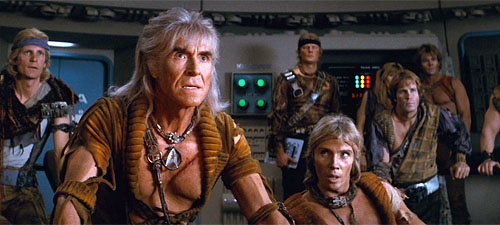
Bennett was an excellent producer and writer, but had a slight problem in that he'd never watched the original Star Trek series. He holed up in an office at Paramount with a screening room and all 79 episodes of the series. He made notes on each episode, searching for inspiration. Towards the end of the first season, he was intrigued by the episode Space Seed. In this episode a genetically-engineered dictator and tyrant, Khan Noonien Singh, is found on a sleeper ship in deep space. He and his followers are at first grateful to Kirk and the Enterprise crew for rescuing him, but then he tries to take over the ship with the help of a crew woman who has fallen in love with him. Khan is defeated and he and his crew are exiled on the planet Ceti Alpha V, a verdant but untamed paradise planet. Kirk promises to check up on Khan, but this never happened in later episodes. Bennett was pleased that there hadn't been a sequel as it meant he could re-use Khan as the villain for the movie. The first draft revolved around Khan manipulating Kirk's hitherto unknown son into fighting against his father. Additional drafts, plotted with the help of Jack B. Sowards, introduced a devastating Starfleet superweapon known as the Omega System that Khan is trying to steal.

Paramount and the team were pleased with the rapid progress that was being made, but they hit on a snag that it was unlikely that the Federation would create a planet-destroying weapon of mass destruction (fears of similarities with the Death Star of Star Wars may have played a part). Bennett and Soward struggled with this until the art director, Michael Minor, suggested that it could be a terraforming device instead: an object of profoundly peaceful intent that is perverted into a weapon. Bennett literally hugged Minor, declaring that he had "saved Star Trek." The Omega System was retitled the Genesis Device.

A new draft was produced which featured Spock dying very early in the script, a shocking move inspired by Psycho. Negative fan reaction after the script leak led to the studio backing away on the idea of Spock dying. Bennett hit upon a sneaky idea, however, by showing Spock dying in the opening minutes of the film only for it to turn out to be a training simulation. This would trick viewers into thinking that the story had been changed so Spock wouldn't die at all. Instead, his death was moved to the back end of the film and turned into a heroic, "blaze of glory" ending that Leonard Nimoy felt was quite moving. Although the script was becoming more familiar, it was still a bit flabby and Bennett felt a fresh pair of eyes would be useful. Nicholas Meyer, the director of Time After Time, was recommended to him. Meyer had no experience of Trek so viewed the script as a stand-alone move. He made a list of everything he liked from the previous drafts and delivered a streamlined, focused version in just two weeks. This new script had more action, space battles and explosions but also developed a strong thematic link of ageing, the next generation coming up and taking over and the old generation passing away. Meyer linked this in with the Genesis Device to create a theme of death, life and rebirth that underlines the space battles and impassioned speeches between Kirk and Khan. This impressed Paramount and Bennett so much that they offered him the job of directing the movie.

Ricardo Montalban was 61 years old and suffering from back problems when the film was shot, but still practised a formidable daily exercise regime and was in better shape than some of his younger co-stars.

Everything was in place...except for the villain. Bennett had assumed that someone in casting had checked with Ricardo Montalban's availability and his willingness to reprise the role. Casting had assumed he'd done it. In a bit of a panic, Bennett contacted Montalban. The veteran actor was uncertain if he could reprise the role, and was concerned if playing a cold-blooded villain would upset fans of his character Mr. Roarke on Fantasy Island. However, he was impressed by the script and quickly got back into character. The producers were especially impressed with Montalban's formidable physical condition: despite being in his sixties and having a back condition, Montalban still vigorously worked out every day. After the movie came out some viewers complained about Khan's "prosthetic chest", which both the producers and Montalban found deeply amusing. Initial script drafts had depicted a lengthy confrontation between Kirk and Khan, including one suggestion that fight using swords, but Meyer had disregarded these. Unable to come up with a plausible way Kirk would survive a direct confrontation (given Khan's genetically-engineered superior strength, speed and stamina), he simply didn't have them meet at all, instead exchanging threats and glowers through viewscreens.

The rest of the Star Trek cast reunited for the film with Meyer keen to give each character their moment in the sun: McCoy and Spock have a series of witty exchanges in the spirit of the TV series, whilst Scotty's nephew joins the crew. Scotty is incredibly proud, but then distraught when he dies in the opening engagement with the Reliant. Sulu is promoted to Captain of the USS Excelsior, but agrees to do "one last training mission" for Kirk. This scene was cut and in the event George Takei had to wait ten years until Star Trek VI showed him commanding the Excelsior. Bennett and Meyer liked the ship name and held onto it for the next movie. Uhura also had more dialogue and scenes, acting as a conduit of information to the bridge in a more naval command-and-control role than in the series. Finally, Chekov was promoted to first officer of the USS Reliant and forced to betray his shipmates with the use of mind-controlling eels. Meyer was worried about this plot element, feeling it was corny, but felt that casting the respected actor Paul Winfield as Captain Terrell helped sell the scene. He also cast an up-and-coming young actress, Kirstie Alley, as Spock's Vulcan protege, Lt. Saavik.

Leonard Nimoy was excited to film Spock's death scene, but when the day of filming arrived he surprised Meyer and Bennett by telling them that he had thoroughly enjoyed making the film and the more collaborative atmosphere of production. He asked them if there was a way he could return in the future if necessary, especially since Paramount had already begun talking about a third film. The death scene was rewritten to include a sequence where Spock mind melds with Dr. McCoy, and a new shot showing his funeral casket lying on the surface of the newly-created Genesis Planet was added in post production.

Star Trek II's visual effects, although fewer in number and simpler than The Motion Picture's, received praise for their clarity and quality.

Shooting began on 9 November 1981 and concluded on 29 January 1982. To reduce costs, a very large chunk of the film took place on just one set: the bridge of the Enterprise, which then doubled as the simulator room at Starfleet Academy and then as the bridge of the USS Reliant, the ship Khan steals and turns against the Federation. Initially the producers were going to depict the Reliant as a ship of the same class as the Enterprise so they could use the same model, but the special effects crew threw a fit. They hated the big, bulky and elaborate Enterprise model and said it'd be cheaper to design and build a whole new model. Bennett and Meyer agreed and the Reliant became a Miranda-class starship, smaller but more manoeuvrable than the Enterprise. The Reliant in fact became the first non-Constitution-class Federation starship to appear in the Star Trek franchise. Compared to the laborious post-production process for The Motion Picture, Star Trek II's visual effects process was more streamlined and even had time to allow for experimental shots, such as using cloud and water tanks to generate the concluding battle in the Mutara Nebula. Production of the effects also proceeded alongside shooting rather than afterwards, allowing closer integration of the effects into live-action scenes.

One area were there were problems was depicting the rapid terraforming of a planet in the Genesis Project demonstration video. Effects supervisor Jim Veilleux was frustrated and turned to Lucasfilm, who had an embryonic studio dabbling in the earliest computer-generated visual effects. They agreed to provide a wholly computer-generated 60-second animation showing the Genesis Device terraforming a planet from a ball of rock into an Earthlike world. This was the first scene in a live-action movie to be generated completely through CGI. The Lucasfilm Computer Graphics Group used the scene as a demonstration of what they could do: a few years later they spun off as a new company called Pixar.

Star Trek II: The Wrath of Khan was released on 4 June 1982, barely four months after shooting finished. It was a lean, tight and focused movie. It had been made for $11.2 million (which was considered pretty cheap even then), came in at an audience-friendly 112 minutes and was immediately showered with praise by both fans and critics alike. The film opened to a $14.3 million weekend, at that time an all-time record, and took home $80 million in the United States and $97 million in total. Although this was down on The Motion Picture, it was vastly more profitable compared to the film's production costs. There was tremendous approval of the film's action scenes and visual effects sequences, but a lot of praise was lavished on Montalban and Shatner's palpable mutual hatred, the themes of death and rebirth, on the extraordinary musical score by newcomer James Horner and on the film's focus. Even Gene Roddenberry, who had had little to do with the movie, grudgingly accepted it was "exciting".

Star Trek III introduced several of the franchise's most iconic spacecraft designs, including (pictured here) the USS Excelsior and the Spacedock station orbiting above Earth. The movie also introduced the Oberth-class science vessel and the Klingon Bird of Prey.

Paramount quickly moved forwards with a third Star Trek movie. Harve Bennett agreed to return as producer and it was decided to make the movie a direct sequel to The Wrath of Khan. They decided that the plot would focus on the return of Spock, but Bennett was keen that the resurrection could only come at a profound personal cost to Kirk. Working backwards through the script, he decided that Kirk was lose his son, David (introduced in the previous movie), he would be forced out of Starfleet and that the Enterprise would be destroyed. Nicholas Meyer was asked to return, but Meyer was unhappy with the way the final edit of the film was handled by Paramount (including much more blatant foreshadowing of Spock's survival than Meyer had intended) and decided to sit the movie out. Bennett hit on the idea of Nimoy himself directing: the actor had been directing TV episodes, plays and smaller TV films for over a decade and had familiarity with the franchise, the cast and the crew (many of them returning from The Wrath of Khan). Nimoy relished the challenge, especially since he didn't have to appear in front of the camera apart from right at the very end of the movie.

As with The Wrath of Khan it was decided to have a memorable villain, and the first draft focused on the Romulans, including a return for their Bird-of-Prey class warship from the episode Balance of Terror, now updated to a new design. However, it was later decided to change the villains to the Klingons, who a more general audience would be more familiar with. Nimoy decided to cast Christopher Lloyd as the Klingon Captain Kruge, citing his dramatic work rather than his comedy role on Taxi which viewers were more familiar with. Nimoy was particularly praised for his direction of his friend and co-star Shatner, reigning in his tendency to chew the scenery. George Takei was also impressed by how Nimoy and Bennett handled him complaining about a massive security guard calling him "Tiny," which Takei found unnecessary. However, watching the complete sequence back (including the "Don't call me Tiny," rejoinder after Sulu kicks the guard's butt) impressed Takei, who immediately apologised.


Spock's return was well-received by fans, especially given it was achieved with difficulty and only at cost.

The visual effects team had more work to do on this film, including designing no less than four iconic new designs: the Federation Spacedock, the Oberth-class USS Grissom, the Klingon Bird-of-Prey and of course the colossal USS Excelsior. All of these designs would go on to feature heavily in future Trek films and TV series. In particular, Nimoy and Bennett were able to increase the visual effects budget by reusing numerous sets, props and costumes from The Wrath of Khan, and by using an interior set for the Genesis Planet rather than most costly exterior shooting. As a result, the film's budget of $16 million (almost 50% higher than The Wrath of Khan's) went a lot further, allowing for the elaborate planet set to break apart as the Genesis Planet disintegrates and for a lengthy sequence showing the destruction of the Enterprise. Bennett was annoyed when Gene Roddenberry, who loathed the idea of destroying the ship, leaked word of the ship's destruction to fans, resulting in derogatory letters being sent in. The visual effects crew, who hated the badly-wired and unwieldy Enterprise model with a passion, were keen to take a hammer to the model to destroy it completely, but were stopped by Bennett and Nimoy, in case it was needed in the future.

Star Trek III: The Search for Spock was released on 1 June 1984. The film took $87 million worldwide and was considered a success, but the critical reception was more muted. Some reviews were critical of the obvious sets used to depict the Genesis Planet (although some said they enjoyed this was a throwback to the original series) but for the most part Nimoy's direction was praised, along with the visual effects. The film was the first in the series to be criticised for relying on continuity from the previous movie and not doing enough to work as a stand-alone film.

Paramount were keen to continue the franchise, but wanted a change of direction: this coincided with both Nimoy and Bennett's feelings as well, that the fourth movie should be a break away from the past. Nimoy in particular was to change gears and make a film that was lighter, more comedic and less reliant on staples such as warp drive, phasers and menacing villains. However, Bennett was also keen that lingering continuity issues from the previous films - such as the knowledge of the Genesis Device being made public, the Klingon outrage after the death of Kruge and Kirk and his crew being fired from Starfleet and facing criminal charges - should be addressed. However, the whole plan was nearly derailed when Shatner refused to sign up for the movie unless he got a bit pay rise. Paramount, possibly as a negotiating ploy, asked Bennet and Nimoy to consider a new film set in Starfleet Academy with the characters played by younger actors. It seems that this threat, combined with a more modest pay increase and production approval, convinced Shatner to sign on. New ideas came on board, such as time travel and the idea of something on contemporary Earth that doesn't exist in the future being key to saving the day. The idea of using humpback whales appealed to Nimoy, who wanted to include a message about conservation but not to the detriment of the drama. Wrath of Khan writer-director Nicholas Meyer returned to polish the script and help integrate the best ideas from the development process.

Star Trek IV's contemporary setting led to a well-received change of pace, but also introduced production headaches for director Leonard Nimoy.

The new film invoked time travel so that he bulk of the film was set in contemporary San Francisco. Real locations were used wherever possible to help keep costs down, along with props and models being reused from the previous movies. The Reliant model, for example, was re-employed to depict the USS Saratoga and the Klingon Bird-of-Prey, Earth Spacedock and the Excelsior models were broken out of storage. The only major new model constructed for the film was the alien probe which menaces Earth in the opening and closing sections.

Nimoy found that directing the film was a more daunting task than The Search for Spock, since he had to appear on-screen as well as direct. There were also logistical difficulties with filming scenes involving traffic (which required set-ups taking 30 minutes each) and extras recruited off the street. There were also some positive nods to long-term fans of the series, such as using the US Navy's Enterprise aircraft carrier (although the ship was actually at sea, so the USS Ranger was substituted). The film also nearly cast long-term Star Trek fan Eddie Murphy in a role as a professor, but Murphy wanted to play an alien or Starfleet officer instead. The issue was resolved when he went to film The Golden Child instead, a decision he later regretted.

Star Trek IV: The Voyage Home was released on 26 November 1986. The film was marketed differently from its predecessors, with emphasis placed on the contemporary setting, the more comedic tone and the fact there was no need to be familiar with the franchise to enjoy the film. Traditional fans were dismayed by some of these elements, such as the whales, but found that the movie handled them far better than was expected and were happy with the ending, in which Kirk is demoted from Admiral to Captain and placed in command of a new USS Enterprise. The movie attracted both critical and commercial praise and took home over $133 million, just $6 million shy of The Motion Picture's take but on less than half the cost (The Voyage Home came in on a $21 million budget).

Star Trek IV ended with the crew given a new Enterprise...but Paramount had a slightly different direction in mind for the future of the franchise.

Paramount was extremely happy with the film's profitability and critical acclaim. It was also astonished by the franchise's longevity, and the fact that the original series was still generating significant revenue in syndication twenty years after it debuted. However, the wage increases for the original actors had become significant and Paramount wanted to approach the franchise from a different angle.

On 10 October 1986, one month before The Voyage Home debuted, Paramount announced that Star Trek was coming home to television with a new, weekly TV series featuring a new ship and a new crew: Star Trek: The Next Generation.

Thursday, 12 May 2016

ALTERED CARBON TV series gets lead actor and director

Netflix have made some announcements about their forthcoming 10-episode TV series based on Richard Morgan's seminal cyberpunk novel Altered Carbon.


Joel Kinnaman (The Killing) has been cast as Takeshi Kovacs, a body-swapping Envoy (highly-trained elite soldier) who is called in to investigate an unusual crime on 26th Century Earth. Kovacs can move from body to body, so it's possible that future seasons will see the character played by other actors. Miguel Sapochnik (Game of Thrones) will also direct the first episode of the series.

I had assumed that this project was some way off, but with cast and crew already being assembled, it's more likely we'll see this filmed later this year and on the air as soon as early next year.

The Lost Reviews: Part 8 - Season 2, Episodes 9-12

Welcome to the Lost rewatch project. I am currently rewatching all 121 episodes of the TV series which aired for six seasons from 2004 to 2010. This is very much a rewatch thread, with the show watched with knowledge of what is to come in later seasons. If you've never watched Lost before, you definitely do not want to read this blog series.

Without further ado, let us continue after the jump.

The Horse of Bewilderment.

Wednesday, 11 May 2016

CIVILIZATION VI announced by Lord Boromir Stark

Firaxis Games have employed the mighty Sean Bean to formally announced that Civilization VI will be released on 21 October this year.


This will be (obviously) the sixth title in the series that began with Sid Meier's original, classic strategy game back in 1991. I must admit I thought this was a bit soon, but then I saw that Civilization IV (which I still think of as quite new) was released in 2005 and V (which I own but haven't played once yet) in 2010. I think I can safely say that it will be some considerable time before I get around to playing this.


Civilization VI will build on elements of V and will come with all of the features introduced in that game's DLC as standard. VI also promises to "unstack the cities" in the same way that V "unstacked the armies". VI will feature areas around each city where you can place additional buildings and facilities. The developers are also promising a stronger focus on AI and diplomacy than ever before.

If Sean Bean is a character in the game, I can confidently predicted he will be nuked to death by Gandhi before the endgame is reached.

Tuesday, 10 May 2016

Star Trek at 50: Phase II and The Motion Picture

Star Trek: The Original Series ran for three seasons on NBC from 1966 to 1969 and was a modest success. However, the show really found its footing in syndication and became a huge smash hit, with millions of viewers tuning in. In 1973-74 an animated series aired which was moderately successful, but fans were clamouring to see more live-action adventures.


 Concept artwork for Star Trek: Phase II.


So were Gene Roddenberry and Paramount Pictures, who had inherited the Star Trek franchise when they bought up Desilu. However, there were early disagreements over how to proceed. The fans wanted a new TV series which could explore many more characters and stories. Paramount were keener on a mid-budget film series. The cast were divided, but certainly Leonard Nimoy was highly ambivalent over returning to play Spock on a regular basis out of fear of typecasting (perhaps groundlessly, as he had among the busier post-Trek careers of his colleagues).

In May 1975 Paramount decided to proceed with a feature film and Roddenberry began considering ideas. He initially toyed with a prequel showing the Enterprise crew forming and coming together, but ultimately settled on the idea of a malfunctioning AI declaring itself a deity and travelling towards Earth. With the working title The God-Thing, the script underwent several revisions with writers such as Theodore Sturgeon and Robert Silverberg taking passes. However, Paramount were unnerved by the script's anti-religious overtones (especially the insinuation that by the 23rd Century religion had effectively become extinct on Earth) and pulled Roddenberry from the project. The new creative team developed a fresh idea called Planet of the Titans and considered a more action-oriented story featuring Spock fighting a Klingon nemesis played by Japanese actor Toshiro Mifune.

Two years into development, Star Wars was released and Paramount got cold feet about launching a mid-budget production that would not be able to compete with George Lucas's movie in terms of visual effects. Reasoning that audiences would not be interested in two movie SF franchises at the same time, they brought Roddenberry back in and began developing a new Star Trek series, with the working title Phase II.

With Paramount looking to put the series into a reasonably fast turn-around to debut on their new TV network, Roddenberry quickly reworked The God-Thing into a much-less controversial script called In Thy Image, now envisaged as a two-part pilot episode. The new series would see the bulk of the old crew (including Kirk, McCoy, Scotty, Sulu, Chekov and Uhura) return on a drastically upgraded and rebuilt version of the Enterprise, Roddenberry using the real-life naval tradition of "refits" to justify the change in design. New characters would also feature, most notably Commander Decker as first officer, Lt. Ilia as a psychiatrist and counsellor and Lt. Xon as the new science officer. Spock would be reduced to a recurring role, playing a large role in the occasional episode but sitting out of most episodes. This was to satisfy Leonard Nimoy's conflicting desire to still do the series as a professional courtesy to Roddenberry and the fans, but not commit to it to the exclusion of other projects.

Sets were designed, costume and make-up tests were undertaken and original designer Matt Jefferies began updating the Enterprise model. Everything was going well and it looked like Star Trek: Phase II would enter production in November 1977.

The cast of Star Trek: The Motion Picture.

What happened next took everyone by surprise: Paramount announced the cancellation of Phase II less than a fortnight before filming was due to begin. Apparently the studio had gotten wind of the pre-release excitement and hype for Close Encounters of the Third Kind, whilst Fox had announced that a Star Wars sequel movie was in development. Paramount had concluded that the marketplace could sustain multiple big SF movies simultaneously, and this was confirmed when Close Encounters came out at the end of November and was a massive hit. Paramount mandated that not only would Star Trek now become a feature film, but it would be a big-budget affair. But they wanted it in production yesterday.

Roddenberry and his team of writers began reworking the script for In Thy Image into a movie script. With a much bigger budget available, they mandated sweeping shots of much more elaborate starship models than they had first envisaged and ordered the construction of much larger and more elaborate sets. Satisfied with early work, Paramount announced in March 1978 that Robert Wise would be directing Star Trek: The Motion Picture, based on a script by Harold Livingstone and a story by Gene Roddenberry. The budget was set at $15 million.

Richard Taylor and Andrew Probert updated the Enterprise design and model from the Phase II version into what would - arguably - become the most iconic and definitive version of the ship for the films. Syd Mead was brought into design the V'Ger spacecraft, a titanic model that ended up being over 68 feet (21m) long.

Filming began on 7 August 1978; delays had been caused by script dissatisfaction, especially with the ending, but these had been overcome. The intervening period had also been useful in allowing Gene Roddenberry to convince Leonard Nimoy to play a larger role in the story (Nimoy had originally planned to sit out the film altogether). However, as filming started the script was still being tweaked, with Roddenberry, Robert Wise and even Nimoy and Shatner suggesting a near-constant stream of updates and changes. There were also significant production problems, including faulty lights, dubious electrical issues and illness among the cast.

The refit version of the original USS Enterprise is often cited as the best version of the ship to date. It was so popular that the second Enterprise simply reused the same design.

Shooting finally wrapped on 26 January 1979, 125 days after it began, and a massive wrap party was held. Post-production then got underway, but even this spiralled out of control as the effects shots became more and more elaborate. Multiple companies and effects teams were brought in until Douglas Trumbull stepped in. Despite having only nine months to complete twice as many effects shots as Star Wars (which was developed over a three-year period) and a famously exacting nature, Trumbull managed to pull off the feat. However, the effects budget had ballooned out of control in the meantime.

Star Trek: The Motion Picture was released on 7 December 1979. To the horror of Paramount, the budget had ballooned to $46 million (over four times the budget of Star Wars and almost twice the budget of its then-in-production sequel, The Empire Strikes Back) and they began to fear a disasterous flop. Fortunately, this didn't happen. The film made $11 million on its opening weekend, which was considered very good, and ultimately the film grossed $139 million worldwide. This was not considered to be a massive, phenomenal success, but it was considered to be a good return given the critical reception.

The film was dubbed Star Trek: The Slow Motion Picture almost immediately, with critics agreeing that the effects were dazzling but went on for far too long at the expense of characterisation. Robert Wise later regretted not test-screening the movie first, as he could have cut out some of the effects and reinstated some of the character material that had been cut for time. However, the film's cerebral core and interest in diplomacy and science over action and violence did go down quite well with some viewers and fans, who had feared a violent action-fest inspired by Star Wars.

With the film a success, Gene Roddenberry presented Paramount with an idea for a sequel, involving time travel and the assassination of JFK. Paramount thanked him for his and "kicked him upstairs" to a consulting role. They brought in a new writer and producer, Harve Bennett, who had been doing good work on television working on low and mid-budget productions. They asked him for his honest thoughts about The Motion Picture and he replied that he found it a bit boring. They then asked him if he could make a sequel for "less than forty-five f***ing million dollars". Bennett said he could make five movies for that amount of money. Bennett was hired on the spot. He did raise one objection: he'd never actually seen any Star Trek. He was given a screening room and the reels of all 79 episodes to familiarise himself with the characters and premise, as well as look at ideas for a story. Bennett was actually looking for something more specific: an antagonist, juding it a major weakness of The Motion Picture that it had no enemy or bad guy. It actually wasn't that long before Bennett found what he was looking for.

"Hi. I'm here to save your franchise."

FINAL FANTASY X and X-II to be released this week on Steam

Square Enix have confirmed that Final Fantasy X and its slightly bizarrely-named sequel, Final Fantasy X-II, will be released on Steam this week in a remastered form.


This continues Square's push into the PC game space, having recently released or re-released Final Fantasy III through IX, as well as XIII, XIII-II and Lightning Returns, as well as Type-0 (XI and XIV, being multiplayer-focused games, were already on the platform). The remaster of X was known to be on the cards for a while since Square had announced it was coming to mobile devices, with the PC versions of the games being a result of those remasterings.

Sales for the PC versions of these older RPGs have been apparently very impressive, with each port getting more care and attention than the last one. This bodes well for a good technical port of the two RPGs.

Whether the upcoming Final Fantasy XV and the comprehensive remake of the classic Final Fantasy VII will also be released on PC alongside their PlayStation 4 and X-Box One versions remains to be seen.

Final Fantasy X was originally released in 2001 and was the first game in the series to be released on the PlayStation 2. It was also the first game in the series to have a full 3D world (rather than the hybrid 3D characters/2D backdrops of FF VII through IX) and voice acting. Controversially, it was the first game to remove the overworld map and limit the freedom of the characters to travel where they liked. The main character Tidus also received criticism for awful dialogue. Despite these weaknesses, the game received generally good reviews and sold very well. Final Fantasy X-II, the first direct sequel Square has ever made to a Final Fantasy game (each game is set in its own world and possibly its own universe), was released in 2003 and is a much lighter game, more reliant on humour. For the first time in a Final Fantasy title, the entire main cast is also female, which was seen as a interesting shift away from the balanced or male-dominated casts of the earlier games. X-II was also well-received, particularly its battle system and much more freeform style of gameplay.

This flurry of re-releases leaves only Final Fantasy XII unavailable on PC. It is unknown if this will follow, but on the basis of the other re-releases this appears to be likely.

Final Fantasy X/X-II HD Remaster will be released on Steam on May 12th.

Monday, 9 May 2016

Star Trek at 50: The Original Series

In early 1966 NBC and Desilu Productions signed an agreement formally committing to producing a full season of television based on Gene Roddenberry's Star Trek. To get to that point Roddenberry had had to create two pilots, hire a cast and build elaborate sets over a period of eighteen months, and still nothing had actually made it to the screen. The formal greenlight allowed him, his writers and his actors to breathe a sigh of relief.

"Space, the final frontier. These are the voyages of the starship Enterprise. Her five-year mission: to explore strange new worlds, to seek out new life and new civilisations, to boldly go where no man has gone before."


Just a few weeks later, Desilu almost killed the series. Although the production company was influential and capable, it was not the largest in Hollywood and it could not afford to mount a number of large projects simultaneously. Bruce Geller had proposed a new, expensive spy drama series to Desilu that had gotten a number of networks very excited, more excited than they were over Star Trek. Desilu agreed to proceed with this series, but it put the future of the Star Trek deal in doubt, as it financially overextended the company. Herb Solow, the Desilu director of programming who was Star Trek's champion, had to meet the head of Desilu, the formidable actress and producer Lucille Ball, and convince her to back both shows simultaneously. Ball agreed and work resumed on both Trek and the spy show, which became known as Mission: Impossible, making this one of the more notably successful such gambles in the history of Hollywood.

For the series itself a number of additional castmembers were added. The second pilot, Where No Man Has Gone Before, saw William Shatner cast as Captain Kirk, Leonard Nimoy retained as Mr. Spock and them both joined by James Dooham as Chief Engineer Montgomery Scott and George Takei as Mr. Sulu. Sulu was initially characterised as a scientist but for the show itself became the helmsman of the Enterprise. Paul Fix played Dr. Piper in the second pilot but for the series he was replaced by DeForest Kelley at Dr. Leonard McCoy. Gene Roddenberry was interested in diversifying the cast with female roles, so retained Majel Barrett from the original pilot, The Cage, in the new role of Nurse Christine Chapel and cast Grace Lee Whitney as Janice Rand, the captain's yeoman. However, Roddenberry wanted a female character front and centre on the bridge, so cast the young African-American actress Nichelle Nichols as communications officer Lt. Uhura. This was an unusual move in the racially sensitive period of the 1960s, but Roddenberry felt it was essential to show an aspirational future free of the petty prejudices of the day.

Filming commenced in the summer of 1966 and the first episode, The Man Trap, was aired on 8 September 1966. The show initially had favourable ratings, but a mixed critical reception. The show's ratings also dipped as the season continued. However, NBC had started studying the demographics of viewership rather than just the raw numbers and concluded that Star Trek's audience, although small, was committed and also young. Using these figures, it was able to still sell advertising space at a favourable rate which kept the show on the air for the rest of the first season.

The Hugo Award-winning City on the Edge of Forever is widely (but not unanimously) regarded as the best episode of The Original Series. It was written by Harlan Ellison, with rewrites by a team including D.C. Fontana, Gene Roddenberry and Gene Coon.

The first season of the original Star Trek is often regarded as the best, featuring episodes such as The Galileo Seven, Balance of Terror and, most memorably, Space Seed and The City on the Edge of Forever. Space Seed saw Ricardo Montalban cast as Khan, a genetically-engineered super-criminal who nearly seizes control of the ship with the help of a Starfleet traitor. Kirk exiles Khan to the planet Ceti Alpha V at the end of the episode and them promptly forgets about him. City on the Edge of Forever, written by popular SF novelist and short story writer Harlan Ellison, was unusual for Star Trek in that it mixed in time travel with a love story, featuring William Shatner's Kirk falling in love with a political activist played by Joan Collins. The script would be partially rewritten by D.C. Fontana and Roddenberry himself, amongst others, to bring it in on time and budget. The episode won the 1968 Hugo Award for Best Dramatic Presentation and became something of a pop culture phenomenon even outside Star Trek's own fanbase: the 1990s British sitcom Men Behaving Badly set an entire episode around the characters watching this episode on a rerun.

Star Trek's first season also saw NBC receive a large amount of praise for the show. It received 30,000 pieces of mail about the series, including letters from scientists, doctors and engineers praising the show. The Smithsonian Institution requested a copy of the series to be stored in its archives as it was of scientific and cultural interest. NBC was taken aback and this support helped it make the decision to renew the series, even though the ratings had already been good enough to ensure that anyway.

The second season saw only a few cosmetic changes to the formula from the first. The most notable was the addition of Walter Koenig to the cast as Ensign Pavel Chekov. Roddenberry had decided that adding a Russian character was a good idea to show that in the future the United States and Russia would have put aside their differences and reconciled, which he thought was a healthier message than other shows which were using the Cold War as a source for action and conflict.

More subtle, although irritating to some of the cast, was the fact that William Shatner and Leonard Nimoy had emerged as the stars of the show and were now given the lion's share of the action. DeForest Kelley's Dr. McCoy became an excellent foil to the two so the show became centred on the three leads (although McCoy had relatively few episodes about him specifically, compared to Kirk and Spock), with the other characters becoming supporting roles. Nichelle Nichols considered leaving the show at this point and to use her newfound fame to get work on Broadway. However, at a charity fundraiser she met Dr. Martin Luther King, Jr., whose civil rights movement was at its height. He told Nichols that she was an inspirational role model for both women and people of colour across the United States and asked her to stay. She agreed.

The second season saw additional memorable and classic episodes, including Amok Time, The Changeling, The Doomsday Machine, Journey to Babel (which introduced Spock's parents) and The Trouble with Tribbles. The show continued to gain fans but the ratings remained less than what NBC would have preferred. However, Star Trek was outperforming the opposition and the demographics continued to show that affluent and professional people were watching the series. A change in transmission date meant that some of the younger viewers from the first season were no longer watching, which have led to some brief discussions at NBC and the rumour that they were considering cancelling the series. This does not appear to have been seriously on the cards, but Gene Roddenberry fanned the flames of the rumour at a series of SF conventions. 116,000 pieces of fan mail flooded the NBC letter room begging them to keep the show on the air. NBC made the unusual step of announcing the renewal live on air, just to let the fans know the show would definitely be coming back.

Things looked rosy for Star Trek but then a problem emerged: internal network politics. The plan had been to move Star Trek to a Monday night, which was considered prime airing real estate. However, the producer of the comedy show it would have replaced angrily objected and, due to contractual agreements, that show could not be moved. Trek had to be dropped back to Friday nights. This was considered the kiss of death as Trek's target audience frequently went out on a Friday evening, but there was no other slot available. The advertising revenue for this slot was also lower than Trek's old slot, so this resulted in a 10% budget cut compared even to Season 1.

Shatner and Nimoy were "unimpressed" with the quality of scripts for the show's third and final season, but particularly despised Spock's Brain, possibly the nadir of the entire Star Trek franchise.

Roddenberry was utterly furious and spent months locking horns with NBC to get them to change their minds, to no avail. He was so annoyed that he withdrew from day-to-day production duties on the show. Roddenberry's previous co-producer had been Gene L. Coon (aka "The Forgotten Gene"), who had joined halfway through Season 1 and won the respect of the cast and the writers as a skilled, even-handed showrunner with a fine eye for quality scripts. Unfortunately, Coon had been offered an excellent deal at Universal and left towards the end of Season 2 (to the later woe of the cast and crew alike), although he continued to contribute scripts under a pseudonym. NBC appointed Fred Freiberger to take charge of the production instead. Freiberger was less interested in serious SF stories and instead mandated more action and monster stories, to the consternation of the cast, writers and fans. The third season was critically mauled compared to the first two, especially the mind-bogglingly awful episode Spock's Brain which opened the season. Nimoy and Shatner were both embarrassed and annoyed by the script, and Nimoy considered the episode the most appalling thing he'd ever worked on. Freiberger's influence on the show was regarded as highly detrimental, replacing the more serious SF of the first two seasons with shlock and cheap sensationalism. A decade later, he would do the same thing when he took over the running of Space: 1999 for its second season and likewise sent the quality of the show right off the edge of a cliff.

Later episodes were better, however, with The Enterprise Incident, The Tholian Web and Day of the Dove considered to be quite strong pieces. The season also managed to score two notable points for political commentary: Plato's Stepchildren featured a kiss between a mind-controlled Kirk and Uhura. Although not quite the first interracial kiss on American television (Sammy Davis, Jr. and Nancy Sinatra had kissed on a TV show a year earlier), it was still considered provocative and daring, and attracted complaints from NBC affiliates in the South. Let That Be Your Last Battlefield was an allegorical episode, featuring the Enterprise crew stumbling on a planet with an overclass who consider themselves racially superior to the underclass, yet both are identical: black on one side of the face and white on the other. The crew are baffled when they realise that the sides of the colours are inverted between the two sides, a completely arbitrary distinction. The racial allegory was unsubtle but somewhat effective.

Ratings for the third season, as expected, tanked and this time no amount of letter-writing could save the show. Turnabout Intruder, the final episode of Star Trek, aired on 3 June 1969. The sets were struck and the actors moved onto other projects. Leonard Nimoy, in fact, only moved across the lot to join the cast of Mission: Impossible. Star Trek, it appeared, was done.

Or maybe not. One month after the final episode aired in the States, the show aired in the United Kingdom for the first time, on the BBC. Glossy and in full colour, Star Trek showed up the BBC's own Doctor Who as looking a bit tired and antiquated, helping inspire a full, dramatic revamp of that show (less episodes, higher budgets and a move to full colour). The show also started airing in many other countries, where it quickly became popular. Star Trek also finished airing just a few weeks short of Apollo 11 landing on the Moon. Suddenly science fiction was a hot property, and everywhere. NBC's cancellation of Star Trek after just 79 episodes fell short of the normal number required for syndication (roughly 104, allowing stations to show two episodes a week year-round), but they found a lot of interest anyway and sold the entire series to local networks to air as and when they pleased.

The result was an explosion of popularity. Suddenly Star Trek was in constant reruns all over the United States and many other countries. Books started appearing, and in December 1972 a Star Trek-specific convention was organised in New York City, attended by Gene Roddenberry. Soon Trek conventions became an annual event, attracting thousands of attendees with castmembers regularly showing up.

Star Trek: The Animated Series ran for two seasons in 1973 and 1974. It reunited most of the original cast for a new series of adventures, mostly scripted by writers from the original series. Gene Roddenberry was not a fan of animation and later "decanonised" the series. However, it was restored to official status in the 1990s.

This belated success caused Roddenberry and NBC to consider a revival of the show. The actors and writers had other commitments which made this difficult, but in 1973 the cast did regroup to make Star Trek: The Animated Series. This ran for two seasons on NBC and was a moderate success, particularly for the way it allowed much more alien creatures and worlds to be used, but the fans were keen for new live-action adventures.

What followed was story of conflicting interests, with Paramount keen to use the name appeal of the show to launch a feature film series and Roddenberry and the fans generally more inclined to want another TV series which would allow them to see more of the characters. Other factors came into this, such as Leonard Nimoy's reluctance to reprise the role of Spock for long periods (his first 1975 autobiography, I Am Not Spock, saw him engaging in this debate publicly) out of fear of typecasting. This series of battles and corporate conflicts was finally settled in May 1977: the release and massive success of Star Wars led - somewhat bafflingly - to Paramount concluding that no-one would go and see two science fiction movies so close together, so they formally greenlit Star Trek: Phase II, a new TV series reuniting the original cast but adding new characters and featuring Spock only as an occasionally recurring role.

Star Trek was on its way back to the screen.