Showing posts with label forgotten realms. Show all posts

Friday, 6 February 2026

BALDUR'S GATE TV series in development at HBO from LAST OF US team

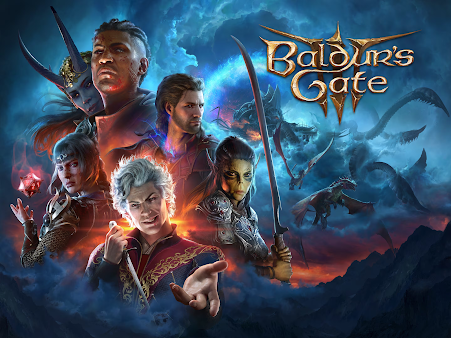
HBO is developing a TV series based on the Baldur's Gate video game series, set in the Forgotten Realms fantasy world and Dungeons & Dragons multiverse. The TV show will be set shortly after the events of the video game Baldur's Gate III and will see some returning characters from the game alongside new faces.

If Lump the Enlightened is not in the TV show, we riot.

Craig Mazin, the showrunner of The Last of Us and Chernobyl, is lining this up to be his next project once work on the third and now-confirmed-to-be-final season of that show is completed. Mazin will be the main writer, showrunner and producer, with Chris Perkins from Wizards of the Coast serving as consultant. At this stage, none of the team from Larian Studios, who produced Baldur's Gate III, are involved, and it appears that Forgotten Realms creator Ed Greenwood has also not been consulted on the project so far. However, some of the voice cast from the video game may return, either voicing or playing their characters where that makes sense, or in new roles if not.

Mazin, a noted gamer, has completed Baldur's Gate III more than once, having put over 1,000 hours into the game and completing it on the challenging "honour mode." He is also an avid tabletop gamer, having run ongoing D&D campaigns for over fifteen years straight.

Baldur's Gate is apparently designed to share continuity with The Forgotten Realms, the Shawn Levy-produced show in development over at HBO's now (or soon-to-be) sister streamer, Netflix.

With the final season of Last of Us not likely to land before mid-2027, the Baldur's Gate show may be lucky to hit screens before the end of the decade.

Thursday, 13 February 2025

Netflix and Wizards of the Coast put FORGOTTEN REALMS live-action show into development

Netflix and Wizards of the Coast have joined forces to put a Dungeons & Dragons TV project into development, tentatively called The Forgotten Realms. The show will be set in the D&D game's most popular world, the recent setting for hit video game Baldur's Gate III and the well-received movie Honor Among Thieves.


Shawn Levy, the producer of Stranger Things and director of movies including Date Night, Night at the Museum and Deadpool & Wolverine, will executive produce the show via his existing deal with Netflix, and will likely direct several episodes. Drew Crevello will write and showrun. Crevello previously worked at Fox on the X-Men franchise and the first two Deadpool movies, and co-wrote and produced the mini-series WeCrashed.

There have been multiple attempts to get a Dungeons & Dragons multimedia franchise off the ground in recent years. Baldur's Gate III has been the biggest success, selling over 20 million copies since its August 2023 release and becoming one of the highest-rated video games of the last decade, if not more (PC Gamer US gave the game its highest rating in over twenty years). Honor Among Thieves landed with impressive critical scores and rave audience reviews, but moderate box office; the film failed to recoup its costs at the box office, but a long tail on physical media and streaming has helped in the longer term. At various times, Hasbro and Wizards have looked at developing projects in both the Forgotten Realms and Dragonlance worlds. Paramount+ was the logical destination for the project after the studio's collaboration on Honor Among Thieves, but the service's increasingly shaky performance led Hasbro to reconsider and start putting out feelers with Netflix.

Discussions with Netflix have been underway for some time, and at one point it was rumoured they were considering an adaptation of the Baldur's Gate video game trilogy. However, that idea seems to have cooled. The current proposal seems to be for an original story following new characters, with the door left open for popular franchise characters from the roleplaying source material, video games and novels to make an appearance.

The Forgotten Realms world was created by Canadian writer Ed Greenwood in the late 1960s as a setting for his own stories (the city of Baldur's Gate first appeared in a tale written to amuse his father in 1967). In 1978 he started playing Dungeons & Dragons and adapted the world for his home campaign. He started contributing articles to Dragon Magazine and quickly started referencing the world, its heroes, villains and iconic locations. In 1986 TSR decided to adopt a new "standard" fantasy setting to replace Greyhawk and Dragonlance, and agreed to purchase the Forgotten Realms from Greenwood.

The Forgotten Realms Campaign Setting appeared in print for the first time as a boxed set in 1987. New editions of the campaign setting core product appeared in 1993, 2001, 2008 and 2015, with two new campaign books planned for later this year. More than 250 other sourcebooks, adventures, board games, boxed sets and gaming materials have also been released. Forgotten Realms is notable as the only D&D campaign setting to remain continuously in print since its first launch, and to have new products for it launched almost every year since its first release.

A range of novels simultaneously launched, with R.A. Salvatore's The Crystal Shard (1988) rapidly attracting huge sales for his iconic hero, the renegade dark elf Drizzt Do'Urden. More than 35 million Drizzt books have since been sold, and the Forgotten Realms novel line has reportedly sold almost 100 million copies. Greenwood himself became a bestselling author with his novels about the iconic wizard Elminster the Sage, with other bestselling authors in the setting including Troy Denning, Doug Niles, Jeff Grubb & Kate Novak, Paul Kemp, James Lowder, Elaine Cunningham and Erin Evans.

The first Forgotten Realms video games were released in 1988 from Strategic Simulations Inc., and were followed by a large number of successful titles. The most notable early success was the Eye of the Beholder trilogy from Westwood Games. In 1998 the Canadian company BioWare teamed up with Black Isle and Interplay to release Baldur's Gate. The game was an immediate smash hit, and was followed by Baldur's Gate II: Shadows of Amn in 2000 and Neverwinter Nights in 2002. Black Isle themselves developed Icewind Dale (2000) and Icewind Dale II (2002), also set in the Realms and using the same engine as Baldur's Gate. After Interplay's collapse, Obsidian Entertainment (made up of Black Isle veterans) released Neverwinter Nights II in 2006. The online roleplaying game Neverwinter was released in 2013, followed by Sword Coast Legends in 2015. Baldur's Gate III, developed by Larian Studios and released in August 2023, is easily the biggest and most successful video game in the setting to date.

This new project is only in development for the time being, with a pilot written. It remains to be seen if Netflix chooses to move forward with a series order.

Tuesday, 19 March 2024

RIP James M. Ward

News has sadly broken that tabletop roleplaying pioneer James M. Ward has passed away at the age of 72.


Born in 1951, Ward was an acquaintance of Gary Gygax in Lake Geneva, Wisconsin, and agreed to help him road-test a new game he was developing in 1973. This game became Dungeons & Dragons, with Ward as one of the early players. Gygax created the wizard Drawmij of Oerth in Ward's honour. When Gygax started TSR in late 1973 and published D&D in January 1974, he recruited Ward to help work on the game as a writer and designer.

Ward collaborated with another of the original plays, Rob Kuntz, to create Gods, Demigods & Heroes (1976), a D&D sourcebook that introduced gods and religion to the game. Back when TSR was trying to publish a number of different systems, Ward created the first science fantasy roleplaying game, Metamorphosis Alpha (1976). Drawing on this work, Ward then co-created (with Gary Jaquet) the better-known Gamma World (1978).

Ward continued working as a staffer at TSR, contributing to different projects. He wrote Deities & Demigods (1980), an effective update of his 1976 book to the Advanced Dungeons & Dragons, 1st Edition rules.

In 1988 Ward drew on his background playing in Gygax's home games to write Greyhawk Adventures, which updated Gygax's signature home setting for the upcoming Advanced D&D 2nd Edition rules. Ward contributed to the design of AD&D 2E and was responsible for the removal of the assassin class, something he noted did not go down well with many fans.

Also in 1988 Ward worked on Ruins of Adventure, the tabletop supplement based on the Pool of Radiance video game set in the Forgotten Realms. Ward further developed the story and scenario into a trilogy of novels, published as Pool of Radiance (1989, with Jane Cooper Hong), Pools of Darkness (1992, with Anne K. Brown) and Pool of Twilight (1993, with Anne K. Brown).

Ward developed Spellfire, TSR's answer to Magic: The Gathering, in 1994. After an initially strong start, the game suffered from a lack of budget (resulting in a considerable reuse of art from existing projects, to fans' dismay).

Ward left TSR in 1996 during the major financial upheavals caused by Random House returning unsold stock to the company for refund, which the company could not afford to pay. This triggered the company's collapse and its subsequent buy-out by Wizards of the Coast in 1997. After departing, Ward worked as a freelancer on various projects (including a Metamorphosis Alpha reboot) before joining Troll Lord Games to work on their Castles & Crusades game line. Ward continued to work on Metamorphosis Alpha material - of which he retained full ownership - until the late 2010s.

As well as the projects with his name on it, Ward contributed in an enormous number of ways to other projects in a variety of roles, from proof-reading the Planescape Campaign Setting (1994) to providing additional design support for the Serenity roleplaying game (2004).

Ward produced new material under his solo companies, Fast Forward Entertainment and WardCo.

Ward was diagnosed with a serious neurological disorder in 2010, for which he received treatment at the Mayo Clinic. Friends, colleagues and fans rallied around with crowdfunding campaigns that ultimately helped him receive the treatment he needed to considerably extend his quality of life.

Ward passed away on 18 March 2024, and is survived by his wife and three children.

Wednesday, 10 January 2024

RIP Jennell Jaquays, D&D designer and artist and video game designer

Dungeons & Dragons designer and artist Jennell Jaquays has sadly passed away at the age of 67.

Born in Michigan in 1956, Jaquays attended Spring Arbor College in the late 1970s, where she become interested in the nascent roleplaying industry. Jaquays began playing Dungeons & Dragons in 1975, shortly after the game came out, and started a fanzine for the game, The Dungeoneer, alongside Mark Hendricks. The fanzine proved successful, and Jaquays began writing for the official TSR magazine, Dragon. She also began working for Judges Guild and freelancing for TSR, producing the officially-licensed D&D modules Dark Tower and Caverns of Thracia, both of which became quite well-known in fan circles at the time. Dark Tower was the only none-TSR adventure included in Dungeon magazine's "Thirty Greatest D&D Adventures of All Time" list in 2004.

Jaquays expanded her remit to cover many of the popular roleplaying systems of the day, expanding from Dungeons & Dragons to work on Traveller and RuneQuest. In 1980 she was brought over to work at Coleco by Michael A. Stackpole (himself a wargaming and roleplaying legend for his work on BattleTech, as well as a Star Wars novelist), where she worked on home ports for popular arcade games like Donkey Kong.

Jaquays worked at id Software from 1997 to 2002, working on Quake II and Quake III: Arena as a level designer, before joining Ensemble Studios, where she worked on Age of Empires III and Halo Wars. After Ensemble collapsed in 2009, she moved to CCP to provide work for their game EVE Online. More recently she worked with her wife at Dragongirl Studios.

For Dungeons & Dragons, Jaquays is noted for her work on the classic Castle Greyhawk module for the World of Greyhawk setting, and for The Savage Frontier module for Forgotten Realms (large chunks of which were reprinted for The North: Guide to the Savage Frontier almost a decade later).

Jaquays co-won the 1989 Origins Gamer's Choice Award for Best Roleplaying Adventure. In 2017 she was inducted into the Academy of Adventure Gaming Arts & Design. She was also active in the LGBTQ+ community, for which she was a strong voice in the gaming world.

A key worker in the field of both tabletop and video games, and with some impressive credits to her name which have been played and enjoyed by millions, she will be missed. She is survived by her wife and two children. She passed away earlier today from complications of Guillain-Barré syndrome.

Friday, 8 December 2023

Baldur's Gate III

An illithid spaceship crashes on the banks of the River Chionthar, far to the east of the great city of Baldur's Gate. Seven survivors stumble forth, former prisoners of the illithids, the much-feared mind-flayers. These seven individuals have been infected with mind-flayer tadpoles, which will slowly burrow into their brains and turn them into new illithids. But something is holding the tadpoles at bay. The companions learn that they may be able to escape their doom, if they can work out their differences, join forces and defeat the greatest threat to Faerûn and the Sword Coast to appear in generations.


Baldur's Gate III - now officially the Game of the Year™ - is a massive, sprawling, roleplaying game set on the Dungeons & Dragons world of Toril, better known as the Forgotten Realms. It is the sequel to Baldur's Gate and Baldur's Gate II: Shadows of Amn, two of the greatest roleplaying games (and in fact video games full stop) of all time, but also notes that since it's almost a quarter of a century since the last game in the series game out, it requires zero previous knowledge of the series to enjoy. It arrives at a perfect moment, with the popularity of Dungeons & Dragons and tabletop roleplaying games at an all-time high, and goodwill for developers Larian Studios still riding high from their previous two games in the Divinity: Original Sin series.

It would be churlish to say anything other than Baldur's Gate III is an overwhelmingly impressive game. It's enormous, with a playthrough of the main story and most side-quests taking around 100 hours, but an exhausting playthrough to find every bit of loot, gold and lore taking easily half again as long. The game can be played solo or as a co-op online game. You can create a new character from scratch, play as one of the six existing "origin characters" (who otherwise become your major NPC party-members), or play the "Dark Urge" character, who has a murderous drive which ties more directly into the previous games in the series. Creating a new character, you can play as one of numerous species, classes and sub-classes, with a wide array of feats, abilities and combat moves to develop and employ. There's a lot of game here, but the game is forgiving enough that you can muddle through even with "suboptimal" builds, and it does a good job of teaching you what you need to do as it goes along.

I mean, she's not wrong.

Baldur's Gate III feels bizarrely and positively schizophrenic: the game has AAA+ production values, cutscenes, voice-acting, graphics, visual effects and polish (at least for the first half of the game) to shame the latest Call of Duty or Assassin's Creed mainstream title, but it's also deeply geeky. The turn-based combat and the need for tactical positioning, mastery of buffs and debuffs and knowledge of how Concentration-based spell effects work all feel better suited for hardcore indie titles aimed squarely at insiders and grognards. The game's most startling success is bridging these two audiences, creating a game with the richness and depth of many of the classic CRPG titles but the mainstream accessibility and appeal of the most polished AAA action games.

The game isn't truly an open-world title, instead being set across one very large map in each of the three acts, plus a couple of side-maps related to them. Each map will still take a while to simply explore, and are packed with puzzles, enemies, potential allies, caves, loot and mysteries. Many events pertain to your current situation but others are incidental side-quests. Each act has its own major storyline: Act I focuses on a conflict between a goblin army and a druid grove which is also hosting a large number of tiefling refugees from the nearby city of Elturel; Act II is set in the mist-shrouded lands around Moonrise Towers, where the Harpers are planning a strike to retake the fortress from the evil warlord who controls it; and Act III takes the party to Baldur's Gate itself, where dubious shifts in governance mask a foul conspiracy unfolding both above and below ground. It sometimes feels like the game could have been a trilogy made up of three ~30-hour games which would have still been incredibly rewarding, and getting them all in one title for one price is an insane act of generosity on Larian's part. For the record, Baldur's Gate III is substantially longer than all three Mass Effect games combined.

No, it's not that one.

The game's narrative is complex, with the struggle to overcome the mind-flayer tadpole munching on your cerebellum tied into the mystery of why it hasn't already succeeded. Trying to remove this threat leads you into some very strange places. But you are also one of seven characters in the same boat, and each one of your companions - Astarion, Gale, Karlach, Lae'zel, Shadowheart and Wyll - has their own immense amount of backstory and baggage to deal with. Astarion is a vampire spawn who yearns for vengeance against his abusive former master. Gale has a ticking magical time bomb inside him and emotional damage from a relationship with the Goddess of Magic. Karlach is infused with an Infernal Engine that grants her strength but is also slowly killing her. Lae'zel is a githyanki with a severe attitude problem who is trying to serve her people the best way she can. Shadowheart is a brittle worshipper of Shar, the Goddess of Shadows and Darkness, but also has a good heart that seems at odd with her calling. Wyll is a warlock tied to a dubious, demonic patron. Each one of these characters and stories is well-drawn and enacted, with outstanding voice acting. Many of the game's finest moments come from interactions with and between your companion characters, as you move from dysfunctional-at-best allies to more of a found family.

That's not going too far into the other characters you meet along the way, people whom you can turn into powerful allies by helping their cause, such as rescuing the druid Halsin from the goblin camp or saving the thieves' guild of Baldur's Gate from being usurped by a rival operation. Many of these storylines are also highly engaging.


Combat is tactically satisfying, but - and this is a relief - not quite as puzzle-focused as the Original Sin games. In those games, incredibly tough battles were really puzzles which could only be unlocked through the use of oils, traps and explosives. Baldur's Gate III still has many of those elements, but they are more optional and instead combat is more reliant on the tactics you yourself develop through experimentation. This is much more satisfying and enjoyable.

Given the game's immense scale, its epic scope, its strong storytelling, outstanding characterisation and immaculate presentation, this must be a clean sweep, surely? An immediate five-star classic?

"This guy seems trustworthy."

Not quite. Baldur's Gate III's incredible first impression is slowly soured by a number of problems (some solved by the large number of patches and hotfixes since the game's launch four months ago, some not). None of these are fatal, but combined they do remove some of the sheen from the game.

The first is that the game's launch was technically problematic. The first half of the game was almost flawless, but the second half saw gradually escalating crashes, graphical errors, quest triggers misfiring, occasional random deaths and massively tanking framerates (especially when reaching Baldur's Gate itself, one of the most detailed and densest fantasy cities ever depicted in a video game). Many of these were fixed, but some issues remain: wonky physics, occasionally vanishing items which you are trying to pick up and cutscenes abruptly ending as the game can't work out what scene to play next (cutscenes are dynamic and depend on, sometimes, hundreds of choices you have made through the game).


This leads into a second problem in that Baldur's Gate III bills itself as being fully reactive to your game choices, so if you want to surprise-attack a major antagonist halfway through his evil plan speech and yeet him into a lava pit, you certainly can try. The problem is that it's rather easy to trip the game up in this way: in Act I I snuck into the goblin fortress from a side-tunnel rather than infiltrating via the camp outside, and in Act II I stumbled across the Gauntlet of Shar before finding Moonrise Towers. So, twice, I did major parts of the game's storyline in the opposite order to the way the game expects. Twice, the game failed to adequately respond to this, with characters making reference to things I had not done and people I had not yet met, cutscenes not really making sense and major parts of the story being shut off to me without much forewarning or the ability to do anything about it.

The game can also be extremely odd in what it tells you to do, or is possible: at the end of Act I you are told you have to proceed either via a mountain pass or the Underdark to reach Moonrise Towers. But, in fact, you can simply do both. In fact, you really should do both, as major storyline events for your companion characters take place in both locations. Following the game's directions literally can simply cut you out of large amounts of content if you are not careful.


Another issue is caused by the game's structure. As you pursue your myriad quests, they start to draw to conclusions deep into Act III, and they then climax in rapid succession, which is what you'd expect. But this means that the game can wind up putting five very tough boss fights one-after-another in the latter part of Act III, which ended up being a bit too much and left the actual final battle of the game feeling a bit undercooked in comparison. The game hints at a better structure earlier one, when Shadowheart's story really climaxes in Act II but gives her a meaty epilogue early in Act III. Wyll's story can also be brought to an early conclusion in Act III. Spacing out the companion characters' stories more evenly would be a better idea (and it may be possible on a replay to approach things somewhat differently).

Baldur's Gate III also cannot help but suffer a little in comparison to its earlier forebears; its music is notably nowhere near as good (BG3's soundtrack perks up with the excellent faux-opera accompanying your confrontation with a very powerful enemy near the end of the game, but is mostly generic) and - utterly bafflingly - its UI is sometimes clunkier. Identifying weapons and items in your inventory can be fiddlier, and things that can smoothly be done in one click in Baldur's Gate II now take two or three. BG2 has real-time combat that can be effectively made turn-based through the use of options, whilst BG3 only has turn-based combat, which sometimes kills the game's pacing when facing off against a bunch of dramatically weaker enemies whom you are absolutely going to rinse regardless. Baldur's Gate III's rogue's gallery of enemies also feels a little flat: the most charismatic and intimidating enemy in the game is seen off in Act II and those left behind are tiresome second-stringers. None of Jon Irenicus' powerful gravitas or Sarevok's mad-dog energy here (well, very little of it). I'm also now a little bored of big RPGs in which something weird is happening inside your head and is going to kill you unless you do the main quest (for a genre that utterly despises railroading, the video game versions of pen-and-paper RPGs are awfully fond of doing things that would risk a DM getting ostracised in real life).


The final criticism is also not so much of a bug but a feature for a lot of people: Baldur's Gate III is a lot and I found myself only really able to enjoy the game with my brain switched full on, paying maximum attention and in the zone. This is not a calm or gentle game to chill out to, like, say, Starfield. With its immense checklist of things to do and people to see and monsters to kill, BG3 occasionally risks feeling more like work than relaxation. Of course, for those who love number-crunching, story-tracking and optimising builds, this will be a huge appeal rather than a possible weakness.

Baldur's Gate III's weaknesses are not insignificant, especially cumulatively, but they ultimately cannot derail the game's immense achievements: mostly good writing, strong character work, intriguing combat, gorgeous graphics and best-in-class voice acting. Baldur's Gate III (****½) has rewritten expectations on how complex, challenging and layered a video game can be and still be a huge crossover smash hit, and it may be some considerable time before we see a game that has as much success.


The game is now available on PC, PlayStation 5 and, as of today, Xbox Series X and S.

Thank you for reading The Wertzone. To help me provide better content, please consider contributing to my Patreon page and other funding methods.

Saturday, 23 September 2023

RUMOUR: Netflix interested in developing a BALDUR'S GATE adaptation

File under "highly tenuous" for now, but a couple of outlets are reporting rumours that Netflix has expressed an interest in developing a live-action Baldur's Gate TV series, based on the hot video game property.

Baldur's Gate III launched on PC at the start of August and reportedly sold five million copies in its first few weeks on sale (before it even launched on console), making it a remarkable success for something of an old-fashioned, party-based roleplaying game with turn-based combat. The game's critical acclaim was also off the charts, with the game becoming PC Gamer's highest-rated title in two decades. The game's voice cast have become almost immediate, breakout stars, and the memes have been constantly flowing since the game's launch.

The Baldur's Gate series comprises three games and three expansions in the core series and three games in the spin-off Dark Alliance series, as well as associated comics and roleplaying products. The series revolves around the titular city of Baldur's Gate, a great port on the River Chionthar and a hugely important trading post for the Sword Coast region of the continent of Faerûn. The city keeps getting into various scrapes, but of course handy adventurers keep showing up to help save it.

The series is set within the much wider Forgotten Realms fantasy universe, created by Canadian writer Ed Greenwood in the 1960s as a setting for short stories and worldbuilding as a hobby. He sold the setting to TSR, Inc., the company behind Dungeons & Dragons, to be turned in an official D&D setting in 1987. Continuously in print since, the setting has sold millions of roleplaying products, tens of millions of novels and has been the setting for almost three hundred books and over fifty video games. Ed invented the city of Baldur's Gate in 1968 for a short story called "The Box That Crept on Talons," whilst it got its first mention in print in Dragon Magazine #81 (January 1984), as the home of a wizard who is an expert on basilisks.

The video game Baldur's Gate was released in December 1998, having been developed by Canadian video game studio BioWare and published by Interplay. A smash-hit success, Baldur's Gate told the story of the Bhaalspawn, a number of progeny of the slain God of Murder, Bhaal, and the various attempts to resurrect Bhaal, a prospect welcomed by some of these progeny but fiercely resisted by others. Baldur's Gate II: Shadows of Amn followed in 2000, and both games had expansions: Tales of the Sword Coast (1999) and Throne of Bhaal (2001). Remasters of the two games, known as Enhanced Editions, were released in 2012 and 2013 respectively. An interquel expansion set between the two games, Siege of Dragonspear, was released in 2016. Baldur's Gate III was developed by Larian Studios in Belgium.

The prospects of a Netflix-produced series are dubious for the time being. Hasbro's TV and film division, eOne, currently has the TV and film rights to all D&D and Forgotten Realms related products. They recently produced the film Honor Among Thieves set in the same world, and are developing a number of further projects, including potentially an adaptation of R.A. Salvatore's mega-selling Legend of Drizzt book series, as well as a possible project based on the popular Dragonlance world of Krynn. eOne is developing these projects with Paramount, for potential airing on their Paramount+ streaming service. If a Baldur's Gate TV project was to be developed, Paramount+ might be a better bet than Netflix at this time.

However, Hasbro have also been entertaining offers to divest eOne (either spinning it off as an independent company or selling it outright, possibly to Paramount), in which case it is unclear what would happen to the D&D rights. It is possible they might entertain an alliance with Netflix at that stage.

Given the massive popularity of Baldur's Gate III, I wouldn't be surprised to see such a project go into development, but given the game is around 100 hours long with a massive cast and a story that can vary immensely from player to play based on the cumulative weight of hundreds of choices, it will certainly be a formidable challenge to bring the story to the screen.

Sunday, 2 April 2023

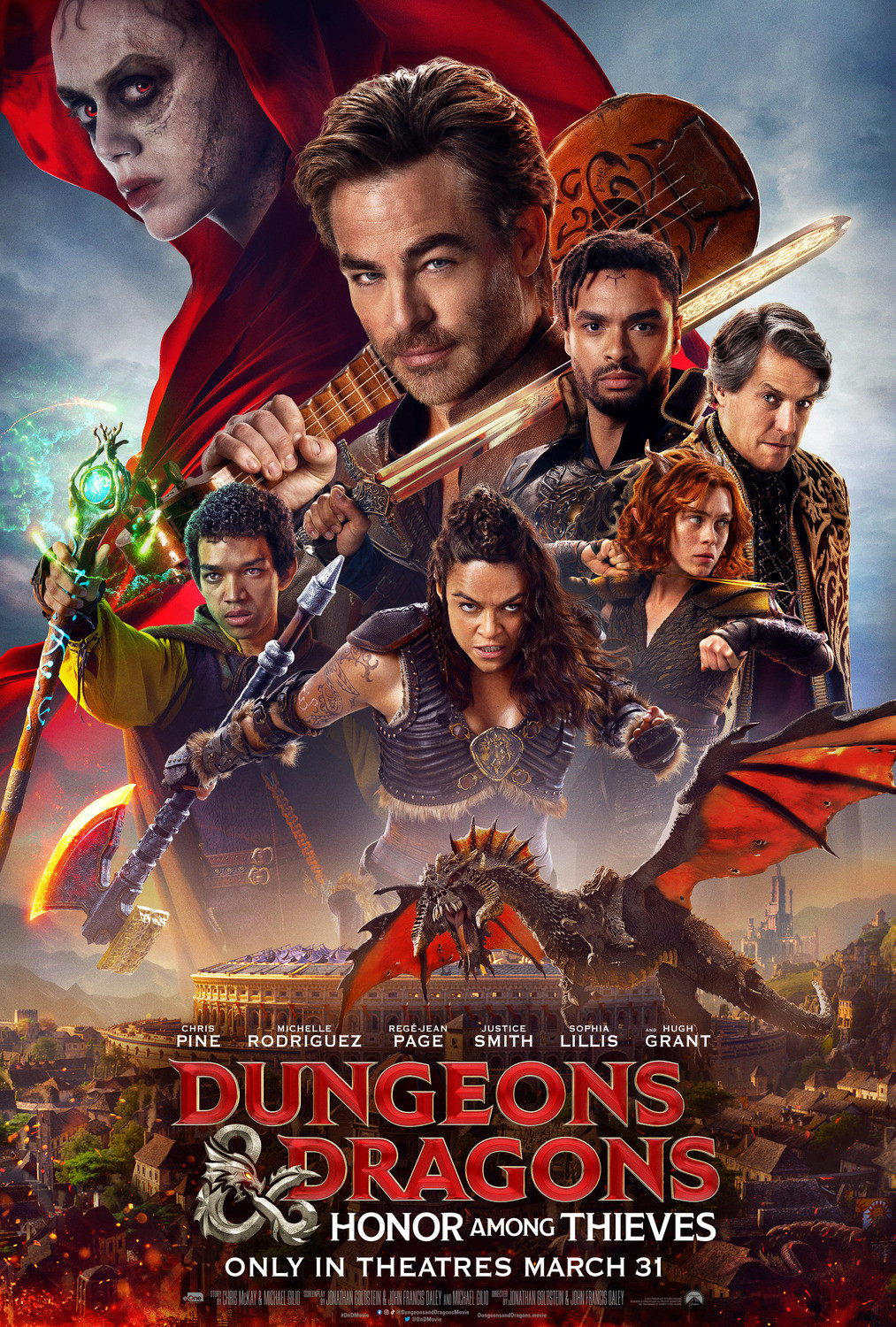
Dungeons & Dragons: Honor Among Thieves

Edgin Darvis, a former member of the Harpers, is serving time in the prison of Revel's End for a heist gone wrong. Together with his barbarian partner, Holga Kilgore of the Tribe of the Elk, he breaks out of prison to try to reunite with his daughter, Kira, who is in the safe keeping of their former partner Forge Fizwilliam. Holga and Edgin discover that Forge is the new Lord of Neverwinter, something he accomplished with the aid of the evil Red Wizards of Thay, and has nefarious plans for the city.


Edgin and Kira recruit a former sorcerer ally of theirs, Simon, and set about assembling a team to break into Neverwinter during the Highsun Games, rescue Kira and find an artifact capable of resurrecting Edgin's slain wife. Each plan runs into new problems, but the gang have to find a way to win through to save Neverwinter.

Next year marks the 50th anniversary of Dungeons & Dragons, the first tabletop roleplaying game which allowed players to undertake stirring and dramatic adventures with nothing more than a couple of rulebooks and some dice. There have been various attempts to adapt D&D to the screen, resulting in some fifty video games, a 1980s animated series and four previous feature films, although only one of them made it to the cinema screen. It was not very good.

Honor Among Thieves is the latest attempt to make such a film and both immediately and comfortably becomes the best-in-class. It helps that the film uses the established world of the Forgotten Realms as its setting, with various cameo appearances by various creatures, spells and locations. It also helps that director-writers Jonathan Goldstein and John Francis Daley (Game Night) have gotten the assignment, making a film that's fully accessible to everyone who's never held a 20-sided dice or knows what a beholder is.

Instead, the film emerges as the finest slice of film fantasy since at least Stardust, if not the Lord of the Rings trilogy. The tone is somewhat light, with plenty of gags and moments of humour, but it does darken considerably whenever the evil Red Wizards of Thay appear. This tonal variation is handled well, making the film both entertaining but with moments of real stakes and dramatic tension. The film is aiming for the same kind of tone as Stardust and in the ballpark of The Princess Bride, and more or less nails that target. Those hoping for a gritty and darker film will be disappointed, but it feels like the creators have found a tone close to that of the D&D tabletop game.

The film dodges some of the balls of other recent, disappointing blockbusters. An extended post-production schedule has allowed for a good mix of live-action, prosthetics, physical locations and real stunts with CG enhancements, and only a few 100% CG scenes, and what there are are mostly very good. After some recent movies from the Marvel stable with very embarrassing CG, it's a relief to be able to say that the effects in this film do their job.

The actors are all on board with the tone, with the MVP being Hugh Grant. Grant adopts his typical British fop/cad accent and mannerisms to the material, but there are several moments in the film where Grant's character drops his facade and a much more ruthless character appears. It's fleeting, but hints at much greater character depth. The rest of the case do their jobs well: Chris Pine brings roguish charisma as the protagonist, Michelle Rodriguez delivers taciturn violence well, Sophia Lillis is the best owlbear you'll ever see on screen, Justice Smith manages to stay just on the right side of irritating and Regé-Jean Page is easily the best depiction of a paladin seen to date. None of them are fascinatingly deep characters, but they are a likeable bunch and it's easy to root for their success. The film even nails some of the brilliantly over-elaborate plans that D&D gaming groups can come up with if left loose with the rulebooks and a flexible Dungeon Master.

The film falters on occasion. It is slightly overlong and maybe a little too flabby, with maybe one extra setpiece than is strictly necessary. But each setpiece is quite good fun, and it's hard to suggest one to fully cut. It's possible the ancillary worldbuilding is not fully explored, such as why the Red Wizards think their plan would be tolerated by the other powers of the Sword Coast, but halting the movie for a ten-minute lecture on Faerûnian geopolitics would have likely not improved it much. It's really not that kind of film.

Honor Among Thieves (****½) gets the assignment and executes it well. This is a well-played, engaging slice of fun with some great D&D references and cameos for hardcore fans, but which is accessible to everyone. A great cast, excellent effects, a terrific score (from Lorne Balfe) and a fun, relaxed tone makes for an engaging, fun but not disposable movie. Assuming it makes a nice bit of change, I think we can expect this to be only the beginning of the D&D multiverse on screen. The film is on general release worldwide.

Thank you for reading The Wertzone. To help me provide better content, please consider contributing to my Patreon page and other funding methods.

Sunday, 1 January 2023

Blogging Roundup: 1 October to 31 December 2022

The Wertzone

News

Reviews

Articles

Atlas of Ice and Fire

Wednesday, 5 October 2022

DUNGEONS & DRAGONS to get two new novels to tie in with upcoming movie

Dungeons & Dragons is getting back into the novel market, at least tentatively, with two new novels commissioned to celebrate the release of the feature film Honor Among Thieves in March.


The two books are called The Druid's Call and The Road to Neverwinter, written by E.K. Johnston and Jaleigh Johnson respectively. Both books are set in the Forgotten Realms world, as is the movie, and will be set before the events of the film. The Druid's Call tightly focuses on the character of Doric, the tiefling druid we saw wildshifting into an owlbear in the trailer, whilst The Road to Neverwinter explores how the rest of party got together and headed for Neverwinter in the first place, and is a much more direct prequel to the film.

E.K. Johnston is a newcomer to the franchise, having previously written a series of stand-alone novels and contributing to the Star Wars setting with the novel Ahsoka (2016) and an additional trilogy. Jaleigh Johnson is a D&D and Forgotten Realms veteran, with five previous novels in the setting to her name: The Howling Delve (2007), Mistshore (2008), Unbroken Chain (2010), The Darker Road (2011) and Spider & Stone (2012).

More than two years ago, I noted the bizarre decision by Wizards of the Coast to terminate the extremely lucrative D&D fiction line several years earlier. Starting in 1984 and running until 2016, first TSR and then Wizards of the Coast published some 623 novels and short story anthologies set in the various Dungeons & Dragons campaign settings. These books shifted vastly in excess of 100 million copies (probably closer to 200 million) and made best-selling superstars of R.A. Salvatore and the team of Margaret Weis and Tracy Hickman, whilst authors like Paul S. Kemp, Elaine Cunningham, Troy Denning and Forgotten Realms creator Ed Greenwood did very well indeed. The novels were credited with bringing hundreds of thousands and possibly millions of people into playing the D&D tabletop game.

However, Wizards of the Coasts' corporate overlords, Hasbro, were apparently always unhappy with running a publishing arm, despite it being an incredibly successful one, as it did not fit in with their core business model focusing on toys and games. After the launch of D&D 5th Edition in 2014, they decided to terminate the publishing business and switched instead to licensing their worlds to third-party publishers. But the cost of the licence was so extortionate that publishers felt it was not worth the effort of publishing authors even like Paul Kemp, Elaine Cunningham and Ed Greenwood, who were usually guaranteed at least a hundred thousand sales in hardcover and much more in paperback and ebook (and these are not chump figures at all). Only R.A. Salvatore seemed worthwhile, and between the end of 2016 and just a couple of months ago, the only D&D-branded novels still coming out were additions to Salvatore's Legends of Drizzt series, with two new trilogies being published. A couple of months ago, Margaret Weis and Tracy Hickman joined the party with the first book in a new Dragonlance trilogy.

Whether this is a limited marketing event solely related to the film coming out, or it might be the first signs of a wider publishing effort to bring more D&D novels to the shelves, remains to be seen.

Thursday, 21 July 2022

The DUNGEONS & DRAGONS movie gets its first trailer

The first trailer has been released for the upcoming Dungeons & Dragons movie, Honor Among Thieves.

The trailer sees bard Edgin Darvis (Chris Pine) and barbarian warrior Holga Kilgor (Michelle Rodriguez) assembling a team to take on evil-doers. The rest of their party is rounded off by a paladin (Regé-Jean Page), half-elven sorcerer Simon (Justice Smith) and tiefling druid Dorig (Sophia Lillis), who specialises in transforming into an adorably murdery owlbear during combat. They have to face off against a number of foes, including the foppish Forge Fitzwilliam of Neverwinter (Hugh Grant), although they also have their work cut out facing down a displacer beast, a black dragon, a gelatinous cube and several evil sorcerers.

The movie is set in Ed Greenwood's Forgotten Realms world, specifically along the Sword Coast North with a focus on the city of Neverwinter (well-known from video games like Neverwinter Nights), and marks the first time the Realms - which have sold somewhere in the region of 100 million novels, over 10 million video games and several million RPG products - has ever been portrayed in live action. Reportedly we may see some cameos from major Forgotten Realms characters, so keep those eyes peeled for Elminster or Drizzt Do'Urden (who is also having his own live-action TV series developed back at Hasbro's production arm).

The film was written by Chris McKay and Michael Gilio, with Jonathan Goldstein and John Daley directing. The film hits cinemas on 3 March 2023, and looks like a cheesy fun time. It will have to go some to be worse than the four previous attempts to bring D&D to the screen, resulting in one dubious cinematic feature in 2000 (although worthwhile for Jeremy Irons' mind-boggling performance as the villain), two unwatchable straight-to-DVD attempts in the 2000s and a forgettable, animated Dragonlance film in 2007.

A first look at the characters from the upcoming DUNGEONS & DRAGONS / FORGOTTEN REALMS movie

Early visitors to the San Diego Comic-Con in California have gotten their first glimpse of the characters from the upcoming Dungeons & Dragons movie, set in the Forgotten Realms world.

SDCC has a "virtual experience" set up in the form of a D&D tavern, where people can go for a drink and be treated to visuals from the film, including a dragon flying by. These visuals include our first looks at the main cast from the film.


Relatively little is known about the movie, except that it is set in the Forgotten Realms, in the Sword Coast city of Neverwinter, and features an unspecified threat unleashed by Hugh Grant's villain, which a band of heroes (or hero-adjacent protagonists) have to deal with.

Dungeons & Dragons: Honor Among Thieves is set for release on 3 March 2023.