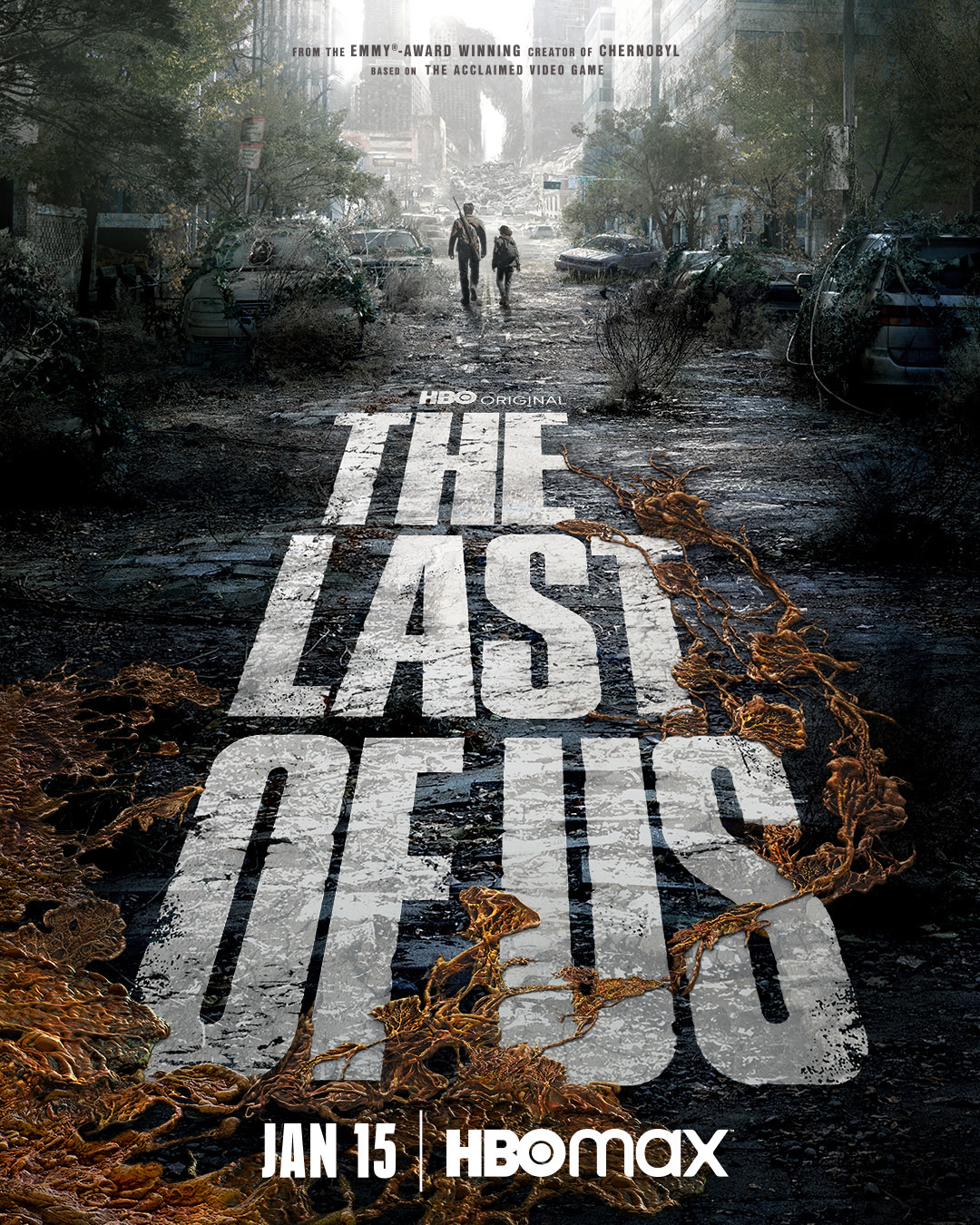
A fungal mass infection has overrun much of the world, killing billions and turning others into mindless, ravaging creatures. Smuggler Joel is tasked by a group known as the Fireflies with escorting 14-year-old Ellie across America to safety. The Fireflies believe that Ellie's genes hold the key to a cure for the infection.
The Last of Us was a 2013 video game from Naughty Dog, the creators of the Uncharted franchise. The game was a massive smash hit success, attracting praise for its emotional storytelling, dialogue, combat, characterisation and atmosphere. Its 2020 sequel was somewhat more divisive but still mostly well-received.
Inevitably, moves began to adapt the story as either a film or TV show. After several failed attempts, the project found a home at HBO with Chernobyl writer-producer Craig Mazin at the helm, joined by the game's original creator and writer Neil Druckmann.
The project still faced an uphill battle to succeed. TV has been awash with post-apocalyptic survival stories for well over a decade, with The Walking Dead (2010-22) being the most successful example, spawning multiple spin-offs. Other shows have had less success, with Y: The Last Man (2021) failing to gain much ground and only lasting one season. More notably, video game adaptations still had a long track record of failure in other mediums, Netflix's Arcane being the biggest exception (although that show benefitted from really only using characters and background lore, and crafting a new story).
The Last of Us once again argues that HBO has the Midas touch, emerging as easily the best live action video game adaptation to date. It helps that the series is based on a linear video game with a very linear story, divided itself into sections that can easily be lifted out and converted into episodes. It also helps that the source material itself is so strong.
The biggest success is in casting: Pedro Pascal can play "adopted grumpy gunman protector-daddy" in his sleep at this point, but still brings his A-game. Bella Ramsey doesn't hugely resemble the Ellie from the games, but has the requisite attitude, and Ramsey and Pascal have a great relationship and energy (possibly inspired by both being Game of Thrones casualties). Other actors rotate in and out of the road trip and do a great job, with Nick Offerman delivering the best guest performance of the season as Bill. More under-used is the normally-outstanding Melanie Lynskey, who isn't given much to as Kathleen (and from what we do see, it feels like her Yellowjackets character - also a well-meaning psychopath - has been airdropped in for five minutes). The likes of Merle Dandridge, John Hannah, Anna Torv, Gabriel Luna, Murray Bartlett and Rutina Wesley all provide excellent support.
The structure of the series mirrors that of the games, but also breaks away for format-busting experiments. The third episode, Long, Long Time, might be the season highlight as it follows libertarian prepper Bill's attempts to survive in the aftermath of the outbreak, and it turns from comedy to action to romance with conviction. Left Behind (based on an expansion to the game) is an excellent flashback episode focusing on Ellie's history and what led her to joining forces with the Fireflies.
Where the series falters a little is in some of the "normal" episodes, where the pacing can flag and where the show sometimes hesitates in how it deals with post-apocalyptic/zombie tropes that the likes of The Walking Dead have employed a dozen times over. A loved one is infected and needs to be killed/is allowed to make a noble sacrifice? Yup, several times. Have the tough times have made some people resort to being murders/rapists/cannibals/murderous rapist-cannibals? Oh yeah. At the merest sign of trouble, did about 30% of the population turn into authoritarian lunatics instantly? Of course. To its credit, the show does its best to make these well-trodden plotlines work, sometimes successfully, at other times less so.
This impacts on the pacing, with, once the flashback episodes are removed, seven episodes to tell its story and it still feels a little too long, which is odd given that the show runs to only about half the length of the first game. Still, the game can eat up a lot of its time in combat and stealth sequences which the show can't, at least not so easily.
But if the pacing is sometimes sluggish, there are also excellent moments of character development. It's also refreshing to see an adaptation not afraid to adapt the source material. Entire scenes from the game are faithfully recreated in the show, occasionally dialogue-perfect. Other storylines are changed to accommodate the show's greater sense of realism: fighting off the type of numbers that Ellie and Joel encounter in the game would look silly, or drag out too much. It's a judgement call in each case and, for the most part, the show makes good calls. After a bunch of recent adaptations that seemed to be terrified of their own source material (The Rings of Power comes to mind), it's good to see one more in conversation with it.
The show also makes good calls when it comes to CG. The increasingly all-invasive use of CGI in modern TV and film has become tedious, leading to fake-looking backdrops all over the place. This show certainly uses CG in places, but it is more restrained and, as a result, more convincing. Arguably, the show even fails to use CG in moments when maybe it should have (painting out the massive mountains that have inexplicably appeared around Boston might have been a good idea). The CG-animated cordyceps monsters are extremely well-realised, and used sparingly to good effect.
Excellent performances, good action and strong character arcs make the first season of The Last of Us (****) a winner. Occasionally sluggish pacing and sometimes questionable story turns that seem rooted more in video game logic than actual logic prevent the show from being an unqualified success, but these issues are minor. The Last of Us proves that adult, intelligent and interesting adaptations of video games are possible, and hopefully more will follow.
The TV show is available to watch on HBO or Max in the US and most overseas territories, and on Now TV in the UK.