An ancient organisation, the Hand, is causing trouble in New York City. They've already run afoul of the Devil of Hell's Kitchen and invoked the enmity of the Iron Fist. Now, with time running short and their resources dwindling, they are forced into desperate, high-profile gambits that attract the attention of not just Iron First and Daredevil, but also Luke Cage and Jessica Jones. The four defenders of New York reluctantly join forces to bring the Hand down...if they can.
The Defenders is the culmination of two and a half years of careful planning by Marvel TV and Netflix. Back in April 2015 they released the first season of Daredevil, a TV series based on one of their lower-tier heroes, rooted in defending Hell's Kitchen, New York from more mundane threats than the aliens and demigods that the likes of the Avengers have to deal with. More series followed focusing on other characters from the same milieu: Jessica Jones, Luke Cage and Iron Fist, as well as a second season of Daredevil. The plan was always to bring them together in a big team-up to fight a mutual threat.
The Defenders has a few jobs it needs to do. It has to be a satisfying team up for these four heroes, it has to work as a story in its own right, it has to pay off the groundwork and scene-setting down in five previous seasons of television and it has to be accessible to newcomers. It's a tall order, not helped by the gradual decline in quality of the Netflix Marvel series that preceded it, but one that it kind of pulls off.
The opening episodes of The Defenders focus on our individual heroes and the problems they are going through: Matt Murdoch has dropped the Daredevil persona and is making a go of it as a lawyer, whilst Jessica Jones is still recovering from Kilgrave's depredations and working up the confidence to go back to work. Danny Rand is searching for more information on K'un-Lun in Asia and Luke Cage has just gotten out of prison and returned home to Harlem. A surprising number of our heroes' supporting casts drop in, making these individual story strands work between in linking the mini-series to the ones that preceded it. Combined with a new storyline revolving around the Hand and one of their leaders, played with traditional charisma by Sigourney Weaver, this makes for a busy couple of opening episodes even before our heroes meet up.
When the gang does get together, the writers have fun setting up their dynamics: Matt's Catholic guilt and intensity gets little respect from the rest of the team and everyone seems to find Iron Fist kind of ridiculous. Jessica Jones gets the best lines and the best side-eye moments as she tries to work out what kind of crazy situation she's walked into, and all four lead actors seem to be having a great time.
The fight scenes are a serious step up from Iron Fist, being more dynamic and brutal, even if they don't get back to the earthy, gritty rawness of the first season of Daredevil. A few of the fight scenes also rely too obviously on CG or filming trickery to pull off having four complicated battles going on in one shot, which feels a bit gimmicky. But overall, the show competently handles its action scenes.
In terms of pacing, something that has caused almost all of the Marvel Netflix shows big problems (Luke Cage worse of all), Defenders benefits from having just eight episodes to unfold across. This makes for some breezy, fast-paced episodes (although, conversely, the best is arguably one that is mostly restricted to a Chinese restaurant and featuring our heroes talking about stuff) which come as a relief after the frantic wheel-spinning of some of the forebear series. The series even finds time to set up new dynamics: Colleen Wing, Misty Knight and Claire Temple get lots of stuff to do, hinting at a possible alternative superhero team who could take shape later on (although, given the impending Netflix/Marvel divorce, this seems less likely).
Unfortunately, the series continues to have a villain problem. Using the Hand is a bad idea, as they were boring and bland in both Daredevil and Iron Fist and are still boring and bland here. The idea of using the Hand leaders (the Fingers, appropriately) as counterpoints to our four heroes is a solid idea, especially since two of them were set up in previous Netflix shows, but it doesn't quite work as other members of the group receive little to no development. Sigourney Weaver's Alexandra is a big selling point of the series and Weaver gives a fine performance, but the character is left a little underdeveloped. More capable in the role of antagonist is Elodie Yung as Elektra, returning from the dead, but she takes quite a long time to rediscover her old mojo. It also doesn't help that the Hand's plan is murky and vague, and the stakes are never really made clear other than that bad things are going to happen to New York.
The result is a mini-series that is quite a lot of fun, and a merciful step up in quality from Daredevil Season 2, Iron Fist and Luke Cage, but one that is never in any real danger of replicating the quality of the first season of Daredevil or Jessica Jones. It really needs better villains and a clearer set of stakes and goals. But as it stands, The Defenders (****) works absolutely fine as a fun action series. It is available to watch on Netflix right now.
Tuesday, 22 August 2017
Monday, 21 August 2017
A Song of Three Seasons: The SF Game of Thrones
It is a world where the seasons last for years, where summers can span decades and devastating winters can threaten to destroy civilisation altogether. In the warmth of summer, princes and kings do battle and play their games of thrones. But in the depths of the coldest winters, the humans seek shelter behind the walls of their castles and cities. Strange creatures appear our of the uttermost north and move south in great migrations which threaten humanity with extinction. This all unfolds on a world called...Helliconia?
In 1982 Brian W. Aldiss published the novel Helliconia Spring. One of the grandmasters of science fiction, renowned for books like Hothouse, Non-Stop and Report on Probability A, as well as works of mainstream fiction and poetry, Aldiss had made the surprising decision to return to SF on a grand scale. For this trilogy he tapped a wellspring of local talent and expertise. Living in Oxford, with the university and its plethora of experts in every field of science imaginable at hand, Aldiss set out to create the single most detailed, expanse planet ever described in science fiction. And he succeeded. Helliconia remains the most remarkable feat of worldbuilding in SF history, outstripping even Frank Herbert's Arrakis (famously detailed in his Dune novels) for the vigour of its scientific plausibility.
At the heart of Aldiss's trilogy is an idea that modern fans of fantasy may find familiar: a world where the seasons last not just three months, but years and even centuries. But unlike George R.R. Martin's A Song of Ice and Fire, the seasons of Helliconia are rooted in real scientific principles.
Helliconia is an Earth-like planet approximately 28% larger than Earth but with a more pronounced axial tilt of 35 degrees. This results in the planet having enormous icecaps which are larger than Earth's, but the planet nevertheless retains as much surface area as Earth, extending over three continents: the northern polar continent of Sibornal, the southern polar continent of Hespagorat and the equatorial continent of Campannlat, which is linked to Sibornal by a land bridge.
More important is the make-up of Helliconia's star system. Helliconia orbits at G4 star Batalix (an orange dwarf, somewhat smaller and less bright than our sun) at a distance of somewhat less than 1 AU (so Helliconia receives slightly less solar output than Earth). Batalix, in turn, orbits the A-class blue supergiant star Frey in a highly elliptical orbit. At apastron, the moment of greatest separation, Batalix is 710 AU from Freyr (for comparison, Pluto at its most distant from the Sun is still only 49 AU away); at periastron, the moment of minimal separation, Batalix is 236 AU from Freyr.
The result of this orbital dance is that Helliconia enjoys a "small year" of roughly 480 days, the time it takes to orbit Batalix once, and a Great Year of 1,825 small years (2,592 Earth years). During a Great Winter, when Freyr is so distant it becomes merely the brightest star in the sky, the great ice completely buries Sibornal and extends deep into Campannlat, forcing humans to live in a narrow habitable strip across the equator. During a Great Summer, where Freyr dominates the sky and the ice has withdrawn far to the north and south, there are great exoduses from the equatorial belt (where great fires consume the forests) in favour of the coasts and the arctic continents.
It is revealed later in the novels that this arrangement is, relatively speaking, new: Batalix was captured by Freyr's gravity during a chance encounter eight million years ago. Prior to that time Helliconia was permanently a much colder world, and it was the capture that allowed humanity to evolve from an earlier primate species.
This push and pull of civilisation across millennia is echoed by a more personal threat: Helliconia is also home to a second sentient species. The phagors or ancipitals are a race of fur-covered creatures similar to mythical minotaurs. The phagors are optimised for life in the cold and are stronger and more formidable than humans in personal combat; however, they are (arguably) less intelligent and have never developed technology beyond that of the hunter-gather stage. During the Great Winters the phagors are the dominant species on Helliconia, whilst humans gain the upper hand during the Great Summers and force the phagors back to the polar continents.
Aldiss uses this ebb and flow of the seasons and species to drive his story. In each of the three novels in The Helliconia Trilogy (Helliconia Spring, Helliconia Summer, Helliconia Winter) Aldiss uses the change of seasons to chronicle the rise and fall of kingdoms, civilisation but, more important, individuals, who change, grow and learn from the ever-changing world around them.
A Song of Ice and Fire can clearly be seen as the fantasy equivalent of Helliconia. Scientifically and astronomically-minded fans have spent large amounts of time coming up with maps and charts of how the seasons might work in such a star system, sometimes drawing on dark matter or invisible neutron stars to explain the required orbital eccentricities. They are sadly doomed in such attempts, for there is no such scientific explanation: George R.R. Martin has been constant in his promise that the reasons for the long seasons of Westeros and Essos are magical, not scientific.
Still, they might take comfort that, fourteen years before Martin published A Game of Thrones, another author took on the same concept with a scientific viewpoint and delivered one of the greatest works of science fiction ever published. The influence of Helliconia on A Song of Ice and Fire is speculative - Martin has almost certainly read the series given its prominence but has never mentioned it to my knowledge - but certainly the parallels between the two series are fascinating.
Maps and charts of Helliconia, created by Brian W. Aldiss whilst writing his trilogy.
At the heart of Aldiss's trilogy is an idea that modern fans of fantasy may find familiar: a world where the seasons last not just three months, but years and even centuries. But unlike George R.R. Martin's A Song of Ice and Fire, the seasons of Helliconia are rooted in real scientific principles.
Helliconia is an Earth-like planet approximately 28% larger than Earth but with a more pronounced axial tilt of 35 degrees. This results in the planet having enormous icecaps which are larger than Earth's, but the planet nevertheless retains as much surface area as Earth, extending over three continents: the northern polar continent of Sibornal, the southern polar continent of Hespagorat and the equatorial continent of Campannlat, which is linked to Sibornal by a land bridge.
More important is the make-up of Helliconia's star system. Helliconia orbits at G4 star Batalix (an orange dwarf, somewhat smaller and less bright than our sun) at a distance of somewhat less than 1 AU (so Helliconia receives slightly less solar output than Earth). Batalix, in turn, orbits the A-class blue supergiant star Frey in a highly elliptical orbit. At apastron, the moment of greatest separation, Batalix is 710 AU from Freyr (for comparison, Pluto at its most distant from the Sun is still only 49 AU away); at periastron, the moment of minimal separation, Batalix is 236 AU from Freyr.
The orbits of Helliconia and Batalix around the star Freyr (not to scale).
It is revealed later in the novels that this arrangement is, relatively speaking, new: Batalix was captured by Freyr's gravity during a chance encounter eight million years ago. Prior to that time Helliconia was permanently a much colder world, and it was the capture that allowed humanity to evolve from an earlier primate species.
This push and pull of civilisation across millennia is echoed by a more personal threat: Helliconia is also home to a second sentient species. The phagors or ancipitals are a race of fur-covered creatures similar to mythical minotaurs. The phagors are optimised for life in the cold and are stronger and more formidable than humans in personal combat; however, they are (arguably) less intelligent and have never developed technology beyond that of the hunter-gather stage. During the Great Winters the phagors are the dominant species on Helliconia, whilst humans gain the upper hand during the Great Summers and force the phagors back to the polar continents.
Aldiss uses this ebb and flow of the seasons and species to drive his story. In each of the three novels in The Helliconia Trilogy (Helliconia Spring, Helliconia Summer, Helliconia Winter) Aldiss uses the change of seasons to chronicle the rise and fall of kingdoms, civilisation but, more important, individuals, who change, grow and learn from the ever-changing world around them.
A Song of Ice and Fire can clearly be seen as the fantasy equivalent of Helliconia. Scientifically and astronomically-minded fans have spent large amounts of time coming up with maps and charts of how the seasons might work in such a star system, sometimes drawing on dark matter or invisible neutron stars to explain the required orbital eccentricities. They are sadly doomed in such attempts, for there is no such scientific explanation: George R.R. Martin has been constant in his promise that the reasons for the long seasons of Westeros and Essos are magical, not scientific.
Still, they might take comfort that, fourteen years before Martin published A Game of Thrones, another author took on the same concept with a scientific viewpoint and delivered one of the greatest works of science fiction ever published. The influence of Helliconia on A Song of Ice and Fire is speculative - Martin has almost certainly read the series given its prominence but has never mentioned it to my knowledge - but certainly the parallels between the two series are fascinating.
RIP Brian W. Aldiss
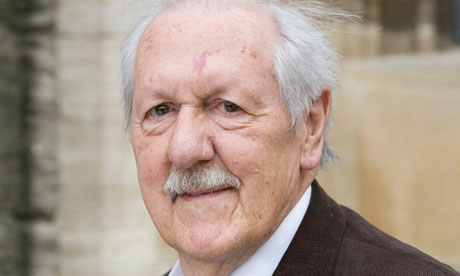
One of the titans of science fiction has left us. Brian Aldiss (often published as Brian W. Aldiss) has passed away at the age of 92.
Aldiss is one of the most fascinating authors in the science fiction canon, comfortable writing stories rooted in scientific ideas but much more interested in writing tales which experimented with language and character. He was arguably in the New Wave of SF two decades before the New Wave really took off, writing books fairly seething with intelligence and artistry. He was a friend and intellectual sparring partner of J.G. Ballard, and if Aldiss was not quite as adept as Ballard as crossing into the mainstream (his love of spaceships and alien worlds drawing him back into hard SF whilst Ballard firmly crossed over with his disturbing novel Crash), he was every bit his equal in terms of sheer writing ability.
To read an Aldiss novel is to drown in evocative prose and strange, compelling ideas, all transmitted through human, flawed characters. His first novel, The Brightfount Diaries (1955), was mainstream fiction, but his second, Non-Stop (1958), is a rightly-acknowledged classic of science fiction, one of the earliest books to explore the idea of a generation ship which takes centuries to travel between stars. Non-Stop is contemporary of early Arthur C. Clarke and Isaac Asimov, but is set apart from them by its fantastic language and the way Aldiss mirrors the decrepit and failing nature of the Ship against that of humanity itself.
His second major work of SF was Hothouse, set on a future Earth beset by global warming where plant life has run out of control and the remnants of humanity are trying to survive in the ruins. The fact this novel was written in 1962 remains jaw-dropping; the prose is evocative and its grasp of human nature is assured. The imagery, of a vast banyan tree covering the entire Indian subcontinent and of immense webs linking the Earth to the Moon, travelled by creatures beyond human understanding, remains unrivalled in science fiction. The 1962 novel was assembled out of five pre-existing short stories; the science fiction fan community bent the rules slightly to collectively award the short stories the 1962 Hugo Award for Short Fiction at the third WorldCon in Chicago. In those days of less-sophisticated international communications, the first Aldiss knew of the award was when it showed up on his doorstep.
Works of profound science fiction power followed: The Dark Light Years (1964), Greybeard (1964), Earthworks (1965) and the intensely strange Report on Probability A (1967), in which Aldiss explores the uncertainty principle and the quantum notion of observer and observed about twenty years before most SF authors even thought of tackling it. Barefoot in the Head (1969) was Aldiss's most experimental novel, a nod at 1960s acid counterculture. Frankenstein Unbound (1973) was a more straightforward novel, a sequel to Frankenstein involving time travel. Roger Corman produced a film version in 1990.
Other major works proceeded at this time. Aldiss wrote the semi-autobiographical Horatio Stubbs trilogy in the 1970s, consisting of The Hand-Reared Boy (1970), A Soldier Erect (1971) and A Rude Awakening (1978). These novels were rooted in Aldiss's own experiences during the Second World War. The Malacia Tapestry (1976) was a triumphant return to science fiction, followed by Moreau's Other Island (1980).
Aldiss spent a large chunk of the late 1970s working with film maker Stanley Kubrick. Kubrick had fallen in love with Aldiss's 1969 novella Supertoys Last All Summer Long and asked Aldiss to collaborate on a film version of the same idea. Aldiss suspected that Kubrick was trying to replicate the success he'd had with 2001: A Space Odyssey (1968), on which Kubrick had collaborated with the altogether more straightforward writer Arthur C. Clarke. Aldiss worked on the project for a decade, going as far as writing two sequel novellas to the original short story (Supertoys When Summer Comes and Supertoys in Other Seasons) to extend the narrative to support the length of a film. Aldiss eventually left the project in 1989. It reached the screen in 2001 under the title A.I.: Artificial Intelligence, with Stephen Spielberg directing after Kubrick's untimely death in 1999.
In the early 1980s Aldiss wrote what many consider to be his magnum opus, a vast and sprawling trilogy set on a meticulously-detailed world where the seasons last for years and strange, threatening creatures threaten from the north. The Helliconia Trilogy (Helliconia Spring, Helliconia Summer, Helliconia Winter) is one of the most accomplished works of science fiction ever written, and certainly the pinnacle of SF worldbuilding, outstripping in its convincing detail even Frank Herbert's Dune and Kim Stanley Robinson's vision of Mars. The first novel in the trilogy won the BSFA Award and the Campbell Memorial Award.
Aldiss's later career continue to result in notable work: Seasons in Flight (1984), Man in His Time (1989), Dracula Unbound (1990) and White Mars, or the Mind Set Free (1999) are all strong works. Super-State (2002) and HARM (2007), the latter riffing on the War on Terror was remarkable power, showed his powers were undimmed in his later years. Walcot (2010), an accomplished 600-page-long family saga spanning the entire 20th Century, was published when he was 85. His last SF novel, Finches of Mars was published in 2012 and his last mainstream book, Comfort Zone, a year later.
Aldiss was not just a writer of science fiction, but had an academic interest in the genre; in 1973 he wrote Billion Year Spree: The History of Science Fiction. In 1986 he expanded the book as Trillion Year Spree: The History of Science Fiction (helped by David Wingrove), which won the 1987 Hugo Award for Best Related Work. Holding aloft the award - his first Hugo since Hothouse 25 years earlier - he yelled, "It's been a long time since you gave me one of these, you bastards!" to cheers and applause. He later wrote two autobiographies: Bury My Heart at W.H. Smith's (1990) and An Exile on Planet Earth (2012).
Aldiss's death has attracted tributes from fellow authors such as Neil Gaiman and Adam Roberts, whilst Blur guitarist Graham Coxon also paid his respects.
Brian Aldiss leaves behind a formidable body of work and a long shadow over the genre. His wit, his humour, his humanity and his words will be missed.
Saturday, 19 August 2017
I have a GAME OF THRONES article up at Variety
Variety, the US entertainment magazine and website, recently asked me to contribute an article on how the appeal of Game of Thrones has grown since 2009, when I met up with fans, cast and crew at an event in Belfast during the filming of the never-screened pilot episode. I was happy to oblige.
You can find the article in full here. You can also find my original reports of the event in Belfast from way back in 2009, here, here and here.
A History of Middle-earth Part 6: The Downfall of Númenor
Part 1 can be found here.
In the Second Age of Middle-earth, Sauron, lieutenant of the exiled Morgoth, tricked the Noldor smiths of Eregion into forging the Rings of Power. In secret, he crafted the One Ruling Ring, the means by which he intended to conquer the world. But his student, Celebrimbor, had also crafted three rings for the elven kings under the sky, which could thwart Sauron's ambitions. The stage was set for the greatest conflict since the War of Wrath.
The War of Sauron and the Elves
With Sauron’s plan revealed, he now moved quickly and begun breeding a vast army of Orcs to take the offensive. Mount Doom burst into flame, covering the lands of Mordor with smoke and ash, hindering any enemy who might try to strike him there, and Easterling allies were summoned to prepare for war.
In Eregion Celebrimbor realised his folly and made his own preparations. He sent word to Gil-galad, who in turn despatched a message to Númenor. Tar-Telperien did not heed the call to arms, but her nephew Minastir did and began assembling both a great army and navy to battle Sauron’s forces. This took time, but Sauron himself had been taken unawares by how quickly he had exposed his plans, and needed time of his own to prepare.
Soon enough Sauron launched his assault. In 1695 SA Sauron’s armies marched through the Gap of Calenardhon between the Misty Mountains and the White Mountains and turned north, laying siege to Ost-in-Edhil. Gil-galad sent Elrond with a great host to the relief of the city, but after two years Sauron’s forces gained the city and put it to the torch. Celebrimbor was slain, but the greater part of the civilian populace managed to escape under Elrond’s protection. Celeborn retreated northwards with Elrond to the hidden valley of Imladris and there they made a stand, but Sauron chose not to pursue, instead directing his forces westwards against Lindon itself.
Now the war entered its bloodiest phase. Free men who inhabited the wide lands of Eriador either allied with Sauron or took up arms against him. Gil-galad fortified the havens and sent as many troops as possible east against this threat, whilst Elrond and Celeborn attacked Sauron’s flanks as often as they could.
But all seemed in vain. In the 1,700th year of the Second Age Sauron’s armies crossed the open, verdant countryside east of the White Towers and drew nigh to Mithlond. But, as all hope seemed to fade, a great fleet sailed out of the west and landed at the Grey Havens. The army of Númenor marched forth, and so many were their soldiers that the earth rumbled, and even Gil-galad was amazed. Then it became clear that this was but part of Númenor’s strength, for another host had landed at ruined Lond Daer and further north at Tharbad, thus bringing Sauron’s host under attack from two directions. Even bolstered by the power of the One Ring, Sauron could not resist such a strength of arms as that which was now arrayed against him. His army was destroyed and he fled from Eriador with but a token of his forces intact.
Now Gil-galad, Círdan, Celeborn, Elrond and Ciryatur, commander of the fleet sent from Númenor, took counsel. Ciryatur could not maintain his army in Middle-earth and had to return it to Númenor, but certainly now the rulers of Westernesse would maintain permanent fortresses and settlements in Middle-earth lest the Shadow come forth again unchallenged. Elrond was commanded to permanently settle in Imladris and he began the construction of Rivendell, which in those days was heavily fortified, but after the Last Alliance was made more beautiful, more of a home than a fortress. At this time Gil-galad surrendered the Ring of Vilya to Elrond, but kept the other ring for himself.
At length Galadriel came over the Misty Mountains from Lórinand and debated with Celeborn about their own future, where they were to dwell. And for many long years afterwards they were wanderers, living sometimes in Imladris, sometimes in Lórinand, but they also desired the Sea and journeying far to the south came to the lands below the White Mountains. There at the mouth of the River Morthond they founded a new haven, Edhellond, and many elves dwelt there as they prepared to take ship for Valinor. But for Galadriel that path was not open until Sauron was defeated, and she and Celeborn built a tower where Dol Amroth in Gondor later stood, and for many years stayed there. But at other times they would depart for Lórinand, or for Imladris or for other lands unknown, and thus passed the Second Age.
The Downfall of the Dúnedain
Now, after the War of Sauron and the Elves the rulers of Númenor resolved to keep a closer watch on the affairs of the mainland, lest Sauron strike again before they could send aid to halt him. Fortresses and citadels they established all along the coasts of Middle-earth. They rebuilt Tharbad and Lond Daer even stronger than before and established a new fortress, Angrenost (Iron Fortress), in the Gap of Calenardhon. In 2280 SA the Númenórean fleet destroyed the navy of a kingdom of southern Middle-earth that was challenging their greatness and captured the capital of their realm, Umbar. By this time the Númenóreans were becoming empire-builders, stripping distant mines bare for their own enrichment and colonising parts of Middle-earth for their own protection, rather than that of their elven allies. Indeed, after a time the Númenóreans ceased to be concerned with the affairs of the elves, save only the Lords of Andúnië, who now called themselves the “Faithful”, and kept open the lines of contact with Lindon. In 2350 SA the Faithful volunteered their ships to colonise the mouth of the River Anduin, the Great River of north-western Middle-earth, and in this year established the fortress and city of Pelargir, which was kept forevermore as a bastion of the Faithful.
Now the Kings of Númenor grew proud indeed. During the reign of Tar-Atanamir (2029-2221 SA) they began to speak openly against the ban against travelling west to Valinor, but they did not dare too much, for they still feared the Valar. But the later Kings dared much more. Tar-Calmacil become King of Númenor in 2737 SA after winning great lands along the coast of the Harad and sending troops exploring up to the very borders of Mordor, encouraging Sauron to seek new conquests in the East. Tar-Calmacil became the first of the Kings to have his name inscribed in the tongue of Númenor, Adûnaic, rather than Quenya, although his Quenya name was still inscribed in the Roll of Kings out of tradition. In Adûnaic his name was Ar-Belzagar, and upon hearing this the Faithful were filled with despair, for in this mode the title of King of Númenor was changed to Lord of the West, but in the minds of the Faithful there was only one Lord of the West and his name was Manwë. Any other claiming that title was foolhardy indeed.
Then in 2899 SA the new King of Númenor, Tar-Herunúmen, openly ruled under the name Ar-Adûnakhôr, and those kings who followed him also proclaimed their names in Adûnaic, save only Tar-Palantir, who repented the ways of his insolent forebears. But Tar-Palantir had no sons, only a daughter, Míriel, and when he died in 3255 SA she was taken forcibly to wife by Tar-Palantir’s cousin Pharazôn, who claimed the title of King of Númenor and Lord of the West.
The Downfall of Numenor, by Ted Nasmith.
The Fall of Númenor and the Flight of the Faithful
After usurping the throne of Númenor, Ar-Pharazôn decreed that the time had come to put an end to the threat of the Dark Lord against the land of Westernesse and assembled a great army. This he put ashore at Umbar late in the year 3261 SA. Early in 3262 SA this army passed nigh to the pass leading from the verdant land of Ithilien into Mordor and prepared for battle, but in startlement the Númenóreans beheld a single figure alone coming forth. This was indeed Sauron, who surrendered himself to the custody of Ar-Pharazôn, claiming to have been overawed by the might of Númenor and to have seen the wisdom in serving the Lords of the West. Ar-Pharazôn was easily convinced this was so and he took Sauron in chains back to Númenor.
But once in Númenor Sauron did not long stay in chains, but whispered golden words in Ar-Pharazôn’s ear. And soon on the summit of Meneltarma, the great mountain of Númenor, Ar-Pharazôn had raised a great temple dedicated to the worship of Morgoth Lord of the Dark, and Ar-Pharazôn spoke openly of his rage against the Valar for banning the westwards passage to Valinor. At this the Faithful quailed in fear, not knowing what the King would do in his madness. But Sauron spread more poison in the ear of Ar-Pharazôn, telling him of the way through the Shadowy Seas to the mouth of the Calacirya, and of how Valinor was not able to withstand attack. And Ar-Pharazôn heeded those words and built a colossal fleet he named the Great Armament.
When this began, the Faithful knew the end of Númenor had come. In many ships they fled for Pelargir, which they made into their fastness, but Amandil, Lord of Rómenna and Chief of the Faithful, refused to leave whilst Númenor still survived, and he tried in vain to counsel words of wisdom to the mighty of Númenor, but they did not heed him, and indeed some reported him as traitor and craven to the King. Amandil then fled from Númenor to seek the western way to Valinor, so he might seek the pardon of the Valar for the sins of Ar-Pharazôn, and limit their vengeance to the King alone, and he bade his son Elendil take the Faithful to Middle-earth. Elendil agreed, but tarried off the coast for a long time, waiting for a sign from the Valar that Amandil had succeeded in his mission.
But the only signs that came were ominous, for many great Eagles filled the skies over Númenor and the great temple of Morgoth was destroyed by lightning. Enraged, Ar-Pharazôn borded his flagship and led the Great Armament westwards, and at this Elendil turned to the east and fled for Middle-earth as fast as his ships could go.
Ar-Pharazôn passed through the protective enchantments of Valinor thanks to the will of Sauron and landed his army at the mouth of the Calacirya. But, as they made to invade Valinor itself, Manwë pronounced the Doom of the Númenóreans upon them. Of what happened to Ar-Pharazôn’s army, only the Valar know, save that none of them ever came back out of the west.
The Valar opened a great chasm in the seas around Númenor, and a colossal earthquake shattered the island, destroying all the cities of the Dúnedain in a matter of hours. Hundreds of thousands died, Armenelos was destroyed and even Sauron the Deceiver was slain, but in his evil cunning Sauron had left the One Ring behind in Barad-dûr, and as long as it endured so did he. His spirit fled the Downfall of Númenor and took form again in the Barad-dûr, assuming the shape of a powerful warrior clad in steel. And his servants had not been idle, for the Nine Rings had corrupted the great Kings of the East into evil, ghostly figures known as the Nazgûl, or Ringwraiths. The Nazgûl had raised a great strength of arms and Sauron now planned his stroke against his remaining foes, the elves of the north-west, and this time there would be no Númenórean intervention to save them.
The Realms in Exile
Yet Sauron miscalculated, for out of the west, barely outrunning the great tidal wave generated by the Downfall of Númenor, a number of ships bore Elendil the Tall to the shores of Middle-earth. He and his kin landed at Pelargir, bastion of the Faithful, where there had gathered many of the valiant men of Middle-earth opposed to Sauron, and with the arrival of the Númenórean survivors they were numerous indeed. This was in the 3,319th year of the Second Age. Elendil marched with his sons to that point where the White Mountains drew closest to the Mountains of Shadow on Mordor’s borders and there founded two great citadels. Minas Anor, the Tower of the Sun, was built on the eastern face of Mount Mindolluin and was encircled by tall and powerful walls seven times to make it impregnable to attack. Minas Anor Elendil entrusted to the care of his younger son, Anárion. Fifty miles away, opposite Minas Anor in the shadowed western pass of Mordor, Elendil built the Tower of the Moon, Minas Ithil, which he gave into the care of his eldest son and heir, Isildur. Between the two fortresses he built the great city of Osgiliath, City of the Stars, and announced the founding of the Land of Stone, Gondor, the South-kingdom of the Númenórean Realms in Exile. He then entrusted the rule of Gondor to his sons, and took ship for Lindon with another remnant of his people.
From Mithlond Elendil marched east, over the Hills of Evendim to the shores of Lake Nenuial. There, on the south-eastern shore of the lake, he founded the city of Annúminas and committed it as the capital of the Land of the King, Arnor. Further east, at the feet of the North Downs, he founded a smaller city and fortress, Fornost, and took counsel with Gil-galad and Elrond on the threat posed by Sauron.
For a century the Númenórean refugees had peace, enough time to complete the building of fortresses and raise great armies, for all knew that Sauron would now attempt to complete the destruction of his enemies.
The Last Battle of the Last Alliance, by Entar0178.
Late in the year 3429 SA Sauron launched his renewed attack upon the free peoples of Middle-earth. His armies marched forth, led by the Nazgûl, and seized Minas Ithil by force of arms. Isildur escaped the fortress with most of his troops and led a fighting retreat to Osgiliath. His brother Anárion came forth from Minas Anor with great strength and there at Osgiliath a mighty battle was fought. Sauron’s armies were halted, though not destroyed, and Isildur resolved to go north and alert his father and the elves to the new threat posed by Sauron. Comitting the South-kingdom to Anárion, Isildur rode to Annúminas with great haste.
Elendil and Gil-galad now formed the Last Alliance of Men and Elves and raised their armies to march to the relief of Gondor, although this was a long task taking over a year. Many elves of Lindon joined Elendil’s host, and Gil-galad came personally to lead them. Elrond led a large force from Imladris, and many elves came over the moutains from Lórinand and North Greenwood as well. Elendil raised the hosts of Arnor and with great strength the Last Alliance set forth, but was much delayed in the passage of the High Passes, for savage men allied to Sauron assaulted them out of the land known as Dunland (by way of the Redhorn Pass and the Gap of Calendardhon), and many fell Orcs came forth from the Misty Mountains.
After the lengthy delay the host of the Alliance came down the east bank of Anduin, and skirting the Emyn Muil (Drear Hills) they came to the Dagorlad, which was after called the Battle-plain, and before the Black Gate of Mordor launched their assault on Sauron’s army in 3434 SA, for Sauron had comitted his greatest forces against Osgiliath and was late in sending his army north to meet this greater threat. Sauron miscalculated and his army was destroyed piecemeal by the Alliance, who forced the Morannon and the Isenmouthe and came down onto the Plateau of Gorgoroth. Then their armies surrounded Barad-dûr itself, allowing no entry or exit, but the fortress could not be stormed for it lay amidst a moat of lava, and its fortifications were strong. Anárion led the army of Gondor forwards and retook Minas Ithil and joined the Siege, and Sauron’s prospects now looked bleak indeed.
But Sauron held out for seven years. In the sixth year of the siege a missile was fired from the Dark Tower which felled Anárion, leaving Isildur as Elendil’s only heir. But then Sauron resolved to break the enemy, and comitted all his troops to forcing a way out of the tower. Sauron and his troops punched through the enemy lines and escaped south to Mount Doom, where they turned and stood, and thus begun the Last Battle of the Last Alliance.
In that battle the Alliance had the victory, for once the free peoples enjoyed the superiority of numbers, but Sauron himself came forth wielding the power of the Ring, and in that last battle Gil-galad was killed, and Elendil felled, and Isildur overcome. But ere Sauron could slay him, Isildur took up his father’s shattered sword, Narsil, and sliced the Ring from Sauron’s finger. And in that moment Sauron was vanquished, and the Nazgûl scattered to the shadows, and all Sauron’s armies filled with disquiet, and fled or were slain.
So ended the Second Age. The Númenóreans had their revenge upon Sauron, who they now considered dead entirely, and Isildur took the Ring for himself. But Elrond and Círdan were filled with disquiet, and bade Isildur take the Ring into Mount Doom and cast it into the flames, but Isildur refused, keeping the Ring in honour of his fallen kingdom and his slain brother and father. So, evil was allowed to endure.
Parts 7-10 of the History of Middle-earth Series are available to read now on my Patreon feed as follows:
Thank you for reading The Wertzone. To help me provide better content, please consider contributing to my Patreon page and other funding methods, which will also get you exclusive content weeks before it goes live on my blogs. The Cities of Fantasy and History of Middle-earth series are debuting on my Patreon feed and you can read them there one month before being published on the Wertzone.
Thursday, 17 August 2017
Season 2 of THE EXPANSE hits Netflix UK on 8 September
Apparently, Season 2 of The Expanse will land on Netflix UK on Friday, 8 September.
The second season of the show, which airs on SyFy in the US, originally aired from February to May this year, and was anticipated on Netflix in June. Bizarrely, the streaming service has held off on broadcasting the show, resulting in both significant levels of piracy and also people perfectly legally buying the already-released DVD and Blu-Ray box sets. The reason for the delay is unknown.
It's also unclear if the entire season is landing in one go (which you'd assume would be the case) or will be stripped over thirteen weeks like in the olden days.
Fortunately, Netflix's laxity has not damaged the success of the series: production of Season 3 began a few weeks ago and is now well underway, for broadcast in 2018. The Season 1 finale also picked up Best Dramatic Presentation (Short Form) at the recent Hugo Awards in Helsinki.
Next STAR WARS standalone movie will (probably) be about Obi-Wan Kenobi
Disney and Lucasfilm have quasi-confirmed that the 2020 Star Wars movie will be a stand-alone prequel focusing on Obi-Wan Kenobi, surprising exactly no-one but still pleasing a lot of people anyway.
The next Star Wars movie will be Episode VIII: The Last Jedi, directed by Rian Johnson and due out in December. This will be followed by a Han Solo-focused prequel move in 2018, currently still scheduled for May 2018 but after a chaotic shoot and the firing of the directors (and their replacement with Ron Howard), this may change. Episode IX is then scheduled to follow in 2019, directed by Jurassic World director Colin Trevorrow. Disney had pencilled in a third stand-alone movie for 2020 but had not confirmed the premise, apparently considering competing ideas focusing on Obi-Wan, Boba Fett or Yoda.
The Obi-Wan movie originally sounded like the least likely of the three ideas, but Ewan Mcgregor enthusiastically endorsed the idea, pointing out that he's now the right age to play Obi-Wan mid-way between his exile to Tatooine in Revenge of the Sith and his return as an old man in A New Hope. The animated series Star Wars: Rebels, which also teased some ideas for Rogue One in its second season, seemed to back this up with a storyline featuring Obi-Wan on Tatooine, looking over Luke from afar and battling a resurrected Darth Maul thirsting for revenge (it's better than it sounds).
Lucasfilm are apparently in discussions with Stephen Daldry, the director of Billy Elliott and The Hours, to helm the film, suggesting they may be open to considering a more character-focused movie. Mcgregor is not yet officially attached, but I have a hard time believing that Disney wouldn't tap him for the project.
As for story ideas, whilst it's generally assumed that Obi-Wan spent nineteen years just hanging out on Tatooine, it is perfectly possible that he did take off for some solo adventures in that time, maybe keeping tabs on Luke through the Force or something. Basically, I don't care and just want to see Ewan Mcgregor playing Obi-Wan in a movie that isn't awful.
More news as we get it.
Pornographic website offers to fund future seasons of SENSE8
Adult entertainment website XHamster has offered to pick up Netflix's recently-cancelled TV series Sense8, in an apparently serious proposal to series showrunner Lana Wachowski.
Sense8's second season aired earlier this year to apparently disappointing viewing figures, especially compared to the show's lavish $9 million-an-episode budget (the second-highest on American television, behind only Game of Thrones). Netflix regretfully pulled the plug, but after an intense fan campaign, agreed to produce a two-hour finale movie so Lana Wachowski and co-writer J. Michael Straczynski could wrap up the cliffhanger ending the show was left on.
Now XHamster has stepped in, posting an open letter to the Wachowski sisters (Lilly Wachowski stepped back from Season 2 of Sense8 after co-producing the first season, but may return for the finale) in which they make a serious offer to pick up the series properly, presumably meaning they would fund the remaining three years of the planned five-season run. Obviously this would require Netflix licensing the property to an adult website, but given Netflix's own history of giving a new home to previously-cancelled series (like Gilmore Girls and Arrested Development), they may be open to the notion.
Certainly XHamster has the financial firepower to make it happen. The website is one of the biggest and most heavily-trafficked on the entire Internet, dwarfing almost every single news outlet and bringing in colossal revenues from advertising. XHamster doesn't have much of an outlay cost, since most of their own content comes from other companies or is, er, crowd-sourced, so they end up making stupendous amounts of money and not doing very much with it. As the XHamster statement says, they can easily afford to produce Sense8 at the same level as Netflix was able to, which is mind-boggling.
Whether this idea goes anywhere remains to be seen, but I'm pretty sure that fans of the show would be happy to see the full five-year story concluded according to the Wachowskis and Straczynski's vision. We await their official response - and Netflix's - with interest.
Wednesday, 16 August 2017
BABYLON 5 Rewatch: Season 2, Episodes 1-2
Season 2: The
Coming of Shadows
“The Babylon
Project was our last, best hope for peace. A self-contained world five miles
long, located in neutral territory. A place of commerce and diplomacy for a
quarter of a million humans and aliens. A shining beacon in space, all alone in
night.
“It was the dawn
of the Third Age of Mankind, the year the Great War came upon us all.
“This is the story
of the last of the Babylon stations. The year is 2259. The name of the place is
Babylon 5.”
- Earthforce
Captain John Sheridan
Regular Cast
Captain John Sheridan Bruce
Boxleitner
Commander Susan Ivanova Claudia
Christian
Security Chief Michael Garibaldi Jerry Doyle
Ambassador Delenn Mira
Furlan
Dr. Stephen Franklin Richard
Biggs
Lt. Warren Keffer Robert
Rusler
Talia Winters Andrea
Thompson
Vir Cotto Stephen
Furst
Lennier Bill
Mumy
Na’Toth Mary
Kay Adams
Ambassador G’Kar Andreas
Katsulas
Ambassador Londo Mollari Peter
Jurasik
Credits
Creator J.
Michael Straczynski
Producer John
Copeland
Executive Producers J.
Michael Straczynski & Douglas Netter
Script Editor Lawrence
G. DiTillio
Conceptual Consultant Harlan
Ellison
Production Designer John
Iacovelli
Constume Designer Anne
Bruice-Aling
Visual Effects Designer Ron
Thornton
Visual Effects Producers Foundation
Imaging
Makeup Supervisor John
Vulich
Makeup Producers Optic
Nerve Studios
Music Composer Christopher
Franke
Music Performers Christopher Franke & the Berlin
Symphonic Film Orchestra
Between-Season Changes
A number of significant changes took place on Babylon 5 between the production of
Season 1 and Season 2. The most notable was the change in lead actor: Michael
O’Hare departed the show and was replaced by Bruce Boxleitner playing new
character Captain John Sheridan. The change happened in such a way that O’Hare
was unable to film a farewell scene, and J. Michael Straczynski had to explain
the departure in the first issue of the Babylon
5 comic book instead
At the time, Straczynski said that Sinclair’s departure was
a creative choice: with the mystery of the Battle of the Line to be resolved
early in Season 2, Sinclair suddenly became a character to bounce exposition
off and he had no actual stake in the new storylines that were becoming more
important. Straczynski also indicated that O’Hare had the option to return to
acting on stage in New York, which he missed. Straczynski claimed that he and
O’Hare discussed the situation and, using a Lord
of the Rings analogy, decided that Sinclair would leave the show like the
Fellowship of the Ring splitting and then return later on to round off his
storyline.
Some fans were sceptical of this choice, some believing that
Warner Brothers wanted a better-known actor in the lead role and others
claiming that the studio wanted O’Hare gone as they were unhappy with his performance.
However, given that the first season had been a moderate success with O’Hare in
the role, this seemed unlikely.
Many years later, after Michael O’Hare’s premature death
from a heart attack in 2012, Straczynski agreed to reveal the truth. O’Hare had
been suffering from mental health issues which gradually worsened over the
course of the gruelling filming schedule for the first season. This manifested
as paranoid delusions, with O’Hare convinced that people were out to get him or
control him. Jerry Doyle, who played Garibaldi, confirmed this on his radio
talk show and by the end of the season had effectively decided he couldn’t work
with him anymore. Before that point, O’Hare confessed the severity of his
condition to Straczynski and they agreed that O’Hare should leave the show for
his own good. Straczynski did offer to delay production by a few months so
O’Hare could seek treatment, but O’Hare did not want to endanger production or
other people’s jobs. After leaving the show, O’Hare did manage to get the worst
excesses of his condition under control and he returned for episodes B9 and C16-C17. Straczynski offered to keep the secret until his death but
O’Hare suggested he keep it only until his
death, as he felt that fans deserved to (eventually) know the truth and it
might help people facing the same problem. Straczynski eventually revealed the
truth at the Phoenix Comic-Con in 2013.
The change in actor resulted in some shuffling of the
planned storylines for the opening episodes. Straczynski worked on creating a
new lead character, someone who could have a direct tie to the unfolding
storyline. This also involved shuffling events around in the opening few
episodes. The planned opener, Chrysalis, Part 2 (although this was only ever a working title), was dropped back
to second place and a new introductory episode was penned for the new
character. This also allowed JMS to have a pause between two very intense,
complex episodes (A22 and B2) to allow the viewers to catch their
breath (especially since in the US the show moved straight into Season 2 after Chrysalis was aired for the first time).
A number of actors were considered for the role of Captain John Sheridan,
including relatively big names like James Earl Jones (the voice of Darth Vader
in Star Wars, a bomber crewman in Dr.
Strangelove and Jack Ryan’s boss in Clear and Present Danger and Patriot
Games) and John Rhys-Davies (Professor Arturo in Sliders, Salla in the first three Indiana Jones films and Gimli in the Lord
of the Rings films), but it ultimately went to Bruce Boxleitner,
best known for his leading role in Scarecrow
& Mrs. King and the title role in the film Tron.
The other major cast change was that, between seasons, Julie
Caitlin Brown (who played Na’Toth) decided to leave to pursue the chance to
appear in films and also because she was developing severe allergies to the
make-up used. Straczynski elected to recast Na’Toth and Mary Kay Adams (best
known for playing the Klingon Grilka in two episodes of Deep Space Nine) was introduced to take over the role. Adams and Straczynski
clashed over her “soft” interpretation of Na’Toth and she left the series after
just two episodes. Straczynski later managed to convince Julie Catilin Brown to
reprise the role for a single episode in Season 5.
A new regular cast member was also introduced, Robert Rusler
as Lt. Warren Keffer. JMS needed someone to tie into the ongoing storyline in
Season 2 as well as satisfy Warner Brothers’ complaints about the station
commander always leading fighter missions in Season 1 when that just wouldn’t
happen in real life. Straczynski resented this note and always planned to kill
Keffer off as soon as possible.
Ex-Taxi and Grease star Jeff Conaway (Kenickie!) had
become a major fan of the series during Season 1 and instructed his agent to
get him onto the show by any means necessary. He landed the role of recurring
security officer Zack Allan in episode B6
and remained with the series until the end.
JMS originally planned to have Ivanova narrate the Season 2
opening titles. The change in lead actor necessitated having Sheridan do it
instead. Bruce Boxleitner re-recorded the narration from episode B4 onwards
to make it stronger (and also because the title sequence was complete by that
point, making the synchronisation of narration and visuals easier). A new
version of the theme tune was also arranged by Christopher Franke. He ‘tweaked’
the music slightly from episode B4 onwards. The Season 2 opening credits
were also altered from episode B3 onwards to show the new-look Delenn.
The Season 2 title sequence features a “5” logo appearing
behind each character before warping the next character over the top. This was
a very complicated effect to pull off in 1994 and was extremely time-consuming
for the editors and the effects team, so Seasons 3-5 feature somewhat more
straightforward title cards.
Episodes planned but not made for this season included The Customer is Always Right and Unnatural Selection (aka All Our Songs Forgotten) by D.C.
Fontana, Expectations by David
Gerrold and The Very Long Night of Susan
Ivanova by Straczynski (he later repurposed the plot – but not the
storyline – for Londo in Season 5). Additional attempts to bring Harlan
Ellison’s Demon on the Run to the
screen also failed.
Between seasons Foundation Imaging upgraded their computers
again, resulting in more and more ambitious CGI. During Season 1 they were
using a mixture of Commodore Amigas equipped with Video Toaster cards and PCs,
but during Season 2 switched over to high-end PCs running early-generation
graphic cards. This resulted in improved visual quality and somewhat faster
turn-around times for shots.
MORE AFTER THE JUMP
Ancillary Mercy by Ann Leckie
Breq, the former starship AI-turned-military-officer, has secured the Atheok system and plans to wait out the civil war raging between the fragmented selves of Anaander Mianaai whilst investigating the ongoing mysterious events in the neighbouring Ghost system. But events will not wait for Breq and she soon discovers that the fates of everyone in the Atheok system may depend on what she does next.
Ancillary Justice was a refreshing, smart and interesting science fiction novel. Its sequel, Ancillary Sword, was a major letdown, a work that sprawled and felt at times that the author wasn't sure what direction to take the story. Ancillary Mercy, which concludes the trilogy, ranks somewhere inbetween. This is definitely a more directed, more focused work that rounds off the thematic elements of the trilogy more or less satisfyingly, but on a more prosaic plot level is less impressive.
On the character side of things, Mercy crystallises when Justice did so well and Sword occasionally struggled with: the interrogation of self, identity and self-realisation. Breq is a creation of the Imperial Radch, but she is not Radchaii and can view their culture from both outside and the perspective of one of its servants. The Radchaii believe they are civilised, but they are also intolerant and imperialistic, stamping their identity on the civilisations they encounter. They are baffled by the idea of ethnic and religious differences amongst their more newly-conquered subjects and resort to violence a little too readily. Breq - ironically - is a humanist who abhors violence when it can be avoided and seeks understanding and diplomatic resolutions to crises, which confuses a lot of her supposed "fellow" Radchaii.
This internal cultural examination is successful, but ultimately doesn't expand much beyond what we learned back in the first novel: the Radchaii should chill out and stop killing people, basically. Much more interesting is the examination of the nature of identity and the interrogation of the nature of both Breq and the other AIs. This leads to a bit of an unexpected plot twist that satisfyingly helps tie up the story at the end of the book.
That story, however, is not the story that many readers thought they were reading about: the war between the Anaander Mianaai clones. This doesn't really end or peak in the book, and carries on after the novel ends. On a thematic level this is quite understandable: the war has been going on clandestinely for a thousand years, so it being wrapped up neatly in three books covering a couple of years is unlikely. On a plot level, however, it can't help but feel that Leckie has left plot hooks dangling for future books (and more novels in the Radch setting are forthcoming), which is fine but feels perhaps a little disingenuous for a series marketed firmly as a trilogy.
At the end of the book there's a big climax and a smart and clever ending which makes the trilogy certainly feel worthwhile. It's an interesting, thought-provoking series. But it's also one that feels passive and inert for a lot of its time, with a huge amount of important stuff going on behind the scenes or resolutely off-page. It can make for a series that's hard to love but easier to admire and respect: Leckie is dealing with a lot of ideas here and doing so in a manner that's often quite subtle.
Ancillary Mercy (***½) is a worthwhile, humanist finale to the Imperial Radch trilogy, but it isn't the grand, epic and stirring ending that I think some people were expecting. It is available now in the UK and USA.
Provenance, the next novel in the Imperial Radch setting (but not a direct sequel to this trilogy), will be published on 26 September 2017.
Subscribe to:
Posts (Atom)