Showing posts with label star trek: lower decks. Show all posts

Tuesday, 28 March 2023

STAR TREK shows gets new seasons and airdates

Paramount have lifted the lid on some of their plans for the Star Trek franchise moving forwards.

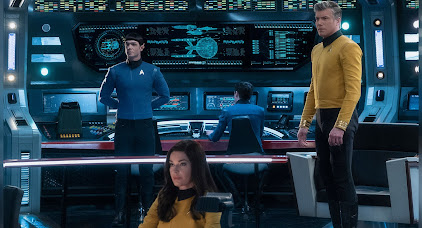
Star Trek: Strange New Worlds will air its second season starting on 15 June, and has been renewed for a third, confirming more adventures for Captain Pike (Anson Mount) and the Enterprise crew in the 23rd Century.

Star Trek: Lower Decks will air its fourth season later in the summer. The precise date is to be decided, but since each of the three previous seasons aired in August, that seems a fairly logical deduction for this season as well. Lower Decks has also been renewed for a fifth season, due to air in 2024.

Strange New Worlds and Lower Decks are also getting a special crossover episode as part of Strange New Worlds' third season, mixing live action and animation.

The Paramount-Nickelodeon co-production Star Trek: Prodigy will also start airing its second season before the end of the year, but has so far not been renewed. Prodigy's seasons are double the length of the norm, though (20 episodes each) and usually air in two blocs, so it might be next year before we hear any more about that show's fate.

Star Trek: Discovery will air its fifth and final season in early 2024, whilst Star Trek: Picard is currently wrapping up its third and final, warmly-received season. Whilst there have been discussions about a follow-up series, called Star Trek: Legacy, that has not been formally greenlit yet. There is also no further word on the much-discussed Section 31 TV series which has been in development hell for some considerable time.

Still, that's a reasonable amount of Star Trek to look forwards to in the foreseeable future.

Monday, 26 December 2022

Where to Start with Star Trek? (revised)

This is a revision of an article I originally wrote two and a half years ago, here.

The recent arrival of Star Trek: Strange New Worlds has spurred a renewed interest in the venerable SF franchise. New viewers want to check out the older material, but the sheer amount of it is daunting. By the start of 2023, no less than 41 seasons of television will have aired in the franchise, totalling 872 episodes spread across eight separate series airing over fifty-seven years (and counting). It would take you more than 621 hours (or almost 26 days, non-stop) to watch all of that material. In addition, there are 13 feature films in the mix, as well as a plethora of video games and hundreds of novels, audio dramas and fan films. If you want to check out this mass of material where do you start?

There are several different approaches you can take and I’ll run through a few of them below. The one thing I would say first is that, with a few notable exceptions, Star Trek is mostly an episodic franchise, where each episode stands alone with its own beginning, middle and end. That starts to shift in Deep Space Nine, which introduces more serialised elements, and by the time of Discovery and Picard the series has become fully serialised, but for the most part the different series are episodic and in fact designed for each episode to be enjoyed by themselves.

Before we get into the lists, it might be worthwhile briefly brushing up on what each series is about.


Star Trek: The Original Series
Live-action: 1966-69 • 79 episodes • 3 seasons • 6 films (1979-91)
Animated: 1973-74 • 22 episodes • 2 seasons


Also called the original series, the classic series or just Star Trek, this series follows the adventures of Starfleet Captain James T. Kirk and the crew of the Constitution-class starship USS Enterprise. They explore strange new worlds, encounter new alien life and seek to uphold the utopian values of the United Federation of Planets in the mid-23rd Century whilst dealing with recurring enemies, including the Klingons and Romulans. The story of this series continues in Star Trek: The Animated Series (which is the same, but as a cartoon) and then in the first six Star Trek feature films.

The first episode of the series, The Cage, was filmed two years before the rest of the series and features a significantly different cast of characters (who do go on to play major roles in some of the films and in Star Trek: Discovery, which revisits the same time period).


Star Trek: The Next Generation
1987-94 • 178 episodes • 7 seasons • 4 films (1994-2002)

Set in the mid-to-late 24th Century, roughly 100 years after the events of the original series, The Next Generation focuses on a brand-new, much larger and vastly more sophisticated Galaxy-class USS Enterprise under the command of Captain Jean-Luc Picard. The emphasis remains on exploring new worlds and meeting new races. Although the series mostly remains episodic, recurring and more serialised elements creep in towards its end. Most notable is the introduction of the Borg, an overwhelmingly powerful cybernetic threat which remains a key enemy through the next several series, and the Cardassians, a mid-ranking antagonistic enemy. The story of this series continues in the seventh through tenth Star Trek feature films and the sequel-series Star Trek: Picard, set thirty years later.


Star Trek: Deep Space Nine
1993-99 • 176 episodes • 7 seasons

To date, the only Star Trek series not set on a starship. Instead, the focus is on Deep Space Nine, a Federation outpost established on an abandoned Cardassian space station orbiting the planet Bajor. The Cardassians conquered and ruled Bajor with an iron fist for forty years before withdrawing, leaving the planet in ruins. The Federation are helping them rebuild, their efforts spearheaded by Commander Benjamin Sisko. Unlike most Star Trek series, which focuses on the Federation and Starfleet crewmembers, this series has a large number of civilian and alien recurring characters. Bajor becomes unexpectedly important when a stable wormhole leading to the remote Gamma Quadrant of the galaxy is discovered, allowing the planet to benefit from increased trade (to the fury of the Cardassians). Early seasons revolve around renewed Cardassian/Bajoran tensions before the introduction of the Dominion, the alien alliance which rules the Gamma Quadrant and is unhappy with the Federation poking around its back yard. Later seasons are more heavily serialised and see the outbreak of full-scale war between the Federation and the Dominion.

Deep Space Nine was controversial during its first airing for being perceived as a lot darker than prior Star Trek shows, but in recent years it has undergone a critical reassessment and is now often cited as the best (or at least the most critically consistent) of the Star Trek series.


Star Trek: Voyager
1995-2001 • 172 episodes • 7 seasons

This series opens when the USS Voyager is flung 75,000 light-years across the galaxy to the Delta Quadrant and has to return home, which is estimated will take over seventy years at maximum warp. Captain Kathryn Janeway and her crew seek to find faster ways home with any means at their disposal, whilst upholding Federation values in a desperate corner of space where no one even knows who the Federation are.


Star Trek: Enterprise
2001-05 • 98 episodes • 4 seasons

A prequel series taking place about a century before the events of The Original Series, this show takes place before the Federation or Starfleet even exist. Instead, it follows the adventures of the NX-01 Enterprise, Earth’s first experimental spacecraft with a Warp 5 drive. The series sees the crew trying to engage in interstellar diplomacy, exploration and commerce with much more primitive technology than even in Kirk’s time, whilst also trying to deal with problems such as a brewing conflict between the Andorians and Vulcans, and Earth’s first fumbling dealings with the Klingons and Romulans. The series is almost completely episodic for its first two years, but in its third season explores a series-long arc where Enterprise has to search for aliens who carried out a devastating sneak attack on Earth. The final season is divided into shorter arcs revolving around the formation of the Federation.


Star Trek: The Kelvin Timeline Films
2009-16 • 3 films

A series of three films (Star TrekInto DarknessBeyond) produced by J.J. Abrams, these films are set in an alternate timeline created by time travel. Spock (from the original series) is blasted back in time by his failure to stop the destruction of the Romulan homeworld, pursued by a vengeful Romulan crew. This results in alterations to the timeline, such as a younger James T. Kirk and his fellow crewmembers joining forces and taking command of the Enterprise years earlier than in the original timeline and getting into fresh, new adventures in the mid-23rd Century.

A fourth film in this series has been in development hell for several years.


Star Trek: Discovery
2017 onwards • 55 episodes • 4 seasons (to date)

Another prequel series, this time taking place ten years before the events of The Original Series. The focus is on Michael Burnham, the first officer of the USS Shenzhou who badly fumbles a confrontation with the Klingons, inadvertently leading to a massive war. A disgraced Burnham is assigned to the USS Discovery, a highly experimental starship with unusual technology and an oddball, maverick captain, where she is offered the chance to atone for her mistakes.

The show undergoes a drastic format change in its latter seasons, when the USS Discovery is shifted through time to the 32nd Century.

A fifth season will air in 2023.


Star Trek: Picard
2020 onwards • 20 episodes • 2 seasons (to date)

A sequel series set at the end of the 24th Century, Star Trek: Picard picks up story elements left dangling from the end of The Next GenerationDeep Space Nine and Voyager, as well as exploring events in the original timeline after the destruction of Romulus (in the original timeline).

A third season will air in 2023.


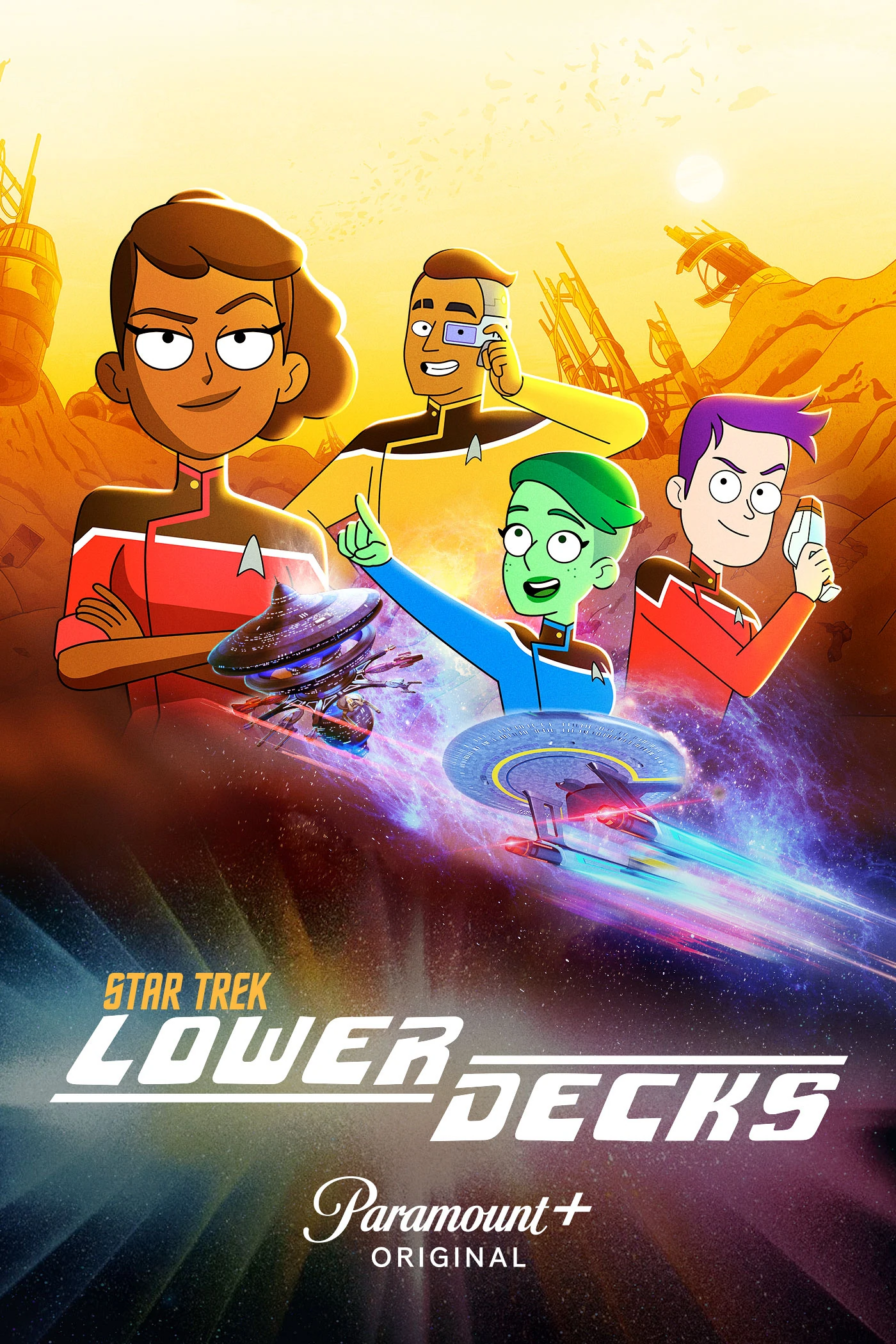
Star Trek: Lower Decks
2020 onwards • 30 episodes • 3 seasons (to date)

An animated series set several years after the end of Deep Space Nine and Voyager, and almost a decade after the end of The Next Generation, Lower Decks is a lighter-hearted show looking at life on one of the "regular" Starfleet ships that doesn't get the high-profile, glamorous missions of other hero ships in the franchise. The show is noted for being an affectionate satire of the rest of Trek, whilst also keeping its ethos intact.

A fourth season will air in 2023.


Star Trek: Prodigy
2021 onwards • 20 episodes • 1 season (to date)

A CG-animated show set a year or so after Lower Decks, Prodigy is notable as the first show in the franchise not to focus on a regular Starfleet cast. Instead, the show features a crew of young aliens who salvage a Federation starship and use it to try to reach Federation space, fed dreams of what it is like to serve in Starfleet by the ship's advisory hologram, based on Voyager's Captain Janeway. However, various problems complicate their mission.


Star Trek: Strange New Worlds
2022 onwards • 10 episodes • 1 season (to date)

A spin-off of Discovery and a prequel to The Original Series, this show focuses on the adventures of the original USS Enterprise, but almost a decade before Kirk's time. The show instead expands from the original pilot The Cage by concentrating on the adventures of Captain Christopher Pike and his crew. The show deliberately bucks recent trends by consisting of episodic adventures.


The Curated Sample

This order is not exhaustive but what it does is provide a snapshot of the different series and some of the strongest stand-alone episodes which hold up well today. These episodes are stand-alones (not part of multi-episodic arcs) and are designed to showcase some of the different types of storytelling the series indulges in. A viewer can jump from these episodes into the rest of that series if they like what they see.

The Animated Series is effectively a continuation of The Original Series and it would be hard to recommend individual episodes from EnterpriseDiscovery or Picard due to their heavy serialisation (Picard is also best-watched having seen some or all of The Next Generation first).
  • Star Trek: The Original Series, The City on the Edge of Forever
  • Star Trek: The Original Series, The Trouble with Tribbles
  • Star Trek: The Original Series, Space Seed
  • Star Trek II: The Wrath of Khan
  • Star Trek: The Next Generation, The Measure of a Man
  • Star Trek: The Next Generation, Q Who?
  • Star Trek: The Next Generation, The Inner Light
  • Star Trek: Deep Space Nine, The Visitor
  • Star Trek: Deep Space Nine, Far Beyond the Stars
  • Star Trek: Deep Space Nine, In the Pale Moonlight*
  • Star Trek: Voyager, Eye of the Needle
  • Star Trek: Voyager, Message in a Bottle
* This may seem to be an exception to the multi-episode arc rule, as In the Pale Moonlight has references to and a big impact on the Dominion War storyline which dominates much of Deep Space Nine’s latter seasons. However, the episode itself is more about Sisko’s journey and how he and Garak bring about a major shift in political events whilst never leaving the station (the Dominion itself does not appear), which can be understood well enough without additional context.


The Pilot Sample

This approach simply has the viewer sampling the first episode of each version of the series to see what grabs their attention straight away, and from there they can choose which series to watch first:
  • Star Trek: The Original SeriesThe Cage (1964)
  • Star Trek: The Original SeriesWhere No Man Has Gone Before (1966)
  • Star Trek: The Animated Series, Beyond the Farthest Star (1973)
  • Star Trek: The Next GenerationEncounter at Farpoint (1987)
  • Star Trek: Deep Space NineThe Emissary (1993)
  • Star Trek: VoyagerCaretaker (1995)
  • Star Trek: EnterpriseBroken Bow (2001)
  • Star Trek: DiscoveryThe Vulcan Hello (2017)
  • Star Trek: Picard, Remembrance (2020)
  • Star Trek: Lower Decks, Second Contact (2020)
  • Star Trek: Prodigy, Lost and Found (2021)
  • Star Trek: Strange New Worlds, Strange New Worlds (2022)

Release Order

AKA the “completionist” approach. This may be the approach everyone ends up taking once they’ve been sucked into the material, but I wouldn’t recommend it for a first run-through. This approach basically means watching the series in order of release and is the best for enjoying the series as it originally aired and was intended (just somewhat compressed).

The primary weakness of this approach is having to watch The Original Series in full before the more recent shows. The original show is certainly great from the perspective of a 1960s TV series and also has many outstanding episodes that have withstood the test of time, but it also has a lot of episodes that…have not. The series underwent an in-depth HD remastering process in 2006 which saw the film quality improved and revamped CG effects added to make the visual quality of the episodes more acceptable to modern audiences, although obviously the writing and performances were not affected.

You can tweak this order for simplicity: there’s nothing stopping you from watching all six films featuring the original cast before watching The Next Generation, and Deep Space Nine and Voyager are divorced from one another almost completely, so you could watch DS9 in full before switching to VoyagerTNG and DS9 do have a few more notable crossovers in terms of characters and storylines, but it also wouldn’t be the end of the world if you finished watching TNG in full before watching DS9.
  • Star Trek: The Original Series Pilot, The Cage (made in 1964, but didn’t air until later as part of the original series)
  • Star Trek: The Original Series Season 1-3 (1966-69)
  • Star Trek: The Animated Series Season 1-2 (1973-74)
  • Star Trek: The Motion Picture (1979)
  • Star Trek II: The Wrath of Khan (1982)
  • Star Trek III: The Search for Spock (1984)
  • Star Trek IV: The Voyage Home (1986)
  • Star Trek: The Next Generation Season 1-2 (1987-89)
  • Star Trek V: The Final Frontier (1989)
  • Star Trek: The Next Generation Season 3-4 (1989-91)
  • Star Trek VI: The Undiscovered Country (1991)
  • Star Trek: The Next Generation Season 5 (1991-92)
  • Star Trek: Deep Space Nine Season 1 / Star Trek: The Next Generation Season 6 (1992-93)
  • Star Trek: Deep Space Nine Season 2 / Star Trek: The Next Generation Season 7 (1993-94)
  • Star Trek: Generations (1994)
  • Star Trek: Deep Space Nine Season 3 (1994-95) / Star Trek: Voyager Season 1 (1995)
  • Star Trek: Deep Space Nine Season 4 / Star Trek: Voyager Season 2 (1995-96)
  • Star Trek: First Contact (1996)
  • Star Trek: Deep Space Nine Season 5 / Star Trek: Voyager Season 3 (1996-97)
  • Star Trek: Deep Space Nine Season 6 / Star Trek: Voyager Season 4 (1997-98)
  • Star Trek: Insurrection (1998)
  • Star Trek: Deep Space Nine Season 7 / Star Trek: Voyager Season 5 (1998-99)
  • Star Trek: Voyager Season 6-7 (1999-2001)
  • Star Trek: Enterprise Season 1 (2001-02)
  • Star Trek: Nemesis (2002)
  • Star Trek: Enterprise Season 2-4 (2002-05)
  • Star Trek (2009)
  • Star Trek Into Darkness (2013)
  • Star Trek Beyond (2016)
  • Star Trek: Discovery Season 1-2 (2017-19)
  • Star Trek: Picard Season 1 / Star Trek: Lower Decks Season 1 (2020)
  • Star Trek: Discovery Season 3 (2020-21)
  • Star Trek: Lower Decks Season 2 (2021)
  • Star Trek: Discovery Season 4 / Star Trek: Prodigy Season 1 (2021-22)
  • Star Trek: Picard Season 2 / Star Trek: Strange New Worlds Season 1 / Star Trek: Lower Decks Season 3 (2022)

Chronological Order
This order lists the series in the order of when the episodes take place in the order of events within the Star Trek universe.

This order has some strengths, as it roughly matches the historical order of events, but it also has some major weaknesses. It puts Enterprise, arguably one of the weaker Trek series overall, up first and also features a number of spoilers for later series (since the Enterprise writers couldn’t resist pulling in familiar creatures and aliens to the show from later periods, no matter how incongruous). You’re also talking about waiting a long time to get to "the good stuff."
  • Star Trek: Enterprise Seasons 1-4 (2151-55, 2161)
  • Star Trek: The Original Series Pilot, The Cage (2254)
  • Star Trek: Discovery Seasons 1-2 (2256-57)
  • Star Trek: Strange New Worlds Season 1 (2259)
  • Star Trek: The Original Series Seasons 1-3 (2266-68)
  • Star Trek: The Animated Series Seasons 1-2 (2269-70)
  • Star Trek: The Motion Picture (2271)
  • Star Trek II: The Wrath of Khan (2285)
  • Star Trek III: The Search for Spock (2285)
  • Star Trek IV: The Voyage Home (2286)
  • Star Trek V: The Final Frontier (2287)
  • Star Trek VI: The Undiscovered Country (2293)
  • Star Trek: The Next Generation Seasons 1-5 (2364-68)
  • Star Trek: The Next Generation Season 6 / Star Trek: Deep Space Nine Season 1 (2369)
  • Star Trek: The Next Generation Season 7 / Star Trek: Deep Space Nine Season 2 (2370)
  • Star Trek: Deep Space Nine Season 3 / Star Trek: Voyager Season 1 (2371)
  • Star Trek: Generations (2371)
  • Star Trek: Deep Space Nine Season 4 / Star Trek: Voyager Season 2 (2372)
  • Star Trek: First Contact (2373)
  • Star Trek: Deep Space Nine Season 5 / Star Trek: Voyager Season 3 (2373)
  • Star Trek: Deep Space Nine Season 6 / Star Trek: Voyager Season 4 (2374)
  • Star Trek: Insurrection (2375)
  • Star Trek: Deep Space Nine Season 7 / Star Trek: Voyager Season 5 (2375)
  • Star Trek: Voyager Season 6-7 (2376-78)
  • Star Trek: Nemesis (2379)
  • Star Trek: Lower Decks Seasons 1-3 (2380-81)
  • Star Trek: Prodigy Season 1 (2383)
  • Star Trek (2385, alternate 2258), Star Trek Into Darkness (2259), Star Trek Beyond (2263)*
  • Star Trek: Picard Seasons 1-2 (2399-2401)
  • Star Trek: Discovery Season 3-4 (3188-90)
* The chronological order of events also makes placing the Kelvin timeline movies awkward, as they rely heavily on knowledge of events after the original show and The Next Generation but are set much earlier, albeit in a parallel universe. Sticking them here is probably the best approach.

What's the best order then? I'd say order of release for those who want to experience the franchise as it was released and understand it could be a bit of a bumpy ride, otherwise one of the curated approaches might be best.

Thank you for reading The Wertzone. To help me provide better content, please consider contributing to my Patreon page and other funding methods.

Tuesday, 22 March 2022

Star Trek: Lower Decks - Season 2

Ensign Brad Boimler has been promoted off the USS Cerritos to join the hyper-competent, super-efficient crew of the USS Titan under the infamous Captain William T. Riker. Meanwhile, the Cerritos crew find themselves once again tackling the bizarre, strange and often underwhelming threats that more important ships are too busy to deal with.


The first season of Star Trek: Lower Decks was a breath of fresh air, an animated comedy show that understands humour but also understands Star Trek, creating a comedic series within that universe which does not disrespect it. Through solid writing, nice characterisation and restrained fanservice, the show produced easily the best debut season of a Star Trek series since at least 1993 (if not 1966).

The second season continues in this vein. The writing is sharper and funnier, and the clever in-depth references to prior episodes come even thicker and faster. There are more long-running character and story arcs, although the show does a great job of making each episode stand alone even if you're not intimately familiar with the franchise. There's a nice line in experimentation this season as well, such as an episode extending the Lower Decks "format" to a Klingon and Vulcan ship.

There's also a good distribution of the stories this year. Boimler and Mariner still have lots to do, but it feels like Rutherford, Tendi and the bridge crew have more time in the sun as well, along with recurring characters.

The show's originality does perhaps flag a little at times. One episode sees the crew dealing with a constantly-duplicating alien, which feels a bit like a Rick & Morty episode (Rick & Morty and Lower Decks share some creative staff). A couple of gags perhaps don't land like they should. But these are relatively rare issues.

The second season of Star Trek: Lower Decks (****½) is funny but also good Star Trek,with heart, humour and some great character moments. The season is available now on Paramount+ in the USA and on Amazon Prime Television across much of the rest of the world.

Wednesday, 19 January 2022

Paramount renews STAR TREK: DISCOVERY, STRANGE NEW WORLDS and LOWER DECKS

Paramount have renewed the remaining two of their three live-action Star Trek shows. Discovery will be returning for a fifth season, whilst Strange New Worlds has had a second season confirmed before its first season even debuts. Animated show Lower Decks will also be returning for a fourth season. Picard was renewed for a third season back in September and production is already underway. 


All three shows have also had their launch dates confirmed: the final batch of episodes from Discovery's fourth season will start airing on 10 February, whilst Picard's second season will launch on 3 March. Strange New Worlds will then debut on 5 May. In addition, animated show Lower Decks is expected to return with its third season in the summer, with CG-animated show Prodigy already working on a second season, expected to debut late this year or early next.

Paramount+, the rebranded version of CBS All Access, has enjoyed significant success with its streaming service, last year reporting they were two years ahead of schedule with their expected customer base. Much of the service's success has been pinned on Star Trek, with the streamer inking a $160 million deal to keep Star Trek showrunner Alex Kurtzman on board until the end of 2026. The only other long-term success on the network is The Good Fight. However, the streamer is diversifying with a larger slate of drama and comedy projects, with the mega-budgeted Halo TV series due to launch in the coming months, as well as a Frasier sequel series in late 2022 or 2023.

The streamer is also making the bold choice to go international. Paramount+ will be launching overseas versions of its content in several dozen countries starting in the Spring, in some areas in conjunction with local streaming services. Controversially with the fanbase, Paramount has started pulling its Star Trek content from Netflix and Amazon Prime ahead of the move.

The multiple renewals also mean that Star Trek is catching up on Doctor Who in terms of the number of seasons confirmed in a franchise. Doctor Who has aired 39 seasons since its its inception in 1963, with a 40th already confirmed for 2023, as well as four seasons of spinoff show Torchwood, one of Class and five of The Sarah Jane Adventures, for a total of 50 seasons. These renewals will put Star Trek on 46 seasons.

Some rumours are stating that the third season of Picard will be last one, due to Sir Patrick Stewart's age (Stewart turns 82 in July), and once it ends it will be replaced by one of two new Star Trek series in development behind the scenes, a long-gestating series about Section 31 starring Michelle Yeoh, and a series focusing on the Next Generation fan-favourite character of Worf. No official confirmation of this has been given.

Sunday, 1 August 2021

STAR TREK executive producer Alex Kurtzman extends deal until 2026

Alex Kurtzman, the showrunner-in-chief of Paramount+'s Star Trek franchise, has extended his deal with the streamer for another five and a half years. Kurtzman will continue to create, produce and spearhead Star Trek shows for Paramount until the end of 2026, in a deal worth $160 million.


Kurtzman began his association with Star Trek as a producer and writer on the JJ Abrams-directed movies Star Trek (2009) and Star Trek Into Darkness (2013). He was recruited by new streamer CBS All Access (as it was then) to help Bryan Fuller and his team helm the first Star Trek television series in over a decade, Star Trek: Discovery (2017-present). Fuller left during pre-production, reportedly over budget and creative issues, and Kurtzman was promoted to showrunner. With Star Trek: Discovery a huge hit for the nascent streamer, Kurtzman has overseen the franchise's expansion to incorporate multiple spin-off shows: Picard, Lower Decks and the to-debut-shortly Prodigy and Strange New Worlds. CBS and Paramount merged last year, with CBS All Access being rebranded Paramount+. It seems that the new corporate overlords are happy enough with the franchise's popularity to retain Kurtzman's services.

However, Kurtzman has proved a divisive figure with long-term Trek fans, due to a relaxed attitude to continuity and a perceived focus on cutting-edge visual effects over character. A repeated criticism is that major character development too often happens off-screen, and sometimes audiences are asked to care about the fate of a background character who's barely uttered a line of dialogue on-screen. His plots are often incoherent and muddled. However, some of his work has been better received; Lower Decks, in particular, has attracted critical and fan acclaim for its respectful-but-fun take on Star Trek's mythos. It also sounds like Kurtzman is adopting less of a direct role in each show to focus more on the business of running the whole franchise, with individual writers and showrunners much more responsible for each show. It sounds like he's becoming more like Rick Berman once Deep Space Nine and Voyager launched, entrusting shows to individual writers whilst making more big-picture, financial decisions behind the scenes.

It also sounds like active development has resumed on several projects previously put on hold. Kurtzman had indicated that five shows was a "sweet spot" for Star Trek and he didn't want to put another one on the air until one of the existing shows - probably Picard, since Patrick Stewart (who recently turned 81) is unwilling to play the role for a long run - reached a natural conclusion. However, the article suggests that they have resumed development on the Michelle Yeoh-starring Section 31 and an unusual new take on Star Trek, focusing on the Next Generation/Deep Space Nine character of Worf.

According to ill-informed YouTube channels, Kurtzman has continuously been on the edge of being fired and his shows cancelled for the past four years. No doubt they will continue to report that this will be the case.

Monday, 5 April 2021

Paramount+ drops a ton of STAR TREK news

Paramount+ - the revamped version of CBS All Access - have dropped a motherlode of news about the upcoming Star Trek seasons via Twitter. There's a lot to unpack here.


First up, Paramount and Nickelodeon have unveiled the look for Kathryn Janeway in Star Trek: Prodigy. They also confirmed that Janeway herself is not appearing in the show. Instead, it turns out that Janeway is the face of Starfleet's Emergency Training Hologram, used to help civilians pilot a Federation starship if the crew are incapacitated. They also revealed that Star Trek: Prodigy takes place in 2383, five years after the USS Voyager returns to Federation space, but will be set in the Delta Quadrant, raising interesting questions about how the Federation starship (presumably the USS Prodigy) central to the story ended up there. We still don't have an air date for Prodigy, although it was originally targeting a mid-2021 release.

Second up, Star Trek: Lower Decks Season 2 will air in August this year and will see a return for Jonathan Frakes as Captain William Riker of the USS Titan, although given how Season 1 ended, that's not a major surprise. The producers have also confirmed that Lower Decks has been renewed for a third season, presumably to air in 2022. The trailer also indicates that at one point the team gets to pilot a Miranda-class starship (think of the USS Reliant or Saratoga).

Next, Star Trek: Discovery Season 4 (which wraps shooting soon) has a shiny new trailer and confirmation of a 2021 air date, probably in the autumn.

Finally, Star Trek: Picard Season 2 also has a new trailer and confirmation of a 2022 debut. Tantalisingly, the trailer (and a separate tweet) confirms the return of John de Lancie as Q in live-action. Q had a brief cameo appearance in Lower Decks but it's good to see him return to test his wits against Picard as well.

Saturday, 23 January 2021

Star Trek: Lower Decks - Season 1

2380. The California-class USS Cerritos is a Starfleet vessel specialising in second contact: turning up to fill out the paperwork and pick up the busywork that more prestigious ships don't have time for as they are on their way to their next adventure. A group of "lower decks" ensigns on Beta Shift are assigned to the most tedious jobs on the ship, but find themselves becoming indispensable to the operation of the vessel.

When a new, animated Star Trek series was announced a couple of years back, some serious grimacing took place among the fanbase. Alex Kurtzman's resurrection of the franchise with the live-action series Star Trek: Discovery had been a mixed bag, at best, and the fear that the new show might be Rick & Morty with a Star Trek rebranding was high. Rick & Morty head writer Mike McMahan being put in charge of the project did little to alleviate those fears.

Fortunately, those fears have been proven groundless. Star Trek: Lower Decks is, genuinely, a fresh and enjoyable take on the Star Trek mythos whilst also paying its dues to the shows and movies that have come before it. Whilst Discovery and Picard have served up some solid instalments and had good ideas, they have also more frequently felt like shows whose writers have never watched a single episode of Star Trek in their lives, serving up generic and all-too-often lifeless adventures which are a disservice to their talented casts. Lower Decks avoids these pitfalls.

There is still much here that the Star Trek hardcore purist will recoil from - the very idea of a comedy series taking place in this universe is enough for that - but on almost every level Lower Decks is a winner. The writing is sharp and funny, the storylines benefitting from the shorter, more focused run-times and, despite the gags, the tone and atmosphere is much more in line with The Next Generation and Deep Space Nine (shows which managed to frequently produce, very successfully, comedy episodes like Qpid and In the Cards).

Most episodes feature classic Trek set-ups, such as the crew clashing with an alien race who have claimed salvage rights over Federation technology or a cultural misunderstanding leads to hostility with a race the Federation is trying to diplomatically win over. The twist here is that the adventures are not told from the POV of the pioneering and brave bridge crew of the Federation flagship, but from the perspective of the lowest-ranking four ensigns on a ship dedicated to paperwork and bureaucracy. The USS Cerritos is an old, ill-maintained vessel which has the dirty job of popping along to planets after much more glamorous vessels have already made first contact and headed off to their next adventure. 

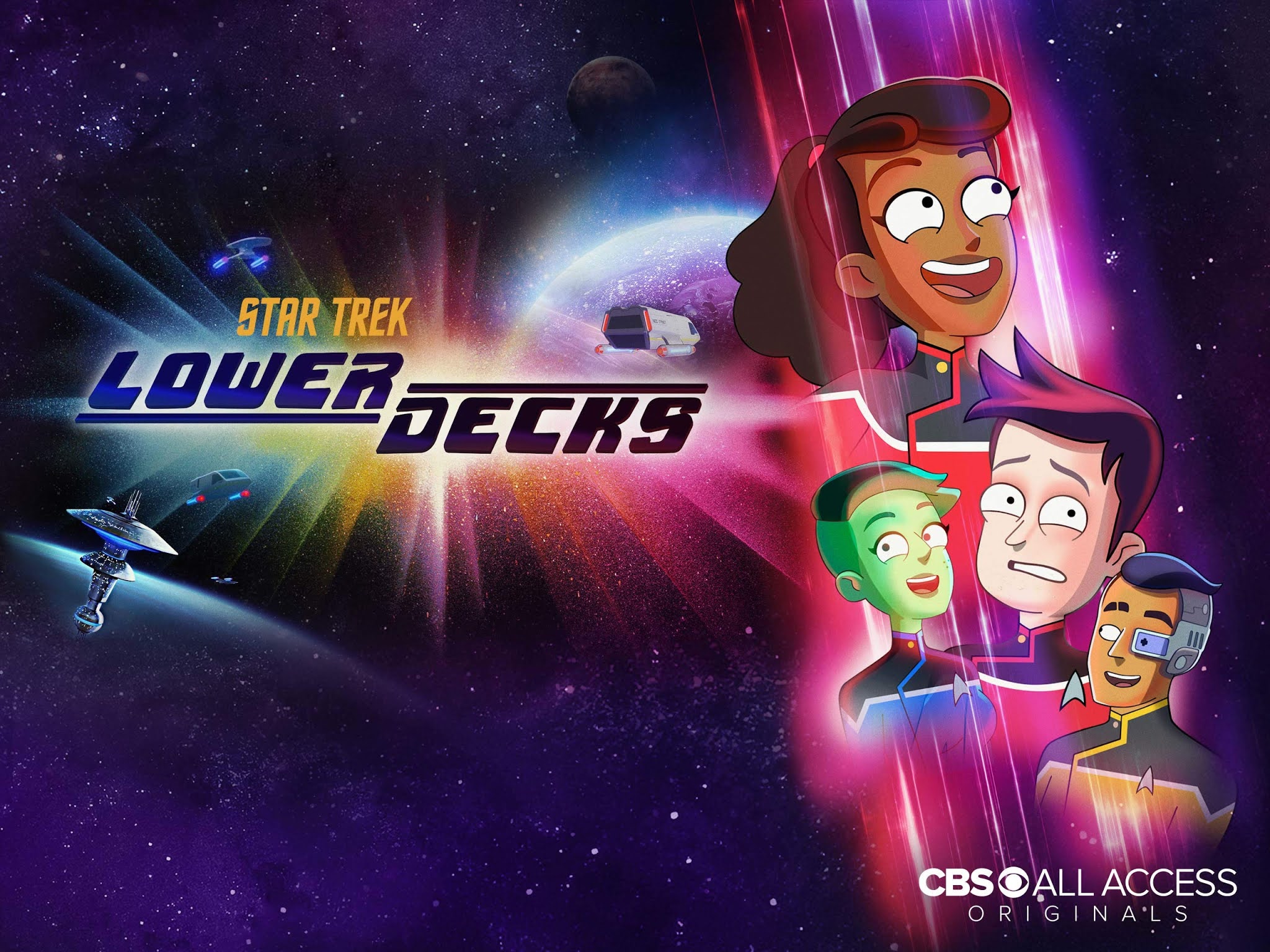
The core castmembers are excellent: Beckett Mariner (Tawny Newsome, Space Force), an experienced officer with good instincts who has been promoted several times, but demoted again due to her irreverent attitude; Brad Boimler (Jack Quaid, The Boys), a stickler for the rules who has excellent book knowledge but is inexperienced in the field; D'Vana Tendi (Noël Wells, Master of None), an enthusiastic fan of Starfleet with an irrepressible appetite for adventure; and Sam Rutherford (Eugene Cordero, The Good Place) a human engineer adjusted to life with a new cybernetic implant. This foursome is key to most of the adventures, either together or divided into two teams (usually Mariner/Boimler and Tendi/Rutherford). A subplot also usually follows the bridge crew of the Cerritos as they also try to deal with whatever crisis is going on, usually with less success.

The upstairs-downstairs dynamic between the bridge crew and the lower deck officers is entertainingly handled and used as a way to comment on Star Trek tropes. So yes, the show confirms that "most" people use the holodeck for sex, not for playing poker with Stephen Hawking and Isaac Newton, and that whilst some officers might like to do a jazz or classical recital in the bar, some other crewmen want to form a 1970s punk rock band instead. The show also reveals that the adventures of the most powerful and advanced ships sometimes leak out to the rest of the fleet, Starfleet Security be damned, leading to confused crewmen on other ships learning about Lore teaming up with the Borg or Dr. Crusher having a relationship with some kind of space ghost.

There is a tension in Lower Decks between self-referential humour for hardcore Star Trek fans (the sort of people who jump up and cry "WE NEED ENGINES TO MAKE US GO!" when the Pakleds show up) and making the stories and humour work for people who've never seen an episode of Star Trek in their life. I suspect people in the latter category may occasionally be left behind by rapid-fire references to the the joggers of Rubicun who murder people for walking on the grass, cameo appearances by Q and debates over the racial stereotyping of the Ferengi (a reference to the heated, real-life debate about the Ferengi being racial stereotypes of Jews or not). But the show also does a good job of rooting the conflict of any episode in contemporary issues related to characterisation: Boimler's perfectionism, Mariner's fun-loving hyper-competence being undermined by her lack of confidence in pursuing a Starfleet career and so forth. This allows episodes to stand alone even when they are fair to brimming with references to quasi-obscure episodes of a TV show that aired the better part of forty years ago (or even to the original series more than fifty years ago).

Aside from the self-referential tics, there aren't too many negatives. A few of the episode premises are stronger than others, and a few gags threaten to feel tired: a holodeck version of Microsoft's Clippy feels like a gag unearthed by archaeologists and carefully chiselled free, although it does then result in one of the show's finest, extended comedic sequences, so it's hard to be too down on that. The show also makes the Discovery/Picard mistake of feeling a little too reliant on bringing in characters and events from other Trek shows to save the day rather than letting our heroes stand alone. These minor issues are offset by the entertaining tone of adventure and exploration.

The first season of Star Trek: Lower Decks (****½) is easily the finest slice of Trek to emerge since the 2005 hiatus, and the most enjoyable season of Star Trek to air this century. With breezy writing, fun characters and a comedic tone set over genuine Star Trek ideals, it shades its recent live-action siblings. The season is available to watch now on CBS All Access in the USA and on Amazon Prime in much of the rest of the world. A second season is currently in production and should air later this year.

Saturday, 19 December 2020

STAR TREK: LOWER DECKS to arrive in the UK on 22 January

Animated series Star Trek: Lower Decks will arrive in the UK on Amazon Prime on 22 January.

The animated show launched in the USA in August, but its release was brought forwards due to scheduling issues with the COVID-19 pandemic and the decision to delay the third season of sister show Star Trek: Discovery. As a result, negotiations for the show's overseas sales had not been undertaken.

After negotiations and discussions with several partners following the show's highly positive reception, Amazon Prime agreed to pick up the show as a companion piece to Star Trek: Picard. The classic Star Trek shows and Discovery all air on Netflix in the UK and most other overseas territories.

In addition to the UK, Amazon Prime have picked up the rights for Europe, Australia, New Zealand, Japan and India.

Season 2 of Lower Decks is due to air in the US, and now presumably overseas via Amazon Prime, in 2021.

Wednesday, 1 July 2020

STAR TREK: LOWER DECKS gets airdate

The latest Star Trek series has gotten an airdate. Star Trek: Lower Decks launches on CBS All Access on 6 August 2020.


Lower Decks, which takes its name and premise from the Season 7 episode of Star Trek: The Next Generation of the same name, is the second animated series in the Star Trek franchise, following on from Star Trek: The Animated Series, which aired for two seasons in 1973-74. The series follows the crew of the California-class USS Cerritos in the year 2380, just after the events of the film Star Trek: Nemesis. The series will focus more on the junior crew of the starship, the crewmen in at the deep end in dealing with crises whilst the bridge crew make the important decisions.

The USS Cerritos is a "second contact" ship, whose job is following up on civilisations who have already had their more glamorous first contact with the Federation and working out trade deals, whether the newly-contacted civilisation wants to join the Federation and so on.

The show is expected to have a lighter and more humorous tone than the other Star Trek series. It will air on CBS All Access in the United States and CTV Sci-Fi Channel in Canada, but no European broadcaster has yet been announced.

Season 3 of Star Trek: Discovery is expected to arrive in the autumn. Production of the next batch of Star Trek shows - Season 2 of Star Trek: Picard, Season 1 of Section 13 and Season 1 of Strange New Worlds - are currently on hold due to the coronavirus pandemic. A further animated show aimed at a younger audience is also in co-development at Nickelodeon; it is unclear what stage of development this show is at.

Friday, 21 February 2020

STAR TREK: PICARD proves a big hit for CBS All-Access

ViacomCBS - the newly-assimilated parent company of CBS - has confirmed that Star Trek: Picard has been a major hit for their streaming service, CBS All Access.


Building on the success of Star Trek: Discovery, which drove several million sign-ups to the service when it launched in 2017, Picard increased the sign-up rate even further.

CBS also confirmed it is continuing to develop the two new Star Trek series it has in pre-production - Section 31 and Lower Decks - and is developing two further projects. It is believed these projects include another animated series aimed at a more adult audience as well as a potential live-action TV series centred on Anson Mount's popular version of Captain Pike.

ViacomCBS is also developing a new Star Trek movie via its subsidiary Paramount Pictures. This film is believed to be the project headed by Noah Hawley and may involve an all-new cast of characters.

Star Trek: Picard runs until 27 March on CBS All Access in the United States and Amazon Prime in most overseas territories. Season 3 of Star Trek: Discovery, with a major format shift propelling it into the far future, is expected to start airing in the summer. Section 31 and a second season of Picard are expected to start shooting in the coming weeks.

Sunday, 21 July 2019

CBS reveals first details about STAR TREK: LOWER DECKS

CBS have revealed details about Star Trek: Lower Decks, a new animated series in the Star Trek universe.


The series is set in 2380, one year after the events of Star Trek: Nemesis, on the USS Cerritos, one of the least-important ships in Starfleet. The focus is on four newly-assigned ensigns working on the ship in junior roles, with occasional appearances by the ship's command crew.

The main cast consists of Ensigns Tendi (Noel Wells), Rutherford (Eugene Cordero), Mariner (Tawny Newsome) and Boimler (Jack Quaid); Lt. Shaxs (Fred Talasciore), Commander Ransom (Jerry O'Connell), Dr. T'Ana (Gillian Vigman) and Captain Freeman (Dawnn Lewis).

Mike McMahan (Rick & Morty) is the showrunner of the new series. It was inspired by the Star Trek: The Next Generation episode Lower Decks, which was written from the POV of several junior officers on the Enterprise-D. The series is also drawing inspiration from Star Trek: The Animated Series which was ran for two seasons in 1973-74. Most notably, Dr. T'Ana is a Caitian, the same feline species as Lt. M'Ress in the original animated series.

Star Trek: Lower Decks will debut on CBS All Access in 2020 with a ten-episode order.