Tuesday, 8 June 2010

THUNDERCATS to return

Late-1980s cartoon series Thundercats is the latest franchise to get a 21st Century revival, following on from Transformers and G.I. Joe. Rather than a big-screen revival, Thundercats is returning as a new, weekly animated series from the makers of the new Batman cartoons is promised to be 'grittier', which hopefully means that Snarf dies in the first episode. Promo art below:


No word on if the next incarnation of Care Bears will likewise be 'grittier' (we find out Grumpy Bear's wife is cheating on him, hence why he's so grumpy, and Funshine Bear is now on crack cocaine).

Update: amusing mistake in the article:
Lion-O, Mumm-Ra, Panthro, Cheetara and others will spring off the screen with realistic cat-like characteristics inconceivable in previous incarnations
Wasn't Mumm-Ra a giant mummy and therefore not really in need of any realistic cat-like characteristics?

Common mistakes in SF&F

This is one everyone can join in on. What are the most common errors you see people making about SFF books? Not spelling mistakes or things of that nature, but more assumptions that people make and trivia that commentators may not be aware of? Here's a few to get started:


1. It's Otherland, not Otherworld.

Tad Williams' four-volume Otherland series is a fine 'rationalised fantasy', with the fantasy elements taking place in a VR simulation in late 21st Century South Africa. However, everyone and their uncle seems to get the name wrong, calling it Otherworld. To be honest, this is probably a more accurate title, but it's not the right one. Yet I've seen bloggers, magazines and even hardcore Williams fans make this mistake as well.

Anomander Rake not present.

2. It's Steven Erikson, not Steve Erickson.

The author of the Malazan series is called Steven Erikson, not Steven Erickson. This is probably the single most common mistake I encounter on forums, and used to make it myself. You may say, so what? But in this case the distinction is important, as there is also an accomplished, award-winning speculative fiction author called Steve Erickson who has written books such as Arc d'X and Zeroville and championed a young Neil Gaiman during his Sandman days (he wrote the introduction to one of the graphic nove collections). Of course, to add to the confusion, Malazan Steve's real name is actually Steve Rune Lundin, with Erikson as a pen-name (according to rumour, adopted because it puts his and Ian Esslemont's Malazan books next to one another on the shelf). In a similar vein, Frederik Pohl gets renamed 'Frederick' quite a bit as well.


3. Nights of Villjamur isn't Mark Newton's debut novel.

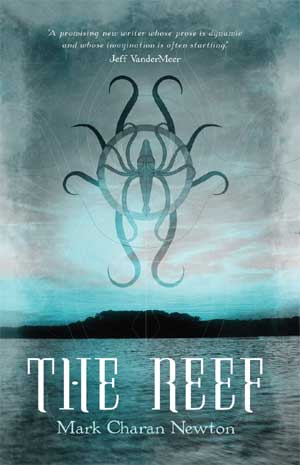
Mark seems rather embarrassed by it, but a year before Nights of Villjamur came out, British small press Pendragon Publishing put out a book by him called The Reef. It's a proper novel, 310 pages in length, and is set in the same world as his Legends of the Red Sun series (albeit thousands of years removed in a remote part of the world). More importantly, despite Mark's claims, it's actually pretty good.

But who'd win in a fight between an Ultramarine and Jim Raynor?

4. Warhammer & 40K predate WarCraft and StarCraft.

Penny Arcade put it best, but it's not uncommon to see people making this mistake even today: Dawn of War ripped off StarCraft, Warhammer Online ripped off World of WarCraft, the Tyranids are totally repainted Zerg and so on. You know, ignoring the fact that Warhammer debuted in 1983 (eleven years before WarCraft: Orcs and Humans) and Warhammer 40,000 in 1987 (eleven years before StarCraft). And that Blizzard reportedly asked Games Workshop to do official Warhammer computer games in the early 1990s and were turned down, so had to create their own IP. Not knocking Blizzard here (StarCraft II will be my first day-of-release PC game purchase in almost three years) who make fantastic games, but the idea that Games Workshop stole anything from them is chronologically impossible.

5. The Wolfman predates Twilight.

By about sixty-five years. Seriously.


6. The Halo is more like a Culture Orbital than the Ringworld.

The titular construct from Bungie's X-Box games is actually much more like an Orbital from Iain M. Banks' Culture novels than Larry Niven's Ringworld (from his classic 1970 novel of the same name). They pretty much all look the same, but famously Niven's construction is too big to actually work in accordance with the laws of physics, and increasingly ridiculous explanations are offered in the succeeding books as to how to stabilise the structure, including fitting rocket engines the size of Jupiter to it. The Culture Orbitals are 'merely' 3 million km across and much more stable. Oddly, it's the computer game which makes the most sense, with the Halos only being about 10,000 km across. The biggest similarity between the two is that both Orbitals and Halos orbit a star (the latter in conjunction with supermassive gas giants), whilst the Ringworld completely encloses it. All of that said, Microsoft did give Niven a complimentary X-Box and copy of the game, acknowledging the visual similarity of the design.

7. A Song of Ice and Fire, not Fire and Ice

I thought we'd seen the back of this one many years ago, but the recent announcement of the HBO TV series has seen a whole truckload of coverage of the books and the series in more mainstream outlets. Thus we are now seeing stories about A Song of Fire and Ice, an SF series set on the planet Westeros where the seasons last for forty years, or some other butchering of title and premise. Less of a criticism of SF fans as mainstream journalists who can't even be bothered to look at Wikipedia for five minutes.

The 'successor' to Revelation Space, but not the 'sequel'.

8. Chasm City is a Revelation Space 'novel', but not part of the Revelation Space 'Trilogy'.

Alastair Reynolds' first novel was Revelation Space, the first novel to be published in the Revelation Space Trilogy and also the first book set in the wider Revelation Space setting (note to authors: calling your book, series and wider setting all the same thing can be confusing). It was followed by Chasm City, which was marketed as the follow-up to Revelation Space, but is not Book 2 of the Revelation Space Trilogy, whilst it is the second book in the wider Revelation Space setting and in fact takes place immediately before the events of Revelation Space (its main character has a cameo in Revelation Space, a cameo that would have passed readers by as they had no idea who he was and it was so fleeting it's unlikely they'd remember him when Chasm City came out a year later). At the time of publication this was extremely confusing, although with the distance of ten years, the completion of the trilogy and the arrival of additional books in the same setting, it is now easier to sort things out, but even so there remains some confusion over what book goes where in what order.

9. Gentleman Bastard, not Gentlemen Bastards.

Scott Lynch's fantasy sequence is called The Gentleman Bastard, singular, a reference to the central character of Locke Lamora. The confusion is understandable since Locke's gang is called the Gentlemen Bastards, but the singular title makes more sense given the fate of many of the Bastards and their allies in the first two books.

Impressive? Yes. Even remotely plausible? Not really.

10. A Dyson Sphere isn't what writers often think it is.

In SF parlance, a Dyson Sphere is a solid shell completely enclosing a star at a distance of roughly 1 AU, providing a living surface billions of times greater than that of a terrestrial planet, powered by absorbing 100% of the energy of the englobed star. Whilst a fantastic and mind-blowing idea, it's not actually what the term means. A 'proper' Dyson Sphere in fact consists of many individual solar collector satellites stationed in orbit around the Sun, absorbing the energy and returning it to Earth for use. Freeman Dyson, the creator of the concept, was not a fan of the 'sold shell' approach, finding it unconvincingly unrealistic. Also, vast numbers of problems have been identified with the 'solid shell' approach, enough to render the idea almost completely unfeasible. But SF writers still use them (and misuse the name) because the idea is cool.

Further suggestions will be gratefully received.

Final MONARCHIES OF GOD Vol. 1 cover art

Behold, the final cover design for the first Monarchies of God cover omnibus, complete with the updated helmet image and Steven Erikson cover quote. Click on the image to see it in all its glory:


There is also an art blog here about the process of selecting and painting the cover and redrawing the book's maps.

Hawkwood and the Kings will be released in August 2010 in both the UK and USA from Solaris Books. The Century of the Soldier will follow in September, completing the omnibus reissues, before Paul Kearney's new novel Corvus is published in October.

EDIT: To confirm, Century of the Soldier contains a new, revised edition of the final book in the Monarchies of God sequence, Ships From the West, featuring 5,000 words of new material.

TORCHWOOD re-commissioned as a UK-US co-production

The BBC and American cable network Starz have agreed to join forces to produce a 10-episode fourth season of Torchwood. The new season will build on the format established by the third season, Children of the Earth mini-series event, with the season forming one serialised storyline that the characters get involved with. According to executive producer Russell T. Davies, the story will be concluded at the end of the season. The storyline will revolve around a new threat to the world arising that sees American intelligence agents being assigned to resurrect the Torchwood organisation, with the help of Captain Jack and Gwen Cooper.


The new format follows talks between Davies and Fox to develop a US-centric version of Torchwood, which eventually came to nothing. The new deal is a co-production, with the resulting series likely to air on Starz in the USA and BBC-1 in the UK. The series will have a significantly bigger budget than previously, with filming set to take place in the USA and other countries around the world. It's unclear when the new season will air, but will likely be some time next year.

Monday, 7 June 2010

Lostwatch 11: Season 6, Episodes 13-18

On the Island the machinations of the mysterious 'Man in Black' are approaching their climax, as his goals are revealed to be more than just merely escaping his prison. In the 'Sideverse' Desmond continues his attempts to gather the various castaways together and reveal to them the truth of their world.


After six seasons and 120 episodes, Lost finally reaches its conclusion, a conclusion which, it is fair to say, has been more controversial than I think anyone was expecting (even moreso than the bitterly divisive Battlestar Galactica finale of a year earlier). Before the finale, however, there's the last run of episodes to get through.

The Last Recruit and The Candidate are pretty heavily serialised, 'getting all the pieces together' episodes with lots of characters moving around and talking about the plot, both in the primary universe and the Sideverse. There's some great moments, but it's the end of The Candidate that proves both shocking and powerful, with a surprising number of major character fatalities, the Man in Black's true colours fully revealed and a real sense of despair descending on the characters and the story. There's some elements of contrivance (at least one character died for no good reason when they had an excellent reason to live), but overall it works.

Then there's Beyond the Sea, the much-touted backstory of the Jacob and the Man in Black. Technically, this should have been a triumph, a revelatory episode packed with surprising reveals about the series' deepest mysteries. Unfortunately, it doesn't really do anything of the sort. The explanations given for some of the mysteries, like the origin of the frozen donkey wheel from Seasons 4 and 5, are nothing short of ludicrous, whilst the revelation that the Island harbours a cave containing magical glowy light at its heart which has to be protected or, erm, it turns people into evil black smoke is so obtuse and meaningless it might as well have been left unrevealed. The episode is wracked by hideously bad writing (the actors look distinctly uncomfortable at various points for saying it) and ends up being badly-placed in the season. Overall, very disappointing.

What They Died For is a triumphant return to form, with shocks, impressive plot twists and a genuine sense of storylines coming together satisfyingly. The Sideverse has become increasingly interesting and important over the last few episodes and this installment makes it as compelling and interesting as the main plot on the Island for the first time this season. In short, this is all great set-up for the finale.

The End is the final episode of Lost, and at almost 2 hours is its longest. It's something of a schizophrenic, flabby episode which does its best with the hand dealt it by the writers and producers, but in the end cannot help be disappointing.

On the Island, things are more interesting. The character stories all reach fairly logical resolutions and achieve satisfying destinies. The biggest disappointment here is that glowy cave thingy at the heart of the Island is now revealed to contain the Giant Plughole of Destiny, and either destroying or saving the Island and the world depends on whether the Stone Plug of Electromagnetic Power is plugged in or not. Maximum props to the actors struggling with the giant polystyrene rock and trying to sell it as the culmination of six years of dramatic storytelling but this was clearly not a good idea from the start.

If you can ignore the Plug Ex Machina, the Island story unfolds and ends reasonably well.

Now, on the Sideverse front it is blatantly clear that the producers changed their mind over what the Sideverse was going to be at some point this season. The information and data previously given about the Sideverse doesn't track with the revelation of its true nature in this episode. As that resolution comes way out of left field and was not sufficiently foreshadowed ahead of time, the Sideverse storyline's ending is extremely underwhelming, not to mention really unconvincing. From the perspective of British viewers, the resolution also suffers from comparison to Ashes to Ashes' finale (which aired literally two days earlier than Lost's), which played around with some of the same ideas but in a far more convincing, better foreshadowed and considerably more satisfying manner. Whilst Lost has never shied away from being sentimental before, it's never really gone into full-on mawkish mode, which is what happens in the culmination of the badly-judged Sideverse story.

Luckily, the Sideverse ends up being completely irrelevant to the story on the Island. If you can ignore the Sideverse story, than Lost ends on a somewhat satisfying note, at least as far as the character arcs are concerned. Some backstory and mystery elements are left unexplained (most notably where the hell the Giant Plughole of Destiny came from), but not cripplingly so, and certainly enough is left for fans to debate for years to come.

Lost falters at its last hurdle, and it is hard after the finale not to feel that the entire Sideverse storyline dominating Season 6 was a waste of time, but at the same time it doesn't destroy the integrity of the whole show going back years (as BSG's does, to some extent). Whilst the Man in Black and Jacob were elements added to the mythology of the show way too late in the day to be either convincing or compelling, their story is nevertheless resolved reasonably well, giving Lost at least some sense of achievement in its finale, even if the show has fallen short of its full potential.


613: The Last Recruit (****)
614: The Candidate (****½)
615: Across the Sea (**)
616: What They Died For (****½)
617-618: The End (***)

Sunday, 6 June 2010

Sara Douglass on cancer and mortality

Popular Australian fantasy author Sara Douglass has published a post about how people face death, spurred by the re-emergence of her cancer several months ago, which is now inevitably terminal.


Sara is the author of several popular fantasy series, including the enjoyable Axis Trilogy, its sequel series The Wayfarer Redemption (all six books are known under the latter title in the USA), the unrelated Troy Game quartet and the current Darkglass Mountain sequence, as well as the historical series The Crucible.

It's a personal and powerful statement, all the more notable coming as it does after recent statements from Terry Pratchett (who is suffering from early-onset Alzheimer's) and, prior to his passing in late 2007, Robert Jordan on similar issues. Our genre has suffered far too many premature losses recently, and the news that another of our authors is facing a terminal illness is tremendously sad. I send my best wishes, as inadequate as they are to Ms. Douglass and her family.

City of Ruin by Mark Charan Newton

The Jamur Empire is riven by internal turmoil and the threat of external invasion. Chancellor Urtica has usurped the throne and seized control of the capital, Villjamur, but the rightful empress, Rika, has fled the city with her sister Eir and their protector, the redoubtable swordsman and con-artist Randur. They decide to head for the far northern city of Villiren, where their potential ally Commander Brynd Lathraea of the Night Guard and his loyal troops have been dispatched, but the journey is fraught with danger and unexpected encounters with both allies and enemies.


Meanwhile, the mysterious Okun are massing on the island of Tineag'l, the population of which they have already slaughtered down to the last man, woman and child. The Jamuran armies are converging on the city of Villiren just across the straits from Tineag'l, ready to make a stand there against a remorseless enemy whose true capabilities and goals remain unknown. As Brynd organises the defence of the city, his own secrets are exposed by a local gang lord and he finds himself open to blackmail. In the city itself Inspector Jeryd does his part for the war effort by investigating the disappearance of dozens of civilians and soldiers in the past few months, a mystery that will lead to unforeseen ends.

City of Ruin is Mark Newton's third novel and the second book in the Legends of the Red Sun series, following on from last year's extremely well-received Nights of Villjamur. City of Ruin directly follows on from the previous novel. Although its central storyline - the defence of Villiren - is self-contained in this book, the character arcs continue from the first novel and some foreknowledge of those events is assumed.

In Nights, Newton deliberately held fire on some of his more fantastical elements for commercial purposes. The ambition of the Legends of the Red Sun series appears to be to fuse the originality and diverse influences of the New Weird with a more traditional epic fantasy narrative. This was evident in Nights of Villamur, but comes much more stridently to the fore in City of Ruin, with several nods to the work of China Mieville (one fairly obvious, the other possibly coincidental given how quickly this book came out after Kraken). The book's place in the 'Dying Earth' subgenre is also made more clear, with references to the shrunken red sun and a minor character who shares a name with one of Jack Vance's most famous characters (which, for those familiar with Vance, may briefly drag you out of the book, but is a very minor issue). Newton successfully achieves a feeling here of a vast history stretching back a quarter-million years with successive waves of civilisations rising and falling until the present day, whilst simultaneously expanding the scope of the world and story to a more cosmic level. This can be risky - Alan Campbell's initially excellent Deepgate Codex trilogy eventually collapsed under the weight of its vastly expanded scope - but Newton handles it well here.

Newton also flexes his full-on, all-out war scene muscles here as a desperate battle for the city of Villiren is mounted in the book's conclusion. Newton's background as an editor for Solaris and their former sister-company, the Black Library, comes to the fore here as a furious urban battle rages which I can imagine Dan Abnett nodding approvingly over. Newton brings together both established and new forms of magic and various creatures to create some very impressive and original combat sequences, and is not afraid to ruthlessly slaughter major characters (from both this and the first book) in offhand ways.

For those less impressed by war porn, there's the complex and convincing characterisation, convincing worldbuilding and increasingly accomplished prose to enjoy. The novel comes close to a maximum score, but falls short only due to the somewhat abrupt ending and a bit too much scene-setting for the third and fourth novels in the series which is not immediately relevant to this book.

City of Ruin (****½) is an excellent fantasy novel fusing elements of the New Weird and traditional epic fantasy into a satisfying whole. The novel is available now in the UK and will be published next year in the United States.

Saturday, 5 June 2010

American readers pay The Price of Spring

Daniel Abraham's The Price of Spring, the splendid concluding volume of The Long Price Quartet, one of the very best fantasy series of the last decade, will not have a mass-market paperback edition in the USA. This news has dismayed fans of Abraham's works, particularly those who have been holding out for the mmpb edition.


No reason for this decision has been given, but is probably linked to the somewhat underwhelming sales of the series in the US (although given widespread reports of people not being able to find the books in their local stores, this is not surprising) and Tor USA's decision not to publish Abraham's next series, The Dagger and the Coin.

For now, the hardcover remains available and the book is published in paperback in the UK, although only as an omnibus with An Autumn War. The Book Depository has free worldwide shipping and is currently selling the book at 30% off, so Americans after the paperback edition are directed to their website.

The Dragon's Path, the first volume of The Dagger and the Coin, will be published in both the UK and USA by Orbit Books in June 2011.

Friday, 4 June 2010

Shogun 2: Total War confirmed to be in development

The Creative Assembly and Sega have revealed that the next game in the Total War series - the seventh full game overall - will be Shogun 2: Total War.


Shogun: Total War was the very first game in the series, released back in 2000, and won a ton of critical acclaim and a slew of awards, including a BAFTA for Best Game Soundtrack in 2001. The game was limited in scope and was seen as more of a test-bed for technologies that would be employed on a much more massive scale in its successors, Medieval: Total War and Rome: Total War. A return to Shogunate Japan seemed more likely following Creative Assembly's release of Medieval II: Total War in 2006, indicating they were prepared to develop direct sequels to their earlier games. However, it was believed that Rome 2 was a much more likely bet, due to the greater size and scope of the Roman period.

Shogun 2's announcement is therefore slightly surprising but still welcome, especially as Creative Assembly seems to be adopting the line that they are aware of significant problems that have been creeping into the franchise (culminating in the release of Empire: Total War in a broken state) and are using Shogun 2's much smaller scope and number of factions to concentrate on these other areas, although they are also indicating that the islands of Japan will be scaled so that the map will still be huge in size. Having won back some of the trust of the fanbase lost with Empire through the much more stable and enjoyable Napoleon: Total War, it will be interesting to see if CA can continue to repair the reputation of the franchise with this title.

Although not fully confirmed, Shogun 2 appears to still be using the Empire engine (the first time an engine has sustained three titles in the series) and the composer for the original game is returning. The game is slated for an early 2011 release.

Wednesday, 2 June 2010

Wertzone Classics: Helliconia Summer by Brian W. Aldiss

Helliconia basks in the glow of the Great Summer. The continent of Campannlat is now dominated by the Holy Empire, a loose religious affiliation between the three great kingdoms of Pannoval, Oldorando and Borlien. These nations find themselves threatened by the far less technologically-advanced but considerably more populous jungle and desert nations to the west and the even more savage tribes to the east. When King JandolAnganol suffers a humiliating defeat to tribesmen using firearms (bought at great cost from the progressive nations of Sibornal far to the north), he divorces his wife so he might seek a more favourable alliance by marrying a princess of Oldorando. However, the queen is a greatly popular figure in Borlien and by divorcing her the king enrages the native population, triggering political turmoil and military action that will have great ramifications for all of Helliconia.


Meanwhile, the crew of the Earth Observation Station Avernus have fallen into internal dissent and debate over the nature of reality and their own orders from distant Earth not to interfere with life on Helliconia. Rejecting this order from a world they can never see or return to, the crew hold a lottery with a grand prize: to allow the winner to visit Helliconia, so for the brief few months it will take for the planet's viruses and bacteria to kill him he can live under a real sky. The arrival of Billy Xiao Pin in Borlien's capital likewise triggers events that will have unforeseen consequences.

Helliconia Summer picks up the story of the world of Helliconia some 355 local years - more than 500 Earth years - after the conclusion of Helliconia Spring. The planet is not far from its time of closest approach to the supergiant star Freyr and humanity rules supreme over the planet, the phagor population reduced to slavery or forced to hide in remote mountain valleys. It is a time of great technological innovation, with firearms, gunpowder and cannons flowing south from Sibornal, but also of turmoil, with the doctrines of the Pannovalan Church stifling the advance of technology and science within Campannlat itself. Like its forebear, the novel mixes thematic elements such as the rise and fall of civilisations, the advance of science and the uneasy union of progress and religion, with a more traditional action and character-driven narrative.

Helliconia Summer, appropriately, sprawls luxuriantly where its forebear was more focused and constrained in narrative scope and geographical area. It is in this novel that Aldiss' achievement in creating Helliconia is best-realised, with lush descriptions of the world and its myriad animal life and human cultures in full flower. The main storyline is compelling, combining intriguing politics and well-realised (if not particularly likable) characters clashing over the fate of their kingdoms in the face of warfare, religious turmoil and arguments over the fate of the phagors, the dominant nonhuman species of Helliconia reduced by the heat into docile soldier-slaves. The relevance of having an observation station from Earth is also made clearer in this novel, with one of the Avernus crewmembers becoming an important character. There are also some intriguing mysteries, such as a murder mystery whose conclusion is ambiguous and a deeper one surrounding the changes in pauk, the bizarre ability of the Helliconian people to commune with the spirits of their ancestors after death, which provide much food-for-thought going into the third and final novel.


On the negative side, the book suffers slightly from its lack of focus compared to the first volume and also from a somewhat clumsy chronological structure, where the first several chapters take place in the present and then we rewind a year and move forward to where the first part began, then skip to after it. The story doesn't really require this structure and would perhaps have benefited from a more linear progression.

In Helliconia Summer (****½) Aldiss' grand ambition, nothing less than a history of an entire world and its peoples across vast chasms of time, becomes clearer and more impressive. The book is available now (albeit somewhat expensively) in the USA and will form part of the new UK Helliconia omnibus due on 12 August this year.