Saturday, 12 May 2018

Gardens of the Moon by Steven Erikson

On the continent of Genabackis the Malazan army lays siege to the city of Pale, which sits under the protection of Anomander Rake, Lord of the Tiste Andii. As the final battle begins, the elite Malazan unit known as the Bridgeburners and several High Mages suffer a calamitous betrayal. Their next mission takes them to Darujhistan, City of Blue Fire, where an even more dangerous showdown awaits...


Steven Erikson's Malazan Book of the Fallen began unfolding back in 1999 with this divisive novel. Strongly hailed by authors from Stephen Donaldson to J.V. Jones as an important, breakthrough work and found utterly baffling by others, Gardens of the Moon has acquired a bit of a reputation over the years as a hard book to get into.

I've always found this suggestion to be overstated, just as much on this fourth reread as on my first fifteen years ago. Gardens of the Moon is a busy, bustling and striking novel which has little interest in slowing down to providing worldbuilding infodumps. You cling on for dear life and follow the story through or you don't. Still, the benefit of fifteen additional years of books from both Steven Erikson and co-creator Ian Esslemont means there are now other, gentler introductions to this world and this story: you can also jump on board with Erikson's Deadhouse Gates or Esslemont's Night of Knives or Dancer's Lament, which all have somewhat easier opening sections.

Gardens of the Moon opens with a bang and doesn't stop for 700 pages. In that time it introduces a whole, vivid world dominated by a powerful empire, dozens of characters, a whole new (and rather vague, at this stage) magic system, a dozen races, multiple gods, a prophetic Tarot card game, undead Neanderthals, a race of elves who are also dragons and more nods to other authors (from Leiber to Donaldson to Cook) than it's possible to parse in one read. It's a mess, without reasonable exposition or grounding in the reality the characters find themselves in.

But it's also a glorious mess. Erikson's imagination here is bigger than a planet, his prose is erudite and far wittier than any first-time author has any right to be (this was Erikson's second-published novel but was written many years earlier), and through the confusion the chaotic charisma of characters like Whiskeyjack, Anomander Rake, Quick Ben, Tattersail, Ganoes Paran, Kalam, Fiddler, Rallick Nom and Caladan Brood is clear. Yes, Gardens of the Moon sometimes feels like starting watching a movie that's already been on for an hour, but that can also be quite good fun.

Once you get through the opening, confusing section at Pale, the action moves to Darujhistan where nobles scheme, assassins plot and thieves fight a clandestine war on the rooftops and things become a lot clearer. From there on it's an easier ride to the big climactic showdown, which is epic, impressive and random (not helped by a deus ex machina resolution, although on rereads when you know what the hell's going on this is much less of a problem).

There are other niggling problems, mainly relating to "GotMisms", worldbuilding and character tics that Erikson put into this book which he changed his mind about in the nine years that passed until he wrote the second volume, Deadhouse Gates. In particular, if the key theme of the Malazan Book of the Fallen is compassion, that theme feels a bit absent in this book as Anomander Rake shows an uncharacteristic amoral ruthlessness (compared to later books) and no-one seems to know anything at all about the ancient races and history of the world whilst later on everyone seems a lot more clued up (one of the more relatable things about this novel is that the characters are often as confused about what's going on as the reader, which is less the case in later volumes of the series). Still, these continuity issues are minor and understandable given the protracted genesis of the series.

Gardens of the Moon (****) is by turns bewildering, confusing, rewarding, exciting and intriguing. It will bewilder a lot of people, but out of that bewilderment will come understanding. The Malazan Book of the Fallen is the most accomplished work of epic fantasy published (predominantly) in the 21st Century to date, and this remains the best place to start, setting the scene as it does for its two successors, which are simply two of the finest fantasy novels ever written. The novel is available now in the UK and USA.

BROOKLYN NINE-NINE saved by NBC, more shows cancelled

NBC have swooped in to save Brooklyn Nine-Nine after it was cancelled by Fox yesterday.


NBC cited the enormous outpouring of affection for the show as a reason for rescuing the show, along with their excellent relationship with the show's creators, Michael Schur and Dan Goor, whom they previously worked on with Parks and Recreation. NBC is also currently producing Schur's newer series The Good Place.

The sixth season order is for 13 episodes, which will allow NBC to assess how well the series is going before ordering further episodes.

Meanwhile, cancellations are coming thick and fast. Last Man on Earth has also been cancelled after four seasons and Wayward Pines after two. The X-Files has also been cancelled, or more accurately to say, Fox have no plans to continue the show's soft renewal after Gillian Anderson indicated she was done with the series. Producer Chris Carter is still planning more X-Files movies, however. The Exorcist has also been cancelled after two seasons and Lucifer after three. The outpouring of anger over the cancellation of the latter has matched Brooklyn Nine-Nine's, with fans hoping for a similar reprieve on another network.

Meanwhile, Batman prequel show/hallucinogenic fever dream Gotham is in the bizarre predicament of having its future decided by what happens to another show, the Lethal Weapon reboot. Fox was forced to fire Lethal Weapon's star after on-set drama and is now scrambling to recast with just days left before a final deadline. If it is unable to do so, it will can Lethal Weapon and renew Gotham, otherwise Gotham will be axed, despite some recent ratings boosts as the show has focused on the Joker as a villain and the teenage Bruce Wayne taking more definitive steps towards donning the cowl.

Also in an unusual state is Agents of SHIELD. ABC tried to kill the show last year, but owners Disney stepped in and overruled them, citing the show's importance to their overall Marvel Cinematic Universe. This still seems to be the case this year, with Disney and Marvel leaning on the season finale to tie in with Avengers: Infinity War and help build intrigue for next year's sequel, as well as Captain Marvel (which will see Agents of SHIELD actor Clark Gregg rejoin the movie cast for the first time since the original Avengers movie). On that basis, it seems unlikely that Disney will kill the show, especially as it could make a great fit for their new streaming service launching in late 2019 (allowing them to take it - and possibly their entire Netflix roster - out of another company's hands). With ABC unhappy about the ratings, however, it might be that we get a compromise, with a half-season order with the show not to return until after Infinity War II hits our screens next spring.

Over at the CW, executives surprised industry observers, their own fans and the creative team by confirming they would not be proceeding with Wayward Sisters, a spin-off from their long-running series Supernatural. After a well-received backdoor pilot earlier this year, the project looked good for a season order and it's a bit of a puzzle why the CW has not proceeded with it.

Meanwhile, the fate of The Expanse remains unclear. Alcon Entertainment own the show outright so can sell it to Amazon, Netflix or another network much more easily, but this is likely to be a more involved process, where we likely won't know the outcome for a few weeks at least.

Over at Netflix directly, the streaming service seems happy with the performance of Lost in Space (despite lukewarm reviews) and on course to renew. The fate of Altered Carbon is much less clear. The cyberpunk epic aired to generally good reviews (after more mixed early previews), but its viewership seemed weak, with the show charting up less than one-third of the streams of Lost in Space in its first week available, despite an apparently higher budget. However, Netflix themselves have to bear some blame for this by sabotaging Altered Carbon's launch with news of their Cloverfield Paradox deal (complete with a major Superbowl ad campaign). With Altered Carbon airing three months ago, it is unusual for Netflix to wait so long before confirming the show's return or cancellation, suggesting it's a tough decision for them.

Friday, 11 May 2018

RICK & MORTY renewed for 70 episodes

In an unusual move, Adult Swim have ordered 70 episodes of Rick & Morty without a season commitment.


Darn Harmon and Justin Roiland's series has only aired three seasons and 31 episodes since debuting in December 2013, with Season 4 not expected to air until 2019, meaning this order will more than double the existing number of episodes and potentially last for another ten years given current production rates.

Harmon and Roiland's deal, which specifies episodes rather than seasons, came after a chaotic production process for the third season, which saw fewer episodes produced than originally planned and an extended writing period. The new deal raises the possibility of the series being continued in batches of episodes made a few at a time rather than large numbers of episodes ordered on a tight deadline, and gives Harmon and Roiland more flexibility in how to handle the show going forwards.

Ryan Reynolds is playing Pikachu in the DETECTIVE PIKACHU movie

I mean, that's it, I can't even parse that headline or believe I went six months without being aware of this news, so that's it really.


This is a thing that's happening.

Jon Favreau reveals more about the live-action STAR WARS TV show

Jon Favreau has been helping publicise the new Star Wars movie, Solo (in which he voices an alien creature), and has taken time to talk about the new live-action TV series he is helming for Disney's new streaming service.


According to Favreau, the new Star Wars series will take place seven years after the events of Return of the Jedi and twenty-three years before the events of The Force Awakens. The series will draw on some of the CG technology pioneered by his movie The Jungle Book to depict truly unusual and weird aliens.

Half of the first season for the show has been written already. Disney are hoping to use the show (alongside an unspecified Marvel Cinematic Universe project) to launch their new streaming service in late 2019.

THE EXPANSE and BROOKLYN NINE-NINE cancelled

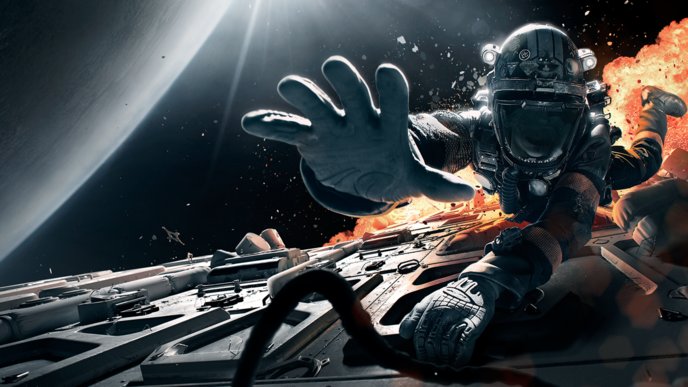
Two of the most critically-acclaimed TV shows in their respective genres have been cancelled, including SF darling The Expanse.

Image result for the expanse

The Expanse's cancellation was slightly unexpected, with the show drawing immense critical buzz of the kind that SyFy has not enjoyed since the second and early third season of Battlestar Galactica, well over a decade ago. First-run ratings were not as strong as might be wished given the show's relatively high budget (at between $4 and $5 million per episode, the show cost almost twice to make as BSG), but of course the metrics of how ratings are measured have changed dramatically in the last few years. By all accounts The Expanse also enjoyed healthy streams and sales through Amazon.

A key factor in the decision was the show's overseas performance and how it's finances are calculated. SyFy was not produced inhouse but was instead financed and produced by Alcon Entertainment and sold to SyFy. SyFy only had first-run transmission rights in the United States, with Alcon able to sell streaming rights to Amazon and international rights to Netflix. However, SyFy insisted on a six-month delay before Netflix could stream the show, despite overseas viewers having no other legal way of watching the show and thus there would have been no cannibalising of SyFy's US viewership. This decision seems to have cost the show international viewership, with hardcore international fans of the series downloading and torrenting the show long before it could be seen legally.

As a result, SyFy's deal meant that The Expanse's success was extremely dependent on first-run viewing figures and with these running at around 1 to 1.2 million per episode in Season 3, these figures were insufficient to support the high cost of the show (compared to SyFy's inhouse programming, such as the considerably cheaper - and vastly cheaper-looking - The Magicians).

Alcon Entertainment are shopping the show to other networks, which means that they may be able to find the show a new home elsewhere. Netflix may or may not be interested, given the lukewarm international figures. Amazon, who have recently been picking up almost every single SF and fantasy property of note (including Wheel of Time, Conan the Barbarian, Lord of the Rings, Ringworld, The Three-Body Problem and Snow Crash), may be a safer bet. Amazon in particular would find The Expanse's budget to be relatively cheap by their standards and they would probably prefer to have a show they can get on the air every year rather than waiting 18-24 months between seasons (The Expanse has gone about 14 months between each season). The momentum of just being able to continue production immediately rather than ramping up on a new show may also be attractive.

Image result for Brooklyn Nine Nine

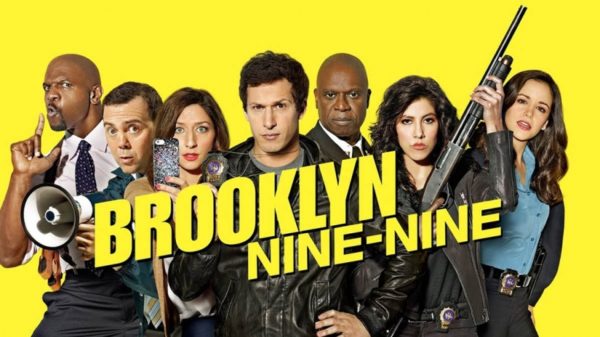
Meanwhile, Fox have cancelled Brooklyn Nine-Nine, their most critically-acclaimed comedy series. Brooklyn Nine-Nine's cancellation was more widely expected, with the show's viewing figures dropping by over half over its five-season run. Some fans were hoping for a reprieve, as viewing figures held relatively firm from Season 4 to Season 5 and the show enjoys widespread global popularity (in the UK it unusually has both reasonable audiences on Channel 4 and then again on Netflix). However, Fox have decided to swap out one of their TV drama nights for sports, which rendered the point moot. A whole swathe of other shows (such as Last Man on Earth) have also been axed to make room for this change in the schedule.

There has been hope that the show might be saved. Netflix are a possibility based on their success with the show internationally, and compared to most of their shows Brooklyn Nine-Nine would be incredibly cheap to make, as well as easily being able to get on the air every year. However, it's unclear if Fox would be willing to make the show for a company they are increasingly seeing as an adversary in the marketplace.

Possibly more likely is US streaming service Hulu. Hulu are are looking to beef up an original programming lineup strengthened by The Handmaid's Tale. Provisional talks between Hulu and Fox have already apparently taken place, with interest from other parties.

Hopefully both shows are saved, particularly The Expanse which was roughly only a third of the way through adapting James S.A. Corey's novel series.

Tuesday, 8 May 2018

More writers announced for Netflix's WITCHER TV series

More writers have been confirmed for Netflix's upcoming adaptation of Andrzej Sapkowski's Witcher series of novels.


Joining Lauren S. Hissrich (The West Wing, Jessica Jones, The Defenders), who has already written the pilot episode are Jenny Klein (Supernatural, Cloak & Dagger, The Tick), Declan De Barra (Funky Fables, The Originals) and Sneha Koorse (Daredevil, Constantine, The Americans).

There will be seven writers for the first season in total, along with several writer's assistants (one of whom is Clare Higgins). With eight episodes in the first season, it sounds like each writer will helm one episode apiece.

The Witcher will enter production later this year to air in (presumably early) 2020.

Monday, 7 May 2018

The City and The City

Beszel and Ul Qoma are two cities that share the same space. The people, the buildings and the institutions of one city must be ignored by residents of the other, on the pain of arrest by the secret police, Breach. When a young woman from Ul Qoma is found dead in Beszel, Inspector Tyador Borlu must investigate to see if a Breach has occurred...but the case reminds him of the disappearance of his wife some years earlier. As Borlu investigates, the trail leads him to Ul Qoma and the chance to solve more than just one mystery.


China Mieville is one of Britain's finest novelists, a writer of the macabre, the strange and the weird who writes in an accessible but memorable style. The City and The City, originally published in 2009, is one of his most stripped-back and accessible novels, the weirdness dialled back to just the idea of the two cities coexisting in the same space. That backdrop is then used to explore the characters and the central murder mystery.

This 4-part BBC television adaptation is a fine take on Mieville's work. David Morrissey (Britannia, The Walking Dead) plays Tyador Borlu, imbuing him with just the right mix of world-weary cynicism, hope and even romanticism as he tries to find answers to the puzzles in his life. Katrynia, played by Laura Pulver (Sherlock), is a new addition to the story and at first glance the inclusion of a "dead/missing wife" as a motivational factor for the main character feels a bit cliche. It does help in giving Borlu a personal connection to the mysterious relationship between the two cities, rather than having it remain an abstract background phenomenon (as in the first half of the novel), and it also creates more storytelling possibilities through flashbacks.

The rest of the cast is accomplished, with Mandeep Dhillon exceptional as the sweary Constable Corwi and Maria Schrader doing a great job as Detective Dhatt, Borlu's Ul Qoman opposite number. Production is also of a high standard, with a great musical score and some very impressive set dressing to sell various parts of Liverpool and Manchester as the twin cities. Some might argue that using two of Britain's best-known cities to serve as the backdrop for a series playing initially to British audiences is a bit weird, but for the most part it works, transporting the viewer to an imaginary microstate on the borders of eastern Europe.

At four hours to adapt a 350-page novel, the drama is just the right length and doesn't outstay its welcome. There are some issues with pacing and exposition, however. The premise is unusual and the series goes pretty far in the first episode in ensuring that viewers get the idea. Given the number of viewers who reported feeling extremely confused, it clearly didn't go far enough for some, but for others (and particularly those who've read the novel), the constant reiteration of the twin cities idea and "unseeing" started getting in the way of telling the story at hand. Also, and this is really minor, the novel ends on a pitch-perfect line and I was surprised that the TV show did not do the same thing.

Overall, The City and The City (****) is a fine slice of television drama, with an accomplished cast and some great visual storytelling. The handling of the unusual premise could have been handled more elegantly, perhaps, but overall this is a great first adaptation of a China Mieville novel and hopefully not the last. The series is available on DVD in the UK and to watch via Amazon Video, but bizarrely a Blu-Ray release has not been listed. There is also no American release listed at this time.

Franchise Familiariser: Axis and Allies

One of the most notable and popular board games around is Axis & Allies. Originally released in 1981, the game was designed to depict the full scale and scope of World War II in a concise board game form but with greater complexity and depth than Risk, the then-dominant popular wargame. Since its release almost forty years ago, the game has sold many millions of copies to become one of the most popular board games of all time.

However, several changes of ownership, several edition changes and the release of a series of related-in-name-only spin-off games have left the casual gamer potentially confused over which edition to pick up or check out. If you fall into this bracket, this Franchise Familiariser may be of some use.

A game of Axis & Allies Anniversary Edition in progress. German units are shown in black, British units in tan, Russian in red and Italian in brown. American and Japanese forces not shown.

The Basics

Axis & Allies is a series of board games which attempts to depict major military conflicts (predominantly World War II) from a military and economic perspective, but in a relatively straightforward and streamlined manner. The Axis & Allies franchise is at heart a deliberately asymmetric game which intends to replicate (in broad strokes) the key difference between the two main sides in the Second World War: the Axis powers start the conflict with enormous and formidable military forces, but if the Allies can withstand their initial onslaught, their superior economic might will, in the long run, turn the tide of the conflict. Whilst modern board games attempt to reduce the role of randomness by substituting card choices for dice rolling, the Axis & Allies games revel in rolling enormous numbers of dice. The dice mechanic is very simple: the game uses a standard six-sided dice and you want to roll as low as possible to inflict enemy casualties.

Games of Axis & Allies usually revolve around the combined use of ground troops (infantry, artillery and tanks), air forces (fighters and bombers) and naval units (submarines, destroyers, cruisers, battlecruisers and transports) to win battles and seize territory. Territory zones have an economic income, which allows the victor to increase their supply of money and buy more units for the next turn. Victory goes to the side which achieves either an unassailable position (agreed by mutual consent) or seizes its military objectives, usually key cities and enemy capitals.

The core factions of each game are the Axis and Allies. Most editions of the game feature the Soviet Union, United Kingdom and United States as the Allied side with Germany and Japan forming the Axis. Some editions of the game adjust this, introducing Italy as a third Axis side and China, the ANZAC forces (Australia and New Zealand) and the Free French as additional Allied factions. Depending on the edition, the game can be played by anything from two to nine players, although nine would be considered excessive (and the ANZAC, French and Chinese players would have relatively little to do). The most common variant is a four-player game with one player controlling each of Russia, Germany and Japan, and a fourth player controlling the USA and UK.

Recently the franchise has expanded to cover the war from three levels of play (beginner, intermediate and advanced), as well as developing spin-off games of varying quality, from the very well-received World War I 1914 to the poorly-received Guadalcanal. There are also video games inspired by the series and a more hardcore miniature wargame which shares the name.

The traditional Axis & Allies logo.

The Series

The Axis & Allies series consists of the following games:

The Core Game
  • Axis & Allies (Nova Games Edition, 1981)
  • Axis & Allies Classic (1984)
  • Axis & Allies Revised (2004)
  • Axis & Allies Anniversary Edition (2008)
  • Axis & Allies 1941 (Beginner's Game, 2012)
  • Axis & Allies 1942 (Intermediate Game, 2012)
  • Axis & Allies Anniversary Edition, Second Printing (2017)

Individual Theatres
  • Axis & Allies: Europe (1999)
  • Axis & Allies: Pacific (2001)
  • Axis & Allies: Pacific 1940 (2009)
  • Axis & Allies: Europe 1940 (2010)
  • Axis & Allies: Pacific 1940, Second Edition (2012)
  • Axis & Allies: Europe 1940, Second Edition (2012)

Spin-Offs
  • Axis & Allies: D-Day (2004)
  • Axis & Allies Miniatures (2005)
  • Axis & Allies: Battle of the Bulge (2006)
  • Axis & Allies: Guadalcanal (2007)
  • Axis & Allies Naval Miniatures: War at Sea (2007)
  • Axis & Allies: WWI 1914 (2013)
  • Axis & Allies & Zombies (2018)

Video Games

  • Axis & Allies (turn-based strategy game, 1998)
  • TripleA (2001)
  • Axis & Allies (real-time strategy game, 2004)


Franchise History

Larry Harris (1948- ) is the son of Lawrence Holiday Harris, Snr. (1920-2010), a former US infantryman who fought in the Pacific Theatre of WWII, taking part in battles at the Solomon Islands, New Guinea and the Philippines. Harris himself saw military action in Vietnam, serving with the 82nd Airborne Division.

Harris developed the original Axis & Allies for Nova Games in 1981, inspired by long talks with his father over his military service. Harris was inspired to create a WWII game which was more complex and true to history than, say, Risk, but was still approachable and easier to play that a detailed, full wargame. In 1984 he re-released the game through Milton Bradley as part of their "Gamemaster Series". This edition of Axis & Allies, known known as the "Classic Edition", became iconic for its colourful map and strong theme. This edition sold over a million copies by itself.

Harris moved on to develop other games (including Thin Ice in 1989) and for some years resisted revisiting his best-known game. In 1999 he relented and released a much more focused version of the game, concentrating solely on the European Theatre. In 2001 he did the same for the Pacific. After experimenting with a series of spin-off games using all-new rules and focused on single battles, not to mention a miniatures of game of dubious connection to the main series, Harris and his team (now working for Avalon Hill, an off-shoot of Hasbro) returned to the original game in 2008, releasing a series of new editions for all levels of play, as well as re-releasing the European and Pacific variants in new editions which could be combined into one massive new game of unparallelled size and scope (featuring over 1,000 miniatures).

More recently, the team has been working on spin-offs which actually use the core Axis & Allies rules but in new settings, resulting in Axis & Allies: WWI and Axis & Allies & Zombies (2018). Future games which take the Axis & Allies gameplay into new settings are also in the planning stages.


Axis & Allies: Nova Games Edition (1981)
Factions: UK, USA, USSR, Germany, Japan.
Units: Infantry, Tanks, Fighters, Bombers, Aircraft Carriers, Submarines, Transports, Battleships, Nuclear Bombs.

The original Axis & Allies was released in 1981 by Nova Games. This version of the game is noted for its paper map and its use of counters rather than miniatures. Despite its primitive presentation, the gameplay is surprisingly close to that of the "classic edition". The biggest and most startling change is the presence of a nuclear bomb: each side can research nukes either as an alternative win condition or to actually use (the nuke obliterates every unit, friendly or hostile, in a single game space). Later editions of the game removed the nuclear bomb, although some house rules sometimes incorporate the race to acquire a nuke as an optional win condition.


Axis & Allies: Classic (1984)
Factions: UK, USA, USSR, Germany, Japan.
Units: Infantry, Tanks, Fighters, Bombers, Aircraft Carriers, Submarines, Transports, Battleships.

The classic edition of the game was released by Milton Bradley in 1984 and remained in print for almost twenty years. This version of the game remains iconic for many people due to its colourful, well-delineated world map and its relatively straightforward gameplay. Aside from getting rid of the nuclear bombs, this edition didn't change too much apart from introducing a tech tree where each side could develop new and better weapons as the game progressed, such as heavy tanks, V2 rockets and jet aircraft. Later editions of the game either removed or reduced this aspect of the gameplay.


Axis & Allies: Europe (1999)
Factions: UK, USA, USSR, Germany.
Units: Infantry, Artillery, Tanks, Fighters, Bombers, Aircraft Carriers, Submarines, Transports, Destroyers, Battleships.

The first theatre-specific edition of the game focused on Europe and North Africa. This version of the game is arguably the bloodiest - the German and Russian players can expect to lose dozens upon dozens of units apiece in the fighting on the Eastern Front - but also arguably the most strategically interesting, with various variant strategies available (including the Axis diverting more troops to the Middle East or the UK mounting an assault on Norway). This edition of the game also introduced artillery, which dramatically improves the effectiveness of infantry in attacking, and destroyers as an urgently-needed counterbalance to German submarines. These improvements would be incorporated in most future editions of the game.

This game also features some cities which are entire spaces on the board by themselves (Leningrad, Moscow and Stalingrad) and convoy routes which the Axis player can raid with U-boats to interrupt the flow of resources to the beleaguered UK and USSR.


Axis & Allies: Pacific (2001)
Factions: UK, USA, Japan.
Units: Infantry, Marines, Artillery, Tanks, Fighters, Bombers, Aircraft Carriers, Submarines, Transports, Destroyers, Battleships.

This version of the game focuses overwhelmingly on the Pacific Theatre, naval combat and the clash between the Allied powers and Japan. This version of the game introduces Marines (as special troops with a bonus for storming islands) and Naval Bases (which give naval forces a boost to movement). Although very popular, this edition of the game has some problems, most notably the simplistic combination of India, Australia and New Zealand under the British banner and the US player taking control of Chinese forces.


Axis & Allies: Revised (2004)
Factions: UK, USA, USSR, Germany, Japan.
Units: Infantry, Artillery, Tanks, Fighters, Bombers, Aircraft Carriers, Submarines, Transports, Destroyers, Battleships.

The third edition of the core game is also the least popular. The introduction of the new rules from the theatre games into the base game - such as destroyers and artillery - are welcome, but this version of the game features a particularly hideous world map which is not enjoyable to play on.


Axis & Allies: Anniversary Edition (2008, 2017)
Factions: UK, USA/China, USSR, Germany, Japan, Italy.
Units: Infantry, Artillery, Tanks, Fighters, Bombers, Aircraft Carriers, Submarines, Transports, Destroyers, Cruisers, Battleships.

Released to celebrate the 50th anniversary of Avalon Hill Games, Axis & Allies: Anniversary Edition was the first attempt to create a "big" version of the standard game. The game takes place on a map which is over 33% larger than the original with many more territories. It also adds Italy as a sixth faction and introduces new rules for China (which is still controlled by the US player, but is now handled as a separate military power). The game also expands the "victory city" idea, identifying 18 cities which are of strategic value. The first faction to capture a certain number of cities wins. This edition also retains the tech tree from the Classic edition that was omitted from later versions of the game. The only new unit introduced is the Cruiser, which sits between a Destroyer and Battleship in capability.

This version of the game has been cited by many Axis & Allies fans as the definitive version of the game. Out of print for many years, it was recently re-released in 2017 and, at this time of writing, remains on general release.


Axis & Allies: 1942 (2009, 2012)
Factions: UK, USA, USSR, Germany, Japan.
Units: Infantry, Artillery, Tanks, Fighters, Bombers, Aircraft Carriers, Submarines, Transports, Destroyers, Cruisers, Battleships.

The new "standard" edition of the game, replacing the unloved Axis & Allies: Revised and Axis & Allies: Anniversary Edition (when the first printing sold out). This game features a new, more realistic map and incorporates Cruisers from the anniversary edition, as well as new, faction-specific sculpts for units (rather than everyone using the same tank and same bomber models, etc). A welcome return to form for the core game, praised for its presentation. However, this edition of the game has been criticised for unclear territory boundaries on the map, cardboard tokens for factories (rather than the plastic units of previous editions) and the removal of bank notes from the game to allow players to track their money, not to mention a highly inadequate number of provided dice.


Axis & Allies: Pacific 1940 (2009, 2012)
Factions: UK, USA/China, ANZAC, Japan.
Units: Infantry, Mechanised Infantry, Artillery, Tanks, Fighters, Bombers, Tactical Bombers, Aircraft Carriers, Submarines, Transports, Destroyers, Cruisers, Battleships.

A revision of the 2001 Axis & Allies: Pacific game, this edition features a greatly expanded role for China (in line with the Anniversary Edition) and introduces the ANZAC (Australia and New Zealand) forces as a distinct faction. 


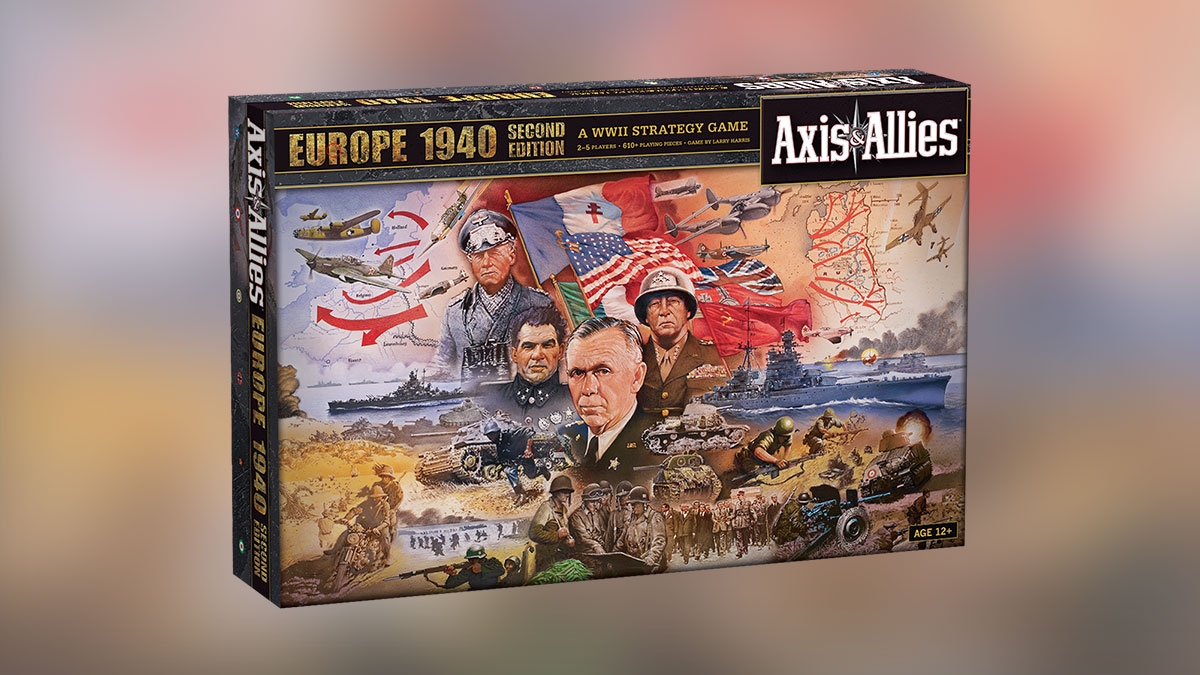
Axis & Allies: Europe 1940 (2010, 2012)
Factions: UK, USA, USSR, France, Germany, Italy.
Units: Infantry, Mechanised Infantry, Artillery, Tanks, Fighters, Bombers, Tactical Bombers, Aircraft Carriers, Submarines, Transports, Destroyers, Cruisers, Battleships.

A major revision of the original 1999 Axis & Allies: Europe game, this edition is similar but also incorporates most of Africa (rather than just the northern coast) and adds some improvements in the form of mechanised infantry, tactical bombers, airbases and naval bases. This game also features an earlier starting position, with Germany considerably weaker than in the original game and with more work to do, as France is still extant and needs to be defeated before the Axis turns its attention towards the Soviet Union.


Axis & Allies: Global 1940 (2010, 2012)
Factions: UK, USA/China, USSR, France, ANZAC, Germany, Italy, Japan.
Units: Infantry, Mechanised Infantry, Artillery, Tanks, Fighters, Bombers, Tactical Bombers, Aircraft Carriers, Submarines, Transports, Destroyers, Cruisers, Battleships

Axis & Allies: Global is not a separate game but is instead created by combining the Pacific 1940 and Europe 1940 boards and units into one massive map almost six feet in length. This version of the game can be best described as the "ultimate" Axis & Allies experience, with over 1,000 plastic miniatures and eight factions (with potentially nine players, as the USA and China can be played separately). With a play time of 10 hours, this is a game for players with lots of time on their hands and an urge to go truly epic with their game.

Although undeniably impressive, this version of the game is possibly a bit "too much" due to the overwhelming number of units and the huge number of territories on the map which can result in dead spans of time in which not much happens. In addition, whilst you can go for nine players, the people playing China and France may find themselves with not much to do. This version of the game should be approached with the same caution reserved for tackling, say, Twilight Imperium with half a dozen players.


Axis & Allies: 1941 (2012)
Factions: UK, USA, USSR, Germany, Japan.
Units: Infantry, Tanks, Fighters, Bombers, Aircraft Carriers, Submarines, Transports, Destroyers, Battleships.

With each edition of Axis & Allies getting bigger and more insane than the previous one, someone at Hasbro had the brainwave of developing a "back-to-basics" version of the game. This version of the game is stripped back and streamlined: Cruisers and Artillery have been dumped, most of the optional rules have been junked, the map is much smaller and there are far fewer territories, which are now also larger. The focus is on the five original factions and the idea is to get games done and dusted in two hours or less.

This version of Axis & Allies is fast-moving and short-lived, perfect for game nights where people want to get several different games down or for beginners just starting out in learning the game. With far less features, options and units, the game is also exceptionally cheap, going for a quarter of the price of Anniversary Edition or a third of 1942.


Axis & Allies: WWI 1914 (2013)
Factions: British Empire, USA, Russian Empire, France, Imperial Germany, Italy, Ottoman Empire, Imperial Russia.
Units: Infantry, Artillery, Tanks, Fighters, Aircraft Carriers, Submarines, Transports, Battleships.

The first attempt to depict a different time period with the core Axis & Allies rules, WWI 1914 is a major success. The game depicts trench warfare through a very simple mechanic: instead of units constantly attacking one another until the battle is won or lost (as in the standard game, to depict fast-moving battles taking place over weeks or days), only one exchange of fire takes place, allowing players to pour more troops into an ongoing battle in a static line. This allows players to fight battles lasting many months for relatively small amounts of territory, which is historically accurate (whether it's fun or not will depend on the players and their ingenuity in how they overcome the stalemate). Optional rules can bring about the collapse of the Soviet Union through the Russian Revolution of 1917 or the early entry of the USA into the war in force.


Axis & Allies & Zombies (2018)
Factions: UK, USA, USSR, Germany, Japan.
Units: Infantry, Tanks, Fighters, Bombers, Aircraft Carriers, Submarines, Transports, Destroyers, Battleships, Zombies, Zombie Control Ray, Chainsaw Tanks, various new units (unconfirmed).

Axis & Allies & Zombies is the forthcoming, and possibly inevitable, first edition of the game to add zombies. Adding zombies to WWII has always been a (somewhat inexplicably) popular idea in film and other games, so seeing them show up in an Axis & Allies title is predictable, but possibly interesting. The game will apparently be based on the 1941 edition, with a focus on fast play, and will see the standard WWII game interrupted by the arrival of zombies, who are a force of nature (not under anyone's control). A new card mechanic will allow players to destroy zombies or possibly funnel them towards the enemy, whilst new units like chainsaw tanks and zombie control rays will make for new and interesting strategies. A gimmick? Sure, but potentially a fun one. The game will be released in time for Halloween this year.

Larry Harris's next game, War Room, is a ground-up reinvention of the WWII war/board game with a focus on diplomacy, morale, resources, propaganda and terror weapons, all of which are missing from the more streamlined Axis & Allies.

The Future

Axis & Allies is an older game, but it's popularity remains undimmed. The key to the game's long-term appeal has been how it recreates WWII in broad strokes that are surprisingly accurate whilst not going in the direction of being a hardcore wargame. The game has been credited with inspiring a greater interest in the conflict and encouraging people to read up the actual history of what happened, which was (and remains) one of Larry Harris's original goals. Since Hasbro took over the franchise, there has been some concern of over-exploiting it, with the number of different editions currently available being potentially too confusing (my advice: buy 1941 if you're a total newcomer with limited time, Anniversary Edition if you want a good all-round experience, 1942 when Anniversary Editions goes out-of-print, and the Pacific/Europe 1940 combo if you're a hardcore, experienced Axis & Allies player with lots of gaming time available). Axis & Allies & Zombies could be fun, but it may be a sign of the bottom of the barrel being scraped, although I must admit I'd be totally down for a well-designed Axis & Allies: Middle-earth or a Game of Thrones variant.

Larry Harris's next game is potentially more interesting. Many of the criticisms of Axis & Allies stem from its limited economic model (which ignores resources such as oil and metals), the absence of diplomacy (although that does make sense, as the game opens with the war in full swing) and factors such as propaganda, resources and weapons of mass destruction. Introducing these elements to the existing game would create a confusing and unbalanced mess, so Harris has sensibly designed a new game from the ground up incorporating these elements. War Room is the result of that design process. The game is superficially similar to Axis & Allies, but features more factions (the UK, USA, USSR, China, Germany, Japan and Italy are the base factions), resource types (such as oil and iron), trade (between allies and with neutral nations) and morale (defeats overseas may trigger unrest at home).

Featuring a large circular map and lots of new features, War Room was successfully funded on Kickstarter last year to the tune of half a million dollars and we should see the game on the shelves in the next year or two. Whether it's any good or not remains to be seen, but it's good to see the spirit of Axis & Allies is still alive and being furthered by its creator.


See Also

A handy tool for Axis & Allies fans is TripleA, an open-source video game based on the board game which features a large amount of variant rules and ideas. This is useful for both practice (although make sure you're using the game version which matches the correct edition of the board game), and playing with friends who live far away.


Thank you for reading The Wertzone. To help me provide better content, please consider contributing to my Patreon page and other funding methods, which will also get you exclusive content weeks before it goes live on my blogs. SF&F Questions and The Cities of Fantasy series are debuting on my Patreon feed and you can read them there one month before being published on the Wertzone.

Saturday, 5 May 2018

WHEEL OF TIME TV series in development (but not yet greenlit) at Amazon

The very strange case of Amazon developing the Wheel of Time TV series with Sony but not really wanting to talk about it continues.


It's an open secret in the business that Amazon is the company that Sony have teamed up with Amazon to bring an adaptation of Robert Jordan's 14-volume fantasy series to the screen. Rafe Judkins (Agents of SHIELD) is working on the project as a screenwriter and possible showrunner, and the pilot script was completed some time ago. Judkins was recently in Guatemala on a writer's retreat to work on the series, possibly with other writers to hand. Although Amazon was known to have had talks with Sony as early as the start of 2017, the announcement of a big-budget Lord of the Rings TV series in November led some to believe that Amazon would not want to develop a superficially similar project at the same time.

Clearly that's not an issue, because all indications since then are that Amazon are on board. Deadline confirmed the company's involvement in February, along with a Dark Tower TV series. After some confusion, Amazon confirmed that Dark Tower is "in development" at Amazon but has not yet received a green light. The project was originally a spin-off from the 2017 Dark Tower movie, but that movie bombing may have led to a creative rethink.

The status of Wheel of Time is a bit more mysterious. We know it is in development at Amazon, but Amazon have so proven unwilling to even give a brief "it's in development" comment as with Dark Tower. Even Amazon customer service representatives seem to be confused as to the official status of the project, some confirming it is in development and others being tighter-lipped.

At JordanCon last month, Harriet McDougall - Robert Jordan's widow and literary executor - confirmed that the Wheel of Time series has a network and it's not a "normal" one, basically meaning it will be a streaming service. This eliminates the last few cable channels from contention (Starz and AMC were believed to have looked the project over, likely passing due to costs) and leaves Amazon, Netflix, CBS All Access, Apple TV and the new Disney streaming service as the primary contenders. Amazon obviously has to be the front-runner, due to both all of the previous information and Jeff Bezos's drive to hoover up all of the major SFF franchises not already snapped up by Netflix or elsewhere. She also confirmed that it won't be a pilot order, but a straight to series commitment which is also standard for streaming.

The reasons for the ongoing obfuscation are likely linked to the different partners involved: Amazon, Sony and Radar Pictures all have part of the production pie, whilst the Bandersnatch Group (the official name of the Robert Jordan Estate) and Red Eagle Productions have producer and advisory roles. As a result no formal announcement can be made until all five of these parties (and likely others) are satisfied with the pilot script and the progress of the project. This may happen imminently or it may still be a few months away. Amazon have also announced a lot of projects recently and likely want to open up some room before making further big announcements.

As usual, I'll cover news here and Wheel of Time TV is continuing to cover all of the latest rumours.