Showing posts with label lauren hissrich. Show all posts

Saturday, 25 September 2021

THE WITCHER renewed for a third season

Netflix have renewed The Witcher for a third season, ahead of the second season dropping in December. The franchise will also be getting a second animated movie and a spin-off aimed at younger viewers.


The Witcher's first season was a huge success when it landed on Netflix in 2019. Production of the second season was repeatedly delayed due to the ongoing COVID19 pandemic, but wrapped several months ago. An animated spin-off movie, Nightmare of the Wolf, did well when it was released on Netflix last month.

Season 3 of The Witcher will shoot in 2022 for a likely 2023 premiere. Season 2 will debut on 17 December. A live-action spin-off series, Blood Origin, is currently shooting with Netflix.

Monday, 27 July 2020

Netflix confirms a WITCHER spin-off series is in development

Netflix has confirmed it is working on a Witcher spin-off television series, in addition to the animated film Nightmare of the White Wolf which is currently in production.


The Witcher: Blood Origin is a six-part, live-action series set 1,500 years before the books and the existing TV series. It will depict the Conjunction of the Spheres, the ancient apocalypse which brought monsters, men and elves to the world of the Witcher in the first place. It also sounds like it may involve major timejumps, as it will also explore the creation of the first witchers some 1,200 years after the Conjunction, 300 years before Geralt's time.

It sounds like writer and producer Declan de Barra will take the lead on the project, with Witcher showrunner Lauren Hissrich serving in an oversight capacity. It is unclear if original Witcher creator Andrzej Sapkowski will be involved.

Meanwhile, Season 2 of The Witcher itself will resume production next month for transmission in mid-to-late 2021.

Saturday, 18 January 2020

Season 2 of THE WITCHER moves filming to the UK, builds entire town

Season 2 of The Witcher is moving its filming base from Hungary to the United Kingdom.


Season 1 of The Witcher was based in Belgrade, with location filming in both Hungary and Poland, the home of the author of the novels, Andrzej Sapkowski. However, the production has shifted to the UK for the second season which shoots next month. Season 2 will be based at the newly-built Arborfield Studios near London with location filming across the country, including Scotland.

The reason for the move is likely linked to the much more established film and post-production base in the UK, the wider pool of English-speaking actors and the fact that much of the cast is already based here (including Henry Cavill, who lives in London), as well as the UK government's generous tax breaks for filming.

An entire medieval town is also being built near Arborfield, likely to stand in for several different locations in the books (probably including Gors Velen and Oxenfurt, potentially Novigrad as well).

Although production being based in the UK means that opportunities for location filming in Eastern Europe will be more limited, there will still be some scope for it, especially given the production team's keenness to ensure that Poland is still represented in the project.

Season 2 of The Witcher begins shooting on 17 February and is expected for around five to five and a half months, with an estimated wrap date of late July or early August. Based on the post-production turn-around of Season 1, that means the earliest Season 2 can air is March or (more likely) April 2021.

Saturday, 21 December 2019

The Witcher: Season 1

The Northern Kingdoms are braced for war. The great southern empire of Nilfgaard is on the advance, plotting to annex more territory. The north is divided. The fate of the continent may depend on three individuals: Ciri, a princess and heir to a fallen nation; Yennefer, a sorceress who is not sure what it is she wants; and Geralt, a witcher, a hunter of monsters who has learned that the worst monsters walk on two legs, wear clothes and pretend to be just.


It may be difficult to think now, but when HBO launched Game of Thrones in 2011 it was taking a massive gamble, one may critics thought was doomed to fail. It turned out that HBO's call was the right one, delivering the biggest watercooler show and the most globally successful drama series of the decade, and making fantasy cool again overnight.

Other networks wanted in on the action and have been snapping up fantasy novel series all over the shop, and the early failures (like MTV's poor Chronicles of Shannara) don't seem to have taken the wind out of their sails. Amazon has Lord of the Rings: The Second Age and The Wheel of Time both in production, the BBC and HBO's His Dark Materials is already airing and Netflix is going all-in on the fantasy genre. It has a live-action reboot of Avatar: The Last Airbender in pre-production and a new take on The Chronicles of Narnia in the planning stages. But before those arrive, it has rolled the dice hard on The Witcher.

The Witcher is a cult European fantasy success story which shifted a couple of million copies in its native Poland and other parts of eastern Europe in the 1990s, but went global thanks to a trilogy of well-received video games from CD Projekt Red. The games have now sold over 30 million copies (outselling the books 6-to-1) and The Witcher 3: Wild Hunt is now being cited by many critics as the greatest video game of the decade.

Netflix's show is based firmly on the distinctly cheaper-to-licence books, specifically the first two (the short story collections The Last Wish and Sword of Destiny) but also drawing on some story elements in the first two novels proper, Blood of Elves and Time of Contempt. Those looking for a linear, chronological adaptation of the books best look elsewhere. Showrunner and head writer Lauren Hissrich has taken the stories from the early books and blended them together to turn an episodic story which gradually becomes more serialised into a single, big-picture epic from the off. This structural decision winds up being the show's biggest mistake, creating a story which is often unnecessarily confusing and which muddles both characterisation and stakes.

Effectively, The Witcher uses the same timeline structure as Christopher Nolan's Dunkirk, having one story (Yennefer's) unfolding over thirty years, another (Geralt's) over fifteen and another (Ciri's) over a few weeks. Whilst Nolan actually told the audience what was going on, there is no indication in the show that we are viewing three disconnected narratives, at least not until the fourth episode when Geralt finally reaches Ciri's homeland and instead of finding it in flames and under enemy occupation, he's instead meeting a younger version of Ciri's grandmother. Once you understand that, the show makes a bit more sense but this doesn't solve the relating problem that Ciri's story is simply too thin for the amount of screentime it gets.

The teenage Ciri is in almost every episode, a result of casting Freya Allan as a series regular, which is baffling because she doesn't need to be. Ciri's entire Season 1 arc is her escaping a bloody battle, running through some woods, getting captured a couple of times, escaping and eventually finding a temporary safe refuge. This entire storyline could have been told in one episode. Spreading it over eight means both a lot of wheel-spinning in her story and constant interruptions in both Geralt's and Yennefer's stories, which are generally a lot more interesting.

The other main negative is the quality of the effects. The effects for creatures, such as the striga and kikimores, are generally excellent and impressive. A terrible dragon in one episode, which looks like a PS3-era video game, is the exception. Environmental effects, magic and especially the depiction of a big battle sequence in the first episode are absolutely woeful, with a lot of painfully obvious greenscreen. Although The Witcher's budget is reasonably solid (at $7 million per episode, adjusted for inflation, it's roughly comparable to the first two seasons of Game of Thrones), it's clear it was insufficient to do the things asked of it. Better that the show hadn't bothered and left those scenes offscreen (as they are in the books) and spent the money elsewhere, such as the prosthetics for the elves and dwarves which are also not great (the dwarves more or less get away with it, but the elves look like under-prepared and under-budgeted cosplayers).

Another problem, although this varies by episode, is the running time. Several of the episodes are 60 minutes long but run out of story at around the 35-40 minute mark, meaning a lot of spare time that's taken up by filler (usually another episode from Ciri's story) or redundant dialogue. The freedom of not having a set running time is great when an episode badly needs a bit more time to do its story justice, but it can backfire when the opposite is the case.

Fortunately, and this saves the show, the performances are very solid, with Cavill splendidly gruff as Geralt but bringing out the (often well-concealed) wit and charm of the character when required. Anya Chalotra may be the stand-out revelation of the cast, having to play considerably older than her years to reflect Yennefer's world-weariness and cynicism. Freya Allan is also very good as the young Ciri, whose world been shattered by harsh events and she needs to adapt to a rapidly changing situation without being prepared for it.

Of the recurring cast, Jodhi May is exceptional as Queen Calanthe, whom she plays like King Robert Baratheon in his prime. MyAnna Buring is also very good as Tissaia (a minor character from the books who is given a much larger role here as Yennefer's mentor) and Emma Appleton is memorable as Renfri, who is only really present in the first episode but shows up in flashback as a framing device for Geralt's acceptance of his destiny. The performances throughout are pretty strong. Joey Batey's performance as Jaskier (aka Dandelion) is also pretty good, especially as they lean on the actor's real-life singing and musician skills, but I can see him annoying some people. That's half the point of the character but may grate with some viewers. Overall both characterisation and performances are good, enough to overcome some decidedly ripe dialogue at times.

Disregarding the unnecessary timeline structure, the story arcs are also reasonably compelling. Yennefer's is by far the best. Depicting her backstory on-screen is a splendid choice and we see her growth into the person she is in a way that sells the character very well. Geralt's development is more subtle but also more nuanced, as we witness his initially aimless, self-reliant drifting turning more into an acknowledgement he needs other people around him and then his adoption of finding Ciri as his goal.

The fight sequences (at least those not involving CGI) are also very impressive and the soundtrack is superb, so those departments can rest easy knowing they've done a superb job.

The result is...okay. The first season of The Witcher (***½) is fine. It's not great but it's not awful either. An unnecessarily puzzling timeline structure, some ripe dialogue and some dodgy effects make the series feel cheaper and less professional than it really should, but some great performances and effective character arcs bring the show back to the level of watchability, and a few good laughs and a great score improve a little over that. The second season certainly promises to be a lot better. Season 1 of The Witcher - which is more the 2007 original video game than the 2015 exceptional one - is on Netflix now and Season 2 starts shooting in February for a 2021 debut.

Sunday, 24 November 2019

Season 2 of THE WITCHER to start shooting in February

Season 2 of The Witcher will start shooting in February 2020, with production expected to run through August.


Season 1 of The Witcher drops onto Netflix on 20 December and will consist of eight episodes, recently named. The first season will most adapt short stories from the first two Witcher books, The Last Wish and Sword of Destiny. The second season is expected to cover some more of the short stories but also move into the action of the main novel series, starting with Blood of Elves (although given how short that novel is, I wouldn't be surprised to see them also drawing on material from Time of Contempt).

Given Season 2's filming dates, it will likely hit screens in early 2021.

Friday, 22 November 2019

Netflix announces episode titles for THE WITCHER

Netflix has confirmed episode titles for the first season of The Witcher.


The titles are as follows:

  1. The End's Beginning
  2. Four Marks
  3. Betrayer Moon
  4. Of Banquets, Bastards & Burials
  5. Bottled Appetites
  6. Rare Species
  7. Before the Fall
  8. Much More
Episode 1 will likely feature Geralt's battle with the striga and the restoration of King Foltest's daughter, which is the subject of the short story "The Witcher" (from The Last Wish) and also featured in the animated opening to the first Witcher video game. It also sounds like it will expand to cover "The Lesser Evil" (featuring the massacre at Blaviken) as well.

Episode 2 appears to be a mixture of original material and references from the books, and will explore Yennefer's backstory.

Episode 4 adapts the short story "A Question of Price" from The Last Wish, where Geralt exposes a complex mystery in the capital of Cintra and wins a promise for the future.

Episode 5 will possibly adapt "The Last Wish" itself, depicting the first meeting of Geralt and Yennefer.

Episode 6 sounds like it will adapt the story "The Bounds of Reason" from Sword of Destiny, where Geralt and Yennefer join a hunt for a dragon which turns into a more complicated affair than they were expecting.

Episode 7 will expand on the Nilfgaardian invasion of the Northern Kingdoms, particularly the assault on Cintra.

Episode 8 may adapt the story "Something More" from Sword of Destiny, which expands on the aftermath of the attack on Cintra. It's quite a short story, so I wonder if it will also adapt "Sword of Destiny" itself, as the two stories define Ciri's relationship with Geralt in important ways.

There are, however, several additional question marks raised about how the series will proceed. We know many characters from much later in the book series will appear in Season 1, such as Triss Merigold and Taissia. This suggests that Yennefer's flashback episode may also introduce many of the other sorceresses of the world, or that new subplots featuring these characters will be in play, setting them up long before they first show up in the books. The character of Istredd has also been cast, despite "Shards of Ice" from Sword of Destiny apparently not being fully adapted this season.

The series also has Ciri (Freya Allan) listed in a starring role, which would be unusual if she really isn't showing up as an adult until the final two episodes of the season. This suggests there may be some kind of framing device where we see Ciri as an older girl flashing back to earlier events in her life and she will be much more present through the series.

We'll find out for sure on 20 December when the first season of The Witcher is released on Netflix.

Wednesday, 13 November 2019

THE WITCHER renewed for second season at Netflix

The Witcher has been renewed for a second season at Netflix, before the first season even airs.


The first season filmed in late 2018 and early 2019 and will be released on the streaming service on 20 December. A second season renewal was considered likely - Netflix usually gives shows two seasons to find their feet - but it's still a good sign of confidence by Netflix in the project.

Season 2 of The Witcher will shoot next year for likely release in early 2021. Henry Cavill, Anya Chalotra and Freya Allan will return as Geralt, Yennefer and Ciri respectively. It will again consist of eight episodes.

Monday, 28 October 2019

THE WITCHER likely to hit Netflix on 17 December

Netflix have been pretty quiet about exactly when their TV adaptation of Andrzej Sapkowski's Witcher novels is going to hit screens. A flurry of marketing activity last month pointed towards a mid-November launch but, if that was the case, clearly Netflix have changed their minds.


The new likely release date is 17 December. Netflix's official Dutch Twitter account inadvertently gave the game away and that's now been backed up by news that the show will have its official world premiere in London on 16 December.

It's a reasonable date, since the previous one looked like it was going to pitch The Witcher directly against the other big secondary world fantasy series of this year, His Dark Materials (which debuts on Sunday 4 November). Opening up a bit more of a gap between them is a reasonable move.

Season 1 of The Witcher is eight episodes long and adapts several short stories from the first two Witcher books, The Last Wish and Sword of Destiny, as well as adding some new material and setting up elements from later in the book series.

Thursday, 29 August 2019

WITCHER TV series targeting October/November release date

A producer on The Witcher has confirmed that Netflix is targeting a release date at the end of October or start of November for the series. This came after some earlier rumours pointed at a December launch.


Giovanni Altamarquez confirmed that principle photography finished several months ago, but some late reshoots have taken place after one role (unidentified) was recast. The show is now very deep in post-production, with CG and sound effects being added, and should be ready for an autumn launch. Altamarquez suggested that Friday, 1 November may be the most likely launch date at the moment.

It is possible this date may be off, as it depends on what else Netflix and its rivals are launching that week, but it does seem to be a reasonable estimate.


UPDATE

Some doubts have been cast on the accuracy of the source. However, it should be noted that Netflix's own marketing has confirmed a 2019 release date and the October-November period remains a likely launch window.

Saturday, 20 July 2019

Netflix drops first trailer for THE WITCHER

Netflix has released the first trailer for its upcoming adaptation of Andrzej Sapkowski's Witcher books.


Based on the trailer, the first season is drawing on Sapkowski's short story collections (The Last Wish and Sword of Destiny) which sets up the world before delving into the five-novel series beginning with Blood of Elves. In addition, the series would appear to be developing some storylines that only appeared briefly in flashback in the books, such as Yennefer's training as a sorcerer and how she cured herself of her birth defects.

Netflix haven't confirmed a release date for the series yet, but the current betting is October or November this year.

Monday, 1 July 2019

Netflix release first official images from THE WITCHER TV series

Netflix have released the first official promo images from their adaptation of Andrzej Sapkowski's Witcher novels.

Henry Cavill as Geralt of Rivia, a witcher or monster-hunter. 


Anya Chalotra as Yennefer of Vengerberg, a powerful sorceress. 


Freya Allan as Princess Cirilla (or Ciri) of Cintra. 


For those asking, in the books Geralt only carries one sword on his back. His silver sword, used for fighting monsters, is kept on his horse, Roach.

Netflix's The Witcher is tentatively scheduled to air later this year, possibly around November.

Thursday, 30 May 2019

Filming wraps on Season 1 of Netflix's THE WITCHER

Showrunner Lauren Hissrich has confirmed via Twitter that production of Season 1 of The Witcher has wrapped.


The show has been shooting since late last year in Hungary and Poland. The show is adapting Andrzej Sapkowski's original book series to the screen, with casting suggesting that the show will start off by adapting some elements of the short story collections The Last Wish and Sword of Destiny before moving onto the novels themselves.

Netflix have confirmed that the eight-episode season will air in 2019, with the smart money being for a transmission time around November, given six months of post-production.

Wednesday, 10 October 2018

Netflix announces more castmembers for THE WITCHER

Netflix have confirmed some additional casting choices for its adaptation of Andrzej Sapkowski's The Witcher.


Anya Chalotra has been cast in the key role of Yennefer, a powerful sorceress who becomes a key ally of Geralt early in the story. Yennefer is in her nineties but has used to magic to appear substantially younger than her true age. Yennefer plays a major role in both the Witcher novels and the video game The Witcher 3: Wild Hunt. Chaltora is a relative newcomer, having established a name for herself on stage as well as a recurring role in the TV series Wanderlust.


17-year old Freya Allan has been cast in the role of Ciri. Ciri is Princess of Cintra, one of the Northern Kingdoms. The Witcher Geralt is involved in the surprising events surrounding her conception and becomes pledged to defend her and even train her in the ways of becoming a witcher to help her defend herself from enemies. Allan is another newcomer, but has already scored notable roles in Into the Badlands and the upcoming period version of The War of the Worlds.

Jodhi May (Last of the Mohicans) will play Queen Calanthe of Cintra, Bjorn Hlynur Haraldsson (Fortitude) will play Calanthe's husband Eist and Adam Levy (Knightfall) will play the Skellige druid Mousesack. MyAnna Buring (Kill List), Mimi Ndiweni (Black Earth Rising) and Therica Wilson-Read (Profile) will player sorceresses Tissaia, Fringilla and Sabrina. Millie Brady (The Last Kingom) will play Princess Renfri (a sort-of psychotic version of Snow White).

The characters cast seem to confirm early reports that the first season will adapt various storylines from the first two Witcher books, the short story collections The Last Wish and Sword of Destiny. This also explains the absence of Triss Merigold, who does not appear until Blood of Elves and thus probably won't be cast until Season 2 at the earliest (it should also be noted that Triss is a minor character in the books, and is not as prominent as she is in the video games).

The most notable character still not cast at the moment is Jaskier (aka Dandelion), Geralt's closest friend and advisor. Given that he appears early in The Last Wish and is a fairly major character, it's unlikely he'll be left out of the adaptation.

Tuesday, 7 August 2018

Henry Cavill expresses interest in playing Geralt of Rivia in Netflix's WITCHER TV series

Henry Cavill, who currently plays Superman in the DC Universe movies, has expressed interest in playing the role of Geralt of Rivia in Netflix's upcoming Witcher TV series.

Fans are already on the case (Source: Bosslogic on Instagram)

Cavill has declared himself a huge fan of the franchise, having played the video games (recently completing a second playthrough of the enormous Witcher 3: Wild Hunt) and read the novels by Andrzej Sapkowski.

Fans have put forward many names for the role of Geralt in the TV series, with suggestions ranging from Black Sails and The 100 star Zach McGowan (who has also expressed an interest in the role) to Mads Mikkelsen, possibly as an older version of the character. Given that Sapkowski is Polish, the mythology of the series is informed by Polish sources and that the show will shoot in Poland, Polish actors have also been put forward, most notably Marcin Dorociński.

With casting reportedly getting underway in the next month or two, Witcher producer Lauren Hissrich may find herself with a bit of a queue of known Hollywood names forming, which is an nice problem to have.

Saturday, 23 June 2018

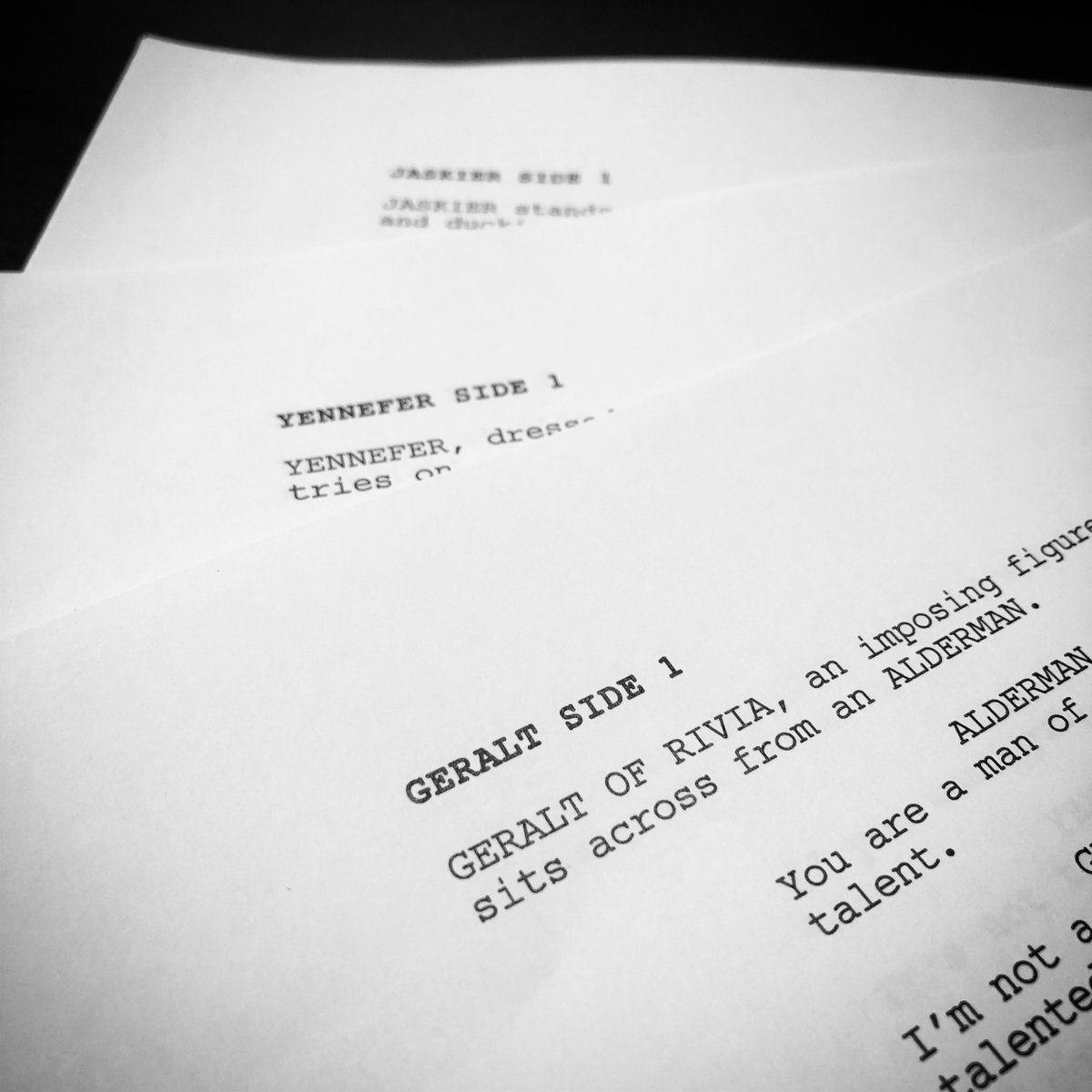
Casting about to begin for THE WITCHER TV series

According to showrunner/writer Lauren S. Hissrich, casting is about to get underway for Netflix's Witcher TV series.


To protect from spoilers, the production team has written all-new scenes for the characters that won't be part of the TV series itself. However, the notes confirm that Geralt, Yennefer and Jaskier will be among the roles being cast. Also of interest is that Geralt's bard companion will be called "Jaskier" rather than the more frequent English translation of "Dandelion," the name by which he is known in the video games and some of the English translations of the books.

The casting process will be international, meaning that actors from numerous countries will be looked at rather than just the United States (where the show is in pre-production) or Poland (where it will be filmed). This ties in with production expected to get underway towards the end of this year for an early 2020 debut on Netflix.

There's a lot of "dream choices" for actors for the role of Geralt floating around the Internet, most of which are surprisingly good. Here's a few of the more popular options:


Geralt of Rivia

The titular Witcher is many decades old, but looks to be somewhere from his late thirties to early fifties, thanks to his Witcher training and use of drugs that has extended his lifespan considerably. He is a skilled swordsman,


Mads Mikkelsen

Danish actor Mads Mikkelsen is best-known for his titular role in the TV show Hannibal. His recent appearances include as the villain Kaecillius in Doctor Strange and as Galen Erso in Rogue One. At 52 he is at the upper end of being the right age for Galen, and it should be remembered that (due to the typical 18-month gap between Netflix seasons) that if the show lasts for 5+ seasons, he may be in his sixties by the time it ends, which may be an issue given the physicality of the role. That said, Mikkelsen is in great shape, looks the part down to a tee and has a lot of star power. Mikkelsen is also now highly in demand for film work and may be less keen on committing to another TV show, although with only 8 episodes in its first season the actual filming time for the show may be relatively modest.

Mikkelsen is also the traditional choice of Witcher creator Andrzej Sapkowski to play the role, which may be influential.


Zach McGowan

American actor Zach McGowan has made a name for himself playing brooding and slightly growly athletic men with charisma and impressive combat prowess. He is best-known for playing Charles Vane in Black Sails and Roan in The 100, but has a long and impressive list of credits. At 38 he is at the younger end of the Geralt age spectrum (but this may be beneficial due to how long the show has to run) and has immense fighting experience from his previous roles.

McGowan has also expressed an interest in the role, exchanging Tweets with Hissrich and fans making it clear he'd be up for consideration.


Nikolaj Coster-Waldau

Danish actor Nikolaj Coster-Waldau will need no introduction, having spent the last eight years playing the role of Jaime Lannister on Game of Thrones, which has given him impressive experience in riding horses and sword-fighting. He's a very fine actor and at 47 is in the right age bracket. The question would be if he was willing to spend potentially another decade riding horses and hitting people with swords, and if the producers would be interested in casting such a recognisable role from another and superficially very similar show in theirs.


Marcin Dorociński

If you're going to be making a TV show based on a high-profile Polish work of literature, you'd do well to at least consider some Polish actors for the role. Marcin Dorociński is a highly experienced Polish actor who's the right age (he turned 45 yesterday, actually) and has experience filming shows in English, recently appearing in British drama Spies of Warsaw and German-South African production Cape Town.


Bubbling Under

Other popular fan choices include Josh Holloway (best-known for player Sawyer on Lost) and Richard Armitage (best-known for playing Thorin in the Hobbit movies). However, both actors are tied in with long-running American TV Shows (Holloway on Colony and Armitage on Berlin Station) which means they are likely unavailable.


Other Roles

There's much more to The Witcher than just the Witcher, of course. For the role of the sorceress Yennefer, Eva Green seems to be overwhelmingly the favourite choice, although Evangeline Lily has some traction (the latter is less likely due to her commitment to the Marvel movies going forward).

Amanda Seyfried seems to be a popular choice for the role of Triss Merigold, although since the TV show is following the books rather than the games, Triss is likely to much less of a key player. Deborah Ann Woll has also been suggested for the role, which is interesting given that she has worked with Hissrich before on Daredevil and The Defenders.

For the role of Jaskier/Dandelion, David Tennant seems to be a very popular choice, although the producers may want to cast younger, in which case Aneurin Barnard would fit the role to a tee.

For the role of Vesemir, no less weighty an icon than Mark Hamill (Luke Skywalker!) has thrown his hat into the ring. When fans repeatedly suggested him for the role on Twitter, he expressed an interest in learning more about the character and role. That'd be some impressive casting, especially given Hamill's relative absence from live-action roles in recent years before his return in The Last Jedi.

Casting will likely be completed and confirmed later this year.

Tuesday, 8 May 2018

More writers announced for Netflix's WITCHER TV series

More writers have been confirmed for Netflix's upcoming adaptation of Andrzej Sapkowski's Witcher series of novels.


Joining Lauren S. Hissrich (The West Wing, Jessica Jones, The Defenders), who has already written the pilot episode are Jenny Klein (Supernatural, Cloak & Dagger, The Tick), Declan De Barra (Funky FablesThe Originals) and Sneha Koorse (Daredevil, Constantine, The Americans).

There will be seven writers for the first season in total, along with several writer's assistants (one of whom is Clare Higgins). With eight episodes in the first season, it sounds like each writer will helm one episode apiece.

The Witcher will enter production later this year to air in (presumably early) 2020.

Friday, 20 April 2018

Netflix's THE WITCHER confirms number of episodes and shooting location

Netflix have confirmed a number of important details about it's upcoming adaptation of The Witcher, Polish author Andrzej Sapkowski's critically-acclaimed fantasy series and also the inspiration for the greatest video game of this century.

Witcher executive producer Lauren Hissrich with Andrzej Sapkowski, author of the eight Witcher books.

The first season of The Witcher will be eight episodes long. Some fans have complained about this, but it's notable that quite a few Netflix seasons have been criticised for spreading too little story out across thirteen episodes. Eight episodes to start with, with the possibility of more later on, is the model also used by the massively successful Stranger Things, so it's not exactly bad company to be in.

In addition, the series will be shot in Eastern Europe and predominantly Poland, which of course has massively pleased the original Polish fanbase.

More surprisingly, the series will not air until 2020, with Netflix determined to give the production team to "get it right." Lengthy gestation periods for shows these days are not unusual, but with the pilot episode already written and filming anticipated to begin this autumn, it was expected that the show would be ready to air at least in late 2019. However, it sounds like Netflix have cannily decided to position the series between Game of Thrones - which will probably air its last episode in May or June 2019 - and Amazon's Lord of the Rings show, which will likely not air before 2021.

It's also apparently been confirmed that the first season will adapt the first two Witcher books, the short story collections The Last Wish and Sword of Destiny. That's an interesting choice, as those two books between them feature thirteen stories between them, which suggests some episodes may adapt more than one story (which is possible, some of the stories are pretty short) or the some stories may be dropped in favour of the more serialised ones that focus on the character development of Geralt, Yennefer and Ciri, arguably the three central characters of the saga. Presumably Season 2 onwards would adapt the five-book novel series starting with Blood of Elves.

Casting has yet to be announced (or even begin), although Black Sails and The 100's Zach McGowan has thrown his hat into the ring for the role of Geralt, and Mark Hamill got involved in a fan's Twitter casting suggestion that he play Vesemir by agreeing (later noting he was not familiar with the franchise, but Netflix should get in touch).

Wednesday, 28 February 2018

Update on the WITCHER TV series

Lauren S. Hissrich, the producer-showrunner-writer of Netflix's The Witcher project, has been providing detailed tweets over the last few months of her work on the show. Considering the series is in its earliest days - the script for the first episode has only just been completed - and we likely won't see it on air until late 2019, this is quite impressive.


Based on what we know so far, the Witcher TV series will draw primarily on Andrzej Sapkowski's novels and story collections. Those hoping to see an adaptation of the Witcher video games will likely be disappointed (amongst other things, although some people who worked on the video games are also working on the TV show, CD Projekt Red itself is not involved and their video games have not been optioned, meaning the game stories and characters can't be used yet). Based on the characters that Hissrich has been discussing, it also sounds possible that the TV series may not be starting with an adaptation of the two short story collections (The Last Wish and Sword of Destiny) but will instead either be jumping straight into the five-volume novel series starting with Blood of Elves, or potentially a new version of the story altogether.

Jumping into the novels makes sense on several levels: the short story collections do a better job of setting up the world, but they also lead to the expectation that Geralt is the star of the story. In the novels Geralt is one of several protagonists, with characters like Ciri and Yennefer given as much (if not arguably more) prominence. Sapkowski himself has even indicated that he considers Ciri to be the main character of the saga, not Geralt. However, the TV show is also being made in the reality of the knowledge that the Witcher video games have massively outsold the books (on a ratio of about six-to-one), and adapting the novels will introduce game fans to characters they've met in the games already, like Yennefer, Ciri, Regis and so on, much more quickly.


Hissrich has also confirmed that she is mostly interested in following the book characterisations and details, so no gender-swapping of characters and Geralt won't suddenly be cracking one-liners and becoming a brainless action hero.

Characters mentioned so far on Hissrich's Twitter feed include: Geralt (natch), Ciri, Yennefer, Triss Merigold, Jaskier (Dandelion), Regis, Roach, Emperor Emhyr, Cahir, Viglefortz, Milva, Leo Bonhart, Angouleme, Borch Three Jackdaws and Essi Daven. However, she also notes that her discussion of these characters does not mean that they will appear in the TV show at the start or at all.

It's worth following Lauren Hissrich's Twitter feed to see what other information is provided over the coming months. It's unusual - even unprecedented - for her to be so open about the adaptation process this early on. The last time showrunners were talking about a project in this detail this early, it was about a little show called Game of Thrones. Netflix will no doubt be hoping that The Witcher ultimately proves as successful.