Sunday, 7 October 2018

Brandon Sanderson suggests he'd give CD Projekt the rights to make a MISTBORN game for free

On a recent Reddit thread, fantasy author Brandon Sanderson has suggested he'd consider giving the rights to his Mistborn novel series to Polish developers CD Projekt Red for free.


CD Projekt Red (CDPR) have achieved tremendous success in adapting the Witcher novels and short stories by Andrzej Sapkowski into a trilogy of best-selling and critically-acclaimed video games. CDPR are now working on Cyberpunk 2077, an adaptation of Mike Pondsmith's popular pen-and-paper science fiction roleplaying game.

Sanderson has so far written six Mistborn novels with a seventh due in the next couple of years, with two further trilogies in the same world to follow. The Mistborn series is part of Sanderson's wider Cosmere multiverse of different worlds and stories with some interlinking elements.

So far, CDPR have not responded to the offer, and with their hands full with Cyberpunk 2077 it's not something that's going to happen any time soon.

Saturday, 6 October 2018

A History of the Wheel of Time Part 1: Introduction and the First Age


Introduction

Between 1990 and 2013 Tor Books published one of the most popular epic fantasy series ever created. Across fourteen novels, a prequel and two companion volumes, The Wheel of Time has sold over 85 million copies worldwide, including 56 million sales in the United States and 5 million in the United Kingdom. It was the biggest-selling epic fantasy series after The Lord of the Rings until 2018, when it was overtaken by sales of George R.R. Martin's A Song of Ice and Fire.

The Wheel of Time has expanded to secondary media, with a video game, soundtrack album, comic book and a pen-and-paper roleplaying game all being released for it (along with T-shirts and replica swords). Now it is set to become a major TV series for Amazon, with Rafe Judkins and his team at Sony TV set to produce an apparently faithful adaptation of the books.

Like all of the biggest fantasy series, The Wheel of Time is built on a bedrock of a deep and well-realised backstory, or "lore" as common parlance has it these days. This history is extensive and continuously expanded upon through the books and the spin-off material. Published in 1997, The World of Robert Jordan's The Wheel of Time by Teresa Patterson attempted to tell this history, but numerous additions to the backstory followed in the subsequent seven novels in the series, along with more information provided by Robert Jordan in the form of fan Q&As, notes given to the makers of the roleplaying game, and his own worldbuilding notes, some of which were mined for the later Wheel of Time Companion (2015).

This, then, is an attempt to update the deep history of the Wheel of Time world, drawing on all of the available canonical sources.


A Note on Calendar Systems
Since the Breaking there have been three calendar systems used widely in all the lands between the Aryth Ocean and the Spine of the World (that subcontinent known, with a disappointing lack of originality, as "the Westlands"). The first, the Toman Calendar (developed by Toma dur Ahmid), recorded the years as After the Breaking (AB) and came into widespread use two centuries after the death of the last male Aes Sedai. This calendar was used until the end of the Trolloc Wars, by which time some nations had lost track of what year it was. A new calendar was created by Tiam of Gazar which recorded the years as Free Years (FY) and celebrated the world’s freedom from the Trolloc threat. The Gazaran Calendar came into use within twenty years after the end of the Trolloc Wars (which are estimated to have ended around 1350 AB). The chaos and destruction of the War of the Hundred Years again disrupted this calendar, so that within eighteen years of the war’s end (in c. FY 1117) a new system had to be instigated. This new system, the Farede Calendar, was devised by Uren din Jubai Soaring Gull, a Sea Folk scholar, and popularised by Farede, the first Panarch of Tarabon. This system counted the years as being part of the New Era (NE) and remains in use today, some 998 years later.

No calendar has survived from the Age of Legends, though we do have dates on various documents. Without context, these dates are meaningless. No calendar was in use during the Breaking of the World, since people had more important things to worry about.

As such, it is not entirely clear how much time has passed since the end of the Age of Legends. The AB and FY periods lasted roughly 1,350 and 1,135 years respectively, and the New Era has just entered its 998th year, but the length of the Breaking is difficult to determine (estimates range from 239 to 344 years). As such the length of time that has passed since the end of the Age of Legends may be anything between 3,724 years and 3,829 years.

Lands beyond our own, such as Shara and Seanchan, use different calendars. The Seanchan may use one of three different calendars: the Gazaran Calendar, the little-used Founding Calendar (dating from the founding of Artur Hawkwing’s empire in FY 963) and their own calendar dating from the end of the first phase of the Conquest (around 700 years ago). The Sharans, as with so much else, have refused to comment on their own calendar systems.

Historical Sources
This history attempts to cover a period in detail from around 110 years before the Breaking of the World to the present day, a period approaching 4,000 years. There are, as you may imagine, many sources available for this period, but their accuracy in many areas is open to question.

No sources have directly survived since before the Breaking of the World. All the knowledge we have about the Age of Legends comes from histories written in the early part of the AB era, presumably when the writers had access to more direct sources. The oldest such source we have dates from the first few decades AB and is nothing less than a history describing the entire period between the drilling of the Bore into the Dark One’s prison and the end of the War of the Shadow. Such a history would be huge, but only 212 pages have survived and the largest number of consecutive pages is a mere six. These fragments, recently unearthed in a dusty room in Chachin, have been carefully analysed by historians and, it is said, an Aes Sedai sister of the Brown Ajah, and their authenticity confirmed. These pages describe something of life in the Age of Legends, before and during the Collapse, and also describe the War of the Shadow. Most importantly, the six surviving consecutive pages describe the attack on Shayol Ghul by Lews Therin Telamon and the Hundred Companions, possibly the most significant event in world history (aside from the drilling of the Bore itself).

Most records of the AB era – the period between the Breaking and the Trolloc Wars – were lost during the chaos of the wars, but several key history books of the period - complete and undamaged - survive in the library of the White Tower in Tar Valon. It is also believed one similar volume resides in the Great Library of Cairhien.

Records of the Free Years should be more common than records for the prior era, since they are up to a thousand years more recent, yet only a few more history texts have survived. It is believed that for a time during the War of the Hundred Years all books which even mentioned the High King, Artur Hawkwing, were burned, even books which had nothing to do with him but were merely published during the reign of the Empire. For a similar reason sources on the Hawkwing Empire itself are relatively scarce, though a few have survived in the libraries of Tear, Cairhien, Tar Valon, Tanchico, Ebou Dar and Caemlyn (the major cities of both the imperial and modern eras).

Histories and records for the New Era are the most common of all, naturally, and only for this period do we have strong, reliable records.

The reader should, however, bear in mind that all records and sources are prone to similar problems: the writer’s opinion, copyists’ errors, propaganda, bias and even plain guesswork corrupting the truth. For that reason, this history uses, wherever possible, only sources verifiable by other sources. However, for some matters, especially the oldest parts of the history, we have had to do some speculation and guesswork. The reader is fully entitled to disagree with our interpretation of events and offer alternatives of their own.


Before the Age of Legends
The Wheel of Time turns and Ages come and go. According to myth there are seven spokes to the Wheel of Time, and each spoke represents one of the Seven Ages. Our Age is called the Third Age by some, the Age of Prophecy by others. But long ago, before the Breaking of the World, a time of peace and harmony existed. This period was called the Second Age of the Wheel of Time, the Age of Legends.

The origins of the Age of Legends are lost forever in the mists of time. According to the most ancient legends the First Age, an age of mysteries, was a time of conflict and pain, when technology meant that death could be rained down upon innocents from thousands of miles away and the entire world was forever in danger of tipping into chaos and oblivion. During this Age the One Power and the True Source were unknown. People simply could not channel. Then, near the end of the Age, they could. The histories and legends are massively unreliable, with speculation and rumour mixed in with more reliable data, but it may be that the ability to channel was introduced (or reintroduced, from the previous turning of the Wheel) artificially, by people using machines and science to change the genetic nature of test subjects.

It is unknown how this was done, or how many people died before they first channeller was successfully created. According to legend, this person was named “Tamyrlin.” This person and their fellow surviving test subjects suddenly found themselves able to move objects without physically touching them, spontaneously create or douse flames and perform many other seemingly impossible tasks. The ability to wield the One Power had been granted to humanity.

At this time the world was made up of hundreds of nations, all competing with one another in complex webs of alliances. Suddenly, the nations were battling one another to create channellers of their own. Thousands died, but hundreds appeared able to wield the One Power. They were used as weapons or spies. Wars erupted over who could control them. When it was revealed that the genetic link was passed on through bloodlines, with often the children of the channellers also able to channel, some of the more callous countries developed breeding programmes dedicated to creating as many channellers as possible.

Eventually, after a few decades of this treatment, the channellers themselves rebelled. Now numbering in the hundreds of thousands, they refused to be used as weapons anymore and demanded their lives back. They banded together to stop the chaos and restore peace to a fractious world. Their “masters” proved unable to stop them. In time the channellers ended the wars and restored peace to the world. With the One Power, they realised, they could end pain and hardship forever. They could alter weather patterns to bring rain to areas afflicted by drought. They could make farms more productive. They could use the One Power to locate valuable stores of minerals far below the ground, or oil underneath the ocean floor. As time passed they even discovered how to travel from any one point in the world to any other point in an instant. Aided by the One Power, they could forge new technologies and undertake scientific research to a far greater level than ever before. Above all, the reasons for poverty and unhappiness could forever be removed.

The channellers dedicated themselves to caring for mankind and protecting the world from itself, if necessary. They named themselves “The Servants of All,” or Aes Sedai in the Old Tongue.

Note: much of the preceding is highly speculative and may be regarded as a best guess on how the First Age gave way to the Second, but in no way should it be taken as fact.

Please note that Parts 2-4 of this series are also available to read now on my Patreon page and my other blog, Atlas of Ice and Fire, is currently running a Wheel of Time Atlas series.


Thank you for reading The Wertzone. To help me provide better content, please consider contributing to my Patreon page and other funding methods, which will also get you exclusive content weeks before it goes live on my blogs. The History of The Wheel of Time, SF&F Questions and The Cities of Fantasy series are debuting on my Patreon feed and you can read them there one month before being published on the Wertzone.

Thursday, 4 October 2018

Live-action STAR WARS TV series gets a name

Showrunner Jon Favreau has confirmed that the first-ever live-action Star Wars television series will be called The Mandalorian.


Set seven years after the events of Return of the Jedi, The Mandalorian follows the adventures of a "lone gunfighter" who is following in the footsteps of Jango and Boba Fett, who wore iconic Mandalorian battle armour in the movies. The Mandalorians were also a key part of both the Clone Wars and Rebels animated series.

Shooting on The Mandalorian begins in the next few weeks, with sets being erected that look suspiciously Tatooine-like. The show is expected to launch in late 2019 or early 2020 on Disney's new streaming service, which they hope will go head-to-head with Netflix and Amazon Video.

Will The Wheel of Time TV series be the next Game of Thrones?

Much excitement has greeted the news that Amazon Studios and Sony Television have greenlit a TV series based on Robert Jordan’s Wheel of Time novel series. There have been at least three major attempts to get a TV series or film based on the books made in the last eighteen years (with NBC, an unnamed Japanese animation company and Universal Pictures respectively) which have come to nothing, so it’s finally a relief that something is happening in this area. 


Amazon’s motive in making this series is clear: they want their own Game of Thrones, a zeitgeist-defining show that can run for years and dominate the cultural conversation. Amazon Studios’ mandate was to move away from their small, quirky and award-winning early shows more towards big, brash and expensive projects, many of them in the science fiction and fantasy genres. They have already spent $250 million acquiring the rights to make a Lord of the Rings prequel TV series and are planning to spend between $150 and $200 million per season on the project. They have also optioned the rights to series based on Iain M. Banks’ Culture novels, Larry Niven’s Ringworld series and Neal Stephenson’s book Snow Crash, and picked up The Expanse (based on James S.A. Corey’s novels) after it was dropped by SyFy after three seasons.

However, The Wheel of Time is the most direct and blatant statement that they want to take on Game of Thrones on its home turf. The Wheel of Time was, historically, the biggest-selling epic fantasy series since The Lord of the Rings, its sales dominating the genre through overwhelming sheer strength. The series has sold approximately twice the copies of Terry Brooks’ Shannara series, for example, and more than three times that of Terry Goodkind’s Sword of Truth or Raymond E. Feist’s Riftwar series (and about one-sixth the sales of the Harry Potter series, which is actually quite impressive). As well as its massive sales in the United States, Wheel of Time has also sold over 5 million copies in Commonwealth territories and been translated into dozens of languages. A Song of Ice and Fire (the novel series on which Game of Thrones is based) was considerably more obscure before the HBO TV series, with only 12 million copies sold as of early 2011. The success of the TV series has since increased these sales to well over 85 million (overtaking – possibly only briefly – The Wheel of Time earlier this year). With The Wheel of Time starting from a much larger base, however, the pre-production hype and profile of the series is considerably higher.

There are of course big differences between the two book series, some of which may increase The Wheel of Time’s appeal as a different kind of story. Blatant, graphic sex and violence is far less prevalent in Wheel of Time (although it does occasionally take place) and the story is, at least initially, focused on more quest-like narratives. The series does eventually turn to deal with politics, military movements and intrigue, as Game of Thrones does, but not until about a third of the way into the series and this is always at a somewhat lesser degree of importance. Wheel of Time is, for better and worse, a more traditional and a more familiar fantasy story than A Song of Ice and Fire. Those looking for the gritty, complex politics and earthier, deeper characterisation of the latter may be disappointed by Wheel of Time’s more adventurous tone and its more archetypal characters.

That said, Wheel of Time does have several advantages going for it. The series is extremely long (fourteen novels and over 4 million words), but it is complete and the ending is very decent. The writers have a colossal amount of material to draw on without ever needing to resort to dubious filler ideas when the source material runs out (as has blighted the last three seasons of Game of Thrones and left many fans wary for the upcoming finale). Indeed, the books themselves are often criticised for filler material and wheel-spinning storylines which the TV series will be able to drop and edit it into something more compelling.

Another advantage is that, whilst Game of Thrones had to sneak its more fantastical elements (dragons, sorcery, zombies) into the story slowly and carefully over the course of many episodes, Wheel of Time is coming out to a much more genre-savvy audience and can be much more upfront with its magic (multiple main characters can wield the One Power, a form of sorcery rooted in scientific-like rules), non-human creatures and mystical visions.

A final interesting difference is that Wheel of Time has a much, much larger and more prevalent female cast of characters. A Song of Ice and Fire/Game of Thrones had important, well-defined female characters from early on but these characters are repeatedly shown as existing in a sexist world and having to overcome the limitations of that world through individual strength, intelligence and achievement (to the point where latter books and seasons arguably have more and more important female characters than male). Wheel of Time, right off the bat, is set in a world where only women can use sorcery safely, resulting in a much more gender-balanced (or possibly even imbalanced, in the favour of women) world complete with female rulers, merchants, craftspeople and soldiers. The Wheel of Time world, set in the aftermath of a series of vast wars and geological cataclysms that threw together all the peoples of the world, is also notably much more ethnically and culturally diverse than ASoIaF/GoT, allowing for more varied casting. Homosexuality in the Wheel of Time world, although not a dominant theme, is also much less controversial than in GoT’s world.

Of course, none of these things mean that the show is guaranteed to be a big hit. The global television landscape has massively changed since Game of Thrones launched in 2011. In that time the number of television series on the air has more than doubled, with 520 distinct, original, scripted series airing from American studios and streaming services this year. The Wheel of Time may risk getting lost in the noise of so many other shows clamouring for attention. Game of Thrones also turned heads for being the only serious, well-made adult fantasy show on the air at launch; The Wheel of Time, by comparison, will launch against numerous genre competitors, including Game of Thrones’ own spin-off prequel show The Long Night, Netflix’s The Witcher, the BBC’s His Dark Materials and possibly Showtime’s Kingkiller Chronicle prequel series.

There’s also the fact that Amazon has so far not managed to launch a global mega-hit. Shows like Transparent and The Marvelous Mrs. Maisel have won awards and garnered critical acclaim, but have not yet broken through to a widespread, mainstream audience. The Tick and The Man in the High Castle have had wider appeal and likewise been acclaimed, but nothing to the audience level of Thrones or Netflix’s Stranger Things. Growing dissent with Amazon’s business and employment practices seems to be making at least part of the audience less keen to spend money on the company (although this is, of course, dramatically outweighed by its enormous customer base who disagree or don’t care).

Still, The Wheel of Time will no doubt have an impressive budget, its writers are fans of the books, the source material is good (once you extract several long-winded subplots that kind of went nowhere and condense about three of the books into one) and it has every chance of being a success. I guess we will find out in around about 2020.

Thank you for reading The Wertzone. To help me provide better content, please consider contributing to my Patreon page and other funding methods, which will also get you exclusive content weeks before it goes live on my blogs. The History of The Wheel of Time, SF&F Questions and The Cities of Fantasy series are debuting on my Patreon feed and you can read them there one month before being published on the Wertzone.

Wednesday, 3 October 2018

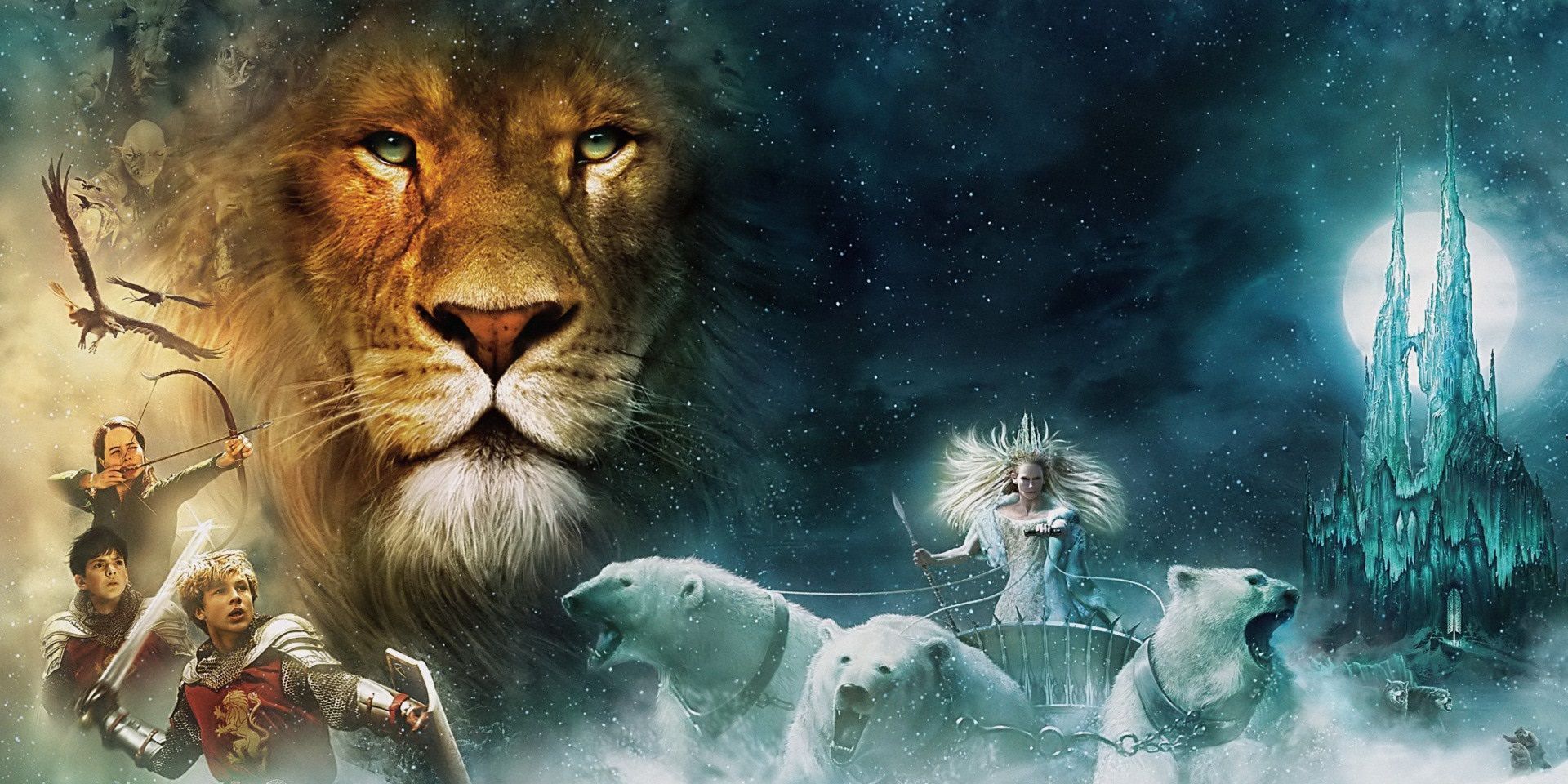
Netflix to make a CHRONICLES OF NARNIA TV and movie series


Netflix have optioned C.S. Lewis's The Chronicles of Narnia for a new adaptation project. This new project will adapt the seven books as a series of films and TV serials.

Image result for The Chronicles of Narnia

The Chronicles of Narnia consists of seven novels: The Lion, the Witch and the Wardrobe (1950), Prince Caspian (1951), The Voyage of the Dawn Treader (1952), The Silver Chair (1953), The Horse and His Boy (1954), The Magician's Nephew (1955) and The Last Battle (1956). The books have been adapted several times, with The Lion, the Witch and the Wardrobe serving as the basis for a BBC mini-series in 1967 and an animated film in 1979. Neither proceeded beyond the first book.

The first successful adaptation of the series was a second BBC television attempt, which adapted the first four books as three television seasons between 1988 and 1990. More recently, three films were produced in a movie series based on the books: The Lion, the Witch and the Wardrobe (2005), Prince Caspian (2008) and The Voyage of the Dawn Treader (2010). An adaptation of the fourth book, The Silver Chair, stalled but recently appeared to be moving forwards. The status of this film in the wake of the Netflix announcement is not clear.

The Chronicles of Narnia is problematic to adapt because of is structure and the wildly varying critical and popular acclaim of the seven books: The Lion, the Witch and the Wardrobe is the most popular, well-known and cinematic of the books. The next three books are at least reasonably straightforward to adapt, but The Horse and His Boy is completely unrelated to the rest of the series and has been criticised for perpetuating racial stereotypes. The Magician's Nephew is a prequel to the entire series, explaining the origin of the wardrobe, but otherwise has little direct narrative connection to the rest of the books. The Last Battle is an outright religious diatribe, featuring dubious sexist caricatures of the female characters as well as featuring a depressing ending. Every attempt to adapt the series has run into the problems of how to handle these latter three books, mostly by not even trying.

It will be interesting to see what, if anything, Netflix can bring to this story that we haven't seen several times before.

Wertzone Classics: The Hitchhiker's Guide to the Galaxy (BBC mini-series)

Arthur Dent wakes up one Thursday morning hoping for a quiet lie-in and a nice lunch. Instead, his house is demolished to make way for a bypass. This is followed by the discovery that his best friend Ford Prefect is in fact an alien from a small planet somewhere in the vicinity of Betelgeuse and then the entire Earth being blown into a trillion pieces by other aliens called Vogons, who enjoy writing bad poetry. Dent's journey will take him to the end of time, back to the beginning of life and will involve searching for the Ultimate Answer to Life, the Universe and Everything and, when that turns out to be disappointing, the Ultimate Question. His only help on this journey will come from The Hitch-Hiker's Guide to the Galaxy, an electronic book clearly written on a very tight deadline. Fortunately, Dent has friends and allies on this trip and he knows where his towel is.


It is often said that Douglas Adams' seminal SF comedy The Hitchhiker's Guide to the Galaxy has no real definitive version: the version each fan considers to be definitive is normally the one they encountered first (unless it's the terrible 2005 movie, in which case obviously not), whether that's the 1978 radio play, the 1979 novel or even the 1984 text adventure video game. But for many millions of fans, the first version they saw was the 1981 BBC TV mini-series. Written by Adams himself, directed by Alan Bell and produced by John Lloyd, it deftly weaves together the best storyline elements from the first two novels in the book series (The Hitchhiker's Guide to the Galaxy and The Restaurant at the End of the Universe) and the first two seasons of the radio series, whilst dropping elements which were less successful.

The result is a - very relatively - tight version of Adams' rambling magnum opus which takes his sprawling story and starts and finishes it in about three hours and six episodes. This modest length (about a quarter the length of your average Netflix season, for example) takes in the birth and death of the human race, asks existential questions about the nature of the universe and almost never lets up, for a second, on the barrage of jokes, quips, elaborate sight gags, puns and character humour. Watching it in 2018, it's an admirable exercise in writing discipline (not a phrase lightly associated with the famously hesitant Adams, who once took eight years to write a book barely 200 pages in  length), worldbuilding and atmosphere.

Of course it has dated, perhaps annoyingly so for the BBC. The Hitchhiker's Guide to the Galaxy cost them a fair amount of money by their standards (certainly far more than they spent on the comparable eighteenth season of Doctor Who, the last one starring Tom Baker, which aired the same year) and the relatively sprawling sets (some inherited from the movie Alien), visual effects gags and, especially, the lengthy and brilliant animated sequences taken from the fictional guidebook itself are all impressive. But there's still a lot of filming in quarries with under-detailed black sets and some decidedly dodgy model shots of spaceships. If anything, the show's transfer to Blu-Ray and resulting digital remastering (alas, not a HD remastering as that's technically impossible due to the profusion of scenes shot directly onto low-res video) shows up some of these problems rather than solves them. But you also have to pause and remember that this TV series was shot almost forty years ago. On that basis, some dated effects and dodgy costumes can be forgiven for a script that is still as laugh-out-loud funny and fresh now as it was then.

Hitchhikers works not because it's a silly, funny story, but because it's a story that poses questions about the nature of the universe, the point (or not) of existence and the search for meaning which we all face at one stage or another. Surprisingly - and very much something that betrays its UK origins - the story doesn't really give any satisfactory or pat answers, Adams noting that he's not going to come up with the answer to such profound musings in a three-hour TV show when scientists, philosophers and telephone sanitation engineers have failed to do so in the preceding two million years. Instead, the show throws some ideas back and forth and has a lot of fun in the process.

Performances are uniformly excellent, from Simon Jones' befuddled Arthur Dent to David Dixon's madcap Ford Prefect to Sandra Dickinson's Trillian (although it's hard not to notice that Trillian is decidedly under-developed compared to the other characters), with a ton of other noted British character actors of the 1970s and 1980s dropping in. Soon-to-be Fifth Doctor Peter Davison has an excellent brief role as an animal desperate to be eaten, and even David "Darth Vader" Prowse shows up to show everyone what he looks like outside of a black mask. There isn't a weak link in the cast, and of course the soundtrack is exceptional from the backing music to the iconic theme tune to the final burst of Louis Armstrong that sees the show out.

The Hitchhiker's Guide to the Galaxy has now been reissued on Blu-Ray, with three discs packed with extra features, including the entire, massive Making of Hitchhiker's Guide to the Galaxy documentary (including new dramatic scenes with the original cast) filmed in the early 1990s. The BBC had huge plans for this show at the time, giving it an impressive sound mix missing from almost all of their contemporary shows, making the series certainly sound far better than it ever has before (helped by a 2018 audio remix).

Unfortunately, the series has a huge problem in that many of the original film elements have not survived the passage of time. Without those, it's not been possible to natively remaster the footage in proper HD. The technical team have managed to moderately improve the quality of both the video and film footage as much as possible (and this is the best the series has ever looked, somewhat better than running the DVD through an upscaler) but there are hard limits on what they can do without the original film elements. This would be less of a problem if the set didn't have "digitally remastered in HD!" on the box, which is something of an exaggeration. Frustratingly, the remastering isn't as good as the recent job that was done on the Season 12 release of Doctor Who, for a season a full six years older than this show. The remaster team were able to recover all of the animated Guide entries and remaster them in HD (thanks to them being stored separately) but they ultimately decided not to mix this into the episodes, feeling it would jar too badly. Instead, the upgraded Guide entries are available to view separately and look excellent.

Technical issues aside, the BBC TV version of The Hitchhiker's Guide to the Galaxy (*****) may (incredibly arguably) be the most concise, focused and successful version of the story made to date, with a relentless assault of ideas, gags and weird and wonderful characters. With the 2005 movie being, how shall we say, "a load of dingo's kidneys", it certainly remains the definitive visual dramatic version of the story to date. It is available now in the UK (Blu-Ray, Limited Edition Blu-Ray, DVD) and will be released next month in the USA (Blu-Ray, DVD).

Tuesday, 2 October 2018

Amazon greenlights the WHEEL OF TIME TV series

Amazon Studios have formally greenlit the first season of The Wheel of Time, a TV series based on Robert Jordan's 14-volume novel series.


Showrunner, producer and writer Rafe Judkins has been working on the scripts for the show for some time now, along with writer Amanda Kate Shuman. The project will be Amazon's second major fantasy show, following their greenlighting of a Lord of the Rings prequel TV series focusing on a young Aragorn. It also comes amidst rumours that their Conan the Barbarian TV project has been dropped.

The Wheel of Time is set many thousands of years in the future (and, because time is cyclical in this series, the past), after a glorious utopian civilisation where sorcery (known as the One Power) coexisted with technology, has collapsed in an apocalyptic war. Following the cursing of magic so only women can use it safely (men who try go insane, becoming a danger to themselves and others), prophecy says that a man will arise who can use the One Power to save the world but in the process will destroy civilisation again. Much of the tension in the series arises when a key male character is revealed to be a channeller and the reaction of the female One Power-wielders, known as the Aes Sedai.

Robert Jordan wrote and published eleven books in the series between 1990 and 2005. He passed away from cardiac amyloidosis in 2007. Author Brandon Sanderson used Jordan's detailed notes and dictation tapes to conclude the series with three further volumes, the last of which was published in 2013. The series has previously been adapted as a video game, a roleplaying game and a soundtrack album. Jordan also published a short prequel novel in 2003. Two companion volumes to the series have also been published.

As part of this news, Jordan's publishers have also confirmed that Wheel of Time has now sold more than 90 million copies worldwide, possibly moving it back ahead of A Song of Ice and Fire (which apparently overtook it earlier this year) to reclaim its position as the biggest-selling post-Tolkien epic fantasy series*.

Production on The Wheel of Time is expected to begin in 2019, possibly to air on Amazon in 2020. More news as we got it.

* As long as you don't count Harry Potter as an epic fantasy, which is a whole other debate.

Salvation by Peter F. Hamilton


AD 2204. A derelict alien spacecraft has been found on a remote planet. A group of explorers are gathered together to investigate the wreck and the strange secrets it contains. For each of them, it has been a strange and stressful road that has led to this time and place. And, centuries in the future, they are revered as the “Five Saints” for the actions they are about to take…


Salvation is the first novel in both a new series and a new universe for Britain’s most successful living SF author, Peter F. Hamilton. It’s also a novel that mixes Hamilton’s well-known strengths – in-depth SF worldbuilding, an epic narrative, the meticulous construction of intriguing mysteries, his skill at both the long-form novel and short stories – with a new approach which splits the story into three distinct strands.

In the first approach, we have the “modern-day” storyline about the gathering of the protagonists (of which there are six; the disparity between the number of characters and the later veneration of five of them is the first clue that something odd is going on) and their deployment to the alien crash site. This story is told in the first person from one of the team and is interesting enough, although it really only serves as a framing device. In the second part of the story we get a lengthy flashback from each character about a key event in their lives, one that also defined who they are but also ties in directly with the over-arching mystery. This section feels a lot like Dan Simmons’ Hyperion (itself inspired by Chaucer’s The Canterbury Tales) and is where Hamilton gets a bit structurally interesting, as he combines the six apparently unrelated novella-length narratives into one story.

In the third section, it’s centuries or millennia in the distant future and the human race seems to be in desperate straits. This part of the story is most baffling, initially, due to a lack of context, but as the story unfolds the reader can start to put together the pieces. This results in impressive foreshadowing.

Hamilton moves between the three plot strands with skillful economy – at 530 pages this may not be a short book, but it’s positively a novella compared to so some Hamilton books (the longest of which are more than twice this size) – building up this new vision of the future. It’s a much less advanced vision than either the Confederation of the Night’s Dawn series or the Commonwealth of much of the rest of his fiction, but it’s still a big, brash and optimistic view. The key invention this time around is the quantum entanglement portal, which stands in for the wormholes of his earlier books. In practical terms they are similar, but they have a limitation in that twinned portals have to be created together and then one of them physically moved to the destination to be set up (it can’t be generated from light-years away). They are also much less energy-dependent, meaning that portals are set up everywhere, allowing someone to commute to work in London from their flat in Glasgow in five minutes. The super-rich even have “portalhomes”, where one bedroom might be in New York City but the bathroom is in Antarctica. It’s a fun concept that Hamilton explores to the hilt.

There’s also a foreboding tone to events. Hamilton is building up to something quite terrible happening between the present and far future storylines, and it’s not until late in the book we get an inkling of what that might be. Of course, the book ends on a cliffhanger just as we get to that point. The good news is that the second book, Salvation Lost, is almost finished already and locked for release in 2019, with The Saints of Salvation to wrap things up in (presumably) 2020.

Character-wise, Salvation probably lacks a figure as dynamic and memorable as Paula Myo, Ozzie or Syrinx, but the Canterbury Tales-style structure does allow each of the major characters to be painted in a lot of depth with their backstories and motivations fleshed out. There are also political and ideological differences between the group, which have to be overcome for them to work out what is going on.

The far future storyline is a lot weirder, with characters being trained to face an enemy who may not appear in their lifetimes, but Hamilton sells the weirdness quite well, even if the characters aren’t quite as engaging this time around.

Salvation (****) is in many ways classic Hamilton: bold, brash, epic, optimistic and packed with great worldbuilding and ideas. It’s also structurally original (for him), relatively constrained in scope and page-count and builds up a terrific momentum which is only arrested by the all-too-soon ending. On the negative side of things, the characters perhaps aren’t among Hamilton’s best and although quantum-entanglement portals may not be wormholes, they are very similar and it does feel like Hamilton is revisiting well-trodden ground here. Still, it’s a compelling, rich SF novel. It is available now in the UK and USA.

Andrzej Sapkowski demands further payment from the creators of the WITCHER video games

Polish fantasy author Andrzej Sapkowski has issued a legal demand for a further payment of $16 million from CD Projekt Red, the company which has made multiple, highly-successful video games based on his Witcher novels. 


Sapkowski sold the video game rights to CD Project Red in the mid-2000s for a modest lump sum rather than a percentage of profits, since he had every expectation that the game would bomb. Instead, the original game sold very well on its release in 2007 and resulted in two even more successful sequels: The Witcher II: Assassin of Kings (2011) and The Witcher III: Wild Hunt (2015), along with additional expansions. Combined sales of the Witcher video game series are now approaching 30 million, or almost six times the combined worldwide sales of the novels. CDPR have also released a video card game based on the books, Gwent, and a story-based spin-off, Thronebreaker: The Witcher Tales, is due for release this month.

Although Sapkowski has not been paid a percentage on the profits of the games, he has benefited in other ways. Sales of the books have almost doubled since the video games started coming out (recently crossing 5 million) – mainly as a result of the books being translated into English, which was inspired by the first game – and Netflix have paid a substantial sum to him to option the novels for a TV series, starring Henry Cavill as the titular character. The TV series starts shooting later this month in Budapest and will debut in late 2019, when it will likely drive further sales of the books.

Sapkowski’s argument to CDPR is rooted in that the original agreement only covered sales and profits related from the first game in the series, not sequels. In addition, the Act on Copyright and Related Rights is a Polish law designed to protect authors when spin-off works based on their novels make significantly more money than expected and could apply here.

CDPR have confirmed that they are happy to discuss further remuneration of the author but also note that they expect the original 2007 agreement to be honoured and they consider the amount requested to be excessive.

Monday, 1 October 2018

RIP Carlos Ezquerra

The feted comic book artist Carlos Ezquerra has passed away from lung cancer at the age of 70.


Ezquerra was born in Spain in 1947. He started his artistic career drawing for Spanish periodicals, but in 1973 moved to London to work for the British comics market, starting with The Wizard and Pocket Western Library, as well as romance strips. In 1974 he started working on Battle Picture Weekly, a war comic, and gained his first fans for his visceral action scenes and readily-identifiable characters. Ezquerra used a shorthand of basing iconic characters partly on famous actors, basing the character of Major Eazy on actor James Coburn.

In 1977 Ezquerra was asked by editor Pat Mills to help launch his new comic 2000AD. Writer John Wagner had created a new character, a tough lawman of the future, and Ezquerra created the iconic look for Judge Dredd (whose formidable chin was inspiared by actor Clint Eastwood), as well as designing the colourful, insane landscape of Mega-City One. Ezquerra was credited as Judge Dredd's co-creator, but he was unhappy when another artist, Mike McMahon, was chosen to draw the first story proper. Ezquerra

Ezquerra and Wagner reunited in 1978 to create a new character, Strontium Dog, for Starlord comic (which later folded, with its characters moving into 2000AD). Strontium Dog, which was about the adventures of a mutant bounty hunter called Johnny Alpha, proved to be a long-running success with Ezquerra illustrating every story for ten years (until an ill-advised decision to kill off the character led to Ezquerra quitting; he rejoined the strip when the character was resurrected).

Ezquerra's career was dominated by Judge Dredd and Strontium Dog, with him illustrating both characters regularly until the late 2000s. During this time he sometimes guested on other strips, such as DC's Hitman and Garth Ennis's Preacher, but his focus remained on the two characters that defined his career. His contribution to both wound down after 2010, when he had a lung removed from complications arising from a cancer diagnosis. Despite his bullish defence - "who the hell needs two [lungs] for drawing?" - his work rate declined.

Ezquerra was one of the defining creative forces in modern British comics and he will be missed.