Science fiction author Jay Lake passed away this morning. He was 49 years old and had been - very publicly through blogging and a documentary film - fighting colon cancer for six years.
Lake was the author of nine novels and three hundred short stories. John Scalzi has penned a memorial to him which can be read here. Unfortunately, I have not read any of his work - something I will have to remedy - but I've always heard of him spoken as a good guy with a tremendous work ethic (barely slowing down after being diagnosed) and someone who faced his enormous struggle with good humour. Condolences to his friends and family.
Sunday, 1 June 2014
Transformers: Fall of Cybertron
The war between the Autobots and Decepticons for control of their homeworld, Cybertron, has resulted in the near-ruination of the planet. Its energon stores are almost gone, with the last few scraps being fought over at tremendous cost. The Autobots realise they have no choice but to abandon their home and search for a new refuge amongst the stars. To this end they have built the Ark, an immense starship, but it is under the threat of Decepticon attack. The Autobots have to power up the ship, protect it from attack and escape, whilst the Decepticons try to stop them and engage in their own internal conflict.
Fall of Cybertron is the sequel to the enjoyable-but-lightweight War for Cybertron and is an improvement over that game in almost every way. Like its forebear, it's a linear third-person shooter which tells a large-scale story involving many characters, with you playing different Autobots or Decepticons on different levels. Unlike its forebear, it's a bit more generous and smarter in differentiating the characters and allowing you to use their full range of abilities.
Part of Fall of Cybertron's appeal is that it takes what is usually the starting point for the Transformers mythos - the launch of the Ark from Cybertron, the subsequent Decepticon ambush and the crash of the starship on prehistoric Earth - and turns it into the grand finale. The build-up to this event is depicted through a series of missions where the Autobots try to get the ship ready for take-off, secure new fuel supplies and fend off Deception attacks, with a series of side-missions depicting the search for the missing Grimlock and his team (the future Dinobots, who get probably their most logical-ever origin story in this game). From the Deception POV, there are a series of missions about trying to defeat the Autobots whilst - as usual - there are internal conflicts and attempts by the treacherous Starscream to supplant Megatron as leader.
The game is heavily focused around combat, although some of the characters (Cliffjumper and Starscream) have more stealthy options available to them. A lot of the time you are fighting in robot mode, diving in and out of cover to exchange fire with enemies, but the game also provides many larger areas where you can switch to vehicle mode for a more mobile experience. The first game was guilty of neglecting the Transforming mechanic (which is a bit stupid), but the sequel makes full and vigorous use of it. Indeed, the one level where you command Grimlock has you limited in being able to transform only when Grimlock gets mad enough (represented by filling a bar by defeating enemies) and then giving you a ridiculous number of overpowered abilities in dinosaur mode. Another sequence has you controlling the gigantic Decepticon Bruticus and smashing your way to victory.
The game also maintains interest by providing a series of massive set-pieces. The game is limited in the freedom it gives you to change or alter the storyline (you get two slightly different endings depending on whether the Autobots or Decepticons get the upper hand in the battle for the Ark but that's about it), so it makes up for that by making the combat fun and by making the levels as memorable as possible. One sequence has you alternating between the Combaticons as they work together to take down a bridge to block an Autobot transport. Another features you as Cliffjumper infiltrating a ruined party of Cybertron and taking down enemies through stealth attacks. Jazz takes part in a combat mission using a physics-based energy grapple, whilst Optimus Prime has to fight his way through enemy lines by lighting up targets for the massive Autobot Metroplex to destroy. The designers work hard to provide big, epic moments at every point of the story (some shamelessly cribbed from the comics, TV series or, especially, the 1986 animated movie) and generally pull it off. Long-term Transformers fans will likely play through most of the game with a big grin on their faces.
The game's biggest success is the depiction of the battle for the Ark. Ususally depicted as a one-sided massacre, the game turns it into a furious battle in space, on the hull of the ship and inside its decks. The POV switches rapidly from Soundwave boarding the ship with his cassette warriors to take down its main guns to Jetfire shooting down grappling hooks outside to Bruticus smashing his way along the hull to Jazz trying to take him down, and finally to a brutal slug-fight between Optimus Prime and Megatron. As final missions go, it's exceptionally good, despite the massive cliffhanger ending.
The game still has some drawbacks. Whilst the stealth sequences and the sequences where you play as overpowered killing machines break up the third-person shooter scenes, you still spend a lot of the game exchanging fire with distantly-glimpsed enemies down corridors. It's also highly unclear what half the weapons in the game actually do (due to some uselessly non-descriptive names). There's also an upgrade system which never really feels that necessary to use.
The drawbacks are fairly minor, however. The game is fun, makes much more interesting use of the licence than its predecessor and has a great, pulpy storyline. More recent fans of the franchise may miss a whole host of Easter Eggs, but old-school Transformers fans will enjoy the tons of references to the many different incarnations of the franchise. If there is a major problem, it's that the game ends on a cliffhanger which is not likely to be resolved any time soon: the planned third game in the series has been turned into a tie-in with the upcoming new Michael Bay movie and won't resolve the story at all.
Transformers: Fall of Cybertron (****½) is available now in the UK (PC, PlayStation 3, X-Box 360) and USA (PC, PlayStation 3, X-Box 360).
Fall of Cybertron is the sequel to the enjoyable-but-lightweight War for Cybertron and is an improvement over that game in almost every way. Like its forebear, it's a linear third-person shooter which tells a large-scale story involving many characters, with you playing different Autobots or Decepticons on different levels. Unlike its forebear, it's a bit more generous and smarter in differentiating the characters and allowing you to use their full range of abilities.
Part of Fall of Cybertron's appeal is that it takes what is usually the starting point for the Transformers mythos - the launch of the Ark from Cybertron, the subsequent Decepticon ambush and the crash of the starship on prehistoric Earth - and turns it into the grand finale. The build-up to this event is depicted through a series of missions where the Autobots try to get the ship ready for take-off, secure new fuel supplies and fend off Deception attacks, with a series of side-missions depicting the search for the missing Grimlock and his team (the future Dinobots, who get probably their most logical-ever origin story in this game). From the Deception POV, there are a series of missions about trying to defeat the Autobots whilst - as usual - there are internal conflicts and attempts by the treacherous Starscream to supplant Megatron as leader.
The game is heavily focused around combat, although some of the characters (Cliffjumper and Starscream) have more stealthy options available to them. A lot of the time you are fighting in robot mode, diving in and out of cover to exchange fire with enemies, but the game also provides many larger areas where you can switch to vehicle mode for a more mobile experience. The first game was guilty of neglecting the Transforming mechanic (which is a bit stupid), but the sequel makes full and vigorous use of it. Indeed, the one level where you command Grimlock has you limited in being able to transform only when Grimlock gets mad enough (represented by filling a bar by defeating enemies) and then giving you a ridiculous number of overpowered abilities in dinosaur mode. Another sequence has you controlling the gigantic Decepticon Bruticus and smashing your way to victory.
The game also maintains interest by providing a series of massive set-pieces. The game is limited in the freedom it gives you to change or alter the storyline (you get two slightly different endings depending on whether the Autobots or Decepticons get the upper hand in the battle for the Ark but that's about it), so it makes up for that by making the combat fun and by making the levels as memorable as possible. One sequence has you alternating between the Combaticons as they work together to take down a bridge to block an Autobot transport. Another features you as Cliffjumper infiltrating a ruined party of Cybertron and taking down enemies through stealth attacks. Jazz takes part in a combat mission using a physics-based energy grapple, whilst Optimus Prime has to fight his way through enemy lines by lighting up targets for the massive Autobot Metroplex to destroy. The designers work hard to provide big, epic moments at every point of the story (some shamelessly cribbed from the comics, TV series or, especially, the 1986 animated movie) and generally pull it off. Long-term Transformers fans will likely play through most of the game with a big grin on their faces.
The game's biggest success is the depiction of the battle for the Ark. Ususally depicted as a one-sided massacre, the game turns it into a furious battle in space, on the hull of the ship and inside its decks. The POV switches rapidly from Soundwave boarding the ship with his cassette warriors to take down its main guns to Jetfire shooting down grappling hooks outside to Bruticus smashing his way along the hull to Jazz trying to take him down, and finally to a brutal slug-fight between Optimus Prime and Megatron. As final missions go, it's exceptionally good, despite the massive cliffhanger ending.
The game still has some drawbacks. Whilst the stealth sequences and the sequences where you play as overpowered killing machines break up the third-person shooter scenes, you still spend a lot of the game exchanging fire with distantly-glimpsed enemies down corridors. It's also highly unclear what half the weapons in the game actually do (due to some uselessly non-descriptive names). There's also an upgrade system which never really feels that necessary to use.
The drawbacks are fairly minor, however. The game is fun, makes much more interesting use of the licence than its predecessor and has a great, pulpy storyline. More recent fans of the franchise may miss a whole host of Easter Eggs, but old-school Transformers fans will enjoy the tons of references to the many different incarnations of the franchise. If there is a major problem, it's that the game ends on a cliffhanger which is not likely to be resolved any time soon: the planned third game in the series has been turned into a tie-in with the upcoming new Michael Bay movie and won't resolve the story at all.
Transformers: Fall of Cybertron (****½) is available now in the UK (PC, PlayStation 3, X-Box 360) and USA (PC, PlayStation 3, X-Box 360).
AGENTS OF SHIELD: Season 1.5
Intelligence organisation SHIELD is on the back foot. Agent Phil Coulson has been kidnapped by an enigmatic enemy, their key ally Mike Peterson is presumed dead and the organisation is under threat from within.
It is fair to say that Agents of SHIELD did not set the world on fire when it debuted last autumn. Some indifferent performances, ropey dialogue and over-cliched scripts made for an uneven series, despite some impressive production values and a large amount of potential in the premise. Upon its return it's initially the same deal, with the show teasing but ultimately refusing to give up any solid information about how Coulson returned from the dead and some lacklustre villain-of-the-week episodes standing in for real drama.
And then Captain America: The Winter Soldier came out and suddenly Agents of SHIELD got good.
I don't think I've quite seen a show spin on a dime and go from being so average to highly enjoyable overnight in quite the same way that SHIELD manages. In fact, it's clear that the writers were under strict orders to hold fire on their biggest plot revelations and surprises until the movie came out. From episode fifteen onwards, SHIELD becomes much more compelling, with some genuinely startling plot twists, much higher stakes and, for once, a built-in reason why the superheroes aren't sorting out these problems the team is running into. The sense of worldwide panic and chaos following the revelations in the movie and the team having to survive on its own without its normal resources is extremely well-done. Then we get the Patented Whedon Gut Punch Betrayal which spurs even the weakest actors in the cast (Brett Dalton's Ward and Chloe Bennett's Skye) to deliver some great performances.
The final seven episodes of the season are very strong, with the team having to recover from the massive blows it sustains and go on the offensive. This makes for some strong TV, enhanced by the presence of Bill Paxton (in fine scenery-chewing mode) as SHIELD agent John Garrett. The series even tries to redeem some of the earlier, weaker episodes by bringing back characters, weapons and elements established earlier on and giving them a reason for existing.
Unfortunately, this late-season improvement in quality doesn't quite last into the finale. Given the disastrous slump in ratings Agents of SHIELD suffered early on, it's clear that the producers were unsure if it would return and hedge their bets in the final episode, wrapping most of the storylines up (a couple of elements left possibly hanging for future films) a little too neatly. There's also some very grating and inappropriate humour in the finale (most noticeably Coulson making clever quips to the villain whilst standing over the dead body of a colleague). However, the show also does finally get a more definitive mission statement in the finale which should make the second season a little bit more interesting. The Fitz/Simmons relationship, which has been mainly used for comic relief throughout the series, also gets a much-needed shake-up with a terrific turn by actors Iain de Caestecker and Elizabeth Henstridge as their characters are put in a no-win scenario.
The second half of Agents of SHIELD's first season (****) is altogether superior to the first. The fact that the producers kept treading water for no less than fifteen episodes before allowing the show to really cut loose is annoying, supporting the idea that SHIELD should have launched later (maybe with fewer, higher-budgeted episodes), but the show does finally manage to redeem its indifferent start by showing what it can really do. Whether this improvement in form will last into Season 2, or if the show will again switch back to a cheesy procedural that only takes off when the films give it permission, remains to be seen.
How the fanbase feels after waiting fifteen weeks for the show to even start to get really good.
It is fair to say that Agents of SHIELD did not set the world on fire when it debuted last autumn. Some indifferent performances, ropey dialogue and over-cliched scripts made for an uneven series, despite some impressive production values and a large amount of potential in the premise. Upon its return it's initially the same deal, with the show teasing but ultimately refusing to give up any solid information about how Coulson returned from the dead and some lacklustre villain-of-the-week episodes standing in for real drama.
And then Captain America: The Winter Soldier came out and suddenly Agents of SHIELD got good.
I don't think I've quite seen a show spin on a dime and go from being so average to highly enjoyable overnight in quite the same way that SHIELD manages. In fact, it's clear that the writers were under strict orders to hold fire on their biggest plot revelations and surprises until the movie came out. From episode fifteen onwards, SHIELD becomes much more compelling, with some genuinely startling plot twists, much higher stakes and, for once, a built-in reason why the superheroes aren't sorting out these problems the team is running into. The sense of worldwide panic and chaos following the revelations in the movie and the team having to survive on its own without its normal resources is extremely well-done. Then we get the Patented Whedon Gut Punch Betrayal which spurs even the weakest actors in the cast (Brett Dalton's Ward and Chloe Bennett's Skye) to deliver some great performances.
The final seven episodes of the season are very strong, with the team having to recover from the massive blows it sustains and go on the offensive. This makes for some strong TV, enhanced by the presence of Bill Paxton (in fine scenery-chewing mode) as SHIELD agent John Garrett. The series even tries to redeem some of the earlier, weaker episodes by bringing back characters, weapons and elements established earlier on and giving them a reason for existing.
Unfortunately, this late-season improvement in quality doesn't quite last into the finale. Given the disastrous slump in ratings Agents of SHIELD suffered early on, it's clear that the producers were unsure if it would return and hedge their bets in the final episode, wrapping most of the storylines up (a couple of elements left possibly hanging for future films) a little too neatly. There's also some very grating and inappropriate humour in the finale (most noticeably Coulson making clever quips to the villain whilst standing over the dead body of a colleague). However, the show also does finally get a more definitive mission statement in the finale which should make the second season a little bit more interesting. The Fitz/Simmons relationship, which has been mainly used for comic relief throughout the series, also gets a much-needed shake-up with a terrific turn by actors Iain de Caestecker and Elizabeth Henstridge as their characters are put in a no-win scenario.
The second half of Agents of SHIELD's first season (****) is altogether superior to the first. The fact that the producers kept treading water for no less than fifteen episodes before allowing the show to really cut loose is annoying, supporting the idea that SHIELD should have launched later (maybe with fewer, higher-budgeted episodes), but the show does finally manage to redeem its indifferent start by showing what it can really do. Whether this improvement in form will last into Season 2, or if the show will again switch back to a cheesy procedural that only takes off when the films give it permission, remains to be seen.
BUFFY THE VAMPIRE SLAYER reimagined as a 1990s adventure game
Artist Andrew Scaife has reimagined scenes from Buffy the Vampire Slayer as a 1990s LucasArts adventure game, and it's awesome.
Scaife has done seven scenes, one for each season. He's put a lot of detail into each scene, not just the characters and environments but also on such things as inventory (what Buffy is carrying in each scene) and what the characters are doing to get out of their predicaments.
If an enterprising modder doesn't go off and make a Buffy adventure game now, I will be disappointed. Check out all of the scenes over at Scaife's website.
Scaife has done seven scenes, one for each season. He's put a lot of detail into each scene, not just the characters and environments but also on such things as inventory (what Buffy is carrying in each scene) and what the characters are doing to get out of their predicaments.
If an enterprising modder doesn't go off and make a Buffy adventure game now, I will be disappointed. Check out all of the scenes over at Scaife's website.
Saturday, 31 May 2014
Brandon Sanderson to release original graphic novel trilogy set in the Cosmere
Brandon Sanderson has announced that his planned White Sand trilogy of fantasy novels has been re-tooled as three graphic novels, to be published by Dynamite Comics.
The White Sand series has been percolating for many years. Set on the planet Taldain, it is part of Sanderson's wider Cosmere universe (also including his Mistborn and Stormlight Archive series, and his novels Warbreaker and Elantris). Taldain is a tidally-locked planet where one half of the world is under permanent daylight and the other in eternal darkness. The 'Daysiders' and 'Darksiders' each have their own unique abilities, with the Daysiders able to use the sand of the title as part of their magic system.
According to Sanderson, the novel trilogy will now not be published, with the story exclusively set to feature as a graphic novel series. The first volume will be published in 2015.
The White Sand series has been percolating for many years. Set on the planet Taldain, it is part of Sanderson's wider Cosmere universe (also including his Mistborn and Stormlight Archive series, and his novels Warbreaker and Elantris). Taldain is a tidally-locked planet where one half of the world is under permanent daylight and the other in eternal darkness. The 'Daysiders' and 'Darksiders' each have their own unique abilities, with the Daysiders able to use the sand of the title as part of their magic system.
According to Sanderson, the novel trilogy will now not be published, with the story exclusively set to feature as a graphic novel series. The first volume will be published in 2015.
Thursday, 29 May 2014
Community: Season 4
Jeff Winger's time at Greendale Community College is coming to an end. Graduation, and a return to his former career as a hotshot lawyer, is now in sight. But standing in the way is a villainous English history teacher, his own (reluctantly growing) sense of community and events unfolding in another timeline altogether.
Every long-running series has its Attack of the Clones, Crossroads of Twilight or "Jack's tattoo episode" moment, when the creative engines misfire and things fall out of alignment. Characters don't gel like they used, lines are delivered with less conviction and everything just goes a bit wrong.
In the case of Community, this problem was inflicted on the show by the studio: creator and showrunner Dan Harmon was fired between Seasons 3 and 4 and the show had to struggle on without its primary creative force. Given that Community is a finely balanced mix of meta-commentary, comedy and character development and even Harmon couldn't get it right all of the time (see the uneven opening to Season 1 or the middle of Season 3), it's unsurprising that Season 4 is a bit of a mess.
The show remains entertaining, even though the moments of out-of-character behaviour and dialogue grate. The performances remain strong and there's some genius moments of casting, with Malcolm McDowell playing the hard history teacher and a reasonable turn by Matt Lucas as an Inspector Spacetime fan to rival Abed. There's also some nice follow-ups to earlier seasons, with the finale combining both the 'darkest timeline' storyline that began in early Season 3 and finding a way of bringing back the paintball game in a different way. Even Britta recovers from her Season 2/3 descent into ditziness and is a moderately more interesting character this year. There's also a clever episode - a puppet musical - which pokes fun at the whole idea of high-concept episodes and feels like it could have been made on Harmon's watch.
Unfortunately these high points only emphasise the lows: the over-reliance on the Dean and the now utterly-redundant Chang for cheap jokes, the mishandling of Abed and indeed the whole pop culture angle (often just referencing things rather than using them to highlight plot or character) and the total sidelining of Pierce until he basically just vanishes from the show altogether. The actors, directors and writers make a heroic effort to make up for Harmon's absence, but there is no disguising that the show is no longer operating on the same level. Fortunately, the studio saw sense and Harmon was reinstated for the fifth (and, for now, final) season, which has been much more positively received.
Community's fourth season (***) is certainly watchable, with its share of funny moments. It also does move the characters and storylines forward more successfully than I was expecting. However, there are too many moments which misfire, too many moments when characters say and do things that feel off and too many lazy references to previous, funnier episodes. There's some fun to be had from revisiting Greendale, but Harmon's absence is palpable. The season is available now in the UK and USA.
Every long-running series has its Attack of the Clones, Crossroads of Twilight or "Jack's tattoo episode" moment, when the creative engines misfire and things fall out of alignment. Characters don't gel like they used, lines are delivered with less conviction and everything just goes a bit wrong.
In the case of Community, this problem was inflicted on the show by the studio: creator and showrunner Dan Harmon was fired between Seasons 3 and 4 and the show had to struggle on without its primary creative force. Given that Community is a finely balanced mix of meta-commentary, comedy and character development and even Harmon couldn't get it right all of the time (see the uneven opening to Season 1 or the middle of Season 3), it's unsurprising that Season 4 is a bit of a mess.
The show remains entertaining, even though the moments of out-of-character behaviour and dialogue grate. The performances remain strong and there's some genius moments of casting, with Malcolm McDowell playing the hard history teacher and a reasonable turn by Matt Lucas as an Inspector Spacetime fan to rival Abed. There's also some nice follow-ups to earlier seasons, with the finale combining both the 'darkest timeline' storyline that began in early Season 3 and finding a way of bringing back the paintball game in a different way. Even Britta recovers from her Season 2/3 descent into ditziness and is a moderately more interesting character this year. There's also a clever episode - a puppet musical - which pokes fun at the whole idea of high-concept episodes and feels like it could have been made on Harmon's watch.
Unfortunately these high points only emphasise the lows: the over-reliance on the Dean and the now utterly-redundant Chang for cheap jokes, the mishandling of Abed and indeed the whole pop culture angle (often just referencing things rather than using them to highlight plot or character) and the total sidelining of Pierce until he basically just vanishes from the show altogether. The actors, directors and writers make a heroic effort to make up for Harmon's absence, but there is no disguising that the show is no longer operating on the same level. Fortunately, the studio saw sense and Harmon was reinstated for the fifth (and, for now, final) season, which has been much more positively received.
Community's fourth season (***) is certainly watchable, with its share of funny moments. It also does move the characters and storylines forward more successfully than I was expecting. However, there are too many moments which misfire, too many moments when characters say and do things that feel off and too many lazy references to previous, funnier episodes. There's some fun to be had from revisiting Greendale, but Harmon's absence is palpable. The season is available now in the UK and USA.
Sunday, 25 May 2014
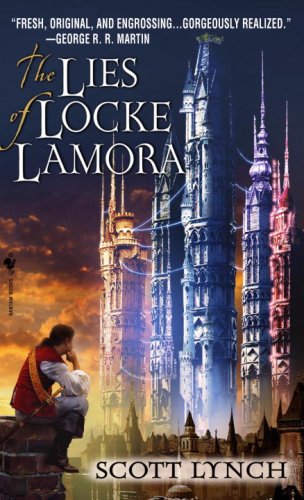
LOCKE LAMORA TV series in the works: update
A couple of years ago, there was a rumour that Scott Lynch's The Lies of Locke Lamora (and presumably the rest of the Gentleman Bastard series) was going to be adapted for television. The novel had previously been optioned for a movie before it had even been released, but after several years in development hell the rights lapsed.
At an event in Santa Fe this week, writer Ryan Condal is reported to have said he is working on a pilot script for a TV series based on the novel. Condal is the writer of the pilot for The Sixth Gun, a potential TV series based on the comic books by Cullen Bunn and Brian Hurtt. NBC passed on the series, but the pilot has been aired in several locations and seems to have gone down well. Condal also wrote the script for the new Hercules movie starring Dwayne Johnson, due out in July.
When asked about the rumour, Scott Lynch replied:
At an event in Santa Fe this week, writer Ryan Condal is reported to have said he is working on a pilot script for a TV series based on the novel. Condal is the writer of the pilot for The Sixth Gun, a potential TV series based on the comic books by Cullen Bunn and Brian Hurtt. NBC passed on the series, but the pilot has been aired in several locations and seems to have gone down well. Condal also wrote the script for the new Hercules movie starring Dwayne Johnson, due out in July.
When asked about the rumour, Scott Lynch replied:
Hmmmmmmmmmmmmmmmmmmmmmmmmmmmmmmmmmmmmmmmmmmmmmmm."I can neither confirm nor deny the denial or confirmation of anything potentially requiring denial or confirmation."
Tuesday, 20 May 2014
Cover art for Steven Erikson and Robert Holdstock
Tor Books in the USA have unveiled a rough mock-up of the cover art for Steven Erikson's next novel. Willful Child is a comic SF novel which riffs on Star Trek.
The blurb is as follows:
Steven Erikson's next Malazan novel, Fall of Light, is due for release in 2015. His collaborator Ian Cameron Esslemont will release his new Malazan novel, Assail, on 17 July this year.
Meanwhile, Gollancz are adding Robert Holdstock's seminal fantasy novel Mythago Wood to its Fantasy Masterworks range, with a striking new cover image.
Mythago Wood was originally published in 1984 and has attracted considerable critical acclaim since its release, least of all by me.
The blurb is as follows:
A wickedly entertaining spoof SF space adventure by Steven Erikson, a life-long 'Star Trek' fan and author of the multi-million copy selling 'The Malazan Book of the Fallen' series.
These are the voyages of the starship, A.S.F. Willful Child. Its ongoing mission: to seek out strange new worlds on which to plant the Terran flag, to subjugate and if necessary obliterate new life life-forms, to boldly blow the...
And so we join the not-terribly-bright but exceedingly cock-sure Captain Hadrian Sawback - a kind of James T Kirk crossed with 'American Dad' - and his motley crew on board the Starship Willful Child for a series of devil-may-care, near-calamitous and downright chaotic adventures through 'the infinite vastness of interstellar space'...
The bestselling author of the acclaimed Malazan Book of the Fallen sequence has taken his life-long passion for 'Star Trek' and transformed it into a smart, inventive and hugely entertaining spoof on the whole mankind-exploring-space-for-the-good-of-all-species-but-trashing-stuff-with-a-lot-of-hi-tech-kit-along-the-way type over-blown adventure. The result is this smart. inventive, occasionally wildly OTT and often very funny novel that deftly parodies the genre while also paying fond homage to it.
Steven Erikson's next Malazan novel, Fall of Light, is due for release in 2015. His collaborator Ian Cameron Esslemont will release his new Malazan novel, Assail, on 17 July this year.
Meanwhile, Gollancz are adding Robert Holdstock's seminal fantasy novel Mythago Wood to its Fantasy Masterworks range, with a striking new cover image.
Mythago Wood was originally published in 1984 and has attracted considerable critical acclaim since its release, least of all by me.
DUNGEONS AND DRAGONS 5th Edition launch details given
Wizards of the Coast have detailed their launch plans for the 5th Edition of Dungeons and Dragons. It's been confirmed that the name 'D&D Next' was just a placeholder and has now been ditched: the game will officially just be called D&D but '5th Edition' is an informal description for it.
The launch schedule is as follows:
15 July: D&D Starter Set
19 August: Player's Handbook, Hoard of the Dragon Queen (adventure)
30 September: Monster Manual
21 October: The Rise of Tiamat (adventure)
19 November: Dungeon Master's Guide
Wizards of the Coast and Hasbro are betting a lot on the release of the new edition, especially as their plans for a tie-in movie franchise were torpedoed by a legal challenge by the previous rights-holders. 4th Edition, release in 2008, was a financial failure (after an initially promising start) and its mixed critical reception tore the core D&D fanbase apart. Many D&D fans have moved onto games like Pathfinder, 13th Age and Numenera, not to mention various 'retroclones' (games by third parties based heavily on older editions of D&D). The high price of 5th Edition ($50 each for the rulebooks and $30 for the adventures) isn't likely to do much to tempt them back.
One factor in D&D's favour is that its primary competition (and the pen-and-paper RPG market-leader for the last few years), Pathfinder, has now been going for over five years and is starting to get a little long in the tooth. With no proper second edition on the horizon for that game, D&D 5th Edition may tempt some fans to at least take a look. However, if 5th Edition fails to do well, we might be looking at the retirement of the D&D game for some time to come.
The launch schedule is as follows:
15 July: D&D Starter Set
19 August: Player's Handbook, Hoard of the Dragon Queen (adventure)
30 September: Monster Manual
21 October: The Rise of Tiamat (adventure)
19 November: Dungeon Master's Guide
Wizards of the Coast and Hasbro are betting a lot on the release of the new edition, especially as their plans for a tie-in movie franchise were torpedoed by a legal challenge by the previous rights-holders. 4th Edition, release in 2008, was a financial failure (after an initially promising start) and its mixed critical reception tore the core D&D fanbase apart. Many D&D fans have moved onto games like Pathfinder, 13th Age and Numenera, not to mention various 'retroclones' (games by third parties based heavily on older editions of D&D). The high price of 5th Edition ($50 each for the rulebooks and $30 for the adventures) isn't likely to do much to tempt them back.
One factor in D&D's favour is that its primary competition (and the pen-and-paper RPG market-leader for the last few years), Pathfinder, has now been going for over five years and is starting to get a little long in the tooth. With no proper second edition on the horizon for that game, D&D 5th Edition may tempt some fans to at least take a look. However, if 5th Edition fails to do well, we might be looking at the retirement of the D&D game for some time to come.
Sunday, 18 May 2014
Batman: The Animated Series
In 1992 Warner Brothers Animation capitalised on the success of the Tim Burton Batman films with a new animated series which took its cue from those movies in terms of visual design. The result was one of the most acclaimed cartoon series of all time, Batman: The Animated Series. It ran for three years and spawned a number of spin-off films and sequel series, not to mention the entire DC Animated Universe.
The series was immensely successful for three key reasons. The first is its visual design, which moves away from the traditional primary colour aesthetic of cartoons to something much darker. This was achieved by painting light colours on black backgrounds rather than vice versa and setting most of the action at night. The art style also draws heavily from the Burton movies' mixture of art deco and retro design with modern technology. Stylistically, Batman may be one of the coolest and visually engaging series ever made.
The second key to success is the writing. Whilst the show occasionally fumbles with a fairly obvious cops 'n' robbers story or an episode more suited to the 1960s Batman series, for most of the time the writing is pretty smart. Whilst overt blood or scenes of death are avoided, the show also doesn't hold back on showing the psychological damage the characters have received and even manages to turn certain characters - Mr. Freeze most notably - into tragic figures. This extends to Batman himself, who suffers occasional bouts of trauma resulting from the murder of his parents. One episode imagines a fantasy world in which Bruce Wayne's parents lived and is appropriately tragic. The series also does a good job of hitting the right note of moral ambiguity, such as in Bruce Wayne's friendship with the doomed Harvey Dent and the depiction of Catwoman as both an ally and an enemy.
The third element of success is the voice acting. It's a remarkable feat given competition such as Jack Nicholson and Heath Ledger, but Mark Hamill's Joker is now widely considered definitive for his hitting of just the right note of demented insanity in his portrayal of the character. Kevin Conroy's Batman is also terrific, particularly his ability to adjust his performance so that Wayne and Batman have somewhat different voices and people don't recognise him immediately (an idea that carries on into the Nolan films and Christian Bale's performance). One-off guest stars are also excellent, with Adam West (who played Batman in the 1960s TV series) relishing a chance to give a serious performance as a childhood TV hero of Bruce Wayne's who helped inspire him to become Batman.
Episodes are fast-paced and engaging, action-packed enough to entertain children but with enough funny lines and smart moments of character-building to keep adults engaged. However, the show does suffer from a relaxed attitude to continuity. Aside from a few elements (Harvey Dent appearing several times before turning into Two-Face), the show doesn't have much of a developing story and characters appear and disappear randomly, particularly Robin. The show also mixes in-depth origin stories for some villains with others showing up and Batman apparently having known them for years.
The absence of heavy continuity means it's a lot easier to dip in and enjoy the show without having to pay too much attention to details, but it also means some of the much more complex character development of later animated series is missing.
Batman: The Animated Series (****) is a highly watchable and enjoyable show with or without kids, with some beautiful artwork and terrific writing. The absence of more serialised storytelling means some storylines and characters are not fleshed out as much as might be wished, but overall this is an animated series that has aged very well and is worth checking out.
The series is available now in the UK (Volume 1, Volume 2, Volume 3) and USA (Volume 1, Volume 2, Volume 3).
The series was immensely successful for three key reasons. The first is its visual design, which moves away from the traditional primary colour aesthetic of cartoons to something much darker. This was achieved by painting light colours on black backgrounds rather than vice versa and setting most of the action at night. The art style also draws heavily from the Burton movies' mixture of art deco and retro design with modern technology. Stylistically, Batman may be one of the coolest and visually engaging series ever made.
The second key to success is the writing. Whilst the show occasionally fumbles with a fairly obvious cops 'n' robbers story or an episode more suited to the 1960s Batman series, for most of the time the writing is pretty smart. Whilst overt blood or scenes of death are avoided, the show also doesn't hold back on showing the psychological damage the characters have received and even manages to turn certain characters - Mr. Freeze most notably - into tragic figures. This extends to Batman himself, who suffers occasional bouts of trauma resulting from the murder of his parents. One episode imagines a fantasy world in which Bruce Wayne's parents lived and is appropriately tragic. The series also does a good job of hitting the right note of moral ambiguity, such as in Bruce Wayne's friendship with the doomed Harvey Dent and the depiction of Catwoman as both an ally and an enemy.
The third element of success is the voice acting. It's a remarkable feat given competition such as Jack Nicholson and Heath Ledger, but Mark Hamill's Joker is now widely considered definitive for his hitting of just the right note of demented insanity in his portrayal of the character. Kevin Conroy's Batman is also terrific, particularly his ability to adjust his performance so that Wayne and Batman have somewhat different voices and people don't recognise him immediately (an idea that carries on into the Nolan films and Christian Bale's performance). One-off guest stars are also excellent, with Adam West (who played Batman in the 1960s TV series) relishing a chance to give a serious performance as a childhood TV hero of Bruce Wayne's who helped inspire him to become Batman.
Episodes are fast-paced and engaging, action-packed enough to entertain children but with enough funny lines and smart moments of character-building to keep adults engaged. However, the show does suffer from a relaxed attitude to continuity. Aside from a few elements (Harvey Dent appearing several times before turning into Two-Face), the show doesn't have much of a developing story and characters appear and disappear randomly, particularly Robin. The show also mixes in-depth origin stories for some villains with others showing up and Batman apparently having known them for years.
The absence of heavy continuity means it's a lot easier to dip in and enjoy the show without having to pay too much attention to details, but it also means some of the much more complex character development of later animated series is missing.
Batman: The Animated Series (****) is a highly watchable and enjoyable show with or without kids, with some beautiful artwork and terrific writing. The absence of more serialised storytelling means some storylines and characters are not fleshed out as much as might be wished, but overall this is an animated series that has aged very well and is worth checking out.
The series is available now in the UK (Volume 1, Volume 2, Volume 3) and USA (Volume 1, Volume 2, Volume 3).
Subscribe to:
Posts (Atom)


