Showing posts with label buffy the vampire slayer. Show all posts

Friday, 5 June 2026

RIP Anthony Stewart Head

The sad news has broken that actor and musician Anthony Stewart Head has passed away at the age of 72, following complications developing from pneumonia. Head was known to multiple generations for numerous roles on stage and screen. However, he will almost certainly be best-remembered for playing the role of Rupert Giles on Buffy the Vampire Slayer (1997-2003).

Head was born in Camden, London in 1954. The son of documentary film-maker Seafield Head and actress Helen Shingler (as well as the younger brother of singer Murray Head), unsurprisingly he chose a career in the spotlight. He studied at LAMDA (the London Academy of Music and the Dramatic Arts) before making his stage debut in the 1970s. He made his TV debut in 1978 in the World War II drama series Enemy at the Door.

As well as acting, Head was noted for his singing voice. He spent some time in the musicals Godspell and The Rocky Horror Show, and provided backing vocals for the bands Red Box and Two Way in the 1980s.

Head made his major breakthrough in an unconventional way. In 1987 he went up for what appeared to be a small role in a TV advertising campaign for coffee company Nescafe. The campaign saw a series of adverts forming a will-they, won't-they romance between Head's character and Sharon Maughan's. Surprisingly, the advertising campaign (which ran until 1993) caught the imagination of the country and turned Head almost overnight into a sex symbol. The advertising campaign transferred to the United States, where the coffee company was known as Taster's Choice, with both Head and Maughan reprising their roles (albeit this time with American accents). The campaign opened doors for Head in the USA and he started to be offered work in American television.

In 1996 Head auditioned for the role of the Eighth Doctor for the Doctor Who TV movie, losing out to Paul McGann. Despite losing the main role, Head soon began contributing to the franchise by voicing webcasts and audio dramas.

In 1996, Head was simultaneously cast in pilots for two shows, one in the UK and one in the USA: Jonathan Creek and Buffy the Vampire Slayer. Both shows went on to be long-running, smash-hit successes but Head could only be in one of them full-time. Despite the complications of filming in Los Angeles whilst his family was based in the UK, he picked Buffy, his second major breakout hit.

In Buffy, Head played Rupert Giles, the "Watcher" who trains and mentors the titular Slayer (played by Sarah Michelle Gellar), succeeding the role played by Donald Sutherland in the original film. He originally played the role as a stiff upper-lift British stereotype but as the show continued, his character's darker backstory was explored in some detail, revealing a rougher, rock-and-roll origin as a more morally dubious magic-user known as "Ripper." Head was able to use his more normal speaking voice for this version of the character, as opposed to his posher voice as the adult Giles.

Head played the role for five full seasons and into the sixth. Missing his family, Head switched from a regular to a recurring role, appearing multiple times through the sixth and seventh seasons before joining Buffy for her final battle in the series finale. Some scenes in the early seventh season were even shot at Head's actual house in the UK to accommodate his schedule. Buffy also allowed him to demonstrate his singing voice, singing The Who's "Behind Blue Eyes" in a Season 4 episode before playing a key role in the Season 6 musical, Once More With Feeling.

Buffy made Head a worldwide star and he got regular job offers for both sides of the Atlantic, though he preferred to remain in the UK. Recurring roles on My Family and Monarch of the Glen followed, along with another highly memorable role playing the British Prime Minister in Little Britain, playing the straight man to David Walliams' deranged assistant. 

In 2005 Head continued his association with Doctor Who by narrating documentaries covering the return of the show to television. In 2006 he played the villain Mr. Finch in the episode School Reunion, opposite David Tennant and Billie Piper. The story was notable for reintroducing Elisabeth Sladen as Classic Who companion Sarah Jane Smith, but Head's villainous turn won praise as well.

In 2007, Head was in advanced talks with the BBC and Fox to reprise his role as Rupert Giles in a UK-set Buffy spin-off show called Ripper. The planned BBC-Fox co-production would have seen Giles investigating smaller-scaled supernatural mysteries in Britain, with the possibility for occasional appearances by his Buffy co-stars. However, the BBC and Fox could not agree on terms, particularly an episode count that would satisfy both parties, as well as debates over the tone of the series.

In 2008, Head was cast as King Uther Pendragon in the first four seasons of the BBC fantasy series Merlin. Uther is the King of Britain who is driven by an utter hatred of magic, forcing the young Merlin to operate undercover in his mission to help the young Prince Arthur achieve his destiny. The character is initially presented as a villain but Head provided him with more depth and explanation for his motivations.

Through the 2010s Head made frequent appearances in guest roles in television. In 2020 he achieved another notable success by playing the villainous role of Rupert Mannion on Ted Lasso.

It is unusual for an actor to embody one high-profile, breakout role in a career, and it is notable that Head managed to achieve so many. His coworkers seem to have been perennially unified in singing his praises as a decent and hard-working actor who welcomed collaboration and enjoyed being part of successful ensembles. He will certainly be missed by multiple generations of TV fans. He is survived by his daughters Emily and Daisy Head, both successful actresses.

Saturday, 21 March 2026

RIP Nicholas Brendon

News has sadly broken of the passing of Nicholas Brendon, who was best-known for playing the role of Xander Harris on Buffy the Vampire Slayer.

Brendon was born in Los Angeles in 1971 and was an identical twin. As well as his slightly older twin brother Kelly Donovan, he had two younger brothers. He developed a stutter as a child, which badly impacted his self-confidence, and pursued acting as a way of managing the condition, abandoning plans to become a professional baseball player. His initial attempts to break into acting ended in failure, so he considered retraining in medicine.

A second attempt at acting saw Brendon audition for the pilot for Buffy the Vampire Slayer in late 1995. Cast as Xander Harris, the high school nerd who develops a crush on newly-arrived Buffy Summers (Sarah Michelle Gellar) only to discover she is the Slayer, the prophesised destroyer of vampire-kind, Brendon retained the role when it went to series, entering production in 1996 and finally airing (as a mid-season replacement) in 1997.

Nicholas Brendon appeared in all seven seasons of Buffy, until the show ceased airing in 2003. His character was notable for not possessing any special powers or skills, instead presenting the "ordinary guy" perspective on events. He was also somewhat the stand-in for creator Joss Whedon, sharing Whedon's interest in comic books and movies. Xander's nerdish persona was somewhat at odds with Brendon's tall good looks, so the show pivoted with Xander dating the popular Cordelia (Charisma Carpenter) in the second and third seasons before hooking up with immortal ex-demon Anya (Emma Caulfield) in Season 4. Xander also became an effective fighter against the forces of evil. Several episodes focused on his character development, arguably the most notable being in Season 3's The Zeppo when he saves the day whilst his super-powered friends, busy with a world-ending threat, are otherwise occupied. In later seasons he gets an ordinary job (in construction) and develops impressive skills in carpentry and design. One episode also saw Xander split into two identical people, which allowed Nicholas and his twin brother Kelly to work together (some fans, unaware that Brendon was a twin, thought the show had demonstrated amazing vfx skill instead). Xander's crowning moment of glory comes in the Season 6 finale when he saves Sunnydale and possibly the world from Willow (Alyson Hannigan) after she is consumed by darkness. The show ends with Xander recovering from Anya's death and his loss of an eye in the final battles against the forces of evil.

Brendon went on to play the recurring role of Kevin Lynch on Criminal Minds, appearing from the third through tenth seasons from 2007 to 2015 in 21 episodes. He also played the main role of Seth Richman in Kitchen Confidential in 2005-06, and the recurring role of Lee McHenry in four episodes of Private Practice in 2010-11. He chalked up multiple film roles, the most notable being in comedy-horror film Psycho Beach Party (2000) alongside Amy Adams and Lauren Ambrose.

Nicholas Brendon also toured on the Buffy convention circuit, but struggled with depression and alcoholism, attending rehab several times. He married and divorced twice, and was arrested several times. He went on Dr. Phil twice to discuss his issues. He also had other health issues, requiring spinal surgery in 2021 and suffering a heart attack in 2022.

There's no denying that Nicholas Brendon had a troubled life, and had a lot of problems after his brush with fame on Buffy in trying to further his career. However, his family reported that new antidepressant medication seemed to be working in the last few years of his life, he had avoided some of the problems that earlier afflicted him and he had found a new career as an artist. It appears he may have found some peace in his last few years.

Saturday, 14 March 2026

Hulu passes on BUFFY THE VAMPIRE SLAYER sequel series after shooting a pilot

Actress-producer Sarah Michelle Gellar has confirmed via Instagram that Hulu has passed on the Buffy the Vampire Slayer legacy sequel series, New Sunnydale. The proposed series filmed a pilot last year with Gellar reprising her role as Buffy Summers and directed by Chloe Zhao.

Buffy the Vampire Slayer aired 144 episodes across 7 seasons from 1997 to 2003 and had a successful spin-off show, Angel. The show also spawned numerous spin-off novels and comic books. Gellar had always resisted attempts to revisit the show, but changed her mind after rewatching the show with her daughters during the COVID lockdown.

New Sunnydale was going to see the town of Sunnydale, destroyed in the original series finale, rebuilt in proximity to the Hellmouth, the old gateway of evil that caused most of the trouble in the original show. A new Slayer would be called in the form of Ryan Kiera Armstrong (Star Wars: Skeleton Crew), with Buffy on hand as well. It was unclear if Buffy was going to act as a mentor to the younger Slayer or what the precise format would be, but Armstrong's character would still be in school and would have a network of friends, allies and frenemies similar to the original show.

Only Gellar was contracted to reprise her role from the original show, but if it had gone to series, there were plans to bring back other characters as well.

Possibly in the future a different pitch might have better luck at getting off the ground.

Saturday, 26 July 2025

BUFFY THE VAMPIRE SLAYER legacy sequel show announces main cast

The Buffy the Vampire Slayer reboot pilot is moving ahead at Hulu, with the streamer announcing the show's primary cast in recent days.

Sarah Michelle Gellar is indeed returning to her signature role of Buffy Summers, whom she played over the original show's seven seasons and 144 episodes from 1997 to 2003, as well as making additional appearances in spin-off Angel. Gellar is also an executive producer on the new show. She was resistant to returning to the role for many years, but apparently changed her mind after rewatching the original show with her teenage children. It is unclear if she'll be a series regular, recurring actor or even just a guest star in the pilot alone.

15-year-old Ryan Kiera Armstrong (one of the best performers in Star Wars: Skeleton Crew) has been cast as the series lead. Armstrong, who has also appeared in American Horror Story, IT: Chapter Two and Black Widow, will be playing a new Slayer who is told she has to save the world from the forces of darkness.

In the original Buffy, only one Slayer was "active" at any one time, imbued with super-strength and superior reflexes to take on the vampires. Buffy's brief "death" at the end of Season 1 allowed a second Slayer to become active (first Kendra and then Faith). At the conclusion of Season 7, Buffy was able to change the laws of reality so every single "potential" Slayer could become a full Slayer immediately, forming an entire army to save the world. Whether this change was permanent was unclear (though spin-off comics suggested it was).

The other announced cast members are Faly Rakotohavana as Hugo, Ava Jean as Larkin, Sarah Bock as Gracie, Daniel di Tomasso as Abe and Jack Cutmore-Scott as Mr. Burke.

Nora Zuckerman and Lila Zuckerman are the writers, showrunners and executive producers. Chloé Zhao will direct the pilot and produce. Fran Kuzui and Kaz Kuzui, who produced both the TV series and the original 1992 movie and own the rights, are returning as producers. Dolly Parton and her Sandollar production company will also produce; they worked on the original TV series.

At the moment only Gellar has been confirmed to return from the original cast, though the door is apparently open to many of the others returning if the pilot gets a full season pickup. Sadly, this will not be possible for Michelle Trachtenberg (who played Buffy's younger sister Dawn), who passed away in February.

The pilot is expected to shoot over the next couple of months with Hulu expected to make a decision on a full season order shortly after that.

Wednesday, 26 February 2025

RIP Michelle Trachtenberg

The surprising news has broken of the passing of Buffy the Vampire Slayer actress Michelle Trachtenberg, at the far-too-young age of 39.


Born in New York City in 1985, Trachtenberg started her acting career at just the age of three, appearing in commercials. She played Nona Mecklenberg on the Nickelodeon series The Adventures of Pete & Pete in 1994-96, and Lily Montgomery on the soap opera All My Children. She made her breakthrough in the successful movies Harriet the Spy (1996) and Inspector Gadget (1999). She picked up additional notable roles in the film EuroTrip (2004) and Mysterious Skin (2004) as well as recurring roles on Six Feet Under and Gossip Girl.

Trachtenberg's most notable genre role was playing Dawn Summers on Buffy the Vampire Slayer. She joined the show in the first episode of its fifth season in 2000 and remained on the show until its conclusion in 2003. Dawn is introduced as the sister of protagonist Buffy Summers, which is interesting because Buffy is repeatedly noted to be an only child in the first four seasons and Dawn is not mentioned, nor appears. The mystery of where Dawn came from, and why Buffy and her friends act as if she's been around all along, becomes a major plot point for the series. Trachtenberg's arrival on the show was controversial with fans, but after the storyline played out, she had a warmer reception from the fanbase. Trachtenberg noted making the show was hard work and she clashed with showrunner Joss Whedon; according to several actors' claims, his bullying behaviour meant he was not allowed to be alone with Trachtenberg on set, something he later disputed. Trachtenberg credited other actors with having her back, especially Sarah Michelle Gellar (Buffy).

Tragically, Trachtenberg's passing comes a few weeks after it was confirmed a new iteration of Buffy was in development with Gellar attached, leading to speculation that Trachtenberg might be able to reprise her role as Dawn.

During her later years, Trachtenberg mostly switched to guest roles on TV shows, as well as appearing in the Gossip Girl revival in 2022-23. Trachtenberg also experienced health complications, undergoing a liver transplant in 2024.

Co-stars including Ed Westwick, Rosie O'Donnell, Kim Cattrall, James Marsters, David Boreanaz, Kenan Thompson, Shawn Ashmore and Melissa Gilbert have paid tribute to her. Likely more tributes will be made in the coming days.

Trachtenberg was a gifted actress at a young age, and made her role on Buffy the Vampire Slayer work under difficult circumstances. She passed away at far too young an age, and will be missed.

Tuesday, 4 February 2025

BUFFY THE VAMPIRE SLAYER legacy sequel series in development

A new Buffy the Vampire Slayer project is in development at Hulu. This is not really surprising, with multiple attempts to resurrect the franchise having been discussed since not long after it concluded the first time around in 2003. However, this attempt appears to be closer to a pilot deal than any of the others, and is the first to have Buffy herself, Sarah Michelle Gellar, attached in an official capacity.


Buffy the Vampire Slayer started as a movie script written by Joss Whedon. The resulting film, released in 1992 and starring Kristy Swanson and Donald Sutherland, did poorly at the box office but found a dedicated cult fanbase on home video. This led to a TV show being picked up by Fox in 1996, for airing on The WB starting the following year, with Whedon as showrunner and Gellar in the starring role. Buffy the Vampire Slayer ran for seven seasons (ending in 2003) and 144 episodes, winning both critical and commercial acclaim for its canny mixture of supernatural fantasy, horror, drama and light comedy. Its spin-off show, Angel, ran for five seasons and 110 episodes from 1999 to 2004.

Although the story continued in comics, attempts to resurrect the franchise in other formats failed. Spin-offs focusing around the characters of Spike (James Marsters), Giles (Tony Head) and Faith (Eliza Dushku) were in development at one time or another, but none made it off the ground.

In 2010 an attempt to reboot the franchise as a new movie series foundered, whilst a 2018 attempt at a total reboot with Whedon producing and Monica Owusu-Breen showrunning also failed to gain traction. Whedon's subsequent fall from grace for alleged toxic behaviour on the sets of his various projects seemed to stall any further development on projects closely associated with his name.

Sarah Michelle Gellar distanced herself from the show after its conclusion, not attending conventions and gently discouraging speculation over a reboot or sequel with herself involved. She starred in two Scooby Doo movies with husband Freddie Prinze Jr., as well as Cruel Intentions and The Grudge, and occasional TV work, most recently Paramount+'s Wolf Pack. She has mainly focused on business interests outside of television and film. However, she recently spoke of Buffy more warmly having sat down to watch the show with her own children for the first time, and found the experience rewarding.


The new iteration of the show being discussed is a successor series which will focus on a new regular cast, with Gellar's Buffy and possibly other actors from the original series appearing in recurring roles. Oscar-winner Chloé Zhao (EternalsNomadland) is being touted as a producer, writer and possibly director for some episodes. Nora Zuckerman and Lila Zuckerman (Poker Face, Prodigal SonsAgents of SHIELD, Fringe) will produce and showrun. Rights-holders Fran Kuzui and Kaz Kuzui (who produced the 1992 film) will produce alongside Dolly Parton, whose production company worked on the original series. Whedon is not involved at this time.

The original Buffy the Vampire Slayer ended with Buffy finding a way of creating more Slayers, allowing others to take over the burden of saving the world and allowing her to have a vacation. Some of the spin-off media posited that Buffy would effectively become a mentor to a whole new generation of Slayers, and working more in the capacity of a general directing her forces against larger threats. Whether this project would go in a similar direction, or return to the status quo of a single Slayer, remains to be seen.

Sunday, 27 October 2024

SLAYERS & VAMPIRES: THE ORAL HISTORY OF BUFFY THE VAMPIRE SLAYER & ANGEL by Edward Gross and Mark A. Altman

In 1997, Buffy the Vampire Slayer started airing. Over the course of seven seasons, it became a pop culture phenomenon and one of the most critically-acclaimed network TV shows of all time. It spawned a hit spin-off show, Angel, which ran for five seasons and did almost as well. The shows introduced a mixture of comedy, horror and character drama that became a template for many series and movies that followed them, but creator Joss Whedon would become an increasingly polarising and controversial figure.


The story of the development of Buffy and Angel has been told before, but Mark Altman and Edward Gross take a slightly difference tack with this 2017 volume by leaning heavily on oral accounts provided by the writing staff and some of the actors. This is a similar format to their earlier two Star Trek books and subsequent volume on Battlestar Galactica (and they have since produced similar volumes on James Bond, Star Wars and John Wick).

Reading in 2024, the book has a slightly different feel due to the well-publicised allegations from 2021 that Whedon created a toxic working atmosphere on Buffy and Angel before he departed both shows (the final two seasons of Buffy were helmed by Marti Noxon and Angel was overseen by a succession of different showrunners, including David Greenwalt, Tim Minear and Jeffrey Bell). These allegations followed earlier complaints that Whedon had bullied castmembers on the 2017 film Justice League, which he'd overseen reshoots on. This book, which just predates those allegations, is surprisingly candid on the fact that working conditions, particularly on Buffy, were often difficult and sometimes unprofessional.

Compared to the authors' other book on Battlestar, this tome is a little more disappointing. This is partially because it tries to cram much more in: twelve seasons of Buffy and Angel, not to mention some bleed-over into discussions about Firefly (the production and abrupt cancellation of which had consequences for Whedon's other shows), as opposed to six seasons of Battlestar (the four for the newer version of the show, the original and Galactica 1980). This means there is less time for discussion of individual episodes, with only the most prominent episodes getting a lot of coverage. Unfortunately there's a lot of repetition here for anyone who's familiar with coverage of the show from web articles and magazine articles back in the day.

There's also an issue in that actors seem much less willing to take part in the project: there's a much greater reliance here on stock interviews rather than new interviews undertaken just for this book. Only Charisma Carpenter and James Marsters get a lot of new discussion time, Nicholas Brendon gets almost none and stars Sarah Michelle Gellar and David Boreanaz are primarily quoted from pre-existing interviews. This absence sees some Buffy critics called in to discuss the show's meaning and accomplishments, and no offence to their expertise, but there's dozens of books out there which have the space to do that a lot better.

The book does do better with the writers' contributions, with the likes of Tim Minear and Dave Greenwalt having a lot to say about television writing and production. Whedon himself gets quoted a fair bit but did not give new interviews for the book, unlike Ron Moore for the Battlestar tome, which makes for a less compelling read. There is some interesting stuff about the mythologising of Whedon, though, and even his most ardent friends and supporters in the book acknowledge he could be mercurial and difficult to work with.

The most fascinating material comes from interviews with Carpenter, who acknowledges her own faults on-set (getting a new haircut or tattoo mid-filming of an episode) and struggling with self-confidence issues, whilst struggling with her treatment by Whedon, who could be kind and generous to her one moment (like giving her a lead role on Angel in the first place) and harsh and judgemental the next.

There is much in the book that is interesting: Minear's journey in adapting to the writing of the show and driving it forwards, and his take-no-prisoners attitude which fascinated Whedon as much as it could annoy other people, is particularly noteworthy. The book also has a genuine emotional moment as it recounts Glenn Quinn's difficulties working on the show and the attempts by co-stars David Boreanaz and Christian Kane to help him out which ultimately did not pan out, with Quinn dying of an accidental drug overdose in 2002.

Compared to the Battlestar tome, Slayers & Vampires: The Complete, Uncensored, Unauthorized, Oral History of Buffy the Vampire Slayer & Angel (***½) falls a little flat as it has nowhere near as many cast and crew contributing new material to it, forcing it to fall back on well-known anecdotes and interviews, as well as critical analyses that doesn't feel entirely appropriate to the book. There's also too many seasons and episodes to cover even in the generous 520 pages of material here (the Battlestar book gets 200 pages more, and it feels like the two franchises maybe should have inverted that). But there is enough new material, especially on the writing and production process of both shows, to make it worthwhile to established fans.

Thank you for reading The Wertzone. To help me provide better content, please consider contributing to my Patreon page and other funding methods.

Tuesday, 13 December 2022

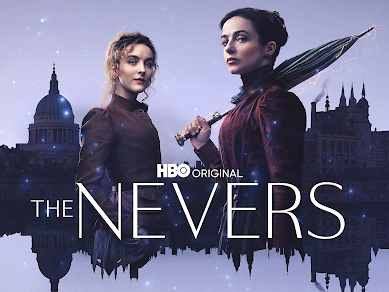
THE NEVERS cancelled at HBO

In not-entirely surprising news, HBO has cancelled its Victorian supernatural drama series The Nevers. However, it has more surprisingly made the move ahead of the broadcast of its second batch of episodes.

The Nevers was created by Joss Whedon and was in development at HBO for some considerable time before it entered production in 2019. However, its development and production were overshadowed by accusations of bullying and unpleasant behaviour by Joss Whedon on the set of the film Justice League (2017), for which Whedon oversaw extensive reshoots. Warner Brothers initially sided with Whedon, but this became less tenable as more actors came forwards with stories of improper behaviour. Whedon abruptly resigned from working on The Nevers after principle photography on the first half of the first season (hugely complicated by the COVID pandemic) was completed but before it was edited.

The first half of the first season aired in May 2021 to a generally positive critical response, although again it was overshadowed by a second wave of allegations about Whedon, this time stemming from his work on Buffy the Vampire Slayer and Angel from 1996 to 2004, where again he was accused of bullying and toxic behaviour.

The critical and commercial reception to The Nevers - the show enjoyed reasonable first-season ratings on HBO - meant that HBO did undertake a salvage operation on the series, appointing Philippa Goslett as the new showrunner and teeing up ideas for a second full season. It appears that the original plan was to let the second half of the season air and then see if it had legs to go on without Whedon's influence. However, the recent merger of Warner Brothers and Discovery has led to many shows, some of them bigger than The Nevers, being cancelled for finance and business reasons rather than popularity ones. It's somewhat unsurprising that The Nevers was deemed much more expendable in this new environment.

Production of the second batch of episodes was fully completed and apparently news of the cancellation came early enough that they were able to craft the season finale into a full series finale. The second batch of episodes should air in 2023, although it's not entirely clear where: the existing episodes have been pulled from HBO Max (alongside those of Westworld). It looks like the episodes may resurface as part of the new ad-supported streaming service that Warner Brothers is reportedly developing.

Wednesday, 10 February 2021

Multiple BUFFY THE VAMPIRE SLAYER stars speak out against Joss Whedon

Multiple cast and crew who worked on the television series Buffy the Vampire Slayer and its spin-off series, Angel, have spoken out against showrunner/creator Joss Whedon, claiming he created a toxic and bullying atmosphere on set.

Charisma Carpenter, who played Cordelia Chase on three seasons of Buffy and the first four seasons of Angel, made the first statement earlier today, stating that Whedon threatened to fire her as a joke and made unflattering statements about her figure and personal appearance, including after she became pregnant in the fourth season of Angel. Carpenter had previously complained that Whedon had effectively fired her from Angel after she became pregnant with no discussion of finding ways of incorporating her pregnancy and allowing her to remain on the show, and Whedon resented her for forcing him to change his storyline for the series. She was killed off during a one-off appearance in Season 5 after being promised that she would not, in fact, be killed off.

Carpenter's statement was quickly picked up and boosted by Amber Benson, who played Tara in Seasons 4-6 of Buffy. Benson confirmed that the show had a toxic atmosphere as a result of Whedon's personality and bullying tactics.

The show's star, Sara Michelle Gellar, then made a brief Instagram statement in which she said she'd forever be proud to have her name associated with that of Buffy the Vampire Slayer, but not that of Joss Whedon.

Michelle Trachtenberg, who played Dawn Summers in Seasons 5-7 of Buffy, has also offered her support and said that Whedon's behaviour was "inappropriate." She later amended her statement to say that Whedon was not allowed to be alone with her in the same room during filming on Buffy.

Clare Kramer, who played the villainous Glory in Season 5 of Buffy, also offered her support for these reports.

The statements come after a year of allegations that Joss Whedon bullied and belittled actor Ray Fisher on the set of the 2017 movie Justice League (an allegation supported by co-star Jason Momoa). Wonder Woman actress Gal Gadot also reported some difficulties in working with Whedon. Buffy actor James Marsters, who played Spike on both Buffy and Angel and was briefly involved in developing a spin-off series, last year recounted Whedon reacting badly to Spike's popularity, feeling that he had to keep Spike on the show rather than facing a fan backlash and reacting poorly to the situation (at one point grabbing the actor and telling him that he was "dead").

Buffy stunt actor and coordinator Jeff Pruitt also reported last year that Whedon had started off the show well, but by Season 4 had become an "egomaniac" due to the success of the series and had resorted to bullying cast and crewmembers, even interfering in Pruitt's relationship with stuntwoman Sophia Crawford, which led to him quitting at the end of that season and Crawford the following season.

In 2017, Whedon's ex-wife Kai Cole posted an article claiming that Whedon was unfaithful to her with several actresses from his shows and was mentally abusive to her in the process. Whedon's representatives did not dispute this point.

Whedon's most recent project was a new TV series for HBO, called The Nevers. Work had been completed on the first six episodes of the series, which HBO is showing in April, but Whedon quit the show last November. A second batch of four to six episodes (delayed by the COVID pandemic) is progressing with replacement showrunner Philippa Goslett in charge.

It was reported last year that Whedon was in talks to rejoin the Marvel Cinematic Universe, which he'd quit following a falling-out with Marvel head honcho Isaac Perlmutter over the film Avengers: Age of Ultron. With Perlmutter removed from any responsibility for the films in favour of MCU producer Kevin Feige, Whedon was reportedly interested in stepping back into a role. However, one imagines this is now highly unlikely to happen.

This is potentially a developing story, and more if it emerges.

UPDATE: Anthony Stewart Head, who played Giles on all seven seasons of Buffy the Vampire Slayer, notes that he did not see any inappropriate behaviour on set but is fully supportive of the actors coming forwards. He notes that he was already a very experienced and relatively famous actor when he appeared in the show, so the power dynamics he had with Whedon were very different, and if he'd been aware of inappropriate behaviour he would have spoken out at the time.

Actor James C. Leary, who played the recurring role of Clem in the last three seasons of Buffy, has also voiced his support for those coming forwards.

Eliza Dushku, who played Faith in twenty episodes of Buffy and six of Angel, has voiced her support as well.

J. August Richards, who played Gunn in Seasons 2-5 of Angel and in a guest role in Season 1, has also spoken of his support for Charisma Carpenter.

James Marsters, who played Spike in Seasons 2 and 4-7 of Buffy and Season 5 of Angel, has added his support. He had previously reported unpleasant interactions with Whedon during the making of Buffy, particularly Whedon's anger over how popular Spike was and how he felt that interfered with his storytelling.

Marti Noxon, who was effectively the showrunner of Buffy the Vampire Slayer after Whedon stepped back to oversee Angel and Firefly as well, has also voiced her support.

Jose Molina, who worked as a writer and script editor on Firefly, alleges that Whedon liked to boast about bullying women in the workplace, in particular taking joy in making a female writer "cry twice in one meeting."

Adam Busch, who played Warren in Seasons 5 and 6 of Buffy the Vampire Slayer, has added his support to Charisma Carpenter.

Emma Caulfield, who played Anya on Seasons 3-7 of Buffy (and is currently playing Dottie on WandaVision), has also voiced her support.

David Boreanaz, who played Angel on the first three seasons of Buffy (and recurring in later seasons) and was the star of the spin-off show, has also offered his support to Charisma Carpenter.

Amy Acker, who played Fred on Angel and Whiskey on Whedon's later show Dollhouse, has offered her support as well.

Sunday, 24 November 2019

She Saved the World...a Lot: A BUFFY THE VAMPIRE SLAYER Retrospective

Originally airing between 1997 and 2003 (and loosely based on a 1992 movie), Buffy the Vampire Slayer was one of the most popular genre TV shows of the 1990s. Created and produced by Joss Whedon, the show spawned a larger franchise – the “Buffyverse” – which came to incorporate novels, video and board games and a canonical, eleven-year comic series which continued the story from the TV show. It also spawned a spin-off show, Angel, which ran from 1999 to 2004. Almost every book, TV show and movie featuring supernatural creatures in a modern setting published since 1997, from The Dresden Files to Sookie Stackhouse (itself adapted to TV as True Blood) to the Twilight series, lives in Buffy’s shadow.


Buffy started as a joke: Joss Whedon getting annoyed at yet another helpless young woman going down the wrong alley or trusting the wrong guy and getting killed by a (usually male) monster or serial killer. Working as a scriptwriter on the mega-hit sitcom Roseanne gave the very young Whedon some pull in Hollywood, so he wrote a spec script which started with the same scene, but this time the young woman defeats the monster and kills it in hand-to-hand combat. The resulting movie made some noise on release for its casting of the then-hot Luke Perry (from Beverly Hills 90210) and Kristy Swanson (seen as a potential up-and-comer) in the title role, and did okay at the box office. Whedon was unhappy with the final film, which had dramatically cut his script, removed most of the best lines and exorcised the final set-piece battle in which the school gym is spectacularly blown up. He was also extremely unhappy with Donald Sutherland’s performance and felt his vision for the film had been butchered, turned more into a comedy than the comedy-horror hybrid he’d envisaged. He moved on, becoming a script doctor working on films such as Twister, Speed and Toy Story, and tried to forget about the experience.

Unexpectedly, 20th Century Fox didn’t forget about it. The movie had performed perfunctorily at the box office but picked up a long tail on home video and rental, making a pleasing amount of money and working as a kitsch cult favourite, although not enough to justify a film sequel. Along with the film’s producers they worked on the idea of turning the film into an ongoing TV series instead and invited Joss back to write for the show and run it. Whedon agreed, surprising many in the business as he turned his back on the lucrative world of movies for TV, where he had much greater creative control instead. Whedon’s last film script at this time was the first draft of Alien: Resurrection, which was also butchered by the director and in rewrites, causing him to later remake the same idea (of a disparate crew of reluctant allies working on a transport ship in the future) as a TV show…but that’s another story.

Buffy the Vampire Slayer was produced by Fox but aired on the WB network, where it picked up very strong audience figures for the young channel. The show was a near-instant success, propelling its young and photogenic cast onto the covers of magazines worldwide. More startlingly, it attracted a degree of critical acclaim. After a few ropy opening episodes, the Season 1 finale and then most of Season 2 saw a huge uptick in the show’s critical reception, as Whedon took the show in unexpectedly dark directions.

The doomed relatonship between Buffy (Sarah Michelle Gellar) and Angel (David Boreanaz) provided the main dramatic thrust for the first three seasons of the show.

The show’s premise is broadly similar to the movie’s (which, confusingly, in the show canon is referenced only in the form of Whedon’s original script, not the final product). Into every generation is born a Slayer, one teenage girl in all the world who has the strength, speed and stamina to fight against the vampires, demons and other forces of darkness. When one Slayer dies another is called. An organisation known as the Watchers’ Council identifies potential Slayers before they are called and helps train and prepare them for the role, but in the case of Buffy Summers they completely miss the signs. Buffy thus has to train and learn how to be a Slayer at the same time as dealing with ordinary teenage concerns: dating, studying and family trauma (her parents have recently divorced).

For the show, Buffy relocates to Sunnydale, California, a fictional town which just happens to be built on top of the Hellmouth, a portal leading to a myriad of unpleasant hell dimensions. The Hellmouth has been relatively quiet for seventy years (although there’s still more supernatural activity than normal there) but has recently become more active due to the presence of the Master, a vampire lord who has been imprisoned nearby. As the Master’s prison weakens, so the Hellmouth gets more active and more weird stuff starts happening.

Buffy is aided in her task of guarding the Hellmouth by a new Watcher, Rupert Giles, and two friends who discover Buffy’s secret in her first week in her new high school: Xander Harris and Willow Rosenberg. This foursome forms the core of the “Scooby Gang.” Over the course of the seven seasons, there are numerous additions to and departures from the Gang, but this core group remains (mostly) constant. The presence of the Hellmouth helps the writers explain why Buffy is constantly coming up against weird creatures in the same location, the show lacking the budget to have her constantly on the road travelling to trouble spots (as is suggested is the normal life of a Slayer); the WB’s later supernatural, demon-hunting series (now on the CW), Supernatural, actually employs this idea instead.

The show’s initial focus is on action, with Buffy fighting a new “monster of the week” each episode, including crazed Inca mummies, a giant praying mantis (probably the nadir of the show’s episodes) and – apparently – a serial-killing sentient puppet. However, she also has a recurring problem in the form of the Master’s plan to break free and open the Hellmouth, thus ending the world (or flooding it with demons). The show also gives Buffy a potential love interest, Angel, a “reformed” vampire who has had his soul restored by a gypsy curse. The twelve-episode first season culminates in a final battle where the Master is defeated.

Although the later seasons are much longer (22 episodes apiece), the first season establishes the show’s basic format: a threat – the “Big Bad” – is established in the opening episodes, which at first is in the background and vague and then grows more powerful, usually becoming prominent by mid-season, where there is usually a twist or reversal which ups the stakes and drives the back half of the season. Buffy also has personal challenges to face at the same time, involving romance, her academic career or her family life. With some variations, each season of the show broadly follows this arc, with occasional moderate changes in format driven by events such as Buffy and her friends graduating from high school to college at the end of Season 3. Whedon chose this format over the “one big story unfolding across the entire series” approach favoured by one of his favourite shows, Babylon 5, because it gave greater closure to each season (making it less problematic if the show was unexpectedly cancelled). However, he later acknowledged this was somewhat contrived – a new threat showing up in September that was normally defeated by May, with there being no threat at all over the summer – and seeded in more long-running story arcs into the later seasons, whilst also including a series-long, ongoing threat in the spin-off show Angel (that of evil law firm Wolfram & Hart).

Spike (James Marsters) was an early-series villain who returned later on as a friend and ally.

The reasons for Buffy the Vampire Slayer’s commercial and popular success were obvious: the young and photogenic cast and the stories mixing action, drama, soap opera elements and romance. The reasons for its critical success were initially less clear; contemporary young dramas such as Charmed, Roswell and Dawson’s Creek seemed to be somewhat more risibly received by adult critics whilst Buffy was wowing them as early as the end of Season 1. The reasons for this are numerous. The first is that Buffy is the rare show that completely masters tonal variation, a hallmark of Joss Whedon’s work (who also does the same thing in Angel, Firefly and the two Avengers movies he worked on). Buffy is an intense teenage character drama one minute, an all-out action show the next and then a comedy. During and after Season 4 it also developed a nice line in unexpected experimentation, with one episode taking place almost completely without dialogue and another being a musical filled with original songs referencing and pushing forwards the plot.

The second is that the show has pretty good dialogue. Whedon – 32 when the first season aired – knew he wasn’t “down with the kids” so developed his own language cadence and lexicon for the show which both felt real (the weird teenager in-references and jokes feel genuine) but weren’t based on real contemporary slang, also preventing the show from dating. More cleverly, he was also able to make Giles sound like a genuine English guy (thanks to Whedon spending three years in the UK as a teenager) and developed more elaborate and flowery dialogue for the vampire characters who had lived for centuries.

The third is that Buffy is self-aware, and usually the first to poke fun at itself. Its premise and even the name of the show are batty and weird, and it leans into it. The fact that all vampires seem to inexplicably learn kickboxing in the time between dying and raising from the grave is noted, and Buffy’s tendency to give wonderfully uplifting speeches but which then can get a bit repetitive becomes a recurring gag in the final season. Giles’s tendency to get immediately knocked out by whatever threat has arisen is also noted, with the other characters starting to worry he’ll “wake up in a coma.” For those who think metacommentary in a TV show is a new thing, watching twenty-three-year-old episodes where characters mock the dramatic angst and doomed tragedy of the Angel/Buffy relationship can be amusing.

The fourth reason is that Buffy is a metaphor, and a successful one. The show uses the vampires, werewolves and supernatural creatures as reflections and stand-ins for the traumas of life, at first applied to teenagers and later to life in general. An unpopular girl is so fed up at being ignored and lonely that she literally fades out of view and becomes completely invisible. The most popular girl in the year, Cordelia, is constantly being complimented and having sycophants hang on her every word, but is lonely and unhappy until joining Buffy’s crew gives her a sense of purpose and fulfilment (despite Buffy’s group being considered weird rejects and outcasts at school) because they are actually achieving something. In Season 2, Buffy loses her virginity to Angel, inadvertently breaking his curse and turning him back into a vicious, amoral killer, a nod at the “nice guys” who turn into arseholes the second they get what they want from the girl. More controversially, numerous young, lonely and male students are shown dabbling with various dark arts to kill or hurt their fellow students, often after being rejected by female crushes. One even pulls out a gun in school, although this is to kill himself rather than his classmates, but this was so problematic in the wake of the Columbine massacre that the episode was delayed by several months.

The metaphors are usually reasonably elegant, but occasionally get preachy: Willow’s addiction to using magic in Season 6 is a worthwhile storyline, but is clumsily presented, with Willow visiting “magic dens” where people get off on doing spells like they’re 1960s acid-trippers. This wasn’t so much “on the nose” as “snapping the nose clean off.” Faith’s third season descent into being a “bad girl” is also pretty clichéd, saved only by Eliza Dushku’s performance and her later redemptive arc on Angel (which then feeds back into Buffy’s final season).

The relationship between Tara (Amber Benson) and Willow (Alyson Hannigan) was extremely popular with viewers, and the resolution to it remains controversial.

As Buffy went on it matured, and the audience matured with it. The final three seasons (the sixth, in particular) are sometimes criticised for going “too dark,” with Buffy embarking on an inappropriate, creepy and mutually destructive relationship with the vampire Spike (who, unlike Angel, doesn’t have a soul) and several popular supporting characters being killed off. In the case of Buffy’s mother, this felt necessary to drive a new wave of storylines about Buffy’s independence and making her stand alone, but in the case of the extremely popular Tara it felt less justified and more gratuitous (and problematic, with Tara being a then-rare example of a lesbian character in a happy relationship). 

The addition of Buffy’s “sister” (actually a magical construct) Dawn to the show also upset some fans, who felt it added an element of soap opera to the show and also contributed to the ever-expanding cast, which added some story variety but also dissipated the tight focus on the core foursome. Whedon certainly seemed to have issues jettisoning actors he’d befriended once their main contribution to the story was done, having the likes of Oz, Anya and even Spike hanging around for maybe a season too long apiece as he tried to work out what to do with them. The final season, which has about a dozen new recurring characters (between multiple villains, new allies and the “potential Slayers” Buffy takes under her wing) showing up, is particularly guilty of this. Another element which has aged poorly is Xander’s borderline sexism towards girls in the first season which thankfully improves dramatically in the second.

Buffy the Vampire Slayer isn’t perfect, but it’s one of those shows where the imperfections make it more interesting. It’s a show that tried to wear several hats simultaneously – action, comedy, romance, horror – and actually succeeded in doing so. It could be funny, scary and thought-provoking, and occasionally (in the case of the harrowing Season 5 episode The Body, comfortably one of the best episodes of television ever made) genuinely tear-jerking. It was also a show way ahead of its time in many respects, with the series doing metacommentary, genre savviness and social commentary arguably better than most shows attempting the same today.

Buffy has aged like a fine wine (apart from some of the dodgier effects and a half-arsed HD remaster which should be avoided like the plague) and is still richly compelling and entertaining television, the forerunner of so many modern shows, books and movies which have never quite managed to hit all the same notes simultaneously. If you’ve never seen it, I recommend giving it a whirl, and if it’s been a while since you last visited Sunnydale, you might be surprised at how welcoming the Hellmouth can be on a return trip.

Thank you for reading The Wertzone. To help me provide better content, please consider contributing to my Patreon page and other funding methods, which will also get you exclusive content weeks before it goes live on my blogs.

Wednesday, 6 March 2019

Buffy the Vampire Slayer: Season 7

For Buffy Summers, it's a strange sense of deja vu to see her sister Dawn starting high school at the newly-rebuilt Sunnydale High. Soon, however, an old enemy returns to Sunnydale and sets in motion a chain of events which threatens everything and everyone. Buffy has to become a leader as she never has before to stand against the threat, and the cost will be very high.


The cast of Buffy hit absolute rock bottom in the show's sixth season, a long and bleak journey from post-traumatic stress through self-realisation to catharsis via a lot of really bad relationship choices, several deaths and the world very nearly being destroyed. Season 7 opens with the fall-out from that season still being felt - Willow in recovery from her magic addiction, Spike trying to deal with his newly-acquired soul - but also with a bit of a back-to-basics feel.

There's a new Sunnydale High (unwisely built - in record time - on top of the old one and the Hellmouth) which Dawn is attending and where Buffy gets a job as a school counsellor, which is one of those genius ideas that the show proceeds not to do very much with. Early episodes of the season have a bit of a Season 1 feel, although this also includes, with the bemusing episode Him, an instalment that feels like Season 1 quality as well. The season is a bit rough in the early going with potentially solid story and character developments being undercut by filler episodes and some odd character choices, like reducing Spike to a raving loon for half the season and killing off fan-favourite side-characters for questionable story reasons.

The story does pick up with Conversations with Dead People, the season's best episode, in which characters are haunted by figures from their past (and yes, this episode bears more than a passing resemblance to Babylon 5's Neil Gaiman-written episode Day of the Dead) which leads to both character growth and also to pushing the main storyline on. By mid-season it's become clear that the true threat is an old enemy returning to destroy the world and the tension ratchets up a gear as Buffy assembles an army of new allies and older characters to face the threat. Spike also stops acting crazy, to everyone's relief.

Events then build to the epic season finale, taking in a few twists and turns along the way, including a memorable turn by Firefly's Nathan Fillion as a crazed evil preacher with superhuman (or subhuman) powers. This is all good stuff and it's a refreshing change of pace after the introspection of Season 6, although those who felt that in-depth psychological exploration of the characters in that season was a strength may be disappointed by the more obvious good-vs-evil struggles this season which dials back the intense character drama.

Buffy does at least stick the landing: the ending is thematically appropriate, rewarding for the characters and leaves the world on a good note, although some may bemoan a few perfunctory character deaths and a rather pointless apparent heroic sacrifice that had been undermined by news the character was moving to Buffy's sister show Angel. Beyond that, the ending and the final line are very nicely done.

Buffy the Vampire Slayer's seventh and final season (****) is a fine ending to the show. It's not the strongest season, but it does provide an appropriately epic finale to seven years of Slaying and it does give the show a nice coda. The season is available now as part of the complete Buffy the Vampire Slayer DVD box set (UKUSA).

Tuesday, 5 March 2019

Gratuitous Lists: The Twenty Best BUFFY THE VAMPIRE SLAYER Episodes

I recently rewatched Joss Whedon's 1990s supernatural drama Buffy the Vampire Slayer in its entirety for a pub quiz (our team came fourth, so that wasn't quite as successful as hoped), which was a great chance to re-appraise the show from the distance of twenty years or so. As a result, here's a Gratuitous List of (in my opinion) the twenty best episodes of the series.

The stories are not presented in quality order because at this level, there's not much between these episodes. This is the show firing at its very best and frankly all of these episodes are worth watching.


Prophecy Girl 
Season 1, Episode 12

The first season of Buffy had mostly contained “monster-of-the-week” episodes, linked together by a vague story arc about the evil Master trying to escape his prison under the town of Sunnydale. In the Season 1 finale, he succeeds, killing Buffy in the process.

Joss Whedon’s first time both writing and directing an episode is notable for elevating the entire feel of the show, both in scale (this is an epic-feeling episode, despite the low budget) and emotional power. Killing Buffy is a surprising move, as is the straightforward method of bringing her back (CPR; she was unconscious just for a minute or two). But the episode wins through Sarah Michelle Gellar’s powerful performance as a 16-year-old girl abruptly told she is going to die and there’s nothing she can do to stop it, and how she deals with it. This is the moment Buffy elevated itself to the next level, and started becoming a very interesting show indeed.


School Hard
Season 2, Episode 3

At some point almost every show tries to “do Die Hard” and Buffy’s answer is to do it in the high school, which is besieged by vampires led by newcomers Spike and Drusilla. The episode is notable for introducing those two iconic characters, who would go on to wreak havoc across both Buffy and spin-off show Angel for the next seven years, and also for its humour and its action. Particularly interesting are the first hints that the authorities of Sunnydale are well aware of the supernatural craziness in town and are working to suppress all knowledge of it, foreshadowing the main story arc of Season 3.


Surprise/Innocence 
Season 2, Episodes 13-14

It was easy to dismiss Buffy early on as cliché: the teenage female protagonist falling in love with a vampire was hackneyed even by the late 1990s, let alone a decade later and the Twilight phenomenon. But Buffy upended that cliché when Buffy finally slept with her vampire boyfriend Angel…causing him to lose his soul and revert back to being an undead killing machine.

According to Joss Whedon, this is the moment when realised it was okay to “be a dick” to his characters, and the cruel taunting of Buffy by Angel after his transformation – David Boreanaz showing his acting range beyond "brooding handsomely" for the first time – and Buffy’s subsequent guilt-ridden sorrow is an example of this. But Buffy is made of sterner stuff and the epic finale to the story, involving rocket launchers, dismemberment and a water-drenched battle almost to the death sees her dish out some payback. It was also bold of Whedon to keep Angel evil for the rest of the season, setting the scene for a lot more angst and anger.


Passion 
Season 2, Episode 17

With Angel turned evil, the question arises if Buffy had done the right thing by allowing him to live based on emotions and the hope he might be turned back. Passion pulls no punches whatsoever as it answers that question in the cruellest way possible, with Angelus embarking on a murdering spree culminating in the brutal murder of a regular character, the near-deaths of several others and the long-awaited sight of Giles fully cutting loose with his “Ripper” persona (which results in yet more mayhem and a major conflagration).

It’s a beautifully-written episode, but a brutal and gruelling one with the entire cast on fire (special props to Anthony Head for channelling Giles’s utter murderous rage at Angel) that asks some pretty damn hard questions and doesn’t offer easy answers. 


Becoming
Season 2, Episodes 21-22

The Season 2 finale sees the final confrontation between Buffy and Angel, but it also throws in a whole load of curveballs, from Drusilla taking down a second Slayer to Willow discovering she can use magic to Xander betraying Buffy’s trust in a key moment (sadly, only paid mild lip services to later on) to a deep exploration of Angel’s backstory, which gave Whedon the idea of a spin-off show focusing on the character. Also in the mix is Buffy’s mother finally discovering her true job and Spike teaming up with Buffy for the first (and a very long way from the last) time.

But the focus of the story is firmly on the tragic battle between Buffy and Angel and the moment when Angel is finally cured…but Buffy still has to kill him to stop events he’s set in motion from destroying the world. It’s a harsh moment (Whedon being a dick to his characters again) and one that’s sold by the actors and especially Christophe Beck’s excellent score.


Band Candy
Season 3, Episode 6

Buffy was many things over its run, from romance to tragic relationship story to intense drama. But something it did on a reasonably regular basis was comedy, finding the ridiculous in every situation that emerged and sometimes just going outright silly. Bandy Candy – in which cursed chocolate turns Sunnydale’s adults into teenagers again – is the silliest of such premises, but is also brilliantly whimsical. It’s funny with terrific performances from the adult cast relishing the chance to behave like their younger cohorts. And whilst it’s silly, it does further the season arc and explores more of Giles and Joyce’s characters in a very amusing fashion (which pays off in the later episode Earshot, when Buffy finds out what they got up to).


The Wish
Season 3, Episode 9

What starts off as Buffy-by-the-numbers – a humiliated and hurt Cordelia lashes out at her friends – suddenly transforms into a dystopian nightmare as Sunnydale is plunged into an alternate timeline where Buffy never came to town. Most of the regular characters are dead or have been transformed into vampires (most memorably Willow), the Master is still alive and Angel has been tortured for years on end as the Master’s plaything. The first appearance by later series regular Anya is certainly memorable, epic and downright disturbing.


The Zeppo
Season 3, Episode 13

This episode is weirdly experimental. The main threat is the reopening of the Hellmouth and the destruction of the entire world, representing the greatest threat Buffy has faced since the Season 1 finale and arguably the greatest she’ll face again until the end of Season 5. However, this story takes place entirely in the background, relayed through snatches of dialogue. Instead, the focus is on Xander as he gets dragged into a very weird side-story involving an undead bromance, an unexpected liaison with Faith, an awesome car and a huge bomb. A key episode for establishing Xander’s character and for showcasing the meta-awareness of the series of its own tropes, and its willingness to mercilessly mock itself.


Hush 
Season 4, Episode 10

Given that TV and film revolve a lot around dialogue, the idea of making an episode that has very little dialogue in it was challenging for both cast and crew. But the episode brilliantly handles it, using character expressions, drawings and occasionally obscene hand gestures to allow the characters to communicate with one another.

Also remarkable is this episode isn’t just a gimmick, but a key part of the show’s mythology, bringing the Initiative out into the open and introducing the fan-favourite character of Tara. But a key selling point is the makeup of the Gentlemen, possibly Buffy's most iconic and memorable monster design (including Star Trek: Discovery actor and regular Del Toro collaborator Doug Jones as one of the monsters).


Superstar
Season 4, Episode 17

Arguably the show’s finest outright slice of comedy, this episode recasts the series as being about the exploits of Jonathan Levinson, actor, government agent, genius scientist and all-round good guy, complete with its own title sequence. It’s clear early on that Jonathan has cast a spell to make himself cooler, but the fun comes from seeing how his status as superhero has been integrated into the season’s ongoing storylines. In retrospect the episode is also a little tragic, foreshadowing as it does Jonathan’s later return in Seasons 6 and 7 under less humourous circumstances. 


Restless
Season 4, Episode 22

Buffy goes full Twin Peaks in the Season 4 finale, an episode set in the shared dreamworld of the four core characters as they are hunted by a mysterious creature. The episode is steeped in mythology and metaphors, some of them highly portentous and significant, others…not so much. The episode features a mixture of whimsy, comedy and horror, expertly combined by Joss Whedon into something offbeat, strange but enjoyably compelling. 


Family 
Season 5, Episode 6

Tara is, arguably, Buffy’s most popular low-key character. Introduced in Season 4 as a love interest for Willow and a fellow witch, the writers seemed to struggle a little to find her stuff to do that wasn’t tied in with Willow. The response was to make her the conscience and most empathetic of the Scooby Gang, always willing to listen and not judge. That makes this episode – where Tara’s family come to town and turn out to be manipulative and abusive – all the more tragic as Tara is unjustly subjected to persecution by her own supposed loved ones (including an early role for Amy Adams). But the actors do great work and the resolution, where Spike saves the day more in exasperation at how stupid everyone’s being than out of altruism, is memorably entertaining.


Fool for Love
Season 5, Episode 7

After promoting Spike to series regular, the producers struggled to find something for him to do, having to go to some lengths to “defang” him and make him an ally of the Scooby Gang. This episode is one of the very best uses of Spike in this period of the show, with Buffy tapping his knowledge of how he killed two Slayers to improve her own fighting style. Instead, Spike lays bear her soul and exposing the key weakness of every Slayer: their death wish. The result is a psychological battle between Slayer and vampire, undercut by extensive flashbacks and filled with excellent dialogue. Possibly James Marsters’ finest hour on both series (which is saying a lot). 


The Body 
Season 5, Episode 16

Bloody hell.

The Body is the best episode of Buffy the Vampire Slayer and, frankly, one of the twenty best episodes of television ever made. It’s also an episode that is very, very hard to watch. The premise is incredibly simple: Buffy comes home to find that her mother has died of natural causes some hours earlier. There is no hope of saving her – in the Buffyverse magic can only be used to save or resurrect someone who’s been killed by magic, not mundane illnesses – so the characters have to deal and process their grief.

The result is 44 minutes of genuinely upsetting television. There is no musical score and each act is just one long scene as different groups of characters try to process what has happened. Whedon’s attention to detail is heart-breaking, from Buffy’s brief fantasy that she’s come home in time and everything will fine, to Willow getting upset because she can’t find a top that Joyce complimented her about one time. Anya’s confusion over mortality, having only recently become human, results in a startling monologue about not understanding the stupidity of death which ranks as one of the series most memorable dialogue scenes.

Probably television’s finest single episode to ever focus on mortality and the transience of life, The Body is Buffy at its best and its most human. 


Life Serial
Season 6, Episode 5

This episode has a very simple and low-key premise: following her death and resurrection, Buffy has to find a job to pay for the hour she has inherited from her mother and also look after Dawn, her magically-created sister. In this episode she applies for a number of jobs, but is being stalked by the Trio, three silly minor villains from earlier seasons (well, two and the relative of another) who are testing their skills against her.

The result is a comic riot in the otherwise fairly bleak sixth season, culminating in a Groundhog Day riff as Buffy is trapped in a time loop in the magic shop and can’t leave until she’s sold her customer a magical mummy hand…which she can’t do because the hand has become 1) animate and 2) homicidally psychotic.

Once you get over the comedy (the surprisingly endearing Evil Mummy Hand may be the greatest monster in the history of the show), the episode also has a lot to say about Buffy and how her view of ordinary life has become skewed by her status as the Slayer. The result is a great “standard” episode of the series, albeit one which falls apart when you start asking why the Watchers’ Council pays the Slayer’s Watcher but not the Slayer herself. Shouldn’t she be on the clock? 


Once More With Feeling 
Season 6, Episode 7
Yes, of course the musical episode is here. I’ve always found Once More to be vaguely overrated. It is of course great, but it is let down a little by a couple of dud songs and the revelation that Xander summoned the song demon for a giggle, which seems massively out of character. Get over that, and the result is quite entertaining, an old-skool Hollywood musical extravaganza with some great songs (apart from those duds) and the showcasing of the cast’s musical ability, with Amber Benson particularly destroying everyone with her Kate Bush-inspired love song. Contrived as hell but great entertainment, and clever in how it drives forward the main story arc for Season 6. 


Tabula Rasa
Season 6, Episode 8

Picking up after the musical and its huge character revelations, this episode sees Willow trying to use magic to fix all the relationships that have gone wrong, but instead things go cataclysmically awry and everyone’s memories are wiped. The result is darkly amusing as the characters try to figure out their names, motivations and abilities just from context (resulting in Spike concluding that he is Giles’s son) whilst also taking on a group of vampires with no idea of how to fight them.


Dead Things 
Season 6, Episode 13

If Season 6 is “the bleak season”, Dead Things is arguably when it turned the bleakness dial right up to 11. The Trio, a fairly ineffectual threat all season, suddenly turn lethal when they accidentally kill Warren’s ex-girlfriend (whom they’d been planning to turn into an actual sex slave because yikes) and then try to frame Buffy for the crime. By this point Buffy has started sleeping with Spike, rationalising what should be a repugnant act by the idea that she came back from death “wrong,” which is why Spike is able to harm her in combat when his Initiative implant should prevent that.

This episode is dark and troubling and delves deep into Buffy’s soul, and what it digs up is unpleasant (Buffy laughing at one of Spike’s jokes about murdering innocent people is a rather telling moment). But it also holds up a mirror to Buffy when Tara confirms that there’s nothing wrong with her: Spike can hurt her solely because her aura or psychic frequency was slightly changed by her death experience. Buffy realises that her relationship with Spike is rooted solely in her own psychology and problems and she suffers a full-on breakdown, not helped by Tara telling her her friends will forgive her. Arguably Sarah Michelle Gellar and Amber Benson’s finest acting moments of the entire series. 


Conversations with Dead People
Season 7, Episode 7

Buffy the Vampire Slayer would occasionally use standard TV tropes for its episodes as well as blazing its own trail. Season 6 gave us Normal Again, in which Buffy wakes up in a lunatic asylum and has to rationalise her experiences in the rest of the series as the result of a psychotic break. That episode didn’t work quite as well as it should (and suffered in comparison to Deep Space Nine’s near-contemporary Far Beyond the Stars). Conversations with Dead People gives us a lengthy discussion between each character and another character who has previously died, a device recently used by Neil Gaiman in his Babylon 5 episode Day of the Dead.

Conversations possibly works a little better, because it ties more firmly into the season arc by having the First Evil directly confront the key characters for the first time. Not being able to use Tara is a shame (although actress Amber Benson’s reasons for not returning – as she didn’t want to present an evil version of Tara – are sound) but the dialogue is pretty sharp in all of the exchanges and the episode is notable for introducing Joss Whedon to Jonathan Woodward, who would go on to appear on both Firefly and Angel in memorable roles. 


Chosen
Season 7, Episode 22
The grand finale of the series and an echo of the original in some ways, with the four core Scooby Gang members reunited for one last battle against the First Evil and the Hellmouth. The scale is epic, with numerous allies and recurring characters brought in to help, and the stakes are high. The ending is perhaps a little more epic than the budget strictly allows for, but it’s certainly a satisfying ending on both an action and emotional level. Some character deaths are a bit perfunctory (barely anyone caring about Anya dying is startling) but overall Buffy goes out the way it came in, kicking and screaming.

Thank you for reading The Wertzone. To help me provide better content, please consider contributing to my Patreon page and other funding methods, which will also get you exclusive content weeks before it goes live on my blogs. SF&F Questions and The Cities of Fantasy series are debuting on my Patreon feed and you can read them there one month before being published on the Wertzone.