Showing posts with label gratuitous lists. Show all posts

Sunday, 2 January 2022

Gratuitous Lists: List of DOCTOR WHO Doctors by appearances and tenure

New year, so a new series of Gratuitous Lists! These lists don't need to exist, but here the hell they are anyway. First up, a list of Doctors in Doctor Who, by appearances and tenure.


This list is divided into two formats. First up is a list of the Doctors by the number of appearances they made. This, very roughly, translates as how many episodes they were in (inspired by the methodology in this Reddit post). However, because the length of Doctor Who episodes has fluctuated dramatically over the years, I had to massage these figures to make them fair. So an appearance corresponds to a 25-minute episode, the average length of Doctor Who episodes from 1963 to 1989 and the base "unit" of Doctor Who, if you will. For the modern era of Doctor Who, with episode lengths ranging from 45 minutes to 75 minutes, I combined the lengths of all the episodes for each run and then divided them into 25-minute increments to get their approximate screentime. The only way to be more accurate is to rewatch all 500+ hours of the entire series with a stopwatch, which is going too far even for me.

An appearance includes any new material shot for that Doctor, including their "main" run on the show and subsequent reunion episodes. This also includes material with new actors playing the Doctor. It does not include appearances of the Doctor in archival footage only. So, for example, the First Doctor's appearances in Listen and The Five Doctors count, even if the Doctor is played by a different actor to William Hartnell, but his archive-only footage from The Name of the Doctor and Day of the Doctor is not counted.

Appearances only as part of the Doctor Who TV show are counted. Appearances in various BBC science programmes or spin-offs such as The Sarah Jane Adventures and Class are not counted. The non-canonical Dimensions in Time and Curse of the Fatal Death are also ignored. However, the canonical Time Crash and The Night of the Doctor are included. Out-of-universe fictional stories about the making of the programme, such as An Adventure in Space and Time and The Five(ish) Doctors Reboot, are also not counted.

The second format is by tenure, that is the length of time each Doctor was the "current" Doctor on-screen. This was more straightforward. I counted the tenure of each Doctor starting from the end of the previous regeneration, with the new actor identifiable on screen. So this counts Jon Pertwee's stint as the Third Doctor beginning from the start of Spearhead from Space, not the previous serial The War Games, because the regeneration was not complete at the end of The War Games. However, the Fourth Doctor's tenure is noted as beginning at the end of Planet of the Spiders because Tom Baker appears in the role (albeit comatose with no dialogue). The new show's unofficial rule that the new Doctor gets a few lines of dialogue before the episode ends has made this a bit easier as well.

The Fourth Doctor (Tom Baker) is the most prolific Doctor in terms of appearances in the role, as well as having the longest tenure when treated by contiguous appearances. However, he is notable for only returning to Doctor Who after his initial run through either earlier-shoot footage (in The Five Doctors) or by playing a later incarnation of the Doctor, as "the Curator" in 2013 special The Day of the Doctor.

List of Doctors by Appearances
  1. The Fourth Doctor: 175 appearances (1974-81, 83)
  2. The First Doctor: 146 appearances (1963-66, 73, 83, 2014, 17)
  3. The Second Doctor: 134 appearances (1966-69, 73, 83, 85)
  4. The Third Doctor: 132 appearances (1970-74, 83)
  5. The Tenth Doctor: 95 appearances (2005-10, 13)
  6. The Eleventh Doctor: 83 appearances (2010-13, 14)
  7. The Twelfth Doctor: 76 appearances (2013-17)
  8. The Fifth Doctor: 76 appearances (1981-84, 2007)
  9. The Thirteenth Doctor: 68 appearances (2017-22)
  10. The Sixth Doctor: 44 appearances (1984-86)
  11. The Seventh Doctor: 43 appearances (1987-89, 96)
  12. The Ninth Doctor: 23 appearances (2005)
  13. The Eighth Doctor: 4 appearances (1996, 2013)
As expected, the Fourth Doctor as played by Tom Baker wracks up the largest number of appearances by his sheer longevity: he starred as the Doctor in seven full seasons of the show from 1974 to 1981 and made a brief comeback in The Five Doctors, albeit in scenes shot for a serial that was left incomplete due to industrial action (I have counted The Five Doctors but not Shada for this reason; if you count Shada as being completed later on through animation and audio voiceovers, you can increase his count by 6 and arguably decrease his count for 2 for The Five Doctors, as he only appears at the start and end of the serial).

The First Doctor gets the prize for the longest span of appearances, with just over 54 years elapsing between his first appearance in An Unearthly Child (1963), played by William Hartnell, and his last appearance in Twice Upon a Time (2017), played by David Bradley. His already-formidable appearance count is buoyed even further by return appearances in anniversary specials The Three Doctors (1973) and The Five Doctors (1983) and brief appearances (as a young child) in Listen (2014) and, also played by Bradley, in The Doctor Falls (2017).

Most of the other counts are self-explanatory: the Eleventh Doctor gets an extra appearance by appearing in specially-recorded, brand-new footage for Deep Breath (2014), and the Fifth for his appearance in 2007 mini-episode Time Crash. So far, the Sixth, Ninth and Twelfth Doctors are anomalous for not getting any further on-screen reprisals of their roles after their main period of incumbency ends; the Twelfth Doctor is so far unique in that he gets a pre-prisal by appearing in The Day of the Doctor before his main period as the Doctor commences. The Sixth and Ninth do appear in archive footage in Day of the Doctor, though.

If you wish to count the War Doctor as played by John Hurt in 2013, his appearance count would also be 4, consisting of three for The Day of the Doctor and his appearance at the end of The Name of the Doctor. The Night of the Doctor uses archival footage of John Hurt as a young man, so is not counted. He'd be equal with the Eighth Doctor, but the Eighth Doctor would break the tie because his 1996 TV movie was a 90-minute special as opposed to the War Doctor's 75-minute special, and the Eighth Doctor's greater period of incumbency (1996-2005), being a numbered Doctor and having a larger number of spin-off appearances.

The Fugitive Doctor as played by Jo Martin has appeared in three episodes (Fugitive of the Judoon, The Timeless Children and Once, Upon Time), though she only has a major role in Fugitive and cameos in the latter two episodes. This would arguably make her appearance count as 4 as well (to date).

The Curator, as played by Tom Baker in The Day of the Doctor, qualifies for 1 appearance as well (to date).

The Thirteenth Doctor (Jodie Whittaker) will be the second-longest-running Doctor in terms of tenure by the time she exits the role in October 2022. Despite this, she will only rank ninth in number of appearances. This is due to the very long gaps between new episodes airing during her time in the role, for which the BBC has been heavily criticised.

List of Doctors by Tenure
  1. The Fourth Doctor: 2478 days (6 years, 9 months, 13 days)
  2. The Thirteenth Doctor: 1758 days (4 years, 9 months, 28 days)
  3. The Tenth Doctor: 1658 days (4 years, 6 months, 14 days)
  4. The Third Doctor: 1617 days (4 years 5 months, 5 days)
  5. The Twelfth Doctor: 1461 days (4 years)
  6. The Eleventh Doctor: 1454 days (3 years, 11 months, 24 days)
  7. The Fifth Doctor: 1091 days (2 years, 11 months, 24 days)
  8. The First Doctor: 1071 days (2 years, 11 months, 6 days)
  9. The Sixth Doctor: 995 days (2 years, 8 months, 20 days)
  10. The Second Doctor: 966 days (2 years, 7 months, 23 days)
  11. The Seventh Doctor: 821 days (2 years, 2 months, 29 days)*
  12. The Ninth Doctor: 84 days (2 months, 23 days)
  13. The Eighth Doctor: 90 minutes**
* This counts the Seventh Doctor's appearances on-screen only. However, the Seventh Doctor was the incumbent Doctor for 3170 days (8 years, 8 months and 5 days) between September 1987 and May 1996 and was listed and shown as such in all spin-off media produced during that time. The Seventh Doctor also has a stronger argument for this being his "actual" tenure because he reappears at the start of the 1996 TV movie and regenerates into the Eighth Doctor on-screen, and also appears as the "current" Doctor in the non-canonical Dimensions in Time 30th Anniversary TV special in 1993.

** This counts the Eighth Doctor's appearance on-screen only. However, the Eighth Doctor was the incumbent Doctor for 3240 days (8 years, 10 months and 14 days) between May 1996 and March 2005, and was listed and shown as such in most spin-off media produced during that time.

We can therefore re-order the list as follows, for completeness's sake:

The Eighth Doctor (Paul McGann) had the shortest period of contiguous appearances as the Doctor (just 90 minutes) whilst simultaneously being the actor longest in the role as the "current" Doctor (from 1996 to 2005). He also holds the record for the longest period between his regeneration from the previous Doctor (in the 1996 TV movie) and his regeneration into the next one (in 2013 flashback mini-episode The Night of the Doctor).

List of Doctors by Incumbency:
  1. The Eighth Doctor: 3240 days (8 years, 10 months and 14 days)
  2. The Seventh Doctor: 3170 days (8 years, 8 months, 5 days)
  3. The Fourth Doctor: 2478 days (6 years, 9 months, 13 days)
  4. The Thirteenth Doctor: 1758 days (4 years, 9 months, 28 days)
  5. The Tenth Doctor: 1658 days (4 years, 6 months, 14 days)
  6. The Third Doctor: 1617 days (4 years 5 months, 5 days)
  7. The Twelfth Doctor: 1461 days (4 years)
  8. The Eleventh Doctor: 1454 days (3 years, 11 months, 24 days)
  9. The Fifth Doctor: 1091 days (2 years, 11 months, 24 days)
  10. The First Doctor: 1071 days (2 years, 11 months, 6 days)
  11. The Sixth Doctor: 995 days (2 years, 8 months, 20 days)
  12. The Second Doctor: 966 days (2 years, 7 months, 23 days)
  13. The Ninth Doctor: 84 days (2 months, 23 days)

Thank you for reading The Wertzone. To help me provide better content, please consider contributing to my Patreon page and other funding methods.

Saturday, 20 June 2020

Gratuitous Lists: The Command & Conquer Games, Ranked

The original philosophy of the Gratuitous Lists feature was to have lists of stuff that are unranked, because frankly if you're talking about the 12th best thing of all time or the 9th best thing of all time, the differences are going to be pretty minor. In the case of a Command & Conquer video game list, however, that's kind of pointless because there's too few things to put on the list. So for this one I'm ranking them and people can argue away to their heart's content. So let us proceed.


9. Command & Conquer: Renegade
Released February 2002

Back at the turn of the century, Westwood hit on the idea of expanding the Command & Conquer franchise to other genres. This wasn't a bad idea - Blizzard was only two years from turning their WarCraft franchise from one of the biggest names in strategy to the biggest name in online roleplaying games - but it felt a bit late in the day, with the popularity of the series having arguably already peaked. Still, a FPS version of the game with you playing the commando from the original game, blowing up fairly faithful 3D recreations of buildings from the franchise, was a fun idea. The execution wasn't. Compared to contemporary FPS games, Renegade was stodgy and disappointing, with a risible and forgettable storyline.


8. Command & Conquer 4: Tiberian Twilight
Released March 2010

At the tail end of the last decade the RTS genre seemed to be running scared from the rise of its all-conquering bastard child, the MOBA, so decided to incorporate MOBA-like elements into their games. This resulted in the disappointing Dawn of War II and seems to have at least partially inspired the decision to strip out traditional base-building and resource-gathering from Command & Conquer 4 to focus on all action, all the time. The problem is that Command & Conquer is so inextricably bound to those concepts that if you remove them, the game becomes just a generic action title, especially if you don't find another solution (such as Company of Heroes' clever use of fortifying battlefield strategic points). The result was a game that was playable but fairly stale and uninteresting, a shame for what is (so far) the final mainline entry in the series.


7. Command & Conquer: Tiberian Dawn
Released September 1995

The OG Command & Conquer game gets massive props for its evolution of the genre and introducing many characters and concepts that would be expanded over the next decade and a half. However, it's also clunky, old-skool and frustrating. The single-player campaign seems averse to actually just letting you build a base and attack the enemy, instead throwing gimmick level after gimmick level at you until your eyes glaze. Unit balance is also highly questionable (infantry are far too powerful in numbers again much heavier units that should make mincemeat of them) and the pace is far too slow. Excellent in its day, but almost immediately superseded by its own successors, but it deserves kudos for getting the ball rolling on the franchise.


6. Command & Conquer: Tiberian Sun
Released August 1999

The sequel to the original Command & Conquer game saw the return of Kane and added a whole lot of star power to the game with James Earl Jones and Michael Biehn. The post-apocalyptic setting and the brave decision to move away from tanks in favour of giant mechs also showed that Westwood were not content to sit on their laurels and were willing to experiment. However, the pace of gameplay was slow, the mech units lacked character and the game felt massively underwhelming compared to the opposition. There was fun to be had in the game, but it really didn't feel like a Command & Conquer game and certainly provided no trouble for the all-conquering StarCraft's domination of online multiplayer.


5. Command & Conquer: Red Alert 3
Released October 2008

By the time EA released Red Alert 3, the secret appeal of this spin-off series had become apparent: the inherent lunacy and high camp of the alternate history pitting the Soviets and the Allies against one another. So Red Alert 3 took these elements and dialed them up way beyond 11. Tim Curry's scenery-destroying turn as the main villain (including, yes, that line) stole the headlines, but George Takei's barking mad portrayal of the Emperor of the Rising Sun and a prevalence of models in skimpy clothing fighting a desperate war for survival are also worthy (?) of notice. These elements tended to detract from the gameplay, which was relatively solid if a little overfond of stereotypical gimmicks such as the Empire's giant samurai mecha and planes which could transform into tanks. There's an enjoyable game to be found here, but the developers could have benefited to learn from "less is more" when it comes to the story and packaging.


4. Command & Conquer: Red Alert
Released November 1996

The original Red Alert took everything that made the original Command & Conquer great and refined it. The two factions are much better-balanced, units have more clearly-defined roles and the pace of gameplay is faster and more furious, making for much better multiplayer and skirmish matches. The singleplayer campaigns are also less frustrating and more fun. Red Alert is the first real classic game in the series and the one that defined it for future generations. Also, the inherent lunacy of receiving in-game orders from Stalin never gets old.


3. Command & Conquer: Generals
Released February 2003

This was a somewhat controversial game in the series on release, with EA's eagerness to cash in on and monetise the War on Terror being one of the most distasteful moves in its history. To the credit of the developers, they took the idea and ran with it to create the first proper 3D game in the series' history and to craft three well-balanced but asymmetrical sides. The original game was solid, but it was the Zero Hour expansion that fleshed out the three factions and added much more dynamic and exciting career specialisations that resulted in some pretty epic battles. This was also the first game in the series that allowed you to build multiple superweapons, resulting in some pretty absurd engagements that went beyond anything seen before (my favourite battle ending in no less than 25 ion cannons simultaneously firing at the enemy base).


2. Command & Conquer 3: Tiberium Wars
Released March 2007

Tiberium Wars took the original Tiberian universe and melded it with the Generals engine to create the best of the modern C&C games, with an all-star cast keeping the FMV (packed with then-hot actors from Lost and Battlestar Galactica) just on the right side of camp and probably the best storyline in the series, with the escalating battles between GDI and Nod finally triggering the long-awaited invasion of the alien Scrin and refreshing a series dynamic that was threatening to get a bit stale. The expansion, Kane's Wrath, also did a fine redeeming job by converting many of the Tiberian Sun units to the new engine and acting as a bridge between games in the series. Thoroughly enjoyable.


1. Command & Conquer: Red Alert 2
Released October 2000

The best Command & Conquer game combined elements from its predecessors: the fast and furious gameplay and superior unit selection and faction balance from Red Alert combined with the technologically superior engine from Tiberian Sun. The game also took a massive ton of ideas from the then-best RTS on the market, StarCraft. The result is the best game in the series, with a storyline that further leans into the camp than the original Red Alert but doesn't go completely berserk with it like the later Red Alert 3, and in Yuri finds a villain to rival Kane. We can only hope EA are planning a remaster of this game up next.


Thank you for reading The Wertzone. To help me provide better content, please consider contributing to my Patreon page and other funding methods, which will also get you exclusive content weeks before it goes live on my blogs.

Thursday, 19 December 2019

Gratuitous Lists: The Star Wars Movies Ranked (updated again)

The philosophy of the Gratuitous Lists feature was to have lists of stuff that are unranked, because frankly if you're talking about the 12th best thing of all time or the 9th best thing of all time, the differences are going to be pretty minor. In the case of a Star Wars movie list, however, that's kind of pointless because there's too few things to put on the list. So for these ones I'm ranking them and people can argue away to their heart's content. So let us proceed.

For the record, Lucasfilm have seemingly ruled both Caravan of Courage (1984) and The Battle for Endor (1985) - which were both released in cinemas in Europe - as non-canon, so I'm going with the eleven Star Wars movies theatrically released since 1977.

Previous versions of this list appeared in 2018 and 2016.


12. The Clone Wars
Released 15 August 2008 • Directed by Dave Filoni • Written by Henry Gilroy, Steven Melching and Scott Murphy

Over the course of five-and-a-half seasons, The Clone Wars evolved into a fantastic, gripping and fun pulp SF adventure show. However, it took a while to get there. The first few episodes were made on a limited budget with very few CG assets, whilst producer Dave Filoni and his team were still finding their feet with pacing and characterisation. George Lucas was a little bit too impressed by what the guys at Lucasfilm Animation had achieved when he decided it was good enough quality to go on the big screen. Coming in the same year as Wall-E and with a juvenile tone that turned off adult Star Wars fans, The Clone Wars just couldn't cut it.

If some of the later, much better arcs and episodes had been made into an animated film, the results may have been different.


11. Attack of the Clones
Released 16 May 2002 • Directed by George Lucas • Written by George Lucas & Jonathan Hales

Well, where to start? The worst live-action Star Wars movie has the most risible performances, dialogue (including the epic "hatred of sand" speech), execrable plotting and confused structural tics out of all of them. It's embarrassing to see actors of the calibre of Natalie Portman and Christopher Lee working with scripts this awful and the hyper-polished CGI sheen over the effects is sterile and uninvolving. Hayden Christensen isn't quite as bad as is often said (given that even Samuel L. Jackson and Ewan McGregor are struggling with this material, Christensen doesn't really disgrace himself) but is still an uninteresting protagonist. Even John Williams is feeling uninspired, only rising to the occasion in his score when he revisits themes from previous movies.


10. Revenge of the Sith
Released 19 May 2005 • Directed by George Lucas • Written by George Lucas

Revenge of the Sith and The Phantom Menace are at a very similar level of quality and you could swap their positions quite easily. Sith, for me, falls short for several reasons. The first is that the utterly pointless CG overload of Attack of the Clones is pursued and doubled down on in Revenge of the Sith, making the film feel even more artificial and sterile. The next is that the dialogue has somehow even gotten worse, along with the performances. Natalie Portman's cringe-inducing "You're breaking my heart!" and Ewan McGregor's completely flummoxed reaction to Anakin murdering children are both awful pieces of acting.

There are some good moments in Sith - the dialogue-less moment where Anakin decides to betray the Republic and the execution of Order 66 - and John Williams remembers to show up with a couple of excellent scoring moments, but the long-awaited Obi-Wan/Anakin lightsabre showdown is awful and the conclusion of the Clone Wars is bitty and unsatisfying. Revenge of the Sith had the potential for greatness and wastes it thanks to George Lucas's ego. On that level Revenge of the Sith isn't the worst Star Wars movie but it is, easily, the most disappointing.


9. The Phantom Menace
Released 19 May 1999 • Directed by George Lucas • Written by George Lucas

Enjoying The Phantom Menace is possible, especially if you cheat and watch The Phantom Edit (which cuts out the majority of Jar-Jar scenes and dramatically reduces the "endearing" antics of little Anakin). But even the original edit is fine if you can simply ignore Jar-Jar. The Phantom Menace emerges as (marginally) the best film of the prequel trilogy thanks to its absolutely stellar soundtrack (a never-better John Williams), the grounded, inspiring presence of Liam Neeson as Qui-Gon Jinn and the use of real sets and models for many of the effects. It also helps that our main villain Darth Maul almost never speaks, so retains some menace rather than losing it by uttering inanely awful dialogue. Some CG overload is still present, but it's nothing as bad as the latter two prequel movies. There's also a pacier feel to events, with the shifts in location and plot meaning that weaker scenes don't drag on as long as they do in the two other prequels, and the movie may feature the prequel trilogy's best set-piece with the pod racing sequence, as well as its best (if occasionally showiest) lightsabre duel.

It's still an enormously flawed film with plot holes you can drive a Star Destroyer through, of course, but not quite as awful as its reputation suggests.


8. The Rise of Skywalker
Released 19 December 2019 • Directed by J.J. Abrams • Written by J.J. Abrams

J.J. Abrams course-correcting from the divisive Last Jedi meant doing two things with The Rise of Skywalker. The very good thing is focusing even more on the Kylo Ren/Rey relationship, which gives the film (and the whole sequel trilogy) its dramatic spine and several genuinely epic moments.

The bad thing is fanservice. Fanservice! Everywhere. If a classic Star Wars sound effect, spaceship or character doesn't show up in the extraordinarily loud and bombastic closing half-hour of the movie, it's not for want of trying.

At its best, the film is an epic and dramatic struggle between two characters struggling with their destinies. At its worst, it's an exercise in weaponised nostalgia, J.J. Abrams walking into the amphitheatre on Geonosis and playing the full four seconds of the film in which Wedge Antilles appears and screaming "ARE YOU NOT ENTERTAINED?" at baffled nine-year-olds.

But when the film works, it does tickle the old Star Wars magic out of hiding. It just feels like it struggles to do it as well the films higher up this list.


7. The Last Jedi
Released 15 December 2017 • Directed by Rian Johnson • Written by Rian Johnson

The Last Jedi is certainly not the worst Star Wars movie but it's clearly the most divisive. The film does so much so well - Luke Skywalker's return does not go the way you expect, the disturbing Rey/Kylo relationship is something Star Wars hasn't really done before and the signature lightsabre battle is outstanding - but also squanders a lot of goodwill through an utterly pointless filler storyline on a casino planet and some very strange character choices, along with a musical score phoned in by John Williams on an off day.

There's a huge amount of unrealised potential in the movie, which a few more rewrites and judicious editing could have fixed. But the biggest problem is that The Last Jedi does not follow through on its promise: Rey should have joined Kylo Ren at the end and either become the big villain for Episode IX, or perhaps tried to work to redeem him from within. By instead snapping back to the status quo at the end of the movie, it betrays its own promise to be an edgier and different kind of Star Wars movie. Instead, it returns things to normal and J.J. Abrams doesn't do anything too unpredictable in the next movie to keep things fresh.


6. Solo
Released 25 May 2018 • Directed by Ron Howard (with Phil Lord & Christopher Miller) • Written by Lawrence Kasdan & Jonathan Kasdan

This is a story that didn't really need to be told and there were audible groans when it was announced, but ultimately it ends up being a worthwhile ride. This is Star Wars in its purest form, a pulp space adventure with fun characters getting into hijinks against the backdrop of entertaining set pieces. There's some great quips, some fine performances (the best from Donald Glover as the young Lando Calrissian) and some rousing action.

Most impressive is Solo's ability to surprise, albeit in the form of opening up the ending to allow for a sequel (which is now unlikely to happen). Completely unexpected characters show up, one character whose storyline you thought you could write from the first scene goes in an unexpected direction and the movie overall rises above its troubled production (including the firing of the original directors halfway through production) to become a watchable, solid film.


5. The Force Awakens
Released 18 December 2015 • Directed by J.J. Abrams • Written by Michael Arndt, Lawrence Kasdan and J.J. Abrams

The Force Awakens is two movies sitting on top of one another. The first is the struggle of the Resistance to avoid the destruction of their hidden base by the First Order's planet-destroying superweapon, which is ludicrously powerful but has a rather-easily-exposed weakness. This plot is less than satisfying, since it's a retread of Star Wars (A New Hope). However, the second is the family drama of Han Solo and Princess Leia having a son strong in the Force who brutally betrays them, murders his way into a position of power in the First Order and embraces the Dark Side, but is constantly tempted by the lure of good. New character Rey has the chance to take his place as the new champion of the Force, but only if she can overcome her own limitations in the process.

This latter story is far more interesting and provides The Force Awakens with its real dramatic meat. Excellent performances by newcomers and old hands alike, excellent effects and John Williams dropping an awesome musical score combine to make a movie that couldn't feel any more Star Wars if it tried. Far from a perfect movie, the main problem with The Force Awakens is that it sometimes tries a little too hard to be Star Wars rather than going with the flow. But as franchise-resurrecting reboots go, this is impressive. The Pacific Rim of the Star Wars franchise: oh, oh so dumb, but so much fun you just don't care.


4. Rogue One
Released 16 December 2016 • Directed by Gareth Edwards • Written by John Knoll, Gary Whitta, Chris Weitz & Tony Gilroy

Rogue One is a fine movie with some fantastic performances, action sequences and individually powerful scenes. CG overload is mostly avoided and the film feels punchy, nailing The Dirty Dozen in Space vibe it is shooting for. The movie also, and rather surprisingly, justifies its existence by mostly avoiding continuity problems and fixing a couple of niggling problems in the original Star Wars.

On the negative side of things, characterisation can be a little variable (Jyn's motivations seem to have gotten lost in the edit) and the way the film ends is structurally messy, whilst the score is forgettable. But congratulations to Lucasfilm for having the resolve to end the film in the only manner that makes sense.

Rogue One is the big winner over previous lists, where I ranked it below The Force Awakens and Solo. In retrospect, Solo's big grin enjoyability doesn't endure through rewatches, whilst The Force Awakens' rewatchability is better but the film's sillier side does grate a bit more. Rogue One is the only one of the new-era Star Wars film which really creates a sense of weight and jeopardy, particularly in the utterly outstanding space battle (the only one outside the original trilogy that's worth a damn) and the decidedly grimmer tone of events.


3. Return of the Jedi
Released 25 May 1983 • Directed by Richard Marquand • Written by George Lucas and Lawrence Kasdan

Return of the Jedi always comes last from the original trilogy when these lists are written, which feels a little unfair. It's got the best space battle of the entire saga, it has a fantastic three-way showdown between Luke, Vader and the Emperor, it has awesome music and also some very fine dramatic moments (Luke and Vader's conversation at the docking platform may be the most underrated scene of the saga). Mark Hamill also gives arguably his best performance in this movie (although it's close between this one and Empire).

It's also a bit of a structurally weak film. Spending so much time at Jabba's palace doesn't quite work, since Jabba is a secondary villain not really worth the screentime he eats up. Also, and this is far more prevalent on marathons when you don't have three years between films, Han Solo's entire kidnap storyline feels like a waste of time given how easily it is resolved. Han and Lando's morally dubious sides have also been eroded away with both now straight-up good guys and white hats, which makes them a bit less interesting. And of course, Ewoks (although I've never had that big a problem with them).

But it's still a fine capstone to the first six films in the saga which earns its (mostly) happy ending.


2. Star Wars
Released 25 May 1977 • Directed by George Lucas • Written by George Lucas, Gloria Katz (uncredited) and Willard Huyck (uncredited)

This is where the fun begins. Released in 1977 and made on a modest budget, Star Wars (reluctantly aka A New Hope) utterly transformed cinema in a way not seen before or since. Watching it today, it's clearly the cheapest Star Wars movie but this also means it has to focus more on story, character and dialogue. It's also pacy and energetic, steered by a never-better George Lucas clearly realising he has the chance to reinvent the wheel here. A brilliant space battle, a tremendous musical score and some very effective Tunisian location filming all give the film a sense of scale and scope that goes beyond its meagre resources. Thrown in tremendous performances from Peter Cushing and Alec Guinness and a star-making turn by Harrison Ford, and the original Star Wars is still a brilliantly-conceived piece of entertainment.


1. The Empire Strikes Back
Released 21 May 1980 • Directed by Irvin Kershner • Written by George Lucas, Leigh Brackett and Lawrence Kasdan

The Empire Strikes Back being the best Star Wars movie has been clear for years, but it's still remarkable just how good it is. It goes dark compared to the original movie, but its power comes more from how invested the audience is in the relationships from the first movie and how effectively this sequel messes around with those relationships (Han and Leia hooking up wrong-foots the audience expecting her to get together with Luke). The film also feels more naturalistic, with director Irvin Kershner letting his actors breathe, discussing character motivation and improvise dialogue in manner that George Lucas was incapable of doing. Most importantly, new characters such as Yoda and Lando grab hold of the imagination and are just as strong as the returning characters, which is quite a feat for a sequel.

The film also has arguably the Star Wars saga's greatest effects set piece as the Millennium Falcon swoops balletically through an asteroid field with John Williams' soundtrack framing events perfectly, with the Battle of Hoth not far behind it in quality.

But of course the real reason the film emerges as the best in the saga is down to that climactic confrontation between Luke and Vader which turns what was supposed to be a disposable popcorn series into an epic, generation-spanning family tragedy. This remains the Star Wars bar of quality that needs to be beaten.


Thank you for reading The Wertzone. To help me provide better content, please consider contributing to my Patreon page and other funding methods, which will also get you exclusive content weeks before it goes live on my blogs.

Monday, 23 September 2019

Gratuitous Lists: Ten Shows That Should Be Rebooted

We live in the age of reboots. It feels like we can’t go a week or three without someone announcing a remake of a beloved, older property. From Ghostbusters (twice!) to Gremlins to Charmed to a third iteration of Battlestar Galactica, reboots are all the rage, many of them unnecessary or premature. 

But what about franchises that have been left fallow which should be rebooted, where a new version would be welcome because the original is very old, or because it was cancelled ahead of time, or because it never got enough recognition in its time? Here are ten shows which I think could rise again and be done interestingly.

Note that by the term reboot, I mean "a relaunch of an older franchise in a new form." This can be either a continuation of the original series but in a new viewer-friendly format – such as the 2005 Doctor Who and 2017 Star Trek “reboots,” and Sam Esmail’s recently-announced Battlestar relaunch – or a complete, from scratch remake of the original, such as Ronald D. Moore’s Battlestar Galactica or the recent version of Charmed. Or even the rare franchise which attempts both (such as, arguably, J.J. Abrams’ 2009 take on Star Trek).


Space: Above and Beyond

Originally airing for just a single season in 1995-96, this space opera series focused on the Wildcards, the 58th Squadron of the United States Marine Corps Space Aviator Cavalry, as they engaged in warfare with the alien “Chigs.” Set in 2063, the series depicts a human race who is on the ropes, their extrasolar colonies destroyed and their fleets forced back to the Solar system. It also doesn’t help that humanity also has an ambiguous relationship with the Silicates, humanoid artificial intelligences who have rebelled against their creators, and “In Vitroes,” genetically-engineered humans grown in tanks to help fight both the Silicates and the Chigs.

Space: Above and Beyond wears its influences on its sleeves – particularly the Wing Commander video game series – and, it has to be said, left much to be desired in terms of writing, acting and worldbuilding, particularly the fact that the main characters are simultaneously both elite fighter pilots and experienced ground combat troops. But there are some very good ideas in the show, with the murky three-way relationship between the humans, Silicates and “tanks” providing some interesting drama and contrasted against the alien invaders. Coming from some of the same creative team as The X-Files, the show also started exploring murky conspiracies which added some interesting depth to the show just before it ended on a huge cliffhanger. You’re also not going to forget the appearance of David Duchovny as an android pool shark in a hurry.

Some may feel that the revamped Battlestar Galactica has rendered a Space: Above and Beyond reboot pointless, as that show had a far superior grip on the nuances of space fighter pilots and where the desperate premise gave a better grounding for the idea of the pilots as multi-purpose troops, but there’s something interesting of the purity of a show which focuses so much on humans versus aliens, but has some added complexity to spice things up.


Ultraviolet

This Channel 4 mini-series aired in 1998 to immense critical acclaim and limited viewing figures, but has enjoyed a cult audience to this very day for several reasons. One of them is that it provided the first major role for Idris Elba, who plays supporting character Vaughn. Another is that it took the slightly barmy premise – vampires are real and such a threat to society that a secret government taskforce has spend decades hunting them – and treated it with earnest seriousness. The result is something that feels closer to The X-Files or a spy thriller than a traditional horror series or Buffy, with fantastic writing and direction from Joe Ahearne.

The cast was exceptional, with a pre-Pirates of the Caribbean Jack Davenport and a pre-True Blood Stephen Moyer leading a spectacular roster also including Elba, Susannah Harker and the fantastic Philip Quast (as the morally ambiguous leader of the taskforce), and with the vampires treated more like a disease or force of nature than forces of handsome temptation…at least until the last two episodes, which do much to make the premise and the nature of the enemy more questionable. An attempted American reboot of the show in 2000 failed to go beyond a pilot, although it did introduce Elba to American casting producers and set the scene for his casting in The Wire two years later.

This feels particularly ripe for a reboot. We’ve had a whole string of slightly campy and funny vampire shows in the last decade or so, but nothing with the menacing energy and total conviction that Ultraviolet had, and it’d be interesting to see it go beyond the first season into the more apocalyptic tone the series seemed to be setting up at the end.


Firefly

I mean, no list like this is going to be remotely complete without at least mentioning the great “missed opportunity” of 2000s space operas, Firefly. Joss Whedon’s much-admired (if thematically-challenged; why are we rooting for the Space Confederates again?) space western lasted only 14 episodes in 2002 before Fox managed to kill it through a combination of corporate politics and inept scheduling, but immense DVD sales saw it brought back as the moderately successful movie Serenity in 2005. Comics, a roleplaying game and a very successful board game have kept the name alive, with both Fox and several streaming services saying they’d be happy to consider a new iteration of the series.

Whedon himself is busy at HBO with a new project, The Nevers, and most of the cast is in demand elsewhere, so this is probably off the cards for a few more years, but it’d be interesting to revisit the ‘Verse. A remake seems unnecessary, given that the original cast was mostly pretty young when they made it (Jewel Staite and Summer Glau are still only in their 30s, Morena Baccarin only recently turned 40), so a relaunch sent 15-20 years after the events of Serenity with a presumably very different ‘Verse in play would be the way to go, perhaps a “getting the crew back together” story when a new threat arises. Moreso than a lot of the shows on this list, there's unfinished business here.


American Gothic

No, not the weak-arsed 2016 show, but the terrifying semi-supernatural drama which aired for one, memorable season in 1995-96. Created and written by Shaun Cassidy, produced by Sam Raimi and starring a frankly disturbing Gary Cole (keen to fight back against his “cuddly dude” image from Midnight Caller), who may or may not be the devil, or a servant of the same, American Gothic was a glorious mash-up of Southern Americana and Stephen King on steroids.

Cole played Sheriff Lucas Buck, the seemingly easy-going sheriff of Trinity, South Carolina who collects favours from the townsfolk in return for his help, and then collects in a brutal and often-unexpected fashion. As the season continues, the serialised story evolves into a war for the soul of Caleb Temple (Lucas Black), a young orphan boy with unusual powers. Buck tempts him towards evil, but reporter Gail Emory (Paige Turco) and Dr. Matt Crower (Jake Weber) try to keep him on the side of good. The townsfolk find themselves caught up in the struggle, which starts as a slow-burning, subtle struggle before becoming more apocalyptic as the season goes on.

Way ahead of its time, some of American Gothic’s Southern-drenched horror atmosphere resurfaced in HBO’s True Blood, although that show arguably overdid the camp and humour to negate much of the dramatic impact of the premise. If someone brought back American Gothic with just the right tone, this could be a huge hit.


Dark Skies

As The X-Files ground its way through the 1990s and it became increasingly clear that the writers were making stuff upon the fly with no pre-planning, fans began to wonder what would happen if it had been written by Babylon 5 creator J. Michael Straczynski, famed for his mastery of foreshadowing and setting up plot points years ahead of time to make a much more cohesive storyline.

Dark Skies attempted to answer that question. Written by occasional Straczynski collaborator Bryce Zabel (along with Brent Friedman), the show had a pre-planned five-season arc that was going to unfold across decades. The first season spans almost a full ten years, from 1961 to 1969, and focuses on FBI agent John Loengard (Eric Close) and his wife Kimberly Sayers (Megan Ward) as they uncover evidence that the Roswell incident was real, and the beginning of a clandestine alien attack on Earth by the so-called “Greys.” Top-secret US agency Majestic-12 was formed to fight against the alien invaders, led by Frank Bach (a magnificent J.T. Walsh), but the long war has made the organisation ruthless and paranoid, trampling over civil rights and the Constitution.

As the season progressed, it pitted Loengard and Sayers against the aliens, their possessed human slaves and into an ambiguous relationship with Majestic-12, sometimes as allies and sometimes as enemies. Halfway through the season there was something of a rejig of the premise, with Kimberly being taken over the aliens and it being revealed that the Greys are just a front, with the real enemy being a parasitic species called the Ganglions, who have taken control of most of the Greys and use them as slaves. Towards the end of the season there was also an unexpected alliance formed between Majestic-12 and its Russian counterpart, with Juliet Stuart (a pre-Voyager Jeri Ryan) joining the team as a liaison, and the intriguing hint that the Cold War was actually just a feint created by the US and Soviet governments to believe that humanity was weaker than it really was.

The plan for future seasons was fascinating, with the second season expected to cover the period 1970-76, the third season 1977-86 and the fourth season in 1987-99, culminating with a full-scale Ganglion invasion. The fifth season, set in real-time (2000-01) would have depicted the fight back against the invaders. Obviously, these never happened.

With its rich period detail and a much greater sense of narrative direction than The X-Files, it’s a shame that the show was dismissed as just a knock-off. A remake of the same premise now would be extremely interesting.


Babylon 5
Speaking of Babylon 5, it’s entirely possible that J. Michael Straczynski’s own magnum opus, which aired five seasons from 1993 to 1998, could be due a reassessment. With its complex, rich five-year storyline and its cast of impressive, flawed protagonists, Babylon 5 certainly felt at least twenty years ahead of its time and was seriously underrated during its time on the air.

Some may argue that remaking Babylon 5 is redundant: the show completed its storyline (unlike most of the shows mentioned here) and aired 110 episodes, seven TV movies and half a season of a spin-off before wrapping up. B5 has also been influential on the current run of space operas, particularly The Expanse (Daniel Abraham has acknowledged his huge love of the show). But whilst that’s true, it’s also true that getting modern audiences to watch the original series is increasingly difficult. There’s no sign that Warner Brothers are interested in a HD remaster, and in many respects the show has not aged as well as it might have done. The first and last seasons are both very rough, and the guest cast could be particularly ropey. The original cast was, of course, fantastic but a sadly astonishing number have passed away very young, making a sequel series or continuation almost impossible to consider.

At its heart Babylon 5 was an epic space opera custom-designed for the small screen. A reboot handled in the right, respectful way (with Straczynski’s involvement and reusing the original cast in new roles where appropriate) could become the Game of Thrones of science fiction (and it’s worth nothing that George R.R. Martin was a huge fan of Babylon 5). Unfortunately, it sounds like Warner Brothers are not interested in the idea, at least for now.


Macross/Robotech

Back in 1982, Studio Nue and Shōji Kawamori created a hugely influential animated show: Super Dimension Fortress Macross. The show depicted an alien spacecraft crash-landing on Earth in the South Pacific, alerting the planet (then on the cusp of a Third World War) of the existence of possibly hostile alien life. Humanity rebuilt the starship, the Super Dimensional Fortress (or SDF-1), but when they reactivated the hyperdrive, they gave away the ship’s position to the Zentraedi, who were searching for it. After a pitched battle, the SDF-1’s hyperdrive misfired, delivering it (and 70,000 refugees from a nearby island) to the orbit of Pluto. With the hyperdrive apparently burned out, the ship had to head back to Earth on normal rocket power, which took two years.

During this period the crew fought numerous battles with the Zentraedi, who wanted to capture the ship intact and thus were constantly fighting with one hand tied behind their backs. The story featured both soap-opera-ish developments among the humans of the SDF-1 and within the Zentraedi fleet, as well as epic battles and huge revelations about the nature of the fortress, humanity and the aliens. A final pitched battle sees Earth mostly destroyed and the surviving humans and Zentraedi forced to work together to survive in the aftermath.

In 1985 the series was bought by Harmony Gold in the USA, but they deemed it too short for syndication. It was combined with two other unrelated-but-similar-looking shows (Super Dimension Cavalry Southern Cross and Genesis Climber Mospeada) to create a whole new show, Robotech. Drawing mostly on the Macross material for its backstory, Robotech expands the storyline to some thirty years after the original series, giving the Zentraedi a new master race (the Robotech Masters) and their own nemeses (the Invid) and exploring further conflicts with these two races. There was also an aborted spin-off, The Sentinels, depicting the original Macross characters taking the fight into space (and explaining their absence from the other series).

Macross itself also gained a large number of spin-off series in Japan, including the non-canonical Macross II, the prequel series Macross Zero and various sequels, including Macross Plus, Macross 7 and Macross Delta. Due to legal disputes between the Japanese companies and Harmony Gold, these latter series have not been released in the west. However, thanks to a new deal signed between the companies in 2019, there are plans to perhaps remedy this.

Both Macross and Robotech have their hardcore fans, and of course modern anime fans consider it sacrilege to rewrite and re-edit original Japanese material, so any reboot of the series would likely be contentious, whether it was a redoing of Macross or Robotech. But given Netflix’s success with relaunching Voltron and given the end of the long-running legal dispute between the US and Japanese creators, this project must be on their radar. With the much-mooted live-action version of Robotech apparently on the backburner (having gone through two directors in rapid succession), it might be time to see the SDF-1 and its crew back on the small screen again.


Rome

HBO’s epic retelling of the story of the fall of the Roman Republic and the rise of the Roman Empire to replace it was one of the most lavish TV shows ever made, with colossal sets, rich costuming and fantastic casting. It feels very much like a practice run for Game of Thrones, sharing a lot of DNA with the latter show in terms of brutal writing, graphic violence and, if anything, even more sex.

It was also short and curtailed. HBO aired two seasons in 2005 and 2007, but were left high and dry when the BBC bailed on cofunding a third season. HBO panicked at the show’s huge budget and dropped it, only to later recant after huge DVD sales and increased viewing figures through the second season’s run. By the time HBO felt ready to remount it, the moment had passed and the in-demand cast (including Kevin McKidd, James Purefoy and Polly Walker) had scattered to numerous other projects.

There are various options for a rebooting of the show. One idea might be to simply remake the original with a new cast (and perhaps a bit more fidelity to actual history, such as using Clodia rather than Atia and depicting the Battle of Philippi as the complex, multi-week campaign it really was), since the stories of Julius Caesar, Augustus, Mark Antony and Cleopatra are of course timeless.

A more interesting idea might be to pursue the notion that HBO themselves had five or six years ago which never took off. The original Rome was going to have a time-jump in the fourth season to the time of Jesus, with the descendants of Timon (Atia’s Jewish hatchet-man in the original show) playing a key role in events. However, after the show was cancelled HBO instead considered a fresh adaptation of Robert Graves’ I, Claudius and Claudius the God, previously adapted as a prestige BBC mini-series in the 1970s. Using the Rome sets (most of which are still standing in Italy, although some were damaged by fire in 2007), the story could be rejigged as a Rome sequel, with many characters returning in their later years of life.


UFO

In 1970, Gerry Anderson was best-known as the creator of a series of puppet shows for kids with insanely elaborate production views: Fireball XL5, Stingray, Thunderbirds and Captain Scarlet and the Mysterons (among many others). UFO was his first live-action project, combining real actors with his trademark elaborate sets and visual effects, courtesy of the late, great Derek Meddings.

UFO remains an outlier among Anderson’s work. It was adult, strange, paranoid, dark, grim and occasionally barking mad. If Anderson’s other shows (excepting maybe Captain Scarlet) reflected the colourful, optimistic tone of the 1960s, UFO reflected the dark side, musing on drug abuse, the PTSD of war and the paranoia that comes from fighting a secret war against an alien infiltration force.

The premise is that Earth is under attack by alien forces. Under great secrecy, an international organisation named SHADO (Supreme Headquarters, Alien Defence Organisation) is established to defend the planet. The defence network consists of Interceptors, space fighters launched from Earth’s moon; Skydiver, a sub-launched aerial combat craft; and rapid-response ground troops deployed from APCs. The series mostly follows operations from SHADO HQ (hidden under a film studio), where Colonel Straker (Ed Bishop) masterminds the fight against the aliens. Other characters include Colonel Foster (Michael Billington), SHADO’s newest recruit; Lt. Ellis (Gabrielle Drake), Moonbase commander; Colonel Freeman (George Sewell), SHADO’s second in command; Colonel Lake (Wanda Ventham), SHADO’s computer specialist; and Captain Carlin (Peter Gordeno), the principle Skydiver pilot.

If this all sounds a bit familiar, this may be because Julian Gollop “borrowed” elements of the premise for his 1993 video game UFO: Enemy Unknown (released as X-COM: UFO Defense in the US), which kick-started the X-COM video game franchise. This series was relaunched in 2012 with a new game, XCOM: Enemy Unknown, and continues today.

UFO was way ahead of its time in being dark, rather pitiless in how it killed off characters and rather realistic in how characters were promoted, reassigned or fired, with the cast moving around a lot in roles in a mere 26 episodes. As the show drew to a close, there were interesting revelations about the nature of the aliens and hints that some of the aliens wanted peace. A modern reboot of the show could be very interesting. 


Blake’s 7

At the top of almost every SF fan’s wishlist for a show to be rebooted is Blake’s 7. Created by Doctor Who writer (and creator of the Daleks) Terry Nation, the show ran for four seasons on the BBC in 1978-81. At its height it was – briefly – the biggest show on UK television, even defeating the super-popular soap opera Coronation Street in a ratings war (albeit for the series finale). This was remarkable given that Blake’s 7 was an unabashed, low-budget space opera, complete with wobbly plastic spaceships, even more wobbly sets and rudimentary visual effects.

What made Blake’s 7 work was its utter ruthlessness. The show started off with idealistic crusader Roj Blake (Gareth Thomas) and amoral computer genius Kerr Avon (Paul Darrow) joining forces after being imprisoned by the totalitarian Terran Federation, a blatantly evil version of Star Trek’s Federation (to the unsubtle extent of the Federation’s symbol being the Star Trek symbol turned all the way to the extreme right). Avon and Blake escape with a motley crew of criminals and chancers, find an advanced alien starship called the Liberator and then embark on a war of retribution against the Federation. So far, so Robin Hood.

However, the show had no truck with black and white hats and clearly-drawn lines of good and evil. Blake starts off as a hero, but becomes morally compromised as he becomes more and more willing to accept civilian casualties as “justified” in the battle to pull down the Federation. At a key moment in the series, he is asked if he can accept the hundreds of thousands and probably many millions of deaths that will result from destroying the Federation’s central control computer on Earth, disrupting food and water supplies. Blake says, rather quickly, yes, “because it’s the only way I’ll know I was right.” The moral lines become even more confused when a hostile alien race from Andromeda invades the Federation at the end of Season 2, forcing Blake into an alliance of convenience with his enemies to ensure that humanity is not just wiped out altogether.

In Season 3, Blake disappears and Avon takes control of the Liberator. Initially planning to use the ship for his own selfish ends, Avon constantly finds himself drawn into idealistic struggles and loses his own sense of identity, becoming a hero against his better instincts and loathing himself for it, as he knows he is a fraud. By Season 4, Avon is clearly suffering from paranoia and possibly a personality disorder as he can no longer determine his own motivations. The series ended with what is arguably still the most shocking finale of all time, as the entire regular cast is brutally gunned down by Federation troops, just before Avon – having just murdered a returned Blake after mistaking him for a traitor – makes a futile last stand of his own, leaving his fate ambiguous.

In truth, that finale was more of a happy accident. Another season was planned, which would open with the revelation that the crew had only been stunned and imprisoned, not killed, but the BBC decided to cancel the show on a high, leaving the bloodbath finale as the show’s last word.

Plans for a relaunch have abounded for years, including a Sky One project a few years ago that seemed to fundamentally misunderstand everything about the show and was fortunately abandoned in the planning stages. Many of the relaunch plans revolved around a “next generation” story where a band of new rebels arises, inspired by the legend of Blake and Avon. Paul Darrow would have returned, sometimes in a mentorship role to the new heroes and sometimes as an enemy, having ascended to high office within the Federation. However, the sad passing of Paul Darrow earlier this year seems to have put paid to such talk, making a full remake more likely.

Thank you for reading The Wertzone. To help me provide better content, please consider contributing to my Patreon page and other funding methods, which will also get you exclusive content weeks before it goes live on my blogs.

Monday, 20 May 2019

Gratuitous Lists: Top Ten SFF Pilots

Five years ago, I talked about the best SFF finales, the shows that stuck their landings with good, rousing endings. Even rarer than a good ending is a good pilot, a great first episode that hooks you into a show for the duration. Many shows take a good 3-4 episodes to bed in and start getting good, so shows which are on fire from the first episode are rarer, and more valuable to networks.

Here is a list of ten of the best show-openers (in no particular order). Note that I have used "pilot" to mean "the first episode of the series" rather than the technical definition (a premiere episode filmed separately to the rest of the series, not always for public consumption).


Battlestar Galactica: The Mini-Series
Aired 8-9 December 2003

Ronald D. Moore worked on the Star Trek franchise over a decade, starting on The Next Generation in 1989 and rounding off the final season of Deep Space Nine in 1999, co-writing two movies along the way. In 2000 he joined the writing team of Star Trek: Voyager in its sixth season, but quickly found his goals for the series being thwarted. He wanted to see Voyager, trapped far from home on the other side of the galaxy, taking damage and staying damaged from episode to episode. He wanted to see more consistent characterisation, the morals of Starfleet being tested in extreme circumstances. Instead the other writers and producers wanted to hit the reset button at the end of every week.

Three years later, Moore was approached by the Sci-Fi Network (now SyFy) with an intriguing offer. They'd picked up the rights to 1978 space opera Battlestar Galactica and were developing a remake project. A previous reboot attempt, with X-Men producers Bryan Singer and Tom DeSanto, had foundered in the wake of 9/11 and SyFy were now looking for a fresh take. Moore agreed to take on the project on the understanding that he wanted to make it a more gritty and adult show. Although he'd enjoyed the original show, he felt the premise had been under-valued. The destruction of twelve planets and the deaths of billions of people would have left a staggering mental scar on the survivors, not to mention raising extreme ethical concerns of how the military and civilian authorities worked together in such circumstances, not to mention the collective PTSD of having tens of thousands of people trapped in spacecraft with dwindling supplies for months or years on end.

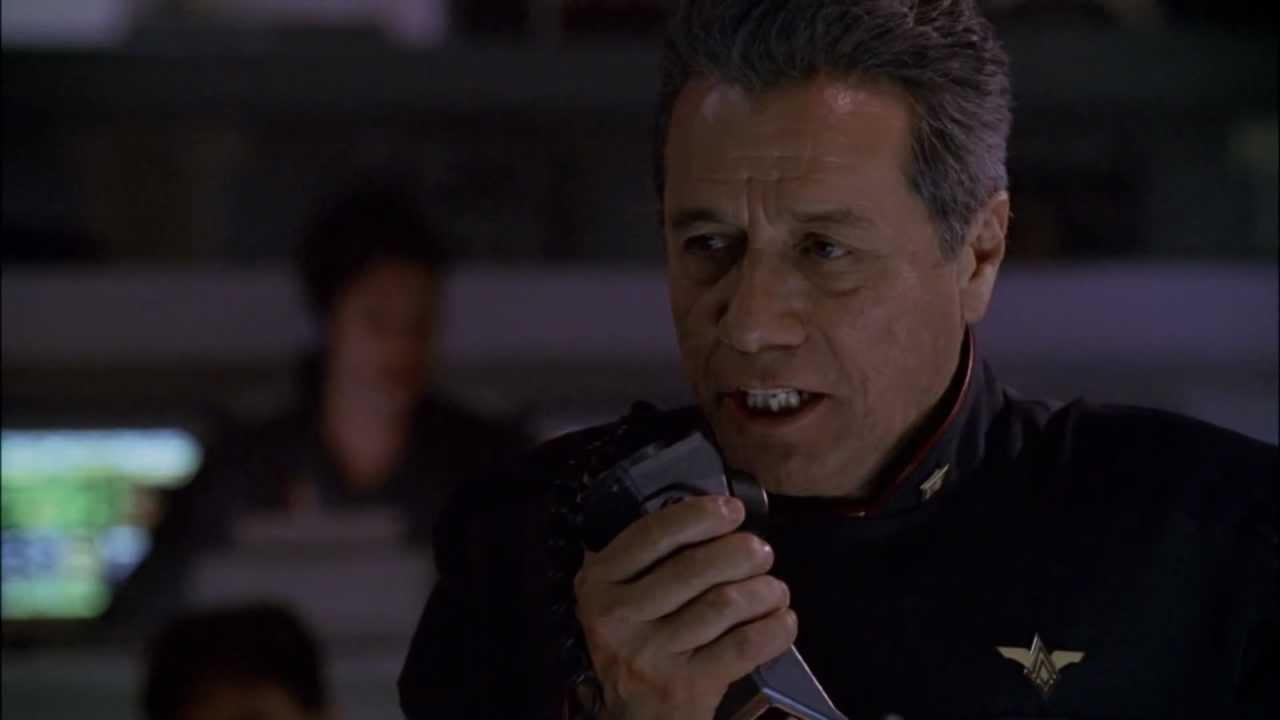
The result was a mini-series, aired on SyFy and then NBC in 2003, which served as a backdoor pilot for a series proper. And it'd be fair to say that Moore and his team knocked it out of the park. The second the mini-series opens it feels different. Director Michael Rymer created a shaky, immediate style of shooting that put the viewer in the heart of the action. Composer Richard Gibbs used a drums-heavy sound to create a very different, military-feeling soundtrack. The actors, a mix of newcomers like Jamie Bamber and Katee Sackhoff and industry veterans like Edward James Olmos and Mary McDonnell, are uniformly excellent. The visual effects by CG studio Zoic are (still) amazing. Over the course of a generous three hours, the mini-series builds the world of the Twelve Colonies and then tears it down, leaving the bewildered survivors to try to escape and build a new life for themselves.

It's not the series at its best - the first episode of Season 1 and thus the next episode after this, 33, may hold that honour - but it does set up the show well and leave you wanting to watch more.


Blake's 7: The Way Back
Aired 2 January 1978

In the late 1970s, veteran TV writer Terry Nation was called in to a meeting at the BBC to discuss creating a new show. A respected writer with a huge amount of experience in the industry, he was still best-known for creating the Daleks for Doctor Who fifteen years earlier, and the BBC were hoping to tap that magic again. Nation had several ideas for crime dramas and other ideas, but the executives he was talking to seemed underwhelmed. Improvising on the spot, Nation suggested a dystopian space opera, with a band of malcontents and criminals reluctantly joining forces to escape a tyrannical government. He left with a commission to write a pilot.

Blake's 7 was developed as a conscious riposte to the relentless optimism of Star Trek; the symbol of the despotic Terran Federation is that of Star Trek's Federation but turned to the extreme right. Nation decided he didn't want to write a children's show, and instead wrote an adult, tough and at times brutal pilot script in which engineer Roj Blake is taken to a clandestine meeting of rebels against the government and learns that he was once a respected military leader, captured by the Federation and mind-wiped to be turned into a model citizen. Blake is horrified and suffers a mild mental breakdown as his real memories come flooding back. His new associates are killed in a massacre and Blake finds himself on trial on trumped-up charges of child molestation. His lawyers discover the truth and embark on a quest to clear Blake's name...with invariably fatal results. Only at the end of the episode does Blake meet some of his other soon-to-be fellow shipmates (Jenna and Vila; Avon doesn't appear until the second episode), as he is carried away from Earth on a transport, vowing to return to destroy the government.

The Way Back is uncompromising and quite astonishingly cynical, landing in tone somewhere between Nineteen Eighty-FourThe Prisoner and a waking nightmare, and light-years from the cowboy theatrics of the then recently-released movie Star Wars. It has money problems - Blake's 7 was commissioned as a replacement for contemporary crime drama Softly Softly: Task Force and given the exact same budget! - but these are mostly overcome by cunning use of industrial wastelands and locations as sets and some quite excellent model work. What remains overwhelmingly impressive is the bleak atmosphere and superb acting, particularly from Gareth Thomas as Blake. Not just a great pilot episode, this is one of the best episodes of the entire series.


Doctor Who: An Unearthly Child
Aired 23 November 1963

The day after the assassination of President John F. Kennedy, the BBC started broadcasting a very unusual drama series. Commissioned as a stopgap between the Saturday sports coverage and an evening pop music show, Doctor Who was a show that combined elements of historical drama, science fiction and educational show. Its long list of creators (Sydney Newman, Anthony Coburn, C.E. Webber, Donald Wilson, Verity Lambert and David Whittaker all played a role in development) shows it was a tough concept to translate to screen, but eventually they succeeded and filmed a pilot episode.

Unfortunately, the pilot episode was a failure. The direction was off, the actors fluffed their lines several times and bits of the set broke off during filming. Unusually (because of the considerable expense), the BBC took the step of mounting a full re-shoot of the pilot, along with a partial rewrite of the script to make the characters more relatable. This time, the team hit it out of the park, crafting a remarkable 25-minute science fiction mystery series that would ultimately launch a franchise that would run for fifty-six years (and counting).

An Unearthly Child sees Coal Hill School teachers Ian Chesterton and Barbara Wright becoming concerned about the welfare of one of their students, Susan Foreman, who is quite astonishingly bright and intelligent about somethings (like science and maths) but astoundingly ignorant about others. They are bewildered to discover that she lives with her grandfather in what appears to be a junkyard. Her grandfather, who answers only to the title "Doctor," tries to escape their attention by taking refuge in a police telephone box, but the teachers follow him inside only to discover it is in fact a camouflaged space/time machine, a TARDIS. Shenanigans ensure in which they also learn that both the Doctor and Susan are aliens, exiles from another world, before the TARDIS malfunctions and carries them away from Earth, beginning an adventure that will last a long, long time.

The first episode of Doctor Who has many of the ingredients of later episodes, including a mystery and dramatic revelations, but this time they're about the Doctor himself. This was the first time people had encountered the character, or the TARDIS, and in many cases the very idea of time travel. With some impressive sets (by 1963 BBC standards), good writing and an off-beat atmosphere, not to mention a superlative performance by William Hartnell (the Doctor), which is somewhere between stern and outright threatening, An Unearthly Child sets the scene for all that has followed since.


The Expanse: Dulcinea
Aired 23 November 2015

Bringing James S.A. Corey's series of space opera novels to the screen was always going to be a big challenge, but it's one that the team at Alcon Entertainment rose to with a relish. Dulcinea introduces the setting of the 23rd Century Solar system as vividly as Ron Moore introduced the world of the Twelve Colonies in Battlestar Galactica a dozen years earlier. The attention to detail is amazing, from the lighter gravity in the asteroid settlements to the way the crewmembers of ships not under thrust have to float in zero-g. More important are the actors, with Thomas Jane as a world-weary detective and Steven Strait as the idealistic would-be hero who puts his life (and those of others) on the line to do what he considers to be right.

The result is a vivid and immediately-impactful vision of the future, and a show that starts already in fifth gear and only accelerates from there. Stunning visuals (the effects team on the show deserve all the plaudits for their clear, detailed style, and to be frank the guys creating the murky, often barely-discernible CG on Star Trek: Discovery could learn a lot from them), some excellent music and some terrific directing (the opening imagery of Julie Mao on her terror-stricken ship is now iconic) help propel the story onwards.

The Expanse is the best space opera show since - and possibly including - Battlestar Galactica and this first episode is an important part of the reason why. Remember the Cant!


Firefly: Serenity
Aired 20 December 2002

Serenity was the first episode of Firefly to be written and shot, but it was not the first to be broadcast: Fox felt the episode was low on action and pace, so they ordered Joss Whedon to create a punchier opening (resulting in The Train Job) and moved this premiere to later in the run. Of course, as this episode was the one that established what the hell was going on and introduced the characters and premise, this didn't do much but leave viewers extremely confused and switching off in their droves, leading a few weeks later to the show's cancellation.

This was a huge shame (understatement) as Serenity - not to be confused with the movie of the same name - is a splendid pilot, the best Joss Whedon has ever written. It sets up both the world and the worldview of its characters, introduces a relatively large cast and establishes a significant mystery that will run across the season. It also has to tell rollicking good story in its own right, which it does with enviable skill.

Whilst it's hard to pinpoint one reason why Firefly failed, taking it's excellent opening two hours and burying them at the end of the first season probably had a key role to play.


Lost: Pilot
Aired 22 September 2004

Costing almost $15 million, the pilot episode to Lost is still the most expensive TV pilot ever filmed. To sell the crash-landing of Oceanic Flight 815 on a remote island in the South Pacific, ABC shipped a broken-up Lockheed L-1011 to Hawaii, scattered bits of it along a beach and then, after several weeks of shooting, had to carefully remove it again. It was absurdly indulgent, but every second of the expense ends up on screen, resulting in a scene of chaos, explosions and people trying to save one another that grabbed the audience and didn't let up.

J.J. Abrams and Damon Lindelof's script is intriguing, setting up no less than fourteen regular characters (and several more recurring) and establishing almost all of them with some interesting character work before later episodes would do the heavy lifting of fleshing them all out via flashbacks. Excellent acting and fantastic location shooting in Hawaii added up to that rarest of things, a network TV show that looked as expensive as premium cable.

Lost's pilot shows the value of starting your show with a bang, grabbing the audience's attention, and then not letting it go.


Mr. Robot: eps1.0_hellofriend.mov
Aired 24 June 2015

Mr. Robot began life as a movie script by Sam Ismail which he developed for some time before realising that the story was too big and the characters bursting past the page count, demanding more material. Ismail reframed the two-hour movie as a ten-hour season of television, with the pilot expanding from the first thirty pages of the script.

Mr. Robot's pilot is remarkable, an intense drama blending psychology, hacking, cyberthriller and drama. Rami Malek is perfectly cast as Eliot Alderson, a man suffering from depression and loneliness who relates to people by hacking them online, even his therapist. In doing so he finds out secrets about them that they don't even know, and is able to influence their lives without them ever knowing.

Mr. Robot's pilot also has unusual rewatch value. You can watch it on the surface as the technothriller it comes across as, but after watching Season 1 you can go back with fresh information and see all the events again in a different light. A remarkable opening episode to a very unique-feeling series.


Red Dwarf: The End
Aired 15 February 1988

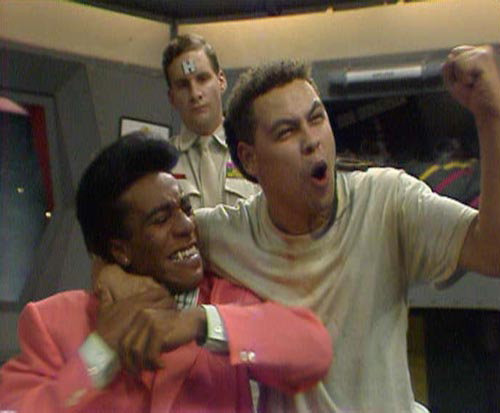
"Everybody's dead, Dave." The very first episode of Red Dwarf sets up a very strong premise, with Dave Lister, the lowest-ranking crewmember on the five-mile-long mining ship Red Dwarf (because the service robots have a better union than the human maintenance crew), being sentenced to spend the rest of the mission in temporal stasis after smuggling an unquarantined cat on board. This proves unexpectedly helpful when the crew is wiped out by a lethal radiation leak. Holly, the ship's AI (IQ 6,000, "the same as 12,000 traffic wardens"), steers the ship into deep space and waits for the radiation to die down to a safe background level...which takes 3 million years.

Emerging from stasis, Lister discovers his only company is the now-senile Holly, a humanoid lifeform who descended from his pregnant cat and a holographic recreation of Lister's commanding office, the painfully officious and unpleasant Arnold J. Rimmer.

It's a great premise which gets the show off to a good start (arguably the second episode, Future Echoes, is also required viewing as it sets up how the show can move beyond its limited premise), showcases the amazing cast and features some good gags. A 31-year (and counting) journey started here.


Star Trek: Deep Space Nine: Emissary
Aired 3 January 1993

Deep Space Nine is almost certainly the finest Star Trek television series for myriad reasons, from its greater levels of serialisation to its intricate character arcs to its refusal to push the reset button at the end of each episode, but one that is oft-overlooked is the fact that it has the best opening episode in the entire franchise.

The Cage was so esoteric and weird that it put the broadcasters off and nearly killed the original Star Trek, before it came back with the (somewhat) stronger and mostly-recast second pilot Where No Man Has Gone Before; the broadcasters were still unconvinced and ended up dropping in a random early Season 1 episode to kick things off instead. Star Trek: The Next Generation's Encounter at Farpoint was intriguing but clumsily-written, with the characters pale shadows of their later, more fleshed-out incarnations. Voyager's Caretaker was only okay, and Enterprise's Broken Bow started off well by promising a more low-tech approach to Star Trek that it had pretty much broken by the end of the pilot. Discovery took arguably three whole episodes to even finish off setting up its basic premise.

Emissary, though, is a much more successful episode. It opens with a literal bang, with producer Michael Piller finally apologising to fans for having to wimp out on showing the Battle of Wolf 359 from The Next Generation's Borg epic The Best of Both Worlds three years earlier (due to cost). An epic flashback depicts the desperate struggle as the Borg cut through a Starfleet armada of forty starships with contemptuous ease, Commander Ben Sisko losing his wife in the process.

The rest of the episode is fascinating. The Cardassians have withdraw their occupation force from the planet Bajor after forty years of brutal conquest, leaving massive religious and social upheavals in their wake. The Federation has stepped in to help the transition and run an orbiting Cardassian space station, but to the surprise of the Starfleet personnel, they find a hostile reception among those Bajorans who fear they've swapped one oppressor for another. It's all rather messy and a big departure from The Next Generation, where everyone is so civilised and reasonable and solves problems over cups of (Earl Grey, hot) tea and sessions with the ship's counsellor. The fact that the main cast includes a significant number of both Starfleet and non-Starfleet personnel (a first and, to date, last for the franchise) allows for more character and cultural conflict than we'd previously seen on Trek, and fuelled seven full (and mostly excellent) seasons of stories.


The Walking Dead: Days Gone Bye
Aired 31 October 2010

The Walking Dead has become such a divisive and polarising show, that it's easy to forget how well-received the first episode (and most of the first season) was. Directed by Frank Darabont (that's Mr. Shawshank Redemption to you and me), the opening episode is a masterclass in slowly building tension and character interplay, particularly the exchanges between Rick and Morgan (so effective that Morgan would return to the series years later by popular fan demand).

The visuals are striking throughout, particularly the closing images of Rick riding a horse into an eerily deserted Atlanta, only to be attacked by a vast horde of walkers and forced to take refuge in a tank. It's rare to see a pilot given this level of production value, scripting and direction, and a genuine pleasure to watch.

Of course, Darabont would be forced off The Walking Dead in -contentious circumstances a year later (with litigation still continuing today), and The Walking Dead would go through so many showrunners, writing staffs and contortions of premise that the show today barely resembles how it started, but this opener remains excellent and compelling viewing.


Thank you for reading The Wertzone. To help me provide better content, please consider contributing to my Patreon page and other funding methods, which will also get you exclusive content weeks before it goes live on my blogs. SF&F Questions are debuting on my Patreon feed and you can read them there before being published on the Wertzone.