Saturday, 7 July 2018

RIP Steve Ditko

Steve Ditko, best-known as an artist and writer for Marvel Comics in the 1960s, has passed away at the age of 90.


Born in 1927 in Pennsylvania, Ditko developed a strong interest in art from a young age. He studied art under Batman artist (and Joker creator) Jerry Robinson, who was one of his idols. It was Robinson who introduced Ditko to Stan Lee, then working as an editor at Atlas Comics (the forerunners to Marvel). Ditko began his publishing career in Daring Love in 1953, followed up by Fantastic Fears the year after. Ditko began working for renowned writer-illustrators Joe Simon and Jack Kirby (the creators of Captain America), working on many of their titles in the mid-1950s. He then moved to Charlton Comics, where he co-created the character of Captain Atom (who later inspired the Watchmen charactr Dr. Manhattan) in 1960.

At the same time, Ditko began an association with Atlas Comics in 1956, particularly on Amazing Adventures where he directly collaborated with Stan Lee on numerous one-shot mystery and horror strips. In 1962, the final issue of Amazing Adventures (now retitled Amazing Fantasy) introduced a new character co-created by Ditko and Lee: Spider-Man.

Lee had originally planned to create Spider-Man with his regular collaborator (and Ditko inspiration), Jack Kirby. However, Kirby wasn't too keen on the idea and his designs proved unusable. Lee turned to Ditko, who very quickly created the character's signature look, including the gimmick of the secret identity. Eric Stanton, who shared a studio with Ditko, offered advice such as having the webs shoot out of Spider-Man's hands directly (rather than using a "web gun" as Lee had planned), but otherwise the character design was wholly Ditko's work.


The character took off and his own title, The Amazing Spider-Man, quickly launched. As well as Spider-Man himself, Lee and Ditko co-created many of his signature villains: the Green Goblin, Doctor Octopus and the Lizard. Their collaboration also resulted in the creation of another character, Doctor Strange, who debuted in Strange Tales #110 (1963) before getting his own title.

In 1966 Ditko chose to leave Marvel Comics. He and Lee had not been getting along for a while and their collaborations had been handled by intermediaries. Even Lee was uncertain exactly why they had fallen out, although their politics and ideologies were on very different wavelengths. Ditko was a hardline Objectivist and wanted to create characters more in line with his believes. In 1967 he created the entirely creator-owned character Mr. A, whose adventures he would continue to intermittently relate. Mr. A divides the world into black and white, good and evil, and is uncompromising in his pursuit and punishment of evil. Writer Alan Moore found the character quite ridiculous, later penning silly songs about him and, in the ultimate tribute, created the Watchmen character of Rorschach as a satirical dig at the character.

Ditko spent several spells at DC Comics and continued his work on the Charlton characters up until the line folded in 1986. He also returned to Marvel in 1979, working on Machine Man and Micronauts. He continued to work as an artist-for-hire, but his latter work is largely undistinguished.

In 2007, comics fans and broadcaster Jonathan Ross presented a documentary on Ditko's career (see above), eliciting comments from Stan Lee, Alan Moore and Neil Gaiman. An intensely private man, Ditko refused to appear on camera but did agree to an off-screen conversation with Ross and Gaiman.

Ditko helped create one of the most iconic fictional characters of all time, and his other contributions to the field of comics remain notable and impressive. He will be missed.

Friday, 6 July 2018

Dying Light

The city of Harran has been overrun by a mysterious virus which transforms those it effects into feral, deranged monsters. The city has been quarantined which international organisations and the government ruthlessly enforce. The Global Relief Effort (GRE) presents itself as a humanitarian organisation, but a more sinister side emerges when they send operative Kyle Crane into the city to find a file stolen from them by Kadir Suleiman. Arriving in the city, Kyle finds refuge at the Tower, a stronghold defended by "runners", survivors who have picked up parkour skills to avoid the infected. Despite himself, Kyle finds himself drawn into the lives of the runners and their perilous battle against a local warlord.


Dying Light is a survival horror open world zombie game, which sounds like a concept created by throwing darts randomly at genres and mashing together whatever they hit. Against the odds, it's a concept that works tremendously and surprisingly well. Although certainly not obscure, Dying Light didn't make a lot of noise on its original release in 2015, but over time has gained an impressive reputation for quality, most of it well-deserved.

The game is an open-world title, with the (very large) slums of the city of Harran open for exploration from the start. In the open world you can rescue survivors, hunt for supplies, kill zombies (who are vulnerable alone but dangerous in numbers) and upgrade your skills. The survival horror element comes from the fact that decent supplies and weapons are rare, so you have to craft your own out of the spare parts you find lying around, and from the day/night cycle. The zombies are more irritating than dangerous during the day, but at night their skills and agility increase and more dangerous zombie variants appear, including ones that can chase you up the sides of buildings. Going out at night is dangerous, but rewarding: any skill points you gain at night are doubled. Survive the night, and you get a healthy skill point bonus (if you die, they're lost). Two-thirds of the way into the game, you unlock a second region, the Old Town, which is even more fun to run around in.


The game's main selling point is parkour, or free-running: Kyle is a nimble character and can jump large gaps between rooftops, haul himself through windows and made dangerous ascents of rickety towers. As his skills unlock, he gains the ability to grapple his way between buildings and fall greater distances without taking harm. Kyle is arguably the most nimble such character since Faith from Mirror's Edge, and it's as much fun to run and jump across the city as it is to defeat a zombie pack in combat.

The zombies are also interesting, being surprisingly quiet and challenging in battle with a number of variants who make things more interesting and lethal. Their biggest threat is their sheer numbers and their response to noise: a loud, long-running battle can draw hundreds of zombies into the area and the mid-game discovery and use of firearms and grenades turns out to be more of a liability than a useful development. However, the game also allows you to make strategic use of this fact: rival human factions can be overwhelmed by summoning a vast zombie horde and then setting them loose on the enemy rather than rushing in yourself.


All of these elements interact really well with one another. Overlaid over the top of this is a strong narrative. There's a core storyline following Crane's attempts to find the enigmatic Suleiman but there's also a sizeable number of side-missions. Surprisingly, there's only a few fetch quests with instead most of these side-missions developing into labyrinth storylines of their own, often spawning their own related secondary missions and objectives. These missions usually expand on how the city fell into its current state and tell lots of short stories about people's lives, many of them falling into standard horror-tragedy tropes but are still generally well-told.

Graphically, the game is very solid (although rarely spectacular) and special mention must be made of the electronic, minimalist soundtrack, which is very accomplished. There's also some great sound effects (the shotgun is satisfyingly meaty in battle and the shuffling undead are accompanied by the gruesome schlopping sounds of bits of them falling off) and the fact that most of the game can be played co-op, which makes it even more fun.


A couple of problems do emerge. The central, main storyline is pretty predictable. Even worse, it becomes progressively linear as it continues, with the end of the game seeing it transform into a standard corridor shooter where most of your parkour skills are unusable. There's also the feeling that the game hasn't really thought through some of the consequences of its abilities: the ending missions disable your grapple, for example, because it would make them far too easy, and a very lame "you are too tired to use the grapple" message pops up if you try. Eventually this narrowing of the game's focus reaches utterly farcical levels: the final battle of the storyline is, astonishingly, a Quick Time Event like it's 2006 or something.

A more omnipresent issue is that, in order to overcome the problem of memory-intensive saves and lengthy reloading screens, the game just respawns you if you "die", with all of your items and inventory intact (you just lose some of your accrued experience points). This means that there is no real price to be paid for dying and, weirdly, you can abuse this respawning system to brute force your way through problems. You may even get to the point where simply killing yourself to get to the nearest shelter is a viable alternative to running there (the game has no fast travel system), which kind of goes against the serious ethos of the game.


It'd be easy to let these problems drag the whole game down, but Dying Light does so much, so well it's hard to criticise it for things that make up a tiny amount of the 30+ hours if takes to complete the base game (not including the numerous DLCs and the expansion). At its best, Dying Light sells the fantasy of surviving against the odds in a post-apocalyptic city, with a rich atmosphere and satisfying combat. At its worst, it turns into a bog-standard linear borefest. But the game spends far more time at its best.

Dying Light (****) is available now in the UK (PC, PlayStation 4, X-Box One) and USA (PC, PlayStation 4, X-Box One). An expansion, Dying Light: The Following, is also available now. A full sequel, Dying Light 2, will be released in 2019.

Wednesday, 4 July 2018

Why the time is NOT right for a ROBOTECH reboot

Tor.com have published an article arguing that, following in the footsteps of Voltron, there should be an animated reboot of classic 1980s animated series Robotech. Unfortunately, the article ignores several major problems with this idea.


If you're not familiar with Robotech, please check out my Franchise Familiariser on the series here.

To recap briefly, in 1985 an American animation company, Harmony Gold, was in need of a new TV series. They really wanted to release the classic Japanese animated show Macross in the USA, but Macross was only 35 episodes long and they needed at least double that for syndication purposes. Producer Carl Macek stepped in and cleverly edited together three unrelated Japanese anime - Macross, Southern Cross and Mospeada - so it looked like one story unfolding over three generations with three different sets of characters and antagonists. The resulting show, dubbed Robotech, was very popular and led to some video games, comic books and an excellent 21-volume novel adaptation by Brian Daley and James Luceno.

However, whilst this was occurring in the USA, in Japan Macross became a monster hit show, spawning multiple sequels, prequels and spin-offs. The Japanese creators were keen to share Macross in the West, but Harmony Gold's contract allowed them to block the release of all material under the Macross banner, which they duly did, fearing the confusion that would result from Macross and Robotech coexisting. This situation has earned Harmony Gold the enmity of the anime fanbase ever since and various legal challenges have taken place since then.

The latest result of these these legal challenges is that Harmony Gold will lose its Macross licence in 2021. This will mean that, after 2021, the Japanese studio behind Macross can finally release the original show and its myriad sequels in the United States and Europe. This will also make it dramatically more difficult to make any new Robotech material, as it will not be able to use any elements from the Macross portion of the series, which is by far the most popular part of the franchise.

Sony are developing a feature film version of Robotech, with Andy Muschietti, the director of the two-part It movie, assigned to bring it to the screen, but the status of the project in the wake of the legal decision is now unclear. It may be that Sony will be developing an all-new version of the story that does not use any pre-existing designs or characters so won't run afoul of the new limitations, although in that case you may ask what is the point?

I think we can safely say that Netflix - the most likely home for a new Robotech series (given their immense success with Voltron - won't be interested in starting a reboot of Robotech if they'll lose the licence to the best part of it in just three years.

Sunday, 1 July 2018

Harry Potter and the Goblet of Fire

The Prisoner of Azkaban was a major hit movie for Warner Brothers and the Harry Potter franchise, rewarding their faith in choosing an unusual director for the project and focusing more on the bigger picture of the overall story of the series and worrying less about making each movie stand alone. However, for the fourth film in the franchise an even bigger challenge lay ahead: Harry Potter and the Goblet of Fire was an enormous novel, more than twice the length of The Prisoner of Azkaban and almost three times the length of the first book in the series. Fitting the book into one move proved challenging.


For this film and the remaining ones in the series, producer David Heyman and writer Steve Kloves realised it would now be necessary to strip each book back to its key storyline and major moments and use simplified plot beats and storytelling to get from one moment to the next. In the process, numerous subplots and minor characters would have to be cut. This was a difficult decision, but ultimately one that allowed them to tell the story in as effective a manner as possible, and ultimately the decision was supported by writer J.K. Rowling.

With Cuaron reluctant to repeat himself, veteran and versatile director Mike Newell was brought on board. Having made films as different as Four Weddings and a Funeral, Donnie Brasco and Mona Lisa Smile, Newell was adept at fitting his vision to the tone of the material and creating reliably effective cinema. It helps that The Goblet of Fire is one of the best books in the series, Rowling opening up her world to show more of the magical society beyond Hogwarts and introducing a whole host of new characters and factions. The wizarding tournament with its sequential challenges also allows for both very effective pacing and tension-building, resulting in periodic key set-pieces throughout the movie.

The biggest success of the movie is in furthering the characterisation of our heroes. They are now more confident and competent, although the teenage angst of growing up is also present (exemplified by Ron and Harry's falling-out and Hermione's confused romantic feelings). Like The Prisoner of Azkaban before it, The Goblet of Fire succeeds in making sure that, no matter what else from the books is dropped or condensed, the core characterisation of the three leads is made paramount. This expands in this movie to include a few other significant secondary characters, like Neville Longbottom.

New actors joining the franchise in this movie include the mighty Brendan Gleeson, whose deranged performance as Mad-Eye Moody makes you want to stand up and applaud, and Ralph Fiennes who debuts as the ultimate villain, Voldemort. As expected by now, the secondary cast give excellent performances.

The script is also impressive, jettisoning as it does all repetitive and not-immediately-relevant elements and characters and focusing on the core of Harry's journey. In this manner the film's pacing and structure manages to be significantly better than The Prisoner of Azkaban.

The movie does have some significant weaknesses, however. There simply isn't enough time to fully develop the secondary cast. Whilst Cedric (a pre-Twilight Robert Pattinson) gets a few key moments and scenes to flesh him out, Viktor and Fleur (the other two tournament competitors) barely get any development at all. It's also a bit weird to cast an actor of the stature of David Tennant (even pre-Doctor Who, he was still a well-known up-and-comer) and only have him in a couple of scenes before vanishing from the film (and the franchise).

Still, Harry Potter and the Goblet of Fire (****½) is the strongest movie in the series to date, with a strong cast and some clever writing that condenses the huge narrative down to a manageable, exciting screenplay. The movie is available now in the UK (DVDBlu-Ray) and USA (DVDBlu-Ray) as part of the Complete Harry Potter Movie Collection.

Harry Potter and the Prisoner of Azkaban

After directing and releasing the first two Harry Potter movies in under three years, The Philosopher's Stone and The Chamber of Secrets, director Chris Columbus took a back seat and Warner Brothers made the bold choice of hiring Mexican director Alfonso Cuaron to helm the third movie in the series. Known for edgy, experimental and realist work, the move paid off with Harry Potter and the Prisoner of Azkaban being an enormous financial hit and the first major critical success in the series.


Straight away, it's clear we're in different territory. The Prisoner of Azkaban has more handheld and realistic camera shots than the previous two movies, which were much more safe and traditional. Cuaron shows a strong affinity for effects work (which would set him in good stead for his later movie Gravity, which would be filmed almost entirely in front of green and blue screens), for story and for character. He's an excellent director of actors and elicits terrific performances from both the young child stars and the increasingly impressive galaxy of well-known supporting actors, this time around including the impeccable David Thewlis, Gary Oldman, Emma Thompson and Michael Gambon (taking over from the late, great Richard Harris as Dumbledore).

Much of the film is also shot on location, whilst the first two movies only used a few location shots and filmed almost everything else in the studio. This immediately results in a much more realistic feel to the film and grounds the film more effectively. There is also greater attention to continuity, with Hogwarts now feeling like a real place with the location of each scene and piece of the action effectively communicated.

However, the film does suffer in pacing. The Prisoner of Azkaban, as a book, is almost half again the length of the previous two books in the series with many more subplots and characters. The film makes an attempt to fit the whole book into the movie, but a lot of extraneous material had to be cut out in rewrites (such Harry's tentative interest in fellow student Cho Chang, which was moved to the following film) and then edits. This problem is increased by the fact that Chamber of Secrets (the longest film in the series) was deemed too long for a children's movie, so Prisoner is a full twenty minutes shorter with even more story cut out as a result. The result is a great story but one that feels a bit too chopped around and bitty in pacing. This odd structuring of the story also means that a key subplot, which relies on the viewer picking up on odd clues from earlier in the film, may not be as apparent as it should be.

Still, Harry Potter and the Prisoner of Azkaban (****) is definitely an immense improvement on the first two movies in the series and is a by turns funny, dark and exciting family adventure film, with Alfonso Cuaron's direction bringing out the best from the source material and the resources at his command. The movie is available now in the UK (DVDBlu-Ray) and USA (DVDBlu-Ray) as part of the Complete Harry Potter Movie Collection.

Thursday, 28 June 2018

WHAT WE DO IN THE SHADOWS spin-off TV show gets a trailer

Wellington Paranormal, the spin-off TV show from Taika Waititi's cult classic movie What We Do in the Shadows, has just had its first trailer arrive.


The TV series follows the misadventures of Wellington police officers Mike Mongue and Karen O'Leary (played by the actors of the same name). In What We Do in the Shadows they were the police officers who kept showing up whenever the vampires got into shenanigans and had to repeatedly hypnotise them to forget about what was going on. The show picks up on the idea that the police officers have finally twigged that something weird is going on and start investigating events more thoroughly.

Waititi and his collaborator Jermaine Clement (Flight of the Conchords, Legion) are producing the new series. Some fans are hoping to see them cameo in the series, although they are busy with other projects in Hollywood.

Meanwhile, FX has ordered 10 episodes of an American remake of the movie in the form of a TV series, to star British comedy stars Kayvan Novak and Matt Berry. Waititi and Clement have also confirmed they still want to make a sequel to the movie, provisionally entitled We're Wolves and focusing on the werewolf pack from the original film, and are waiting for a gap in their schedules where they can do this.

Waititi is reportedly being wooed by Lucasfilm to make a Star Wars movie, whilst also consulting with Marvel on a potential sequel to Thor: Ragnarok or another movie in the MCU.

RIP Harlan Ellison

Harlan Ellison, one of science fiction's best-known and most polarising figures, has passed away at the age of 84.


Born in 1934 in Cleveland, Ohio, Harlan Ellison held a wide variety of jobs whilst he honed his skills as a writer. He was kicked out of Ohio State University for punching a professor who said he was a bad writer and claims to have sent a copy of every story he published for the next twenty years to that professor in revenge (later, more moderate accounts suggest he was kicked out for just yelling at him).

He sold his first story to The Cleveland News in 1949 and began publishing short fiction regularly in 1955. In 1962 he moved to Hollywood and began working in the film industry, submitting scripts to shows such as The Man from UNCLE and The Outer Limits. He first attracted widespread notice with his work for the latter, particularly his 1964 episode Soldier, a story about a murderous soldier who goes back in time. Twenty years later he declared that this episode had been ripped off by James Cameron for his movie The Terminator and won a significant out-of-court settlement.

During his time working in Hollywood, Ellison incurred the ire of Frank Sinatra during a billiards game, who objected to Ellison's footware.


Ellison began working on Star Trek, penning the original script for The City on the Edge of Forever, widely acknowledged as the finest episode of the original Star Trek series and one of the very best of the entire franchise. Ellison's script was reworked by Gene Roddenberry and D.C. Fontana (among others) into the aired version, something that irked Ellison, although not to the point of removing his name from the script. Ellison won the Writer's Guild Award for the original version of the script and also the 1968 Hugo Award for Best Dramatic Presentation, for the shooting script. Ellison continuously claimed his original script was superior, publishing it several times (critics were less in agreement). In 2009 he sued Paramount for royalties and profits made from the episode; a significant out-of-court settlement was reached.

Ellison worked at Disney, for a day, before being fired after joking that they should make an animated pornographic film featuring Disney characters. He then continued his career in short fiction, penning the short stories "'Repent, Harlequin!' Said the Ticktock Man" (1965), "I Have No Mouth and I Must Scream" (1967) and "A Boy and His Dog" (1969). "I Have No Mouth" won a Hugo Award and was turned into a well-received video game in 1995, which Ellison collaborated on despite not owning a PC. "A Boy and His Dog" was filmed in 1975 (winning Ellison another Hugo) and was named as one of the key influences on the video game Fallout (1997); imagery from the film was particularly tapped in the marketing for the game Fallout 3 (2008). Presumably this escaped Ellison's attention, as he did not sue anyone involved.

In 1967 Ellison published the science fiction anthology Dangerous Visions. A ground-breaking work, it codified the New Wave movement of science fiction and was credited for almost single-handedly changing the way people thought about the genre. Three of the stories in the book won Hugo Awards and the book itself was massively successful and critically-acclaimed in and out of the genre. Ellison followed it up with Again, Dangerous Visions in 1972, which, improbably, reached similar levels of acclaim. Ellison announced The Last Dangerous Visions in 1973 and solicited approximately 150 stories for the third collection. The book was repeatedly delayed and some of the contributing authors either died or withdrew their stories. British author Christopher Priest was so incensed by the situation that he penned a non-fiction book about the affair, The Last Deadloss Visions (1987, reworked as The Book on the Edge of Forever ten years later), which exceedingly annoyed Ellison for the rest of his life. The Last Dangerous Visions, remarkably, remained unpublished at the time of Ellison's death, forty-five years after it was first announced.

In 1980 Ellison and Ben Bova sued Paramount Pictures, contending that their TV series Future Cop was based on Ellion and Bova's story "Brillo." Paramount decided to defend the case and lost, being forced to award the writers $330,000. 


In the mid-1980s Ellison worked on the rebooted version of The Twilight Zone, hiring George R.R. Martin as a writer on the show before Ellison quit in anger after disagreeing with the studio on the show's creative direction.

Ellison met Hollywood scriptwriter J. Michael Straczynski when the latter tracked down his telephone number and called him up, nervously asking what advice he could give a budding writer whose work wasn't selling. "Stop writing shit," was Ellison's response. They later met in person and struck up a friendship and collaborative relationship. Straczynski solicited Ellison's advice on his in-development TV series Babylon 5, and when the show was picked up by Warner Brothers Harlan Ellison came on board as creative consultant. Ellison contributed several voices on the show and cameoed as a Psi Cop in the Season 4 episode The Face of the Enemy, alongside Star Trek's Walter Koenig. Ellison hit on the idea of writing a sequel to his Outer Limits episode Demon with a Glass Hand, entitled Demon on the Run, for Babylon 5, but after several attempts was unable to complete a script to his satisfaction. He did collaborate with Straczynski on the Season 5 episode Objects in Motion. Straczynski spoke briefly about his passing today.


In the 2000s Ellison became known for his increasingly angry activism on behalf of writers: his rant "Pay the Writer!" where he talks about the contempt Hollywood holds for writers despite them being their most important resource went viral and has been cited many times in response to the suggestion that writers should work "for exposure." Ellison also became known for being disrespectful at public events; his most notorious moment came at the 2006 Hugo Awards when he groped writer Connie Willis on stage during the ceremony. He later apologised for the incident, but then complained when his apology was apparently not accepted.

It'd be fair to say that Harlan Ellison was one of science fiction's most colourful and divisive writers. A passionate advocate for not just creative impulse of writing but also paying the writer their due, he worked hard to ensure that his work was not plagiarised and his rights infringed. He wrote more than 1,500 short stories (some of them whilst sitting in bookstore windows in a kind of live performance art process) and dozens of scripts. He won seven Hugo Awards, three Nebulas and three Writer's Guild of America Awards, along with the 2005 SFWA Grand Master Award and the World Fantasy Award for Lifetime Achievement. His actual fiction - sometimes overshadowed by the author's tendency towards gossip-inducing shenanigans - was often scathing and powerful. According to John Clute, Ellison's writing shows that he was "a central witness to the pain of the world."


Ellison was also irascible, rude, quick to anger and slow to forgive. He never burned a bridge when he had the option of dropping a Tsar Bomba-class nuke on it instead. By the end of his days he'd managed to piss off everyone from Frank Sinatra to Gene Roddenberry to James Cameron. His colourful "bad boy of SF" image was tarnished by some of his behaviour at conventions towards the end of his life, particularly the shameful Connie Willis episode.

Love him or hate him, Ellison was impossible to ignore and will be difficult to forget. That, I think, is an epitaph he would be content to go out on (having first suspiciously checked his back catalogue and consulted a lawyer to ensure it hadn't been stolen from one of his short stories).

Showtime commission a 10-episode HALO TV series

In a surprising move, the cable network Showtime has commissioned a 10-episode TV series based on the space opera video game series Halo.


Kyle Killen (Awake, Lone StarMind Games) will act as showrunner and chief writer, whilst Rupert Wyatt (The Escapist, Rise of the Planet of the Apes, Captive State, The Exorcist) will direct multiple episodes and serve as a producer.

The Halo video game franchise has included nine console and PC games, two arcade shooters and multiple spin-off novels and comics. The franchise has sold over 77 million units, generating $5 billion in revenue for Microsoft. The game series depicts a war between the United Nations Space Command (UNSC), including Earth and her colonies, and an alien race known as the Covenant. This war is complicated by the discovery of a massive, ring-shaped space habitat known as the Halo and the discovery of an alien threat known as the Flood, which the Halo is designed to hold back. In the original Halo: Combat Evolved and its direct sequels, it falls to a human hero (known as "Master Chief") to save humanity from the Flood. More recent games have focused on new threats and new discoveries about the origin of the Halo. It is not yet known when or where the Halo TV show will be set relative to the timeline of the games.

Peter Jackson spent some years developing a Halo movie series with future Game of Thrones writer Dan Weiss before the project foundered over budget concerns.

Showtime's move into big-budget, high-concept franchise TV is a response to the recent announcement of multiple high-profile projects by studios and networks including HBO, Netflix and Amazon. The acquisition of the Halo licence is particularly notable, since the Halo video games are partially inspired by Larry Niven's Ringworld and Iain Banks' Culture novel series, both of which are now being developed as TV shows for Amazon.

Showtime are apparently betting the farm on Halo, following the extremely expensive Twin Peaks revival last year which attracted critical acclaim but low ratings. The network are seeing this show as the opportunity to take the fight to their rivals.

When to Write: Debut Ages of Famous SF&F Authors

A few months ago, a fellow blogger announced they were writing their first novel via social media and were immediately criticised for being "too old" to start writing. This was a bizarre comment for several reasons, not least of which was that the person in question was really not that old at all, but also the idea that writing - a livelihood not dependent on fast reflexes or immense physical stamina, but one that benefits from life experience - should have any kind of appropriate age for it in the first place.
Still, I thought it would be interesting to take a snapshot of well-known SF&F authors and look at the ages they were when they debuted, and the results are surprisingly varied.


Coming in at the bottom end of the range is Catherine Webb, a British science fiction and fantasy author who has published critically-acclaimed work under her own name and under two pseudonyms: Kate Griffin and Claire North. Webb was 16 years old when she published her first novel, Mirror Dreams, 23 when she published A Madness of Angels (her first Matthew Swift urban fantasy novel) and 28 when she published arguably her best-known novel, The First Fifteen Lives of Harry August. She's only 32 now, with twenty novels under her belt in a career spanning sixteen years. More impressive is that Webb has attracted immense critical acclaim for her work, which is imaginative, thought-provoking, restless and constantly innovative.

Better-known, although considerably less artistically accomplished, is Christopher Paolini. His Inheritance series of fantasy novels began with Eragon, published when he was 19 years old.
Next up is that well-known young gun George R.R. Martin. His first published work was "The Hero", published in 1971 when Martin was 22 years old. His first novel, Dying of the Light, was published when he was 28, and he was 47 when his best-known novel, A Game of Thrones, was published.

Terry Pratchett got his novel-writing career off to an early start, publishing The Carpet People at the age of 23. However, he had long waits between his early books. His Discworld series kicked off with The Colour of Magic, published when he was 35.

China Mieville was 26 when he published his first novel, King Rat, but, overwhelmingly impressively, was only 27 when he published the massive, classic fantasy Perdido Street Station. He was still only 36 when The City and The City, one of his best-known novels, was published.

Robin Hobb aka Megan Lindholme was 27 when she published her first short story and 31 for her debut novel, Harpy's Flight. Her most famous novel (and debut as Robin Hobb), Assassin's Apprentice, was published when she was 43.

Arthur C. Clarke got into science fiction writing early, with numerous fanzine stories published in the late 1930s and early 1940s, but his first professional sale was "Loophole", published when he was 28. His first novel, Prelude to Space, was published when he was 33. However, his best-known novel, 2001: A Space Odyssey, was not published until he was 50, and his most acclaimed, Rendezvous with Rama, until he was 55.

Scott Lynch was 28 when he published The Lies of Locke Lamora, narrowly beating out Brandon Sanderson, who was 29 when he published Elantris.

Statistically, especially in SF&F, most debut authors are in their thirties when they start publishing. Falling in this bracket are Iain Banks (30 when he published The Wasp Factory, 33 when he published his first SF novel, Consider Phlebas); Robert Jordan (31 when he published The Fallon Blood and 41 when he published The Eye of the World); Joe Abercrombie (31 when he published The Blade Itself); Ursula K. Le Guin (31 for her first short story, 38 for A Wizard of Earthsea); Terry Brooks (33 for The Sword of Shannara); and Patrick Rothfuss (34 for The Name of the Wind).

For those starting publishing a bit later than the median, there's Raymond E. Feist, who published Magician when he was 37. Gene Wolfe was 39 when he published his first novel and 49 when he released his best-known novel, The Shadow of the Torturer, which opened his Book of the New Sun sequence.

Steven Erikson was 39 when he published his debut novel, This River Awakes, and 40 when he released his first Malazan novel, Gardens of the Moon

J.R.R. Tolkien was 44 when he published his first novel, The Hobbit, or There and Back Again, and 62 when he began publishing its sequel, The Lord of the Rings.

Terry Goodkind was 46 when he published his debut novel, Wizards' First Rule.

David Eddings was an impressive 50 years old when he published Pawn of Prophecy, beginning The Belgariad.

Richard Adams was 52 when he published his debut novel, Watership Down.

Outside of SF, there are a lot of examples of famous writers who got going in middle age or later. Raymond Chandler was 45 when he published his first story and 51 when he published The Big Sleep. George Eliot aka Mary Evans was 40 when she published her first novel, but 55 when she released her masterwork, Middlemarch. Frank McCourt was 66 when he published his debut novel, Angela's Ashes, which won the Pulitzer Prize. 

The conclusion to be drawn from this is that there is no good or bad time to start writing. If you have talent and skill and good judgement, that will become apparent if you're 16 or 76.


Thank you for reading The Wertzone. To help me provide better content, please consider contributing to my Patreon page and other funding methods, which will also get you exclusive content weeks before it goes live on my blogs. SF&F Questions and The Cities of Fantasy series are debuting on my Patreon feed and you can read them there one month before being published on the Wertzone.

Saturday, 23 June 2018

Casting about to begin for THE WITCHER TV series

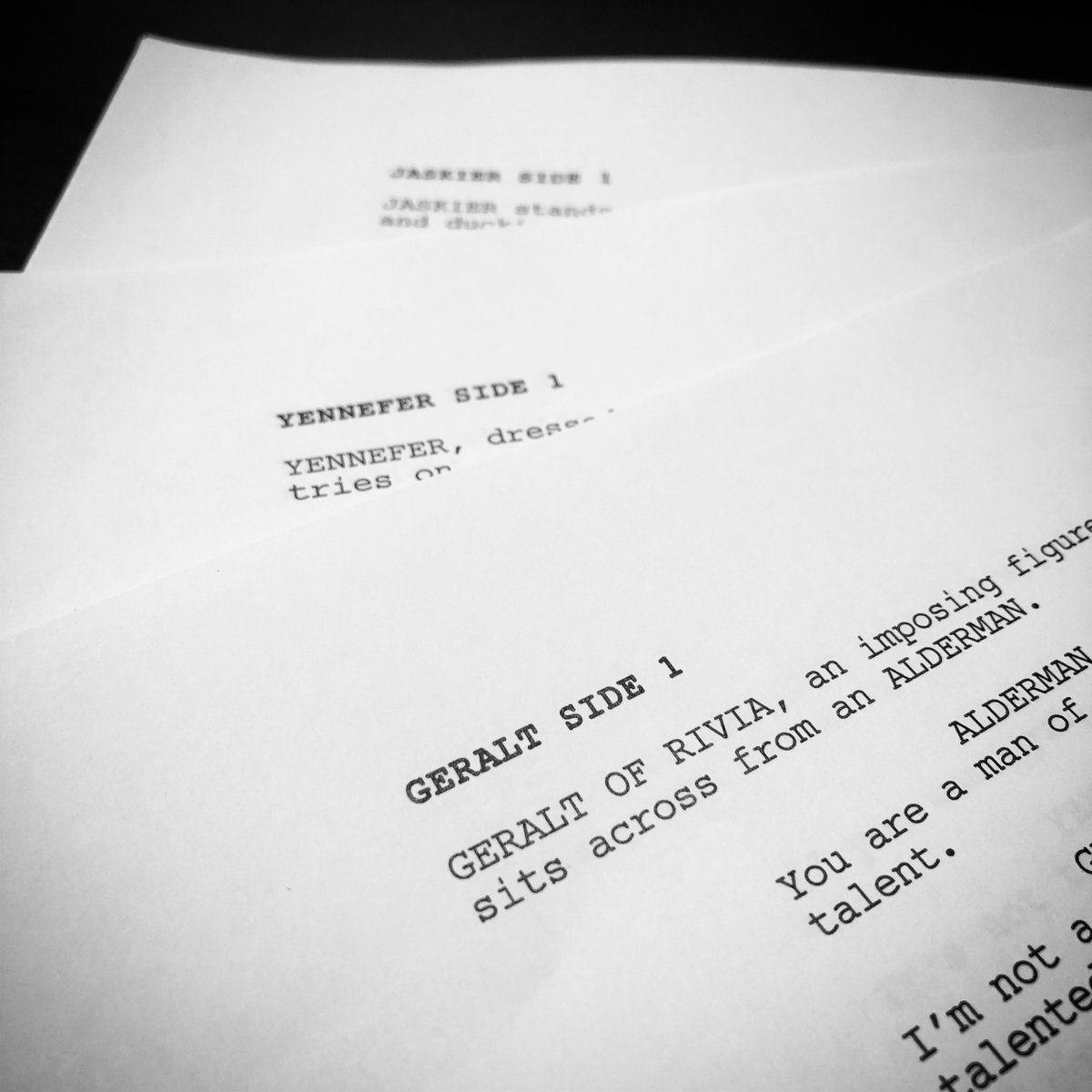
According to showrunner/writer Lauren S. Hissrich, casting is about to get underway for Netflix's Witcher TV series.


To protect from spoilers, the production team has written all-new scenes for the characters that won't be part of the TV series itself. However, the notes confirm that Geralt, Yennefer and Jaskier will be among the roles being cast. Also of interest is that Geralt's bard companion will be called "Jaskier" rather than the more frequent English translation of "Dandelion," the name by which he is known in the video games and some of the English translations of the books.

The casting process will be international, meaning that actors from numerous countries will be looked at rather than just the United States (where the show is in pre-production) or Poland (where it will be filmed). This ties in with production expected to get underway towards the end of this year for an early 2020 debut on Netflix.

There's a lot of "dream choices" for actors for the role of Geralt floating around the Internet, most of which are surprisingly good. Here's a few of the more popular options:


Geralt of Rivia

The titular Witcher is many decades old, but looks to be somewhere from his late thirties to early fifties, thanks to his Witcher training and use of drugs that has extended his lifespan considerably. He is a skilled swordsman,


Mads Mikkelsen

Danish actor Mads Mikkelsen is best-known for his titular role in the TV show Hannibal. His recent appearances include as the villain Kaecillius in Doctor Strange and as Galen Erso in Rogue One. At 52 he is at the upper end of being the right age for Galen, and it should be remembered that (due to the typical 18-month gap between Netflix seasons) that if the show lasts for 5+ seasons, he may be in his sixties by the time it ends, which may be an issue given the physicality of the role. That said, Mikkelsen is in great shape, looks the part down to a tee and has a lot of star power. Mikkelsen is also now highly in demand for film work and may be less keen on committing to another TV show, although with only 8 episodes in its first season the actual filming time for the show may be relatively modest.

Mikkelsen is also the traditional choice of Witcher creator Andrzej Sapkowski to play the role, which may be influential.


Zach McGowan

American actor Zach McGowan has made a name for himself playing brooding and slightly growly athletic men with charisma and impressive combat prowess. He is best-known for playing Charles Vane in Black Sails and Roan in The 100, but has a long and impressive list of credits. At 38 he is at the younger end of the Geralt age spectrum (but this may be beneficial due to how long the show has to run) and has immense fighting experience from his previous roles.

McGowan has also expressed an interest in the role, exchanging Tweets with Hissrich and fans making it clear he'd be up for consideration.


Nikolaj Coster-Waldau

Danish actor Nikolaj Coster-Waldau will need no introduction, having spent the last eight years playing the role of Jaime Lannister on Game of Thrones, which has given him impressive experience in riding horses and sword-fighting. He's a very fine actor and at 47 is in the right age bracket. The question would be if he was willing to spend potentially another decade riding horses and hitting people with swords, and if the producers would be interested in casting such a recognisable role from another and superficially very similar show in theirs.


Marcin Dorociński

If you're going to be making a TV show based on a high-profile Polish work of literature, you'd do well to at least consider some Polish actors for the role. Marcin Dorociński is a highly experienced Polish actor who's the right age (he turned 45 yesterday, actually) and has experience filming shows in English, recently appearing in British drama Spies of Warsaw and German-South African production Cape Town.


Bubbling Under

Other popular fan choices include Josh Holloway (best-known for player Sawyer on Lost) and Richard Armitage (best-known for playing Thorin in the Hobbit movies). However, both actors are tied in with long-running American TV Shows (Holloway on Colony and Armitage on Berlin Station) which means they are likely unavailable.


Other Roles

There's much more to The Witcher than just the Witcher, of course. For the role of the sorceress Yennefer, Eva Green seems to be overwhelmingly the favourite choice, although Evangeline Lily has some traction (the latter is less likely due to her commitment to the Marvel movies going forward).

Amanda Seyfried seems to be a popular choice for the role of Triss Merigold, although since the TV show is following the books rather than the games, Triss is likely to much less of a key player. Deborah Ann Woll has also been suggested for the role, which is interesting given that she has worked with Hissrich before on Daredevil and The Defenders.

For the role of Jaskier/Dandelion, David Tennant seems to be a very popular choice, although the producers may want to cast younger, in which case Aneurin Barnard would fit the role to a tee.

For the role of Vesemir, no less weighty an icon than Mark Hamill (Luke Skywalker!) has thrown his hat into the ring. When fans repeatedly suggested him for the role on Twitter, he expressed an interest in learning more about the character and role. That'd be some impressive casting, especially given Hamill's relative absence from live-action roles in recent years before his return in The Last Jedi.

Casting will likely be completed and confirmed later this year.