Sunday, 8 September 2013

Doctor Who at 50: The Fifth Doctor (1981-84)


Peter Davison (1951-  ) played the Fifth Doctor in 69 episodes and 20 serials, airing over three seasons. He had six companions. At 29 he was the youngest actor to be cast as the Doctor, a record he held until the 27-year-old Matt Smith was cast in 2010. He is the only Doctor (so far) from the classic era to reappear in the modern outside of images or flashbacks, appearing in the mini-episode Time Crash in 2007. Davison's daughter, Georgia Moffett, is married to David Tennant, who played the Tenth Doctor.


The Fifth Doctor: Peter Davison (1981-84)


The Fifth Doctor's era was one of reinvention for Doctor Who. The casting of the 29-year-old Peter Davison as the Doctor and the presence of three young companions meant that the show had a younger, fresher atmosphere going on. There had also been a decision to drop the longer, six-episode serials to keep stories shorter, more focused and tighter. Christopher Bidmead departed as script editor and, after a brief filling-in by Anthony Root, he was ultimately replaced by Eric Saward. Saward was more interested in drama and making the show scary again, leading to some comparisons with Robert Holmes (right down to, once again, receiving criticism of the show for being too violent).

The new, more advanced-looking Cybermen.

Davison's first season was focused mostly on new threats and menaces, though with a hint of experimentation. Black Orchid was a pure historical, that is a serial lacking any SF elements at all apart from the Doctor and his companions.  This was the first such serial since The Highlanders fifteen years earlier and the last to date. More notable was Earthshock. John Nathan-Turner had decided to resurrect the Cybermen, who hadn't been seen since Revenge of the Cybermen seven years earlier (which in turn had been their sole appearance on the show since The Invasion in 1968). A new, sleeker and more advanced-looking Cyberman costume (by the standards of 1982) was introduced and Earthshock was written as more of an action story, featuring scenes of combat between the Cybermen and human marines. The story also made history when, at its conclusion, it killed off Adric (played by Matthew Waterhouse). Adric had not been popular with the fans and Nathan-Turner decided that killing him off would restore some dramatic tension to the show.

The twentieth season in 1983 saw the return of several old enemies: Omega returned in Arc of Infinity, which also featured a return to Gallifrey (and, intriguingly, the casting of Colin Baker as a Time Lord security guard), whilst the Black and White Guardians and a now-retired Brigadier Lethbridge-Stewart reappeared in Mawdryn Undead. This serial also introduced a new companion, the enigmatic Vislor Turlough. Turlough was introduced as an antagonist, an agent of the Black Guardian's placed on the TARDIS to spy on the Doctor and eventually to kill him. Two serials later he instead helped the Doctor defeat the Black Guardian.

The Master returned in The King's Demons which also introduced a recurring android character, Kamelion. Originally planned to be an active companion, difficulties with the Kamelion prop led him to being put in storage and only making one more major appearance on the series.

Publicity shot for The Five Doctors, including a waxwork dummy of Tom Baker!

For the twentieth anniversary itself, Nathan-Turner and the BBC decided to make a 90-minute special event episode. This episode would air separately to the rest of the season, as close to the actual anniversary itself. Veteran Who writer Robert Holmes initially worked on a script concept called The Six Doctors but eventually could not deliver the script in time. Terrance Dicks submitted a story called The Five Doctors featuring all of the previous Doctors and assorted companions. The sad death of William Hartnell meant that the First Doctor had to be recast, with Richard Hurndall stepping in. Tom Baker then declined to appear, believing it was too soon after his own departure from the programme. He instead appeared in clips from the abandoned 1980 serial Shada. Despite it's everything-and-the-kitchen-sink approach (with Cybermen, a Dalek, the Master, various Time Lords, five Doctors and eight companions appearing), The Five Doctors turned out to be a popular, fun romp.

Working on the advice of Patrick Troughton, who had theorised that three years was the optimum time to stay on the show, Peter Davison decided to leave the show at the end of the twenty-first season. John Nathan-Turner decided to break with tradition and have Davison leave in the penultimate serial of the season so the new Doctor could have a full serial to 'bed in' before the break.

Davison's final season featured the return of the Silurians and Sea Deviles in Warriors of the Deep (a Cold War-riffing action story that was not very popular) and the return of the Daleks and Davros in Resurrection of the Daleks. This was a much more popular serial, commenting as it did on the violence of the show. Companion Tegan left the TARDIS at the end of the serial, sick of the death and destruction that seemed to follow the Doctor around. Turlough followed in the following serial, which also introduced the new companion of Peri Brown, played by Nicola Bryant. Nathan-Turner decided to make the new companion American to appeal more to the US audience, although Bryant was British.

The Caves of Androzani has been voted the best Doctor Who story of all time by several fan polls.

Davison went out on a high. The Caves of Androzani, written by a returning Robert Holmes, is still-rated as one of the finest Doctor Who serials ever, and arguably the last stone-cold classic the show has produced to date. Davison gives a tremendous performance and the direction from Graeme Harper is unusually accomplished for the show (Harper would later become the only director to work on both the classic and revived series). Christopher Gable also gives a tremendously intense and threatening performance as Sharaz Jek, the 'villain' (albeit a tragic one) of the serial.

At the end of the serial the Doctor regenerates, but almost dies. Only images of his companions - featuring specially-recorded new clips of Adric, Nyssa, Tegan, Turlough and Kamelion - keeps him going. When the Sixth Doctor gets up and a confused Peri asks what has happened, he replies, "Change, my dear, and it seems not a moment too soon."


Review ratings are only given for complete serials I have seen, which isn't very many. Those looking for an in-depth and unusual review of the entire series are directed to Adventures with the Wife in Space, in which a committed Doctor Who fan exposes his wife to the series and records her reactions.


Season 19: 4/1/82-30/3/82 (26 episodes)
5Z: Castrovalva (4 episodes) ****
5W: Four to Doomsday (4 episodes)
5Y: Kinda (4 episodes)
5X: The Visitation (4 episodes)
6A: Black Orchid (2 episodes)
6B: Earthshock (4 episodes) ***½
6C: Time-Flight (4 episodes)

Season 20: 4/1/83-16/3/83, 25/11/83 (23 episodes)
6E: Arc of Infinity (4 episodes)
6D: Snakedance (4 episodes)
6F: Mawdryn Undead (4 episodes)
6G: Terminus (4 episodes)
6H: Enlightenment (4 episodes)
6J: The King's Demons (2 episodes)
6K: The Five Doctors (1 90-minute episode) ****½

Season 21: 5/1/84-30/3/84 (24 episodes)
6L: Warriors of the Deep (4 episodes)
6M: The Awakening (2 episodes)
6N: Frontios (4 episodes)
6P: Resurrection of the Daleks (2 45-minute episodes) ****
6Q: Planet of Fire (4 episodes)
6R: The Caves of Androzani (4 episodes) *****

The Fifth Doctor regenerated at the end of The Caves of Androzani, having been poisoned with spectrox toxemia. He was able to secure some antidote, but only enough to save his companion Peri.

The Fifth Doctor's Companions and Recurring Allies
Adric (Matthew Waterhouse): Season 19 (5Z-6B)
Nyssa (Sarah Sutton): Season 19-20 (5Z-6G)
Tegan Jovanka (Janet Fielding): Seasons 19-21 (5Z-6P)
Vislor Turlough (Mark Strickson): Seasons 20-21 (6F-6Q)
Kamelion (Gerald Flood): Seasons 20-21 (6J, 6Q)
Peri Brown (Nicola Bryant): Seasons 21-  (6Q-  )
Brigadier Alistair Lethbridge-Stewart (Nicholas Courtney): 6F, 6K
Borusa - third incarnation (Leonard Sachs): 6E
Borusa - fourth incarnation (Philip Lathan): 6K

Saturday, 7 September 2013

Doctor Who at 50: The Fourth Doctor (1974-81)


Tom Baker (1934-  ) played the Fourth Doctor in 172 episodes and 41 serials, airing over seven seasons. He had eight companions (counting the two models of K-9 as two, but the two actresses who played Romana as one). His era is notable for introducing the Zygons and Davros as recurring enemies. His era also introduced the character of Borusa, the White and Black Guardians, and expanded greatly on the mythos of Gallifrey and the Time Lords. Baker was briefly married to his co-star Lalla Ward, who later went on to marry scientist Richard Dawkins.


The Fourth Doctor: Tom Baker (1974-81)
The arrival of the Fourth Doctor in 1974 marked the end of an era. Long-term producer Barry Letts and script editor Terrance Dicks both left along with Jon Pertwee and Philip Hinchcliffe took over as producer, with Robert Holmes as script editor. Holmes had already written several scripts under the old regime but they were constantly being toned down, with scary or disturbing elements removed or reduced. Hinchcliffe was firmly of the opinion that the show was rarely truly scary any more and wanted to ramp up these elements, giving Holmes freer reign. The Hinchcliffe/Holmes era, encompassing Season 12 to Season 14, is sometimes regarded as the show's 'gothic horror' period. This period is highly-praised for featuring several of the most critically-lauded Doctor Who stories of all time (The Ark in Space, Genesis of the Daleks, Pyramids of Mars, The Brain of Morbius, The Deadly Assassin, The Robots of Death and The Talons of Weng-Chiang), but is also controversial for episodes featuring material deemed too horrific for young children to watch.

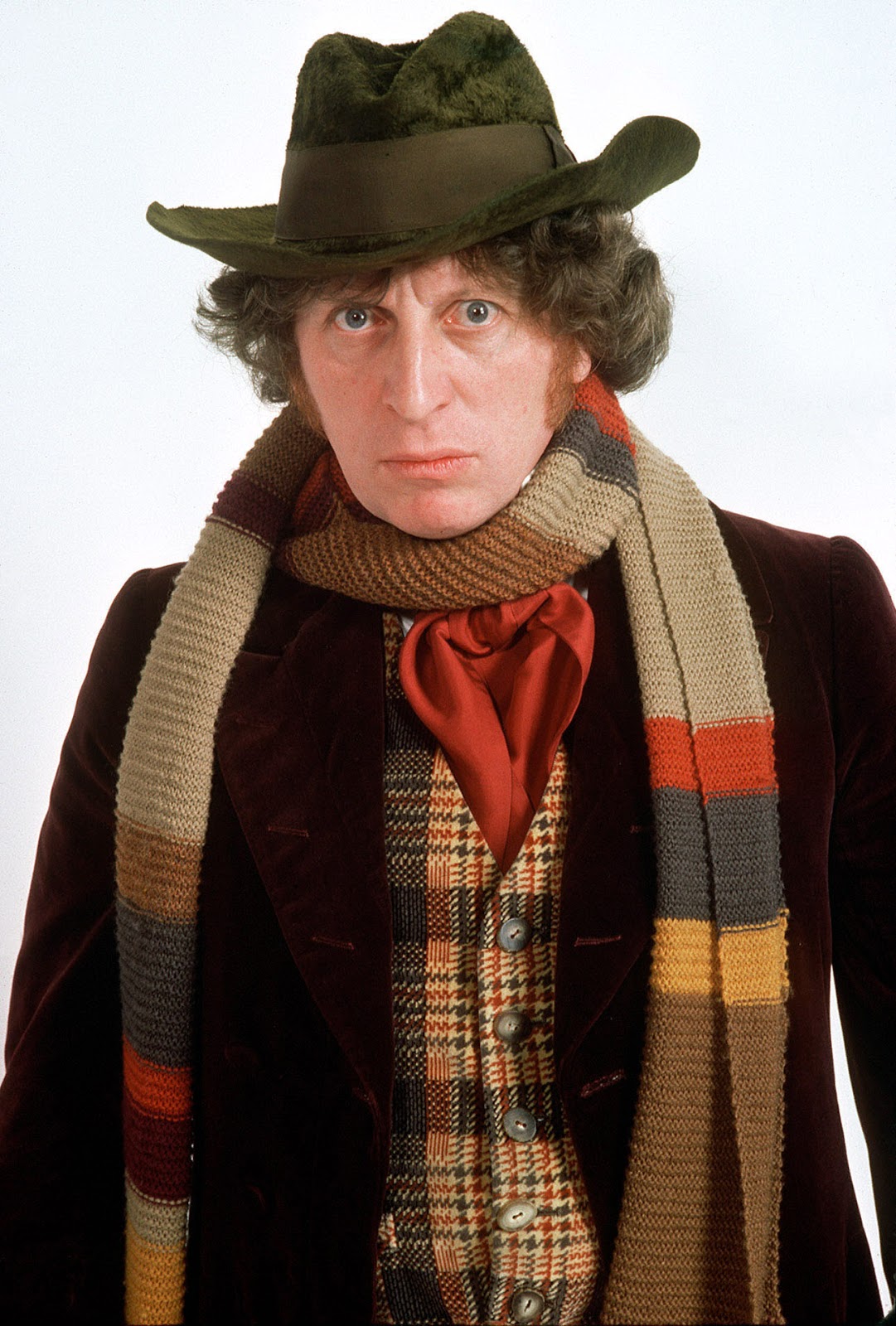
The incoming new Doctor, Tom Baker, was a relative unknown. Originally the producers had been thinking of casting an older actor and new companion Harry Sullivan, played by Ian Marter, was introduced to take on more of the action elements. Baker was younger than the producers had been anticipating and more able to actively participate in action storylines, so they wrote Harry Sullivan out in Season 13. Later, they admitted this was a mistake, as the chemistry and contrast between the stiff-upper-lipped, old-school Harry and the feminist, independent Sarah Jane Smith (Elisabeth Sladen) was extremely popular with fans. Most surprising was the speed with which Baker made the role his own. He had the iconic scarf and coat sorted out pretty quickly and soon the writers were relishing giving him speeches and iconic lines other Doctors couldn't have sold:

"Homo sapiens. What an inventive, invincible species. It's only a few million years since they crawled up out of the mud and learned to walk. Puny, defenceless bipeds! They've survived flood, famine and plague. They've survived cosmic wars and holocausts. And now, here they are, out among the stars, waiting to begin a new life. Ready to outsit eternity. They're indomitable."

The new team soon moved away from the UNIT format, keener to get the Doctor back out to alien worlds and battling strange alien menaces which they felt was more at the heart of what the show was about. Season 13's Terror of the Zygons marked the final appearance of the Brigadier for seven seasons and UNIT itself bowed out after The Seeds of Doom, not to reappear for a full thirteen years. Season 13 also marked the departure of Elisabeth Sladen as Sarah Jane Smith. Having played the role in three and a half seasons, Sarah Jane Smith was the longest-running companion to date (though not the most frequently-appearing, due to the lower number of episodes per season compared to Fraser Hines's run as Jamie) and her departure occasioned the sort of press coverage normally reserved for the departure of Doctors. Sladen would return to the role in a pilot for a never-commissioned spin-off series, K9 and Company, before reappearing during the David Tennant era. She finally got her own ongoing series, The Sarah Jane Adventures, in 2008, which ran for four seasons before Sladen's tragic death in 2011.

The next serial, The Deadly Assassin, was a hugely important story in the history of the show. It was the first serial portraying the Doctor without a companion and was set mostly on the Doctor's homeworld of Gallifrey. It introduced a huge amount of lore about the Time Lords, revealing that the founder of Time Lord society was called Rassilon and that Time Lords could only regenerate twelve times before dying. It introduced elements such as the Matrix, the huge computer network that keeps track of Time Lord activity (and, quite a few years pre-cyberpunk, features a VR interface). Most importantly, it brought back the Master for the first time since Roger Delgado's tragic death four years earlier. The new Master, played by Peter Pratt under a not-really-convincing mask, was his fourteenth incarnation, a near-impossibility. The Master had tried to regenerate anyway at the end of his life and became trapped in his own body, a dying husk. His attempts to find a new body and a new set of regenerations would inform much of the rest of his storyline in the show.

The Sontarans invade and briefly occupy Gallifrey in The Invasion of Time, probably the most embarrassing defeat ever suffered by the Time Lords. Later on, the Sontarans couldn't even get an invite to the Time War.

Hinchliffe and Holmes both departed at the end of Season 14, though Holmes was convinced to stay on for a few more episodes into Season 15. They had introduced a new companion, Leela, a 'savage' warrior-woman played by Louise Jameson. Just before his departure, Holmes hit upon the idea of introducing a robotic companion, possibly influenced by the droids in the first Star Wars film. Star Wars (as it was then titled) had debuted aired in the USA between Seasons 14 and 15, though it didn't reach the UK until 1978. K-9, a robotic dog, was introduced in The Invisible Enemy and became a recurring character.

Incoming new producer Graham Williams wanted to explore the more comic side of Doctor Who and his tenure became controversial, with much fewer inarguable classics than the Hinchcliffe one and more of a focus on laughs. Williams later blamed this shift on BBC management, keen to avoid the controversies of the Hinchcliffe era. Apparently the directive filtered down to star Tom Baker, who was extremely keen to adopt a more active role creatively in the show. He now felt able to insert ad-libbed lines into scripts and come up with jokes and puns, some of which made their way into the final edit.

Anthony Read took over as script-editor and suggested a format change to shake things up a bit: the sixteenth season could be one huge storyline rather than lots of little ones. After some discussions they decided to compromise on having six stories as usual, but these stories would share a common thread in the hunt for the 'Key to Time'. Wanting to also bring in some new blood, Read commissioned several ideas from up-and-coming writer Douglas Adams. Adams had actually already written The Hitch-Hiker's Guide to the Galaxy as a radio play (it had been transmitted in early 1978) by the time he started work on Doctor Who and arguably his attention was diverted in several different directions. When Read left at the end of Season 16, Adams replaced him.

City of Death is both the Doctor Who serial with the highest-ever audience figures and also one of its most critically-acclaimed stories.
The resulting seventeenth season features several of what some fans consider to be the very worst Doctor Who stories of all time (Destiny of the Daleks and The Horns of Nimon) as well as what is often considered to be the very best, or at least the funniest: City of Death took advantage of the show's burgeoning popularity abroad (particularly in America, where it had started airing on PBS) to fund an overseas shoot in Paris. Douglas Adams turned in his best script for the show, with significant collaboration from Williams and others, and Tom Baker gave his finest comic performance on the show. The result was a tremendously entertaining serial, topped off with a cameo from Monty Python star John Cleese. When it aired, the rival ITV network was off-air due to a strike, so City of Death ran off with the ratings, scoring a record 16 million viewers. The rest of the season was not as accomplished and ended disastrously, when an electricians' strike saw the final serial, Shada, left incomplete.

Williams, apparently weary of criticisms directed against him, departed the show at the end of Season 17. Adams also stepped down as script editor to concentrate on The Hitch-Hiker's Guide to the Galaxy, which had turned into a major SF franchise of its own. Christopher Bidmead replaced Adams as script editor and was keen to bring elements of actual science fiction into the show. One of Williams's deputies, John Nathan-Turner, was promoted to head producer. Although no-one knew it at the time (Nathan-Turner least of all), he would be the classic series' final producer.

The new title sequence for Season 18. In 1981, this was cutting-edge.

Though Nathan-Turner later become a criticised and much-hated figure by Who fandom (perhaps, as in the case of his Star Trek counterpart Rick Berman, not entirely fairly with regards to the creative elements of the show), he started out his tenure with several goals. He wanted to bring the show more up to date with more advanced visual effects and more futuristic music and a new, contemporary title sequence. He and Bidmead agreed that Tom Baker's comic excesses needed to be reigned in as well. Previous attempts to do so had been handicapped by the fact that the BBC did not want to lose the popular Baker from the show, but Nathan-Turner was less-inclined to indulge him. As to be expected, Baker was apparently unhappy with his influence on the show being curbed and ultimately decided to leave at the end of the eighteenth season.

Baker's final season is notable for its more futuristic (from the point of view of 1981) vibe and its greater attention to continuity. The serials Full Circle, State of Decay and Warriors' Gate form a trilogy with the TARDIS trapped in 'E-space', a parallel universe. Soon afterwards the Master reappeared and stole the body of Councillor Tremas of Traken (played by Anthony Ainley), finally giving him a more active role to play in future storylines. Tom Baker's final story, Logopolis, was a complex SF story involving the TARDIS apparently materialising inside itself, causing dimensional chaos; it being revealed that the universe had passed the point of natural heat death and the portals into E-space had been created to vent the excess heat; and the Doctor's 'death' when he fell from a radio telescope.

Tom Baker had spent seven years as the Doctor, the longest run ever by any actor spent in the role. Later he would struggle to find acting work and acknowledged the dangers of being typecast. However, Baker also presided over both the critical and popular high-water marks of the series. Whilst behind the scenes he may have become too powerful, his departure was greeted with much sadness by fans and viewers. But the new production team were keen to usher in a new era and, controversial at the time as it would be thirty years later with Matt Smith, they cast an actor still in his twenties as the new Doctor: Peter Davison.


Review ratings are only given for complete serials I have seen, which isn't very many. Those looking for an in-depth and unusual review of the entire series are directed to Adventures with the Wife in Space, in which a committed Doctor Who fan exposes his wife to the series and records her reactions.


Season 12: 28/12/74-10/5/75 (20 episodes)
4A: Robot (4 episodes)
4C: The Ark in Space (4 episodes) *****
4B: The Sontaran Experiment (2 episodes)
4E: Genesis of the Daleks (6 episodes) *****
4D: Revenge of the Cybermen (4 episodes) ***

Season 13: 30/8/75-6/3/76 (26 episodes)
4F: Terror of the Zygons (4 episodes) ****
4H: Planet of Evil (4 episodes)
4G: Pyramids of Mars (4 episodes)
4J: The Android Invasion (4 episodes)
4K: The Brain of Morbius (4 episodes)
4L: The Seeds of Doom (6 episodes)

Season 14: 4/9/76-2/4/77 (26 episodes)
4M: The Masque of Mandragora (4 episodes)
4N: The Hand of Fear (4 episodes)
4P: The Deadly Assassin (4 episodes)
4Q: The Face of Evil (4 episodes)
4R: The Robots of Death (4 episodes) ****
4S: The Talons of Weng-Chiang (6 episodes)

Season 15: 3/9/77-11/3/78 (26 episodes)
4V: The Horror of Fang Rock (4 episodes)
4T: The Invisible Enemy (4 episodes)
4X: Image of the Fendahl (4 episodes)
4W: The Sun Makers (4 episodes)
4Y: Underworld (4 episodes)
4Z: The Invasion of Time (6 episodes)

Season 16: 2/9/78-24/2/79 (26 episodes) - The Key to Time
5A: The Ribos Operation (4 episodes)
5B: The Pirate Planet (4 episodes)
5C: The Stones of Blood (4 episodes)
5D: The Androids of Tara (4 episodes)
5E: The Power of Kroll (4 episodes)
5F: The Armageddon Factor (6 episodes)

Season 17: 1/9/79-12/1/80 (20 episodes)
5J: Destiny of the Daleks (4 episodes)
5H: City of Death (4 episodes) *****
5G: The Creature From the Pit (4 episodes)
5K: Nightmare of Eden (4 episodes)
5L: The Horns of Nimon (4 episodes)
5M: Shada (6 episodes, incomplete)

Season 18: 30/8/80-21/3/81 (28 episodes)
5N: The Leisure Hive (4 episodes)
5Q: Meglos (4 episodes)
5R: Full Circle (4 episodes)
5P: State of Decay (4 episodes)
5S: Warriors' Gate (4 episodes)
5T: The Keeper of Traken (4 episodes)
5V: Logopolis (4 episodes) ****

The Fourth Doctor regenerated at the end of the serial Logopolis, having been pushed off the top of a radio telescope by the Master.

The Fourth Doctor's Companions and Recurring Allies
Sarah Jane Smith (Elisabeth Sladen): Seasons 12-14 (4A-4N)
Harry Sullivan (Ian Marter): Seasons 12-13 (4A-4F, 4J)
Leela (Louise Jameson): Seasons 14-15 (4Q-4Z)
K-9 Mk. I (John Leeson): Season 15 (4T-4Z)
K-9 Mk. II (John Leeson, David Brierly): Seasons 16-18 (5A-5S)
Romana - first incarnation (Mary Tamm): Season 16 (5A-5F)
Romana - second incarnation (Lalla Ward): Seasons 17-18 (5J-5S)
Adric (Matthew Waterhouse): Season 18- (5R- )
Nyssa (Sarah Sutton): Season 18- (5T- )
Tegan Jovanka (Janet Fielding): Season 18- (5V- )
Brigadier Alistair Lethbridge-Stewart (Nicholas Courtney): 4A, 4F
Warrant Officer Benton (John Leven): 4A, 4F, 4J
Borusa - first incarnation (Angus MacKay): 4P
Borusa - second incarnation (John Arnatt): 4Z

Steven Erikson to publish SF novel in 2014

There's been a bit of a change-around in Steven Erikson's schedule for 2014. In a Tor.com Q&A last week he confirmed he's still very early in the writing of Fall of Light, the second novel in the Kharkanas Trilogy, and is still wrestling with a major structural issue which he isn't fully sure how to resolve yet. This has led to the expectation that Fall of Light won't make its June 2014 release date and may instead fall later in the year or even 2015.


However, Erikson will still be publishing a novel next year. Willfull Child (its unclear if the incorrect spelling is deliberate or not) is a comic SF novel that riffs on Star Trek. The blurb is as follows:
These are the voyages of the starship, A.S.F. Willful Child. Its ongoing mission: to seek out strange new worlds on which to plant the Terran flag, to subjugate and if necessary obliterate new life life-forms, to boldly blow the...

And so we join the not-terribly-bright but exceedingly cock-sure Captain Hadrian Sawback - a kind of James T Kirk crossed with 'American Dad' - and his motley crew on board the Starship Willful Child for a series of devil-may-care, near-calamitous and downright chaotic adventures through 'the infinite vastness of interstellar space'...

The bestselling author of the acclaimed Malazan Book of the Fallen sequence has taken his life-long passion for 'Star Trek' and transformed it into a smart, inventive and hugely entertaining spoof on the whole mankind-exploring-space-for-the-good-of-all-species-but-trashing-stuff-with-a-lot-of-hi-tech-kit-along-the-way type over-blown adventure. The result is this smart. inventive, occasionally wildly OTT and often very funny novel that deftly parodies the genre while also paying fond homage to it.
The novel has a listed release date of 5 June 2014 and an estimated page-count of somewhere around 300 pages. Erikson published a longer excerpt from the book on Tor last year.

RIP Ann C. Crispin

Sad news emerged this morning that science fiction and fantasy author Ann C. Crispin has passed away from cancer at the age of 63.


Crispin, who published most of her work under the moniker 'A.C. Crispin', is best-known for her contributions to several shared universes. She wrote six Star Trek novels, beginning with her first published novel, Yesterday's Son (1983). She also wrote in Andre Norton's Witch World universe as well as penning three tie-in novels for the V mini-series and later regular series. She also wrote the novelisation of the film Alien Resurrection. In 1989 she began writing her own series, Starbridge, which eventually expanded to seven volumes.

In the late 1990s she penned a series of Star Wars novels detailing the backstory of Han Solo. This material became the canonical origin story of Han Solo in the Expanded Universe (though it is expected that the rumoured Han Solo Star Wars spin-off will ignore the Expanded Universe altogether).

In 2011, impressed by her work on the Star Wars novels, Disney commissioned her to write the 'origin story' of Jack Sparrow from the Pirates of the Caribbean films, resulting in the 600-page novel The Price of Freedom. This was her last-published work.

As well as writing, Crispin was active in SFF fandom. She served as the Eastern Region Director and later Vice-President of the Science Fiction and Fantasy Writers of America. In 1998 Crispin also co-founded 'Writers Beware', an organisation dedicated to exposing scam agents, editors and publishers. In April 2013 she was named Grandmaster by the International Association of Media Tie-In Writers.

I read Crispin's Star Trek novels when I was young and found them to be among the best of the tie-in novels from that franchise. Crispin's skill was adding background and layers to characters readers believed they were already very familiar with, and she was not particularly interested in being restricted by concerns over canon. The result were novels that might not 'count' in the official histories of those franchises, but were still well-written and fascinating for the different perspectives on established characters. Her work on the Writers Beware program is also highly laudable, given the number of scam artists out there trying to take advantage of young and up-and-coming authors desperate to get published. Cory Doctorow has a brief obituary to her here.

Friday, 6 September 2013

The Shadowed Sun by N.K. Jemisin

The city of Gujaareh chafes under the rule of the Kisuans, who lack respect for the traditions of the city and its priesthood. When a son of the previous, deranged prince emerges as a warleader of a fierce barbarian tribe, the inhabitants of Gujaareh prepare for a rebellion...until a mysterious plague begins striking at the populace through their dreams.


The Shadowed Sun is the second and concluding volume of the Dreamblood duology, following up on The Killing Moon. This book sees N.K. Jemisin shifting gears from the first volume, which was focused more on investigations and conspiracies within the city. This second book is more about politics, the gathering of armies and, well, perhaps what can be described more as 'traditional epic fantasy guff'. However, Jemisin's take on traditional epic fantasy guff is refreshing, with the narrative never caving in to cliche and with widely-diverse storylines converging in unexpected and unpredictable ways.

As before, this is a character-based fantasy. The surviving characters from the first book take a back seat: Sunandi only gets a few scenes and Nijiri is in a supporting role only. The focus is on Hanani, the first woman to join the priesthood of Hananja, and Wanahomen, the exiled prince-in-waiting. Jemisin handles these characters with impressive skill: Hanani is inexperienced but rapidly learns the ways of the world and proves more resourceful than she was expecting. The usual learning-and-growing stuff, sure, but depicted with some interesting twists. In particular, Hanani's success in navigating the shoals of the culture of the Banbarra tribe is down to intelligence and being able to adapt to changing circumstances. Wanahomen is presented initially as a very unlikable character, which is an interesting choice for one of the major protagonists. His own character evolution, which involves learning the art of dream-magic and discovering the true nature of his father, is successfully depicted.

Other characters swirl around this central duo, though they risk feeling under-developed in comparison due to a lack of page-time. This does have the benefit of keeping a tight focus on our two main characters which the book does benefit from, but several fascinating side-characters (like Tiaanet, Nijiri, Sunandi and the Kisuan Protectors) do feel a little sold short as a result.

The thematic idea from the first novel - of people trapped in rigid and small world-views who have those views changed through a widening of their experience - is pursued and if anything is explored more intriguingly in this second volume. Wanahomen's world-view is restricted by him believing that his father was murdered and that the priesthood of Hananja is an enemy that must be punished. His own experiences in the dreaming world and his experiences with Hanani change that in a very plausible fashion. Jemisin tackles a wide variety of issues related to sexuality, abuse, gender politics and religion in the book, but never in a preachy way. Instead, she organically lets thematic elements arise from the story and characters to form a very satisfying and well-written whole.

The Shadowed Sun (****½) matches its forebear in quality and is available now in the UK and USA.

Thursday, 5 September 2013

GAME OF THRONES beats DOCTOR WHO to a Hugo Award

In a surprise result, Game of Thrones proved victorious at Worldcon at the weekend. It seized the Hugo for Best Dramatic Presentation (Short Form), an award that traditionally goes to Doctor Who. Doctor Who has won the award in six of the previous seven years (missing out in 2009 only to Doctor Horrible's Sing-Along Blog) and was widely expected to win again this year.


Doctor Who's failure to win can be ascribed to a lower number of episodes overall, the fact that those episodes were largely awful, or to the radical increase in the popularity of Game of Thrones, which has swelled to become one of the biggest shows on television (whilst Who has been in a modest ratings decline in the UK). Whilst the second season of Thrones did not win as much critical approval as the first (or third), it was still well-regarded. The episode that won, Blackwater, is also widely-acknowledged as the finest episode of the series to date.


George R.R. Martin wrote the episode that won the award, making this his sixth Hugo Award overall and the third for A Song of Ice and Fire, following the Hugo Award for Best Novella in 1997 for Blood of the Dragon and the Hugo for Best Dramatic Presentation (Long Form) for Season 1 of Game of Thrones (shared with the writers and producers) last year. George R.R. Martin accepted the award along with Rory McCann, who plays Sandor 'The Hound' Clegane in the TV series.

THE EXPANSE optioned for television

The Expanse, the six-volume space opera series written by Daniel Abraham and Ty Franck under the pen-name James S.A. Corey, has been optioned for television by Alcon Television Group.


The Expanse consists of the published novels Leviathan Wakes, Caliban's War and Abaddon's Gate, with three more books projected. Set in the 22nd Century, it depicts tensions in a colonised Solar system that are heading to war. Government and corporate conspiracies abound, as does the possible discovery of alien life.

Mark Fergus and Hawk Ostby will be writing the pilot episode and will co-produce. They are best known for writing the script for the original Iron Man film, as one of the drafts of the film Children of Men.

Alcon Television Group is developing the series internally before shopping it to networks. It remains to be seen which ones will be interested. This is obviously great news for Daniel and Ty, and it'll be interesting to see how it develops.

Monday, 2 September 2013

New HOMEWORLD game confirmed

Gearbox and Blackbird Interactive have announced a deal to bring out a new title in the Homeworld series of space-based real-time strategy games. Blackbird (founded by many of the team who made the original Homeworld games) are re-purposing their in-development game Hardware: Shipbreakers - which they had been already treating as a 'spiritual prequel' - as a an actual prequel to the original Homeworld. Gearbox also confirmed that they would be releasing both 'straight' versions of the original Homeworld and Homeworld 2 and HD remakes on PC and other devices, including tablets.


Homeworld was developed by Relic, published by Sierra/Vivendi and released in 1999. It broke new ground for the real-time strategy genre, with a persistent military force that you built up from mission to mission, as well as resources you kept between missions. The game allowed full 3D movement of spacecraft, from lumbering dreadnoughts and carriers to small, nimble fighters and bombers. The game was noted for its fantastic music (a mixture of original tunes and classical music), its sombre atmosphere and its rich storyline.

The game, set in the Whirlpool Galaxy and not involving Earth at all, opened with the people of the desert planet Kharak discovering the wreck of an ancient starship, the Khar-Toba. Inside the ship they found an intact Hyperspace Core, allowing them to travel faster than light, and also a guidestone showing a route across the galaxy to another planet. The people of Kharak realised they were descended from settlers from another planet, Hiigara, their true homeworld. They constructed a massive Mothership to find Hiigara but during its testing run Kharak was obliterated in an alien attack. With the population reduced to half a million settlers (most of them in cryo-sleep), the crew of the Mothership had to guide the survivors of their race to their true home, discovering all sorts of secrets about the galaxy along the way.

A stand-alone expansion, Homeworld: Cataclysm (developed by Barking Dog Studios) was released in 2000. The game, set 15 years after Homeworld, saw a small mining clan forced into a desperate battle with an alien force called the Beast. The game was even more critically acclaimed than its forebear. Sadly, Homeworld: Cataclysm's source code has apparently been lost for good, making a re-release or HD remake unlikely.

A capital ship blowing up in Homeworld 2, yesterday. Or, more accurately, ten years ago.

Homeworld 2, released in 2003, was set 100 years after the events of Cataclysm. A new Mothership, the Pride of Hiigara, has been built to defend against an encroaching alien threat and locate two other missing Hyperspace Cores. If the three Cores can be reunited, it will allegedly usher in a new golden age for the galaxy. However, the alien Vaygr are also after the Cores.

After Homeworld 2's release, Relic was sold to THQ and developed the Dawn of War and Company of Heroes franchises. THQ bought the Homeworld IP from Vivendi in 2007, but failed to do anything with it. Around this time a number of personnel left Relic and set up Blackbird Interactive. In 2010 Blackbird began developing Hardware: Shipbreakers, a spiritual prequel to Homeworld using much of the same art style, music style and even voice actors and fonts. Blackbird apparently hoped to turn the game into a Homeworld prequel early on, and made approaches to THQ which were apparently ignored. They continued development of the game as a separate and new IP.

Earlier this year, THQ went bust and its assets were sold off. Relic were sold to Sega whilst Gearbox, best-known for creating the Brothers in Arms and Borderlands franchises, bought the Homeworld IP rights. Blackbird had made an offer for the IP but it was too low. After the sale Blackbird congratulated Gearbox and worked with them to recover the assets to the Homeworld games to allow them to be re-released. With two new games in development for next-gen systems and no expertise in the RTS genre, Gearbox realised they needed some expertise to make a new Homeworld game and entered negotiations with Blackbird. The deal was signed live on-stage at PAX Dev last month. As well as publishing the new game and allowing it to be set in the Homeworld universe, Gearbox will co-fund and help publish the game.


Hardware: Shipbreakers was formerly set on a desert planet called LM-27 and saw a number of mercenary groups competing to loot crashed spaceships from the planet's surface. It was originally a free-to-play, multiplayer-focused game, but Blackbird had hinted that there would be a narrative. A gameplay footage demo released earlier this year showed some of this and also demonstrated the game's very Homeworld-esque aesthetics in action.

The transition into being a Homeworld game seems to be pretty straightforward. LM-27 will probably now become Kharak, the desert planet the Hiigarans have been exiled to, and it's likely the game will now focus on different kiith (clans/ethnic groups) fighting one another for resources. Whether these will remain the many crashed spaceships of Hardware remains to be seen. It is likely that the new game will culminate in the discovery of the Khar-Toba and the Hyperspace Core that leads to the construction of the Mothership in the original Homeworld. I also suspect that, if successful, a 'proper' Homeworld 3 will follow at a later date.

This is excellent news, though some elements need to be clarified. In particular, if the free-to-play, multiplayer aspect which was extremely lukewarmly received will now be joined by a proper single-player campaign (the previous core of the Homeworld experience).

Doctor Who at 50: UNIT

Doctor Who, by tradition, consists of only a few continuing elements: the Doctor, the TARDIS, the notion of him being accompanied by a (normally human) companion and a few recurring enemies like the Daleks and Cybermen. There is, however, a very popular recurring element that has sporadically been part of the show since the late 1960s. This is UNIT, the United Nations Intelligence Taskforce, a military force which the Doctor has aided (or been aided by) in defeating various alien threats to the Earth.

Brigadier Lethbridge-Stewart and Captain Yates wonder what the hell is going on this week.

UNIT was inspired by the serial The Web of Fear (Season 5, 1968). In this story the Second Doctor and his companions Jamie and Victoria arrive on contemporary Earth to find London being menaced by the Great Intelligence, a foe they had previously encountered earlier that season in The Abominable Snowmen. The Doctor hooked up with a British military unit led by Colonel Lethbridge-Stewart and they worked together to defeat the threat. The production team were impressed by the contrast between the Doctor's scientific, eccentric approach to the problem and Lethbridge-Stewart's more militaristic one, and the resulting butting of heads whilst also retaining a strong working relationship. They planned a sequel for Season 6, The Invasion, which would see Lethbridge-Stewart now in command of a military force dedicated to preventing Earth from alien incursions, UNIT. This was done both as a response to the several alien attacks on contemporary Earth that had happened over the course of the show to date and also as a possible 'pilot' for a new format the producers were considering. The Invasion was even more popular and acclaimed than The Web of Fear, and the production team decided to continue with their format shift.

This shift was brought about by the BBC's decision to move all drama production to colour starting from 1970. Unfortunately, this significantly raised the expense of their shows, resulting in the episodes-per-season being slashed almost in half (down from 45 or so episodes to 25-26). Patrick Troughton had also decided to leave the show along with the actors playing his companions, so the production team decided on a 'soft reboot' of the show. To help reduce costs they decided to exile the Doctor to Earth, where he would fight alien threats alongside UNIT. This allowed them to re-use sets and castmembers.Whilst remaining the same show and in the same continuity, the total change of cast and the move from black and white colour resulted in a different feel to the series (arguably this would be the biggest format shift until the show returned from its sixteen-year hiatus in 2005). There was also more of a focus on gadgets and action, with UNIT's victories often coming about to the Doctor constructing some kind of elaborate device (or 'reversing the polarity of the neutron flow' of existing technology).

UNIT, or its personnel, thus appeared on at least an annual basis from Season 5 to Season 13, and on a recurring basis from Seasons 7 to 11. UNIT stories were notable for often having the Doctor present a peaceful, scientific solution to problems and the Brigadier presenting a military one. After some butting of heads, either a compromise solution would be worked out or the Doctor would get his way. A notable exception is The Silurians, where a military solution is affected over the Doctor's objections. The clash of science and military reflected contemporary issues, where the scientific golden age of the 1960s (with the advent of computers and the moon landings) was being seen as giving way to an era dominated by the Cold War and the Vietnam War and its aftermath. Day of the Daleks, unusually, partially focuses on the Cold War by depicting the countdown to a nuclear war between the western powers and the Soviet Union (averted by a peace conference hosted by the UN).

The decision to drop the UNIT format appears to have been taken due to a desire to see the Doctor visiting numerous alien worlds rather than repeatedly contemporary Earth. This was likely assisted by an improvement to the (already impressive) viewing figures that accompanied the move. Stories set on Earth with UNIT were still popular - and the Brigadier may be the most popular single character in the history of Doctor Who after the Doctor and maybe the Master - but there was a feeling that the Tom Baker era needed to do things differently to the Pertwee one that preceded it. However, there was also the fact that thanks to the Doctor's influence, UNIT could also handle problems by itself. Several spin-off fan movies and novels showed UNIT tackling alien menaces without the Doctor followed.

The lifespan of a UNIT soldier on Doctor Who is substantially less than even that of a redshirt on Star Trek.

UNIT itself apparently vanished after Season 13, though a retired Brigadier did make return appearances in Mawdryn Undead and The Five Doctors (both in Season 20). In Season 25 the production team had the Doctor working on Earth against a Dalek incursion and ended up having to ally with a British military force. As the story - Remembrance of the Daleks - was set in 1963 (the year the show began, as part of the show's 25th anniversary celebrations), UNIT itself could not appear. Writer Ben Aaronovitch instead created the Intrusion Counter-Measures Group under the command of Group Captain Gilmore. The ICMG was a military force with scientific advisors and with connections to the British Experimental Rocket Group (a teasing in-joke by Aaronovitch which seems to establish that Doctor Who and the Quartermass serials take place in the same fictional universe). The Doctor himself notes the similarity to UNIT by referring to Gilmore as 'Brigadier' at one point. Subsequent materials suggest that the ICMG was a fore-runner of UNIT and some of its personnel, equipment and methodology was adopted by it.

The production team enjoyed the UNIT-like dynamic so much that they decided to bring back UNIT 'properly' the following year. Season 26's Battlefield, again written by Aaronovitch, introduces a new UNIT commander, Brigadier Winifred Bambera. Once again the Doctor and the UNIT detachment work together defeat an alien menace, this time a force of invading high-tech knights from an alternate dimension. Brigadier Lethbridge-Stewart is called out of retirement to help defeat the menace and ultimately saves the day.

When the series returned in 2005, UNIT was initially kept to a background role. UNIT advisors appeared briefly in the Aliens of London/World War Three two-parter but played a bigger role in The Christmas Invasion, when UNIT shoots down the Sycorax ship over London. The new show preferred to develop its own Earth-based anti-alien force, Torchwood, with the two organisations shown to be uneasy allies at best. The Sound of Drums three-parter reveals that UNIT is now based on an immense flying aircraft carrier, the Valiant, to better handle alien threats.

It wasn't until the Season 30 (Series 4 of the new run) storyline The Sontaran Stratagem/The Poisoned Sky that UNIT made a full and proper appearance, with the Doctor joining forces with UNIT to defeat a Sontaran attack on the planet. UNIT made extended cameo appearances in later episodes, most recently in the Season 33 story The Power of Three, which establishes that UNIT's new scientific advisor is the Brigadier's daughter, Kate Stewart (who had previously appeared in several spin-offs).


 UNIT's logo, as used in the 1990s.

Fictional History


UNIT - the United Nations Intelligence Taskforce - is a joint military and scientific force organised under the aegis of the United Nations to combat extraterrestrial and other threats to humanity. It was founded either in the late 1960s or early 1970s after a string of alien incursions on Earth (curiously, a lot of them in England) alerted governments to the threat. These incursions included a battle between two factions of robotic cyborgs in the Shoreditch area of London in late 1963, an incident involving a powerful AI (also in London) in 1966 and, most notably, the incursion of a race of robots disguised (for reasons that remain debatable) as yetis into the London Underground in the late 1960s.

Each of these events was defeated by the activities of an alien individual named 'the Doctor'. During the incident with the yetis in the Underground, the Doctor worked alongside a British military force led by Colonel Alastair Lethbridge-Stewart, a highly decorated soldier. After this incident Lethbridge-Stewart's report proved pivotal in paving the way to the founding of UNIT. UNIT's first operational success came four years later, when the head of International Electronics, Tobias Vaughn, allied with the Cybermen to bring about their invasion of Earth. With the help of the Second Doctor, UNIT successfully defeated the would-be invasion.

A year or so later, the Doctor was forced to regenerate by this own people, the Time Lords, and exiled to Earth. UNIT successfully rescued the Doctor, who was suffering from post-regenerative trauma, and he aided them in turn in defeating an attack on Earth by the Nestene Consciousness and its Auton minions. With the Doctor stuck on Earth for the time being, he agreed to work with UNIT as their scientific advisor. In this capacity the Doctor helped them defeat several attacks on Earth by alien forces, the planet's original reptilian inhabitants (the Silurians) and also by the Master, another renegade Time Lord.

After helping to save his homeworld of Gallifrey, the Doctor was allowed to travel in time and space once more. However, he continued to treat Earth and UNIT HQ as a base of operations and returned several times to aid UNIT against additional threats. After his regeneration into the Fourth Doctor, however, he became less sentimental about Earth and his friends in UNIT and returned to wandering in space and time. UNIT continued operating and facing alien threats in his absence. Brigadier Lethbridge-Stewart retired from UNIT in 1977 to become a teacher but was recalled to duty on occasion to help with additional problems. By the 2000s Lethbridge-Stewart had become
 a special envoy for the UN due to his extensive experience.

The Doctor would assist UNIT in defeating an incursion by dimension-hopping warriors in the 1990s and a Sontaran attack in the 2000s, but the days of lengthy associations between the Doctor and UNIT were passed. In addition, by the late 2000s UNIT had become too high-profile a force, with several alien incursions targeting UNIT assets with destruction as part of their attacks. For a time, the focus on defeating alien threats shifted to the clandestine Torchwood organisation, which was much smaller than UNIT and able to work more effectively in secret and behind the scenes. However, UNIT remains operational with Kate Stewart, the Brigadier's daughter, serving as their chief scientific advisor.


 Yes, it even has its own logo.


The UNIT Dating Controversy

UNIT stories occupy an awkward position in the fictional history of Doctor Who. The UNIT stories take place in the 'near future' to the time of broadcast, with a few notable differences to contemporary events. For example, The Dæmons has characters watching 'BBC3', when the real BBC3 didn't start until thirty years later. The human race is also engaging in manned space travel to Mars. Dating the UNIT stories has thus been a source of constant controversy amongst fans.

The only on-air clue is given in The Hand of Fear (aired in 1976), when Sarah Jane Smith reveals that the year where she comes from is 1980. Publicity material for The Invasion (aired in late 1968) said that it was set in 1975. This led to the conclusion that UNIT stories take place between four and six years in the future. However, Mawdryn Undead would later say that the Brigadier had retired in 1977 and that the current year was 1983, when the serial was broadcast. Reconciling this is not impossible but awkward: if The Invasion took place in 1975, then the last mention of the Brigadier as a serving member of UNIT (in The Seeds of Doom in 1976) must take place in 1977. This compresses the entirety of the Third Doctor's time in exile on Earth into just a year or two, which strains credulity.

More convincing is to abandon The Invasion's date altogether (publicity material information is not canon, especially if contradicted by on-screen evidence) and to add further, unseen adventures with the Fourth Doctor and Sarah before her departure. This would take 'her' current year up to 1980 without contradicting the date given for the Brigadier's departure from UNIT. UNIT's stories can then be fitted into the timeline from the early 1970s through to the late ones. Several Doctor Who reference books take the same lines, suggesting that the 'near future' means one to two years in the future, not five or six.

The UNIT dating controversy remains a fiercely-debated subject on Doctor Who forums to this day (and possibly constitutes the definitive #FirstWorldProblem), to the point where the show itself has poked fun at it. In Season 26's Battlefield the Seventh Doctor makes rather a lot of the fact that they have travelled into the near future and Ace is shocked by the price of a pint of beer. In The Sontaran Stratagem/The Poisoned Sky the Doctor mentions he can't even remember if he worked with UNIT in the 1970s or 1980s.


UNIT-Focused Serials

Season 5
The Web of Fear

Season 6
The Invasion

Season 7
Spearhead From Space
The Silurians
The Ambassadors of Death
Inferno

Season 8
Terror of the Autons
The Mind of Evil
The Claws of Axos
The Dæmons

Season 9
Day of the Daleks
The Time Monster

Season 10
The Three Doctors
The Green Death

Season 11
The Time Warrior
Invasion of the Dinosaurs
Planet of the Spiders

Season 12
Robot

Season 13
Terror of the Zygons
The Android Invasion
The Seeds of Doom

Season 26
Battlefield

Season 30
The Sontaran Stratagem/The Poisoned Sky

Season 33
The Power of Three

In addition to the above, Brigadier Lethbridge-Stewart would also appear in Season 20's Mawdryn Undead and The Five Doctors, as well as an episode of The Sarah Jane Adventures. UNIT would play a minor background role in Season 27's Aliens of London/World War Three and a slightly more prominent (but still supporting) one in Season 29's Utopia/The Sound of Drums/The Last of the Time Lords storyline.

Saturday, 31 August 2013

Doctor Who at 50: The Third Doctor (1970-74)


Jon Pertwee (1919-96) played the Third Doctor in 128 episodes and 24 serials, airing over five seasons. He had three companions but a large number of other recurring characters. His era introduced recurring elements such as multi-Doctor stories, parallel universes and time paradoxes, and enemies including the Master, Autons, Silurians/Sea Devils and Sontarans. He returned to the role once more after he left and also reprised the role on stage and in charity sketches.


The Third Doctor: Jon Pertwee (1970-74)

The Third Doctor's tenure began with a bang. The show was now in full colour and had gained a major star in the form of Jon Pertwee. Whilst Hartnell and Troughton had been recognisable figures from stage and screen, Jon Pertwee was much better-known for his long stint on radio sitcom The Navy Lark. He was cast because the production team wanted his comic timing and sense on the show, but Pertwee instead saw the series as a vehicle to more serious dramatic roles. Pertwee played the Doctor fairly straight (though with a certain dry wit) with a strong dose of morality and a dramatic streak. He was also much more a man of action than his forebears, not above getting into hand-to-hand combat with his enemies, and also had a fascination with gadgets and vehicles. The sonic screwdriver - a minor tool developed during Troughton's final two seasons - became a regular stand-by to get the Doctor out of difficulties. Amusingly - and long before Star Trek made it an issue - the writers decided they couldn't be bothered to come up with technobabble on a weekly basis and simply had the Doctor 'reversing the polarity of the neutron flow' whenever a tech-problem emerged.

The Doctor still had an assistant - initally Caroline John playing scientist Liz Shaw, then Katy Manning as the ditzy Jo Grant and, most iconically, Elisabeth Sladen playing reporter Sarah-Jane Smith - but a lot of action revolved around UNIT and its officers. Brigadier Lethbridge-Stewart (Nicholas Courtney) and Sergeant Benton (John Levene) had been inherited from the Troughton era (both appeared in The Web of Fear and The Invasion) but were soon joined by Captain Yates (Richard Franklin) and a large number of disposable soldiers (UNIT's staff turn-over was higher than in the Enterprise's security division). This gave the writers a larger number of characters to work with and saved the production team money by allowing them to re-use sets and regular characters rather than having a large guest cast for each serial.

The Third Doctor's tenure is also notable for introducing the idea of long-form story arcs. Recurring enemies and very loose story arcs had featured before (such as the First Doctor's attempts to get Ian and Barbara home), but this was the first time that continuity was observed more closely. These elements included Jo and Captain Yates's on-off relationship, the Doctor's attempts to repair the TARDIS and, most notably, the introduction of a new, more personal enemy.

The first on-screen incarnation of the Master (although, as later revealed, this was his thirteenth incarnation), played by Roger Delgado between 1971 and 1973.

The production team conceived the idea that the Doctor should have a nemesis, a Moriarty to his Holmes. A previous recurring villain from the Doctor's own race (the Meddling Monk, from The Time Meddler and The Daleks' Master Plan) was considered too bumbling and ineffectual to be a real threat, so a new character was created. The Master, played with villainous relish by the excellent Roger Delgado, was an instant hit and his repeated machinations in the eighth season, culminating in his eventual capture and imprisonment by UNIT, provided the series with a new ongoing storyline. Pertwee and Delgado got on famously, their chemistry inspiring the writers to take their relationship in interesting directions such as having them work together against common enemies and engage in swordfights whilst exchanging jibes.

After several seasons spent creating new threats, the ninth season saw the return of established foes: the Daleks in Day of the Daleks (Nation's attempts to get a spin-off show failing and him agreeing to let the BBC use them again) and the Ice Warriors in The Curse of Peladon. This serial wrong-footed audiences by having the Ice Warriors turn up as allies of the Doctor (to his distrust), the first time the show took a previous hostile alien race and gave them more nuance.

For the tenth anniversary of the series, the producers decided to unite all three incarnations of the Doctor in one story. Hartnell's ill health reduced his appearance to a brief cameo on a video screen, but Troughton and Pertwee squabbled magnificently through a fairly pedestrian story. This story, The Three Doctors, was important in that it established some of the cornerstones of Time Lord mythology (such as the - here unnamed - Eye of Harmony and the role of Omega in creating time travel technology). It also ended the Doctor's exile on Earth and allowed him to travel in the TARDIS once again. Rather than abandon the extremely popular UNIT format altogether, it was decided to mix UNIT-focused storylines with stories on other planets and this became the norm in Pertwee's final two seasons.

Tragedy struck the production when Roger Delgado was killed in a car crash after completing work on his tenth season story Frontier in Space. The news hit the production team hard, but none harder than Pertwee who decided to leave the show at the end of the eleventh season after five years in the role. This final season introduced another set of iconic enemies - the potato-headed Sontarans - and finally named the Doctor's homeworld as Gallifrey. In the final episode of the series Pertwee bowed out, regenerating into the curly-haired form of Tom Baker, who would go on to become the longest-running actor in the role.


Review ratings are only given for complete serials I have seen, which isn't very many. Those looking for an in-depth and unusual review of the entire series are directed to Adventures with the Wife in Space, in which a committed Doctor Who fan exposes his wife to the series and records her reactions. From the start of the Third Doctor's tenure onwards, all Doctor Who serials fully exist in the BBC archives with no further missing episodes.


Season 7: 3/1/70-20/6/70 (25 episodes)
AAA: Spearhead From Space (4 episodes) ****½
BBB: The Silurians (7 episodes)
CCC: The Ambassadors of Death (7 episodes)
DDD: Inferno (7 episodes)

Season 8: 2/7/71-19/6/71 (25 episodes)
EEE: Terror of the Autons (4 episodes) ****
FFF: The Mind of Evil (6 episodes)
GGG: The Claws of Axos (4 episodes)
HHH: Colony in Space (6 episodes)
JJJ: The Dæmons (5 episodes) ****½

Season 9: 1/1/72-24/6/72 (26 episodes)
KKK: Day of the Daleks (4 episodes) *****
MMM: The Curse of Peladon (4 episodes)
LLL: The Sea Devils (6 episodes) ****
NNN: The Mutants (6 episodes)
OOO: The Time Monster (6 episodes)

Season 10: 30/12/72-23/6/73 (26 episodes)
RRR: The Three Doctors (4 episodes) ***½
PPP: Carnival of Monsters (4 episodes)
QQQ: Frontier in Space (6 episodes)
SSS: Planet of the Daleks (6 episodes) ***
TTT: The Green Death (6 episodes)

Season 11: 15/12/73-8/6/74 (26 episodes)
UUU: The Time Warrior (4 episodes) ***½
WWW: Invasion of the Dinosaurs (6 episodes)
XXX: Death to the Daleks (4 episodes) ***
YYY: The Monster of Peladon (6 episodes)
ZZZ: Planet of the Spiders (6 episodes) ***½

The Third Doctor regenerates at the end of the final episode of Planet of the Spiders, having been poisoned by radiation on the planet Metebelis III.

The Third Doctor's Companions and Reccuring Allies
Liz Shaw (Caroline John): Season 7 (AAA-DDD)
Jo Grant (Katy Manning): Seasons 8-10 (EEE-TTT)
Sarah-Jane Smith (Elisabeth Sladen): Season 11-  (UUU-  )
Brigadier Alastair Lethbridge-Stewart (Nicholas Courtney): Seasons 7-11 (AAA-KKK, OOO-RRR, TTT, UUU-WWW, ZZZ)
Sergeant Benton (John Levene): Seasons 7-11 (CCC-GGG, JJJ-KKK, OOO-RRR, TTT, WWW, ZZZ)
Captain Mike Yates (Richard Franklin): Seasons 8-11 (EEE-GGG, JJJ-KKK, OOO, TTT, WWW, ZZZ)