Saturday, 23 July 2022

Netflix releases trailer for THE SANDMAN

Netflix has dropped another trailer for it's imminent adaptation of Neil Gaiman's Sandman comic series.

Sandman ran for 75 issues (collected as 10 graphic novels) from 1989 to 1996, ending its run as one of the most acclaimed comic and graphic novel series in history. It won a World Fantasy Award, two Bram Stoker Awards and multiple Eisner Awards, and was nominated for a Hugo Award. It also elevated Neil Gaiman into becoming an international superstar, one of science fiction and fantasy's most respected authors.

The comic tells the story of Morpheus, the Lord of Dreams, one of the seven Endless. The Endless are godlike personifications of certain ideals, such as Death, Despair and Delight. Morpheus is imprisoned by a human sorcerer at the start of the series, leading to decades of chaos as his realm falls into disrepair in his absence. Escaping, Morpheus has to set his realm to rights and then deal with various adversaries, including serial killers, a living weapon and Lucifer themselves.

The Sandman launches on Netflix on 5 August.

Classic SF RPG TRAVELLER turns 45

The classic science fiction roleplaying game Traveller has celebrated its 45th anniversary. One of the oldest and most iconic tabletop roleplaying games of all time, Traveller has inspired vast amounts of fiction and video games since its release.


Traveller was inspired by the success of Dungeons & Dragons, which had been released in 1974. Mark Miller realised there was scope for a science fiction roleplaying game with spaceships and technology and developed the Traveller game rules, with help from Frank Chadwick, John Harshman and Loren Wiseman. The game was released on 22 July 1977 by Game Designers' Workshop with a striking black cover.

It was an immediate bestseller, answering the demand for "Dungeons & Dragons but in space," as well as people who were interested in the idea of roleplaying games but not a classic fantasy setting. Traveller was also bolstered by the launch of the movie Star Wars just a few weeks earlier, which created a hunger for everything science fiction.

Traveller was originally a rules set without any setting material, but subsequent expansions introduced a far-future setting where humanity has colonised the stars with an FTL drive, but without FTL communications the various colonies and nations of humanity have splintered into small states, divided between different "strands" of humanity. Aliens exist in the setting but are mostly rare or extinct. Alternate SF settings for the game were created by fans and other creators.

An interview with Marc Miller at Dieku Games.

Traveller introduced innovations to the RPG space, including the idea of "life paths." Rather than characters being relative youngsters meeting in a bar and deciding to join forces (the standard D&D setup), Traveller characters are older and have usually had extensive training or education before deciding to become adventurers. Characters can be former soldiers, bureaucrats, medics, pilots or almost anything else the player can conceive of. Creating a character involves playing a mini-game of its own as players work out their heroes' backgrounds and their career. Infamously, it is possible for a character to die in character creation! This system also rewards extended service but also introduces penalty: the older a character is when they start the adventure, the more skills they have, but also the greater the possibility of injury or a degrading of skills due to old age.

Traveller also focused heavily on a skill system, a stalwart of every RPG apart from Dungeons & Dragons, which didn't really develop a skill system until 3rd Edition (earlier editions experimented with "proficiency" rules which tried to covers skills with a very broad brush). Most notably, this skill system allowed for a greater variety in resolving tasks and situations without combat. Traveller also emphasised its "social" skills to encourage roleplaying.

Traveller has been reissued in multiple editions since its original 1977 release: MegaTraveller (1987), Traveller: The New Era (1993), Marc Miller's Traveller (1996), GURPS Traveller (1998), Traveller d20 (2002), GURPS Traveller: Interstellar Wars (2006), Traveller Hero (2006), Mongoose Traveller 1st Edition (2008), Traveller 5.0 (2013), Mongoose Traveller 2nd Edition (2016) and Traveller 5.10 (2019).

The game is notable for using its own rule system, which relies heavily on six-sided dice rather than the plethora of different-sized dice favoured by D&D. However, over the years the game has been "ported" to other systems, including the D&D 3rd Edition "d20" system, the universal GURPS rules set and the Hero System. Players have also created homebrew variants based on other systems.

The Traveller setting has been used as the background for sixteen novels, published sporadically from 1993 to 2015. Surprising, only two video games have been developed from the setting: MegaTraveller 1: The Zhodani Conspiracy (1990) and MegaTraveller 2: Quest for the Ancients (1991), both from Paragon. The games were critically well-received and apparently successful, but no further video games based on the system have since appeared.

Traveller was a very forwards-thinking TTRPG when it was released and its influence on the genre remains very high. Here's hoping it carries on for many years to come.

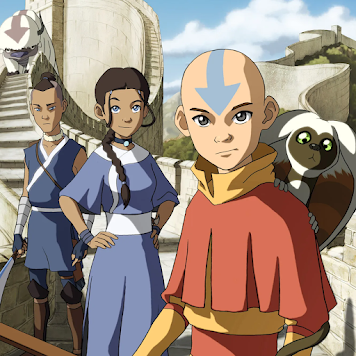
The first new AVATAR: THE LAST AIRBENDER project will be about Aang and his friends

It's been confirmed that the first new Nickelodeon Avatar: The Last Airbender project will focus on the original cast and will be set after the original show. The news was revealed at the San Diego Comic-Con.

Original Avatar creators Michael DiMartino and Bryan Konietzko have teamed up with Nickelodeon to create new animated projects in the same universe. Three animated movies have so far been greenlit, with at least the first set for a theatrical release. The first movie will be directed by Lauren Montgomery (Voltron: Legendary DefenderThe Legend of Korra). DiMartino and Konietzko will write, with OG Avatar writer Eric Coleman also on board. Further projects, including a new ongoing animated series, are also under discussion.

It's assumed that the original voice cast will return. The precise storyline for the sequel is unknown, but DiMartino and Konietzko previously authorised a series of graphic novels dealing with subjects like the search for Zuko's mother and political tensions between the Earth Kingdom and the Fire Kingdom colonies cut out of its territory a hundred years earlier, eventually leading to the founding of Republic City. These graphic novels could provide a storyboard for new projects, or the writers may choose to tackle unrelated subjects.

These projects are unrelated to the live-action remake of the original animated series being worked on at Netflix. The first season of that project wrapped production last month and will debut on Netflix in 2023.

Friday, 22 July 2022

FOR ALL MANKIND renewed for a fourth season

Apple+'s alternate history SF series For All Mankind has been renewed for a fourth season.

The series is based on the premise that the Russians beat the Americans to the Moon in 1969, triggering a far more intense space race than in reality, with the two countries racing to get the first space station in orbit and the first permanently-settled lunar base. The currently-airing third season takes the show into the mid-1990s, with the still-extant Soviet Union and United States competing to be the first to reach Mars, and having to content with surprise competition from a private space company.

The show is executive produced by Ronald D. Moore, Matt Wolpert and Ben Nedivi and stars (among many others) Joel Kinnaman, Shantel VanSanten, Jodi Balfour, Sonya Walger and Krys Marshall.

Season 4 will move the timeline into the 2000s. It's unclear what the story will be, but a likely focus is establishing the first permanent Mars colony and maybe even extending manned spaceflight to the moons of Jupiter.

Amazon releases another RINGS OF POWER trailer

Amazon have released a new trailer for The Lord of the Rings: The Rings of Power, which is now only six weeks away from airing.

The trailer is one of the more confusing that's been released so far, mainly because it surprisingly confirms that Sauron is in the season in a villainous role, already playing some kind of priest or religious figure. Although he does take up this role in the Second Age in Tolkien's books, it's not until near the end of the age when he is a prisoner on the island of Numenor. Here he seems to be in that role in Middle-earth many years earlier.

The trailer opens with Galadriel (Morfyyd Clark) placing an elven helmet on a very large pile of other elven helmets, declaring that the elves thought the war was over, a reference to the War of the Jewels in the First Age when the elves, humans and dwarves of Middle-earth fought against the first Dark Lord, Morgoth, a war which ended in Morgoth's exile from the world and the destruction of an entire subcontinent. Gil-galad (Benjamin Walker) sets a laurel crown on Galadriel's brow and declares that the days of peace have begun. Galadriel then says they thought a time of peace, plenty and prosperity had come and would never end.

We then see clips from earlier trailers, where Harfoot chieftain Sadoc Burrows (Sir Lenny Henry) declares that "the skies are strange," and we see a meteor ploughing across the sky. On the island of Numenor we see Tar-Miriel (Cynthia Addai-Robinson) showing a palantir to Galadriel, which Galadriel grasps. We see a flashback to the War of the Jewels, where Galadriel's brother Finrod (Will Fletcher) was slain, and Galadriel tending to her brother's body.

We are told that "evil does not sleep" and we get our first glimpse of Sauron (Anson Boon) as a white-clad human, apparently some kind of cult leader or religious figure (in the books, Sauron corrupts those around him by playing the role of a priest of Morgoth).

We also see King Durin III (Peter Mullan) talking to Prince Durin IV (Owain Arthur), something sure to rankle fans of the books, where each dwarven king named Durin is separated from the last by decades or centuries, and may be reincarnations of the same dwarf (so two of them being around simultaneously is an impossibility).

We see Galadriel in the ruins of a burning port and shots of an ominous evil castle (not Barad-dur, at least not yet). An old man claps the hand of a young boy called Theo (Tyroe Muhafidin) and asks him if he has ever heard the name "Sauron."

We see orcs on the loose, Theo grasping a black sword that seems to form out of the air, a boat bursting into flames, Theo embracing his mother Bronwyn (Nanzanin Boniadi), orcs showing deference to a leader, Halbrand (Charlie Vickers) in Numenor and Bronwyn rallying a village. 

Most intriguing is a sequence where several elves are shown unsheathing their swords. It seems probable that this is a depiction of the Oath of Feanor, when Feanor, leader of the Noldor, and many of his sons and followers swore an oath to follow Morgoth to Middle-earth and recover the Silmaril jewels he had stolen. This event is depicted in The Silmarillion, offering further credence to the idea that Amazon has at least limited access to that book to depict events in this series.

We then see Galadriel boarding a ship, Arondir (Ismael Cruz Cordova) fighting various enemies, Tar-Miriel carrying a child, the dwarven Princess Disa (Sophia Nomvete) singing, Durin IV holding aloft an item of mithril, Bronwyn and Arondir together, Galadriel joining a Numenorean cavalry charge, orcs fighting in a forest, Galadriel escaping a shipwreck caused be a sea serpent, troops marching in Numenor, Durin IV leading dwarven warriors and Nori Brandfoot (Markella Kavenagh) helping the Stranger (Daniel Weyman) from a fiery crater.

We see more of Arondir fighting in a pit with orcs, Sauron casting some kind of spell and apparently speaking, "You have been told many lies of Middle-earth," Arondir being accosted in a forest (maybe by Ents?) and, finally, a Balrog roaring.

There's a lot going on in this trailer and the chronology seems confused: the name "Sauron" being openly bandied around is odd given that the elves of the First Age would know him by that name and seek his immediate destruction. Sauron also appears to be in his priest guise many years than was the case, even before the Rings of Power are forged. There's also a curious mix of styles: the palantir looks different to those in the Jackson trilogy, but the balrog is a dead ringer for the one in Moria in the movies.

The Lord of the Rings: The Rings of Power debuts on 2 September and hopefully will clear up these confused story points.

UPDATE: It's been clarified that Sauron does not appear in the trailer, and the "cultist" figure is another character played by Bridie Sisson. Anson Boon does play Sauron, presumably in his Annatar guise, but is not shown in the trailer.

Disney in talks to acquire overseas streaming rights to DOCTOR WHO

Disney is in discussions with the BBC about picking up the overseas streaming rights to Doctor Who. The deal would not involve Disney creatively with the franchise in any way.

New Doctor Ncuti Gatwa and returning showrunner Russell T. Davies

At the moment, Doctor Who is wholly owned by the BBC and, apart from the 1996 TV movie (a one-off co-production with Fox), has been filmed inhouse by the corporation. For a series of specials airing in 2023 to celebrate the show's 60th anniversary, production is moving to an external, independent production company, Bad Wolf Studios. Bad Wolf is owned and run by former Doctor Who executives. Bad Wolf was also recently acquired by Sony, although that has no bearing on the rights situation: the BBC still owns Doctor Who and Bad Wolf are making the show for them on contract. This kind of independent production deal is commonplace in British television and is especially useful for BBC shows, as it allows profits be put back into the programme, whilst the profits from inhouse shows are sometime used to subsidise other, less successful programming. This approach has been problematic for Doctor Who, which like most BBC dramas has been on a tight budget squeeze ever since the 2008 financial crisis, ultimately leading to a reduction in the number of episodes filmed per season and growing chasms of time between seasons.

At the moment, the American rights to Doctor Who are held by HBO, who stream the show in America on HBO Max. Disney is bidding to acquire the streaming rights for the international market. If successful, this would allow Disney to add the show to their Disney+ service. Disney believes that Doctor Who, which has a strong adult-children crossover audience, would be a worthy addition to their franchises chasing the same audience, such as Marvel and Star Wars.

HBO and the BBC struck a deal in 2020 to host the show on HBO Max. Although no timescale was announced, rumours since they have suggested that the deal extends to Series 15. Next year's specials will be followed by Series 14, probably airing in early 2024, with a Series 15 likely to follow in 2025. As a result, if Disney's negotiations are successful it will still be several years before they bear fruit, unless they want to buy out HBO's deal early, which would be very expensive.

Disney would not have any creative say in Doctor Who's production, and Doctor Who would continue to air on the BBC and the iPlayer streaming service in the UK.

At least three specials for the 60th anniversary are currently shooting in the UK, and will see David Tennant return to the role of the Doctor as he re-teams with previous companions Donna (Catherine Tate) and Wilf (Bernard Cribbins) to face several new foes, including a flamboyant villain played by Neil Patrick Harris. Series 14, which sees Sex Education star Ncuti Gatwa take over full-time as the next incarnation of the Doctor, is set to start shooting in the autumn. Former Doctor Who showrunner Russell T. Davies is returning to helm and write the show with the new specials.

Before all of that, one single last episode from the current Jodie Whittaker era is set to air in October, and will see the Thirteenth Doctor join forces with former companions Ace (Sophie Aldred) and Tegan (Janet Fielding) to fight the Master (Sacha Dhawan). The episode will see the end of the Thirteenth Doctor's era.

Mess Effect: A Nitpicker's to the Universe That Fell Apart by Shamus Young

In 2007, BioWare released their science fiction roleplaying video game Mass Effect, the first in a proposed trilogy. The game sold well and was critically acclaimed, for its intricate worldbuilding, great characters and solid storytelling. However, its gameplay was not as well-received, and after BioWare were acquired by uber-publishers Electronic Arts, there was a marked shift in the development of the second and third games in the series. The intricate worldbuilding and strong story focus were diminished, and instead there was more focus and emphasis on action set-pieces, stronger combat and character side-stories. These changes were well-received by many (Mass Effect 2 and 3 outsold the first game comprehensively) but some noted a significant decline in the plot logic as the series as it progressed, culminating in what is still one of the most controversial endings in video game history.


Video game critic Shamus Young (who sadly passed away a few weeks ago) spent a lot of his time on his Twenty-Sided blog critiquing the role of storytelling in video games, and how storytelling, worldbuilding and characterisation are integrated with gameplay. Many games de-emphasise their stories, using them as bare excuses for why you as the player now have to go and kill people or monsters. But roleplaying games like the Mass Effect series live by their stories, since they provide the impetus for what you do and why you are doing it. Sometimes, your character has to make major decisions that impact on the fate of thousands or millions of people, and your understanding of the world determine what decisions you make.

Young's analysis of the Mass Effect series starts with the acknowledgement that the first game in the series was unusual in how well it set up and executed its story, establishing a cast of memorable, colorful characters (Garrus, Wrex, Tali, Liara, Joker and David Anderson are as fine as collection of space adventure friends as you could ever ask far, and Saren and Sovereign as worthy foes) and how it built its space opera world with surprising skill. Mass Effect's worldbuilding is nothing too original - it's about 75% Babylon 5 mixed with 25% of Battlestar Galactica and given a lot of Star Trek-flavoured mixers - but it is executed with superb flair. The races, background history and lore are created and laid out with accomplished skill, and then integrated into the game itself. The genophage isn't just a historical curiosity, but a ongoing, horrendous crisis for the Krogan people and how your character views it may determine whether Wrex is a valued ally or a bitter (and very quickly, dead) foe, or if the entire Krogan race joins the fight against the Reapers or not. The Quarian-Geth conflict isn't an irrelevant footnote from 300 years ago, but a real, ongoing struggle with the fates of millions of sentient beings swinging in the balance.

It's this integration of story, character and worldbuilding with the actual gameplay and story which is Mass Effect's greatest triumph, and Young, argues, an increasingly major problem in the games that follow. Mass Effect 2, infamously, took a hard left turn from where Mass Effect left off and devoted most of its length to a huge side-quest rather than following the storyline from the first game more organically. In the process, Mass Effect 2 made a lot of very strange decisions that, from a story and worldbuilding perspective, verge on the nonsensical (Shepard agreeing to join forces with ultra-violent terrorist organisation Cerberus despite fighting them several times in the prior game; the Illusive Man's plan for dealing with the Collectors not making any sense unless he's already read the game script). What saved Mass Effect 2, and indeed made it many people's favourite game in the series, is the enormously enjoyable "recruiting the Dirty Dozen" mission structure, the superior combat and the excellent characters, and the time the game spends on allowing you to get to know and befriend them, and how the nurturing of these relationships impacts on the "suicide mission" at the end of the game.

Mass Effect 3 is thus left having to get the main story back on track after Mass Effect 2 ignored it, but the process of having to effectively be both Acts II and III of the trilogy in one game, of having to deal with a lot of loose threads from Mass Effect 2 and the fact that Mass Effect 3 had to work both if you'd killed off the entire cast of the second game or not, meant that Mass Effect 3 was under a lot of strain that led to further, compounded story errors. These included: Cerberus being the main enemy for much of the game rather than the Reapers and having apparently inexhaustible resources; a villain in the game coming out of nowhere; the Crucible super-weapon not really getting a lot of development; and the ending being somewhat illogical (and only marginally improved by post-release DLC) and anticlimactic.

Throughout the book, Young notes that these problems are not actually major problems for a huge number of people. The story that the trilogy tells is solid when seen from a distance, the characters are exceptional and many, many individual quests (especially the character-focused side-quests, the Citadel DLC and the major subplots involving the genophage and the Geth/Quarian conflict) are superb. The combat gameplay improves game on game, and the third game introduced a compelling multiplayer mode. Each game tried something new, even if it didn't always work.

However, Young does convincingly argue that the trilogy is uneven when it comes to its storytelling and worldbuilding, and the cut corners and left-field turns the plot makes in the latter two games are systemic problems that frustratingly undo a lot of really good work the first game accomplishes. For example, the first game has two excellent villains (Sovereign and his stooge, Saren) with well-established goals and motivations, and the game has the flexibility for you to help Saren realise he's made a huge mistake and try to make amends. Neither ME2 or ME3 has very good villains at all: the Illusive Man just makes a lot of vague speeches; Kai Leng shows up out of nowhere like a lame cockroach ninja, does nothing and dies; Harbinger likes to "TAKE CONTROL" of enemy puppets in such a way that you've already killed them long before he's a threat; the Catalyst Intelligence (aka Supremely Punchable Starboy) is Captain Vagueness; and even the Archon from Mass Effect: Andromeda is a ranting nobody, less threatening than a 13-year-old on Xbox Live who's fired up on aggression and too much Coca Cola.

Young also spends only a brief period on the ending to the trilogy, noting the commonly-cited issues with it. He's more interested in identifying where the problems emerged earlier on in the story and how they evolved to the point where the trilogy possibly couldn't end in any other way than this kind of disappointment (but does make a few heroic attempts to suggest improvements).

The book intelligently deconstructs the trilogy's storytelling and worldbuilding - and even dives into Andromeda in a lengthy coda - but Young is wary of drawing easy conclusions. He notes that the trilogy's hard left turn coincides with EA buying BioWare and it would be incredibly easy to blame EA's more corporate, profit-seeking culture, and in particular the way that it rushed BioWare on developing the second and third games, for the issues that cropped up. But he doesn't think that's the whole problem. Some fans have also cited Drew Karpyshyn departing between Mass Effect 2 and 3 as an issue, but Young also identifies problems in the two games Karpyshyn worked on and very well-executed areas in the two games he did not write, so that's not the entire story either (Karpyshyn's recent AMA where he himself refuted the argument that he was a details and worldbuilding guy, praising others at BioWare for focusing on those areas, is interesting in that regard). Young even defends some changes, noting that the original plan for dark energy to be the main problem in the setting wasn't very well established in the first two games, whilst the AI-organic conflict had at least been present since the first game through the confrontation with the AI on Luna and the Geth/Quarian story elements, and was better integrated into the background.

What I also appreciated about the book was Young's constant proposal of solutions to fix the problems, often within the context of adjusting dialogue in given scenes rather than completely rewriting entire plots (or even games). Way back in the 1990s, a guy named Phil Farrand wrote a series of books called The Nitpicker's Guide, focusing on the Star Trek franchise. In those books he noted that plot holes, weird moments of characterisation and bits where it felt like someone had forgotten a fundamental bit of lore were often things that could be fixed very, very easily with small tweaks rather than sweeping changes and Young often puts that into practice here. He even proposes direct rewrites to important scenes that cleans up motivations and background information.

For a book with such a negative-sounding title, Young approaches the subject with a degree of positivity, informed by his love of the story, the setting and the characters. The only time I felt a degree of negativity overload setting in was during his coverage of Andromeda, where his clear loathing of the game's antagonist feels like it overwhelmed the more positive elements of the game. I also feel his coverage of Andromeda was a bit off the mark in some ways: Young claims that colonialism is not particularly part of the game when in fact you spent a fair bit of the game mediating disputes between the Andromeda Initiative colonists, the rebels who've broken away from them and the alien Angara who are a bit narked off about a hundred thousand people showing upon their doorstep, saying they are friends but can they please have their food and resources and a place to live?

Still, Young makes some excellent points throughout the book on the interface between storytelling, worldbuilding, characters and gameplay, and constantly pays tribute to the Mass Effect series in how well it handles these elements in many areas, only to lose the plot in others. There's a strong vibe here of how a franchise started off with brilliant writing and worldbuilding and gradually degraded in those areas, perhaps not matched by any other video game series (although Fallout fans, I suspect, might want a word).

Mess Effect: A Nitpicker's Guide to the Universe That Fell Apart (****) is a long but mostly engrossing read on an interesting and underrated subject, that of the importance of details and consistency in video game storytelling. You can get the book on-demand from Amazon (which also supports his family) or read the original blog series on his website.

Thank you for reading The Wertzone. To help me provide better content, please consider contributing to my Patreon page and other funding methods.

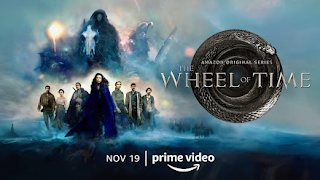
WHEEL OF TIME formally renewed for a third season

Amazon have renewed their Wheel of Time TV series for a third season. The announcement came during a panel at the San Diego Comic-Con. It had previously leaked that the show had been renewed for a third season in February and was under a consideration for a fourth, but Amazon rowed back on those rumours at the time.

The Wheel of Time aired its first season in November 2021, almost immediately becoming the single most-watched season of original programming in Amazon's history. The first season of Reacher and the third season of The Boys subsequently have notched past that, demonstrating Amazon's consistent growth in market share whilst their main rival, Netflix, has begun contracting. After a mixed start, the full season attracted reasonable critical acclaim, being certified fresh on Rotten Tomatoes, despite grumbling from part of the book fanbase for its deviations from the source material (as well as a final pair of episodes somewhat hamstrung by being produced during the COVID-19 pandemic, including a castmember unexpectedly leaving).

Season 2 had been greenlit whilst Season 1 was still in production, allowing production to continue from Season 1 into Season 2 without too much of a delay. The same may now be true of Season 3, with this renewal allowing work to get underway on the season quite soon and before Season 2 airs.

The airdate for Season 2 remains unconfirmed. With Season 2 wrapping exactly a year after Season 1, it's possible that the show will likewise air a year after the first season, in November this year. However Amazon has several issues with more post-production requirements for Season 2 (the COVID delays ironically allowed post-production on Season 1 to start much earlier in the process), another completed fantasy season waiting for a slot to air in (the second season of Victoriana steampunk show Carnival Row) and possibly not wanting to air The Wheel of Time so close to its flagship medieval fantasy show for the year, The Rings of Power, which will air its first season from 2 September through 14 October. These issues may make a January/February 2023 airdate for Wheel more likely.

Showrunner Rafe Judkins also hints at the content of Seasons 2 and 3. Whilst Season 1 adapted the first novel in the book series, Season 2 will reportedly draw on elements of Books 2 and 3. Judkins notes that Season 3 will cover material from the fourth volume, The Shadow Rising, his favourite book in the series. However, with the planned eight season run of the show requiring to compress fourteen books, it might be that Season 3 also covers material from the fifth book in the series and maybe later as well.

Thursday, 21 July 2022

The DUNGEONS & DRAGONS movie gets its first trailer

The first trailer has been released for the upcoming Dungeons & Dragons movie, Honor Among Thieves.

The trailer sees bard Edgin Darvis (Chris Pine) and barbarian warrior Holga Kilgor (Michelle Rodriguez) assembling a team to take on evil-doers. The rest of their party is rounded off by a paladin (Regé-Jean Page), half-elven sorcerer Simon (Justice Smith) and tiefling druid Dorig (Sophia Lillis), who specialises in transforming into an adorably murdery owlbear during combat. They have to face off against a number of foes, including the foppish Forge Fitzwilliam of Neverwinter (Hugh Grant), although they also have their work cut out facing down a displacer beast, a black dragon, a gelatinous cube and several evil sorcerers.

The movie is set in Ed Greenwood's Forgotten Realms world, specifically along the Sword Coast North with a focus on the city of Neverwinter (well-known from video games like Neverwinter Nights), and marks the first time the Realms - which have sold somewhere in the region of 100 million novels, over 10 million video games and several million RPG products - has ever been portrayed in live action. Reportedly we may see some cameos from major Forgotten Realms characters, so keep those eyes peeled for Elminster or Drizzt Do'Urden (who is also having his own live-action TV series developed back at Hasbro's production arm).

The film was written by Chris McKay and Michael Gilio, with Jonathan Goldstein and John Daley directing. The film hits cinemas on 3 March 2023, and looks like a cheesy fun time. It will have to go some to be worse than the four previous attempts to bring D&D to the screen, resulting in one dubious cinematic feature in 2000 (although worthwhile for Jeremy Irons' mind-boggling performance as the villain), two unwatchable straight-to-DVD attempts in the 2000s and a forgettable, animated Dragonlance film in 2007.

A first look at the characters from the upcoming DUNGEONS & DRAGONS / FORGOTTEN REALMS movie

Early visitors to the San Diego Comic-Con in California have gotten their first glimpse of the characters from the upcoming Dungeons & Dragons movie, set in the Forgotten Realms world.

SDCC has a "virtual experience" set up in the form of a D&D tavern, where people can go for a drink and be treated to visuals from the film, including a dragon flying by. These visuals include our first looks at the main cast from the film.


Relatively little is known about the movie, except that it is set in the Forgotten Realms, in the Sword Coast city of Neverwinter, and features an unspecified threat unleashed by Hugh Grant's villain, which a band of heroes (or hero-adjacent protagonists) have to deal with.

Dungeons & Dragons: Honor Among Thieves is set for release on 3 March 2023.