Showing posts with label anniversaries. Show all posts

Monday, 3 August 2026

A GAME OF THRONES at 30

In May 1996, eager fantasy fans in the UK hit their local bookstore to pick up the seventh and latest Wheel of Time novel in hardcover. Robert Jordan's giga-series ruled the roost in fantasy sales, only beaten in the UK by homegrown legend Terry Pratchett and his Discworld saga (which had two entries in 1996, Pratchett not being one to hang around). But fans picking up the brick-thick tome could also pick up something else: a preview booklet for a new novel arriving later that year. The preview booklet even had a Robert Jordan back cover quote: "A Game of Thrones grabs hold and won't let go!" proclaimed Jordan. "It's brilliant!" he added, possibly redundantly.

Arriving in the first week of August 1996 (release dates being a window rather than a specific date at that point, especially for the first book in a new series by an author who was not a household name), A Game of Thrones was George R.R. Martin's first solo novel for thirteen years. That novel, the supernatural rock and roll story The Armageddon Rag, had sold poorly and had dented Martin's publishing reputation to the point that he couldn't sell his his next planned books and instead took up a career in Hollywood, working on The Twilight Zone and Beauty and the Beast. He did repair his reputation in publishing circles with his short story collection/fixup novel Tuf Voyaging (1986) and then as the editor-in-chief of the Wild Cards shared world anthology series, which started in 1987, but there was a perception that a promising genre novelist had been lost to the silver screen.

They may have been right, for a while, but Martin had grown frustrated with everything he wrote being "too long and too expensive" for the screen and started planning a return to fiction, where length and budget were not (or at least less) of a concern. With Beauty and the Beast finishing in 1990, Martin started work on Avalon, a new novel in the Thousand Worlds science fiction setting of his early work. By summer 1991, work on that novel was coming along well when he was almost forcibly struck by the vision of a young boy watching a man being beheaded in the snow. Martin didn't know what that meant, whether it was a short story or a novella or more, but started writing. More chapters came, and he left Avalon cooling off in a corner of his hard drive (where it presumably remains, the victim of maybe the biggest writing tangent in human history).

What the first chapter of A Game of Thrones looks like on George's WordStar 4.0 word processor. He's written the entire series like this. Writing white-on-black is something that would drive me crazy, making me want to murder every single character I was writing...wait a sec.

Martin's early career can be defined by promising series he started writing only to dry up after a promising first instalment, and he generally needed to get a story down whilst it was white-hot in his mind before it could cool off. As a result, A Song of Ice and Fire was almost strangled at birth when Hollywood called Martin up and offered him the thing he'd been dreaming about for ten years: his own TV show. Martin agreed with alacrity and began working on Doorways, a TV series about a character who can slip between parallel universes. Sets were built, casting was undertaken in Europe and a pilot episode filmed, featuring among its supporting players an unknown actress called Carrie-Ann Moss. By late 1992 or early 1993 ABC had passed on the project and Martin returned to working on what he was now calling A Game of Thrones. Rather than losing the thread of the novel whilst working on the TV pilot, Martin had used the time to solidify some of his ideas.

Martin had by now drawn a map of the vast continent called Westeros where the bulk of the action would take place. Additional action was happening to one character on an even bigger continent to the east, but Martin decided not to map or name that landmass to preserve a sense of mystery. He had also made a key decision on the tone of the story. His initial chapters had not featured any magic at all, and he had toyed with the idea of having no fantastical or supernatural elements of any kind, just a "fake history" in a different world. Martin's friend Phyllis Eisenstein, knowing of Martin's lifelong love of writers like Robert E. Howard, Jack Vance, Michael Moorcock and Tolkien, thought this was limiting and suggested that he "put the dragons in." He took this advice to heart and, not one to do things by thirds, he put three dragons and a multitude of zombies and ice creatures in for good measure. A new prologue incorporating some of these elements followed.

Robert Jordan's copy of A Game of Thrones, signed by George R.R. Martin.

In October 1993, Martin sent the novel's opening thirteen chapters (totalling around 170 pages) out to publishers, alongside a rough outline of what he now considered to be a trilogy called A Song of Ice and Fire. Martin was not a fan of outlines, feeling they inhibited the improvisational urge that gave rise to the best fiction (in this he was similar to Robert Jordan, Terry Pratchett, Stephen King and J.R.R. Tolkien, so was in reasonable company), so cheerfully admitted that the outline would probably bear no resemblance to the actual series as it unfolded, as would very much prove to be the case.

The outline did its job, with publishers in both the USA and UK eager to snap up the series. Epic fantasy was huge business at the time but an epic fantasy from a credible, multi-award-winning genre figure was much rarer. More to the point, the editors who read the early chapters saw immense commercial potential mixed with excellent dialogue, potentially a critical and sales success. If anything, the UK was even more thrilled than the US publishing houses, with Legend Books and HarperCollins getting into a brutal bidding war that ended with Legend's John Jarrold admitting defeat to HarperCollins's Malcolm Edwards after the tactical deployment of a cheque for £450,000 (about £978,000 in today's money) in February 1994.

Martin discovered he may have bitten off more than he'd initially planned to chew (potentially not for the first time). His original estimate of three 700 manuscript page books started to look naive when he soared past 1,000 manuscript pages for the first book and kept going...and going. He took a hard look at the pages he had and chainsawed the book at a dramatically appropriate moment, calling this first coherent chunk A Game of Thrones and sending it off to his publishers, along with his apologetic note that A Song of Ice and Fire would now be four volumes in length.

Someone who was very happy was Robert Jordan, who sent George's editor a letter celebrating the fact that A Song of Ice and Fire would now take as long as it would take, across as many novels as it would take, rather than being artificially restricted to just three books. Jordan's unrepentant enjoyment of A Song of Ice and Fire may be explained by the fact that his original outline for The Wheel of Time was far more heavy metal, balls-out crazy than what the series ended up being, with half-demons invading our world through portals and the main character having sex with almost every female character of note in his quest to save the world, presumably by exercising his prostate. Jordan's editor (also his wife) and publisher asked him to tone it down a bit and write something with a bit wider of an age range, which ended up being commercially the better decision, but Jordan may have felt a little disappointed at not having unleashed his inner keg rager of a writer, whilst George had.

Finally complete (sort of), A Game of Thrones hit shelves in the first week of August 1996, preceded by the aforementioned sampler in May in the UK and, in the USA, by Blood of the Dragon, a novella consisting of all the Daenerys Targaryen chapters arranged into a single story. This novella was published in Asimov's, one of the leading SF magazines of the day, to try to tempt Martin's already-existing SF fanbase into trying his fantasy novel.

These intriguing tactics proved...not really successful. A Game of Thrones launched to a muted reception. Sales were okay, but not stunning. Reviews were decidedly all over the place. As well as Robert Jordan, authors Raymond E. Feist, Katherine Kerr and Anne McCaffrey gave the book glowing reviews and cover quotes, but critical reviews were somewhat less unanimous. SFX Magazine, Britain's biggest-selling SF magazine, was cool at best. The reaction was, after five years of build-up, underwhelming. However, Martin did get some consolation when Blood of the Dragon won the Hugo Award for Best Novella in 1997, the only literary Hugo the series has won to date (A Storm of Swords made a strong swing for the Best Novel prize in 2001, but was defeated by Harry Potter and the Goblet of Fire).

But, things slowly got better. The Wheel of Time fanbase, responding to Jordan's exultations about the novel and, with that series entering its longest hiatus (though, at two-and-a-half years until the next novel, perhaps not that bad in retrospect) many decided to check out A Game of Thrones. Arguably the earliest stirrings of the online Song of Ice and Fire discourse came about on Wheel of Time fansites. Some eager fans quickly created their own websites, with early discussion on the Dragonstone site before moving to Westeros.org.

A Game of Thrones came out in paperback and saw a jump in sales, with additional cover quotes joining the party. Thanks to the novel being split off from the larger manuscript, Martin already had a significant head start on the second book, which he now called A Clash of Kings. Martin's original plan had been to release a book a year in the series, but when he turned in A Clash of Kings in early 1998, he was deeply apologetic and some very early grumblings online can be discerned about the lateness of the book (proving that historical irony is definitely a thing). More traditionally, the same thing that had happened to Thrones had happened to this book. Once again, the book had gotten too big to be published in one volume and Martin's trusty literary chainsaw had been deployed, with a third volume called A Storm of Swords introduced to the mix.

At this point Martin decided to at least have a go at writing a new outline, one that has never been made public, and from this he deduced that the series would now consist of six books: A Game of Thrones, A Clash of Kings, A Storm of Swords, A Dance with Dragons, The Winds of Winter and A Time for Wolves (a title he was never happy with, many years later replacing it with A Dream of Spring). He also mounted his first reconnaissance expedition into the lands of Westeros outside of the main series. His colleague Robert Silverberg had called to ask for a short story in the same world for an anthology he was editing called Legends. Martin eagerly agreed, and his story The Hedge Knight, about a young knight and his unusual squire adventuring in the Seven Kingdoms some ninety years before the events of A Game of Thrones, duly appeared in the book alongside new stories in their signature universes from the likes of Pratchett, King, Feist...and inevitably Robert Jordan. It was arguably Jordan's short story New Spring that drove sales of the anthology more than anything else, which led to people reading The Hedge Knight, which led to people buying A Game of Thrones and its newly-minted sequel.

A US first-edition hardcover of A Game of Thrones, retailing for £540 at the 2014 London WorldCon. I can only assume the value has gone up.

The rest is history, both past and present. The series did expand, though thankfully only from six to seven planned novels (touching wood). A tiny TV operation called HBO picked up the screen rights to the books and turned them into the biggest drama show of the entire decade in the 2010s, driving sales of the books to over 100 million (HarperCollins, you'll be happy or, more likely, totally indifferent to know, turned a profit on that advance). The novels would get turned into video games, board games, tabletop roleplaying games, action figures, miniatures, calendars and, most vitally cookery books. An entire ecosystem of websites and YouTube channels dissecting every scrap of the lore and background material would spring up. The TV show would spawn two spin-off shows, both successful, not to mention a stage play and even a book of witticisms (okay, maybe that one was pushing it a bit). The only thing missing is a Game of Thrones-branded flamethrower shaped like a dragon.

The books would get everything but, so far, an ending. Yes, and I know the novelty of this information this will shock readers to the very core of their being, A Song of Ice and Fire is, thirty years on from the release of A Game of Thrones (and fifteen from A Dance with Dragons), incomplete, with five of the planned seven books out and the sixth reportedly sitting on over 1,200 manuscript pages as of last reporting. We'll have to wait and see if the series will be finished. It will have etched its mark into the fabric of fantasy history even if it isn't, but everyone, and George R.R. Martin most of all, will be much happier if the words the series ends on are "THE END" and not "TO BE CONTINUED." 

But it's hard to overstate the positive impact that A Game of Thrones had on the history of fantasy fiction, an impact maybe exceeded only by The Lord of the Rings, Robert E. Howard's Conan the Barbarian stories, the Harry Potter phenomenon, and Dave Arneson and Gary Gygax's invention of Dungeons & Dragons in the 1970s, and rivalled only by Terry Pratchett's series about a flat planet and Robert Jordan's series about a battle of the sexes played out as a magical metaphor. Authors like Joe Abercrombie, Scott Lynch and Mark Lawrence would gain traction from playing in a similar sandbox to Martin. Martin would champion younger authors like Daniel Abraham, who (as half of author-unit James S.A. Corey, alongside Martin's former assistant Ty Franck) would go on to write their own successful multi-volume series that would become a popular TV show (The Expanse, in that case). Fantasy would gain a more traction as a serious genre for adults after A Game of Thrones was published.

Thank you for reading The Wertzone. To help me provide better content, please consider contributing to my Patreon page and other funding methods.

Wednesday, 26 March 2025

DOCTOR WHO celebrates the 20th anniversary of its revival

Doctor Who is celebrating the 20th anniversary of its revival. The episode Rose, written by Russell T. Davies, aired on the BBC on 26 March 2005, introducing the Ninth Doctor (played by Christopher Eccleston) and his companion Rose (Billie Piper) to a whole new generation of fans, sixteen years after the original run of the show had come to an end.

Christopher Eccleston as the Ninth Doctor and Billie Piper as Rose Tyler, in a publicity still for the launch of the new Doctor Who in 2005.

Russell T. Davies had been a Doctor Who fan since childhood and had been trying to resurrect the show since he began his writing career. One of his first projects, Dark Season (1991), was almost a stealth teen revival of the show, featuring an eccentric, brainy protagonist (Marcie, played by Victoria Lambert) and her two "companions," one of whom was played by Kate Winslet, fighting an evil corporation trying to conquer the world with a killer AI. As Davies' star rose, he tried several times to relaunch the show, with the BBC strongly considering a proposal from him called Doctor Who 2000 in 1999 but demurring due to ongoing attempts to launch a feature film based on the franchise. It was only after the enormous success of Davies' Queer as Folk on Channel 4 that the BBC courted him seriously and agreed to revive Doctor Who, announcing the news in late 2003.

To revive the show, Davies decided to make sweeping changes to the format, many of which troubled long-time fans who'd been waiting a decade and a half for regular new episodes. He chose to model the show after contemporary American genre dramas like Buffy the Vampire Slayer. He decided 45-minute episodes could pack more story and worldbuilding in than the old 25-minute format, but he also decided to make most of the episodes standalones, compared to the old format of serials consisting of 4-6 episodes (with outliers of stories lasting up to 14 episodes). This meant mostly doing away with cliffhangers - a staple of the classic show - and wrapping up stories very quickly (after some consideration he did allow for a few two-parters, restoring the cliffhanger experience, albeit occasionally). A common complaint of Davies' initial run was that episodes were too fast-paced, hectic and difficult to follow. But he also integrated serialised storytelling, with each season having a mystery or story that unfolds in the background of the individual episode storylines, only coming to the fore at the end of each season.

David Tennant is the most popular actor to play the Doctor since the show's return. He played the Tenth Doctor from 2005 to 2010, subsequently returning for the 50th anniversary special in 2013. He then returned again for three special episodes celebrating the 60th anniversary in 2023, playing the Fourteenth Doctor. 

He also decided to revamp the show's mythology. Between the original show and the new run, a vast "Time War" had taken place, in which the Doctor's homeworld of Gallifrey had been destroyed and his species, the Time Lords, rendered extinct. The Doctor is dealing with the stress of this event, leaving him somewhat more aloof than he was before, until he meets young London shop-worker Rose Tyler, whom reminds him of his sense of adventure and morality. As the first series unfolds, we learn that the Doctor's most enduring foes, the Daleks, were also destroyed in the Time War, but it's not too long before the Doctor starts encountering survivors of the conflict. Events culminate in the epic series finale, where he has to hold off an entire battle fleet of Daleks from destroying Earth.

One of Davies' masterstrokes was casting Christopher Eccleston as the Ninth Doctor. Eccleston was known mostly for very serious, intense roles in TV shows like Our Friends in the North and Cracker, and movies like Shallow Grave. Davies had worked with Eccleston on The Second Coming, a mini-series where Eccleston plays someone who may (or may not) be the Second Coming of Jesus, except this time around the Son of God has decided to incarnate in Manchester (where else?). For himself, Eccleston had wanted to try his hands at more comedic roles and being a role-model for children. His casting brought gravitas to the project. Davies was also impressed with the audition of Billie Piper, a former teen pop star who was looking to reinvent herself as an actress. Piper brought tabloid interest to the new show and cynicism about stunt casting, but her performance ultimately won over doubters.

Matt Smith played the Eleventh Doctor from 2010 to 2014. He remains the youngest and least-known actor to have played the role, but was a huge success, with the show achieving arguably its highest level of international success during his run. The role made Smith a star, paving the way for his later roles in The Crown and his ongoing role in House of the Dragon.

Many people, including those at the BBC, were worried about reviving the show. They feared the premise was too hokey and kids playing video games or watching reality shows or cooler US series wouldn't be interested. They needn't have worried. Doctor Who's return was an immense ratings success and, after some initial doubting, a critical one as well. The BBC, impressed with the show's performance, quickly commissioned another season, and almost immediately ran into a major problem.

Christopher Eccleston had not enjoyed filming, especially in the early going of the season, and had clashed badly with one of the directors. Eccleston felt he did not have sufficient backup from the producers and decided to quit (he almost changed his mind after the later blocks of filming went far more smoothly, but decided to stick to his guns). The story was threatening to leak to the media, so the BBC rushed out a press release which included quotes from Eccleston that he'd never said, leading to friction.

Peter Capaldi played the Twelfth Doctor from 2013 to 2017, with Jenna Coleman playing his companion Clara from 2012 to 2015. Although several of the show's most critically-acclaimed episodes aired during this tenure, the Capaldi era was criticised for being too adult and dark, and saw the show start to lose viewers, despite dealing with more interesting storylines.

Davies steadied the ship by convincing David Tennant - whom he'd worked with on a Casanova mini-series - to step in to replace Eccleston and quickly moved into production on the second series. However, it appears that attempts to mend fences with Eccleston, if any were made, were not successful. Though Eccleston later returned for some audio dramas and renewed his friendship with Billie Piper, he refused to consider returning to the show under Davies' stewardship (he did consider a request to return for the 50th anniversary celebrations under Steven Moffat, but ultimately demurred).

Despite that bump in the road, Doctor Who's return was extraordinarily successful. Since 2005, the revamped Doctor Who has aired 188 episodes across 14 seasons of television. It has managed to air at least one episode in every year since its return (though 2016 and 2019 only saw one episode apiece air for the whole year). Six actors have played the Doctor since the show's resurrection: Christopher Eccleston (2005), David Tennant (2005-10, 2022-23), Matt Smith (2010-14), Peter Capaldi (2013-17), Jodie Whittaker (2017-22) and Ncuti Gatwa (2023-present), although several alternate/"guest" incarnations of the Doctor have been played by actors including John Hurt and Jo Martin. In addition, all of the surviving earlier actors to have played the Doctor have made returning guest appearances, with the deceased ones returning via stock footage or being recast. At least sixteen regular "companion" characters have also starred in the show (depending on how you count them, there could be quite a few more). Three showrunners have helmed the show since its return: Russell T. Davies (2005-10, 2023-present), Steven Moffat (2010-17) and Chris Chibnall (2018-22).

The revamped show also resulted in three spin-off shows airing: Torchwood (2006-11), The Sarah Jane Adventures (2007-11) and Class (2016).

Jodie Whittaker played the Thirteenth Doctor from 2017 to 2022, the first woman to play the role long-term. Although her performance was praised, her era was contentious for inconsistent writing, dubious lore retcons, too many characters and, after a strong start, declining ratings.

Doctor Who has faced some stiff challenges since its return. The BBC considered cancelling the show when both Tennant and Davies decided to leave after a run of special episodes ending in 2010, but decided to give new actor Matt Smith and new showrunner Steven Moffat a chance, with both delivering the show to new heights of success. The show arguably achieved its cultural zenith during its 50th anniversary celebrations in 2013, with a special episode shown in cinemas around the world and the show making a breakthrough in the United States, albeit a relatively short-lived one. However, the show suffered from the BBC's declining fortunes through the 2010s, with the corporation's funding under severe strain. The show went from airing a season a year to sometimes splitting a season and its attendant specials across two or even three years. The episode count was gradually cut from 13 at the start of the decade to 10 by its end. The show was also buffeted by the arrival of streaming platforms, with first-run ratings gradually declining over the latter 2010s. Production problems caused by COVID badly impacted the end of Jodie Whittaker's era.

Critically, the revived era of the show was always somewhat divisive, but with the showing enjoying huge ratings, merchandising sales and popular success, this was not a major problem until ratings started falling during the Peter Capaldi era. Some critics and fan reviewers argued the show had become too dark and depressing during this period, and younger viewers did not relate as well to Capaldi playing an older version of the Doctor. However, there was widespread praise for occasional classic episodes (like Listen and Heaven Sent). Reviewers became more negative with the arrival of the Chris Chibnall era, with widespread criticism of the writing and characterisation, particularly the issues caused by a more crowded TARDIS crew (with four regular characters instead of just two, to try to lighten the workload on the actor playing the Doctor). There was also anger about the decision to retcon the Doctor's origin story, which was poorly-explained, even more poorly-explored and never really resolved. After an initial bump, this era saw ratings continue to decline.

Millie Gibson as Ruby Sunday and Ncuti Gatwa as the Fifteenth Doctor, the incumbent TARDIS crew. Their era has seen Disney take over as co-financiers and international distributors for the franchise, but has had a mixed critical and commercial reception so far.

To reverse ailing fortunes, the BBC re-hired Russell T. Davies and entered into a co-production and international distribution deal with Disney+. First-run ratings on the BBC continued to decline, but Disney acknowledged the show had performed solidly for them (though not spectacularly). Critics continued to be divided, but there was at least universal agreement that the 8-episode seasons under the Disney deal were far too short to deliver satisfying story arcs, and a scheduling issue with new actor Ncuti Gatwa (that saw almost half his first season be made up of "Doctor-light" episodes) adversely impacted the show.

All sorts of rumours are now floating around regarding the show's future. A new eight-episode season, the fifteenth since its return (and forty-first in total), is in the can and will start airing on 12 April. A five-episode spin-off mini-series, The War Between the Land and the Sea, is also in the can and is expected to air in late 2025, completing the deal between the BBC and Disney+. Whether the deal will be renewed or not remains to be seen.

If the revamped Doctor Who does end here, it will have been a hell of a run, mostly very successful but with some missed opportunities. Given Doctor Who's universal and timeless themes, I'm pretty sure it will eventually return in some form or another, hopefully not taking another sixteen years to do so.

Friday, 26 January 2024

Happy 50th Birthday to DUNGEONS & DRAGONS, and the tabletop roleplaying genre

Dungeons & Dragons turns 50 years old today, or at least today-ish. The first few copies of the original release of the game hit the wild in late January and early February 1974, although the ad hoc nature of the game's development and release means there's always been ambiguity over the precise date.

D&D was co-developed by Gary Gygax and Dave Arneson, two wargamers from Wisconsin. Since the 1960s they'd been playing and designing wargames, starting off in traditional arenas like Civil War and Napoleonic War games, as well as naval titles (including their first co-designed game, Don't Give Up the Ship!). By the end of the decade they had developed an interest in fantasy fiction, with Gygax particularly driven by his love of the works of Jack Vance, Fritz Leiber, Poul Anderson, Michael Moorcock and Robert E. Howard. Arneson and some of their friends were also fans of The Lord of the Rings, which had recently blown up big time (Gygax was cooler on Rings, which he considered boring, preferring the shorter, more focused adventuring of The Hobbit).

Merging fantasy with wargaming seemed an obvious move, and as early as the late 1960s Gygax was organising a play-by-mail campaign set in a fantasy land called "the Great Kingdom." However, assembling a large army of elves, orcs and goblins was difficult, forcing players to substitute models of, say, French line infantry or Prussian hussars. In 1971 Gygax and Jeff Perren collaborated to create a wargame, which they named Chainmail. Drawing on 1968 wargame Siege of Bodenburg for inspiration, the game focused on medieval battles but also had a "fantasy supplement" with rules on incorporating elves, dwarves and magic into the game.

Arneson was a fan of Chainmail but had also been working on a fantasy variation of Braunstein, an experimental rules system allowing for the control of individual characters on the battlefield. As he developed the project, Arneson added elements including character classes and levels, experience points and armour class, as well as a background setting, which he called "Blackmoor." Arneson invited Gygax to play the game and Gygax immediately saw the potential for it. He developed many of the ideas in greater detail and play-tested the first variations at home with his wife and children. He and Arneson agreed to develop the game as a commercial project; according to legend, Gygax's then-two-year-old daughter picked the title "Dungeons & Dragons" from a list Gygax had been mulling over.

The original Dungeons & Dragons "white box" set from January 1974.

Arneson and Gygax set up the company Tactical Studies Rules (TSR) in October 1973 to handle the project. Their budget for the project was just $2,000 (about $12,450 in today's money), with only around $100 budgeted for artwork. With the budget limited, they were only able to print 1,000 copies, which they sold through local conventions and mail order ads in magazines and fanzines. Arneson and Gygax did not expect big success, but all 1,000 copies were sold within a few months and they rushed through a reprint; more than 3,000 copies were sold in 1975.

To Gygax and Arneson's surprise, they quickly had interest from overseas. In mid-1975 they were contacted by Ian Livingstone and Steven Jackson, who had set up a London-based company called Games Workshop, which was designing boards for popular games like Backgammon and Go. GW became the exclusive European importer of Dungeons & Dragons, which drove the success of both companies. GW later invested in miniatures, co-founding Citadel Miniatures in 1978 and developing a generic line of high-quality (for the time) fantasy figures for use with D&D and other fantasy games like Runequest and Middle-earth Roleplaying. When Games Workshop lost the exclusive distribution licence for D&D, they decided to create their own tabletop wargame using their fantasy figures...although that is a different story.

The popularity of D&D rapidly grew. Arneson and Gygax published several supplements and expanded TSR, launching a tie-in magazine (called The Dragon, later shorted to Dragon) and incorporating new rules and ideas. Notably, D&D did not launch with an established setting or world, instead encouraging Dungeon Masters to create their own world. Gygax and Arneson eventually detailed their home campaign worlds, named the World of Greyhawk and Blackmoor respectively, for supplements, but these remained optional.

The encouragement was well-taken, however, with a young Canadian teenager named Ed Greenwood converting a world he'd created as a little kid for short stories into a D&D campaign world, which he dubbed Forgotten Realms, and started writing Dragon articles in the setting. A very young British writer, Charles Stross, was also encouraged to create his own monsters, "borrowing" the name "githyanki" from an obscure novel called Dying of the Light (by an ultra-obscure writer called George R.R. Martin) for a memorable species for the Fiend Folio tome. Meanwhile, a writer in South Carolina called Oliver Rigney, Jr. agreed to run D&D campaigns for his young stepson and started pondering his own ideas for a fantasy world. In California, the Abrams Brothers were inspired to create their own D&D world, which they called Midkemia. They quickly moved beyond D&D to other rules systems and developed the world further; when a friend from university called Ray Feist asked if he could write a novel called Magician based on the same world, they said okay. Over in the UK a press officer working for a nuclear power plant, named T. Pratchett, invited his co-workers to a D&D night at the local pub and was dismayed when they went totally off the rails and trashed the campaign; he was at least satisfied with one of his creations for the game, an ambulatory chest which ran around on tons of little legs, carrying the adventurers' gear.

Up north in Canada, two archaeology students started playing a D&D game. They quickly tired of the focus on killing monsters and looting their stuff, but became intrigued by applying archaeological principles to the game: who are the monsters, who built these dungeons, and what history led to these events? In 1986 they switched their gaming to the newly-released GURPS system and developed what became known as the Malazan world, with Ian Esslemont penning the first proto-Malazan novel, Night of Knives in 1986 and Steve Lundin (aka Steven Erikson) writing a film script in the same world called Gardens of the Moon; with zero interest from Hollywood he redeveloped it into a novel in 1991, and the rest was, as they say, history.

The AD&D Player's Handbook, 1st Edition, 1978.

Back in the late 1970s, Arneson was not hugely interested in working in a corporate environment and bailed on the game, instead happy to collect his royalties as the game's success began to explode exponentially. This irked Gygax, who continued to work in the trenches of game development, writing and making new business deals. According to some theories, Gygax began development of a new D&D derivative which Arneson which would not be involved in, allowing Gygax to claim sole copyright (and thus royalties) over. This resulted in Advanced Dungeons & Dragons, aka D&D 1st Edition, which appeared in 1978. Arneson's lawyers were unhappy with Gygax's argument, and later legal deals were settled in both parties' favour. However, the existence of "Advanced" D&D kind of required the continued existence of a "Basic" D&D, which appeared in 1981 (after a prototypical version was tested in 1977). The Basic D&D line eventually became the biggest-selling line of D&D projects, shifting over six million copies.

In 1983, TSR shifted strategies by planning a "multimedia event," one of the first of its kind, with a major new campaign set in a brand new world focusing on dragons. This resulted in the Dragonlance setting, spearheaded by a 16-volume adventure series and a novel trilogy, The Dragonlance Chronicles, by Margaret Weis and Tracy Hickman. The novels became bestsellers, shifting four million copies before the end of the decade. 

In the early 1980s, Gygax decamped to Hollywood to work on a D&D movie and TV show, eventually resulting in the release of a Dungeons & Dragons animated series, but no movie. With Gygax apparently distracted by partying at the Playboy Mansion (as you do), TSR recalled him and manoeuvred him out of the company in 1985.

With Gygax gone, designers felt uncomfortable carrying on using his Greyhawk setting. With Dragonlance featuring many deviations from "core" D&D rules, it was decided to develop a new campaign world. TSR called on Ed Greenwood, who'd been contributing to Dragon Magazine for a decade with articles set in the Forgotten Realms, and bought the setting from him, publishing it in 1987. Tie-in novels also appeared, with the third novel published, The Crystal Shard by R.A. Salvatore (featuring a dark elf protagonist, Drizzt Do'Urden), becoming an immediate big hit. The success of the Realms encouraged a whole slew of new campaign settings, although none became as big as the Realms or the earlier setting: Spelljammer (1989), Dark Sun (1991), Al-Qadim (1992), Planescape (1994) and Birthright (1995).

The 2nd Edition D&D Player's Handbook, 1989.

The 2nd Edition of Dungeons & Dragons launched in 1989, but the game started dropping sales in the early 1990s. D&D had effectively created the entire tabletop roleplaying game industry, resulting in a bunch of other games soon appearing: Empire of the Petal Throne (1975), Boot Hill (1975), Traveller (1977), RuneQuest (1978), Gamma World (1978), Call of Cthulhu (1981), Champions (1981), Star Trek (1982), Palladium (1983), Heroes Unlimited (1984), Paranoia (1984), Doctor Who (1985), Teenage Mutant Ninja Turtles (1985), MechWarrior (1985), Robotech (1986), GURPS (1986), Star Wars (1987), Cyberpunk (1988) and Shadowrun (1989), among many others.

Hugely important was Vampire: The Masquerade, which appeared in 1991. With a streamlined rules system and a cool setting with a ton of deep lore, the game quickly became hugely popular, eclipsing D&D in sales. Weird Western Deadlands, which launched in 1996, was also hugely successful in a similar vein. D&D was increasingly seen as old-fashioned and old-hat, with its rules system feeling archaic (with many core features largely unchanged since 1974, despite three distinct versions of the game having existed) and its overwhelming focus on combat over the social side of roleplaying feeling dated. Unbeknown to fans and players, TSR was also in financial trouble, trouble that continued to expand through bizarre business decisions and the policy of creating more product to push through publishers to create churn, even though the products were not selling.

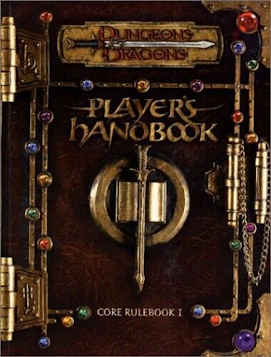
In 1997 TSR effectively collapsed and had to be rescued by Seattle-based Wizards of the Coast, the company founded just a few years earlier to sell the Magic: The Gathering card game. Magic: The Gathering was a colossal, ludicrous sales success and it was easily able to buy TSR and settle its immense debts. Goodwill towards D&D was starting to build again, thanks to the success of the tie-in video games from BioWare and Black Isle Studios, including Baldur's Gate (1998), Planescape: Torment (1999) and Icewind Dale (2000), along with the various sequels. Wizards of the Coast released Dungeons & Dragons 3rd Edition in 2000 to immediate success and acclaim, reasserting the game's position as the market-leading roleplaying game. The d20 rules system pioneered by 3E soon spawned a whole host of other games.

The D&D 3rd Edition Player's Handbook (2000), the first recognisably "modern" iteration of the game.

However, 3rd Edition lacked the long tail of earlier versions of the game, something the release of a "3.5 Edition" in 2003 seemed to exacerbate rather than solve (fans angered by the release of new rulebooks barely three years after the last). Faced with dwindling sales, WotC released the 4th Edition of the game years ahead of schedule in 2008, but the game saw a huge move away from D&D's original rules, resulting in a lot more anger from fans. Many decamped to rival fantasy game Pathfinder, established in 2009 and carrying on the 3rd Edition line of rules. D&D went through a nadir of sales and popularity in the early 2010s, with WotC rumoured to be considering cancelling the game outright. The 5th Edition, released in 2014, was a big improvement, at least in the eyes of the game-buying public, and livestreams of games over the Internet (particularly the Critical Role webseries) soon triggered high sales. The game also got a boost from the major role it played in Netflix series Stranger Things (2016-present). 5th Edition's sales became the healthiest seen for the game since the early 1980s. A revision of 5th Edition is due for release later this year.

It's not always been plain sailing. WotC have been criticised in recent years for ambiguity over AI artwork, trying to cancel the Open Game Licence (allowing third parties to produce compatible material) and a lacklustre approach to D&D's heritage, with very few novels or decent setting material being published. An overzealous approach to copyright protection (resulting in private detectives storming a YouTuber's house after he received a product before its review date) has also proven controversial.

In its fifty years on sale, D&D has shifted around 20 million core rulebooks and sourcebooks, over 100 million spin-off novels and around 30 million video games. A minimum of 50 million people are believed to have played D&D. It spawned the entire tabletop roleplaying industry and played a key role in the development of video games. At least dozens and likely hundreds (maybe even thousands) of published fantasy authors have played the game. Its impact on fantasy, especially secondary world, epic fantasy, might be second only to that of The Lord of the Rings. Hopefully it can enjoy at least fifty more years of success.

Thank you for reading The Wertzone. To help me provide better content, please consider contributing to my Patreon page and other funding methods.

Tuesday, 12 September 2023

Steam turns 20 years old

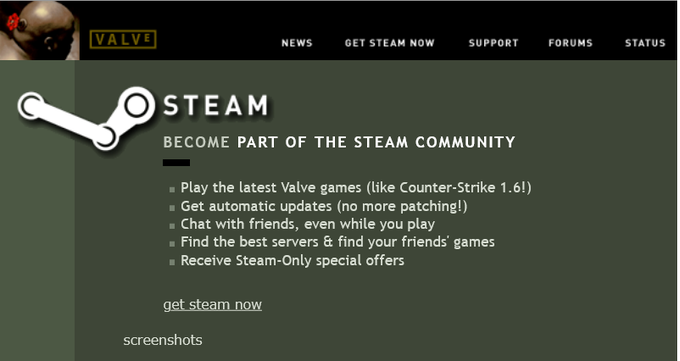
PC video game distribution platform Steam turns twenty years old today. Normally that wouldn't be a major milestone outside of technical interest, but Steam's achievements and position in the industry remain unique, despite some criticisms.

PC games company Valve Corporation launched Steam on 12 September 2003. The first - and for a while only - thing you could do on Steam was use it to patch up your existing Steam games, particularly Counter-Strike. The service did not even have a store front on release. Valve had identified the enthusiasm for online multiplayer early, but also identified that many gamers experienced frustration when new patches were released, as these tended to be released ad hoc and it sometimes took days for them to be disseminated over the entire playerbase. Valve proposed developing a universal updating service with several other companies, including Microsoft, but were shot down. They began development of their own service in 2002. This idea wasn't totally new, as Blizzard had released their Battle.Net service at the end of 1996, but Steam was working on a different scale.

Valve quickly realised the same system could be used to sell and download games in their entirety. Valve ran videos and interviews demonstrating how this would work with the video game Impossible Creatures by Relic Entertainment, with the entire game being downloaded over broadband in just a few hours. Ironically, Impossible Creatures would not be actually released on Steam until 2015.

Valve also sold the benefits of the service for combating piracy, which was widely believed at the time to be killing the PC gaming market. This led to consternation from gamers, already wary of DRM (Digital Rights Management) software trying to restrict when and where they could play games. To assuage concerns, Valve also demonstrated that the system could be used as a mass distribution system for free mods by releasing the popular Half-Life mod Day of Defeat on the service.

After a successful launch, Valve shut down all of their other online matchmaking and updating websites and systems, effectively forcing gamers to migrate to Steam over the course of 2004, to some controversy.

On 16 November 2004, Valve released Half-Life 2. One of the most eagerly-awaited games of all time up to that point, preceded by months of hype, Half-Life 2 was sold at retail and as a Steam download, but all copies of the game had to be activated and authenticated on Steam, even if the game was to be played solely offline in single-player mode. This led to vast criticism and anger from both critics and the gaming community, as broadband internet was still in its relative infancy. However, Valve stuck to their guns and the game's overwhelmingly positive reviews saw a million copies sold worldwide within a relatively short timeframe. Shortly after release Valve demonstrated the versatility and convenience of Steam by releasing an extra bonus level, Half-Life 2: The Lost Coast via the service.

In 2005 Valve signed its first distribution agreement with third-party vendors. The first third-party game was Rag Doll King Fu, followed quickly by the more acclaimed Darwinia. Over the next few years numerous other publishers and developers jumped on board, attracted by the company's generous royalty cut (far superior to boxed retail). Critics continued to complain loudly about the service being a form of intrusive DRM, but fans began to see the convenience of having all their games, multiplayer services and achievements in one place.

It is possible that Steam would have remained a relatively minor success, especially as Valve proved reluctant to release more high-profile original games, but the PC gaming market underwent serious contraction after the release of the Xbox 360 console in 2005 and the PlayStation 3 the following year. Both consoles had comparable power to gaming PCs of the time and pushed the development of HD graphics at a much more affordable price. The result was something of a stampede of gamers to the new consoles, including PC gamers who previously would have not considered switching to console but were lured over by the likes of the Halo series on Xbox. Previously PC-centric developers like Bethesda were also focusing heavily on the console versions of their next-generation games, like The Elder Scrolls IV: Oblivion (2006) and Fallout 3 (2008). For several years the future of PC gaming appeared to be in doubt.

The result was an explosion in the indie game sector starting in the late 2000s, alongside Valve using numerous inducements to try to get PC publishers and developers to rally around Steam as a centralised, global launch platform for their games. Valve also initiated aggressively-priced "Steam Sales," sometimes selling games just a year or two old for heavy discounts. This approach proved successful, if again controversial, and PC games began to see an uptick in sales again towards the end of the decade. A good sign of Steam's success was the appearance of competitor products: Ubisoft launched the Ubisoft Games Launcher (aka Ubisoft Connect, later UPlay) in November 2009 and Electronic Arts launched Origin in June 2011.

An earlier competitor was Polish company CD Projekt. The company had enjoyed success by launching its first original game, The Witcher on Steam (as well as physical release) in 2007. In 2008 they launched Good Old Games, a variation on Steam which focused on older, out-of-print games and employing patches and community knowledge in making them compatible with modern systems. CDPR won early victories by recruiting Interplay and Ubisoft to their cause. In 2010, rebranded as GoG, they carried out a successful relaunch spearheaded by the re-release of classic CRPG Baldur's Gate. Valve noted CDPR's success and began launching older games themselves, although generally without the care and attention GoG spent on compatibility.

By the early 2010s, Steam had established itself as the de facto global PC games storefront, to the point that many bricks-and-mortar video game stores dramatically reduced or even removed physical PC games from sale. Most games sold physically still needed to be activated on Steam anyway. Steam users became numerous and passionate, calling for boycotts of other launchers from companies who refused to release on Steam as well, citing the inconvenience of managing multiple launchers and software. The success of Steam also encouraged the further development of Microsoft, Nintendo and Sony's inhouse storefronts for their consoles (several attempts to create console versions of Steam came to nothing).

By 2020, most rivals had admitted defeat, with both Electronic Arts and Ubisoft agreeing to release their games via Steam once again. In 2022 EA discontinued Origin in favour of the EA App, which allows former Origin players to continue accessing their games.

In late 2018, Epic Games, flush with cash from their game Fortnite, launched a service designed to directly take the fight to Steam. The Epic Game Store used aggressive pricing, a more generous royalty scheme and the promise of completely free AAA games to aggressively expand. However, the service was hugely criticised during its launch phase for lacking basic functions like a shopping basket and user reviews, whilst Epic's attempt to lock in some games to exclusivity periods with them in return for buckets of cash was criticised as anti-consumer. It took several years to implement basic features and remains controversial, despite the number of Epic exclusives tailing off as developers discovered that the bad will engendered from not launching on Steam often outstripped the short-term financial benefits of accepting Epic's pricing terms.

Steam enjoyed a further shot in the arm thanks to the COVID pandemic, with the number of people using the service seeing a sharp increase as they were stuck at home with, in some cases, not much to do other than play video games.

In 2023, Steam is the overwhelmingly dominant games delivery service for the PC format. The service continues to set new records for concurrent players - the latest high of over 33 million was reached earlier this year - and now every major publisher and almost all publishers full stop use Steam as their main launch system. Rivals continue to hang in there - GoG has continued goodwill from its attempts to track down and release older games and Epic Games is continuing to try to make inroads through exclusives and free games - but many have thrown in the towel and admitted defeat.

Criticisms of Steam and its monopoly-like position in the marketplace continue, with criticism of the service sometimes pushing shovelware games released without much attention to quality (or sometimes copyright). The service has sometimes been used for cheating, toxic behaviour and even fraudulent activities, which Valve has sometimes acted decisively to stamp out and, at other times, less decisively. However, Steam has also been praised for almost single-handedly saving PC gaming as a viable format during the 2005-10 period when its future might otherwise have been in doubt, and for prioritising convenience and ease of use for customers.

Probably the biggest and most viable criticism of Steam has been its impact on Valve, its creators. Valve used to create vibrant, exciting and original video games. Steam has given them an astonishing annual income (comfortably in the billions of dollars) which frees them from having to rush games or, indeed, do much work on original games at all. Although Valve continued to publish popular titles in the first few years after Steam launched - Portal (2007), Team Fortress 2 (2007), Left 4 Dead (2008), Portal 2 (2011), Counter-Strike: Global Offensive (2012) and Dota 2 (2013) - it is also unquestionable that their financial security has meant they are not under any pressure to actually make new games. The Half-Life franchise was left on a massive cliffhanger with the release of Half-Life 2: Episode Two in 2007 and the company has so far failed to follow up on it, although VR prequel Half-Life: Alyx (2021) hints at how the series might continue.

My main abiding memory of the first time I used Steam was strewing network cables across my house, to my landlady's consternation, as I tried to get Half-Life 2 to work on its release day. I now have 484 games on the service with some 5,769 hours spent on them (which isn't as bad as I'd feared, spread over nineteen years). My most-played games on the service are Age of Empires II: Definitive Edition, Fallout 4, Cyberpunk 2077, The Elder Scrolls V: SkyrimBattleTech, XCOM: Enemy Unknown/Enemy Within, Death Stranding, Mass Effect: Legendary Edition, Grand Theft Auto IV/Episodes from Liberty City and The Witcher III: Wild Hunt. Many of the criticisms and wariness about the service remain valid, but I think without Steam, it's questionable if PC gaming would have survived, let alone thrived as it has.

Wednesday, 22 February 2023

BABYLON 5 celebrates its 30th anniversary

Seminal space opera television series Babylon 5 has celebrated its 30th anniversary. The show's pilot movie, The Gathering, aired for the first time on 22 February 1993.

Babylon 5 ran for five seasons, notching up 110 episodes, seven TV movies and 13 episodes of a spin-off series, Crusade, between 1993 and 2007. It also generated a huge number of tie-in books, comics and roleplaying games, as well a video game that was - still bafflingly - cancelled when it was 95% complete.

The show was mainly set between the years 2257 and 2262 and depicted the misadventures of the crew and diplomats on board Babylon 5, a massive space station designed to serve as a sort-of United Nations in space, between the borders of five major powers and numerous smaller ones. Babylon 5 was purposefully designed by its creator, J. Michael Straczynski, as a "novel for television," with one pre-planned story unfolding over five years. This level of serialisation was unusual at the time, although not completely unprecedented. It was more unusual that the story arc was planned out in some detail ahead of time, though.

After a rough opening season, Babylon 5 hit its stride in its second and third seasons, with both years winning Hugo Awards for Best Dramatic Presentation. A near-cancellation in Season 4 saw Straczynski wrap up the main story arc last few episodes, but a late renewal allowed him to end the story as planned, albeit with a somewhat more spun-out fifth season than originally envisaged.

Babylon 5 broke the mould not just for serialisation, but also for its pioneering use of CGI to depict all of its visual effects. Most contemporary space shows still used very expensive models. As the show continued, its use of CG became more innovative, extending to the creation of virtual sets and all-CG aliens interacting with human actors; commonplace today but remarkable in the mid-1990s. B5 also used the Internet in a pioneering way, with Straczynski taking advantage of the Internet to discuss behind-the-scenes trivia and worldbuilding information with eager fans.

Despite its innovative structure, excellent pacing and outstanding cast, the show teetered on the edge of cancellation throughout its run, and has never had more than a dedicated, cult audience. The show also suffered appalling attrition among its main castmembers, making a continuation unfeasible. A Babylon 5 reboot project has instead been gestating at the CW for well over a year, although recent sweeping changes at the network and a retreat from drama commissions makes that project now unlikely to proceed (although the possibility remains of it finding a home elsewhere).

Saturday, 23 July 2022

Classic SF RPG TRAVELLER turns 45

The classic science fiction roleplaying game Traveller has celebrated its 45th anniversary. One of the oldest and most iconic tabletop roleplaying games of all time, Traveller has inspired vast amounts of fiction and video games since its release.


Traveller was inspired by the success of Dungeons & Dragons, which had been released in 1974. Mark Miller realised there was scope for a science fiction roleplaying game with spaceships and technology and developed the Traveller game rules, with help from Frank Chadwick, John Harshman and Loren Wiseman. The game was released on 22 July 1977 by Game Designers' Workshop with a striking black cover.

It was an immediate bestseller, answering the demand for "Dungeons & Dragons but in space," as well as people who were interested in the idea of roleplaying games but not a classic fantasy setting. Traveller was also bolstered by the launch of the movie Star Wars just a few weeks earlier, which created a hunger for everything science fiction.

Traveller was originally a rules set without any setting material, but subsequent expansions introduced a far-future setting where humanity has colonised the stars with an FTL drive, but without FTL communications the various colonies and nations of humanity have splintered into small states, divided between different "strands" of humanity. Aliens exist in the setting but are mostly rare or extinct. Alternate SF settings for the game were created by fans and other creators.

An interview with Marc Miller at Dieku Games.

Traveller introduced innovations to the RPG space, including the idea of "life paths." Rather than characters being relative youngsters meeting in a bar and deciding to join forces (the standard D&D setup), Traveller characters are older and have usually had extensive training or education before deciding to become adventurers. Characters can be former soldiers, bureaucrats, medics, pilots or almost anything else the player can conceive of. Creating a character involves playing a mini-game of its own as players work out their heroes' backgrounds and their career. Infamously, it is possible for a character to die in character creation! This system also rewards extended service but also introduces penalty: the older a character is when they start the adventure, the more skills they have, but also the greater the possibility of injury or a degrading of skills due to old age.

Traveller also focused heavily on a skill system, a stalwart of every RPG apart from Dungeons & Dragons, which didn't really develop a skill system until 3rd Edition (earlier editions experimented with "proficiency" rules which tried to covers skills with a very broad brush). Most notably, this skill system allowed for a greater variety in resolving tasks and situations without combat. Traveller also emphasised its "social" skills to encourage roleplaying.

Traveller has been reissued in multiple editions since its original 1977 release: MegaTraveller (1987), Traveller: The New Era (1993), Marc Miller's Traveller (1996), GURPS Traveller (1998), Traveller d20 (2002), GURPS Traveller: Interstellar Wars (2006), Traveller Hero (2006), Mongoose Traveller 1st Edition (2008), Traveller 5.0 (2013), Mongoose Traveller 2nd Edition (2016) and Traveller 5.10 (2019).

The game is notable for using its own rule system, which relies heavily on six-sided dice rather than the plethora of different-sized dice favoured by D&D. However, over the years the game has been "ported" to other systems, including the D&D 3rd Edition "d20" system, the universal GURPS rules set and the Hero System. Players have also created homebrew variants based on other systems.

The Traveller setting has been used as the background for sixteen novels, published sporadically from 1993 to 2015. Surprising, only two video games have been developed from the setting: MegaTraveller 1: The Zhodani Conspiracy (1990) and MegaTraveller 2: Quest for the Ancients (1991), both from Paragon. The games were critically well-received and apparently successful, but no further video games based on the system have since appeared.

Traveller was a very forwards-thinking TTRPG when it was released and its influence on the genre remains very high. Here's hoping it carries on for many years to come.

Tuesday, 12 October 2021

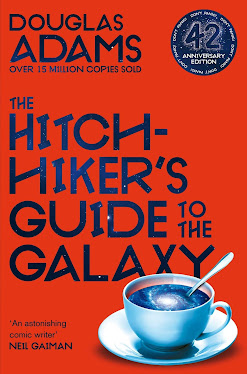
Happy 42nd Birthday to The Hitch-Hiker's Guide to the Galaxy (novel)

Douglas Adams's novel, The Hitch-Hiker's Guide to the Galaxy, turns 42 today.


Published on 12 October 1979, the novel was based on Adams's radio series of the same name which had aired eighteen months earlier on the BBC. With the radio series a huge success, Adams was convinced to turn the series into a novel. Adams only adapted the first four parts of the radio series into the book, saving the rest for the sequel, The Restaurant at the End of the Universe (published a year later), although, as was his wont, Adams made major plot and character changes between the different versions of the story. The same held true of the excellent BBC mini-series (which aired in 1981), the video game (1984) and feature film (2005).

The novel sold extremely well, shifting 250,000 copies in its first three months on sale. Unusually for a British comedic SF novel, the book was a hit in the United States as well and sales of the novel passed a million in 1984. Total sales of the novel are now believed to be in the neighbourhood of 20 million. The Hitch-Hiker's Guide to the Galaxy is one of the two biggest-selling individual SF novels* of all time, a position it has swapped fairly regularly with Dune in the last few years, although a recent boost in sales for Dune (driven by the new movie adaptation) have almost certainly moved it back into first place and Hitch-Hiker's into second.

As with most versions of the story, The Hitch-Hiker's Guide to the Galaxy novel opens with Earth being demolished by the officious and callous Vogons to make room for a hyperspace by-pass. Ford Prefect, a field researcher for the eponymous book who has been conducting research on Earth for fifteen years, elects to rescue his best friend Arthur Dent from certain death and they flee into deep space. After an improbable meeting with Ford's semi-cousin Zaphod Beeblebrox (the part-time Galactic President who's now on the run after stealing a hyper-advanced starship for no rational reason), they find themselves caught up in a wild, ancient conspiracy involving god-like computers, dolphins, mice, an alien fjord-designer and, of course, the number 42, which holds the key to the secrets of life, the universe, and everything. Or it would, if anyone knew what the hell the question was.

Sadly, Douglas Adams passed away in 2001 at the far-too-young age of 49 and is not here to celebrate the milestone his famous novel has achieved. However, I am certain that, demolition of the Earth by bad poetry-reciting aliens allowing, the novel will still be going strong in another 42 years from now.

* Sales estimates of The Hitch-Hiker's Guide to the Galaxy are complicated due to the fact that it is a very short novel, so for most of its existence it has been published in handy omnibus formats with various of its sequels; the biggest-selling edition of the book is believed to be a 1985 omnibus edition that packaged it with its three immediate sequels: The Restaurant at the End of the Universe (1980), Life, the Universe and Everything (1982) and So Long and Thanks For All the Fish (1984). After 1992, this was supplanted by a five-volume omnibus that added Mostly Harmless (1992), the final book in the series. In recent years, the series has seen new five-volume editions put on sale. However, Dune has a similar estimate problem due to the extreme popularity of a hardcover omnibus that contains the first three books in its series which has been in print since the late 1970s.

Friday, 2 April 2021

Happy 50th Publication Anniversary to George R.R. Martin

This is actually a couple of months late, but probably close enough. George R.R. Martin recently passed the milestone of being a published author for fifty (50) years.

Martin's first professionally-published story was "The Hero," a story from his Thousand Worlds space opera setting. It was published in the February 1971 issue of Galaxy Magazine, though he'd written it in 1968-69 when he'd made his first serious push to become a published author. This period also resulted in "The Added Safety Factor" (eventually published in 1979 as "Warship"), "The Fortress" (eventually published in 1985 as "Under Siege," no relation to the Steven Segal movie), "And Death His Legacy" and "Protector." Martin's earlier writing had been for fanzines and comic books. In fact, his very first-published material of any kind was a letter to Stan Lee and Jack Kirby printed in Fantastic Four #20 (August 1963).

"The Hero," though, was the first of Martin's stories to see print and kick-started a run of early, promising fiction that eventually culminated in his Hugo Award-winner "A Song for Lya" (1974). Additional, multi-award winning fiction followed, including the Hugo and Nebula Award-winning "Sandkings" (1979) and Hugo Award-winning "The Way of Cross and Dragon" (1979), along with his novels Dying of the Light (1977), Windhaven (1981, with Lisa Tuttle), Fevre Dream (1982) and The Armageddon Rag (1983), the commercial failure of which triggered a sideways career movie into film and television scripts. Martin spent years working in Hollywood on TV shows including The Twilight Zone and Beauty and the Beast, whilst rebuilding his novel career through Tuf Voyaging (1987) and working as the creator-editor of the popular Wild Cards series of superhero anthologies (starting in 1987 and continuing to this day).

This year also marks the 30th anniversary of Martin starting work on his wildly popular Song of Ice and Fire book series (later adapted by HBO as the phenomenally successful if-controversially-ended TV show Game of Thrones). Although A Game of Thrones (1996) wasn't published until five years later, Martin began work on the novel in the summer of 1991 when he was struck forcibly by the image of a young boy being taken by his father to see a deserter being executed in the snow. At the time he had no idea whether this was the idea for a short story or a novel, and certainly no idea it would be the start of a magnum opus that would still be running three decades and just shy of 100 million book sales later.

So happy anniversary to George for a full half-century in the business.

Wednesday, 23 September 2020

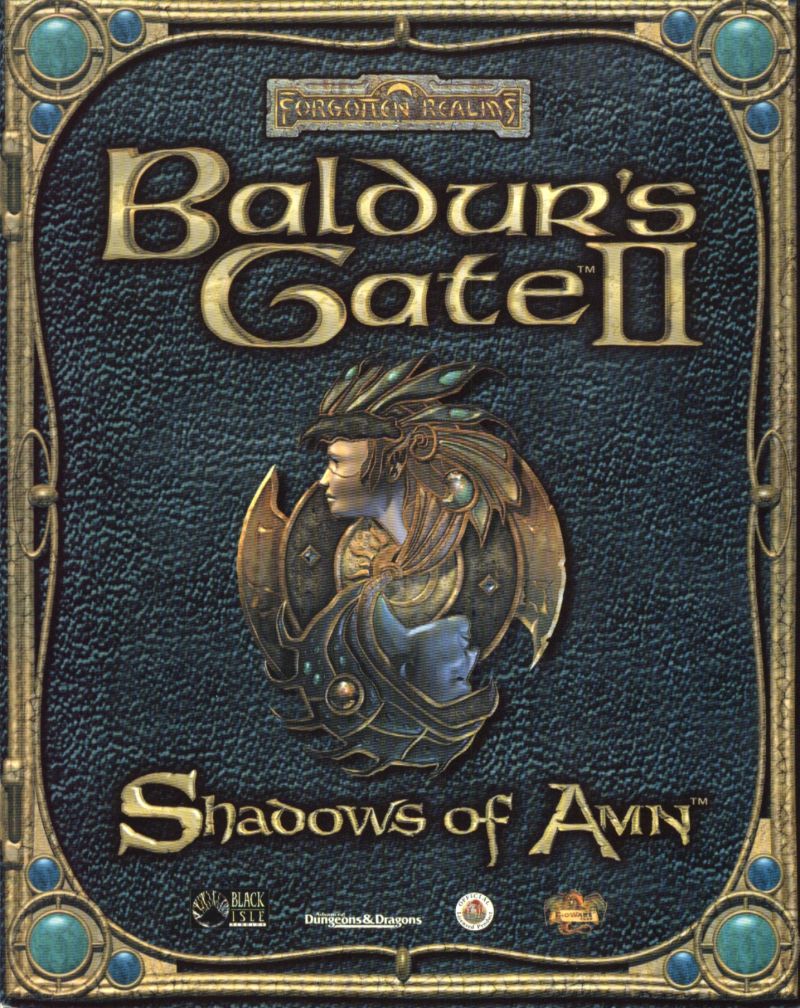
BALDUR'S GATE II - the LORD OF THE RINGS of western RPGs - turns 20

BioWare's classic computer roleplaying game, Baldur's Gate II: Shadows of Amn, turned 20 years old this week. The sequel to the 1998 original, Baldur's Gate II was bigger, more epic and exhausting to make, but more exhilarating to play. It was the last 2D game BioWare made, switching to a 3D engine for their next games Neverwinter Nights and Star Wars: Knights of the Old Republic, and never looking back. They have acknowledged that they will likely never be able to match the scale and scope of the game again.

BioWare shipped Baldur's Gate in late 1998. A 2D CRPG launching in the initial age of 3D games - being released within weeks of Half-Life, in fact - Baldur's Gate proved to be a huge hit. Using the Dungeons and Dragons 2nd Edition ruleset and the Forgotten Realms world, Baldur's Gate and its excellent Infinity Engine caught the public imagination. BioWare's publisher, Interplay, even borrowed the engine so their in-house CRPG studio, Black Isle, could make their own variants, Planescape: Torment (1999) and Icewind Dale (2000).

Baldur's Gate allowed the player to create any character they wished and then guide them through a lengthy adventure. Starting with the murder of the player's adopted father by a mysterious stranger, the player would explore a semi-open world brimming with adventures, side-quests, monsters and treasure. They'd join forces with a band of bickering companions, some of whom would hate and fight one another. The player would even be able to romance some of these companions. All the while a compelling central storyline would unfold, culminating in the reveal that the lead character is one of the "Bhaalspawn," descendants of the slain God of Murder, Bhaal, and poised to inherit his murderous power. The original game ended with the party defeated another of the Bhaalspawn, Sarevok, and defeating a conspiracy to destabilise the Sword Coast and the great city of Baldur's Gate. An expansion, Tales of the Sword Coast (1999), expanded the original game with a series of new quests and a "super dungeon" adding many hours of new content.

With Baldur's Gate a huge hit, the team at BioWare started work on a sequel. With the engine already mature and ready to go, the designers were able to focus almost exclusively on creating content. In less than eighteen months, they had created a game almost four times the scale and scope of the original Baldur's Gate. The new storyline would expand on the "Bhaalspawn" elements from the original, with a new villain called Jon Irenicus trying to capture the main character to gain access to his or her power. In a deviation from the original game, where Sarevok appeared fleetingly, Irenicus makes more frequent appearances in the game throughout its length and is ruthless and threatening, killing several major characters from the first game and kidnapping another. Actor David Warner (Time Bandits, Titanic, Star Trek) was praised for his memorable performance as Irenicus, often cited as one of the greatest video game antagonists of all time for his conviction and menace.

Although the new storyline was memorable and well-handled, praise was also lavished on the game's immense number of side-quests, some developing into significant sub-plots lasting hours in themselves. These appeared in the game's second act which, as is traditional with BioWare games, is wide open and allows players to travel around, meet people at random and achieve different goals. Although not an open world game as such (even arguably as much as the original), Baldur's Gate II was still huge in scope with more than 350 locations to visit, dozens of dungeons to explore and thousands of enemies to fight. The game also gave more power and choice to the player, including greater character customisation options and bringing in rules from the just-released 3rd Edition of the tabletop Dungeons & Dragons game.

One of the game's most popular features was a home base. Depending on the main character's class, they would receive one of several potential strongholds. Over the course of the game the stronghold could be built up and improved on, and would provide a valuable location for players to retreat to between quests.

The game expanded the combat from the original game, offering a ton of elements to give players granular control over how they handled it. They could transform the game into a turn-based affair, pausing the game after every six-second action to issue new orders, or play completely in real time, able to pause with a tap of the spacebar to issue new orders. This freedom is, curiously, missing from in-development Baldur's Gate III, which has mandated turn-based combat only to the frustration of some long-term fans.

Baldur's Gate II was released in September 2000 and sold immensely well, garnering critical acclaim for its huge scope and length, as well as its refined game engine. The game such a success that Interplay wanted a sequel in development ASAP, but BioWare felt burned out on the Infinity Engine and had plans for an ambitious 3D engine that would allow gamers to replicate the tabletop D&D experience, including having one player serve as an online Dungeon Master in creating their own adventure. BioWare decided not to proceed with a full sequel but to "super-size" the planned expansion for the game into a proper ending to the saga. Released in September 2001, Baldur's Gate II: Throne of Bhaal brought the Bhaalspawn story to a conclusion and was well-received, with its scope and size considered surprisingly huge for an expansion. BioWare would release their 3D, player-driven game, Neverwinter Nights, in June 2002 as their last (to date) D&D video game.

The size and scope of Baldur's Gate II could not be replicated in a 3D engine and BioWare decided not to even try, instead focusing on much shorter but much more "cinematic" game experiences, blending action and roleplaying. They also began developing games with a view to releasing console versions. Although the CRPGs developed during this period were highly successful and critically acclaimed for their stories and characters - Star Wars: Knights of the Old Republic (2003), Jade Empire (2005) and Mass Effect (2007) - they faced some criticism for being short and "dumbing down" RPG elements in favour of action. BioWare tried to reverse this course with Dragon Age: Origins (2009), a "spiritual successor" to Baldur's Gate II set in their own original world, but matching the older game's epic story and focus on strong characters. Even this game couldn't match Baldur's Gate II's scale (coming in at around a third the size), but it was critical and commercial success, generating two sequels: Dragon Age II (2011) and Dragon Age: Inquisition (2014).

Those wanting a genuine successor to Baldur's Gate II had to wait a long time to get it. Obsidian Entertainment's Neverwinter Nights II (2007) and its two expansions focused more on single-player adventuring than BioWare's original, and scratched an itch for D&D CRPG fun in the Forgotten Realms setting. Obsidian went on to develop several "spiritual successors" of their own in a modern take on the Infinity Engine, resulting in Pillars of Eternity (2015), Tyranny (2016) and Pillars of Eternity II: Deadfire (2018). Their forthcoming new game Avowed is set in the same world as Pillars of Eternity, but draws more on Skyrim for inspiration than Baldur's Gate. Pathfinder: Kingmaker (2018) likewise channelled the spirit and energy of Baldur's Gate II, and made a rare attempt to try and match its size and scope. Arguably it was Larian Studios who delivered the first significant improvement to the isometric formula with Divinity: Original Sin (2014) and Divinity: Original Sin II (2017), which added environmental physics puzzles to the mix.

Although it's very different in moment-to-moment gameplay, which is more action-based, CD Projekt Red's The Witcher III: Wild Hunt (2015) might be the closest game to Baldur's Gate II in terms of the sheer epic nature of the storyline, the memorable cast of characters and the compelling plot which twists and turns over dozens of hours, whilst also giving the freedom to pursue a vast array of side-quests.

In 2019 it was confirmed that Divinity studio Larian would be helming the proper, official Baldur's Gate III. Taking place about 130 years after events of Baldur's Gate II, the epic new game sees the player creating a character who gets caught up in a battle between mind-flayers, dragons and demons, extending from the Forgotten Realms into the layers of Hell itself. Although the story is new and largely separate from the original games, some characters and dangling plot threads are expected to be addressed in the new game.

Baldur's Gate II set new standards for fantasy roleplaying games in terms of scope, storytelling, characterisation and adventure. Despite many brave attempts, it's never been quite matched and its influence looms large over the entire Western canon of digital roleplaying games. Whether Larian can match that legacy with Baldur's Gate III remains to be seen, but they certainly have an uphill task on their hands.

Baldur's Gate III will enter Early Access in October 2020 and will be released fully in 2021. Baldur's Gate II is available to play now in its updated "Enhanced Edition."