Tuesday, 9 July 2013

Trailer for debut novel TERRA features some famous faces

British comedian and musician Mitch Benn has written his first novel, Terra, after being Twitter-stalked by Gollancz into doing so (less sinister than that suggests). Due for publication this month in the UK, it's the latest book to get its own trailer. However, this trailer is a bit different: it features sixteen writers, actors, comedians and musicians taking turns to read the first chapter of the book. Benn also called in several compatriots from The Now Show (a BBC radio show that Benn works on).


Those who took part were:

Hugh Dennis (comedian)
Steve Punt (comedian)
Neil Gaiman (Neil Gaiman)
Sophe Aldred (actor, best known as Ace, Doctor Who companion 1987-89)
Phill Jupitus (comedian, perennial panel show guest, Jabba the Hutt fan)
David Baddiel (comedian, novelist, scriptwriter)
Emma Kennedy (comedian)
John Culshaw (comedian, impressionist, Tom Baker voice impresario)
Laura Shavin (comedian)
Rufus Hound (comedian, actor, presenter)
Samuel West (actor)
Amanda Palmer (musician)
Robert Llewellyn (writer, TV presenter, actor, best known as Kryten in Red Dwarf)
Reece Shearsmith (writer, actor, best known as one of The League of Gentlemen)
Arthur Darvill (actor, best known as Rory, Doctor Who companion 2010-12)
Mitch Benn (musician, comedian, wrote the book)

ELITE: DANGEROUS starmap is a thing of beauty

Frontier Developments have posted a new screenshot from their Kickstarter-funded space trading/combat game Elite: Dangerous. This screenshot shows their starmap, which the player will use to travel from system to system and within systems as well.


The starmap used in Frontier: Elite 2 was a phenomenal piece of work (considering it was an addendum to the main game) and it looks like the map in the fourth game is shaping up to be far more impressive.

As a bonus, see if you can catch all the SF references on the image.

Robert Jordan bigging up A GAME OF THRONES in 1997

This is a cool find, courtesy of Terez. It's a letter from the late Robert Jordan to George R.R. Martin's editor, Anne Groell, requesting a signed copy of A Game of Thrones. The letter is dated 6 March 1997, after Thrones came out in hardcover (August 1996) but before its paperback publication.

Click to embiggen.


It also features an interesting statement from Jordan regarding series length:
"I see in Locus that George says he no longer thinks he can finish the story in a trilogy. Good. Not that his story will be any longer, but that he isn't going to try shoe-horning his story into the form everybody seems to say such stories must follow. Writing what you want to write, in the way you want to write it, isn't easy when people are telling you that you can't do it that way because it it isn't done that way. He apparently is as lucky as I am in having a publisher and editor who are willing to go against the flow."

GRRM has said many times that he credits the early success of A Game of Thrones in paperback to Jordan's cover quote and, a bit later, people picking up Legends to read Jordan's short story New Spring, also reading The Hedge Knight and then picking up the novels. An interesting insight into Jordan's opinion of Martin (and for the reverse, Martin penned a memorial for Jordan when he died in 2007).

Monday, 8 July 2013

A glimpse of a FIRST LAW world map

The First Law comic adaptation has given us a glimpse of a world map for Joe Abercrombie's fantasy world. On his blog, Abercrombie has confirmed that the map is mostly accurate and canonical. On the following image the map is shown with the existing maps of the Old Empire to the left and Styria to the right, whilst at the bottom is an attempt to combine them into one image.


Obviously, the comic strip image is small, somewhat compressed and not entirely to scale with the published maps, though it is possible to get a good sense of what's going on and what is where. I will try to use this information to construct a clearer map at a later date.

The island in the middle is clearly Midderland, the island-continent on which the heart of the Union and Adua are situated, whilst to the north lie the Northlands, with Angland likely being the peninsular immediately to the north-west of Midderland. Kanta is one of the two landmasses to the south; likely the one to the south-west, with Dagoska located on the narrow peninsular reaching up towards Midderland (it's also possible that both landmasses to the south are Kanta, with the sea between them being a very large bay rather than a separating ocean).

Sunday, 7 July 2013

The SF of Gaming

Where would computer games be without science fiction? Alien bad guys, stonking great railguns, cyborg protagonists and post-apocalyptic landscapes are ten-a-penny in games. The number of games out there without any SF or fantasy elements is tiny; even the historical simulation Civilization games allows Gandhi to build an army of death-dealing laser tanks and then fly to Alpha Centauri, whilst the Crusader Kings series postulates fantastical alternate timelines where Wales is a European superpower.

Scientifically inexplicable.

That said, SF in games is usually scenery rather than the focus of the setting. The socio-economic basis of why the alien Lord Mental, with access to vast resources and commanding a star-spanning empire, needs to invade Earth in the Serious Sam series remains resolutely unexplored. And how do those suicide bomber guys scream when they don't have a head anyway? The science in science fiction is often questionable in books (and almost non-existent on TV and in film), and even moreso in games.

Still, exceptions exist. Here's a look at some games which attempt to use real science as more than just wallpaper.


Frontier: Elite 2 - Real Astronomy & Newtonian Physics


Released in 1993, Frontier was David Braben's ambitious follow-up to the classic, medium-defining 1984 space sim Elite. Frontier allows you to take on the role of the captain of a spacecraft. You can indulge in trading goods between star systems, fighting pirates (or turning pirate yourself) or undertaking missions for one of several interstellar powers (the Federation, the Empire or numerous independent worlds, as well as various corporations). You can switch between spacecraft and upgrade them.

Where the game was truly stunning was that it simulated the entire Milky Way Galaxy on just a single floppy disk. 100 billion stars were located in the galaxy, and the several hundred closest to Earth were placed in their (more or less) correct astronomical positions, along with a few hundred other major stars. You could fly to the Pleiades (though it'd take a while), check out Polaris or skim the surface of Arcturus. The game also used real Newtonian physics, complete with effectively infinite inertia once you had fired your engines in a particular direction, and space stations simulating gravity through centrifugal force. You could even fly over planetary surfaces and land at starports.

Of course, the game looks pretty primitive by modern standards, 99% of the stars in the game are randomly placed and named and the Newtonian physics make space combat unintuitive and almost ridiculously difficult to pull off (and the fact that few later space games - I-War and Tachyon's nods to it side - use real physics may be down to Frontier's problems). But the ambition and scope are there. It will be interesting to see if Elite: Dangerous, due in 2014, manages to solve the issues whilst retaining the immense scale, scope and ambition of its forebear.


Damocles: Mercenary II - Comets and Time Dilation


Predating Frontier by a few years, Damocles similarly depicts an impressive 3D universe which allows you to land and take off from planets. The setting is much more limited, with just a single solar system on offer. The spacecraft is also merely a way of getting from planet to planet, with the focus being on your character wandering around (in first-person 3D; a stunning achievement in 1990). The premise is that the comet Damocles is about to crash into and destroy the planet Eris and your character has to find a way of stopping it. The game presents several possibilities, from the direct (finding and blowing up the comet with a mega-powerful antimatter bomb) to the sensible (redirecting the comet away from Eris onto a safer orbit by blowing up another, uninhabited body nearby).

One of the more interesting things about the game is that your spacecraft can accelerate to near-lightspeed to get around the system, but this results in time dilation. You can travel right across the system in minutes, but the doomsday clock will tick down at a ridiculous rate. This forces the player to find alternate ways of travelling around (teleporters being the favourite alternative, but their locations are unknown at the start of the game) to avoid the problem.


Syndicate - Cyberpunk Dystopia


Also released in 1993, Syndicate was an action-strategy game set in a dystopian cyberpunk future, where the world is controlled by corporations who influence and pacify citizens via chips in their brains. These chips can be subverted by the player, allowing them to take control of huge crowds of people during missions to be used as cannon fodder or a distraction. This notion of human/computer interfaces is only lightly touched upon in the game due to control limitations, although it does bring in other SF ideas such as robot policemen and massive corporate advertising boards (influenced by Blade Runner). Most sinister is the way the game postulates a future where governments are rump states at best, with the real power held by corporations and their private armies.

A sequel, Syndicate Wars, moved the game into 3D in 1996. Recently, several of the design team for Syndicate and its sequel announced a Kickstarter campaign for a 'spiritual sequel', Satellite Reign, that will expand upon many of the ideas in the original game and allow for things like hacking and more freeform approaches to missions.


Hostile Waters - Nanotech Singularity and Social Revolution


One of the greatest (though also underplayed) strategy games of all time, Hostile Waters (aka Antaeus Rising in the USA) places you in command of an immense aircraft carrier with orders to liberate a chain of newly-risen islands from the control of a hostile power. What at first appears to be a remake of the classic 1987 strategy title Carrier Command (itself given a lacklustre, official remake in 2012) quickly turns into a different beast. Part of this is down to the compelling fiction, created by writer Warren Ellis.

The game postulates a technological singularity (in 2012) which comes to pass due to the invention of Creation Engines, devices which use nanotechnology to break items apart and reassemble them at a molecular level. Anything can be turned into anything else. Rubbish can be transformed into food, sand into diamonds. This immediately removes scarcity - famine, lack of resources - as an issue for everyone on the planet and would seem to herald a golden age. The owners of the means of production, who are effectively out of a job, resist by trying to regulate the introduction of Creation Engines, resulting in a messy, bloody global civil war. At the end of the war the 'old guard' are defeated and everyone lives in a world of plenty. Needless to say, some of these old guard launch a new assault using weaponised Creation Engine technology...technology which gets out of hand very rapidly.

Dealing with SF hot topics like nanotechnology, the Singularity (not exactly in a robust way, though, as the post-2012 society is still pretty comprehensible to us), life-extension via 'saving' consciousness on AI systems, the conflicts of closed systems versus open ones and ideology versus religion, the game's storyline is surprisingly deep though arguably flawed: the world also being a secularist paradise with billions of people abandoning religion seems a bit far-fetched, though there are hints that the new society has a sinister side as well. All the more remarkable is that this background is there purely to explain the game's use of standard strategy tropes, like being able to build vehicles instantly on the battlefield. The fiction is impressive and well-thought-out, complementing the amazing gameplay very well.


Portal - Science as Fun


Released in 2007, Portal was a small game but a hugely influential one. The game is based around the idea that you can create two linked dimensional portals on certain surfaces, allowing for intelligent ways to solve apparently insurmountable puzzles. Jumping across a vast chasm is possible by creating a portal on the wall behind you and another at the bottom of the chasm: falling into the chasm builds up enough momentum to shoot through the portal, over the top of the chasm and landing safely on the other side.

The portal technology is of course highly speculative, but it's a rare example of a gaming taking its central scientific/technological premise (no matter how ludicrous) and exploring it intelligently. The 'science!' theme, the impressive AI antagonist, the game's remarkable sense of humour and it's bigger, better sequel all help cement the game's reputation as one of the finest first-person action games in existence.


Deus Ex: Human Revolution - Augmentation and Cyborgs


This prequel to 2000's classic Deus Ex deals with a number of important near-future issues. As well as the standard cyberpunk government/corporation tension, the game explores the theme of augmentation and using technology to enhance human abilities in depth and with intelligence. The notion of how much of our bodies we can replace and remain human is also a key theme: does the corporation 'own' protagonist Adam Jensen because they paid for the augmentations that allow him to live? A rich and involving game (let down a little by silly boss fights).


BioShock Infinite - An Infinity of Possibilities


This recent game is set in an alternate timeline in which a huge flying city called Columbia was built in the early 20th Century thanks to the invention of quantum engines, technology that never existed in our world. As the game progresses, the protagonist and the girl he was sent to save find themselves passing through tears in the fabric of reality into other universes, including some similar to our own and others completely different.

The 'many worlds' theory of quantum reality is a common theme in modern SF, but this is the first time a game successfully explores the same theme with some intelligence and uses it to tie together the disjointed narrative in a manner which makes sense.


Wasteland 2 - Post-Apocalyptic Wildlife


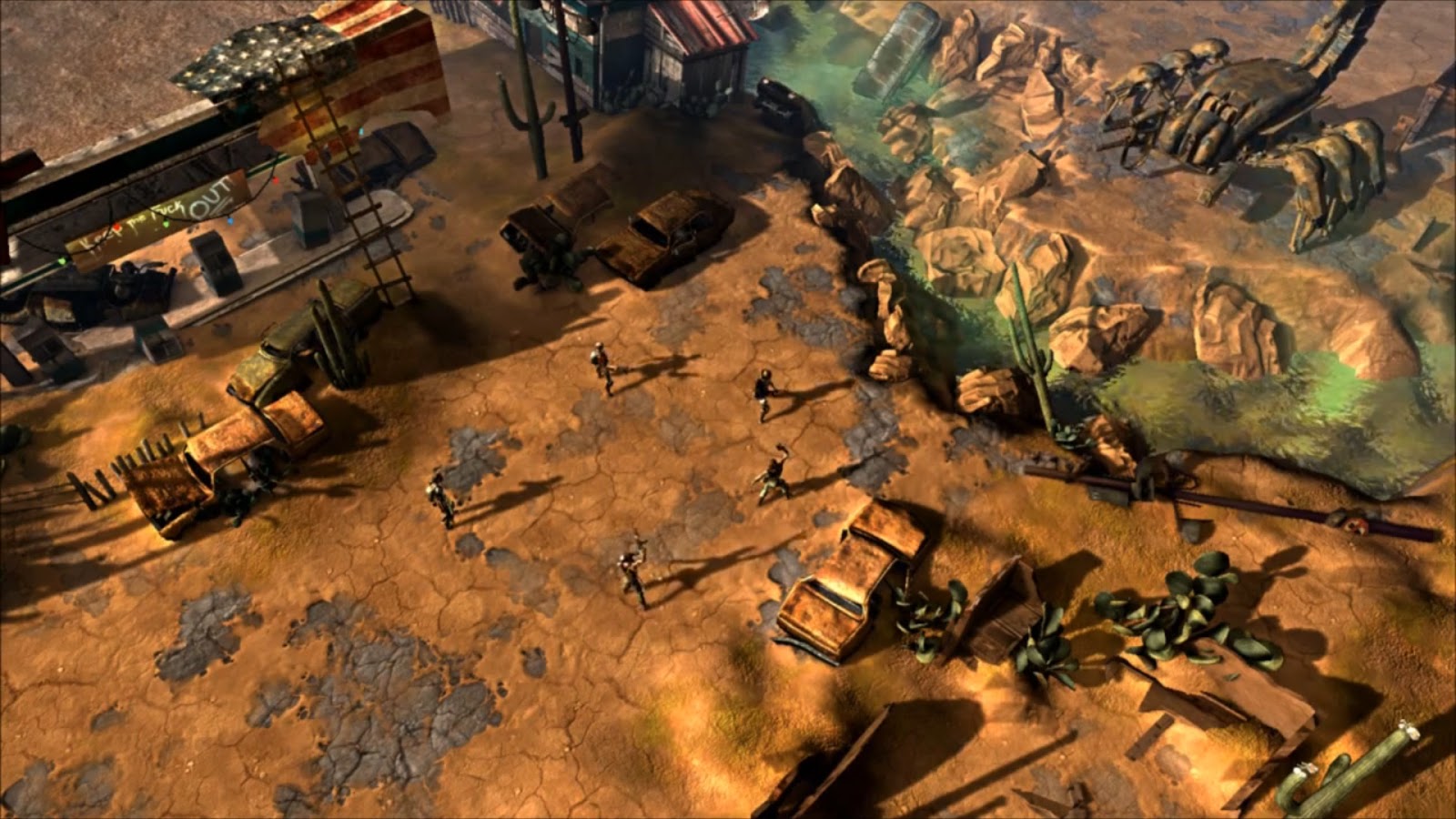
The upcoming Wasteland 2, from some of the same team that gave us the Fallout games, is a post-apocalyptic romp which makes few pretences towards scientific realism in its backstory or how anyone survived the nuclear apocalypse. However, the developers have called upon the services of real scientists to help portray environments and creatures, leading to the creation of the fearful giant hermit crab, which hides within the shells of abandoned and burned-out cars and gives the players a nasty surprise when they wander by.

As we can see, there are a few games around which do make more use of science and real SF ideas than as just a cheesy explanation for insane ultraviolence. Hopefully this is something we will see more of in the future.

See also: Polygon has interviews with the scientists who have consulted and advised on games such as Wasteland 2, BioShock Infinite, Deus Ex: Human Revolution and the upcoming Outlast.

Friday, 5 July 2013

Neil Marshall returns to direct GAME OF THRONES

Neil Marshall will be returning to direct the final episode of Game of Thrones's fourth season, according to Empire Online.


Marshall directed the penultimate episode of Season 2, Blackwater, which was very well-received (and is probably the most critically-acclaimed episode of the show to date). Marshall is known for his feature film work, having directed films including The Descent, Dog Soldiers and Centurion.

Warning: spoilers under the cut for those who have not read the books.


Thursday, 4 July 2013

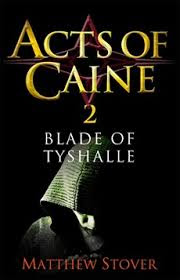
Blade of Tyshalle by Matthew Woodring Stover

Seven years ago, the warrior-assassin Caine - played by Actor Hari Michaelson - saved his lover Pallas Rill and became a hero on Earth and infamous on Overworld. In that final battle Michaelson was severely wounded and can now only walk intermittently, with technological help. When Michaelson discovers that a devastating virus has been unleashed on Overworld from Earth, he immediately intervenes to stop it...and unleashes a terror upon both worlds in the process.

  
Blade of Tyshalle is the second volume of The Acts of Caine series (four books so far) and is a quite startling deviation from its predecessor, Heroes Die. Whilst Heroes Die was an intelligent, smart SF/fantasy hybrid novel with lots of action, Blade of Tyshalle is an outright philosophical assault on the senses. This is a murkier, more violent and darker book than its predecessor, but also one that is more demanding, smarter and less interested in spelling things out. It is, on almost every front, a step-up from the first book in the series.

In terms of characterisation, the book is highly impressive. Michaelson/Caine himself is a deceptively straightforward figure. When he has an objective, he does whatever is necessary to achieve it. When he has everything he wants - a family, a great job, fame and fortune - he is utterly miserable. When the world sets itself against him (or, in this case, two worlds and almost everyone on them), he shines. When he has the freedom to forge his own destiny, he flounders. It's the classic mid-life crisis narrative, made even harsher by the fact that Michaelson is partially crippled. There's something inherently tragic in the fact that Michaelson's closest friend is also his deadliest enemy, the exiled Emperor Ma'elKoth. Caine is against the odds but also certain to win through because that is the task he sets himself. Some reviews have taken this to mean the book is pro-fascist (The Triumph of the Will could be the title of Caine's biography) but Stover undercuts this by showing that Caine cannot achieve his goals without him relying on his friends and allies (and some of his old enemies).

The book is unusual in that the first-person narration parts of the book are split between Caine and his old friend Kris. The book opens with a tantalising glimpse at Michaelson's youth as he first enters training as an Actor and Kris is assigned to stop him flunking out. The experience changes Kris forever, leading to a fateful decision and a reunion many years later in the main narrative of the book. The rest of the cast is a mixture of returning characters from Heroes Die (such as Shanna, Ma'elKoth, Kierandal and Majesty) and newcomers such as Raithe, a Monastic citizen who harbours an old grudge against Caine. Stover juggles them all with skill.


In terms of the antagonist, Stover does something very interesting by making it more of a force of nature and philosophy than an actual villain (though it is personified when it possesses the body of an old enemy of Caine's). This leads to the book's most stomach-churning sections as this force for evil kills and slaughters on a scale that is quite shocking. The book also muses on the theme of rape, not of the body (though this is implied in several moments), but of the mind. The destruction of consciousness, the stripping of identity and the nature of self are all dwelt on as concepts.

Stover pulls back from these philosophical moments - though the book remains intelligent and sharp-witted throughout - to deliver a finale which may redefine the term 'apocalyptic'. The final 200 pages of the book feels like experiencing the Vietnam War on fast-forwards. It's relentless, grim and action-packed. It probably goes on a little too long - at 725 pages of small print in tradeback the novel is substantially longer than Heroes Die - and there's a few too many endings as Stover tries to wrap things up fairly conclusively, but ultimately it's an ending to be remembered.

Blade of Tyshalle (*****) is a vastly more ambitious book than its predecessor which pulls off what it's trying to do. Action, philosophy and characterisation are blended to create what may be one of the outstanding examples of the fantasy genre in the last decade. Blade of Tyshalle is available now in the USA and as an e-book only edition in the UK.

Wednesday, 3 July 2013

Maps for THE WORLD OF ICE AND FIRE

It's been confirmed that the map artist for The World of Ice and Fire is Michael Gellatly. Gellatly has set up a new website and posted some teaser images for his work on World, though only bits of maps or heavily obscured images for copyright reasons.

Copyright Michael Gellatly

We're still hearing that The World of Ice and Fire may be released in April or May of 2014 to tie in with the fourth season of Game of Thrones. However, until this is confirmed the official date remains November 2014.

Tuesday, 2 July 2013

The Tudors: Season 3

England, 1536. Anne Boleyn has been executed and King Henry VIII has married Jane Seymour. Henry is incredibly happy with his new wife, who soon bears him his much-longed-for son. However, Jane is also keen for Henry to reconcile with his daughters Mary and Elizabeth, and Henry is concerned that Jane is meddling in affairs beyond her interest. Such matters become less important when the north of England rises in rebellion against the crown, furious with the dissolution of the monasteries and what they see as the corruption of the king's chief minister, Thomas Cromwell.


The third season of The Tudors covers the period running from 1536 and the immediate aftermath of the execution of Anne Boleyn, to 1540 and the king taking Catherine Howard as a mistress. In terms of wives, it's the busiest of the four seasons as it has to get through three of them whilst also addressing the popular rebellion known as the Pilgrimage of Grace, the downfall of Thomas Cromwell, the rise to prominence of the Seymour family (who would retain some power even beyond Henry's death) and the religious opposition of Cardinal Reginald Pole, who stirs up opposition to Henry VIII in Europe. Furthermore, it only has eight episodes to do all this in (as opposed to the ten apiece of the other seasons). They even fit in a somewhat bizarre episode in which Henry has a mini-breakdown and works through it with the help of his fool (a great performance by David Bradley).

The third season is therefore quite impressive in that it manages to pack all of these storylines into a very short space of time and explore them quite thoroughly without feeling rushed. It's a fairly dynamic season, complete with more action-adventure subplots as the would-be assassin Sir Francis Bryan chases Reginald Pole across Europe and as the Pilgrimage of Grace marches across England with Charles Brandon leading an army against them.

The performances range from the excellent to the okay. James Frain's Thomas Cromwell is probably the season highlight as he loses control, but Henry Cavill improves yet more as Brandon is ravaged by guilt over the deaths he causes. Jonathan Rhys Meyers, again, is fairly neutral in his performance, but there's a nice turn from singer Joss Stone as Anne of Cleeves. Giving an unproven actress a tricky role with a German accent was quite a challenge, but she handles it reasonably well. The season also benefits from Sarah Bolger coming more to the fore as Mary Tudor, a difficult character to get right. Mary was a woman of principal and authority, but one who became increasingly ruthless when she herself became queen, and Bolger combines those traits quite well. Unfortunately, the loss of Natalie Dormer's Anne Boleyn is more keenly felt, with Annabelle Wallis's Jane Seymour being rather unmemorable in comparison, despite an odd attempt to draw parallels between her and Diana, Princess of Wales.

The season is also let down a little by the arrival of Catherine Howard at the end of the season. Though Tamzin Merchant (probably better known for almost being Daenerys in Game of Thrones, playing the role in the unaired pilot and later being replaced by Emilia Clarke for reasons that have never been divulged) does a good job with the material, the writing never really explains why Henry would fall for such a flighty creature. That has to wait until Season 4, when the suggestion that Henry is having what we'd now term a mid-life crisis is better-explored.

Season 3 of The Tudors (***½) maintains the show's run of being watchable, entertaining, historically interesting (though not hugely accurate), slightly trashy but lacking in depth. The season is available now in the UK (DVD, Blu-Ray) and USA (DVD, Blu-Ray).

Monday, 1 July 2013

Serious Sam 3

Thousands of years ago, the alien Sirians visited Earth and left behind advanced technology. Humanity begins to discover this technology in the mid-21st Century, attracting the attention of the evil Lord Mental. Mental attacks Earth with his endless hordes of minions, almost wiping out the species. It falls to Sam 'Serious' Stone, the most capable soldier left alive, to fight his way through Mental's hordes to activate a time machine near Cairo. This will allow him to travel back in time and enlist the aid of the Sirians in defeating Mental once and for all.


Serious Sam 3 is a prequel to the first Serious Sam game, making it an ideal jumping-on point for new players (though this is hardly a complex narrative). Serious Sam 3 is a game which has no truck at all with the modern first-person shooter genre. Cover systems, regenerating health and being limited to only carrying two or three guns at a time are all thrown out the window in favour of the genre in its purest form: you have lots of guns and have to use them to shoot lots of bad guys.

Serious Sam 3 takes this retro approach seriously. The first level is in fact a mocking pastiche of Call of Duty-style games, with Sam being shot down on a helicopter and having to fight his way out from the Cairo suburbs with limited weapons and ammo, proceeding down closed-in streets and alleyways and occasional indoor spaces, fighting grey-clad soldiers. It's not long before the game says, "This sucks, right?" and gives you a rocket launcher and unleashes its hordes of dual-minigun-wielding giant spider/human hybrids upon you, at which point the game kicks into life.

Each level after the first one is generally wide open, allowing you go anywhere you want and fight the enemy in whatever manner you choose. Typically each level consists of one or two large plazas or wide open spaces where full-on battlefield carnage is the order of the day, along with a few linking sections and occasional buildings. The game liberally scatters ammo, guns, armour and health around and then hurls a ludicrous number of bad guys at you. As the game continues you go from having to kill a few dozen bad guys to complete a level to, on the final mission, over 1,700. There are points in the game when a vast horde of enemies appears in the distance and you can comfortably empty your minigun, rocket launcher, quad-barrelled laser battery, giant cannon and machine guns into them without missing once and still have dozens of enemies left to deal with. This is indeed the FPS reduced to its purest form.


That said, the game isn't completely mindless. Each enemy has specific strengths and weaknesses, as do each of your weapons, and finding which weapon works best against which enemy provides a solid tactical element to the game. Similarly, trying to hide behind cover and snipe at enemies is a good way of getting killed, so you have to keep moving and learning how each enemy moves, what their attacks are and what's the best position to attack them from is important to ensure victory. The game's campaign is also playable with up to 15 other players in co-op, which is a hell of a lot of fun.

The game can't quite escape being a 2012 shooter, so we do get a little bit more in the way of dialogue and cut-scenes this time around. They're fairly brief and the writing is cheesier than prime Stilton, but they work in getting the plot (for lack of a better term) across. Serious Sam 3 can also be seen as a rebuke to Duke Nukem Forever, a long-gestating, old-school FPS released in 2011 to a woeful reception. Whilst Duke Nukem bafflingly cobbled together old-school design with some of the weaker elements of modern FPS (regenerating health and a limited weapon selections), Serious Sam 3 has some great level design, non-regenerating health and a ludicrous weapons arsenal. Serious Sam 3 also manages to go for some amusing lowbrow humour without being tiresomely misogynistic, unlike Duke (indeed, the only named and notable 'good' characters in the game apart from Sam himself are women, both presented simply as other soldiers).

Serious Sam 3 does have its flaws, however. Those who've played the earlier games in the series will find little new here, aside from the graphics being substantially better. Most of the enemies are the same as in the original Serious Sam, as are the guns, and changes are fairly minimal (the demon monkey is a new enemy that only succeeds in being irritating rather than challenging). The level design is based heavily around Egypt, like the original game. Whilst there is a strong tactical element to the game in terms of weapons choice, getting to know the enemy and where to best position your character for combat, this also becomes second-nature pretty quickly. With little surprises in later levels, the latter part of the game can feel more like a repetitive grind. Also, whilst the game is mostly excellently paced, it drops the ball on the last level which rapidly becomes exceedingly tedious. The end-of-game boss is impressive and the way you fight him is great (hint: it involves a jetpack), but the game is also fairly obtuse about how exactly you defeat him. It's a bit of a let-down given that the original Serious Sam's end-of-game boss was more impressive (a two-mile-high demon you killed by pumping millions of bullets into him as he advanced menacingly towards you from several miles away).

Serious Sam 3 (***½) is a frantic, fast-paced shooter with a surprising amount of tactical thought required for victory. It shows up many modern FPS games as being slow and boring, but it risks descending into a grind in its later levels. However, the problems with the single-player structure are more than made up for by the excellent co-operative multiplayer. The game is available now in the UK (PC, X-Box 360) and USA (PC, X-Box 360).