Sunday, 7 August 2022

Druidstone: The Secret of Menhir Forest

Menhir Forest is in danger. The Archdruid has gone missing and a horrible growth, known as "the Cancer," is spreading through the forest, consuming everything in its path. Corrupted, dangerous creatures are appearing. The druids call upon three allies to help investigate and solve the crisis: Aava, the Archdruid's daughter and a keen archer; Leonhard, the Warden, a mighty warrior with a mysterious past that he cannot remember; and Oiko, a renegade Red Priest who has rejected the evil ways of his former colleagues.


Druidstone: The Secret of Menhir Forest is an intriguing game which mixes several influences: tactics games, like XCOM: Enemy Unknown and Final Fantasy Tactics; JRPGs, particularly the Final Fantasy series; and old-school games which rewarded tactical thinking and creative combinations of abilities, perhaps unsurprising given the same creative team worked on the throwback Legend of Grimrock series. It is more accessible than Legend of Grimrock, and can easily be summed up as "fantasy XCOM" (even if it's not quite as accomplished in that field as the Banner Saga trilogy).

The game proceeds from quest to quest with your fellowship assigned a primary objective, achieving which immediately ends the mission, and secondary objectives. Secondary objectives are not essential to complete the mission, but they are essential to acquire gemstones, which boost your abilities. You will very quickly learn that these gemstones are not optional and are urgently needed to make some of the later missions achievable in any fashion.

Each mission plays out in a familiar XCOM style, with a grid across which your characters can move and take actions. You can move up to an allowance and attack, but attacking does not end your movement, so can pop out of cover to get line-of-sight on an enemy, fire off an arrow or magical attack, and then nip back into cover, which creates lots of intriguing tactical options. One limitation is that if you are adjacent to an enemy, you cannot move away from them without triggering an opportunity attack (the same is also true for you), although several items and abilities do allow you to accomplish this.

You have a baseline of abilities and levelling up your character allows you to add new abilities. More important are the gemstones, which enhance the abilities you already have. These may allow you to add more damage or a status effect to an attack, or simply use the ability more often. Using abilities usually replaces an attack action, but some are free-to-use and can combine with attacks or movements to impressive effect. Your magic-users can utilised "Focus" to enhance their magical abilities, such as taking Fire from a single-target ability to an area-of-effect ability that can hit up to nine enemies if they are standing closely together (or if you manipulate or trick the enemy into bunching together). Oiko has an underrated ability to swap places with any unit in his line of sight (friend or foe) which allows you to increase the range of your melee characters' movement (Oiko moves up to his maximum, swap-teleports with a melee character who can then move to the maximum of their movement, allowing them to get into combat a round earlier than just waiting for the enemy to approach).

Progress is mostly linear, although at key points you have a choice of several missions to proceed with. You can also revisit previously-completed missions to gain more experience and gold, although the amount you gain each time you replay a mission dwindles with each playthrough. You can also only get bonus gems from any given mission once. This does allow you to sometimes complete a mission without getting the bonus objectives and then coming back later on once your overall strength has improved.

Graphically, the game is solid but not amazing and the music is pleasant, even if more than one tune only narrowly avoids have Square Enix's lawyers frowning and reaching for the telephone. The user interface is great and an "undo move" button is a welcome sight given how easy it is to accidentally move somewhere you didn't want to go. More annoying is the way that Oiko's "teleport" and "forcebolt" icons are very similar, meaning you sometimes end up swapping places with an enemy you meant to attack and vice versa.

In terms of story, the game is okay but the lack of any voiceovers at all feels a bit outdated (as much as it kept the game's budget down). There's also sometimes far too much dialogue before a mission starts, little of it interesting. The story is also a bit odd, one subplot where a character is possessed by a another being and stays that way for the rest of the game being weirdly under-explored. There's also a strange thing where you really (eventually) have five party-members, but to bring the fifth party member into the battle requires summoning them at the start of every mission. It feels like they should really have just been in the party all along.

Druidstone: The Secret of Menhir Forest (****) is not going to be winning any prizes for originality, but it is a tightly-designed fantasy tactics game with a nice story, interesting characters and some fiendishly designed missions. These make up for a sometimes confusing UI and a lack of voice acting in the game. The title is available now on PC.

Thank you for reading The Wertzone. To help me provide better content, please consider contributing to my Patreon page and other funding methods.

Monday, 1 August 2022

Blogging Roundup: 1 June to 31 July 2022


The Wertzone

News

Reviews


Articles

Atlas of Ice and Fire

Dragonmount

Thank you for reading The Wertzone. To help me provide better content, please consider contributing to my Patreon page and other funding methods.

Disney+ delays STAR WARS TV show ANDOR

Disney+ has delayed the launch of its next Star Wars TV series, Andor, by three weeks. The show will now launch on 21 September.

Andor is a prequel to the movie Rogue One and follows a young Cassian Andor as he takes up arms against the Empire for the first time. However, the film also has a more epic scope and follows Mon Mothma and other dignitaries on Coruscant as they take their first faltering steps in opposing the tyrannical government that the Galactic Empire has become. Other storylines span the Star Wars galaxy instead of the very tight focus on single characters from The Mandalorian, The Book of Boba Fett and Obi-Wan Kenobi.

The reason for moving Andor is unclear, but there is speculation that it was to move it out of a crowded launch window which would have seen it going head-to-head with She-Hulk: Attorney at Law (17 August), House of the Dragon (21 August) and The Rings of Power (2 September).

Andor sees Diego Luna reprise his role as Cassian Andor from Rogue One. Forest Whitaker also returns as Saw Gerrera, a role he played in Rogue One and also in Star Wars: Rebels. Genevieve O'Reilly returns as Mon Mothma, a role she played in Rogue One and Star Wars Episode III: Revenge of the Sith. Stellan Skarsgård also stars as Luthen. Adria Arjona, Kyle Soller, Fiona Shaw, Anton Lesser, Ben Miles, Robert Emms and David Hayman have unconfirmed roles.

Sunday, 31 July 2022

RIP Nichelle Nichols

News has sadly broken that Star Trek actress Nichelle Nichols has passed away at the age of 89.

Nichols was born in Robbins, Illinois, a suburb of Chicago, in 1932. Nichols' father was a factory worker who was elected mayor of Robbins in 1929. Nichols became interested in acting at school and studied in New York City and Los Angeles, as well as at the Chicago Ballet Academy.

After a number of lower-profile stage roles, her big break came in appearing in Kicks and Co. on stage in 1961. Although the play closed early, Nichols attracted positive notices and also began a side-career in modelling. She continued acting on stage, attracting higher-profile roles in Carmen Jones in Chicago and Porgy and Bess in New York. Her acting in musicals also opened an occasional career in music, singing with the Lionel Hampton and Duke Ellington bands and later recording two albums.

On screen, she appeared in the 1959 film version of Porgy and Bess as an uncredited dancer, but achieved a breakthrough in Hollywood in 1966, appearing in the films Tarzan's Deadly Silence, Made in Paris and Mister Buddwing. Her first television role came in 1964 in The Lieutenant, playing Norma Bartlett in the episode To Set It Right (alongside Dennis Hopper). Nichols' performance impressed producer Gene Roddenberry, who held her in mind for a science fiction television series he was developing.

In 1966 Nichols was cast as Lieutenant Uhura, the communications officer of the starship Enterprise in Roddenberry's Star Trek. Nichols' role as a prominent African-American woman in a position of some authority on a starship was unprecedented and Nichols attracted significant fan mail, particularly from young black women who saw her as a role model. Despite the attention and profile, Nichols quickly realised that she was not likely to be the star of many episodes, as the focus shifted from an ensemble piece to a tight focus on the triumvirate of William Shatner, Leonard Nimoy and DeForest Kelley as Kirk, Spock and McCoy. Due to her low number of lines, Nichols considered leaving the show after the first season to resume her career on Broadway and even handed her resignation in to Gene Roddenberry. Roddenberry urged her to take the weekend to reconsider. At a charity event over the weekend, Nichols met Dr. Martin Luther King who told her he was an enormous fan and her work was inspiring to himself and to the Civil Rights Movement. He also told her she was hugely inspiring to the next generation of young children, particularly black girls, who otherwise had very few role models on television. Nichols agreed to stay.

Despite nearly losing her from the show, Roddenberry rarely gave Nichols a starring role in episodes. He did, however, cause enormous controversy by producing an episode in which Uhura and Kirk kiss, Plato's Stepchildren. Apparently the nervous director suggested they film a "backup" version of the scene without the kiss. However, Shatner and Nichols both purposefully screwed up the other takes, leaving the scene with the kiss as the only usable take. This is sometimes - inaccurately - portrayed as the first interracial kiss on American television, although it was publicised as such at the time and caused a certain amount of attention. In her autobiography, Nichols noted that she was romantically involved with Roddenberry following their meeting on The Lieutenant, although the relationship was over by the time she was working on Star Trek. She remained friends with Roddenberry and his later wife Majel Barrett, and sang at his funeral in 1991.

Following the cancellation of Star Trek in 1969, Nichols agreed to return to voice her character in Star Trek: The Animated Series. In one episode Uhura took command of the Enterprise, whilst she played a more prominent role in several episodes compared to the live-action show.

Nichols began to work closely with NASA, with a view to inspiring women and minority recruits to sign up to work with the organisation. The program was highly successful and credited with recruiting Dr. Sally Ride, the first American female astronaut, and Colonel Guion Bluford, the first African-American astronaut. As part of her NASA work, Nichols was invited as a special guest in 1976 to watch both the Viking 1 landing on Mars and the first flight of the American space shuttle Enterprise.

In 1979 she returned to the role of Uhura in Star Trek: The Motion Picture and reprised it in Star Trek II: The Wrath of Khan (1982), Star Trek III: The Search for Spock (1984), Star Trek IV: The Voyage Home (1986), Star Trek V: The Final Frontier (1989) and Star Trek VI: The Undiscovered Country (1991). For her appearance in Star Trek V, Uhura infamously danced naked with only two strategically-placed fans and a phaser for comfort, which Nichols found amusing.

In 1994 she published her autobiography Beyond Uhura, which focused on all aspects of her career. She indicated that her greatest pride came from assisting NASA in the space program, which continued well into the 21st Century.

As an inspiration to younger generations, Nichols found herself being cast in later life in roles by fans, including reprising Uhura for a Star Trek fan production called Of Gods and Men in 2007. She also had small roles on Heroes (2007), The Cabonauts (2009) and The Young and the Restless (2016). She memorably played both herself and Uhura in episodes of Futurama.

Nichols had a significant number of awards, including a star on the Hollywood Walk of Fame (1992), a Goldene Kamera (1999), an honorary degree from Los Angeles Mission College (2010), the Life Career Award from the Academy of Science Fiction, Fantasy and Horror Films (2016) and the Inkpot Award (2018). She also had an asteroid, 68410 Nichols, named in her honour.

Nichelle Nichols passed away on Saturday 30 July 2022, whilst staying with her son in Silver City, New Mexico. She had been suffering from health issues for several years, including a stroke in 2016 and being diagnosed with dementia in 2018, which caused her to announce her retirement. She is survived by her son Kyle Johnson. An inspiration to many, Nichelle Nichols will be very much missed.

Nichols' passing leaves the surviving original Star Trek castmembers as William Shatner, Walter Koenig and George Takei.

Paper Girls: Season 1

 November 1st, 1988. Erin Tieng starts her first-ever early morning paper round, to the distress of her over-protective mother. She meets three other paper girls doing the same neighbourhood: Tiffany Quilkin, Mac Coyle and KJ Brandman. Their first challenges are late-night revellers and pranksters not over Halloween, followed by an escalation to getting involved in a temporal war spanning thousands of years. The girls have to navigate the timelines to find a way home, whilst also learning maybe far more than they should about their own personal futures.

Paper Girls started life as a comic by Brian K. Vaughn and Cliff Chiang, which launched in 2015. The comic ran for 30 issues, ending in 2019 and wracking up significant critical acclaim along the way, including five Eisner Awards. Along with Stranger Things - which launched on Netflix ten months later - the comic was credited as being part of a wave of 1980s nostalgia-driven properties. Unlike Stranger Things, Paper Girls was credited for interrogating its nostalgia in a deeper way, and shining a light on the less pleasant aspects of the time period.

The television adaptation of Paper Girls is that rarest of beasts: a television adaptation that significantly improves on its source material. The same creative team as the brilliant Halt and Catch Fire are involved, so are no strangers to the 1980s nostalgia bandwagon with a darker and more cynical twist. But Paper Girls works primarily because the writers have the confidence to slow the comic's manic pace and focus more on character development. The comic is infamous for being relentless, throwing new ideas, time periods, factions and characters into the mix like a demented chef with a superfast new blender, which was both invigorating but also risked becoming seriously confusing at times. The TV show isn't slow-burning by any means, but it does know it doesn't have to be at full throttle all the time.

The show follows the comic in zeroing in on the central cast of four characters: Erin, Mac, KJ and Tiffany. It also achieves the near-impossible of finding the perfect cast to embody them: Riley Lai Nelet, Sofia Rosinsky, Fina Strazza and Camryn Jones respectively. These young actresses nail their characters from the opening moments and across the season rise to the challenge of having to drag them through the emotional wringer as they learn about their own futures, occasionally having arguments with their older selves about how their lives are nothing like what they had imagined.

They are ably supported by a top-notch supporting cast, led by Ali Wong and Sekai Abeni as the older versions of Erin and Tiffany, with the actresses doing great jobs of making them appear to be the same people separated by decades (shades of Yellowjackets, except the two incarnations of each character get to meet one another). There's also fantastic support by Adina Porter (True Blood, The 100), Nate Corddry (For All Mankind) and Jason Mantzoukas (Parks & Recreation, Brooklyn Nine Nine).

The show succeeds by mixing its time-travelling, crazy SF antics with more human stories. Erin dreams of graduating from college and becoming the first Asian-American President of the United States; she occasionally breaks from the action to filter events through an imagined Presidential TV debate with Ronald Reagan (the CG Reagan is the show's weakest link, effects-wise). KJ is worried that her future will be determined by her controlling parents. Tiffany dreams of going to a top university and using her intelligence for good purposes. Destitute Mac doesn't even know what her future could be. As each of them discovers their destinies, they have to confront the people they're going to be (literally) and what choices they can make in the past to change things for the better. This theme is a minor element in the comics but becomes a much bigger focus in the TV show.

But the time-travelling, crazy SF elements are still here and they show up in a big way. City-sized spaceships, raging mech fights, gun battles between time-travelling armies and dinosaurs (!) are all present and correct, just slowed down a bit and given more weight than in the comics.

The series starts well, ticks along nicely and ends on a hell of a cliffhanger. The cast is exemplary, the writing is strong and the effects are superb, not being allowed to overwhelm the show as they have for other properties. Above all, the show knows how to use its time-travelling premise to tell really human stories. The only weak link is that the throttled-down pace is maybe a tad too throttled-down, and the main storyline feels like it goes on a break a few times until they get back on track.

Paper Girls (****½) is the rare example of a TV adaptation that improves on its source material to become a compelling watch. It is available now on Amazon Prime Video worldwide.

Thank you for reading The Wertzone. To help me provide better content, please consider contributing to my Patreon page and other funding methods.

Thursday, 28 July 2022

RIP Bernard Cribbins

News has sadly broken that veteran British actor Bernard Cribbins, OBE has passed away at the age of 93. He is best-known for his work on TV shows The Wombles and Doctor Who, and as part of the long-running British comedy film series Carry On. He also found fame as a successful singer during the 1960s and was active in charity work for military veterans.

Born in 1928 in Oldham, Lancashire, Cribbins grew up with his two siblings in very poor conditions. His father "dabbled in acting," giving Cribbins the idea of pursuing it as a career. He worked as an assistant stage manager in a local theatre, getting his first experience of treading the boards. He then worked with the Oldham Repertory Theatre. He was too young to fight in World War II, but subsequently did National Service with the Parachute Regiment. During this period he was deployed to Palestine, then a British Mandate. He later related some of his experiences to Russell T. Davies, who used them as backstory for Cribbins' character Wilf in Doctor Who.

After completing his service, Cribbins returned to acting, making his West End debut in 1956. When it was realised he could sing, he was recruited for musicals and revues, which resulted in him recording his first single, "Folksong" from And Another Thing. In 1962 Cribbins hit the UK Top Ten with three comic songs: "The Hole in the Ground," "Gossip Calypso" and the major hit "Right Said Fred," which occasionally crops up on the radio even today. This period saw Cribbins become something of a household name and rubbed shoulders with the Beatles.

Cribbins began appearing in British films in the late 1950s, starting with Yangste Incident in 1957. His highest-profile roles came through collaborations with Peter Sellers, in Two-Way Stretch (1960) and The Wrong Arm of the Law (1963), followed by two appearances in the Carry On series when it was at the height of its fame: Carry On Jack (1963) and Carry On Spying (1964). He later returned to the series for its reunion film, Carry On Columbus (1992). He also appeared in the classic children's film The Railway Children (1970) and in Alfred Hitchcock's Frenzy (1972).

For television, he starred in his own TV series for ITV, Cribbins (1969-70) and had a memorable role in Fawlty Towers as a spoon salesman mistaken for a hotel inspector. He established himself as a star of children's television by narrating The Wombles (1973-75) and reading more stories on Jackanory than any other celebrity presenter, notching up 114 appearances from 1966 to 1991. He voiced a road safety film campaign in the 1960s, advertised Hornby model trains and hosted the children's panel game show Star Turn in the 1970s.

Cribbins is arguably most famous for his long-running association with Doctor Who. He debuted by playing companion Tom Campbell in the 1966 feature film Daleks: Invasion Earth 2150 AD, alongside Peter Cushing as the human Dr. Who. In 2007 he appeared in the audio drama Horror of Glam Rock and, later that year, was cast by Russell T. Davies as a London newspaper seller in the 2007 Doctor Who Christmas special, Voyage of the Damned. Davies enjoyed his performance so much he decided to bring him back as a recurring character in the fourth series in 2008, retconning him as the grandfather of Donna Noble (who had previously appeared in the 2006 Christmas special The Runaway Bride), Wilfred Mott. After a series of guest spots, he was "promoted" to full companion status for David Tennant's final episodes in the role, The End of Time Part 1 (2009) and Part 2 (2010). Notably, it is to save Wilfred's life that the Tenth Doctor exposes himself to a dangerous level of radiation, triggering his regeneration.

Cribbins returned to the role in early 2022, playing Wilfred again for (at least) the first of three anniversary specials due to air for Doctor Who's 60th anniversary in 2023. For this appearance he was reunited with David Tennant and Catherine Tate.

These roles meant that Cribbins holds a number of distinctive Doctor Who records: the only actor to play two different companions on Doctor Who, the only actor to appear as a companion both the feature film and TV versions of the franchise, the only actor to face the Daleks in film and television, the oldest companion (he was 81 during his last appearance in The End of Time Part 2 and 93 during filming of the 60th anniversary specials) and the actor with the longest association with the programme, from 1966 to 2023 (although this may be broken if any actor who appeared in the show in 1963-66 was to return). 

Cribbins held several honours, including the General Service Medal for his service in Palestine in 1947-48, a special award at the British Academy Children's Awards for his work in children's television in 2009, and the JM Barrie Award for his contribution to children's arts in 2014. In 2011 he was appointed an Officer of the Order of the British Empire. Cribbins was also engaged with charity work, particularly for military veterans. He worked with the Support Our Paras charity and the Fishing for Heroes organisation. 

Cribbins married Gillian McBarnet in 1955 and they had a lifelong romance and partnership, lasting until her death in October 2021. They had no children. Cribbins survived prostate cancer in 2009 and later reported being in excellent health, occasional back conditions excepted. In 2018 he published an autobiography, Bernard Who? 75 Years of Doing Just About Anything, which he later recorded as an audiobook.

Bernard Cribbins was hugely respected for his acting skills, his singing, his charity work, his comedy and his relentless good cheer. He was a professional who always brought his A-game to every role, no matter how big or how small, and something of a British institution. He will be sorely missed, although we have at least the pleasure of one last performance in Doctor Who to look forwards to next year.

Wednesday, 27 July 2022

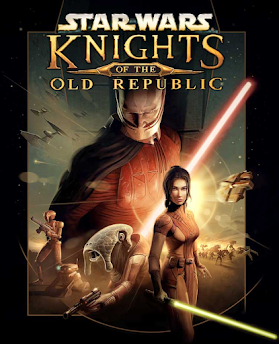
KNIGHTS OF THE OLD REPUBLIC remake on hold at Aspyr and in "serious trouble"

In surprising news, Aspyr Media has put its eagerly-awaited remake of classic Star Wars CRPG Knights of the Old Republic on hold.


Knights of the Old Republic was released by BioWare in 2003 and has been regularly acclaimed as one of the very best Star Wars video games of all time, and one of the very best CRPGs. A sequel, Knights of the Old Republic II: The Sith Lords was released in 2004 and launched the career of Obsidian Entertainment. The game was released during BioWare's "imperial period" when everything they made was either great or at least ambitiously interesting. Baldur's Gate II (2000), Neverwinter Nights (2002), Jade Empire (2005) and Mass Effect (2007) all hail from this period as well. BioWare has since fallen on tougher times, with Dragon Age II (2011), Mass Effect 3 (2012), Dragon Age: Inquisition (2014), Mass Effect: Andromeda (2017) and Anthem (2020) all suffering controversies of one kind or another, and the latter two also experiencing poor sales. Critics and fans have frequently said that BioWare needs to get back to making games of the type and scale as Knights of the Old Republic to return to success.

Aspyr Media, based in Texas, has focused on porting existing games to new formats, including porting Knights of the Old Republic itself to MacOS in 2004. Knights of the Old Republic Remake was announced in 2021 as Aspyr's first large-scale, big-budget video game project. The game is a total, ground-up remake of the original title using modern graphics technology and new voice acting (including the return of fan-favourite actor Jennifer Hale).

Unfortunately, it appears that Aspyr were unprepared for the scale of the project. Internally and informally, Aspyr were targeting a late 2022 release date, but insiders have noted this is unachievable and unrealistic, and that a release date of 2025 is more likely. It also sounds like the game may have started off with more modest goals but transformed into a full-on remake when it became clear how difficult using the original code and assets was going to be. If it's the case that Aspyr envisaged a more modest remaster and scaled up to something of the scope of the Final Fantasy VII Remake, it's unsurprising that they've realised they've bitten off more than they can chew.

Whether the project is remounted in the future remains to be seen, but unfortunately, it looks like the project is not happening in the near future.

Tuesday, 26 July 2022

Wertzone Classics: Subnautica

The starship Aurora has crash-landed on planet 4546B, which is largely covered by oceans. The crew has bailed out in escape pods, but only one, Ryley Robinson, has the great fortune to land in a shallow area devoid of hostile creatures. With a functional fabricator, which can turn basic elements into tools, survival gear and components, Ryley sets out to be build a way off the planet...and learn why the Aurora was even there in the first place.


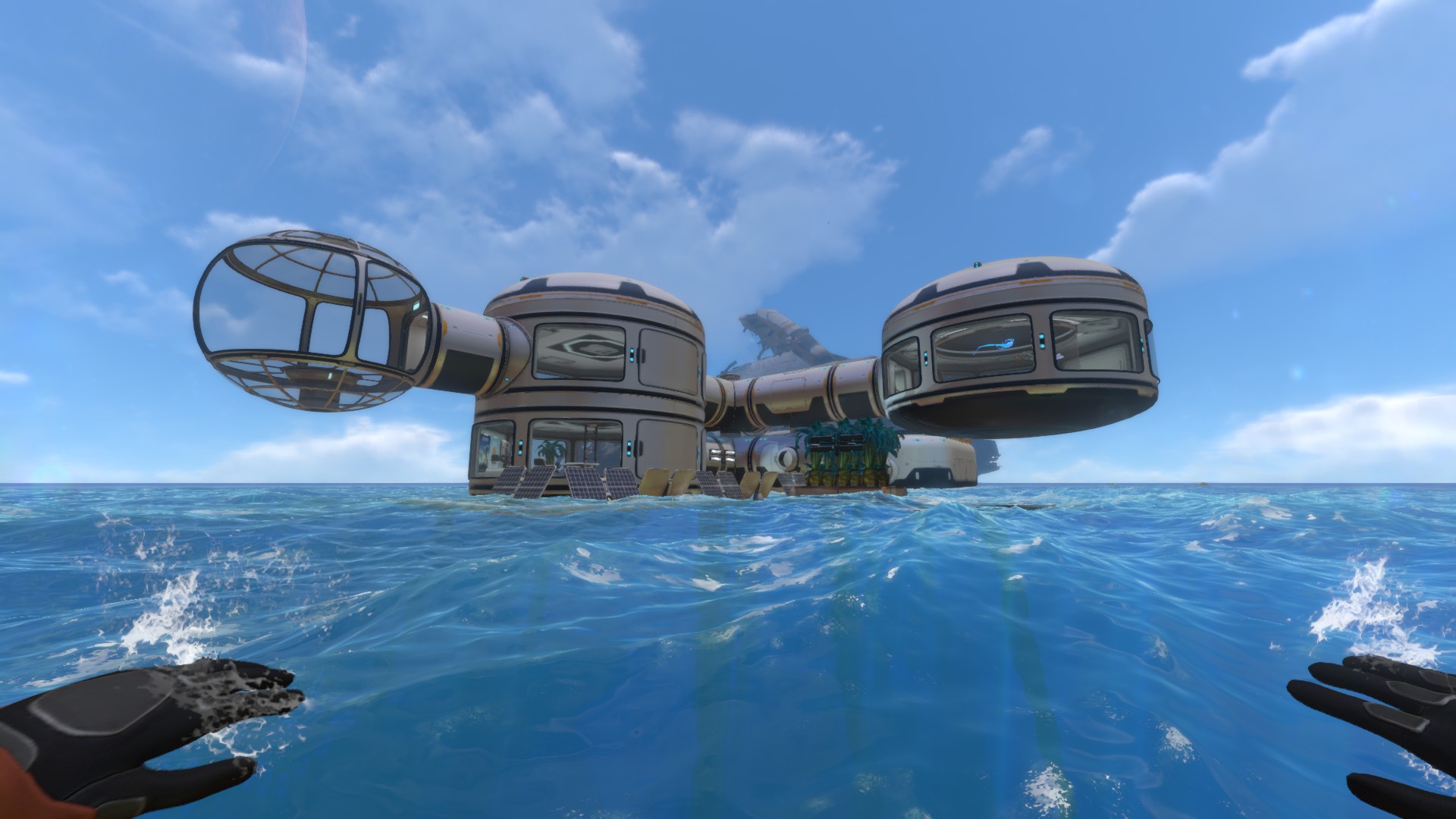
Subnautica is a game that takes great, great delight in putting you in a desperate, apparently insurmountable situation and letting you get on with it, to sink or swim (literally, in this case). Emerging from your escape pod to find nothing but water stretching to the horizon is one of the most striking openings to a video game ever. The only thing you can see is your crashed spaceship...which very quickly explodes, spewing radiation everywhere and preventing you from getting anywhere near it.

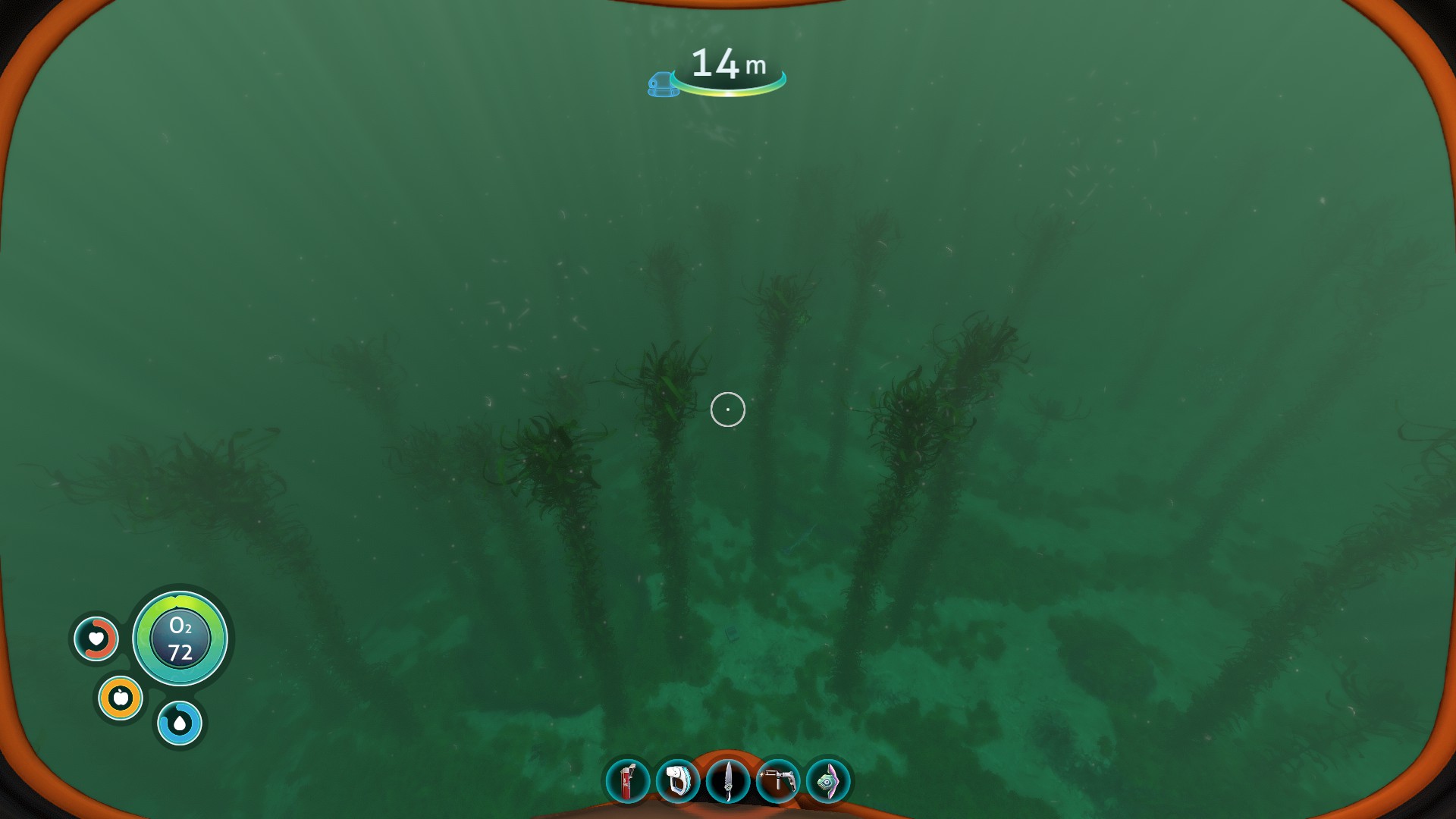
Fortunately, if there's nothing on the surface that's of use (which isn't quite as true as it first appears), the same cannot be said of the seabed. The ocean is teeming with fish, fauna and mineral deposits, not to mention a trail of debris from the Aurora which provides a rich source of resources. Your escape pod's fabricator - think of a Star Trek replicator - can create almost anything but requires raw materials. At the start of the game you can easily acquire things like quartz, copper, titanium, silver and gold, which can be fed into the fabricator to create repair tools and a device to help you build a modest habitat. As the game proceeds you can create a radiation suit to explore the Aurora, which in turn provides you with more blueprints to build vehicles and more sophisticated base facilities...and opens up a mystery as to why the Aurora was even in this star system in the first place.


A key thing to understand about Subnautica is that it is a game that expands downwards. Your early explorations will probably end up with you getting an oxygen tank so you can dive deeper without worrying about suffocating so fast, and fins to dramatically increase your speed. This allows you to reach rarer resources, which can be used to craft vehicles. These vehicles can remove your breathing problems altogether and, upgraded to reach greater and greater crush depths, can reach hitherto unknown resources. Rinse and repeat until, around twenty hours into the game, you are guiding a submarine bigger than a bus through caverns more than a kilometre below the surface, trying to track down the yet rarer resources you need to start building an escape vehicle from the planet. Of course, even that is not straightforward, with various other problems cropping up that you need to deal with before you can even think about leaving.


It's a game that focuses on exploration over almost anything else. The underwater landscape is divided horizontally and vertically into different biomes, each with their own resources, unique lifeforms and plant life, most of which can be harvested for resources in one fashion or another. The map feels gargantuan at the start, although once you unlock the Seamoth (a zippy submersible) you soon realise it's not really that massive. It's the combination of horizontal and vertical space that allows the to game to pack in a lot of variety. It's only when you find your way into a huge undersea cavern system that you may find the process of getting back and forth a little laborious, which leads to the fun of building a second base, wholly underwater this time and without the readily-available solar power of your starting location. And from here you can dive even further, into areas that are increasingly strange, dangerous...and rewarding.

Subnautica is a game that gets under your skin. There's a fairly linear progression of unlocking new equipment and options that eventually leads to the endgame, but it's startlingly easy to get sidetracked. Building bases is fun, even if there are only a few useful rooms you can construct. Creating your own multi-level aquarium is utterly pointless, but looks really cool. Constructing a luxurious bedroom is a bit of a waste of time (apart from being able to rest to speed up the day/night cycle, and once you're a hundred metres below the surface, that becomes immaterial) but making a cool pad with posters and a cuddly toy you've recovered from a wreck just feels fun. You can build a coffee maker that serves no useful purpose whatsoever, aside from the fact your character is probably feeling an urgent need for caffeine at all times. Subnautica is a game that rewards creativity and creative thinking, and sometimes going off-course for tens of hours to fulfil some random urge (like building a base in every biome, or constructing an underwater tunnel from one end of the map to the other, or putting out every fire on the Aurora) can be as satisfying as eventually completing the game's story.


Subnautica is a richly atmospheric game. The sparse soundtrack is excellent and the graphics are evocative, such as your first glimpse of an underwater volcano surrounded by lava, or diving into the shallows at night when everything is lit up by bioluminescence. Your first foray into the underwater caverns is a hair-raising moment when you realise how far you are from the surface if something goes wrong. But the game makes a great virtue of first making you feel utterly helpless, but then giving you a way of dealing with every situation. Having to dodge the ocean's apex predators near the start of the game is nerve-wracking, but coming back later on to deal out some payback via a mech suit loaded with micro-torpedoes and packing a massive skull-drill (well, actually a drill for minerals, but it's versatile) is incredibly satisfying, even if combat is not a particular focus of the game (and you never need to fight anything at all to complete the game, if you prefer a pacifist approach). Subnautica evolves from being a survival game into something of a power fantasy, first by making you feel like an utterly inadequate victim of the environment to eventually feeling like the absolute master of it...at least until some trivial mistake or a run-in with a predator at the wrong moment can take the shine off that smugness, at least a little.

As survival games go, Subnautica might be the very greatest by the way it gives you a punishingly hard situation but also the tools to overcome it, and a goal to work towards. The presence of a story with several major sub-strands is also a welcome change for the genre. The story elements are low-key, mostly advanced through reading codex entries and finding certain locations later in the game, but give you an objective beyond just "survive."


As far as negatives go, there are a few. Subnautica was created by a very small team on a very low budget, and the game does have a few bugs that have not been corrected, despite it being eight years since the game entered Early Access and four since it was given a full release. Particularly annoying is that the game sometimes fails to recognise that you've switched from an underwater environment to a dry one, sometimes leaving you "swimming" through air or "walking" through water, unable to travel vertically. This only happened three or four times in a 40-hour playthrough, but it was slightly annoying. There are also clipping issues, and some weird work-arounds to save memory (for the console versions) which come across as bizarre. For example (spoilers!), there actually are landmasses on the surface of the planet and pretty close to your crash site, but the game hides them in masses of cloud which feels weird and artificial. Vertical descents to the sea floor can also see a lot of sudden texture pop-in.

Other issues have to do with plausibility: the fact there isn't an in-game map feels really silly, since you can fabricate multiple huge bases and a fairly big submarine, but not a piece of A4 paper you fill in as the game proceeds? As it stands, vertical navigation can be a bit of a pain, especially with your big submarine, when all you have to go on are some vague directions from a voice log and a few beacons you can drop. The developers apparently thought a map would make the game too easy, or the ocean less mysterious and threatening, which I understand, but it also makes the game a little too irritating at times.


But all of these problems, as present as they are, ultimately pale into insignificance compared to the game's riches. Diving deep to grab a resource you urgently need to complete a vital project and making it back to the surface with seconds to spare. Fending off a crab-squid to make it into an undersea wreck containing the next piece of an important puzzle. The first time you build a Seamoth and are suddenly flitting about in seconds distances you used to need half an hour to cover. Building a sprawling base and sitting outside to watch the sun go down. The first time you find a peaceful cave in the hazardous undersea caverns and realise you can build a new base down there. Or the first time you scare off an huge leviathan of the deeps, having always hidden from them in terror before.

Subnautica (****½) is a game rich in atmosphere, superb in its design and compelling in the creative freedom it gives you. As far as survival and exploration games go, this is one of the very best, and a worthwhile gaming experience for everybody who doesn't have a crippling fear of the deep. The game is available now on PC, PlayStation 4, PlayStation 5, Xbox One, Xbox Series X/S and Nintendo Switch. A stand-alone expansion/sequel, Subnautica: Below Zero, is also available. A revamped "Subnautica 2.0" is also currently in development, for release in the next few months, which should remove most of the lingering bugs and will add new UI improvements and expanded base-building.

Thank you for reading The Wertzone. To help me provide better content, please consider contributing to my Patreon page and other funding methods.

Monday, 25 July 2022

RIP David Warner

Sadly, news has broken that the actor David Warner has passed away at the age of 80.


Born in Manchester in 1941, Warner graduated from RADA in London and made his professional stage debut in 1962. He joined the Royal Shakespeare Company in 1963 and was soon making his name on stages all around Britain, with an impressive ability to pick up different roles very quickly.

He made his feature film debut in 1963 in an adaptation of Tom Jones, and memorably played opposite Bob Dylan in a BBC TV play Madhouse on Castle Street, the same year. By the start of the 1970s he had established himself as a low-key but versatile performer on stage, in the cinema and on television.

His big breakthrough role came in 1976 when he played Keith Jennings in The Omen, which opened him up to bigger Hollywood roles. He played major roles in Time After Time (1979), Time Bandits (1981), Tron (1982) and Teenage Mutant Ninja Turtles II (1991).

In 1989 he began a successful collaboration with the Star Trek franchise, playing Ambassador St. John Talbot in Star Trek V: The Final Frontier (1989), Klingon Chancellor Gorkon in Star Trek VI: The Undiscovered Country (1991) and the Cardassian Gul Madred in the two-part Star Trek: The Next Generation episode Chain of Command. Infamously, Warner's character tortured Patrick Stewart's Captain Picard with a psychological device, leading to one of Stewart's most famous moments in the series.


Warner developed an affinity for genre roles, also appearing as Thomas Eckhardt in Twin Peaks (1991), Aldous Gajic in Babylon 5 (1994), Jor-El in Lois & Clark: The New Adventures of Superman (1994), Inspector Langford in The Outer Limits (1999), Dr. Latham in Total Recall 2070 (1999), Admiral Tolwyn in Wing Commander (1999), Sandar in Tim Burton's Planet of the Apes (2001), Lord Downey in the Discworld TV movie Hogfather (2007), and Abraham van Helsing in Penny Dreadful (2014).

His distinctive voice also saw him much sought-after for animation work, playing Ra's al Ghul in Batman: The Animated Series (1992-95), Herbert Landon in Spider-Man (1995-97) and the Archmage in Gargoyles (1995). He also acted in video games, appearing in Privateer 2: The Darkening (1996), Fallout (1997), Descent 3 (1999), Star Wars: Force Commander (2000) and Star Trek: Klingon Academy (2000), reprising the role of Chancellor Gorkon.

In 1997 he enjoyed probably the highest-profile role of his career by playing the villainous Spicer Lovejoy in James Cameron's Titanic. The film went on to become the highest-grossing movie of all time.

Warner also gave what may remain the single greatest villain voice performance - and maybe the greatest video game voice performance ever - as Jon Irenicus in Baldur's Gate II: Shadows of Amn (2000), its expansion Throne of Bhaal (2001) and prequel Baldur's Gate: Siege of Dragonspear (2016).

He also played numerous roles in the Doctor Who audio dramas from 2003 to 2018, including the Doctor himself in six plays. Remarkably, he only appeared in live-action in Doctor Who once, as Professor Grisenko in the 2013 episode Cold War.

Remarkably, despite many fantastic performances throughout his career, Warner was rarely rewarded by institutions. He achieved a BAFTA nomination for Best Actor for his 1966 performance in Morgan: A Suitable Case for Treatment, and he won an Emmy Award in 1991 for his portrayal of Pomponius Falco in Masada. He was also nominated for an Emmy for his role as Reinhard Heydric in Holocaust (1978) and was nominated by the Screen Actor's Guild as part of the ensemble for Titanic (1997).

A versatile and charismatic actor who always got the assignment and gave his best, David Warner will very much be missed.

Stray

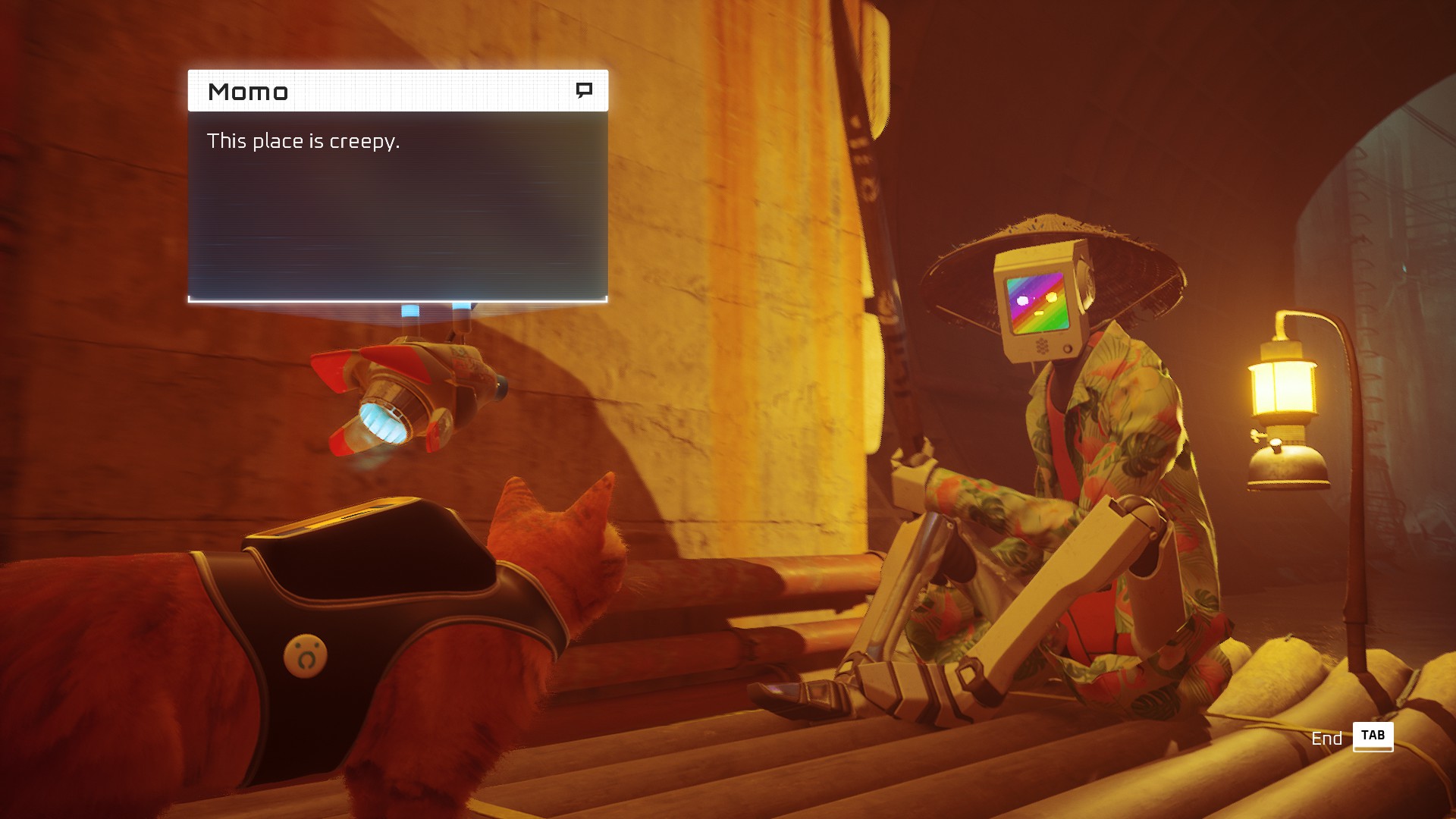
A group of cats are enjoying living in the wilds. One of them falls into a tunnel leading into an underground city of robots and amenities, but no people. Assisted by a friendly drone, B-12, the little cat must find their way out of the city, uncovering and solving the mystery of the city's origin in the process.


Stray is a third-person action/adventure game with a twist: you play a cat. Not a robot cat or cybercat or cat-like alien, but an actual cat. Perhaps a somewhat more intelligent cat than most, but still a feline. Playing as a cat immediately changes the dynamics of how you interact with the environment: you can go into places far too small for a human, you can jump impressive distances and almost never miss or fall and you have excellent night vision. However, there are also limitations: you can only carry small objects in your mouth, you can't understand anything anyone says to you and you are too small to be effective in combat against most enemies.

As the game progresses, some of these weaknesses are overcome: the B-12 drone and its nano-manipulation system allows you to deconstruct larger objects and store them a harness, whilst B-12 also provides handy robot-to-cat translations. The designers cleverly avoid using B-12 as too much of a crutch. At one point B-12 gains the ability to destroy Zurks (small parasitic creatures who are the main enemy in the early going of the game) but this is time-limited and eventually runs out, leaving your feline hero to their impressive speed and dodging skills instead (hint: this is a game where "going serpentine" is almost always a good idea).

The environments are fantastic in design and filled with hidden nooks and crannies where you can jump, crawl and explore. The linear levels are broken up by several hub areas, where you can explore more widely, meet other characters and engage in a number of side-missions. You can also find hidden achievements, and even unlock extra parts of the soundtrack (by finding hidden music sheets for a frustrated robot guitarist).

Later on, when you encounter more hostile robots with ranged weapons, the game turns into a stealth title, with you having to avoid enemy vision cones and hide in cardboard boxes (a la Metal Gear Solid) to avoid being detected (alas, you can't move the boxes around).

Along the way you can knock things off shelves, miaow a lot, sit and look vaguely puzzled, curl up and go to sleep, drink water from ill-advised sources, rub robots' ankles to make them coo at you and generally engage in a lot of standard cat behaviour. The animation of procatonist is outstanding and worthy of applause. The only missing bit of cat behaviour is food: your cat never gets hungry or eats something they just found lying in the dirt, which is the only unrealistic part of the game.

Stray isn't a long game - I finished it in about seven and a half hours - but 100%ing the game is a much tougher proposition, requiring you to speed-run the entire game as well as finding every fiendishly hidden bonus objective. Luckily the budget price reflects the game's modest length.

Stray (****) is a pleasantly enjoyable video game which does exactly what it promises: it allows you to play a game as a cat, and have a good time doing so. It is available now on PC, PlayStation 4 and PlayStation 5.

Thank you for reading The Wertzone. To help me provide better content, please consider contributing to my Patreon page and other funding methods.